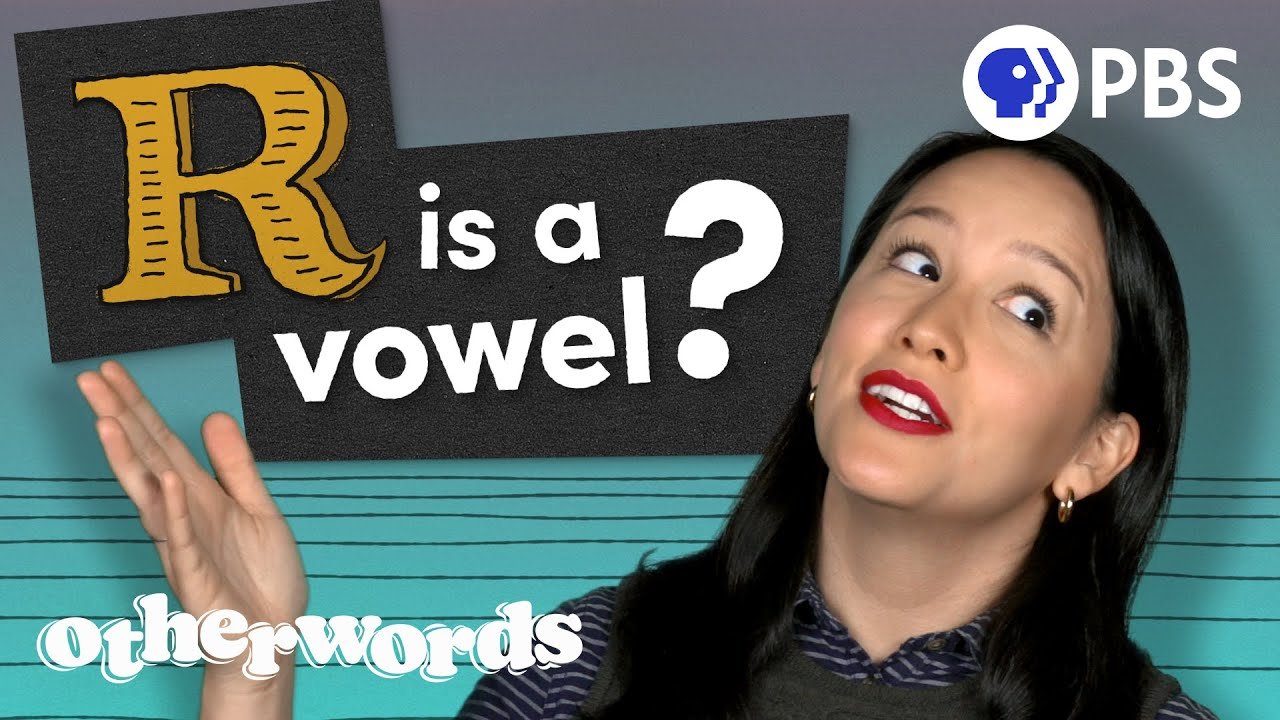
If you went to elementary school in the United States, then you learned that vowels are “A, E, I, O, U and sometimes Y.” All other letters of the alphabet are consonants and make a hard or soft sound depending on their placement around the vowel.
But apparently, our elementary school teachers may have missed a sometime-y vowel…and nobody puts “R” in the corner.
That was a terrible “Dirty Dancing“ reference, but nonetheless, here we are looking at the English language with a collective “What the heck?” At no point in my native English-speaking life did I ever realize “R” could sometimes possess the characteristics of a vowel. But PBS said so, and they brought us “Sesame Street,” so I’m inclined to believe them.
Erica Brozovsky, Ph.D. breaks down what makes a vowel and explores how the letter “R” in the English language fits that description in the PBS series “Otherwords.”
“Linguists define vowels not so much as letters but sounds,” Dr. Brozovsky explains. “To qualify as a vowel, a sound must meet a few general criteria.” The criteria include that your voice box must vibrate when you make the sound, it should function as the peak of a syllable and you must have an unobstructed vocal tract when you say it. That basically just means you can’t use your lips or tongue to make the sound, or it would be considered a consonant.
Now, I know what you’re doing. You’re making the “R” sound thinking, “My teeth are touching my lips to make that sound.” But before you write off Dr. Brozovsky, you should check out the video, because using “R” as a vowel seems to be a regional thing that people from certain parts of Boston and New York have mastered, likely without even knowing. But she can explain it much better than I can, so check out the video below.