5 ways to connect with your loved ones this holiday season, even if you’re miles apart
For most people, the holidays are the busiest time of year. There are parties, trips to the store, school plays, parades, religious services, countless hours spent decorating and cleaning the house, and that long line at the mall to see Santa. But in the end, the season is all about spending quality time making memories…
For most people, the holidays are the busiest time of year. There are parties, trips to the store, school plays, parades, religious services, countless hours spent decorating and cleaning the house, and that long line at the mall to see Santa.
But in the end, the season is all about spending quality time making memories with the people we love. Unfortunately, we can’t always see all of our loved ones over the holidays. But these days, it’s a lot easier to stay connected with grandma and grandpa or our kids off at college.
Here are five great ways to connect with our loved ones this holiday season, even if they’re miles apart.
1. Share holiday memories with the Google Nest Hub
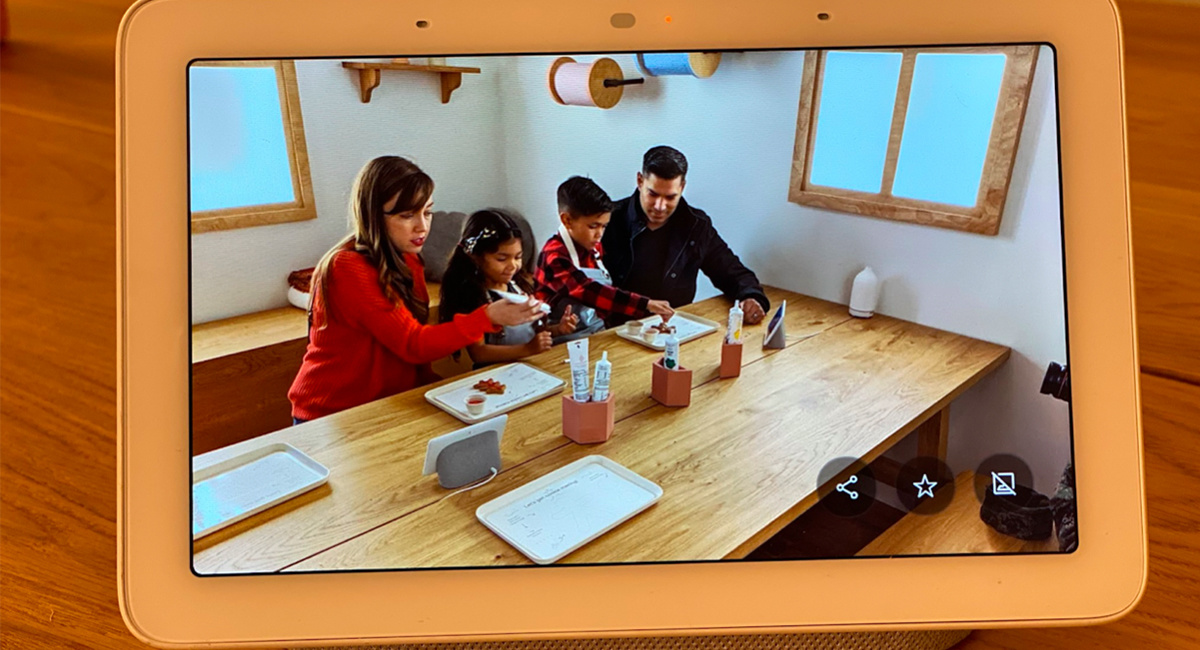
The great advantage of the Google Nest Hub is that you can use it to automatically upload photos, so loved ones can see these memories as they happen. The digital photo frame is connected to shared albums through Google Photos, meaning everyone who has access to the album can contribute. You can choose which photos are displayed, or allow the Nest Hub to choose its favorites. As an added bonus, the Nest Hub also acts as a virtual assistant which makes it easy to keep everything you need at your fingertips and stay connected to loved ones with just the press of a button.
One of the quickest ways to warm the hearts of your family memories is by sharing a traditional meal. If your aunt in Chicago can’t make it to your big family holiday celebration, you can send her some of your special stuffing that reminds her of home.
3. Connect with multiple family members all over the world through Google Hangouts
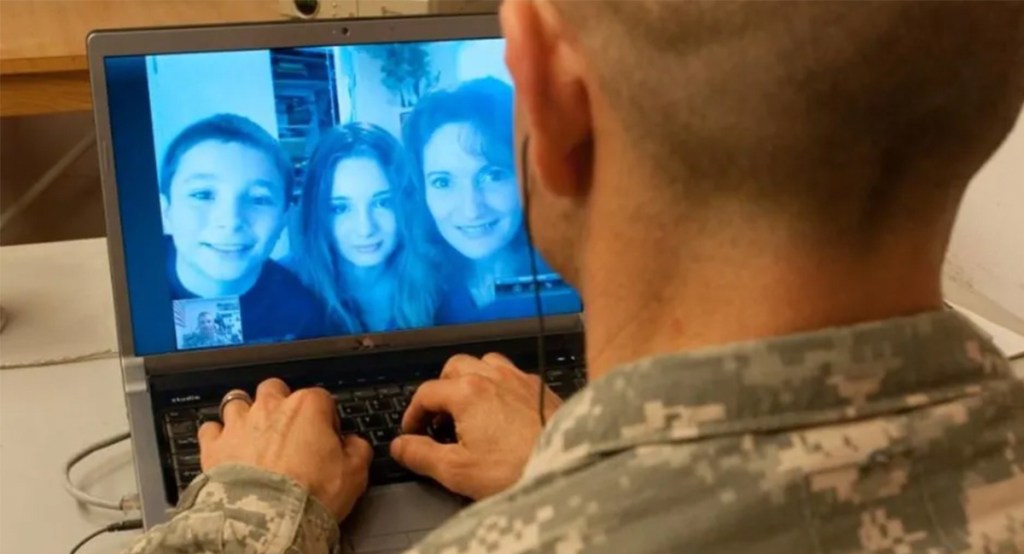
If you have a big family stretched around the globe, Google Hangouts allows you to do a live video chat with up to ten people. It works via a Web browser, Android app, iOS app, Chrome app, or via an old-fashioned landline phone (voice services only).
The app is available in any of the aforementioned app stores.
4. Watch your favorite holiday films together with a Netflix Party
Getting the family together to watch a holiday-themed movie such as “Home Alone,” “Christmas Vacation,” or “It’s a Wonderful Life” is a holiday tradition for many families. Now, through Netflix Party, you can watch a movie with them in real-time. Netflix Party is a Chrome extension that syncs up the film so you can watch it all at once and it has a live chat feature so you can comment on your favorite parts together.
Netflix Party is available in the Chrome web store.
5. Achieve your new year’s resolutions together at MakeMe
Staying motivated is tough to do alone. MakeMe allows you to encourage one another, hold each other accountable, and celebrate your achievements. Get the family together and create a goal for the new year, whether it’s losing weight, being more mindful, or giving back to the community.
MakeMe is available for in the Android, Apple, and Google Play stores.
Google is providing Nest Hubs to USO families to help them feel closer this holiday season. Join us in supporting the USO at uso.org/googlenest.
In a small village in Pwani, a district on Tanzania’s coast, a massive dance party is coming to a close. For the past two hours, locals have paraded through the village streets, singing and beating ngombe drums; now, in a large clearing, a woman named Sheilla motions for everyone to sit facing a large projector screen. A film premiere is about to begin.
It’s an unusual way to kick off a film about gender bias, inequality, early marriage, and other barriers that prevent girls from accessing education in Tanzania. But in Pwani and beyond, local organizations supported by Malala Fund and funded by Pura are finding creative, culturally relevant ways like this one to capture people’s interest.
The film ends and Sheilla, the Communications and Partnership Lead for Media for Development and Advocacy (MEDEA), stands in front of the crowd once again, asking the audience to reflect: What did you think about the film? How did it relate to your own experience? What can we learn?
Sheilla explains that, once the community sees the film, “It brings out conversations within themselves, reflective conversations.” The resonance and immediate action create a ripple effect of change.
MEDEA Screening Audience in Tanzania. Captured by James Roh for Pura
Across Tanzania, gender-based violence often forces adolescent girls out of the classroom. This and other barriers — including child marriage, poverty, conflict, and discrimination — prevent girls from completing their education around the world.
Sheilla and her team are using film and radio programs to address the challenges girls face in their communities. MEDEA’s ultimate goal is to affirm education as a fundamental right for everyone, and to ensure that every member of a community understands how girls’ education contributes to a stronger whole and how to be an ally for their sisters, daughters, granddaughters, friends, nieces, and girlfriends.
Sheilla’s story is one of many that inspired Heart on Fire, a new fragrance from the Pura x Malala Fund Collection that blends the warm, earthy spices of Tanzania with a playful, joyful twist. Here’s how Pura is using scent as a tool to connect the world and inspire action.
A partnership focused on local impact, on a global mission
Pura, a fragrance company that recognizes education as both freedom and a human right, has partnered with Malala Fund since 2022. In order to defend every girl’s right to access and complete 12 years of education, Malala Fund partners with local organizations in countries where the educational barriers are the greatest. They invest in locally-led solutions because they know that those who are closest to the problems are best equipped to solve and build durable solutions, like MEDEA, which works with communities to challenge discrimination against girls and change beliefs about their education.
But local initiatives can thrive and scale more powerfully with global support, which is why Pura is using their own superpower, the power of scent, to connect people around the world with the women and girls in these local communities.
The Pura x Malala Fund Collection incorporates ingredients naturally found in Tanzania, Nigeria, Pakistan, and Brazil: countries where Malala Fund operates to address systemic education barriers. Eight percent of net revenue from the Pura x Malala Fund Collection will be donated to Malala Fund directly, but beyond financial support, the Collection is also a love letter to each unique community, blending notes like lemon, jasmine, cedarwood, and clove to transport people, ignite their senses, and help them draw inspiration and hope from the global movement for girls’ education. Through scent, people can connect to the courage, joy, and tenacity of girls and local leaders, all while uniting in a shared commitment to education: the belief that supporting girls’ rights in one community benefits all of us, everywhere.
You’ve already met Sheilla. Now see how Naiara and Mama Habiba are building unique solutions to ensure every girl can learn freely and dare to dream.
Naiara Leite is reimagining what’s possible in Brazil
Julia with Odara in Brazil. Captured by Luisa Dorr for Pura
In Brazil, where pear trees and coconut plantations cover the Northeastern Coast, girls like ten-year-old Julia experience a different kind of educational barrier than girls in Tanzania. Too often, racial discrimination contributes to high dropout rates among Black, quilombola and Indigenous girls in the country.
“In the logic of Brazilian society, Black people don’t need to study,” says Naiara Leite, Executive Coordinator of Odara, a women-led organization and Malala Fund partner. Bahia, the state where Odara is based, was once one of the largest slave-receiving territories in the Americas, and because of that history, deeply-ingrained, anti-Black prejudice is still widespread. “Our role and the image constructed around us is one of manual labor,” Naiara says.
But education can change that. In 2020, with assistance from a Malala Fund grant, Odara launched its first initiative for improving school completion rates among Black, quilombola, and Indigenous girls: “Ayomidê Odara”. The young girls mentored under the program, including Julia, are known as the Ayomidês. And like the Pura x Malala Fund Collection’s Brazil: Breath of Courage scent, the Ayomidês are fierce, determined, and bursting with energy.
Ayomidês with Odara in Brazil. Captured by Luisa Dorr for Pura
Ayomidês take part in weekly educational sessions where they explore subjects like education and ethnic-racial relations. The girls are encouraged to find their own voices by producing Instagram lives, social media videos, and by participating in public panels. Already, the Ayomidês are rewriting the narrative on what’s possible for Afro-Brazilian girls to achieve. One of the earliest Ayomidês, a young woman named Debora, is now a communications intern. Another former Ayomidê, Francine, works at UNICEF, helping train the next generation of adolescent leaders. And Julia has already set her sights on becoming a math teacher or a model.
“These are generations of Black women who did not have access to a school,” Naiara says. “These are generations of Black women robbed daily of their dreams. And we’re telling them that they could be the generation in their family to write a new story.”
Mama Habiba is reframing the conversation in Nigeria
Centre for Girls' Education, Nigeria. Captured by James Roh for Pura
In Mama Habiba’s home country of Nigeria, the scents of starfruit, ylang ylang and pineapple, all incorporated into the Pura x Malala Collection’s “Nigeria: Hope for Tomorrow,” can be found throughout the vibrant markets. Like these native scents, Mama Habiba says that the Nigerian girls are also bright and passionate, but too often they are forced to leave school long before their potential fully blooms.
“Some of these schools are very far, and there is an issue of quality, too,” Mama Habiba says. “Most parents find out when their children are in school, the girls are not learning. So why allow them to continue?”
When girls drop out of secondary school, marriage is often the alternative. In Nigeria, one in three girls is married before the age of 18. When this happens, girls are unable to fulfill their potential, and their families and communities lose out on the social, health and economic benefits.
Completing secondary school delays marriage, and according to UNESCO, educated girls become women who raise healthier children, lift their families out of poverty and contribute to more peaceful, resilient communities.
Centre for Girls’ Education, Nigeria. Captured by James Roh for Pura
To encourage young girls to stay in school, the Centre for Girls’ Education, a nonprofit in Nigeria founded by Mama Habiba and supported by Malala Fund and Pura, has pioneered an initiative that’s similar to the Ayomidê workshops in Brazil: safe spaces. Here, girls meet regularly to learn literacy, numeracy, and other issues like reproductive health. These safe spaces also provide an opportunity for the girls to role-play and learn to advocate for themselves, develop their self-image, and practice conversations with others about their values, education being one of them. In safe spaces, Mama Habiba says, girls start to understand “who she is, and that she is a girl who has value. She has the right to negotiate with her parents on what she really feels or wants.”
“When girls are educated, they can unlock so many opportunities,” Mama Habiba says. “It will help the economy of the country. It will boost so many opportunities for the country. If they are given the opportunity, I think the sky is not the limit. It is the starting point for every girl.”
From parades, film screenings to safe spaces and educational programs, girls and local leaders are working hard to strengthen the quality, safety and accessibility of education and overcome systemic challenges. They are encouraging courageous behavior and reminding us all that education is freedom.
Experience the Pura x Malala Fund Collection here, and connect with the stories of real girls leading change across the globe.
The holidays are a time of connection. All over the world, families are reuniting, bonding, and making new memories that will last a lifetime. But for hundreds of thousands of military families, celebrating Christmas, Hanukkah, Kwanzaa, or Yule is impossible with service members stationed overseas. To paraphrase “I’ll Be Home for Christmas,” togetherness for military…
The holidays are a time of connection. All over the world, families are reuniting, bonding, and making new memories that will last a lifetime. But for hundreds of thousands of military families, celebrating Christmas, Hanukkah, Kwanzaa, or Yule is impossible with service members stationed overseas. To paraphrase “I’ll Be Home for Christmas,” togetherness for military families during this time of the year may just be a dream.
Fortunately, in 2019, we can do a little bit better than dreams — thanks to tech. This year, the USO, the leading military support organization in America, and Google Nest are teaming up to ensure military families who can’t reunite for the holidays can always stay connected. With the Google Nest Hub, a digital assistant that makes it easy to share photos from all over the world in real time — families can keep in touch even across great distances.
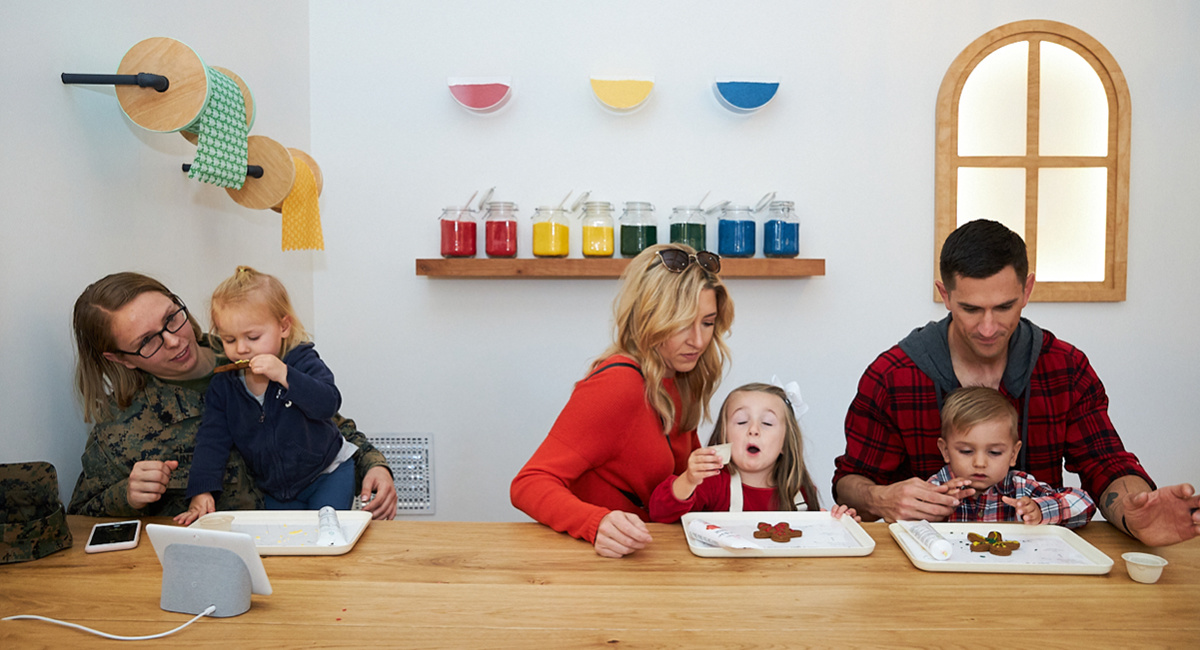
On December 9, the two organizations constructed a festive gingerbread village at Camp Pendleton, the largest military base in California, to provide service members and military families with festive USO Holidays programming. The week-long experience brought a winter wonderland to the base and allowed military families to walk through life-size gingerbread houses to decorate cookies, make ornaments, write letters to Santa and more. For service members and military families who could not travel home or be with their families during the holidays, this provided the comforts of home. A full-scale gingerbread house was unexpected, but those attending the event got an even bigger surprise: Google Nest gifted Nest Hubs to military families, so they could stay in touch with those that matter most.
“As our service members and military families work tirelessly and make daily sacrifices, even the smallest reminder of home can have a huge impact,” says Chris Fowler, Director of Corporate Development at the USO.
“Throughout the year, our nation’s service members are there for us. This is our chance to be there for them. Whether we’re delivering care packages, hosting holiday events or enabling technology that brings loved ones together, the USO is making sure that service members and their families are connected to the comforts of home this holiday season.”
A partnership like this is a perfect fit for the USO, as the nonprofit’s mission is to keep service members connected to family, home and country. The organization not only offers WiFi in 230 locations around the world, it also helps service members stay tethered to their families via a variety of services, including one that allows those overseas to record bedtime stories for their kids and have them sent back home. For military families, the Google Nest transforms each house into a helpful home — one which makes it easy to keep everything you need at your fingertips and stay connected to loved ones with just the press of a button.
You, too, can be a part of helping service members feel just a little bit more at home this holiday season. “As you enjoy your favorite holiday traditions,” Fowler says, “pause for a moment to show your support for those who remain on duty, protecting our nation.” When you make a donation to the USO, you’ll be delivering a piece of home to some of the people who need it most.
Google is providing Nest Hubs to USO families to help them feel closer this holiday season. Join us in supporting the USO at uso.org/googlenest.
When I was a kid, we had an entire living room shelf full of photo albums to pore through when we wanted to relive family memories. Now, several decades later, we flip through digital albums, instead. But the feelings that family photographs invoke are still the same. Every photo tells a story, and some photos…
When I was a kid, we had an entire living room shelf full of photo albums to pore through when we wanted to relive family memories. Now, several decades later, we flip through digital albums, instead. But the feelings that family photographs invoke are still the same. Every photo tells a story, and some photos hold tales and truths that are particularly dear to our hearts.
I was visiting with my friend Paula recently when she pulled up a sweet old photo of our sons together.
Paula and I met in a parenting group 15 years ago. Our oldest daughters were nearly identical in age and we both had newborn babies, so we started planning regular play dates together.
Soon those play dates became a lifeline to our own sanity, and our friendship blossomed. We got together several times a week for years, essentially raising our kids together. Paula didn’t have any family living nearby — no grandparents to gush over her children, no cousins to bond with — so our family became their extended family.
“I entered parenting without having been parented well myself,” says Paula, adding that our marathon playdates gave us a chance to parent in a community. “Sometimes I’d even call and say, ‘I can’t parent today. How about if I do all the cooking and you do all the parenting?’ So we did. In that way, I learned how to be the parent I never had.”
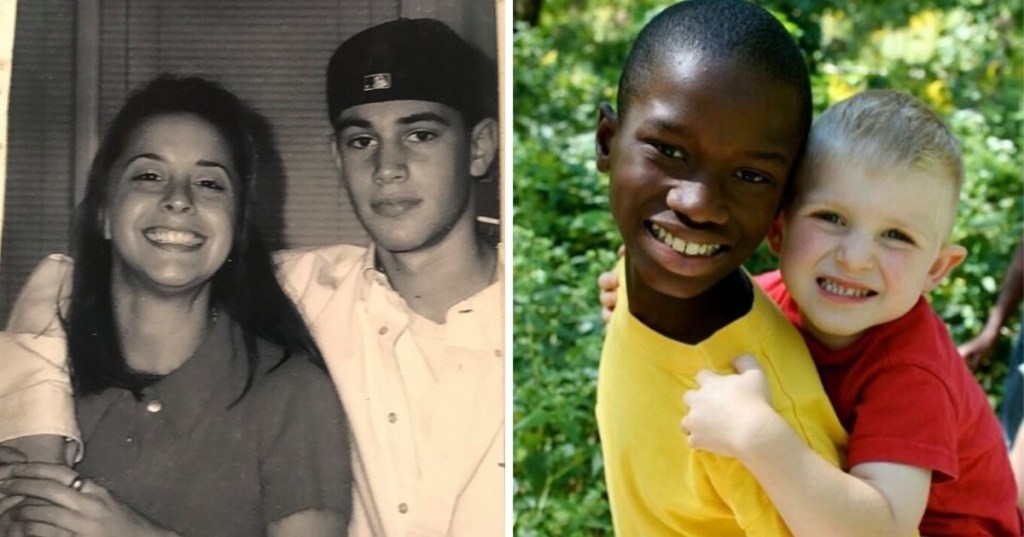
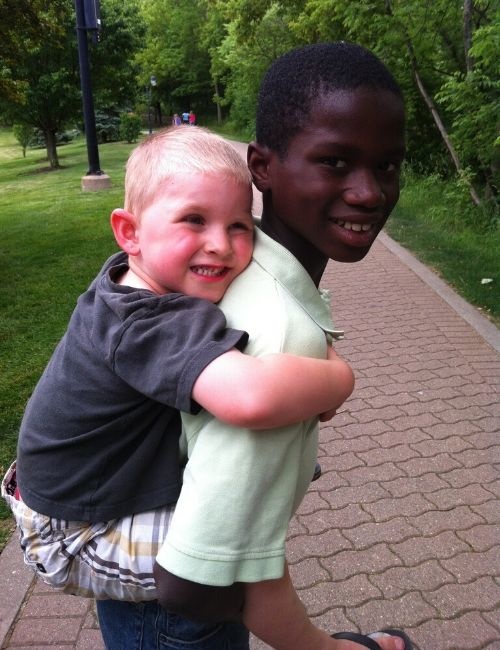
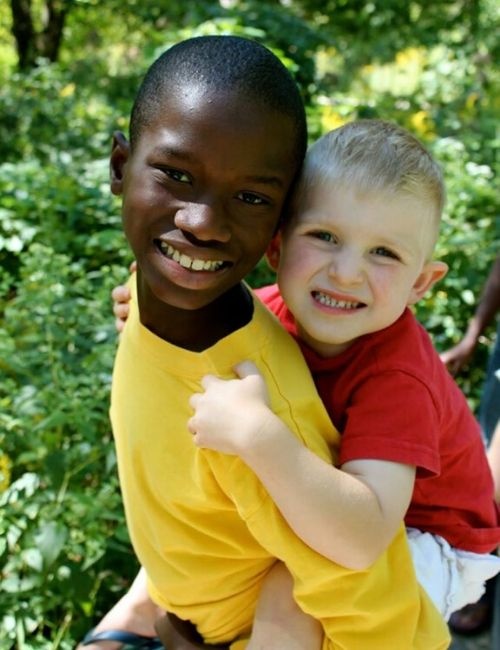
While our girls were same-aged peers, our sons were seven years apart. Paula says that her son Sevvy had always wanted a brother, and when my Isaac was born, it was like Sevvy’s wish was fulfilled. Indeed, our boys grew an incredibly sweet bond, less like friendship and more like brotherhood. Isaac followed Sevvy around like a puppy, and Sevvy doted on Isaac with a mixture of mentorship and protectiveness.
Life happened and we eventually ended up moving to different parts of the country. Our boys are now 18 and 11, but we still get together and reminisce about how those formative years meant so much to both of our families. This photo encapsulates the joy and care that defined our families’ relationship.
Gretchen Kelly also has a precious sibling photo, but hers holds beautiful, bittersweet memories of her beloved baby brother, Todd.
At 16, Todd was diagnosed with Ewing’s Sarcoma, a rare type of bone tumor that generally hits people at a young age. He was eight years younger than Gretchen and 11 years younger than their older sister. “He was the baby of the family and spoiled rotten by all of us,” Gretchen says. He passed away in 1999 at age 18.
“There’s a photo of he and I that tugs at my heart because he has his arm casually draped over my shoulder and it perfectly captures our relationship and dynamic,” says Gretchen.
“I don’t remember what he said when we took this picture, but I know he said something to make me laugh while he stayed casual and cool for the photo. That was his way. He could keep a straight face and make you laugh in spite of yourself. And he could ALWAYS make you laugh.”
“This is the picture that always leaves a lump in my throat,” she adds. “It makes me smile—it is exactly how we were together. He was the baby brother who I adored, but at times, as he matured, it was as if he was the older sibling. Protective and wise beyond his years. But mischievous. Always mischievous.”
Gretchen keeps another photo of Todd on her “inspiration wall” in her office, this one during his cancer journey.
“Obviously cancer was already taking something from him at this point,” she Gretchen. “But not his smile. He somehow made all of us laugh and smile even when we were terrified of everything he was going through. I keep this picture on the wall in my office. His smile is what I will always cling to, his determination to not let cancer steal his joy or his humor. This serves as a reminder of determination and grit. When things get hard, as they tend to do, I look at this picture and he reminds me we can do hard things, and sometimes we can smile through it.”
Photos aren’t just snippets of our lives — they are images of joy and love, of family and community that can move us and inspire us. But these days our photos frequently get lost in the digital deluge of modern life. They end up archived on a hard drive somewhere or buried deep in social media.
Google Nest is trying to make it easier to keep treasured photos front and center with the Google Nest Hub — a device that serves as a digital photo frame and personal assistant. You can choose any album from Google Photos, such as “Family” or “Favorites,” and the Nest Hub will display them on rotation. The Live Albums feature takes the work out of updating the photos by letting you create an album that automatically adds photos of the people who matter to you most. You can share a Live Album with anyone you want, just like any other album in Google Photos. The Nest Hub even adjusts to the lighting in the room so your photos look less like images on a screen and more like real photos.
Here’s to the snapshots that remind us of our loved ones at all stages of life. They truly are among our most precious belongings.
Google is providing Nest Hubs to USO families to help them feel closer this holiday season. Join us in supporting the USO at uso.org/googlenest.
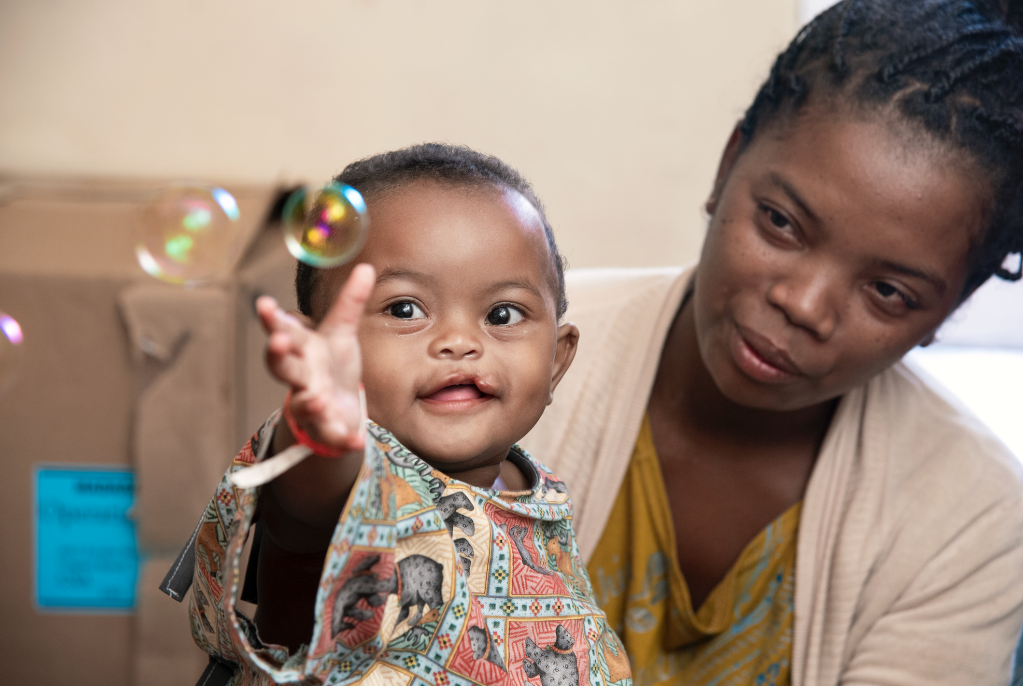
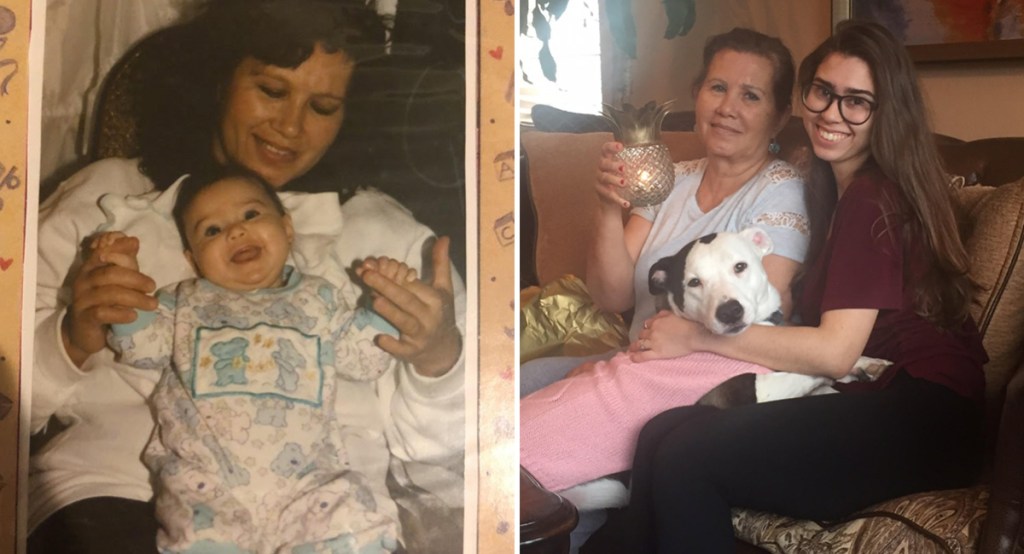
Quinn Hendershot and her grandma have always been super close. She’s lived nearby in the southwest suburbs of Chicago, Illinois for Hendershot’s entire life. When she was 13 and her father suffered a brain stem stroke, her grandma moved in with her family to help take care of everyone. Unsurprisingly, Hendershot feels incredibly connected to…
Quinn Hendershot and her grandma have always been super close. She’s lived nearby in the southwest suburbs of Chicago, Illinois for Hendershot’s entire life. When she was 13 and her father suffered a brain stem stroke, her grandma moved in with her family to help take care of everyone. Unsurprisingly, Hendershot feels incredibly connected to her.
Even when they weren’t living under the same roof, Hendershot got to visit with her grandma regularly while she was growing up, and that didn’t change when she became a young woman and was preparing to go off to graduate school.
“When I spend time with her, we do a lot of cooking (she loves to feed me!), as well as running errands together since she can’t drive,” says Hendershot.
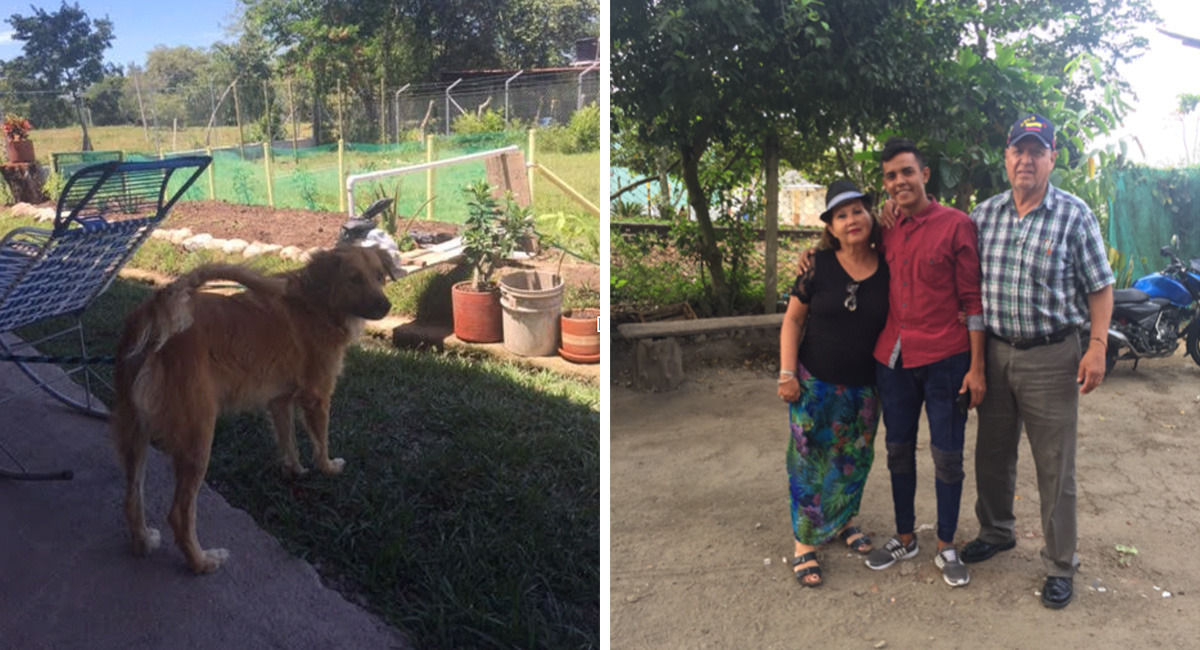
Last year, however, Hendershot’s grandma built a house in Colombia and moved there semi-permanently. She was born in Colombia and lived there until she was 17, so she still has a lot of family there whom she wants to reconnect with and help look after.
“My grandma grew up on a farm, and has always wanted to live somewhere where she could keep farm animals like chickens and donkeys,” explains Hendershot. “It’s a lot cheaper and easier to build houses in Colombia, so when she saved up enough money to build a house there, she bought a plot of land in the country and started building.”
While Hendershot is incredibly happy her grandma is finally living out her dream, she misses seeing her all the time. It now takes three flight transfers for her grandma to get back to Chicago to see her family in the states, so she doesn’t get to see Hendershot in person very often. But that hasn’t changed the grandma and granddaughter’s strong bond.
“We text almost daily, and love to send each other pictures,” says Hendershot. “She has a cat and a dog that she loves to show me, and I like to send her pictures of my food because she always worries about if I’m eating enough – like any grandma!”
Unfortunately, phone service and internet isn’t great where her grandma lives, so it’s difficult to talk or see one another in a video chat in real time. When it works, however, it’s wonderful for everyone.
“It’s great to be able to see her and talk to her face-to-face, as opposed to just over text,” says Hendershot. “Text is such a great way to communicate easily, but you do lose a lot of the tones and inflections that make a huge difference in talking to someone you love. I love getting to see that she is surrounded by so much of her family and friends in Colombia, and that she’s never lonely.”
Thanks to technology available today, it’s easier for Hendershot to stay connected with her grandma. Products like the Google Nest Hub can help bridge the gap while they’re apart. The device’s photo sharing feature allows the family members to upload and share meaningful images with each other through Google Photos, helping them feel closer even when they’re thousands of miles apart.
It’s not easy for Hendershot to be so far away from one of her favorite people, but technology like this helps enormously. Getting to regularly see how happy her grandma is enjoying her new house, farm animals, and Colombian family helps Hendershot miss her just a little bit less.
“Knowing about each other’s day-to-day lives makes me feel like the physical distance lessens, because we’re emotionally so close,” says Hendershot.
Google is providing Nest Hubs to USO families to help them feel closer this holiday season. Join us in supporting the USO at uso.org/googlenest.
When you marry into the military, you know you’re signing up for a life of occasional-to-frequent separation. Not only are service members sent around the globe during deployment, but they also attend training schools leading up to missions, which can mean months away from their loved ones. While we often recognize the sacrifices soldiers make…
When you marry into the military, you know you’re signing up for a life of occasional-to-frequent separation. Not only are service members sent around the globe during deployment, but they also attend training schools leading up to missions, which can mean months away from their loved ones.
While we often recognize the sacrifices soldiers make with their service, it’s easy to overlook the sacrifices their spouses and children make as well. When your significant other is gone for months at a time, maintaining a relationship gets complicated. And when a parent is gone for months at a time, you have to come up with creative ways to stay connected as a family.
Shannon Sandvig’s husband, Gavin, was gone for 10 months with the Iowa National Guard just six weeks after their first son was born in 2005. Talking on the phone was difficult during that period because babies don’t put their needs on hold for phone calls. They relied on texting and sending photos in the mail, but it’s nearly impossible to keep up with the rapid changes and growth of a baby when you’re away for most of their first year. “Even three months with a newborn baby is a big deal,” says Shannon, “because they come home to a totally different child.”
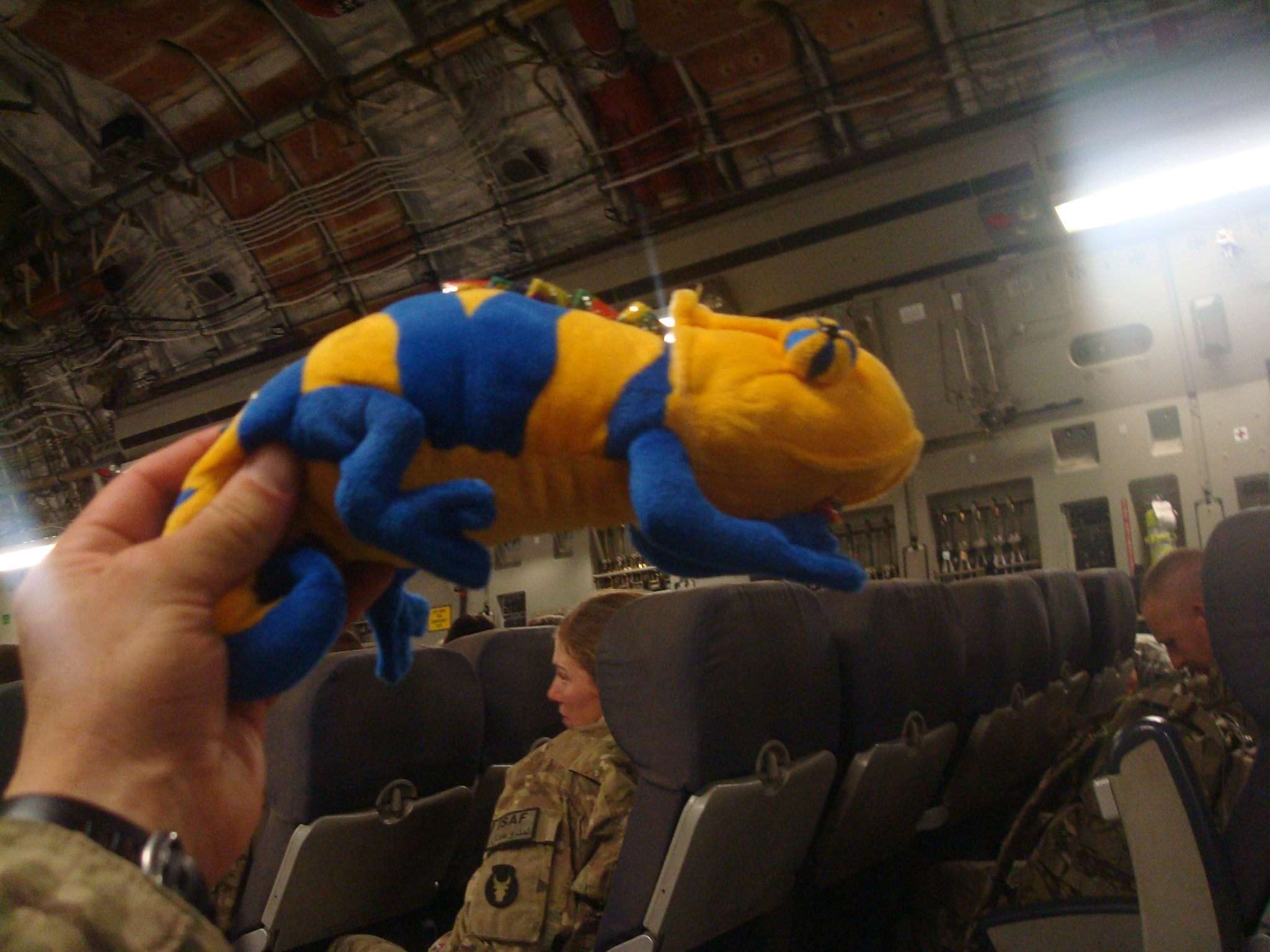
The Sandvigs now have three boys — ages 14, 13, and 11 — who have grown up with their dad regularly on deployment. When Gavin was sent to Afghanistan in 2010, the kids were five, three, and two years old. During that 11-month deployment, Shannon would send Gavin photos of the boys’ daily lives. Their middle son also sent a stuffed chameleon named “Rocky” to Gavin so he could take pictures with it to send home to the kids.
Shannon says her kids got cell phones at much younger ages than most of their peers so they’d be able to communicate with their dad on his schedule. Gavin doesn’t always know ahead of time when he can call or text, so they wanted the boys to be able to respond to his calls or messages immediately.
It’s hard to stay connected as the kids get older and busier, though. When a spouse and parent is gone for a long period, family life still goes on, and keeping a deployed family member feeling like they’re a part of the daily rhythms is a challenge. There’s a readjustment period every time they leave, and another every time they come back home.
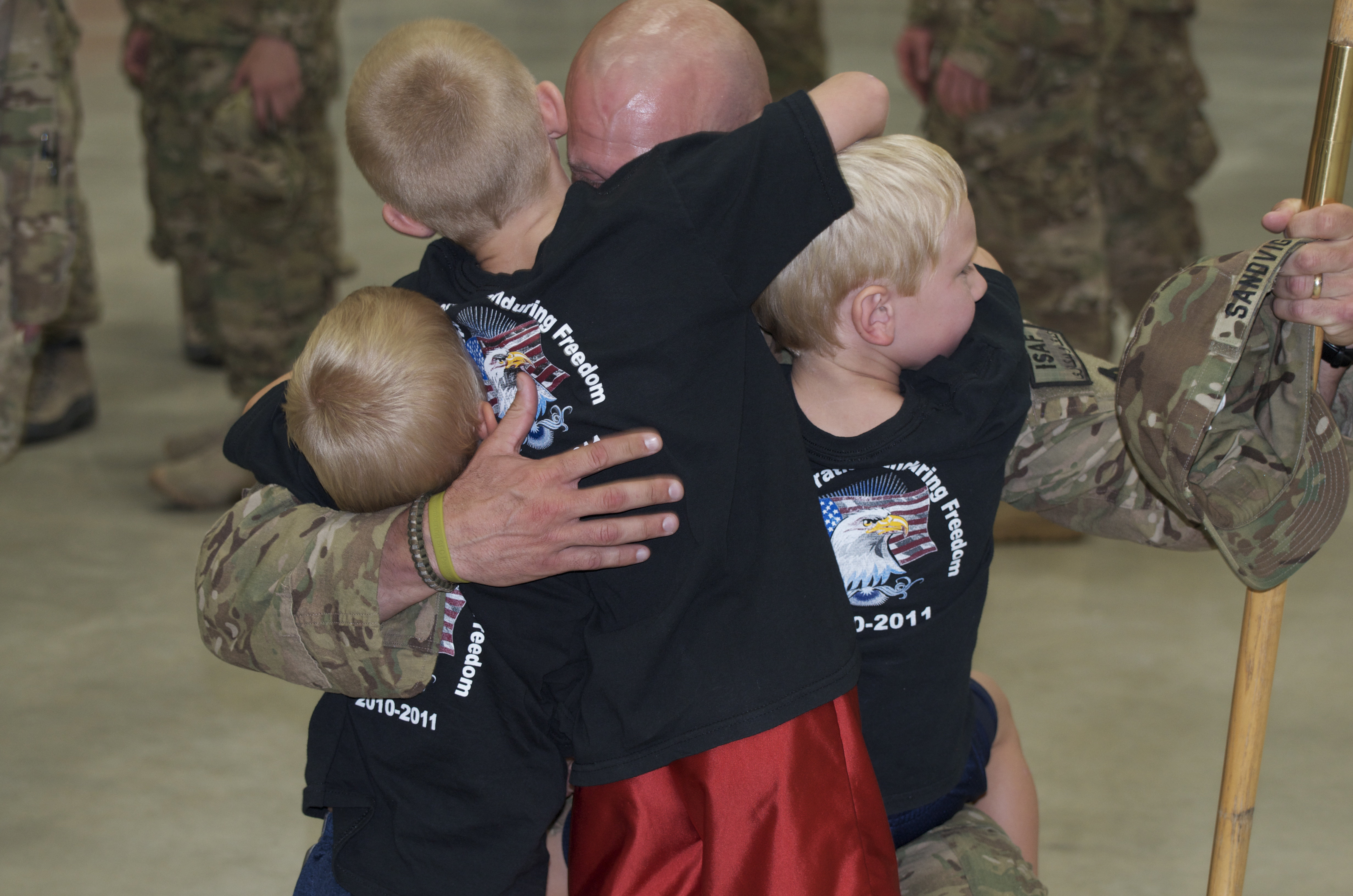
Gavin Sandvig reuniting with his three boys after a deployment in Afghanistan Shannon Sandvig
Thankfully, technology keeps marching along, making it easier than ever for families to stay connected even at a distance. Smart cameras and systems like the Google Nest Hub allow you to easily share photos without having to go through social media; it’s as easy as saying “Hey Google, share this photo with Mom.” Since photos and videos are vital lifelines for families who are separated by deployment, the more options they have for sharing life’s little moments, the better.
Like Shannon, Evey Koen also learned early that the dynamics of parenting with a deployed spouse is complicated. Her husband, Mike, an aviator in the Navy, was deployed less than a week after their daughter, Aven, was born. In all, he was only home for nine weeks of the first year and a half of Aven’s life, which was hard. But Evey says parenting solo wasn’t the hardest thing about Mike’s deployment; the hardest part was making him feel like he was included in their daily family life.
“It was definitely emotionally hardest on Mike,” Evey says.
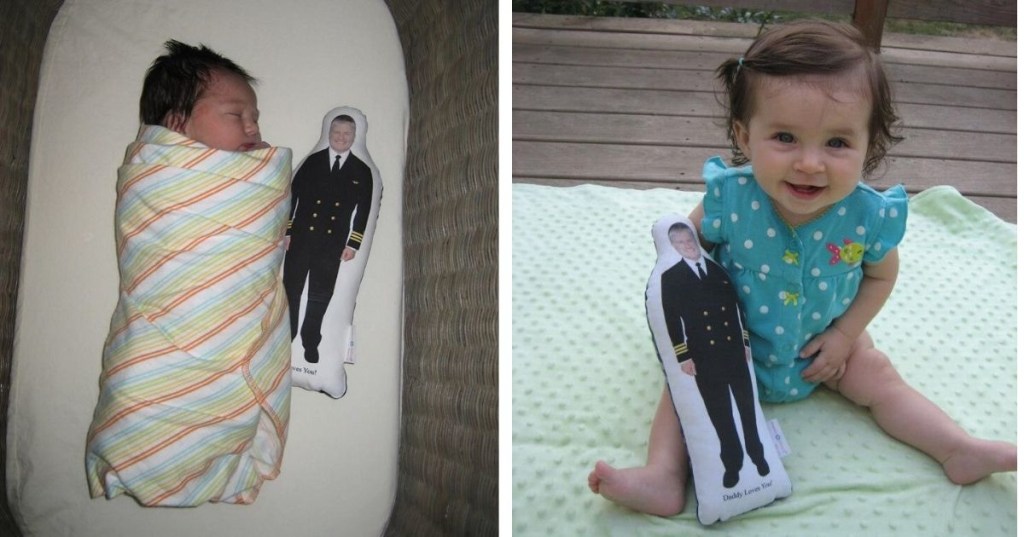
The couple worked hard to find creative ways to keep him connected. Mike recorded himself reading stories, which Evey would play for Aven five or six times a day. They would mail back and forth clothing items so that Aven could get used to Mike’s smell and Mike could experience that magical baby scent. Evey also took pictures of Aven with a stuffed photo of Mike — her “Daddy Doll” — at regular intervals so that he could see how she was growing.
Aven at 4 months Evey Koen
However, being out on a ship in the middle of the ocean, Mike didn’t always have reliable access to phone or internet. He had a hard time feeling like he was missing everything, and Evey tried hard to prioritize his needs as a father. For example, when Aven said her first word at nine months old, Evey had to wait to tell the rest of her family. “Her first word was ‘Dada’ because I was always talking about Dada and there was no one around to say Mama,” says Evey. “All of my family wanted to see it, but I couldn’t post the video for my family to see until Mike had seen it, because I wanted him to feel like he was a part of our family experience.”
Mike has been in the Navy for 28 years and is now teaching at the U.S. Naval War College in Rhode Island. He will retire next year at 50, so he gets to spend a lot of time with now seven-year-old Aven. Gavin recently found out he will be deployed with the National Guard again next year, so Shannon and the boys are preparing for another long separation and figuring out the best ways to keep Gavin in the loop. Shannon says Rocky the chameleon will likely accompany him on this deployment, too.
Here’s to the men and women who serve around the world, and here’s and to the families who support them from home.
Google is providing Nest Hubs to USO families to help them feel closer this holiday season. Join us in supporting the USO at uso.org/googlenest.