upworthy
Add Upworthy to your Google News feed.
Google News Button
More

J.K. Rowling found out her books helped save this baby's life. Her response was magic.

Meet Juniper, a girl who lived.

On the worst night, when our 1-pound daughter was fading in the darkness of her incubator, my husband opened a book and began to read aloud.

"Chapter One: The Boy Who Lived."

He needed to say those words. I thought it was strange that he’d chosen the first book in a seven-volume series, a series that totals more than 4,000 pages, for a little girl who might not survive the night.


Juniper in the NICU. Photo by Cherie Diez. All photos used with Kelley Benham French's permission, except as noted.

"How about 'Goodnight Moon'?" I offered. "That’s a good book."

Tom saw it all more clearly than I did. He wanted Juniper, born barely viable at 23 weeks gestation, to hear a story about children who could fly. He wanted to read to her about a baby who survived the most powerful evil in the world because his mother stood by his crib and protected him with her life.

In our family, the Harry Potter books are dog-eared and worn.

My husband wanted to initiate our daughter into our tribe. My stepsons, Nat and Sam, grew up reading the books criss-cross applesauce underneath restaurant tables. They played Quidditch on rollerblades and made wands out of chopsticks and string. On their 11th birthdays, they began checking the mailbox for their invitations to Hogwarts, clinging to the hope it could all be real. J.K. Rowling’s stories, along with the Springsteen canon, made up our shared mythology.

Photo by Alex Wong/Newsmakers/Getty Images.

Now, as Tom held that faded book, the dust jacket long lost, he was reaching out to our daughter with a protective incantation of love and belonging.

Stories were invented to conjure meaning from randomness. They give us our history, even our identity. It made no sense that Juniper came crashing into the world 16 weeks early and the size of a kitten. It made no sense that machines could keep her alive or that she could be snatched away. It made no sense to parent a baby in a plastic box, but that was what we learned to do.

"Stories are a promise," Tom told me when he’d had time to think it through. "They are a promise that the ending is worth waiting for."

Juniper didn’t understand a word of the story, of course.

But she could tell us, by the monitor pinging at her bedside, that she loved the parts about Hermione and that she hated the gruff voice of Hagrid the half-giant.

Juniper in the NICU. Photo by Cherie Diez.

When Tom read to her, she breathed better, held her temperature better, seemed generally more content. Tom read every paragraph in a soothing, sing-song voice, and when he stopped, her oxygen levels would plummet and the alarms would blare.

"Keep reading!" the nurses would shout.

He was nearly finished with book one when Juniper had another awful night. We were rushing to the hospital when he started crying at the wheel. "What if she never hears the end of the story?" he said. "What if she never learns how it ends?"

Five years later, Juniper is a wild and joyful kindergartner. And one day this spring, while she was off at school, a large box arrived at our house.

The shipping label showed an address of Mailboxes, Etc. in Edinburgh. I waited until Juniper got home to open it.

"Is dat for me?" she asked. She didn’t notice my shaking hands.

I hadn’t told her that a month or so earlier I’d gotten a Twitter message from Jo Rowling. She said she’d heard about Juniper on an episode of Radiolab and had been jolted when she’d heard Harry’s name. She said that she’d cried and that she wanted to send us something.

When I saw the message from Rowling the first time, I screamed. Then I tried to seize the moment to tell her what she’d already given us. I’m sure I didn’t capture it.

I told her that her books brought our family together in midnight lines that snaked through Walmart, where we always bought four copies so we wouldn’t have to share. In our all-night family readings, we raced each other to finish but then slowed in the last chapters because we couldn’t stand for them to end.

When Juniper arrived and Tom started reading, those stories helped me see that being a parent wasn’t something I might get to do someday, it was something I could do right now, for however long it lasted. They helped Tom and I write the story of our own lives — of who we were in those long, wrenching months. They gave a generation of children the most powerful gift imaginable: the lessons of love and friendship and bravery and decency and the ability to apparate to a better place with the turn of a page. They gave our family its sacred text. They guided us through the dark.

I sent Rowling this photo:

Juniper, all grown up!

And now, I unwrapped Rowling’s books from the box, sent all the way from Scotland, and handed them to my daughter.

"She loves me," she said, because she already knew it. She hugged the books tight.

I opened the first book to the first page and read her what it said:

"To Juniper, The Girl Who Lived! With lots of love, J.K. Rowling."

A few months later, our own book was published. It tells the story of Juniper’s six months in that hospital, in that yawning neverland between the womb and the world. It’s about the science that made her possible and the love that saved her in the end.

Harry is in it, and Hermione and Ron and Ginny and Dobby and all the rest, because they were there with us as surely as the doctors and nurses and God himself.

When the book came out, we mailed one off to Scotland, to Rowling, signed by Juniper:

"To Jo, Who made us believe. With love and gratitude, Kelley, Tom, Juniper."

Now, our little girl sorts her chickens into the houses of Hogwarts. She voted for Hermione for president. At night, she tells me, she sees Hermione in her dreams.

Last night, we opened "Sorcerer’s Stone" and started the story all over again. This time, Juniper was old enough to follow every word.

Ahead of her lies the hippogriff and the golden snitch and the time-turner and a sprawling, dazzling world where girls are the smartest, the strangest people make the best friends, and you can’t judge someone until you see what they have seen. She will be reminded that no one gets through life alone, and children carry the strength inside them to right the world.

I hope she will remember that she has carried a bit of that magic with her, all this time.
Pop Culture

In 1969, the Monkees appeared on The Johnny Cash Show and played a stunning, original country song

"Nine Times Blue" is a jaw dropping intersection of craftsmanship and pure talent.

the monkees, nume times blue, monkees live, monkees country, johnny cash show

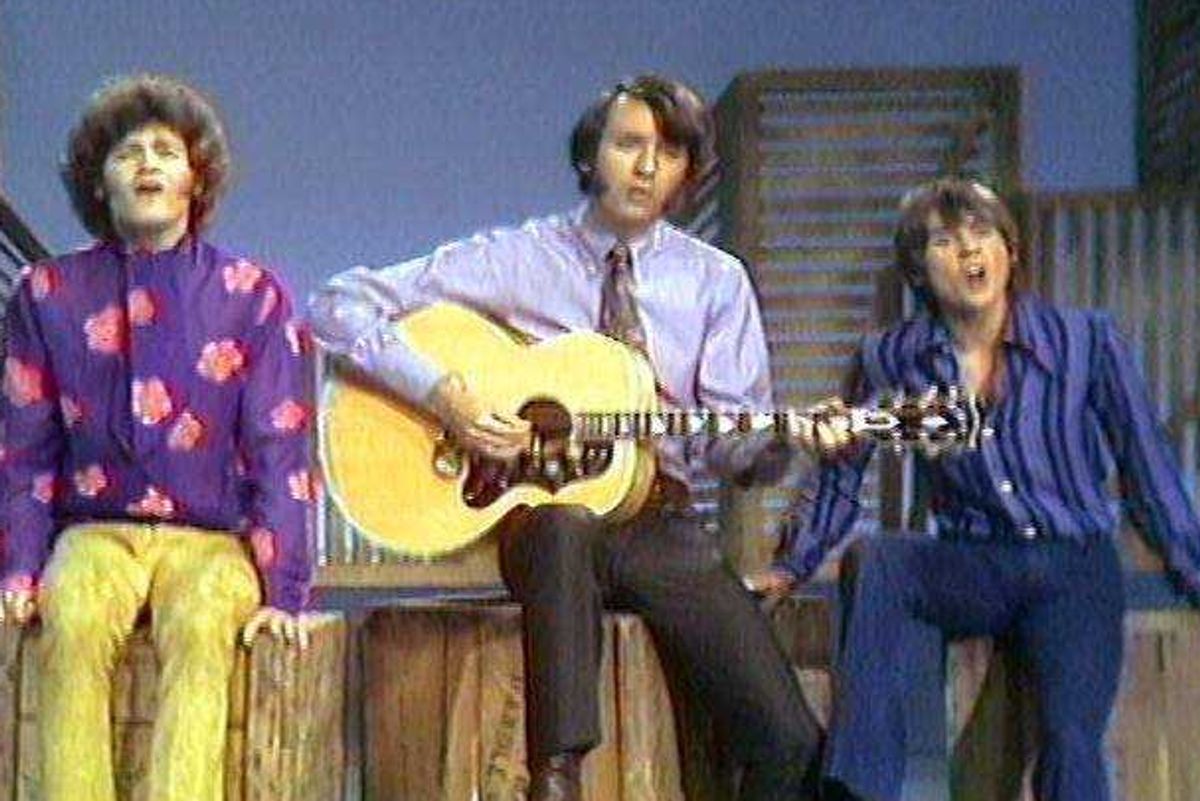
The Monkees perform on "The Johnny Cash Show."

The great debate about The Monkees is whether they were a real band or just a group of actors thrown together for a TV show. The answer is yes. They were actors cast to play an American version of The Beatles, and many of their early songs were written by big-time professional songwriters such as Tommy Boyce, Bobby Hart, Neil Diamond, Carole King, and Gerry Goffin.

However, The Monkees would pick up their own instruments, play on the 1967 Headquarters album, and perform as a live band on sold-out tours. After a resurgence in the '80s, the band enjoyed a lucrative career as a legacy act, with various members continuing to perform as The Monkees until Michael Nesmith died in 2021. Nesmith, originally a country singer from Dallas, Texas, wrote several of The Monkees' hits, including "Mary, Mary," "Papa Gene's Blues," "The Girl I Knew Somewhere," and "Listen to the Band," and was a driving force in the group being taken seriously as musicians.


By the summer of 1969, The Monkees' TV series was off the air, and the affable Peter Tork had exited the group, citing exhaustion. The remaining three soldiered on, performing on The Johnny Cash Show to promote their latest album, Instant Replay. The band chose to perform "Nine Times Blue," a country song written by Nesmith that he had demoed at the time but wouldn't be released until he recorded it as a solo artist in 1970.

The performance is a wonderful reminder that The Monkees were great comedic actors and accomplished musicians. Davy Jones and Micky Dolenz do a fantastic job singing harmonies on the chorus, while Nesmith plays some nice fills on his Gibson acoustic.

- YouTube www.youtube.com

Later in the show, The Monkees joined Cash for a performance of his 1966 novelty song, "Everybody Loves a Nut," which perfectly suited the band's comedic sensibilities. Two weeks after the release, Cash scored one of his biggest hits with "A Boy Named Sue," recorded live at San Quentin prison.

A few months later, Nesmith left The Monkees to pursue a country-rock career, first with the seminal group The First National Band, which scored a Top 40 hit with "Joanne" from the album Magnetic South.

- YouTube www.youtube.com

Although Nesmith's country-rock albums of the '70s were moderately successful, he was still overshadowed, as a musician, by The Monkees' towering success and subsequent downfall. In the '70s, it wasn't easy for Nesmith to get the respect he was due as a country artist. But in the years leading up to his death in 2021, Nesmith's work was reappraised, and he was seen as a brilliant songwriter who anticipated the rise of alt-country.

The Monkees hold a complicated place in rock 'n' roll history. While some see them as a prefabricated band assembled to cash in on The Beatles' success, others recognize them as talented musicians brought together under bizarre circumstances who forged their own path and created something fresh and innovative, only earning proper respect years later.

1950s year book, old photos, college annual, students, 1950s america

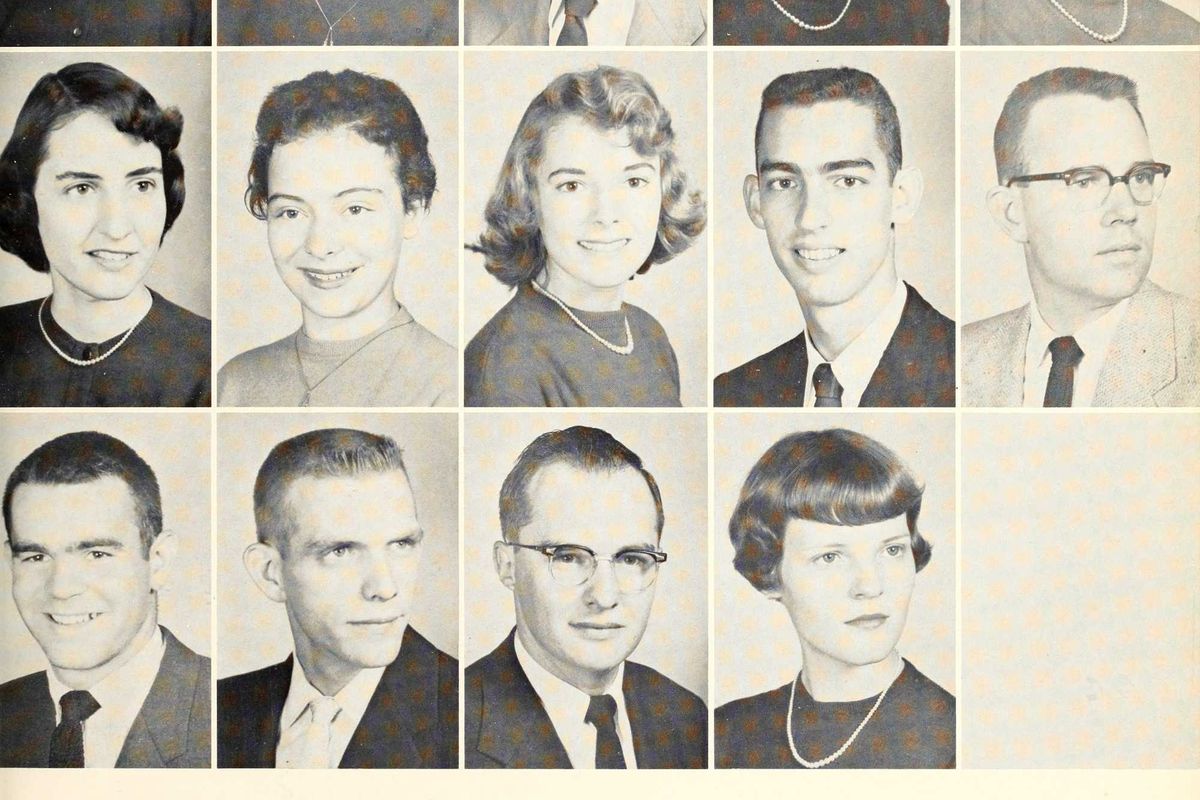
The Wittenberger College 1956 yearbook.

Ever look through your parents’ high school yearbook and all the teenagers look like they are 35 years old? When you think about how teenagers look today, the difference is striking. But why? Did people grow up much faster back in the day, or is there something else at play?

If you look back to the 1980s, there’s a clear difference between actors Paul Rudd and Wilford Brimley at 50.


Sure, that's a cherry-picked, extreme version of the difference in how people age, but it does support the idea that just a few decades ago, people aged much faster.

In a recent video, the folks at Recollection Road did a deep dive into why your average high school junior in 1958 looked like a 55-year-old bank manager, and they found seven reasons. They were a mix of environmental and cultural factors that boiled down to one central point: people are much healthier these days.

- YouTube www.youtube.com

1. Smoking

“Cigarettes were everywhere: in diners, in offices, even on airplanes. In the 1950s, it wasn't unusual to see a mother with a baby in one arm and a cigarette in the other. High school kids would light up behind the gym, and by adulthood, many were chain smokers.”

A Gallup poll found that in 1954, 45% of U.S. adults smoked cigarettes at least once a week. Compare this with 2024, when only 11% of Americans smoked a cigarette in the previous week.

2. Sun exposure

“Back in the 1960s and 1970s, a summer tan wasn't just fashionable, it was almost required. People slathered on baby oil, laid out under the blazing sun, and cooked. There was no SPF 50. In fact, lotion was designed to help you burn faster for a deeper tan. Families on vacation didn't think twice about spending hours on the beach with no shade. By the time they were in their 30s or 40s, the sun had also carved wrinkles and dark spots into their skin.”


3. Fashion

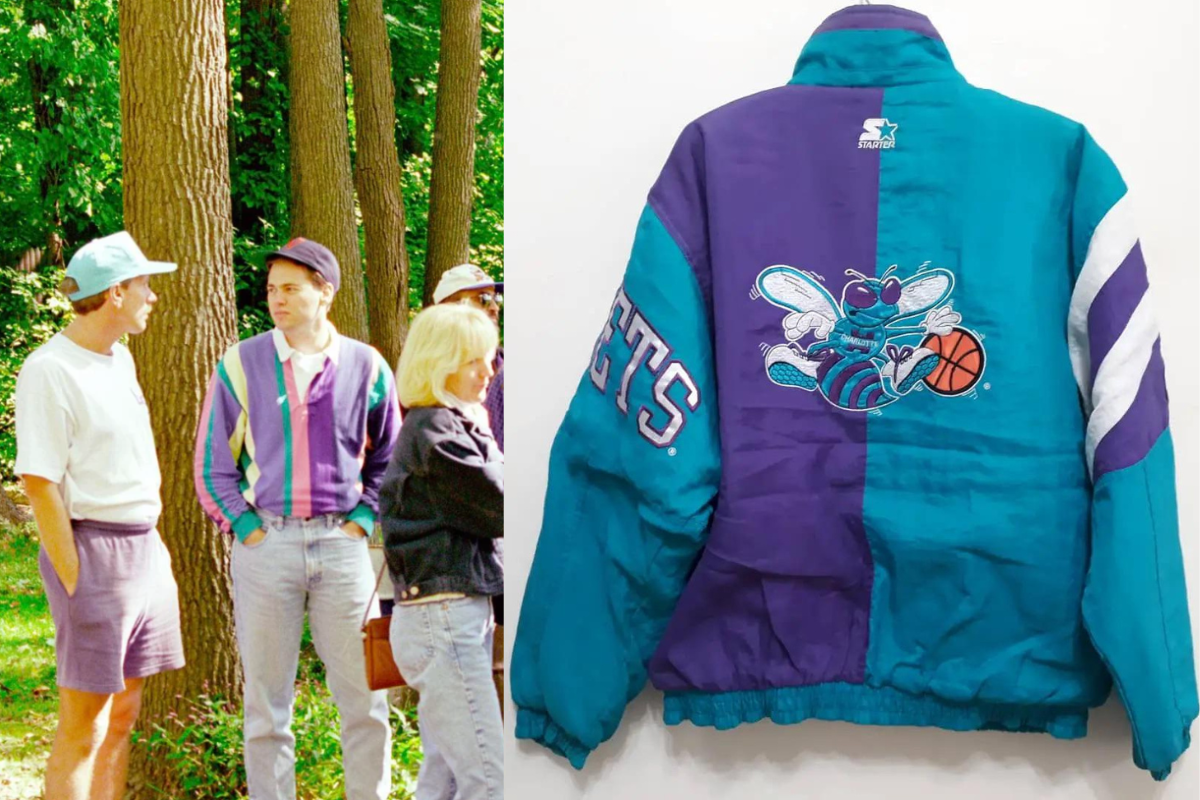
“Think about old photos of your parents or grandparents. A 25-year-old man in 1948 was often dressed in a suit and tie, maybe even a fedora. A young woman might be wearing a conservative dress and practical shoes. By modern standards, those styles look more grown-up, more like something we'd expect from someone middle-aged.”

4. Life was harder

“Someone who grew up during the Great Depression often started working as a teenager to help put food on the table. A lot of young men were drafted into World War II or Vietnam before they were even old enough to legally drink. That kind of responsibility leaves its mark. … Even women carried heavy burdens. In the 1950s, a young mother might have had three or four kids by the time she was 25, while also running a household without modern conveniences like microwaves or dishwashers.”


5. Drinking

“Having a three martini lunch was common in the business world of the 1960s. Beer was practically considered a food group in some households. Combine that with less knowledge about exercise and health, and you can see why bodies wore down faster, giving people an older appearance earlier in life.”

There has been a sharp decline in the number of Americans who consume alcohol. In 1971, 71% of Americans had the occasional drink, but that number dropped to 54% in 2025. The decline in drinking is attributed to concerns over alcohol’s effect on health and a decrease in consumption amongst younger people.


6. Cultural expectations

"By their mid-20s, most people in the 1950s and ‘60s were married, raising children, and working full-time jobs. Life was about responsibility, not self-expression. They dressed older, behaved older, and carried themselves as adults.”

7. Testosterone

“Studies show that the average testosterone has been steadily declining for decades. Men in the 1950s and ‘60s often had higher natural testosterone than men today, which gave them more muscle mass, broader builds, and in some cases, more facial hair. While that might sound like it would make them look younger, it often had the opposite effect. The heavy brows, thick body hair, and rugged features made young men look tougher, older, and more weathered than their actual age.”

boomer grandparents, boomer grandparent, millennial parents, millennial parent, grandkids
Image via Canva/PeopleImages

Boomer grandparents are excessively gifting their grandkids, and Millennial parents have had enough.

Millennial parents and Boomer grandparents don't always see eye to eye on parenting and grandparenting. Now, Millennial parents are uniting on a nightmare Boomer grandparenting trend that sees them "excessively gifting" their grandkids with tons of both new and old *unwanted* stuff during visits.

Ohio mom Rose Grady (@nps.in.a.pod) shared her "Boomer grandparent" experience in a funny and relatable video. "Just a millennial mom watching her boomer parents bring three full loads of 'treasures' into her home," she wrote in the overlay.


Grady can be seen looking out the window of her home at her Boomer mom and dad carrying bags and boxes up her driveway after several visits. The distressed and contemplative look on Grady's is speaking to plenty of Millennial moms.

@nps.in.a.pod

Today's "treasure" highlight was the mobile that hung in my nursery... #boomerparents #boomers #boomersbelike #millennialsoftiktok #millenialmom #motherdaughter

Grady captioned the video, "Today's 'treasure' highlight was the mobile that hung in my nursery..."

The humorous video resonated with with fellow Millennial parents. "Straight to the trash when they leave," one viewer commented. Another added, "I always say 'if you don’t want it in yours, we don’t want it in ours' 😂."

Even more Millennial parents have shared and discussed their situations with Boomer grandparents buying their kids too much stuff on Reddit. "Both my mother and my MIL love buying and sending toys, books, clothes, etc. I don't want to be ungrateful but we just don't need it and don't have the space. I have brought this up politely in 'we are all out of drawers for that' but it hasn't slowed things down," one explained. "I think part of the issue is that the grandparents live in different cities and vacation a lot. They don't get to see our daughter much so they buy stuff instead."

Another Millennial parent shared, "While the intention is very kind behind these, all the grandparents are very aware that we do not need, nor wish to receive these gifts in such an excessive volume - as it creates a daily struggle to store and accommodate in our home. I struggle to keep on top of tidying as it is, and this is a massive added challenge."

millennial parents, millennial parent, millennial mom, kids room, organize Millennial mom struggles to organize her son's room.Image via Canva/fotostorm

How to talk to Boomer grandparents about gifts

So, why are Boomer grandparents excessively gifting? "Boomer grandparents may be the first grandparent generation to have accumulated the substantial discretionary funds that enables them to spend money on their grandchildren," Sari Goodman, a Certified Parent Educator and founder of Parental Edge, tells Upworthy. "These grandparents probably grew up with grandparents who didn’t have that kind of money and so they may be excited to give their grandchildren the things they didn’t get."

Goodman suggests that Millennial parents first discuss with them the "why" behind the gifting. "What comes before setting a boundary to limit over-the-top gift-giving is delving into the reasons grandparents are buying so much," she explains. "Coming from a place of compassion and understanding makes it possible to come up with mutually beneficial solutions."

- YouTube www.youtube.com

She recommends that Millennial parents sit down with their Boomer parents to learn more. "Did they grow up without many toys and clothes and are fulfilling a dream? Ask them about the values they learned as children (hard work, perseverance, the power of delayed gratification) and how they can pass on these lessons to the grandchildren," she suggests.

She adds that another reason may be that Boomer grandparents live far away and want their grandchildren to feel a connection with them. "Set up a regular FaceTime or Zoom meeting. Rehearse with the kids so they have something to say and suggest a topic for the grandparents," says Goodman. "Or send snail mail. Kids love getting mail. The grandparents can send postcards from where they live and explain some of the special sites."

boomer grandparents, boomer grandparenting, video chat, video call, grandkids Boomer grandparents have a video call with grandkids.Image via Canva/Tima Miroshnichenko


Finally, Goodman adds that for some grandparents, this may be is the only way they know how to show their love. Millennial parents could ask if they would be open to other ideas. "Parents can set up an activity for grandparents and kids to do when they come over—a jigsaw puzzle, art activity, board game, magic tricks," she says. "Arrange for the grandchildren to teach the grandparents something their phones can do or introduce them to an app they might like."

This article originally appeared last September

employee; employment law; work friends; work bestie; coworker boundaries; work boundaries; work life balance

Employment lawyer reveals 4 texts to never send a coworker

It's not uncommon for people to have a "work bestie" or "work spouse." Often, people spend a lot of their waking hours at work, so they're bound to feel like they've made true friendships with their coworkers. Before too long, numbers get exchanged, and they find themselves venting after hours about work, but this may not be a good thing.

Ed Hones is an employment attorney in Seattle, Washington, and he is not only discouraging coworkers from thinking of each other as friends, but also sharing what texts people should never send their colleagues. As an employment lawyer, Hones sees the legal fallout of the lines between friends and coworkers being blurred. Though he isn't saying people can't text their coworkers, he lists four specific types of texts to never send in case of a lawsuit.


"I see great cases destroyed every single day from one thing: old text messages," Hones reveals. "You might think that your text thread with your coworker is a safe space to vent, joke, or even scheme, but let me be clear about this one thing: it is not. In the eyes of the law, those text messages are evidence, and if you ever have to sue your employer for something, defense attorneys will find a way to get those text messages and destroy your credibility and tank your case."

employee; employment law; work friends; work bestie; coworker boundaries; work boundaries; work life balance Smiling at work, checking messages during a break.Photo credit: Canva

Of course, no one plans to sue their employer or to have their employer sue them, but sometimes things happen that result in lawsuits. Once a lawsuit is filed, discovery often follows, which means phone records and other device communications can be requested. If you've been trash-talking your boss or making egregious claims, you may be stuck having to explain it in court. But avoid sending these four texts, and you won't have to worry about your employer finding something to use against you in a lawsuit.

1. Asking a coworker to bend the rules

Hones explains that this often happens in the form of asking someone to clock you in or initial a form they forgot to complete. It may be something you think everyone does every once in a while at their place of employment, but sending a text message is documenting the request. Explicitly asking a coworker to break this employment policy can result in termination being justified. The employment attorney implores people to avoid doing it completely.

employee; employment law; work friends; work bestie; coworker boundaries; work boundaries; work life balance Man focused on his phone screen, deep in thought.Photo credit: Canva

2. Awkwardly acknowledging something inappropriate

"Here is the scenario," Hones says. "A coworker or supervisor texts you something inappropriate. Maybe it's a dirty joke or a comment about your private life, or medical condition. It makes you uncomfortable, but you have to see this person at the office tomorrow, and you don't want to make it awkward, so you reply with an LOL, laughing emoji, or a thumbs up. But if you send that text, you're walking into a legal trap called "The Unwelcome Standard.'" This means that if this behavior turns into harassment or creates a hostile environment, legally, it can be seen as being acceptable due to responses to inappropriate texts in the past.

3. Texting about job hunting

It's not uncommon for frustration to boil over and result in someone declaring they're going to start looking for a new job. Not every text or annoyed utterance about needing to find different employment is serious. Sometimes it is about blowing off steam, but other times it's truthful. Hones says not to let your employer be the one to decipher the difference in a court of law, because it may not work out in your favor. It could reduce an employee's lost wages claims, eliminate the ability to claim work conditions that resulted in an abrupt resignation, and even result in the company pushing an employee out if the text is revealed before they resign.

4. Talking trash about your boss or company

"We all need to vent, but doing it via text message hands the employer the perfect cover story," says Hones. This comes into play when an employee sues for discrimination or wrongful termination. According to the employment lawyer, if an employee sues for one of those reasons, the burden shifts to the employer to prove they didn't fire the employee for an illegal reason. If the employer discovers the negative texts about them, then it could give legitimacy to their claims if they have lied about the reasons someone was terminated. Hones says it's common for employers to lie in these cases by saying the employee was disrespectful or a bad employee, and texts trash-talking the boss would strengthen their argument.

employee; employment law; work friends; work bestie; coworker boundaries; work boundaries; work life balance Focused multitasking at the office.Photo credit: Canva

Hones explains in another video that it's not wise to assume your coworker-turned-friend will have your back in an employment investigation. Often, people need their jobs and are unwilling to risk them to help someone else keep theirs. Becoming overly familiar with a coworker may feel genuine and comfortable, but maintaining certain boundaries will help protect you legally should you ever have to sue your employer.

"Work relationships do not necessarily have to be friendly to be healthy," Dr. Maya Reynolds, MD, MPH, Psychiatrist and Behavioral Health Spokesperson at Choice Point Health, explains to Upworthy. "Keeping personal relationships and work relationships separated keeps a person free from additional emotional entanglement, rivalry, and disappointment. Because when work relationships step into personal life, promotions or disagreements can feel personal rather than professional, which brings a great emotional toll on oneself. Also, maintaining boundaries at work promotes your psychological safety."