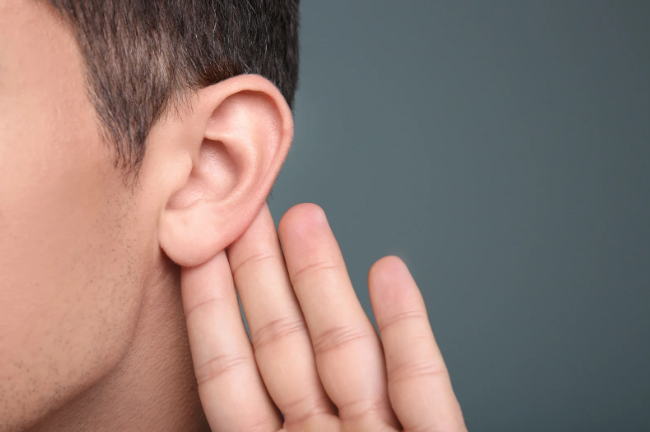
Do you know someone who can wiggle their ears, either up and down and back and forth, but whenever you look in the mirror and try to do so, you flare your nostrils like a bunny, but nothing moves? According to Popular Science, only about one in five people can wiggle their ears, and it’s most likely not because they practiced all day in the mirror. For most people, it’s genetic.
In a recent video, Dr. Monica Kieu calls being able to wiggle your ears a “rare superpower.” Kieu is a board-certified specialist in facial plastic and reconstructive surgery in Beverly Hills and Newport Beach, California. “Moving our ears is a vestigial trait, meaning that it’s a relic from our previous ancestors,” she says in a YouTube reel. “Although these movements help us localize sound, it doesn’t really have much function.”
Why can some people wiggle their ears?
If you have a dog or a cat, you’ve noticed that when there is a loud noise in the house, their ears perk up and then, like radars, scan the home and beyond to find the location of where the sound came from and what it might be. As humans, we’ve lost the need for such sensitive hearing over millions of years, so the auricular muscles (those attached to your ears) have become weaker. They are now considered vestigial or something that either didn’t finish developing or, through evolution, has become useless.
The auricular muscles aren’t the only thing evolution has left us from the past. The wisdom teeth are left over from when humans had to chew a lot more raw food. The appendix was used to digest tough plants, and goosebumps are left over from when we had fur.
Those who can wiggle their ears have not just developed vestigial ear muscles; their brains are wired to allow them to do so. They still have neural pathways in their brains that enable them to move those muscles, while others may have lost them a few branches back on the family tree. According to Popular Science, significantly more men than women can move both ears at the same time.
Gillian Margonis, a popular TikTok user, claims she taught herself how to wiggle her ears while bored in high school. Here’s her step-by-step process for getting the wiggles going.
1. Notice when your ears move
If you feel a slight movement of your ear muscles when holding back a smile, those are the muscles you should focus on. “After you recognize when it happens, look out for it,” Margonis says.
2. Focus on your newly-discovered muscles
“Try to use those same muscles and see if it makes your ear move,” she said. “You’re probably only going to be able to do one or two wiggles until you gain control of the muscle enough to wiggle your ears as much as you want.”
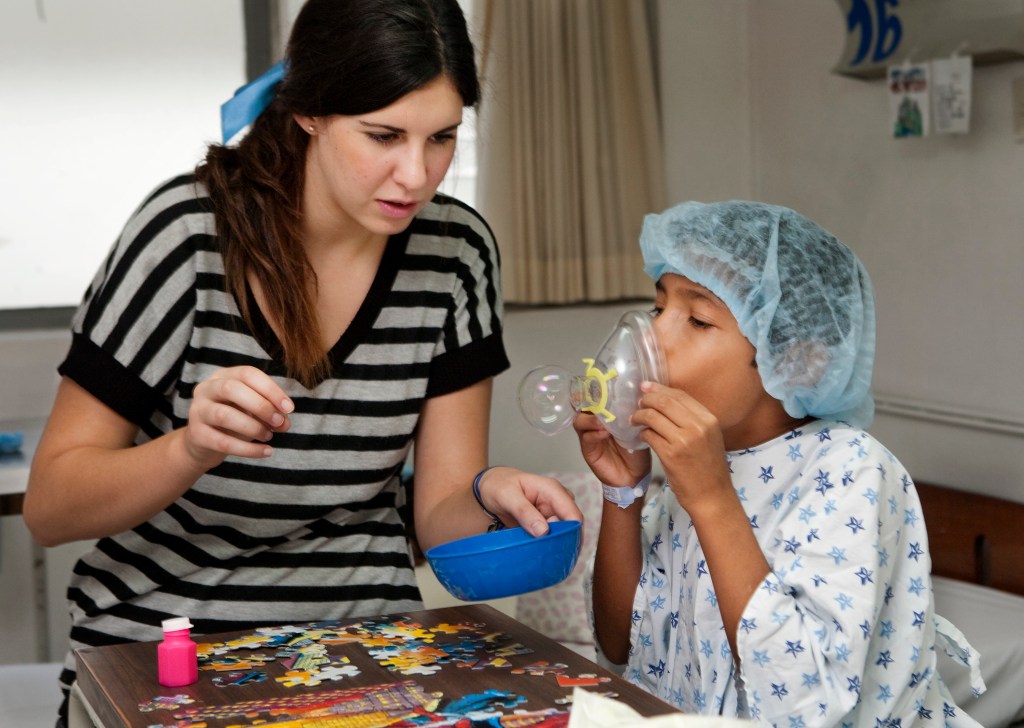
An Operation Smile volunteer reverses an oxygen mask so a child with a cleft condition can blow a bubble for the first time in Guadalajara, Mexico. (Operation Smile Photos)
For thousands of children born with cleft conditions, Operation Smile provides simple, playful tools—like bubbles—to strengthen the skills they need to speak and thrive.
While a bottle of bubbles might seem out of place in a hospital setting, you might be surprised to learn that, for thousands of children around the world born with cleft lip and palate, they can be a helpful tool in comprehensive cleft care. Lilia, who was born with cleft lip and palate in 2020, is one of the many patients who received this care.
As a toddler, Lilia underwent two surgeries to treat cleft lip and palate with Operation Smile’s surgical program in Puebla, Mexico. Because of Operation Smile’s comprehensive care, it wasn’t long before her personality transformed: Lilia went from a quiet and withdrawn toddler to an exuberant, curious explorer, babbling, expressing herself with a variety of sounds, and engaging with others like any child her age.
Lilia is now a healthy five-year-old, with the same cheerful attitude and boundless energy. Her progress is the result of care at every level, from surgery to speech therapy to ongoing support at home—but it’s also evidence that small, sustained interventions throughout it all can make a meaningful difference.
Lilia at age 1, before surgery, and at age 5, 4 years post-surgery
Cleft Conditions: A Global Problem
Since 1982, Operation Smile has provided cleft lip and cleft palate surgeries to more than 500,000 patients worldwide with the help of generous volunteers and donors. Cleft conditions are congenital conditions, meaning they are present at birth. With cleft lip and palate, the lip or the roof of the mouth do not form fully during fetal development. Cleft conditions put children at risk for malnutrition and poor weight gain, since their facial structure can make feeding challenging. But cleft conditions can have an enormous social impact as well: Common difficulties with speech can leave kids socially isolated and unable to meet the same developmental milestones as their peers.
Surgery is a vital step in treating cleft conditions, but it’s also just one part of a much larger solution. Organizations like Operation Smile emphasize the importance of multi-disciplinary teams that provide comprehensive, long-term care to patients across many years. This approach, which includes oral care, speech therapy, nutritional support, and psychosocial care, not only aids in physical recovery from surgery but also helps children develop the skills and confidence to eat easily, speak clearly, and engage in everyday life. This ensures that each patient receives the full range of support they need to thrive.
Marie, 11 months, with her mother at Operation Smile Madagascar before her cleft surgery (Operation Smile Photos)
A Playful (and Powerful) Solution
Throughout a patient’s care, simple tools like bubbles can play a meaningful role from start to finish.
Immediately before surgery, children are often in a new and unfamiliar environment far from home, some of them experiencing a hospital setting for the first time. When care providers or loved ones blow bubbles, it’s a simple yet effective technique: Not only are the children soothed and distracted, the bubbles also help create a sense of joy and playfulness that eases their anxiety.
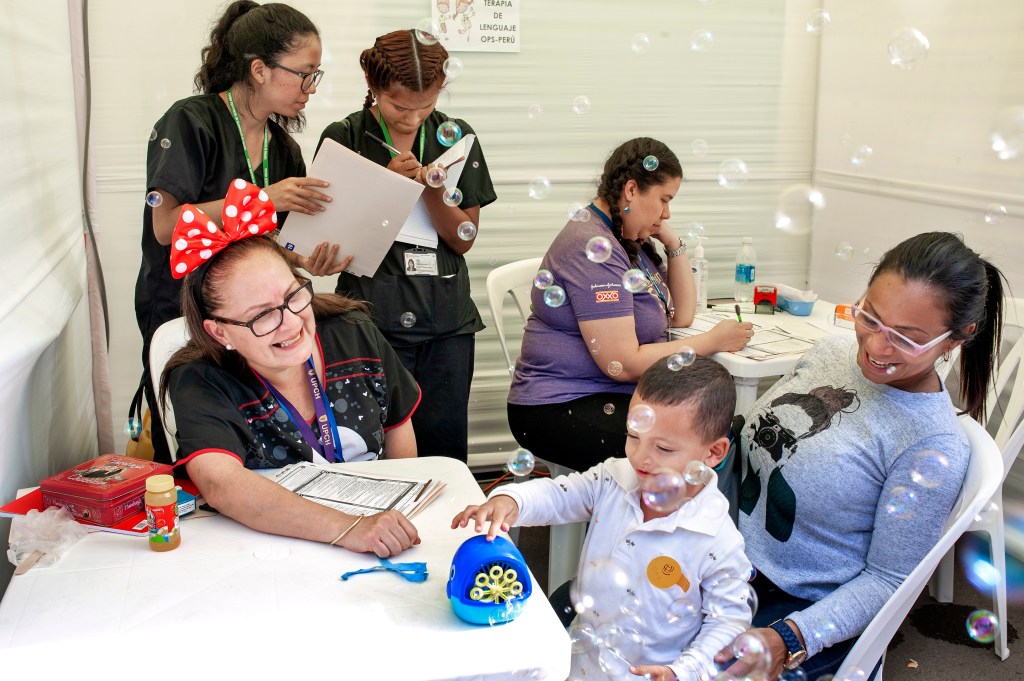
Milagros Rojas, a volunteer speech therapist in Peru, using bubbles in a screening with a patient. (Operation Smile Photos)
In speech therapy, bubbles can take on an even more important role. Blowing bubbles requires controlled airflow, as well as the ability to form a rounded “O” shape with the lips, which are skills that children with cleft conditions may struggle to develop. Practicing these skills with bubbles allows children to gently strengthen their facial muscles, improve breath control, and support the motor skills needed for speech development. Beyond that, blowing bubbles can help kids connect with their parents or providers in a way that’s playful, comforting, and accessible even for very young patients.
Finally, bubbles often follow patients with cleft conditions home in the “smile bags” that each patient receives when the surgical procedure is finished. Smile bags, which help continue speech therapy outside of the hospital setting, can contain language enrichment booklets, a mirror, oxygen tubing, and bubbles. While regular practice with motor skills can help with physical recovery, small acts of play help as well, giving kids space to simply enjoy themselves and join in on what peers are able to do.
Bubbles at Home and Beyond
Today, because of Operation Smile’s dedication to comprehensive cleft care, Lilia is now able to make friends and speak clearly, all things that could have been difficult or impossible before. Instead of a childhood defined by limitation, Lilia—and others around the world—can look forward to a childhood filled with joy, learning, discovery, friends, and new possibilities.
CTA: Lilia’s life was changed for the better with the care she received through Operation Smile. Find out how you can make an impact in other children’s lives by visiting operationsmile.org today.
Nearly everyone has suffered from the dreaded flu and can agree that the hacking coughs, achy bones, and sneezing are more than just a tad miserable. The silver lining, if there can be one, is that the flu (and colds in general) brings out some old remedies that some might find rather charming. Even better, some of them may actually work.
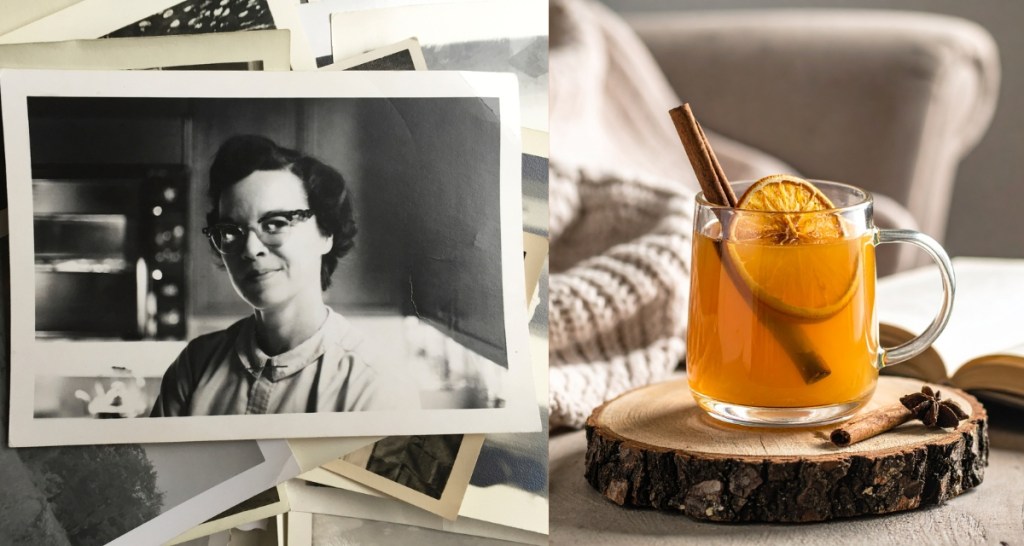
In a clip from the late 1950s on the BBC Archive Facebook page, a random assortment of men and women are asked for their personal “flu cures.” Their answers ranged from typical homespun ideas like hot tea and plenty of water to more curious alternative remedies. But many were eager to share their personal treatments and seemed sure of their effectiveness.
Shot on black-and-white film, British interviewers Fyfe Robertson and Alan Whicker ask people what they do or take when they have the flu. One woman answers, “Well I take Vitamin C and lemon, barley, and whiskey.” The next man agrees that he can “defy the virus” with whiskey and tea, but adds bacon, porridge, and eggs.
In fact, quite a few included whiskey in their flu routine. “I’m a great believer in whiskey,” one man proudly shares. “I’m like a Scotch man. I believe in a drop of whiskey, warm, and it sort of kills the germs.”
In keeping with the alcohol angle, another Brit answers, “A jolly good hot rum punch. And a jolly good sweat, and stop in bed until it’s all over.”
“Elderflower wine,” says an older woman. “If you take a good glassful tonight, and you go to bed, and you sweat it out, you know, and you’re alright in a day or two.”
Not everyone used alcohol in their remedies. One woman swaps the whiskey for water: “Rinse your inside out continually with boiled water. About four or five half-pint glasses a day, boiled water.”
But then things get interesting. A woman clad in an oversized sweater coat shares this trick: “Well my remedy for the flu is to get a small Spanish onion, chop it up finely, and put some brown sugar over it and a little vinegar. And then when it turns into a syrup, take a spoonful before you go to bed. It’s a very good remedy.”
A man, seemingly eager to share his mother’s recipe, steps in: “Well my mother recommends an old sweaty sock with salt right round your throat. A good pullover and a good hot water bottle. Sweat it out.”
Now things take a turn for the more unique. “There is a good cure in mustard and lard,” one woman says. “And you rub the two well together and get a good blend. I don’t know how to do it, but my father does.” After the interviewer asks if one should eat it or rub it on one’s chest, she clarifies: “Rub it on your chest, on the front and the back, and it’s a good cure.”
Just when it seemed that possibly “mustard and lard” were the most interesting answers, the woman next to her takes the cake: “Goose grease. You can rub that on your chest. You know, after you’ve been cooking the goose, then keep the grease and run it on your chest.”
This next idea is a bit complicated, but it also involves goose grease: “A large piece of brown paper and cut it to go under the arms and you warm it first, and get hot warm goose grease and then spread mustard over the brown paper first. Get warm goose grease, which most people have got in the house. You spread it over the mustard on the paper to avoid burning of the skin. And should inflammation be setting in, as the doctor says does sometimes, you boil the elderflower and give the patient a dose of elderflower water.”
Understandably, the reporter pushes back: “But then do you go to bed with this brown paper? Don’t you find it a bit messy?” She answers with a resounding yes, adding, “And the goose grease avoids it from burning.”
And just when it seems like someone is going back to a more popular cure, it takes a turn: “I take a nice big tumbler full of hot lemonade. Put in about three teaspoons full of rum. Two aspirin. Get into bed and cover myself well. Tie the stocking that I’ve been wearing around my feet. One of them around my throat with a safety pin, and stay in bed and sweat it out.”
Finally, a younger gentleman is asked his “best way to cure the flu.” His answer is rather philosophical: “Well, just think that you haven’t got it.” He adds a few other ideas about onions and then shocks the interviewer with this final thought: “I’ve still got it now, and I’m about.”
“You’ve got the flu now, have ya?” the interviewer asks. “Well in that case, I won’t keep you another minute.”
Reactions
Just this clip has 35,000 likes and over a thousand comments. And perhaps not super surprisingly, many Facebook users back up the remedy claims:
“After all, where do people think ‘medicine’ comes from? My Hungarian grandfather would eat raw garlic if he felt under the weather. Drank tea daily with a little red wine in it. Lived to be 101.”
“Whiskey and stinky socks are to men as goose grease and mustard are to women.”
“How Alan Wicker (sic) kept a straight face to these people being interviewed is amazing.”
Putting some of these cures to the test
Onions
According to the National Library of Medicine, onions do in fact contain antibacterial properties: “Onion skin possesses various health benefits due to its phenolic and antimicrobial components.”
Time published an entire piece called “Medicine: The Healing Onion,” where they discuss the roots of this theory:
“The onion, at one time or another, has been enthusiastically recommended as a remedy for colds in the head and worms in the intestines. For centuries, the onion’s medicinal value has been praised by witch doctors, old wives, and bartenders. Rome’s Pliny the Elder listed the onion as a cure for 28 diseases. Early New England settlers believed that the onion would prevent fits; Neapolitans of the Middle Ages thought it averted the evil eye. A 16th Century French surgeon, Ambroise Parè, used it instead of ointment to heal powder burns.”
While they have more recently found that the onion itself doesn’t create health benefits, cutting the onion actually does, according to Time:
“Food Chemist Edward F. Kohman has found that the active chemical agent in onions is a thioaldehyde, a close relative of the common antiseptic, formaldehyde. Chemist Kohman put raw onions through an ordinary household meat grinder, distilled the onion vapors, put them through a series of chemical tests. In a recent issue of Science, he reported finding about 1/20 of a gram of thioaldehyde in a pound of raw onions.
The germ-killing thioaldehyde, Kohman said last week, probably does not exist as such in the onion. More likely, it is produced by the complicated enzyme activity that goes on in the onion when it is cut. Cooking would eliminate it completely; a boiled onion is no more good for a cold than a boiled turnip. But chewing a raw onion might help a cold (it would undoubtedly prevent the spread of colds by keeping non-onion eaters away from the cold sufferer).”
“Although no clinical research supports their claims, advocates of wearing wet socks to bed to cure a cold are convinced that the practice is effective. Here’s their explanation: When your feet begin to cool, the blood vessels in your feet contract, sending good nutrients to your tissues and organs. Then, when your feet begin to warm up, the blood vessels dilate, which releases the toxins in the tissue. The technique most recommended includes two pairs of socks: one pair of thin cotton socks and one pair of heavy wool socks.”
And while they can’t claim it works completely, they note that many believe it does, which can be enough:
“There’s no scientific evidence that wearing wet socks to bed will cure your cold. But there’s anecdotal evidence. One explanation for people believing that it works could be the placebo effect.”
Whiskey and other alcohol
Since so many mentioned whiskey (and rum), we took a look at that claim too. Sad news: this one appears to be nothing but a myth.
Again, turning to Healthline, they take the claims step by step to debunk them. Some believe that because alcohol is a “disinfectant,” it should help kill viruses and bacteria:
“It’s true that alcohol is a key component of hand sanitizers, which help kill germs that you may pick up when you touch contaminated surfaces. However, alcohol is only effective as a topical disinfectant. In other words, it works on the surface of your skin, but not as a disinfectant when you drink it. This means alcohol doesn’t help kill cold viruses or other germs inside your body.”
In fact, though many believe it helps open up the sinuses, it’s not accurate.
“Alcohol is rumored to work as a decongestant, but actually, the reverse is true,” the Healthline article noted. “Small amounts of alcohol can cause vasodilation — a widening of blood vessels — which can worsen a runny nose or congestion. Medicines with pseudoephedrine will tighten blood vessels (vasoconstrict), which is why they can help relieve congestion.”
This doesn’t stop people from sharing their flu-fighting whiskey recipes. Perhaps these, too, create a placebo effect. At least they might be more fun than wet socks.
People cite convenience and taste in addition to perceived safety for reasons they prefer bottle to tap, but the fear factor surrounding tap water is still a driving force. It doesn’t help when emergencies like floods cause tap water contamination or when investigations reveal issues with lead pipes in some communities, but municipal water supplies are tested regularly, and in the vast majority of the U.S., you can safely grab a glass of water from a tap.
Now, a new study on nanoplastics found in three popular bottled water brands is throwing more data into the bottled vs. tap water choice.
What researchers actually found in those bottles
Researchers from Columbia University used new laser-guided technology to detect nanoplastics that had previously evaded detection due to their miniscule size.
The new technology can detect, count and analyze the chemical structure of nanoparticles, and they found seven different major types of plastic: polyamide, polypropylene, polyethylene, polymethyl methacrylate, polyvinyl chloride, polystyrene, and polyethylene terephthalate.
Columbia researchers found that bottled water contains hundreds of thousands of previously uncounted plastic particles—particles small enough to pass into the bloodstream and travel directly into our organs.https://t.co/NoC70dLakV
As opposed to microplastics, nanoplastics are too small to be seen by microscope. Their size is exactly why experts are concerned about them, as they are small enough to invade human cells and potentially disrupt cellular processes.
“Micro and nanoplastics have been found in the human placenta at this point. They’ve been found in human lung tissues. They’ve been found in human feces; they’ve been found in human blood,” study co-author Phoebe Stapleton, associate professor of pharmacology and toxicology at Rutgers University’s Ernest Mario School of Pharmacy, told CNN Health.
What this means for your health
We know that nanoplastics are making their way into our bodies. According to UCLA Health, there is some evidence that they may be negatively affecting our health.
“Studies conducted on animals and on cells in a lab suggest nanoplastics can impact a variety of organs and systems throughout the body,” a report by UCLA Health states. “Exposure to high quantities of nanoplastics may affect cell’s immune function and cause inflammation…There is even some evidence that by altering cell function, nanoplastics may increase the risk of some types of cancer.”
The UCLA Health report notes, however, that “very little research to date has looked specifically at humans.”
According to Dr. Sara Benedé of the Spanish National Research Council’s Institute of Food Science Research, it’s not just the plastics themselves that might cause damage, but what they may bring along with them.
“[Microparticles and nanoparticles] have the ability to bind all kinds of compounds when they come into contact with fluids, thus acting as carriers of all kinds of substances including environmental pollutants, toxins, antibiotics, or microorganisms,” Benedé told Medical News Today.
Where is this plastic in water coming from?
This study focused on bottled water, which is almost always packaged in plastic. The filters used to filter the water before bottling are also frequently made from plastic.
Is it possible that some of these nanoplastics were already present in the water from their original sources? Again, research is always evolving on this front, but microplastics have been detected in lakes, streams and other freshwater sources, so it’s not a big stretch to imagine that nanoplastics may be making their way into freshwater ecosystems as well.
A subsequent study from The Ohio State University also found that bottled water contains three times as many microplastics as tap water. Researchers there recommended drinking filtered tap water from a reusable metal bottle as the best way to reduce daily exposure.
As for exactly where all those nanoplastics are coming from, the research is still evolving.
“Based on other studies we expected most of the microplastics in bottled water would come from leakage of the plastic bottle itself, which is typically made of PET (polyethylene terephthalate) plastic,” lead author Naixin Qian, a doctoral student in chemistry at Columbia University, told CNN Health. “However, we found there’s actually many diverse types of plastics in a bottle of water, and that different plastic types have different size distributions. The PET particles were larger, while others were down to 200 nanometers, which is much, much smaller.”
But it’s not just women who were undiagnosed since the criteria mostly included ways in which hyperactivity showed up, you know, the “H” in ADHD. But not everyone with ADHD presents with the stereotypical hyperactivity bit.
In the first few minutes of the video, Brannon shares a clinical observation that feels mind-boggling
“75% of adults with anxiety actually have ADHD as the cause of their anxiety.” Even though I fit into that category, consider my mind completely boggled because I thought I was a rarity and my psychiatrist was a magician. Turns out, he was probably just up to date on his continuing education credits.
Brannon talks about how people who may express feelings of overwhelm, anxiousness, and tiredness and who are easily frustrated may actually have undiagnosed ADHD.
It’s pretty easy to overlook ADHD that presents with more of the attention deficit part of the diagnosis than the hyperactivity part. When someone is having difficulty sitting still, talking so fast that you can barely keep up, and is constantly on the go, it’s pretty easy to pinpoint there may be an issue.
But when the person is quiet, sits still but misses large chunks of conversations, or is chronically forgetful and sleepy, it’s much easier to miss the signs, according to Brannon.
Brannon says many people feel bad about themselves without knowing why, so having an answer for why you’re feeling this way can be helpful.
Does any of this sound like you?
In the clip, Brannon introduces us to a theoretical person named Sally.
Sally is successful, creative, and holds a master’s degree. She’s functioning at a high level by all indications, but Sally struggles with procrastination, getting sidetracked, and feeling unmotivated. She feels lazy and ashamed of it, but she just can’t bring herself to change her behavior.
Brannon says that Sally is typical of adults with undiagnosed ADHD. These are people who feel and know something is not quite right with them, but they have no idea what.
As for a little happy ending, Sally eventually finds out that she has ADHD and receives treatment. Brannon says in the video that the right medication can make a world of difference.
“Now [Sally] can have creative thoughts without having that big swirl of ideas running around in her head. She can look at an email to see if she has time to answer or she needs to save it for later. Now Sally can be on time for her appointment, and that frees up the perfectionist that was trying so hard to be on time before and was failing every time.”
The numbers are bigger than you’d expect
Brannon says that over the span of her career, she would estimate about 2 or 3 out of 10 adults have undiagnosed ADHD and are living a life of difficulty and shame.
“That’s a lot of people who could be feeling a whole lot better,” she says.
This article originally appeared three years ago. It has been updated.
It’s not breaking news that journaling has been proven, again and again, to be good for you—mind, body, and soul.
But not all journaling is created equal. Writing about what you did that day and your future plans has a profoundly different effect than writing about your deepest emotions, especially the upsetting ones. A growing body of research now shows that confronting your deepest traumas and experiences in order to put them on the page not only makes you feel better, but can even help heal you. One remarkable scientific study demonstrates how.
Landmark study indicates that “expressive writing” has healing powers
The body of research around expressive writing had been growing for years. American social psychologist James Pennebaker is considered one of the leading voices in pioneering this area of research.
In an interview with the American Psychological Association, Pennebaker recalled wondering, “If secrets are so bad, what if we brought people in the laboratory and had them talk about them… [but] that turned out to be way too complex. How about we just had them write about it? And that was kind of the birth of expressive writing.”
Pennebaker’s remarkable research revealed that expressive writing could improve mental health, boost the immune system, and reduce doctor visits. In 2013, a group of researchers wanted to see whether these benefits could carry over even further into the physical world.
In the study, two groups of adults ages 64 and older underwent a simple biopsy procedure. It left a small wound on the upper arm that was uniform in size across all participants and could easily be monitored for changes in healing.
A Band-Aid covers a wound. Photo credit: Canva
One group was assigned to perform expressive writing for 20 minutes per day, writing about its deepest thoughts and most upsetting life experiences.
The other group, rather than not writing at all, journaled daily about its activities but did so in an emotionally neutral register.
Just 11 days after the biopsy, 76% of the expressive writing group had fully healed. That’s almost double the rate of the control group, of whom only 42% had healed.
A thorough review found almost no other differences in the adults’ cognitive or physical health, which makes a powerful case that the expressive writing exercises were responsible for the improved healing.
Why emotional writing can have a physical impact
Pennebaker, for his part, recognized that deeply emotional journaling is not just about the physical act of writing.
In order to write about upsetting experiences in your life, you have to turn them over and over in your mind and confront them head-on.
“Getting people to actually sit down and confront it and to write it, you don’t have to write a lot, but you have to first of all just acknowledge it and put it into words,” Pennebaker said. “And that was really for me, the breakthrough.”
Emotional writing eases psychological stress. Feelings like anxiety and stress can have severe negative health consequences, so it stands to reason that relieving some of that stress should have a positive payoff. Less stress on the immune system, for example, means it’s better able to do its job of warding off sickness and healing wounds.
According to Harvard Health Publishing, “The process of writing may enable [people] to learn to better regulate their emotions. It’s also possible that writing about something fosters an intellectual process — the act of constructing a story about a traumatic event — that helps someone break free of the endless mental cycling more typical of brooding or rumination.”
The power of “letting it out”
A majority of scientific research agrees that learning to understand and express what’s happening inside us is a key component of mental health.
“Labeling and expressing what’s going on inside can calm our nervous system. It also gets us in touch with our internal senses and what’s going on beneath the skin, in the heart, and in the brain,” said Alli Spotts-De Lazzer, a licensed therapist. “The connection of thoughts flowing through and out may be similar to ‘name it to tame it,’ a concept related to calming emotional distress and increasing emotional regulation.”
It can be dance, it can be art, or it can be talking it out with a therapist or friend. The important thing is that expression, or disclosure, is necessary. The unique power of expressive writing, however, is that it forces us to address our biggest sources of pain and anxiety head-on.
Expressive writing has its limitations, of course.
It’s not necessarily a cure-all for people suffering from serious mental health conditions like chronic anxiety or major depression. And it can’t cure cancer or miraculously heal a broken leg.
Some research also shows that expressive writing can temporarily make people feel worse before the mental health benefits kick in. And for people who have recently undergone trauma, it may simply be too soon to write about it. Pennebaker himself advises therapists not to assign expressive writing to patients until at least a few months after an incident.
However, the study is fairly undeniable evidence of the mind-body connection. Science shows us that placebos can work wonders, even when people know they’re taking a placebo. And expressive writing research is beginning to show just how incredible the physical benefits of relieving psychological stress can be.
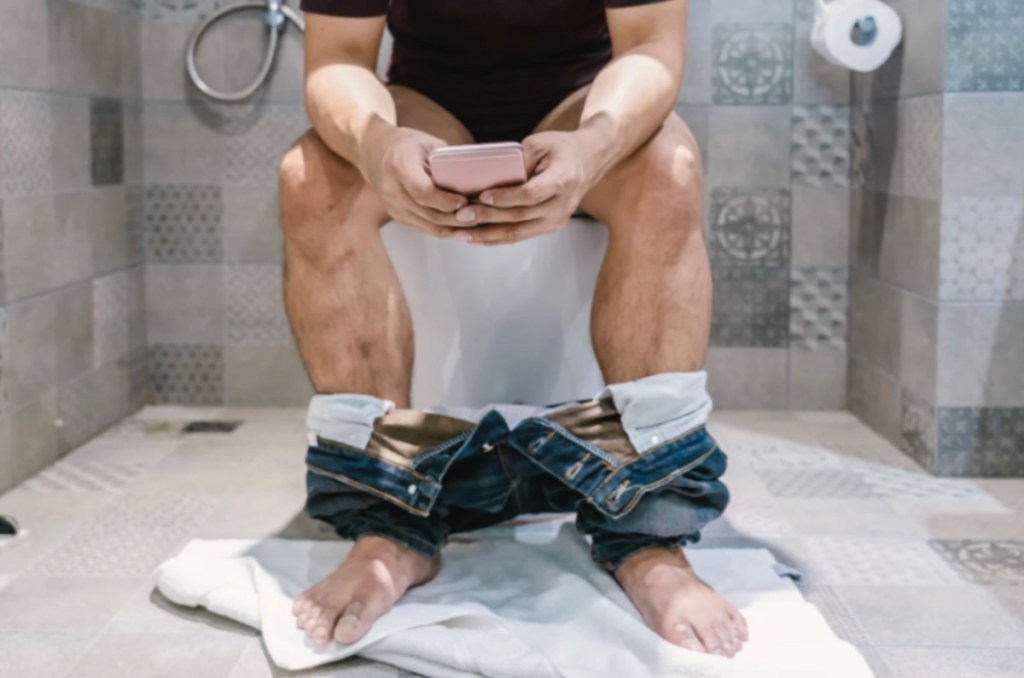
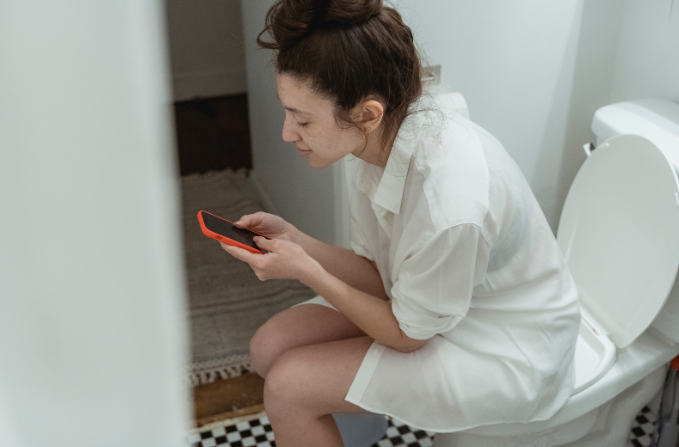
Have you ever been scrolling through social media on your phone and then suddenly wondered where all the time went? You glance at the clock and wonder, “OMG, did I really just spend 30 minutes mindlessly scrolling on this app?” Well, after a new report published in PLOS ONE, you’ll think twice about getting lost doomscrolling while sitting on the toilet.
Looking at your smartphone on the toilet could cause hemorrhoids
“Smartphone use on the toilet was associated with a 46% increased risk of hemorrhoids,” the paper found after adjusting for sex, age, fiber intake, and exercise activity. To come to this grim conclusion, the researchers interviewed 125 patients at the medical center and asked them about their toilet habits, including whether they scrolled through their phone or not.
What the researchers found was that those who bring their phone into the bathroom spend more time on the toilet; therefore, increasing the likelihood of developing hemorrhoids. “Of all respondents, 83 (66%) used smartphones while on the toilet,” the study found. “Furthermore, smartphone users spent considerably more time on the toilet compared to non-smartphone users, with many spending more than five minutes on the toilet per visit.”
Of those who looked at the phone on the toilet, 37.3% said that they sat on the throne for six to fifteen minutes. Non-phone users sat longer than six minutes only 7.1% of the time. “The likely explanation is that prolonged sitting increases pressure in the veins around the rectum, which can contribute to hemorrhoids,” Dr. Ernesto Gonzaga, a gastroenterologist from the Hospital of the University of Pennsylvania, told ABC News.
“When you’re sitting on an open toilet bowl, you have no pelvic floor support,” Dr. Trisha Pasricha, the study’s senior author and a gastroenterologist and director of the Gut-Brain Research Institute at Beth Israel Deaconess Medical Center, told CNN. The study said that 54% of people who use the phone while pooping are reading the news, and 44% said they were scrolling through social media.
The study was conducted on people 45 and over
The study was conducted on people aged 45 and older, a beneficial group to examine because some individuals in this age group don’t bring their phones to the bathroom. The study would have been much harder to conduct on younger people.
“It was helpful to have this (45 and older) group because there were people who didn’t use their smartphones on the toilet. So we had a comparison group,” Dr. Trisha Pasricha, the study’s senior author, told CNN. “Having a third of people not bringing their smartphones to the bathroom helped us understand what a baseline could look like, especially as I imagine the situation is more profound for younger individuals.”
So what can you actually do about it?
If you’re afraid of developing hemorrhoids, the first step is to make sure that, if you take your phone with you to the bathroom, you stop scrolling when you’re done evacuating your bowels. You can also eat more high fiber foods, such as fruits and vegetables, and be sure to exhale while pushing and not strain. It’s also important to keep a healthy weight and to avoid sitting for too long, whether on a toilet or in your car. Hemorrhoids are a pain in the butt, and they’re not worth it, no matter how great the latest tea is on TikTok.
This article originally appeared one year ago. It has been updated.
Julie Silverman had been coughing for years. Not the kind of cough that goes away with some rest and cough syrup, but a persistent, worsening cough that no doctor seemed able to explain or fix. As she shared on NPR’s Hidden Brain podcast in the “My Unsung Hero” segment, the experience of being dismissed by the healthcare system over and over again was exhausting.
“I had, at this point, gotten kind of dismissive about it because I had been dismissed by so many doctors as, ‘There’s nothing wrong, you’re not responding to our treatments, we’ll try something else,’” Silverman recalled.
But one person refused to dismiss her: a nurse practitioner named Alison.
A nurse checks the vitals of a patient. Photo credit: Canva
Alison worked at one of the clinics Silverman visited regularly, and unlike the doctors who had cycled through various unsuccessful treatments, Alison kept paying attention. She was perplexed by the cough and made it her mission to track Silverman’s condition over time.
During one of Silverman’s weekly appointments, Alison noticed something concerning. Silverman’s symptoms had gotten worse. Her voice was hoarse, she was breathless and wheezing, and the coughing was more severe than before.
“She was just adamant something was wrong with my airway,” Silverman said.
Alison immediately pushed one of the physicians at the clinic to perform a scope of Silverman’s trachea. The procedure involved inserting a small camera through her nose and down the back of her throat to look for blockages.
“I could just tell by their faces something was not right,” Silverman remembered.
The scope revealed what years of doctor visits had missed. Silverman had idiopathic subglottic stenosis, a rare condition that affects about one in 400,000 people. Scar tissue had been building up at the top of her trachea, and her airway was 75% blocked. That’s why she’d been coughing. That’s why nothing had worked. And if it had gone untreated much longer, it would have been fatal.
“This is a very serious condition and fatal if not treated because your airway completely closes,” Silverman explained.
The diagnosis finally gave Silverman what she needed: the right information to find the right specialist who could actually treat her condition. She’s now doing well, spending her time volunteering at her local hospital, riding her bike, hiking, skiing, and enjoying time with friends and family.
But she hasn’t forgotten what Alison did for her.
“Had Alison not picked up on the fact that she was sure something else was wrong and gotten this physician to look in my throat, I don’t know what would have happened,” Silverman said. “It was her persistence and diligence and her listening to me and taking me seriously that got my diagnosis in a timely enough fashion to do something about it. So, for these reasons, Alison is my unsung hero.”
Our healthcare system is increasingly driven by rapid diagnoses and technology, but sometimes what saves a life is just simple human attention. Someone who listens, keeps watching, and refuses to dismiss what they’re seeing even when everyone else has moved on.
“Emails I had sent to my work were gibberish, so much so that a close colleague escalated to my boss, as it frightened him.” The diagnosis that followed saved her life.
When Becca Valle woke up with chronic headaches in 2021, she did what most people do. She went to her general practitioner, got a diagnosis (migraines, probably sinus-related), took the prescribed medication, and hoped things would get better. According to PEOPLE, the then-37-year-old tried everything to manage the pain, from different medications to morning walks, but nothing worked.
After three weeks of worsening symptoms, Valle started vomiting from the pain one afternoon and immediately called her boyfriend to take her to the emergency room. Before heading out, she pulled up her email to let her boss know she needed the day off.
What she typed wasn’t a day-off request. It was gibberish.
Woman writes an email at her computer. Photo credit: Canva
“Emails I had sent to my work letting them know I was signing off for the day were gibberish, so much so that a close colleague escalated to my boss, as it frightened him,” Valle recalled. By the time she was in the ER, she was texting similar incomprehensible messages to her partner, who wasn’t allowed in with her due to COVID restrictions.
The scan results showed blood in her brain. Doctors performed an emergency craniotomy, a surgery that involves removing part of the skull to access the brain. What they found required a second emergency craniotomy. Valle had glioblastoma, an aggressive type of brain cancer.
The diagnosis finally explained the “chronic migraines” that had been plaguing her for weeks. But it also put her on a path she never expected to navigate. CBS News reported that Valle immediately told her doctors she wanted to pursue every possible trial and treatment option available to her.
After consulting with her radiologist and oncologist, she connected with Dr. Graeme Woodworth, Chief of Neurosurgery at the University of Maryland Medical Center, whose clinical trials involved drug therapies administered by temporarily opening the blood-brain barrier using ultrasound treatment.
Now 42, Valle describes her diagnosis journey as “interesting” and says she’s been cancer-free for four years. She rang the “cancer is clear” bell back in 2022, though her doctors have warned that glioblastoma can recur.
Still, she’s living her life fully and has advice for anyone facing a serious medical diagnosis: “As much as you can, take control of your journey. Talk to doctors and others who have gone through the same.”
That gibberish email, the one that scared her colleague enough to escalate it up the chain, turned out to be the alarm bell that got her into the ER in time. Sometimes the things that frighten us most are exactly what we need to pay attention to.
Only 1% of this Bolivian tribe develops dementia. They walk 17,000 steps a day, eat almost no processed food, and have never heard of a wellness trend.
When CNN’s Dr. Sanjay Gupta traveled deep into the Bolivian Amazon to spend time with the Tsimané people, he wasn’t expecting to find a population that had essentially solved one of modern medicine’s hardest problems. But that’s close to what he found.
The Tsimané, an indigenous group of roughly 17,000 people living in the lowland jungle near the Bolivian Amazon, have a dementia rate of approximately 1 percent. Among Americans 65 and older, that figure is around 11 percent. Researchers who have studied the Tsimané extensively through peer-reviewed work published in the journals PNAS and Alzheimer’s & Dementia say the gap isn’t genetic luck. It’s lifestyle.
Members of a Bolivian tribe take a break at sunset. Photo credit: Canva
The Tsimané don’t have a wellness plan. They have a life. An average member of the community walks around 17,000 steps per day, not on a treadmill but out of necessity in order to do the fishing, farming, hunting, and foraging in the forest around them. Their diet is roughly 70 percent complex carbohydrates, primarily plantains, cassava, rice, and corn, with around 15 percent fats and 15 percent protein. Processed food, added sugars, and added salts are largely absent. Their diet is dense in fiber and micronutrients like selenium, potassium, and magnesium.
They also practice intermittent fasting, but not as a trend but because food availability has natural limits. They sleep on a consistent schedule. They spend most of their waking hours physically active.
“This ideal set of conditions for disease prevention prompts us to consider whether our industrialized lifestyles increase our risk of disease,” Dr. Andrei Irimia, an associate professor at the University of Southern California who led one of the major studies, told researchers.
The contrast with American life is stark. A study published in the BMJ found that 60 percent of Americans’ daily caloric intake comes from ultra-processed foods. For children, registered dietitian Ilana Muhlstein told Fox News Digital, that figure climbs above 70 percent. The Tsimané’s cardiovascular health, separately documented in The Lancet, is similarly remarkable with some of the lowest rates of coronary artery disease ever recorded in any population.
None of this means moving to the Bolivian jungle is the answer. The Tsimané face real hardships that come with their lifestyle, including limited access to medical care for acute conditions. But researchers are increasingly clear that the chronic disease burden plaguing industrialized nations isn’t inevitable. It’s a product of specific choices about food, movement, and how we structure daily life that we’ve collectively made and could, at least in part, collectively unmake.
The Tsimané didn’t design a diet. They just never stopped moving, and never started eating processed food. The results, it turns out, are remarkable.