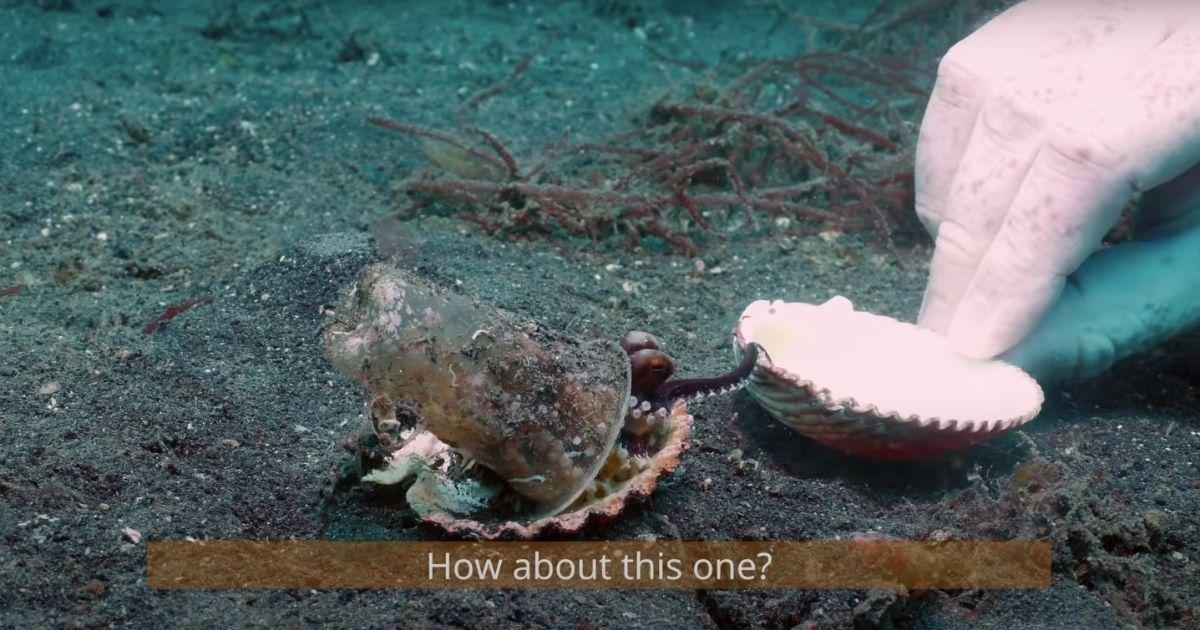
Kind scuba divers try to convince a tiny octopus to trade its plastic cup for a shell

Sometimes taking care of our beautiful home planet looks like big, broad policies tackling issues like plastic pollution and habitat destruction. And sometimes it looks like taking the time to help one tiny creature in an environmental bind.

In a YouTube video that's been viewed a whopping 18 million times, we see an example of the latter in action as some kind and compassionate divers attempt to convince an octopus to abandon the plastic cup it's using for protection and trade it for a sturdy shell. Pall Sigurdsson has shared dozens of underwater videos on YouTube, but watching this particular video from his dive off the coast of Lembeh, Indonesia a few years ago almost feels like watching a Pixar short film.

"We spent a whole dive and most of our air saving this octopus from what was bound to be a cruel fate," Sigurdsson wrote in the description of the video.

"The coconut octopus, also known as veined octopus, is born with the instinct to protect itself by creating a mobile home out of coconut or clam shells. This particular individual however has been trapped by their instincts and have made a home out of a plastic cup they found underwater."

Sigurdsson explained that a predator like an eel or a flouder would probably end up swallowing the cup with the octopus in it, likely killing both of them.

"We tried for a long time to give it shells hoping that it would trade the shell," he wrote. "Coconut octopus are famous for being very picky about which shells they keep so we had to try with many different shells before it found one to be acceptable."

If you think an octopus in a cup making a decision about shells doesn't sound riveting, just watch:

Octo in a cup www.youtube.com

The tentacles reaching out to test the weight of each shell, the divers searching for more options to offer it, the suspense of wondering whether the octopus really would abandon its pathetic plastic pollution protection...it's just too much.

Funny how one small interaction in one tiny portion of the vast ocean can say so much about us, for better and for worse. Human pollution is an enormous problem and saving one little octopus won't save the world, but it sure gives us hope and motivation to keep trying.

True

From the time she was a little girl, Abby Recker loved helping people. Her parents kept her stocked up with first-aid supplies so she could spend hours playing with her dolls, making up stories of ballet injuries and carefully wrapping “broken” arms and legs.

Recker fondly describes her hometown of Cedar Rapids, Iowa, as a simple place where people are kind to one another. There’s even a term for it—“Iowa nice”—describing an overall sense of agreeableness and emotional trust shown by people who are otherwise strangers.

Abby | Heroes Behind the Masks presented by CeraVe www.youtube.com

Driven by passion and the encouragement of her parents, Recker attended nursing school, graduating just one year before the unthinkable happened: a global pandemic. One year into her career as an emergency and labor and delivery nurse, everything she thought she knew about the medical field got turned upside down. That period of time was tough on everyone, and Nurse Recker was no exception.

Keep Reading Show less
via Pexels

The Emperor of the Seas.

Imagine retiring early and spending the rest of your life on a cruise ship visiting exotic locations, meeting interesting people and eating delectable food. It sounds fantastic, but surely it’s a billionaire’s fantasy, right?

Not according to Angelyn Burk, 53, and her husband Richard. They’re living their best life hopping from ship to ship for around $44 a night each. The Burks have called cruise ships their home since May 2021 and have no plans to go back to their lives as landlubbers. Angelyn took her first cruise in 1992 and it changed her goals in life forever.

“Our original plan was to stay in different countries for a month at a time and eventually retire to cruise ships as we got older,” Angelyn told 7 News. But a few years back, Angelyn crunched the numbers and realized they could start much sooner than expected.

Keep Reading Show less
True

It takes a special type of person to become a nurse. The job requires a combination of energy, empathy, clear mind, oftentimes a strong stomach, and a cheerful attitude. And while people typically think of nursing in a clinical setting, some nurses are driven to work with the people that feel forgotten by society.

Keep Reading Show less

We're dancing along too.

Art can be a powerful unifier. With just the right lyric, image or word, great art can soften those hard lines that divide us, helping us to remember the immense value of human connection and compassion.

This is certainly the case with “Pasoori,” a Pakistani pop song that has not only become an international hit, it’s managed to bring the long divided peoples of India and Pakistan together in the name of love. Or at least in the name of good music.
Keep Reading Show less

Dr. Alicia Jeffrey-Thomas teaches you how to pee.

A pelvic floor doctor from Boston, Massachusetts, has caused a stir by explaining that something we all thought was good for our health can cause real problems. In a video that has more than 5.8 million views on TikTok, Dr. Alicia Jeffrey-Thomas says we shouldn’t go pee “just in case.”

How could this be? The moment we all learned to control our bladders we were also taught to pee before going on a car trip, sitting down to watch a movie or playing sports.

The doctor posted the video as a response to TikTok user Sidneyraz, who made a video urging people to go to the bathroom whenever they get the chance. Sidneyraz is known for posting videos about things he didn’t learn until his 30s. "If you think to yourself, 'I don't have to go,' go." SidneyRaz says in the video. It sounds like common sense but evidently, he was totally wrong, just like the rest of humanity.

Keep Reading Show less