upworthy
Add Upworthy to your Google News feed.
Google News Button
Mental Health

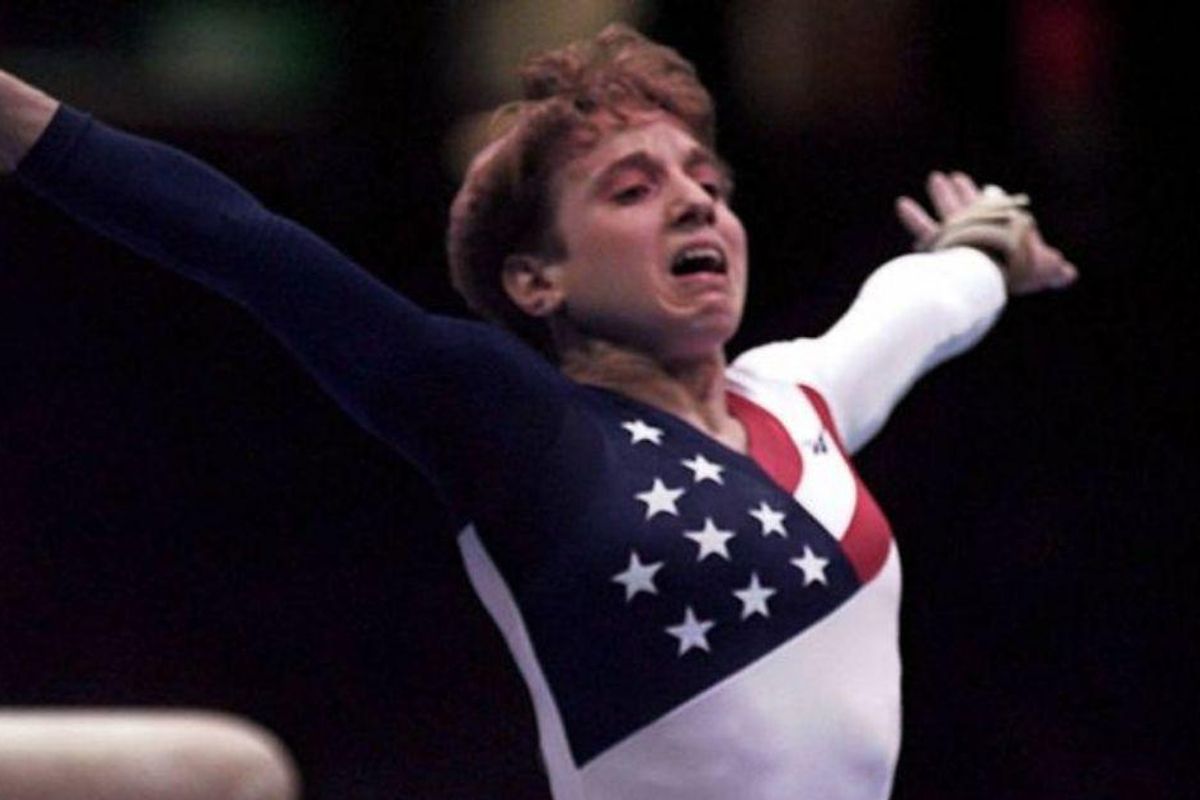
Viral post thoughtfully reexamines Kerri Strug's iconic broken ankle vault at 1996 Olympics

"Yesterday I was excited to show my daughters Kerri Strug's famous one-leg vault...But for some reason I wasn't as inspired watching it this time. In fact, I felt a little sick."
Viral post thoughtfully reexamines Kerri Strug's iconic broken ankle vault at 1996 Olympics

Simone Biles withdrawing from the team final in the Tokyo Olympics and subsequently withdrawing from the individual all-around finals after getting a case of the "twisties" has the world talking. She's received overwhelming support as well as overwhelming criticism for the move, with some praising her for recognizing her limits and others blasting her for not persevering through whatever she's dealing with.

Some people pointed to Kerri Strug, who landed on one foot after vaulting with a broken ankle in the 1996 Olympics to help the U.S. win gold, as an example of the kind of sacrifice an athlete should be willing to make for their country.

Byron Heath shared some thoughts about that fateful day in a viral Facebook post that has been shared more than 370,000 times in less than a day.

Heath wrote:

"This realization I had about Simone Biles is gonna make some people mad, but oh well.

Yesterday I was excited to show my daughters Kerri Strug's famous one-leg vault. It was a defining Olympic moment that I watched live as a kid, and my girls watched raptly as Strug fell, and then limped back to leap again.

But for some reason I wasn't as inspired watching it this time. In fact, I felt a little sick. Maybe being a father and teacher has made me soft, but all I could see was how Kerri Strug looked at her coach, Bela Karolyi, with pleading, terrified eyes, while he shouted back 'You can do it!' over and over again.

My daughters didn't cheer when Strug landed her second vault. Instead they frowned in concern as she collapsed in agony and frantic tears.

'Why did she jump again if she was hurt?' one of my girls asked. I made some inane reply about the heart of a champion or Olympic spirit, but in the back of my mind a thought was festering: *She shouldn't have jumped again*

The more the thought echoed, the stronger my realization became. Coach Karolyi should have gotten his visibly injured athlete medical help immediately! Now that I have two young daughters in gymnastics, I expect their safety to be the coach's number one priority. Instead, Bela Karolyi told Strug to vault again. And he got what he wanted; a gold medal that was more important to him than his athlete's health. I'm sure people will say 'Kerri Strug was a competitor--she WANTED to push through the injury.' That's probably true. But since the last Olympics we've also learned these athletes were put into positions where they could be systematically abused both emotionally and physically, all while being inundated with 'win at all costs' messaging. A teenager under those conditions should have been protected, and told 'No medal is worth the risk of permanent injury.' In fact, we now know that Strug's vault wasn't even necessary to clinch the gold; the U.S. already had an insurmountable lead.

Nevertheless, Bela Karolyi told her to vault again according to his own recounting of their conversation:

'I can't feel my leg,' Strug told Karolyi.

'We got to go one more time,' Karolyi said. 'Shake it out.'

'Do I have to do this again?' Strug asked. 'Can you, can you?' Karolyi wanted to know.

'I don't know yet,' said Strug. 'I will do it. I will, I will.'

The injury forced Strug's retirement at 18 years old. Dominique Moceanu, a generational talent, also retired from injuries shortly after. They were top gymnasts literally pushed to the breaking point, and then put out to pasture. Coach Karolyi and Larry Nassar (the serial sexual abuser) continued their long careers, while the athletes were treated as a disposable resource.

Today Simone Biles--the greatest gymnast of all time--chose to step back from the competition, citing concerns for mental and physical health. I've already seen comments and posts about how Biles 'failed her country', 'quit on us', or 'can't be the greatest if she can't handle the pressure.' Those statements are no different than Coach Karolyi telling an injured teen with wide, frightened eyes: 'We got to go one more time. Shake it out.'

The subtext here is: 'Our gold medal is more important than your well-being.'

Our athletes shouldn't have to destroy themselves to meet our standards. If giving empathetic, authentic support to our Olympians means we'll earn less gold medals, I'm happy to make that trade.

Here's the message I hope we can send to Simone Biles: You are an outstanding athlete, a true role model, and a powerful woman. Nothing will change that. Please don't sacrifice your emotional or physical well-being for our entertainment or national pride. We are proud of you for being brave enough to compete, and proud of you for having the wisdom to know when to step back. Your choice makes you an even better example to our daughters than you were before. WE'RE STILL ROOTING FOR YOU!"

Many people shared Heath's sentiment, with comments pouring in thanking him for putting words to what they were feeling.

We're in a new era where our lens of what's admirable, what's strong, and what's right has shifted. We understand more about the lifelong impact of too many concussions. We have trainers and medics checking on football players after big hits. We are finding a better balance between competitiveness and well-being. We are acknowledging the importance of mental health and physical health.

We are also more aware of how both physical and mental trauma impacts young bodies. Though Kerri Strug pushing through the pain has long been seen as an iconic moment in sports, the adults in the room should have been protecting her, not pushing her through an obvious injury.

And the way this fall of Dominique Moceanu at age 14 was handled is downright shocking by today's standards. She said she never received an exam for it, even after the competition was over. So wrong.

Athletes are not cogs in a wheel, and the desire to win a competition should not trump someone's well-being. Elite gymnasts already put themselves through grueling physical and mental feats; they wouldn't be at the top of their sport if they didn't. But there are limits, and too often in our yearning for a gold medal—or even for a triumphant Olympic story—we push athletes too far.

Now we see some of them pushing back, and knowing what we know now, that's 100% a good thing.


This article originally appeared 3 years ago.

Planet

Our favorite giveaway is back. Enter to win a free, fun date! 🌊 💗

It's super easy, no purchase or donation necessary, and you help our oceans! That's what we call a win-win-win. Enter here.

Our favorite giveaway is back. Enter to win a free, fun date! 🌊 💗
True

Our love for the ocean runs deep. Does yours? Enter here!

This Valentine’s Day, we're bringing back our favorite giveaway with Ocean Wise. You have the chance to win the ultimate ocean-friendly date. Our recommendation? Celebrate love for all your people this Valentine's Day! Treat your mom friends to a relaxing spa trip, take your best friend to an incredible concert, or enjoy a beach adventure with your sibling! Whether you're savoring a romantic seafood dinner or enjoying a movie night in, your next date could be on us!

Here’s how to enter:


  • Go to upworthy.com/oceandate and complete the quick form for a chance to win - it’s as easy as that.
  • P.S. If you follow @oceanwise or donate after entering, you’ll get extra entries!

Here are the incredible dates:

1. Give mom some relaxation

She’s up before the sun and still going at bedtime. She’s the calendar keeper, the lunch packer, the one who remembers everything so no one else has to. Moms are always creating magic for us. This Valentine’s Day, we’re all in for her. Win an eco-friendly spa day near you, plus a stash of All In snack bars—because she deserves a treat that’s as real as she is. Good for her, kinder to the ocean. That’s the kind of love we can all get behind.


Special thanks to our friends at All In who are all in on helping moms!

2. Jump in the ocean, together

Grab your favorite person and get some much-needed ocean time. Did you know research on “blue spaces” suggests that being near water is linked with better mental health and well-being, including feeling calmer and less stressed? We’ll treat you to a beach adventure like a surfing or sailing class, plus ocean-friendly bags from GOT Bag and blankets from Sand Cloud so your day by the water feels good for you and a little gentler on the ocean too.

Special thanks to our friends at GOT Bag. They make saving the ocean look stylish and fun!

3. Couch potato time

Love nights in as much as you love a date night out? We’ve got you. Have friends over for a movie night or make it a cozy night in with your favorite person. You’ll get a Disney+ and Hulu subscription so you can watch Nat Geo ocean content, plus a curated list of ocean-friendly documentaries and a movie-night basket of snacks. Easy, comfy, and you’ll probably come out of it loving the ocean even more.

4. Dance all day!

Soak up the sun and catch a full weekend of live music at BeachLife Festival in Redondo Beach, May 1–3, 2026, featuring Duran Duran, The Offspring, James Taylor and His All-Star Band, The Chainsmokers, My Morning Jacket, Slightly Stoopid, and Sheryl Crow. The perfect date to bring your favorite person on!

We also love that BeachLife puts real energy into protecting the coastline it’s built on by spotlighting ocean and beach-focused nonprofit partners and hosting community events like beach cleanups.

Date includes two (2) three-day GA tickets. Does not include accommodation, travel, or flights.

5. Chef it up (at home)

Stay in and cook something delicious with someone you love. We’ll hook you up with sustainable seafood ingredients and some additional goodies for a dinner for two, so you can eat well and feel good knowing your meal supports healthier oceans and more responsible fishing.

Giveaway ends 2/15/26 at 11:59pm PT. Winners will be selected at random and contacted via email from the Upworthy. No purchase necessary. Open to residents of the U.S. and specific Canadian provinces that have reached age of majority in their state/province/territory of residence at the time. Please see terms and conditions for specific instructions. Giveaway not affiliated with Instagram. More details at upworthy.com/oceandate

quiet, finger over lips, don't talk, keep it to yourself, silence

A woman with her finger over her mouth.

It can be hard to stay quiet when you feel like you just have to speak your mind. But sometimes it's not a great idea to share your opinions on current events with your dad or tell your boss where they're wrong in a meeting. And having a bit of self-control during a fight with your spouse is a good way to avoid apologizing the next morning.

Further, when we fight the urge to talk when it's not necessary, we become better listeners and give others a moment in the spotlight to share their views. Building that small mental muscle to respond to events rather than react can make all the difference in social situations.


argument, coworkers, angry coworkers, hostile work enviornment, disagreement A woman is getting angry at her coworker.via Canva/Photos

What is the WAIT method?

One way people have honed the skill of holding back when they feel the burning urge to speak up is the WAIT method, an acronym for the question you should ask yourself in that moment: "Why Am I Talking?" Pausing to consider the question before you open your mouth can shift your focus from "being heard" to "adding value" to any conversation.

The Center for The Empowerment Dynamic has some questions we should consider after taking a WAIT moment:

  • What is my intention behind what I am about to say?
  • What question can I ask to better understand what the other person is saying?
  • Is my need to talk an attempt to divert the attention to me?
  • How might I become comfortable with silence rather than succumb to my urge to talk?

tape over muth, sielnce, be quiet, mouth shut, saying nothing A man with tape over his mouth.via Canva/Photos

The WAIT method is a good way to avoid talking too much. In work meetings, people who overtalk risk losing everyone's attention and diluting their point to the extent that others aren't quite sure what they were trying to say. Even worse, they can come across as attention hogs or know-it-alls. Often, the people who get to the heart of the matter succinctly are the ones who are noticed and respected.

Just because you're commanding the attention of the room doesn't mean you're doing yourself any favors or helping other people in the conversation.

The WAIT method is also a great way to give yourself a breather and let things sit for a moment during a heated, emotional discussion. It gives you a chance to cool down and rethink your goals for the conversation. It can also help you avoid saying something you regret.

fight, spuse disagreement, communications skills, upset husband, argument A husband is angry with his wife. via Canva/Photos

How much should I talk in a meeting?

So if it's a work situation, like a team meeting, you don't want to be completely silent. How often should you speak up?

Cary Pfeffer, a speaking coach and media trainer, shared an example of the appropriate amount of time to talk in a meeting with six people:

"I would suggest a good measure would be three contributions over an hour-long meeting from each non-leader participant. If anyone is talking five/six/seven times you are over-participating! Allow someone else to weigh in, even if that means an occasional awkward silence. Anything less seems like your voice is just not being represented, and anything over three contributions is too much."

Ultimately, the WAIT method is about taking a second to make sure you're not just talking to hear yourself speak. It helps ensure that you have a clear goal for participating in the conversation and that you're adding value for others. Knowing when and why to say something is the best way to make a positive contribution and avoid shooting yourself in the foot.

baby, baby fever, biological urge to have a baby, want a baby, having a child

Holding a baby can trigger a wave of "baby fever."

Choosing to have a child is one of the biggest life decisions a person can make and a highly individual choice. Some people know they want to be parents from a young age, some people decide to never have kids, and a whole lot of people fall somewhere in between. Some plan to have kids and it doesn’t work out. Others have no desire to have kids until something happens and suddenly they do.

A perfect example of such a change of heart can be seen in a video from Daniela Brkic, who captured the moment her friend, who didn’t want kids, held a baby for the first time. She clearly wasn’t prepared for how she would feel, as we see the young woman holding the baby with tears streaming down her cheeks and a look of utter joy and bewilderment on her face.


@daniela.brkic

First time holding a baby and now she wants 8, probably my favourite video ever 😭😂 #fyp @brkicbaby

She's so taken with the wee one that she can barely look at her. As her friends wipe her tears (at her request, so she doesn't get them on the baby), she says, "I need to have a kid," and "I want to take my top off and have skin-to-skin contact."

Brkic wrote that it was the friend's "first time holding a baby," adding, "and now she wants 8." So many people recognized the overwhelming urge to have a baby coming out of nowhere and commiserated in the comments.

"If that’s not baby FEVER then idk what is."

"Omg don't let her smell the baby's head. 😭😂"

"Just another example of our bodies betraying our good common sense. 😂"

"Her-i dont want kids. her uterus-WE ARE SOOOOO GETTING ONE OF THESE!!!! 🥰🥰🥰"

"Her ovaries activated 😂❤️❤️❤️"

baby, baby fever, biological urge to have a baby, want a baby, having a child, baby feet Tiny baby toes are too cute. Photo credit: Canva

"Those maternal instincts booted down the door and arrived with a BANG with the skin to skin comment 🤣🤣🤣"

"She’s not ready for skin to skin, her heart will literally explode."

"What a wholesome crash out 😂🥰❤️"

"She’s going to be the greatest mom!"

"THIS HAPPENED TO ME. I NEVER WANTED KIDS. Then I held a baby and it drooled on me and laughed. We now have 2 and they're my favorite people in THE WHOLE WORLD AND THEY'RE SO FUN."

"I NEVER wanted kids!!! I held my cousin's baby and fell in love. That was July of 2014. My son was born July of 2015!!!!"

baby, baby fever, biological urge to have a baby, want a baby, having a child Beware the sleepy baby as a baby fever trigger.Photo credit: Canva

Other commenters warned her that the baby fever is a temporary feeling, with some going so far as to call it a "trick" or a "trap." After all, they don't stay sweet, adorable babies forever.

"They DONT ALWAYS SLEEP. They're much harder awake. Do not fall for sleeping babies."

"Give her a toddler, she will get over it really quick 😵💫😂"

"now give her a 3 year old that has missed their nap, got the blue cup instead of the green and their biscuits broke 👹👹👹"

"Girl it’s a trick 😩 they start that cute for a reason."

"It’s a trap. They need cars and insurance 😭"

Is 'baby fever' a real phenomenon?

Yep. It is. That doesn't mean everyone experiences it, of course. But according to Gary Brase, an associate professor of psychology at Kansas State University who spent nearly 10 years studying the “baby fever” phenomenon, not only is it real, but it’s not limited to women. Though it shows up more frequently and to a stronger degree in females, it happens across the gender spectrum,. Brase and his wife Sandra went into their research looking at three theories about what contributes to a sudden, strong urge to have a baby:

1. The sociocultural view: "People want to have a baby because they are taught gender roles. Women think they should have children because society says that is what they are supposed to do."

2. The byproduct view: "Humans experience nurturance. When they see a cute baby they want to take care of it, and that makes them want to have a baby of their own. Baby fever is a by-product -- it is nurturance misplaced."

3. The adaptationist view: "Baby fever is an emotional signal -- like a suggestion sent from one part of the mind to the other parts -- that this could be a good time to have a child."

baby, baby fever, biological urge to have a baby, want a baby, having a child Is "baby fever" a natural phenomenon? Photo credit: Canva

But the results of their research found three different factors that contribute to wanting to have a child.

"The first two had to do with the visual sensory things," Brase told NBC News. "Seeing a baby, hearing a baby, smelling a baby led some people to want to have a baby." Conversely, seeing the more “disgusting” parts of having a baby, such as dirty diapers and spit-up, had an anti-baby-fever effect. The third factor was about life circumstances and trade-offs that made it seem feasible or not feasible to have a baby.

"People would say, 'I don't want to have a baby because I don't have money or I don't have time or I don't have a partner," Brase said. "All of the rational thoughts. That showed up as a third factor."

The mix of biological urge and societal conditioning can be a potent combo, which is why older adults will often tell young people that they might change their mind. Then again, they might not. Plenty of people live happy, fulfilling lives without having children, and plenty of people who never saw themselves becoming a parent find it to be the highlight of their life.

Time will tell whether this woman's baby fever is temporary or permanent, but how lucky is that baby to be surrounded by so much love?

arthur c. brooks, harvard, psychology, happiness research, bucket list

Harvard researcher Arthur C. Brooks studies what leads to human happiness.

We live in a society that prizes ambition, celebrating goal-setting, and hustle culture as praiseworthy vehicles on the road to success. We also live in a society that associates successfully getting whatever our hearts desire with happiness. The formula we internalize from an early age is that desire + ambition + goal-setting + doing what it takes = a successful, happy life.

But as Harvard University happiness researcher Arthur C. Brooks has found, in his studies as well as his own experience, that happiness doesn't follow that formula. "It took me too long to figure this one out," Brooks told podcast host Tim Ferris, explaining why he uses a "reverse bucket list" to live a happier life.


bucket list, wants, desires, goals, detachment Many people make bucket lists of things they want in life. Giphy

Brooks shared that on his birthday, he would always make a list of his desires, ambitions, and things he wanted to accomplish—a bucket list. But when he was 50, he found his bucket list from when he was 40 and had an epiphany: "I looked at that list from when I was 40, and I'd checked everything off that list. And I was less happy at 50 than I was at 40."

As a social scientist, he recognized that he was doing something wrong and analyzed it.

"This is a neurophysiological problem and a psychological problem all rolled into one handy package," he said. "I was making the mistake of thinking that my satisfaction would come from having more. And the truth of the matter is that lasting and stable satisfaction, which doesn't wear off in a minute, comes when you understand that your satisfaction is your haves divided by your wants…You can increase your satisfaction temporarily and inefficiently by having more, or permanently and securely by wanting less."

Brooks concluded that he needed a "reverse bucket list" that would help him "consciously detach" from his worldly wants and desires by simply writing them down and crossing them off.

"I know that these things are going to occur to me as natural goals," Brooks said, citing human evolutionary psychology. "But I do not want to be owned by them. I want to manage them." He discussed moving those desires from the instinctual limbic system to the conscious pre-frontal cortex by examining each one and saying, "Maybe I get it, maybe I don't," but crossing them off as attachments. "And I'm free…it works," he said.

- YouTube www.youtube.com

"When I write them down, I acknowledge that I have the desire," he explained on X. "When I cross them out, I acknowledge that I will not be attached to this goal."

The idea that attachment itself causes unhappiness is a concept found in many spiritual traditions, but it is most closely associated with Buddhism. Mike Brooks, PhD, explains that humans need healthy attachments, such as an attachment to staying alive and attachments to loved ones, to avoid suffering. But many things to which we are attached are not necessarily healthy, either by degree (over-attachment) or by nature (being attached to things that are impermanent).

"We should strive for flexibility in our attachments because the objects of our attachment are inherently in flux," Brooks writes in Psychology Today. "In this way, we suffer unnecessarily when we don't accept their impermanent nature."

What Arthur C. Brooks suggests that we strive to detach ourselves from our wants and desires because the simplest way to solve the 'haves/wants = happiness' formula is to reduce the denominator. The reverse bucket list, in which you cross off desires before you fulfill them, can help free you from attachment and lead to a happier overall existence.

This article originally appeared last year.

Family

Mom shares her family's 10-year tradition of ending each day with an hour of silent reading

"This has to be one of the top nervous system regulators out there."

reading routine ,reading for kids, bedtime routine for kids, raising calm kids, parenting
via @1beccapike/Instagram, used with permission

A great way for the whole family to wind down.

Mom and business coach Becca Pike (1beccapike) recently shared a rather unconventional nightly routine that she and her family have been doing over the past decade: reading in silence for one hour.

In a video posted on her Instagram, Pike explained that her house has a hard lights-out curfew of 8 p.m. However, that curfew can be pushed to 9 p.m. if you are reading. It was something she started with her eldest child at seven (now 17), and continued with all four of her kids. Even before her young kids could read, they would still participate in the routine, and “just stare at the pictures” in their books.


The result: a pack of calm booklovers able to sit comfortably in boredom and get great sleep. All this happened by simply not ending the night with the “TV blaring” or “running errands till passing out,” according to Pike. Hence why she claimed "this has to be one of the top nervous system regulators out there."

To say parents were inspired would be an understatement.

“Love this! Trying to cultivate better sleep habits...and this is perfect,” one parent wrote.

Another added, “ Ready to start this with my 5 month old lol”

A few other parents shared their own similar routines.

“We do ‘quiet time’ for an hour before bed - rules are you can do reading, writing or drawing ❤️ it’s so lovely to do these quiet activities together and a calm end to the day.”

“What a beautiful scene! We do something similar, and it’s a great transition to bedtime ❤️”

“Love this - we have a no phones in the bedroom rule and you get an old school alarm clock ⏰”

We generally know how vital boredom is to a child’s development, helping them become more creative, better at problem-solving, more emotionally resilient, and yet, our modern world makes that unstructured time harder and harder to come by.

The truth is, relaxation only comes if one intentionally carves out time for it. Pike’s kids are not only getting to learn this firsthand, but because she herself participates. They see this kind of healthy behavior modeled by an adult, which also helps the habit stick.

There are other kid-friendly, screen-free activities—like enjoying a warm bath, listening to soft music, doing gentle stretches—that can also be effective at inspiring a sense of calm before bed, so long as they’re done consistently.

- YouTube www.youtube.com

But what’s particularly cool about this reading routine is that it can be enjoyed both as a solo activity and as a shared family experience with shared benefits. Adults are in equal need of a respite from the screens, chores, and last-minute to-dos. This simple, predictable ritual offers a shared pause button where everybody wins. Kids get a sense of autonomy (“stay up later if you read”) while parents still reinforce boundaries and rest. And for both parties, reading is reframed as a cozy privilege rather than a chore.

When modern life moves relentlessly fast and demands constant stimulation, an hour of collective quiet might be one of the most generous gifts a family can give itself.

Sustainability

A new school for girls in India stays cool in 120 degree desert heat without air conditioning

The award-winning structure is a huge step forward for sustainable design.

schools, india, desert, architecture, buildings, design, sustainable design, sustainable architecture, women, girls
Mike Rowe/Flickr & Canva Photos
Revolutionary school building stays cool even in 120 degree desert heat—with no air conditioning

Michael Daube, founder of the nonprofit CITTA, wanted to bring a school for girls to one of the most rural and conservative parts of India. In the region known as Rajasthan, the literacy rate for women was among the lowest in the country. There were few to no opportunities for girls to learn, and, for many, the only path in life was marriage.

There was just one problem with the plan: the rural desert community called Jaisalmer had almost no infrastructure to support a building that would meet the potential students' needs, and the nearest city was 40km away. Further complicating things, it would be challenging to build a low-tech outside venue for kids to learn in because of sweltering desert temperatures that routinely reach over 120 degrees Fahrenheit.


Luckily, architect Diana Kellogg was up to the challenge.

"I was so struck by Jaisalmer, the beauty of the place and how difficult it is to build in the climate," she told Stir World. "There was something very captivating about Jaisalmer and I also learned more about the situation of women and girls in that area. I was affirmed by the fact that education is better not just for individuals, but for the society as a whole. It changes the whole dynamic in societies."

She worked closely with the community to design the school, The Rajkumari Ratnavati Girls School, in a way that would empower women, give girls a safe place to learn, and stand up to the desert heat.

What's incredible is that the school building is able to stay relatively cool with no air conditioning even in the 120 degree heat using both ancient and local techniques:

  • Locally sourced sandstone gives the building its golden color and helps keep heat out of the interiors
  • Lining the inner walls with a material called lime plaster reduces humidity
  • A courtyard, which is customary in India, provides shade at many times throughout the day and can also be covered by a canopy
  • A jali wall—a grid-like structure—allows air to accelerate into the courtyard creating a breeze
  • High ceilings with window vents encourage hot air to escape
  • The elliptical shape of the building encourages air flow and allows high desert winds to flow around the structure

These techniques miraculously allow the indoor spaces to remain about 20-30 degrees cooler than the outside temperature.

- YouTube youtu.be

The school building is also completely solar and wind powered, while a water harvesting system helps recycle the school's graywater and harvest fresh rainwater.

Not only does the sustainable building look and feel like an extension of its desert surroundings, it uses building techniques, materials, and technology that the girls in the region are familiar with. It's all designed to help them feel safe and unencumbered in their learning.

There are plans to expand the school in the near future, adding more buildings that will support a women's cooperative, a marketplace, a library, museum, and an exhibition space that will serve the extremely remote and rural community.

- YouTube youtu.be

Kellogg and CITTA hope that the school can become a blueprint for more just like it around the world.

School is something many kids and families take for granted as a part of their communities, but there are plenty of areas like Jaisalmer where lack of infrastructure, poverty, and gender inequality keep kids from educational opportunities. In 2015, Global Citizen estimated about 60 million kids worldwide do not have access to a formal education. The Rajkumari Ratnavati Girls School is a wonder of modern architecture, but it also proves that it is possible through creative engineering to bring safe educational spaces to kids no matter where they live.

The building also won several architecture awards, including a prestigious recognition in the 2023 AIA Architecture Awards. It all helps get the word out.

"The comments that have come in are heart-warming. The girls find the space to be free and comfortable," Kellogg told Stir World. In a 2023 interview with CNN, she added that she's already seen a difference in the local girls who have attended school in the building she designed.

"[I've seen] the change in the girls, from being quite shy to being these bright lights that are devouring whatever kind of information you put in front of them."