Simone Biles withdrawing from the team final in the Tokyo Olympics and subsequently withdrawing from the individual all-around finals after getting a case of the “twisties” has the world talking. She’s received overwhelming support as well as overwhelming criticism for the move, with some praising her for recognizing her limits and others blasting her for not persevering through whatever she’s dealing with.
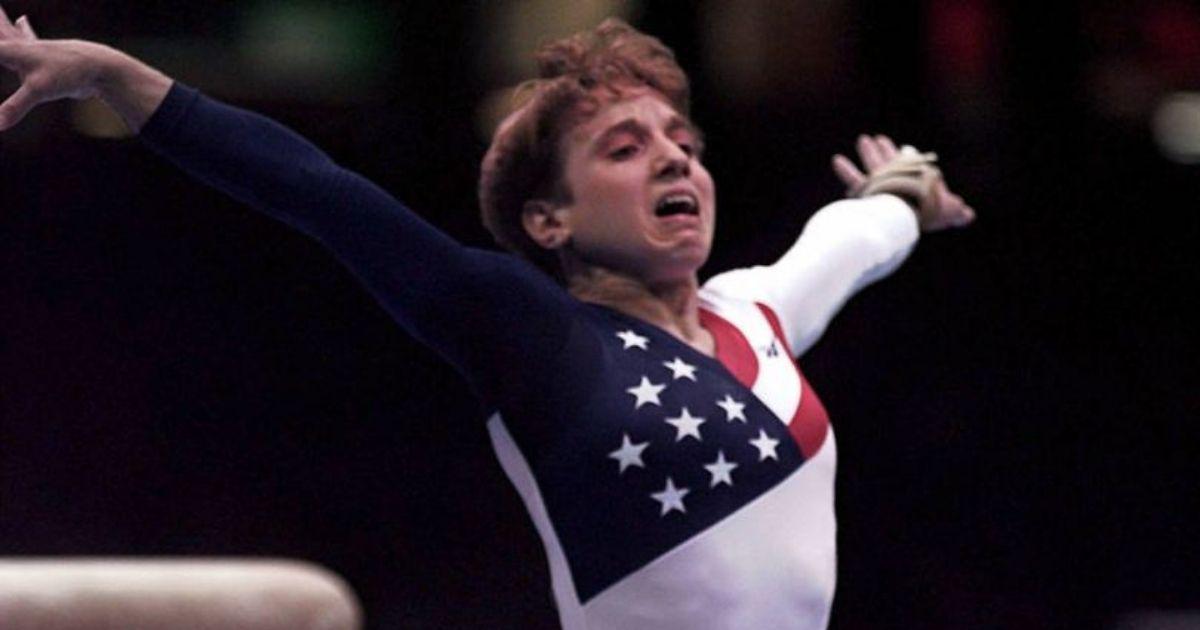
Some people pointed to Kerri Strug, who landed on one foot after vaulting with a broken ankle in the 1996 Olympics to help the U.S. win gold, as an example of the kind of sacrifice an athlete should be willing to make for their country.
Byron Heath shared some thoughts about that fateful day in a viral Facebook post that has been shared more than 370,000 times in less than a day.
Heath wrote:
“This realization I had about Simone Biles is gonna make some people mad, but oh well.
Yesterday I was excited to show my daughters Kerri Strug’s famous one-leg vault. It was a defining Olympic moment that I watched live as a kid, and my girls watched raptly as Strug fell, and then limped back to leap again.
But for some reason I wasn’t as inspired watching it this time. In fact, I felt a little sick. Maybe being a father and teacher has made me soft, but all I could see was how Kerri Strug looked at her coach, Bela Karolyi, with pleading, terrified eyes, while he shouted back ‘You can do it!’ over and over again.
My daughters didn’t cheer when Strug landed her second vault. Instead they frowned in concern as she collapsed in agony and frantic tears.
‘Why did she jump again if she was hurt?’ one of my girls asked. I made some inane reply about the heart of a champion or Olympic spirit, but in the back of my mind a thought was festering: *She shouldn’t have jumped again*
The more the thought echoed, the stronger my realization became. Coach Karolyi should have gotten his visibly injured athlete medical help immediately! Now that I have two young daughters in gymnastics, I expect their safety to be the coach’s number one priority. Instead, Bela Karolyi told Strug to vault again. And he got what he wanted; a gold medal that was more important to him than his athlete’s health. I’m sure people will say ‘Kerri Strug was a competitor–she WANTED to push through the injury.’ That’s probably true. But since the last Olympics we’ve also learned these athletes were put into positions where they could be systematically abused both emotionally and physically, all while being inundated with ‘win at all costs’ messaging. A teenager under those conditions should have been protected, and told ‘No medal is worth the risk of permanent injury.’ In fact, we now know that Strug’s vault wasn’t even necessary to clinch the gold; the U.S. already had an insurmountable lead.
Nevertheless, Bela Karolyi told her to vault again according to his own recounting of their conversation:
‘I can’t feel my leg,’ Strug told Karolyi.
‘We got to go one more time,’ Karolyi said. ‘Shake it out.’
‘Do I have to do this again?’ Strug asked. ‘Can you, can you?’ Karolyi wanted to know.
‘I don’t know yet,’ said Strug. ‘I will do it. I will, I will.’
The injury forced Strug’s retirement at 18 years old. Dominique Moceanu, a generational talent, also retired from injuries shortly after. They were top gymnasts literally pushed to the breaking point, and then put out to pasture. Coach Karolyi and Larry Nassar (the serial sexual abuser) continued their long careers, while the athletes were treated as a disposable resource.
Today Simone Biles–the greatest gymnast of all time–chose to step back from the competition, citing concerns for mental and physical health. I’ve already seen comments and posts about how Biles ‘failed her country’, ‘quit on us’, or ‘can’t be the greatest if she can’t handle the pressure.’ Those statements are no different than Coach Karolyi telling an injured teen with wide, frightened eyes: ‘We got to go one more time. Shake it out.’
The subtext here is: ‘Our gold medal is more important than your well-being.’
Our athletes shouldn’t have to destroy themselves to meet our standards. If giving empathetic, authentic support to our Olympians means we’ll earn less gold medals, I’m happy to make that trade.
Here’s the message I hope we can send to Simone Biles: You are an outstanding athlete, a true role model, and a powerful woman. Nothing will change that. Please don’t sacrifice your emotional or physical well-being for our entertainment or national pride. We are proud of you for being brave enough to compete, and proud of you for having the wisdom to know when to step back. Your choice makes you an even better example to our daughters than you were before. WE’RE STILL ROOTING FOR YOU!”
Many people shared Heath’s sentiment, with comments pouring in thanking him for putting words to what they were feeling.
We’re in a new era where our lens of what’s admirable, what’s strong, and what’s right has shifted. We understand more about the lifelong impact of too many concussions. We have trainers and medics checking on football players after big hits. We are finding a better balance between competitiveness and well-being. We are acknowledging the importance of mental health and physical health.
We are also more aware of how both physical and mental trauma impacts young bodies. Though Kerri Strug pushing through the pain has long been seen as an iconic moment in sports, the adults in the room should have been protecting her, not pushing her through an obvious injury.
And the way this fall of Dominique Moceanu at age 14 was handled is downright shocking by today’s standards. She said she never received an exam for it, even after the competition was over. So wrong.
Athletes are not cogs in a wheel, and the desire to win a competition should not trump someone’s well-being. Elite gymnasts already put themselves through grueling physical and mental feats; they wouldn’t be at the top of their sport if they didn’t. But there are limits, and too often in our yearning for a gold medal—or even for a triumphant Olympic story—we push athletes too far.
Now we see some of them pushing back, and knowing what we know now, that’s 100% a good thing.
This article originally appeared 3 years ago.