In praise of morning birds

Every morning, when the windows of my house are raised, I remember how much of a gift it is to be alive together.

Array
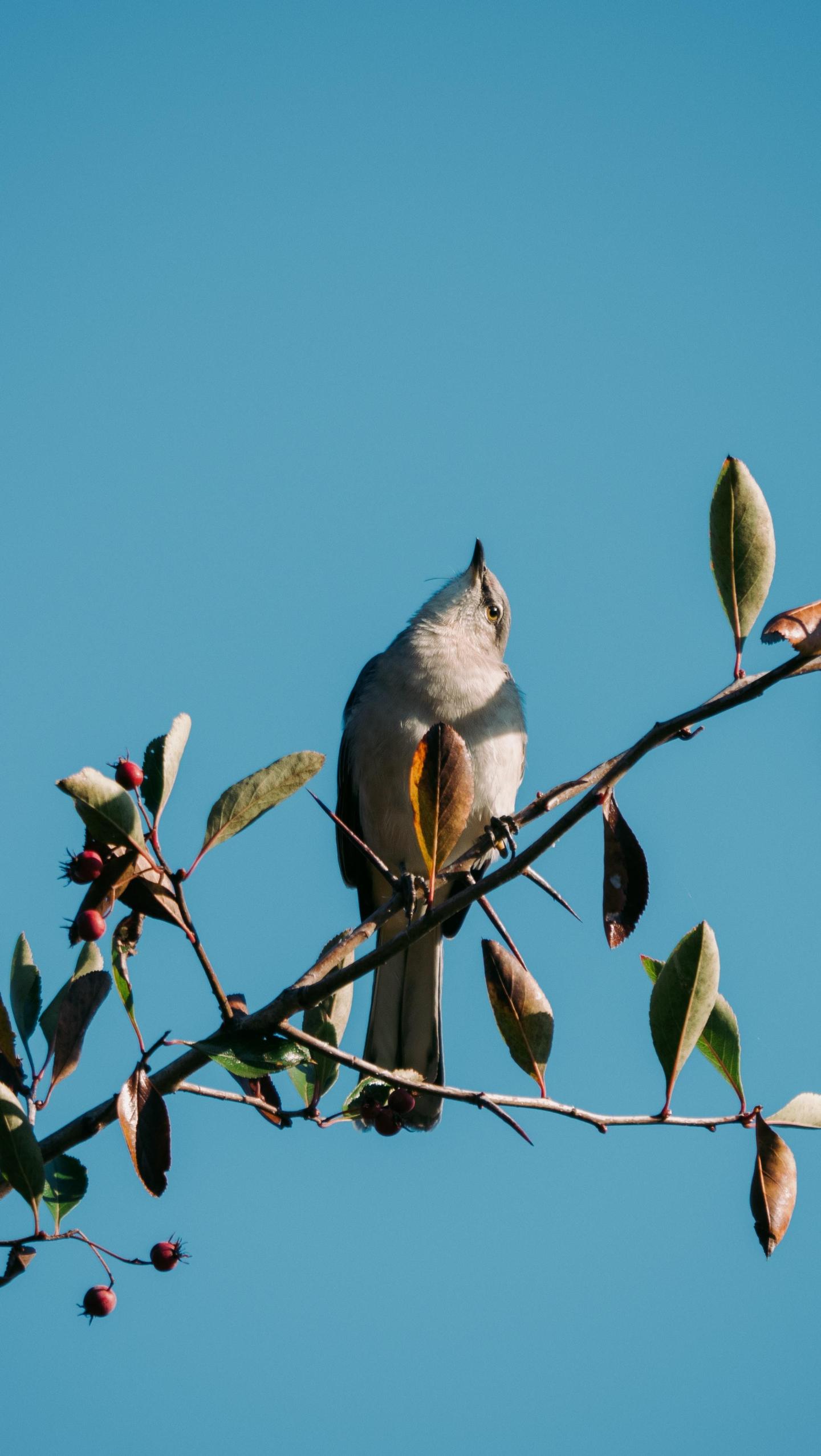
Photo credit: Photo by Mark Olsen on Unsplashgray and white bird on tree branch during daytime

On the day I heard my grandmother laugh so deep and so precious it made my stomach quake, I am sitting on the edge of my wooden kitchen table, staring out the window as the sun beats against the seals. The morning is hot, a bit of the southern stuffiness that happens in Georgia during the summer months, and the wind blows pages out of order as they sit on the table. Just a few moments ago, I am pouring my coffee into my dinner mug, setting it on the table, raising the windows a bit so that the warm breeze can enter my house. Ten minutes later, the red mug that I got from the bookstore some months ago is empty, the contents of the cup have warmed my insides. I close my ends. I take three long, deep breaths in. I take three long, deep breaths out.

And I hear the sound of morning birds.


I have made it a practice of late to raise the windows in the morning time to be greeted by their song. The chirping, swift, sharp and high-pitched echoes from one bird to another. For a few seconds, I pause, gazing upward from the green grass to the trees that sway in the distance. For a few seconds, I pause long enough to notice that no one bird interrupts the others. Each bird, one by one, makes a noise and then another and then another. My grandmother told me that when birds sing, if you listen close enough, you can tell that their melodies are never drawn out. It doesn’t take much to be heard, I guess. In one simple sound, overheard through the glass window, their presence is felt in my world. There is no pressure. There is no stage. There is no timeline. There is only a small animal doing what it has been created to do, reminding me that in life, I too take up space and whatever space I crave in this world is enough to make another pause and pay attention.

This reminds me, strangely enough, of the times as children where we would be in the church on Sunday mornings. For us, children of the black rural South, Sunday mornings were much like Friday nights around time. See, on Friday, the days the town would shut down because of high school football games in the fall, hardly anything moved. As the football time made their way to the altar between the lines, the miracle was the fact that under these lights even the most public of failure demanded intentional presence. Mothers, fathers, cousins and friends would make their way to the bleachers to experience what could only be called “baptism”—experience being enveloped by the simple yet powerful gaze of the body’s movement under pressure. That moment, much like Sundays at church, feels divine and sacred, I guess. Or maybe that’s too much. I do know that from a child, both Fridays and Sundays made such an impression that I too ran up and down the field; I too ran up and down the church.

I don’t think I know the age of birds or even if, from their perspective, their songs are sung again and again, but I do know that every morning, when the windows of my house are raised, I remember how much of a gift it is be alive together.

woman in red white and blue plaid shirt smoking cigarette Photo by <a href="https://unsplash.com/@nate072107?utm_source=RebelMouse&utm_medium=referral">NATHAN MULLET</a> on <a href="https://unsplash.com/?utm_source=RebelMouse&utm_medium=referral">Unsplash</a>

I called my grandmother a few days ago and asked her if she remembered the time she, sitting on the porch a few weeks ago, told me about the solace she has found by being wrapped in the silence. Every morning, like me or me like her, she makes her coffee, says her prayers, read her Bible and then sits on the porch. “Do you like think or you just sit,” I asked her, wondering if we were more alike than I remembered. “I just sit,” she said. “I remember how as kids, we would just love to come on the porch and sit and listen to the birds.” I asked her if she still does this. She said yes. “I love it,” she told me. “Ohhhhhh, I do.”

A few months ago, after having sat on the porch for years with my grandaddy, sharing laughs and coffee along with the sound of birds and the cool South Carolina breeze that would touch their cheeks, grandma said her final goodbyes to him. That moment too was wrapped in silence. Grandaddy had dementia. Every time I saw him, at least for the last few years, he repeated the same story over and over, again and again, until I got proficient at telling the story to him before he started talking. “There was El Paso, Texas,” I would say. “And then there was the poetry,” I would say. “And then …. Let me see …” At that moment, he would laugh, pop me three times in my chest with the black side of his hand, before giving me the type of hug that was gestured by one minute of heavy laughter. “You on the good foot,” he would ask, mimicking James Brown the best way he could. “Of course grandaddy,” I would say. “You already know.”

That morning, the morning coronavirus made his heart beat faster than my legs ever ran on the football field or across the floors of the church, and then ultimately making it beat so hard that it finally gave way to a singular line, grandma looked at his body, clothed in the white gown with blue streaks, through the glass barrier. She could not touch him. She could not kiss him. She could not touch the top of his head nor grasps the depths of his feet. The next time that would happen: the day of the funeral. I’ll never forget that day or the sound or the picture of her rough hands touching him and sitting as still as the trees that surround their house. I’ll never forget it.

I’ll also never forget that afternoon, the house smelling like perfume, chicken, sweet potato pie and grief, the moments grandma and I shared on the porch. We didn’t say much. We just sat there. Together. Cars lined the concrete road, dirt and rocks mixed; loud voices were heard faintly through the shut door. Her hands rested in her lap. She still had on the two-piece suit she wore to the funeral. Blue, with a white blouse, the pink flower resting on the left side of her chest.

The dawn chorus is said to be the song of blackbirds, robins, Eurasian wrens and chaffinches. It is said to mark the magical beginnings of a new day. It is said that it is an explosion of life bursting out of the Earth that makes the heart leap. It is said that whether you are in the city or in the country that you can hear this sound. It is said that this sound is most noticeable in spring.

crowd of people inside room dancing while watching person singing Photo by <a href="https://unsplash.com/@jamesoliverbarr?utm_source=RebelMouse&utm_medium=referral">James Barr</a> on <a href="https://unsplash.com/?utm_source=RebelMouse&utm_medium=referral">Unsplash</a>

Well, grandma said when she sits on the porch every morning, she hears less and less birds singing. I guess she meant that with grandaddy being gone, the birds are lot less happy like her and that like Toni Morrison’s Shalimar in “Song of Solomon,” grandaddy has learned how to fly and has found his rest. I guess when she said that less birds are around and then started talking about climates changing, she was talking about our lack of pausing to care for the Earth and noticing how things so precious aren’t around anymore. I guess she was saying that we too are like the birds, we have survived so much and have found a way to greet each other in the morning with something that makes the heart softer. I guess she didn’t mean any of that, but to remind me the power of our presence together in grief: it weds what we lost to what we remember and lets us know that so much love remains.

The birds of the morning turn a song into a memory, an ordinary porch into an altar. What else can we give to one another in these moments of sadness but something that reminds each other that there are two of us here? What else can we give to one another but the assurance that stories don’t always when bad things happen?

The birds greeted me this morning. My windows were up. Grandma sat on the porch. We sipped coffee together.


  • Man explains the counterintuitive reason Norwegians love fishnet underwear
    Photo credit: CanvaFishnet stockings have multiple purposes.

    When you think of mesh shirts and fishnet stockings, you might picture a goth, punk, or other brands of night club fashion. Most wouldn’t associate fishnet garments with hiking, skiing, or dogsledding.

    But as Michael Kristy from The Iron Snail Clothing Co. explains, fishnets are the underwear of choice for many. In particular, Norwegians who want to enjoy the great outdoors in all temperatures wear them. It may seem counterintuitive to wear something holey to stay warm, but there’s a reason it works better than most base layers.

    Kristy explains that Norwegians have been wearing fishnets under their clothes for over 100 years. And they’re not the only ones. The first people who summited Mt. Everest wore a fishnet layer under their clothing to stay warm.

    Mesh undergarments were popular around the 1950s, but they weren’t called fishnets. They were called “health vests” or “string vests” and they were touted as being “recommended by medical professionals.”

    What’s the big deal with mesh? It’s all about the air layer it creates. Wearing it under clothing serves as both an insulating layer and a moisture wicking layer.

    “It really helps regulate your overall body temperature and makes you feel a lot more comfortable when you don’t have wet, clammy clothes sticking to you at all times,” says Kristy.

    The Norwegian company Brynje manufactures mesh under layers and claims they are four to six times warmer than other base layers.

    So under other clothing, the fishnet fabric keeps you warmer. But conversely, if you get too hot, stripping down to only the mesh layer will quickly cool you down.

    In addition to plenty of punk/goth approvals, the comments included corroboration from Norwegians and others who have first-hand experience with the magic of mesh base layers:

    “Norwegian here, and proud wearer of «netting» as we call it in the military!”

    “Can confirm, most Norwegians (and neighbours) that do outdoors stuff use ullnetting/woolnet. It’s basically a cheatcode for staying warm, so I have a ton of these. The words fishnets or health/stringvests is never used. You can find very old farmers that use the word healthvest/helsetrøye, mostly people just call them ullnetting or netting if talking to outdoors people.”

    “I’m a veteran. I did training with the Norwegian army on a base north of Norway. I had so many layers and was constantly freezing my ass off. I noticed the Norwegian army guys had these fishnets as their first layer. And asked em why they all had that. He told me it was to keep them warm. Luckily i have not been in that kind of cold since. But getting those fishnet layers has been on my mind since.”

    fishnets, leggings, clothing
    Fishnet leggings add a surprising amount of warmth as an underlayer. Photo credit: Canva

    “Our guide on a glacier tour in Norway had these and told me about them, so I decided to give them a go for a recent vacation to go figure skating on wild ice in northern Sweden. I wore these nets under a merino wool baselayer and a thick Norwegian wool sweater (plus an outer synthetic hard shell to keep out the wind) and it was fantastic. Spent all day outdoors at -20°C combining intense workouts with picnic breaks and never got cold thanks to my base layer always being dry. 11/10 would recommend, I haven’t shut up about these since then.”

    “Yeah, it’s absolutely true too. I’m an avid outdoorsmen, so I’ve watched lots of tests on this. Fishnets outperform even the best wool base layers in absolutely every single category except for odor. Unless we’re talking niche applications there’s nothing better than the fishnets.”

    “I’ve been wearing mesh shirts under my normal clothes for about a year now—and without knowing this was exactly what they were used for, I found it helped me keep cool in the summer and warm in the winter. Imagine my surprise when this video teaches me I’ve been continuing a longstanding Norwegian tradition as a necessity for working in a warehouse (and for punk fashion lol).”

    With as many advancements as we’ve made, sometimes the traditional methods still work best.

    You can follow The Iron Snail on YouTube for more fun clothing facts.

  • President Jimmy Carter’s thoughts about the Bible and homosexuality resurfaces
    Photo credit: Commonwealth Club via Wiki CommonsJimmy Carter at the Commonwealth Club

    Jimmy Carter was the 39th president of the United States (1977 to 1981). Looking back on his achievements both in and out of office, it’s easy to say that he was a man ahead of his time. He was far ahead of the mainstream when it came to advocating for social justice, human rights, and the environment.

    Carter famously installed solar panels on the White House in 1979, only to have them removed by Ronald Reagan.

    The former peanut farmer and Navy Lieutenant from Plains, Georgia, was also far ahead of his time when supporting gay rights. In 1976, while running for president, he said he would sign the Equality Act, an amendment to the 1964 Civil Rights Act that would prohibit discrimination based on sexual orientation. “I will certainly sign it, because I don’t think it’s right to single out homosexuals for special abuse or special harassment,” he said.

    He continued to advocate for gay rights as president. In 1977, the first gay delegation visited the White House. He also campaigned against California’s Proposition 6, which would have barred gays and lesbians from teaching in the state’s schools and was the first Democratic president to endorse gay rights in the party’s platform in 1980.

    It may seem unusual for Carter, a confessed born-again Christian, to be a staunch advocate for gay rights. But he has publicly said that he believes that being pro-gay is wholly aligned with the teachings of Jesus Christ. Carter’s advocacy found itself in the spotlight once again after a meme featuring his thoughts about Christ and homosexuality from 2012 went viral on Reddit’s MadeMeSmile forum on April 8, 2024.

    The viral quote was taken from an interview with the Huffington Post in 2012, during which Carter promoted his book, NIV, Lessons from Life Bible: Personal Reflections with Jimmy Carter. At the time, LGBTQ rights were the subject of heated debate in Washington, and President Obama had just “evolved” and began publicly supporting same-sex marriage.

    “A lot of people point to the Bible for reasons why gay people should not be in the church or accepted in any way,” the interviewer Rev. Paul Brandeis Raushenbush said. But Carter responded by correctly noting that Jesus Christ never said anything about homosexuality.

    “Homosexuality was well known in the ancient world, well before Christ was born and Jesus never said a word about homosexuality. In all of his teachings about multiple things—he never said that gay people should be condemned. I personally think it is very fine for gay people to be married in civil ceremonies,” Carter said. “I draw the line, maybe arbitrarily, in requiring by law that churches must marry people. I’m a Baptist, and I believe that each congregation is autonomous and can govern its own affairs.

    “So if a local Baptist church wants to accept gay members on an equal basis, which my church does, by the way, then that is fine. If a church decides not to, then government laws shouldn’t require them to,” he continued.

    Jimmy Carter, LGBTQ rights, gay rights history, Christian faith and homosexuality, US presidents
    Jimmy Carter in the White House.

    Three years later, Carter shared the same sentiments in another interview with the Huffington Post, this time shortly after the U.S. Supreme Court legalized same-sex marriage. “I think Jesus would encourage any love affair if it was honest and sincere and was not damaging to anyone else, and I don’t see that gay marriage damages anyone else,” Carter said.

    Jimmy Carter’s belief in gay rights stems from his faith as a Christian, but it’s also in complete alignment with his values as an American. Carter believed that the United States was a “beacon” for human rights, and in his 1981 presidential farewell address, he reminded the nation that the job was an ongoing struggle.

    “The battle for human rights–at home and abroad–is far from over,” Carter said. “If we are to serve as a beacon for human rights, we must continue to perfect here at home the rights and values which we espouse around the world: A decent education for our children, adequate medical care for all Americans, an end to discrimination against minorities and women, a job for all those able to work, and freedom from injustice and religious intolerance.”

    Jimmy Carter passed away on December 29, 2024, at the age of 100 years old. He was the longest-lived U.S. president. After his passing, President Joe Biden wrote that Carter, “stands as a model of what it means to live a life of meaning and purpose, a life of principle, of faith and humility. His life was dedicated to others.” He will forever be remembered as a man who fought for human rights both at home and abroad.

    This article originally appeared two years ago. It has been updated.

  • Canadian astronaut shares ‘Seven Sacred Laws’ Indigenous elders sent with him to space
    Photo credit: NASAJeremy Hansen, right, is the lone Canadian on the Artemis II mission.
    ,

    Canadian astronaut shares ‘Seven Sacred Laws’ Indigenous elders sent with him to space

    The seven animals on his personal patch each represent specific attributes.

    Like the space flights before it, the Artemis II mission revolves around hard science and data. But what has captivated us most here on Earth is the beauty and humanity it reveals. We’ve enjoyed the astronauts’ joyful camaraderie as they reach farther into space than any humans have gone before. We’ve been touched by the reminder that we are all one people. And we’ve wept at the naming of a moon crater after Commander Reid Wiseman’s late wife.

    And now, we’re hearing from the lone Canadian onboard, sharing how Indigenous elders’ wisdom has helped guide him through this mission.

    In preparation for the Artemis II launch, mission specialist Jeremy Hansen said he sought advice that led him to Indigenous wisdom. Asked what he learned from Indigenous elders, Hansen shared his response from space.

    “I’ve had many Indigenous elders spend time with me in my travels across the country, and I’ve always enjoyed it,” he said. “If I can give you one piece of advice, sit with your elders and ask questions. But listen intently. Every time I’ve stopped to listen, I’ve just learned these amazing things.”

    Hansen pulled out the personal mission patch he carried onboard.

    ‘This encompasses a few of the things I learned from the elders,” he said. “But when I left the vision quest, I had a better understanding of it. These animals in this patch, that was created by Anishinaabe artist Henry Guimond from the Turtle Lodge, these animals represent some things that I try to think about every day. My mantra when I wake up is I am just going to try to spend my day walking with these attributes. And so I start with courage, humility, respect, love, honesty, wisdom, and truth.”

    Hansen said the crew named their Orion spacecraft “Integrity,” which he says encapsulates those attributes.

    “For me, being ‘in integrity’ is walking in accordance with these seven sacred laws, and it’s just something that helps guide me through life,” he said.

    The Canadian Space Agency (CSA) explains the “Seven Sacred Laws” represented by the animals on Hansen’s patch. The following descriptions come from Sabe, Leader of Turtle Lodge, and have been edited for concision by the CSA:

    Buffalo – Respect

    The buffalo represents respect. It gives its entire being to feed the people, for them to live. Elders teach that when you respect others, you give of yourself, you give your life to help people around you to create a better existence for all.

    Eagle – Love

    The eagle represents love. Grandmothers say that one of the most powerful medicines we have is love, that love is a powerful healer. The eagle also symbolizes vision and sight. It is important to see ahead, to have a vision of one’s purpose and to work towards it. Elders teach that one’s true purpose is always rooted in love and in support of others.

    Bear – Courage

    A very physically powerful animal, the bear represents courage. A mother bear is fearless in the protection of her cubs. It is natural for her to display courage and strength, to do what is right in life. It is not always easy to face challenges, follow one’s purpose and do the right thing. Only with the courage and resilience of the bear will you be able to face and overcome the challenges that could prevent you from living out your life’s purpose.

    Sasquatch – Honesty

    Sasquatch or Bigfoot – Sabe or ‘giant’ in the Ojibway language – represents the importance of honesty and being true to one’s word. Say what you mean and be honest with yourself and others. Elders often exemplify this trait; when they say something, their word is a commitment and can be counted upon. Honesty is also speaking true and good words about others and avoiding gossip.

    Beaver – Wisdom

    The beaver represents wisdom. It has an incredible gift to build and create, as well as the wisdom of how to use this gift. The beaver’s creation harnesses life-giving water to create important ecosystems that support and enable life. It can even channel water back into an area following a devastating forest fire, renewing and revitalizing that ecosystem.

    Like the beaver, we all have a special gift to offer others. Use the wisdom of the beaver to acknowledge your gifts and put them to use in the service of others: this is the source of life satisfaction and happiness.

    Wolf – Humility

    The wolf represents humility, acknowledging that there is a higher power and natural laws governing the universe. Showing gratitude for our life and our existence, while acknowledging that we are all equal is a sign of humility. The sun shines on us all equally, and no one is better or less than others.

    Turtle – Truth

    The turtle is truth. The Elders say that in order to know and understand truth, we have to learn to understand the six other teachings: respect, love, courage, honesty, wisdom, humility. The turtle leaves a trail, truth, for us to follow. As we are constantly faced with challenges, we should do our best to follow that trail and live truthfully.

    The patch has some obvious symbols, such as the Big Dipper, the North Star (with five points to represent Hansen’s five family members), the Canadian flag, and the Royal Canadian Air Force astronaut wings.

    But it holds other symbolism as well, the CSA explains. The bow represents Artemis, the twin sister of Apollo and the goddess of the moon and the hunt. She launches her arrow with the astronauts, taking off from Turtle Island—the Indigenous name for the Americas—toward Grandmother Moon. The silver border represents the Orion spacecraft. The blue border beneath it represents the light, or spirit, in all living things that travels with the crew through space.

    What a beautiful reminder of our connection to Earth, and of the meaningful lessons we carry with us when we leave it.

  • Fascinating study reveals the beginnings of an Antarctic accent
    Photo credit: CanvaTwo researchers looking at an iceberg.
    ,

    Fascinating study reveals the beginnings of an Antarctic accent

    The findings provided greater insight into how dialects form in the first place.

    Antarctica has no permanent residents or Indigenous populations. The only people who live there do so temporarily, either to conduct research or to serve as support staff. And yet, even in the most isolated place in the world, an accent could be forming.

    At least, that was the conclusion of a 2019 study in which 11 participants, known as “the winterers,” were recorded saying common, everyday words every few weeks. The group consisted of eight Brits, one American, one German, and one Icelandic participant. Most of the words were ones they used regularly in daily life and contained vowel sounds known to vary across English accents, including “food,” “coffee,” “hid,” and “airflow.”

    The researchers found that, over their six-month stay, the winterers began shifting their vowel pronunciations, gradually sounding more similar to one another.

    How the Antarctic accent came to be

    Part of this phenomenon has to do with accommodation, a linguistic term describing how we adjust our speech to be as clear as possible to the person we are speaking to, often adopting their pronunciation. That person, in turn, instinctively does the same, and a new dialect can begin to take shape, often through what’s known as a vowel merger. Vowel mergers occur when two distinct vowel sounds merge into one, causing words that historically sounded different to be pronounced identically (think: “Mary,” “marry,” and “merry”—which once had slightly different pronunciations).

    The study’s researchers also found that the “ou” vowel sound (as in “sew,” “flow,” and “code”) began “fronting,” meaning it was pronounced farther forward in the mouth. This finding was particularly interesting because none of the speakers’ native accents featured this trait, suggesting it did not arise from accommodation. In other words, they developed it spontaneously.

    Scientists call this linguistic innovation, the process by which social interaction, technology, and cultural shifts create new language patterns. Slang falls into this category.

    language, antarctic slang, science
    Man looking at “hello” in different languages. Photo credit: Canva

    Why you won’t be seeing an Antarctic accent anytime soon

    There are, however, a few caveats. For one, Jonathan Harrington, a professor of phonetics and speech and an author of the study, told the BBC that the accent shift was “very subtle” and couldn’t technically be heard. Instead, researchers observed the change in recorded acoustic waves.

    Second, Harrington noted that “for accents to develop to the point where they are noticeable, it really takes a generational change.” Considering that people stay in Antarctica for only six months at most, any accent that forms is likely short-lived.

    The bigger takeaway

    Still, this experiment provides larger insight into how new accents, dialects, and even languages develop when communities grow in isolation. It also helps explain why American English has diverged so much from British English.

    And if you really want to sound Antarctic, it’s all in the slang, apparently. Here are a few examples of words known among those who live on “the ice” (as dwellers call it, rather than Antarctica), courtesy of Bernadette Hince’s The Antarctic Dictionary and the Cool Antarctica website:

    science, language, linguistics
    Researcher photographing a penguin. Photo credit: Canva

    Dingle

    A sunny, bright, and clear day.

    Fod Plod

    Picking up rubbish or debris to keep the airfield and base safe.

    Big Eye

    Insomnia caused by a lack of sunlight disrupting one’s circadian rhythms.

    Toasty

    Brain fog caused by perpetual darkness, as well as low temperatures and discombobulating altitudes. The term can also be used for other general misdemeanors committed around camp.

    Ice Shock

    As one Antarctica-based blogger put it, this is what happens when “you get back to the rest of the world and realize that no matter how insane Antarctica is, the real world is FAR nuttier, and that you can no longer function in it.”

    Greenout

    A riff on “whiteout.” As The Antarctic Dictionary defines it, “greenout” is “the overwhelming sensation induced by seeing and smelling trees and other plants after spending time in Antarctic regions.”

    Beaker

    Scientist. There are also nicknames for specialists, including “fuelies” (in charge of fueling equipment) and “wasties” (who deal with, well, waste).

    City Mice/Country Mice

    Personnel who work at main research stations, as opposed to crews who move among different camps across the continent.

    Freshies

    Shipments of fresh fruits and vegetables that provide a welcome culinary respite for those on the ice.

    Poppy

    Alcohol served over Antarctic ice, which makes a satisfying popping sound as it releases long-pressurized gas.

    All of this goes to show that even at the very edges of the world, humans will continue to reshape the way they connect with one another.

  • Royal Navy marine shares 8 unbelievable things about daily life on a submarine
    Photo credit: Timothy Hawkins via WikiMedia CommonsLife on a submarine can be odder than you'd think.

    Life can feel confining at times. With every freedom to enjoy there seems to be a limitation. However, after watching a submariner’s TikTok, many people are grateful for the life they have. They were also amazed at how a person lives on a nuclear submarine.

    Former U.K. Royal Navy submariner Paul McNally shared what life was like for him during a seven-month long patrol inside a submarine. He introduced the video with, “Everything I’m about to say sounds fake, but it’s completely normal underwater.”

    @paul_mcnally_

    We also supplement vitamin D due to not seeing sunlight for months.

    ♬ original sound – roknardin

    People sounded off in the comments remarking about the day-to-day reality of being underwater in a metal tube:

    “I panicked and realized I don’t ever have to do this.”

    “This sounds absolutely miserable, thank you for your service.”

    “Wow, this just made me really grateful for my silly little life.”

    Here are some of the odd realities McNally shared about living in a submarine for an extended period of time:

    ‘Fresh air smells disgusting when you’re back on land’

    McNally shared that, over time, many submariners get so used to the purified recycled air within a sub that “regular” air stinks when they return to the surface. This is because the air within submarines is made through a reverse osmosis process and electrolysis. Reverse osmosis removes salt from ocean water surrounding the vessel to create pure water. Electrolysis turns that pure water into breathable hydrogen and oxygen. This air is free of the usual air pollution and scents that typically exist outdoors. The air is also recycled and filters out any contaminants throughout the voyage.

    They drink ‘demin’ water

    “Demin water” is shorthand for “demineralized water.” Like how a submarine gets its air, it also gets its water through reverse osmosis. While pure water does sound clean, it’s not necessarily good on its own. Much of our drinking water contains healthy, helpful minerals whether you drink it from the tap or a purchased bottle through a store. This means that submariners are encouraged to take extra supplements and vitamins to make up for it.

    ‘No contact with the outside world for seven months straight’

    In the TikTok, McNally mentions the long span of time without contact with the outside world, limiting communication between sailors and family members to one email per week, printed. Patrols and mission protocols can vary, but for most submariners email is the primary way to communicate with the outside. This can be due to technological limitations or mission priorities that call for limited communication between the vessel and other areas. 

    There may even be protocols that prohibit certain messages, such as the death of a family member, be withheld until the submariner is back on shore. This can be due to mental health and morale reasons, along with the reality that the person usually cannot leave mid-patrol to address their loss.

    ‘Daytime and nighttime don’t exist’

    Since sunlight cannot peek into submerged submarines and there needs to be 24/7 alertness to keep the vessel moving safely, there is no “day” or “night.” McNally shared that he worked two six hour shifts per day on his vessel. Since submarines only have artificial light, submariners have to take vitamin D supplements to help offset the lack of sun exposure.

    Many submariners have ‘coffin dreams’

    Due to living in such cramped quarters, many submariners have “coffin dreams,” nightmares in which the submariner believes they’re being buried alive, even after they wake. This is due to the confined coffin-like bunks and the reality that they’re technically buried underwater.

    ‘Showers are limited to 16 seconds’

    While the reverse-osmosis of seawater helps create breathable air and drinking water for the submarine, it also is the water supply for other needs on the vessel. This includes cooking and showering. It’s also very limited in supply.

    Because of the greater need for air and drinkable water, showering is less of a priority. This means shower time is extremely limited in order to save clean water. Most showers allow a person to spray water on themselves to get wet, turn off the water to lather up their body with soap, and then spray the lather off quickly. 

    It can ‘rain’ inside a sub

    It’s not that rain clouds form inside of a submarine, but it’s not far off either. The interior of the sub is impacted by the water temperature of the ocean outside of it. If the temperature outside of the sub causes the temperature inside to drop, it can lower to the dewpoint. This creates condensation “sweat” that could “rain” in parts of the sub.

    They entertain themselves the best way they can

    Recreation is necessary when living in a tube with 130 people, but the options are limited compared to on land. Movie night and video games help pass the time between shifts. Card games, especially cribbage, are considered the traditional and time-honored way people on the submarine bond. 

    Different submariner vessels also have various playful “rites of passage” not unlike fraternities and sororities. On “Halfway Night,” for example, the submariners celebrate the halfway point of their deployment. This can include various activities including throwing cream pies at their ranking officers. Some vessels allow submariners to receive “halfway box” care packages from loved ones to celebrate being halfway done with their tour.

    @._.its._.emma

    Hopefully, this can help someone who has no clue what snacks to include, because that was me at one time #foryoupage #milso #milspo #navy #submarinefamily #halfwaybox #navywife #submariner

    ♬ original sound – noahksticks

    Based on McNally’s video and other submariners’ experience, living on a submarine isn’t easy, but it sure is interesting.

  • A pageant winner boldly calls out her abuser in the audience during her final interview
    Photo credit: Miss Kansas/FacebookAlexis Smith being crowned crowned Miss Kansas in June 2024.
    ,

    A pageant winner boldly calls out her abuser in the audience during her final interview

    “I took back my power—not just for myself, but for my dreams and everyone watching and listening.”

    Domestic violence survivors cheered on the winner of the 2024 Miss Kansas competition after she stood on stage and called out her abuser who showed up to the pageant. Before Alexis Smith was chosen from 26 participants in the state competition on June 8, 2024 to represent Kansas in the 2025 Miss America contest, she was asked to speak on stage about her Reclaimed Respect initiative.

    “My vision as the next Miss Kansas is to eliminate unhealthy and abusive relationships,” Smith said. “Matter of fact, some of you out in this audience saw me very emotional because my abuser is here today. But that’s not going to stop me from being on this Miss Kansas stage and from representing as the next Miss Kansas. Because I, and my community, deserve healthy relationships. We deserve a domestic [violence] free life.”

    Watch:

    @lexlex_smith

    Respect Reclaimed is about reclaiming your power and standing firmly in it. On the night of Miss Kansas, my journey took an unexpected turn when someone I have been healing from tried to disrupt my peace. Instead of falling into silence, I chose to live out my vision for a better world. I took back my power—not just for myself, but for my dreams and everyone watching and listening. This isn’t about shunning others; it’s about turning our pain into purpose and channeling it in a way that unifies and uplifts. I’m ready to use my story, tools, and resources to end unhealthy relationships in all forms. My voice and advocacy will empower everyone to reclaim their own power in their own unique way. I might be small in stature, but I stand tall in strength, purpose, and power with hopes of inspiring others to do the same. #fyp #abuse #miss #misskansas #missamerica #pageant #awareness #me #relationship #respect #tiktok

    ♬ original sound – Alexis Smith

    In the video shared on TikTok, the freshly-crowned Miss Kansas wrote, “Respect Reclaimed is about reclaiming your power and standing firmly in it. On the night of Miss Kansas, my journey took an unexpected turn when someone I have been healing from tried to disrupt my peace. Instead of falling into silence, I chose to live out my vision for a better world. I took back my power—not just for myself, but for my dreams and everyone watching and listening.”

    She wrote that it wasn’t about shunning anyone, but about “turning our pain into purpose and channeling it in a way that unifies and uplifts.”

    “I’m ready to use my story, tools, and resources to end unhealthy relationships in all forms,” she wrote. “My voice and advocacy will empower everyone to reclaim their own power in their own unique way.

    I might be small in stature, but I stand tall in strength, purpose, and power with hopes of inspiring others to do the same.”

    People who have experienced abuse themselves applauded her advocacy.

    “As a victim of domestic violence I applaud you for speaking out!! I watched this 10 times!! I’m still getting bullied by his parents even with a no contact order. I plan on helping women like us as well.”

    “WHAT A WOMAN. This is absolutely incredible. From one survivor to another, I am SO SO proud of you for reclaiming this moment for yourself. You will do amazing things “

    “Incredibly brave of you. You just made a statement for all women. I appreciate you so much.”

    domestic violence, Miss Kansas, pageant, abuse survivors, women
    A woman holds a sign that reads: “Love shouldn’t hurt.” Photo credit: Canva

    “As an old survivor…I’m so damn PROUD OF YOU!! Love, A Stranger “

    “We got to see you ACTIVELY showcasing your platform LIVE IN PERSON! My utmost respect to you Miss Alexis. This is beyond any crown, I cannot wait to watch your journey. As someone who grew up around domestic violence, I have chills watching you. You will always have a supporter in me. You absolutely ate that. “

    “YAS GIRL! As a fellow survivor, you are an inspiration and I’m so proud of you for using your voice and showing your strength.”

    “”I experienced emotional and psychological abuse for a very long time,” Smith shared with KMUW, “and it was recognizing that I was losing control over my own personal emotions, trying to save the emotions of someone else, and so to be able to save myself. I recognize that we don’t want to both go down together. I need to be able to leave this relationship. That way, I’m able to pursue a future, because you just never know what can happen to your partner or happen to yourself when you’re in those relationships.”

    According to The Wichita Eagle, Smith uses her 19 years of experience as a ventriloquist to teach kids about healthy relationships with puppets as part of her Reclaimed Respect initiative. She also works full-time as a cardiothoracic ICU nurse. And she went on to compete at Miss America 2025 in Orlando in January, where Miss Alabama Abbie Stockard was crowned.

    This article originally appeared two years ago. It has been updated.

  • Grocery store’s produce section concerts give indie musicians a live venue. People want more.
    Photo credit: Fiesta Fresh Market/YouTubeA band plays in the produce section of Fiesta Fresh Market.
    ,

    Grocery store’s produce section concerts give indie musicians a live venue. People want more.

    “We need this right now in the world…Real humans doing real human things.”

    On the outside, Fiesta Fresh Market looks like just another neighborhood grocery store in New Castle, Delaware. Inside the produce section, however, customers can listen to local bands perform their latest songs live and in person. These “Mercadito Sessions” have since evolved from a simple community offering into a full-fledged live music event.

    While grocery stores and live music don’t typically mix, at Fiesta Fresh Market, it’s part of the family. The Aguilar Garcia family, who run the store, have music in their roots—especially co-owner José Luis Aguilar Garcia, who works in the music industry.

    In the hope of helping Mexican American bands gain more exposure, José and his family offered their produce section as a space for Latin musicians to perform for customers. They were inspired by National Public Radio’s “Tiny Desk Concerts,” which feature artists performing live in a confined space.

    These produce section mini-concerts, dubbed “The Mercadito Sessions,” initially puzzled customers. Over time, however, shoppers came to welcome and enjoy the live music, with some even visiting just for the performances. Then, posts on the store’s social media featuring the bands began to go viral.

    “The idea is to highlight independent artists from the area,” José told CBS Philadelphia. “Because it’s getting more attention online, people are excited. They’ll ask when we’re doing the next one.”

    Commenters on the store’s Instagram celebrated the market’s concert concept:

    “This is so cool. Not everyone wants to go to bars and/or have to stay up late to hear live music. I love this so much.”

    “Honestly this is the absolute coolest thing ever.”

    “Amazing music scenes going on everywhere, love the magic being shared.”

    “We need this right now in the world…Real humans doing real human things.”

    “Such an innovative and creative idea! 🥹💫”

    @fiestafreshmarket

    Just put the bananas in the bag bro @erre6ixx

    ♬ original sound – Fiesta Fresh Market

    While the Mercadito Sessions showcase Mexican regional music, they are open to any genre. As the series gained attention online, many bands reached out to Fiesta Fresh Market to get booked. Several acts have come to perform and record as customers pick out fresh fruits and vegetables.

    Concerts for the community, by the community

    Musicians and customers alike say these concerts provide a sense of community among Latin Americans living in Delaware. They not only celebrate their culture, but also showcase it to others in New Castle.

    “It gives us a platform to portray who we really are,” musician Jesús Beltran Méndez told CBS Philadelphia. “There’s a lot of misconceptions about who we are. There are bad people. There are good people. We are just human.”

    @fiestafreshmarket

    @Los K-Bros “Ya No Me Llames” (Unreleased) live desde Fiesta Fresh Market

    ♬ original sound – Fiesta Fresh Market

    Demand for the music has grown so much that the grocery store is now hosting and promoting a full-fledged concert event. What was once a place to buy groceries has become a spotlight for the community—all by offering a small space in an aisle.

  • A neighbor complained that her rooftop yoga was “inappropriate for children” and promoted “Eastern religion.” She made them regret it.
    Photo credit: CanvaA woman does yoga outside by the water

    Getting a formal notice from your HOA is rarely a good way to start the morning. For one homeowner (u/clammyanton on Reddit) who shared her story on social media, the letter arrived after months of peaceful sunrise yoga on her rooftop terrace, a routine she’d built around the views and the quiet of early morning.

    The notice informed her that a neighbor had filed a complaint about her “inappropriate public displays” and “disturbance of community aesthetics.” She was baffled. She practiced at 6 AM when almost no one else was awake, wore standard workout clothes, and made no noise.

    Then it got stranger. When she followed up with the HOA manager for specifics, she learned the neighbor had gone further than a written complaint. They had been photographing her in various poses and submitted the photos as evidence, arguing they were “inappropriate for children to potentially see” and were “promoting Eastern religious practices in a family community.”

    A woman meditates in a garden setting.
    A woman meditates while doing yoga. Photo credit: Canva

    “I’m literally just doing basic vinyasa flow!” she wrote.

    The detail about Eastern religious practices caught significant attention when the post went viral on Reddit, and for good reason. Legal experts and housing advocates are clear on this point: the Fair Housing Act prohibits HOAs from restricting a homeowner’s use of their property based on religion. As one legal resource explains it plainly, an HOA can ban exercise broadly, but it cannot single out yoga specifically because of its perceived religious associations. The same logic applies to holiday decorations — an HOA that bans string lights for Diwali but allows Christmas lights is on legally shaky ground.

    Commenters on the post were quick to flag this. “If that whole promoting Eastern religion thing is an exact quote, I feel like that right there is your ticket to fight,” wrote  u/cheybananas. “They can’t just outlaw religious practices.”

    Others were more focused on the neighbor’s surveillance. Several urged her to file a counter-complaint about someone photographing her on her own private terrace at dawn. “Taking photos of someone on their private residence without their knowledge or consent?” u/ok-pomegranate-6479  wrote. “Involve authorities if you have to, that’s creepy.”

    A woman performs an advanced yoga pose while on the beach in front of the ocean.
    A woman executes an advanced yoga pose on the beach. Photo credit: Canva

    The homeowner had already come to the same conclusion on her own. After reviewing her HOA’s bylaws, she found nothing prohibiting yoga or exercise on private terraces, only a vague clause about maintaining community standards. She drafted a formal email to the HOA board requesting the specific bylaw citation they were relying on, along with copies of all photos collected of her. She also made clear she was considering a counter-complaint about the neighbor’s behavior.

    “The irony is that yoga is supposed to reduce stress,” she wrote, “but this whole situation is doing the opposite.”

    Her experience isn’t unusual. A Rocket Mortgage survey of more than 1,000 HOA homeowners found that more than 3 in 10 feel their HOA has too much power, and 10% have considered selling their home because of it.

    This article originally appeared earlier this year.

Culture

56 years after it first debuted, Robert Plant performs a majestic version of ‘Ramble On’

Moms

Spike Lee steps in to help woman with ALS complete final bucket list wish

Wholesome

Tornado forces couple to have their wedding in a gym next to an active volleyball game

Generations

Chef creates nursing home menu sourced from the family recipes of senior residents