Anthony Bourdain’s humanity shines in trailer for new film about his extraordinary life
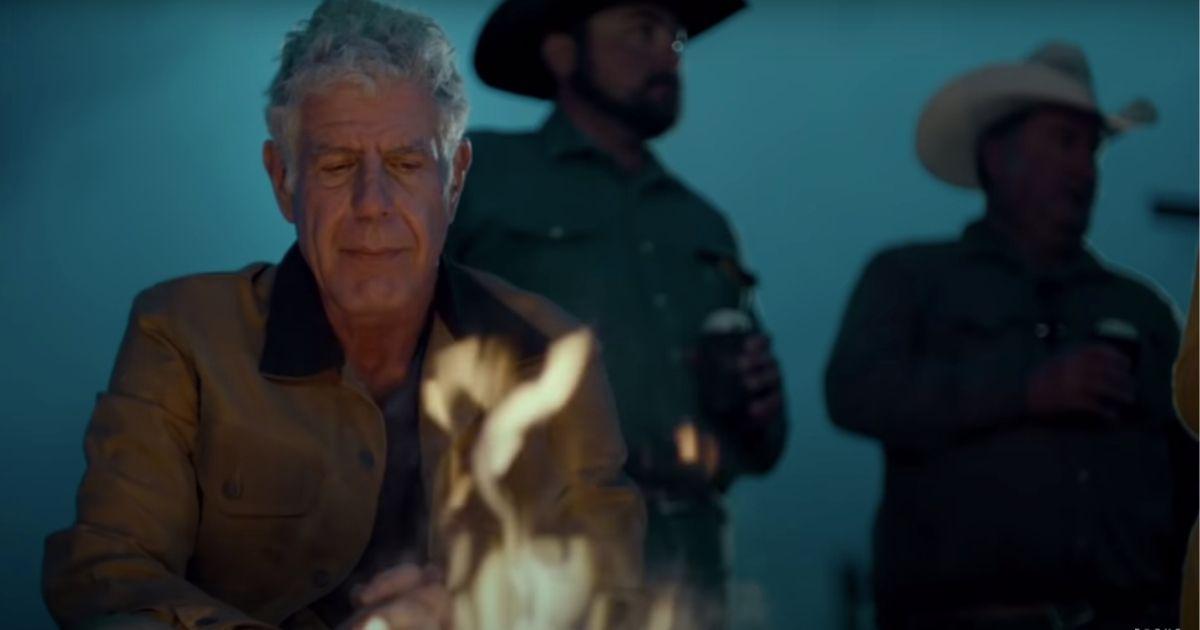
He was a chef, an author, and a travel show host, but people who loved Anthony Bourdain didn’t love him just for his work. They loved him for his unique ability to get to the heart of humanity through those lenses. Whether he was exploring culinary delights in Delhi or marveling at the colorful culture…
He was a chef, an author, and a travel show host, but people who loved Anthony Bourdain didn’t love him just for his work. They loved him for his unique ability to get to the heart of humanity through those lenses. Whether he was exploring culinary delights in Delhi or marveling at the colorful culture of Mozambique, Bourdain offered us a window to the world and an introduction to the diverse people who call our planet home.
His openness about his own shortcomings and his ability to connect with places and people in a real, down-to-earth, honest way drew a large audience. And because people felt a real connection with him, his untimely death from suicide in 2018 rocked the world in a way that’s hard to describe. A man who had such a love for the world leaving it in such a way was a painful blow. We all know that mental health struggles don’t discriminate, but Bourdain’s suicide at age 61 hit people hard.
Perhaps that’s why this preview of a documentary about his life, “Roadrunner: A Film About Anthony Bourdain,” has received such an emotional response. Directed by Academy Award-winning filmmaker Morgan Neville, the film follows Bourdain’s career through his shows, books, and world travels. It includes interviews with his closest friends and colleagues, and is designed, Neville told Rolling Stone, to showcase Bourdain “in his own voice and in the way he indelibly impacted the world around him.”
Watch:
Fans have feelings seeing this preview. But perhaps it will be a cathartic cryfest and a way to honor Bourdain’s contributions to the human story.
My thoughts exactly. I wanted to weep from the first frame of the trailer. This will be a painful, beautiful pilgrimage.— Stephen Kelman (@stephen_kelman) June 3, 2021
And for those who have not yet delved into Bourdain’s rich legacy, perhaps it will be just the introduction they need to take the plunge.
Agreed. I had always liked his shows, but it wasn't until I read his books that I realized how truly impressive the guy is. So many shortcomings, but so brutally honest about them & always striving to get a better understanding of the world around him and the the journey of life.— itaintAndy (@ItaintAndy) June 3, 2021
The film will have its world premiere at the Tribeca Film Festival on June 11 and is set to be released by Focus Features on July 16.

From Pakistan to Tanzania, the most effective education solutions are community-led. Here’s how local leaders, in partnership with Malala Fund and supported by Pura, are mobilizing entire communities.
When asked to describe what Tanzania smells like, Grace Isekore closes her eyes and breathes in deep. For a moment, she’s somewhere else entirely. Tanzania is a rich tapestry of sights and scents, from the smell of sea mist that permeates the coastline to the earthy cardamom and cloves she cooks with in her kitchen. But when Grace emerges from her reverie, her answer is unexpected.
“Tanzania smells like peace,” she says, her eyes still closed. “I see a beautiful country where we are free to move, free to speak. And there is peace within the community.”
For Grace, that sense of peace isn’t just something she smells; it’s something she works toward every day. As a project coordinator with Pastoral Women’s Council (PWC), a women-led organization that empowers pastoralist communities in northern Tanzania, she has seen firsthand how girls flourish when they have the opportunity to attend school. Like scent, education not only connects girls to their own culture, but also helps broaden their horizons, realizing new possibilities for themselves and others. That transformation reshapes entire communities and ripples outward, with the potential to change countries and transform the world for the better.
Different scents, different approaches, and communities driving change
Spices in Tanzania. Captured by James Roh for Pura
For Grace and others around the world, education is freedom, as well as a pathway to a stronger community. Rooted in that shared belief, Pura, a home fragrance company, was inspired to build on their four-year partnership with Malala Fund to create something truly unique: a fragrance collection that connects people through scent to communities in Tanzania, Nigeria, Pakistan, and Brazil, where barriers to girls’ education are among the highest.
Using ingredients from each region, the new Pura x Malala Fund Collection uses scent to transport people to these regions directly. “Future in Bloom,” for example, invokes Pakistan’s lush valleys through notes of jasmine, cedarwood, and mango; while Tanzania’s fragrance, “Heart on Fire,” evokes the spirit and joyfulness of the girls who live there through cardamom, lemon, and green tea.
The new Collection honors the work Malala Fund does every day, partnering with locally-led organizations in these four countries to ensure every girl can access and complete 12 years of education. Each scent celebrates the joy, tenacity, and courage of the women and girls driving change on the ground, while also augmenting Pura’s annual grant to Malala Fund by donating eight percent of net revenue from the Pura x Malala Fund Collection to Malala Fund directly.
Just as each country’s scent is unique, so too are their needs related to education. But with support from Malala Fund and Pura, local leaders are coming up with creative ways to mobilize entire communities (parents, teachers, elders, and the students themselves, in their pursuit of solutions, understanding that educating girls helps everyone thrive. Here’s how their efforts are creating real, durable impact in Tanzania and Pakistan, and creating a ripple effect that changes the world for the better.
Parent-teacher associations help Maasai girls and their communities in Tanzania problem-solve
A girl’s school in Tanzania. Captured by James Roh for Pura
Northern Tanzania, Grace’s home, is home to pastoralist communities like the Maasai, a nomadic people who have moved with the seasons to nurture the land and care for their livestock for centuries. The nomadic nature of this lifestyle creates significant and unique barriers to girls’ education. Longstanding gender roles have enabled Maasai to survive in the harsh environment and have placed great value on both women and men. Over time, as nomadic life has been threatened by the privatization of land and stationary education models have been implemented, the reality of pastoralist livelihood has shifted and introduced new complexities. Now, the sheer distance to schools is both a practical challenge and one that often comes with danger from the landscape, predators, and potential exposure to assault along the journey. Girls shoulder the responsibility of household chores and there is often cultural pressure around early marriage – both leading to boys’ education being prioritized over girls’.
“There are very, very good [pastoralist] cultural practices, which are passed from generation to generation,” says Janet Kimori, an English teacher at Lekule Girls Secondary School in Longido, Tanzania. But when cultural practices act as educational barriers, “you have to sit down and look for where you are going to assist. As a school, as an individual, the school administration—all of us will chip in and know how we are going to deal with this problem.”
PWC works to ensure girls are able to exercise their right to an education while also preserving pastoralist culture. One successful approach, the organization found, has been the formation of Parent Teacher Associations (PTAs), created with help from Malala Fund. In PTA meetings, students, parents, teachers, elders, and government officials meet, discuss educational barriers, and come up with community-led solutions that preserve and honor their culture while advancing educational outcomes.
PTA meeting in Tanzania. Captured by James Roh for Pura
One recent PTA meeting highlights how these community-led solutions are often the most effective. At Lekule Girls Secondary School, the lack of fresh water forces girls to walk long distances to collect water for the school’s kitchen during the school day, and these long journeys not only disrupt class time but can leave girls vulnerable to sexual assault in isolated areas. Through facilitated discussion, PTA members landed on a solution: installing a borehole to pipe in fresh water to the school. Reliable access to water creates a better learning environment for the girls, but it also benefits the community at large, as local governments are then more likely to invest in health clinics and other community resources nearby.
With a solution in place, the PTA was then able to discuss ideas and map out a course of action. The women would raise money for the cost of the borehole, while the men would recruit workers to dig the hole and lay the pipe. Together, they would ask government officials to match their investment.
The benefits of PTA meetings within the pastoralist communities are undeniable. “The girls are talking and addressing issues in a confident way, and parents feel they are part of the resource team to solve challenges happening at school,” Grace says. One unexpected benefit: The larger cultural impact these PTA meetings have created. Thanks to the success of PTAs within pastoralist communities, the models are now being endorsed on a national level, and schools across Tanzania are starting to use them to solve problems in their own communities. When a community creates opportunities for girls to learn, everyone benefits.
Safe spaces in rural Pakistan help students and their parents connect, then drive change
Safe space for girls meeting in Pakistan. Captured by Insiya Syed.
A continent away in Pakistan, the country’s northernmost region of Gilgit-Baltistan seems like a land untouched by time. The region’s looming mountains, snow-capped peaks, lush valleys and crystalline lakes draw nature lovers and landscape photographers from around the world, but living among this kind of breathtaking scenery has its drawbacks. Schools in the region are few and far between, and the area’s harsh climate often makes roads inaccessible for travel. Poverty and gender-based discrimination are additional obstacles, making school even further out of reach, and girls are affected disproportionately. Going up against these barriers requires a persistent, quiet strength that’s found in the women who live there and reflected in Pakistan’s signature scent.
Saheli Circles are how local leaders in Gilgit-Baltistan are bridging the gap between girls and education. An Urdu term for “female friend,” Saheli Circles are after-school safe spaces where girls explore subjects like art and climate change, while also developing skills that help them manage emotions, set goals, and build positive relationships. Girls study in groups, visit the library, play sports, and tackle filmmaking and photography projects, all designed to develop self confidence and teach the girls how to advocate for issues that matter to them. But the work doesn’t stop there.
“What we’re trying to achieve here will only be impactful if it trickles down to the home environment and the school environment,” says Marvi Sumro, founder and program director of Innovate, Educate, and Inspire Pakistan (IEI), the local organization that developed the Saheli Circles model and partnered with Malala Fund in 2021 to make it a reality. Ever since, Saheli Circles have grown to involve teachers, elders, and parents to encourage relationship building that’s essential for young girls and adolescents. “Our spaces can give mothers and daughters an opportunity to interact a little differently—do an art activity, or have a cup of tea together, or some good conversation,” Marvi says.
The relationship building is what makes the biggest positive impact throughout the community. Recently, one Saheli Circle was able to bring together parents, teachers, and administrators to advocate for better education at their local school, and together they convinced the department of education to hire a science teacher. Another Saheli Circle organized a fund where members of the community can contribute monthly to pay for uniforms, books, and other school expenses for the girls in their village, eliminating those small, hidden costs that are often a barrier to education for many. A third Saheli Circle was able to produce a short film about how gender-based household chores can take away valuable study time from girls, leaving them at a disadvantage. “The girls put the film together and showed it to the mothers, and the response from the mothers was just beautiful,” Marvi says.
Girls smiling in Pakistan. Captured by Insiya Syed.
The education and relationship building that the girls receive in Saheli Circles connects them to larger opportunities and economic freedom that are not possible in their hometown. “For girls in Gilgit-Baltistan, education is extremely important because of the fact that we’re so far away from where the economy is, where the opportunity is. Education becomes this bridge for us, for our girls, to access all the opportunity and economy that exists in [larger cities].”
From rural Tanzania to remote Pakistan, local organizations prove every day that prioritizing girls’ education benefits everyone. Communities that lift up girls are able to secure resources like clean water and well-staffed schools, as well as build stronger relationships.
These outcomes are only possible because of the women and girls who work tirelessly in these regions to overcome barriers and drive progress. The Pura x Malala Fund Collection is a way to honor them, celebrate their achievements, and unite people the world over around a shared belief that education is freedom. Like scent, that belief can build, travel, and has the possibility to transform the world.
Experience the Pura x Malala Fund Collection here, and connect with the stories of real girls leading change across the globe.
There’s no doubt that the role aunts and uncles play in a child’s life is important. Typically, these are the people who are raising the cousins that often serve as your child’s first best friends. But many Millennials are part of a growing group of adults opting not to have children.
Instead of raising their own children, they’re leaning into their childfree status and the additional bandwidth it affords them. “Rich auntie” status is not new. It’s the endearing nickname given to women who chose to forego children to maintain the lifestyle they worked for. It replaced the more derogatory term of “childless cat lady,” which replaced “spinster.”
Though the idea of a childless aunt or uncle isn’t new, the prevalence is. This phenomenon was once so rare that it caused speculation around sexuality and sanity. Clearly, there must be something wrong with you if you didn’t have children. Today, people are celebrating the mutually beneficial role childless adults play. Not only do they bring fun and adventure to a child’s life, but they also serve as a trusted babysitter for a much-needed evening out.
It’s not only the kids and parents that benefit, but the childless adults also gain. TikToker Amanda Vanhook says, “I’m very much single, no interest in dating, none. And I’m very happy that way. I’m very happy in my life.” Later, she adds, “I’m also very fortunate that I had a sister that gave me two little crazy hooligans, my four-year-old nephew and my two-year-old niece, and I would not change that for the world because they are the light of my life.
I would go above and beyond, go over the moon, and wouldn’t even blink an eye for those two. So I get the best of both worlds. I get to spoil myself, treat myself whenever I want, and enjoy my quiet time life, but I also get my nuggets, who I want to spend all this time with. I want to show them the world, I want to show them the great things of life.”
Adults remain childless for a variety of reasons. Struggles with fertility, not finding the right partner, or simply not having the desire to raise a child full-time are some of the most prominent. No matter the reason for being child-free, though, the mutual benefit of those without kids having close relationships with those who do have them shouldn’t be understated. One family has a tradition they’ve shared online for others to see. Since their aunt doesn’t have children, instead of Mother’s Day, they created a special day just for her called “Auntie Lynn Day.”
Man holding young girl like an airplane. Photo Credit: Canva
Every year, the family gathers for a cookout complete with decorations and a cookie cake, declaring it “Auntie Lynn Day.” It’s a day filled with love and smiles, acknowledging how valued her role is in their family.
Another woman, Jillian Gerhardt, explains the importance of having childless friends who double as aunties and uncles to your children. “Every parent needs a childless auntie or uncle friend. They’re not real aunts and uncles, but they’re that friend that shows up smelling like independence and freedom.” She advocates that their role is vital to remind parents who they were before they had children, to keep them grounded in their sense of self.
Mike Mancusi, a childless uncle, makes an argument for those on the fence about becoming a parent. “Anyone that’s on the fence about having kids or not having kids, I’m going to propose to you a third option, and it is by far the best option–being an aunt or an uncle. It is the best. It’s all of the good parts of parenting and none of the bad parts.” He adds, “You get to hang out with these kids, you get all of the joy, all the endorphins, and then as soon as they start being annoying, you just get to hand them off to the people that are legally required to take care of them.”
The consensus of the childfree aunts and uncles is that they get to be the fun-havers. They come in like a superhero to either give parents a break while they spoil them, or rile the kids up right before bedtime. Either way, they get to go home or drop the kids back off with their parents when they’re overstimulated.
Parents who appreciate the childless aunties and uncles celebrate what they bring to their lives. Childless aunts and uncles appreciate that they get to share parenting with their sibling or friend without the full-time responsibility. It’s a win-win-win. A win for the parents, a win for the childless person, and a win for the kids.
“The DINK, Auntie and Funcle life is really underrated,” one person says. DINK stands for Dual Income No Kids.
“It really is the best option. Also, when they become teenagers, they only fight with their parents and have a great relationship with you and ask for your advice and will listen to you,” someone writes in response to Mancusi’s video.
An adult child reveals, “My Auntie is my favorite human. 42 years later that woman is my go to for just about EVERYTHING.”
Someone else adds, “Childless auntie here! My besties kids are my world. My weekends are spent at soccer games, cheer games, etc and then I get to go home at night and read my book in silence. Someday we will build a compound so they can just walk to my house whenever lol.”
CNN had created a remembrance video for the Back to the Future star, titled “Remembering the life of Michael J. Fox.” Now, it’s fairly standard practice for news outlets to make these sorts of posthumous tributes in advance. But publishing them before the celebrity actually passes away? Not so much.
And yet, on Tuesday, April 7, that’s what happened. But when Fox saw the accidental announcement of his death, he met it with a bit of philosophical humor.
On Threads, Fox wrote, “How do you react when you turn on the TV and CNN is reporting your death? Do you…A) switch to MNSBC, or whatever they are calling themselves these days, (B) Pour scolding hot water on your lap, if it hurts your fine, (C) Call your wife, hopefully she’s concerned but reassuring, (D) Relax, they do this once every year, (E) Ask yourself wtf ?”
@realmikejfox Threads
Ending with just a dash of self-deprecation, he concluded, “I thought the world was ending, but apparently it’s just me and I’m ok. Love, Mike.”
As to be expected, fans were quick to “yes and” Fox’s sense of humor.
“Go outside and ask the first person you come across: ‘Can you see me?’ Glad you’re ok btw!” wrote one person.
Meanwhile, actor Kathy Griffin quipped, “You’re a helluva ghost. ❤️😂.”
In CNN’s defense, the tribute, however premature, did respectfully honor Fox’s legacy not only as a beloved actor, but also as an active Parkinson’s advocate.
According to Entertainment Weekly, the narrator in the now-deleted video said of Fox: “He came into our living rooms on the small screen each week as Alex P. Keaton [on Family Ties] and eventually onto the big screen as Marty McFly in [Back to the Future]. But Michael J. Fox had a compelling third act as a Parkinson’s sufferer and stem cell research advocate.”
“His most lasting role may have been as a tireless voice against Parkinson’s, a performance the Academy of Motion Pictures Arts and Sciences honored with the Jean Hersholt Humanitarian Award in 2022,” the clip went on. “In the end, Fox came to understand that his battle against the disease brought out the best in him.”
A CNN spokesperson also stated: “The package was published in error; we have removed it from our platforms and send our apologies to Michael J. Fox and his family.”
On Wednesday, Fox’s rep assured TMZ that “Michael is doing great.”
So great, in fact, that he was out and about in Los Angeles speaking on a panel for the Apple TV series Shrinking, in which he filmed a three-episode guest arc playing a character who also deals with Parkinson’s disease. The guest spot marked his first on-screen appearance since 2020. Harrison Ford, who also plays a character with Parkinson’s on the show, regarded Fox as “an extraordinarily powerful person” after meeting and working with him on set.
So, Michael J. Fox is still kickin’. And he’s still meeting each moment with a tremendous amount of humility and humor, lifting our spirits as he does it.
There is something about finding connection with fellow humans that can help make even the hardest obstacles seem more bearable. So when Kirsty Waugh was diagnosed with a brain tumor in 2024, she and her family sought to fight it. Not just for her, but for anyone out there suffering.
They had an ingenious idea. What if they could find every person named Kirsty, Kirstie, or Kirsti in the world to bond together and help support her battle, and any other child who might have the same affliction?
Kirsty Waugh. Photo Credit: Mat Waugh, website
Kirsty’s father Mat Waugh shared a bit of their story on his LinkedIn page, as well as their new plan to be of service. “Last year, our 11-year-old daughter Kirsty – who’s having chemotherapy for a brain tumour – raised £120,000 for Children with Cancer UK. As she cracks on with a second year of chemo, we have a new plan but we need your help!”
Looking for Kirstys
“We’re hunting for every Kirsty, Kirstie, and Kirsti we can find: to show their support for her, and for every other child with a brain tumour. There are about 50,000 in the UK, more elsewhere. There’s a one in three chance that you work, live, or are related to one – that’s the same odds of knowing someone with a brain tumour. (Try tagging below: there were three in my modest circle alone).”
Mat adds the importance of donating, as government child cancer research is underfunded. “Aside from giving a massive, Kirsty-shaped hug, we’re trying to raise money for badly needed research into child brain tumours: just 3p in every £100 of gov cancer funding gets allocated. Yet it’s the biggest cancer killer of kids, and indeed anyone under 40. Every penny raised will be spent on projects vetted and selected by OSCAR’s Paediatric Brain Tumour Charity to find kinder, better treatments.
Everyone can show their support by joining Kirsty’s map and perhaps making a donation. Please help our girl by sharing her quest and let’s find those Kirstys!”
Kirsty shares her story
On their website, “My Name is Kirsty,” there is a statement from Kirsty herself. “My name is Kirsty. I’m 11, and I’m sorry you don’t have the best name in the world. But you can help! Here’s how.” She then relays the similar details her father had listed about her journey with chemo, and how to raise money for others.
There is a clickable map that shows every Kirsty in the world (who has so far participated), from Europe to Canada to the US to Australia. A red star indicates a “Kirsty” (or a spelling close to it), and a green heart represents a supporter.
Kirsty Waugh map, Photo Credit: Mat Waugh
Update on Kirsty
Upworthy had the chance to speak with Mat, who gave us updates and explained more about how the idea to create a “Kirsty map” came to be.
Upworthy: First and foremost, how is Kirsty feeling now?
Mat: “Kirsty’s into her second year of weekly chemotherapy following her diagnosis in November 2024 for a benign brain tumour. If you’ve known anyone who’s gone through this, you’ll know that it’s really tough. Hair loss, nausea, anaemia, aches, and lack of energy: she’s had it all. And she has more than a year to go. It’s tough-going psychologically, too. But she’s a bright, feisty, and creative girl who fills her time with crochet, dance, and everything else she can manage. We’re learning a lot from her! ‘One day at a time’ is the cliche, but it’s true that we’re not looking too far ahead because we can’t control that. We can, however, control how much fun we have today.”
How to help
Upworthy: Whose idea was the “Finding Kirsty” challenge, and how did you turn it into such a successful nonprofit?
Kirsty Waugh, Photo Credit Mat Waugh
Mat: “The idea to find all the Kirstys came because she had to change treatment, and suddenly 70 weeks of chemo became 150. She’d spent much of 2025 raising money with her crochet project, raising £120,000 for a children’s cancer charity. But over the same period, she’d learned how poor and harsh the available treatments for brain tumours are, and how little money is spent on researching the biggest cause of cancer deaths in the under 40s. She decided she wanted to fund more research and chose OSCAR’s Paediatric Brain Tumour Charity. They provided our family with support, but also run a research arm where every penny donated will go to research.
And so we had to work out who we should ask, because we’d already leaned on all our friends, relatives, and neighbours for the first campaign! Kirsty suggested that the best people to ask would be other Kirstys because, in her experience, they’re always kind and lovely. So we looked up how many there are, because it’s a pretty rare name now in every country. But there was a time in the 1980s when lots of girls were named Kirsty or Kirstie. We reckon there are about 50,000 worldwide. The website www.mynameiskirsty.com was born.”
A plethora of Kirstys
Upworthy: Who are some of your favorite Kirsty(s) and from which countries?
Mat: “First on the map was Kirsty Gilmour, who is the UK’s no.1 badminton player; our Kirsty met her when she was a guest at the All England badminton championships, and the lovely Kirsty G offered to be the first Kirsty in her campaign. Second was a duck – the newborn sister to a therapy duck called Goldie that Kirsty met the following day!
Kirsty has now hit the first milestone of 1,000 Kirstys found, and exploring their photos and messages on the map is great fun. But equally rewarding are the words left by other supporters of every name. They’re united by their appreciation of the tough time kids with brain tumours are going through, and the need to improve the odds for thousands of children worldwide who face an uncertain future and life-changing symptoms and treatments.”
Onion rings are a staple fast-food item. Yet you’re unlikely to find them at McDonald’s, one of the most recognizable fast-food chains in the world.
However, once upon a time, Mickey D’s did experiment with its own version of the side item, and it’s easy to see why the idea was short-lived.
It was the 1970s, and by then, allegedly thanks to a Texas-based drive-in restaurant called The Pig Stand, onion rings were already a popular fast-food item. However, McDonald’s’ entire brand is centered around efficiency and profit, and compared to fries, onion rings would have been more time-consuming to make and less cost-effective.
Enter: Onion Nuggets
Photo credit: Wiki.com – A vintage ad for McDonald's Onion Nuggets.
According to Mental Floss, the rather baffling idea came from Rene Arend, McDonald’s first executive chef, who would later develop the somewhat controversial McRib. And get this: they actually predate chicken nuggets.
Rather than cutting onions into thin rings, food workers would batter and deep-fry onion bits. However, it soon became clear that customers, especially children, didn’t enjoy this particular vegetable-to-batter ratio. You can almost picture the confusion at the counter: someone opens the box expecting a familiar crispy ring and instead finds a pile of tiny fried onion clusters. Technically accurate, sure. Emotionally satisfying? Eh, that’s another story.
But Arend was then instructed to apply the concept to a chicken-based product, and voilà—the Chicken McNugget was born, and we were never the same. So you could say onion nuggets walked so chicken nuggets could run!
Interestingly, McDonald’s could take Burger King’s approach, which essentially makes “rings” out of minced onions. According to Tasting Table, “The goal isn’t to recreate the diner-style onion ring, but to offer a salty, crunchy side that’s cheap, uniform, and easy to churn out by the millions.” However, some have criticized this recipe as more like “tiny onion flavored doughnuts.” Honestly, not seeing the problem there.
There have been far worse mess-ups
And when you think about McDonald’s’ long history of bizarre menu failures, including the 1960s Hula Burger (a pineapple slice with cheese), McSpaghetti, and Seinfeld-inspired Muffin Toppers, deep-fried onion bits don’t sound too strange. Some folks are even nostalgic about it and would love to see its glorious return. While the odds are never zero, they are quite low.
That’s not to say the restaurant won’t ever sell proper onion rings. But Mike Haracz, a former McDonald’s manager of culinary innovation, explains in a TikTok video that they would likely only ever be a “limited-time offer” so as not to compete with their “over-the-top profitable” French fries.
If you’re jonesing for some McDonald’s onion rings, they’re occasionally served in places outside the United States, such as Turkey, Greece, Israel, and even Australia. Just as Haracz predicted, they’re limited-time items.
We can probably all agree that if any menu item deserves a comeback, it’s the Apple Fritter.
As the music began, no one knew what the apparatus made of poles and bars surrounding the dancers was for. But it soon became apparent that they would use it to lift themselves off the ground. What started with a simple pull-up, however, turned into an incredible synchronized dance to Justin Bieber’s “Where Are U Now” in which the dancers synchronized their movements without their feet even touching the ground.
AIRFOOTWORKS dancing to Justin Bieber on AGT
The dancers, who hail from Japan, were mentored by Kenichi Ebina, who won AGT Season 8 in 2013. Their performance earned them a standing ovation from all four judges and the audience.
“Everything about the performance was perfect,” said judge Sofia Vergara.
“It was so creative and so different—and so difficult, by the way,” said judge Simon Cowell. “So you have a great mentor. However, even if you’ve got a great mentor, you’ve still got to be able to do what your mentor helps you to do. And you did it immaculately.”
AGT fans agree with the judges
People in the comments were equally blown away.
“How do people find out they have talents like this??? ✋ “
“My toxic trait is thinking I can do this without any difficulty .”
“Insane core strength.”
“OBSESSED with this audition.”
“What kind of core strength is this… flawless, “
Many people were disappointed that none of the judges hit the Golden Buzzer.
“Why no Golden Buzzer?!?!?! If I’ve seen any act more deserving of it, I can’t recall. These guys were AWESOME!!!!!!!”
“Did they run out of golden buzzers? This is worthy.”
“THEY DESERVED THE GOLDEN BUZZER!”
“This performance absolutely deserved a golden buzzer. It was just spectacular.”
“Can only assume all the judges were so enthralled and mesmerized by this performance they forgot there was a golden buzzer.”
The ‘Golden’ performance
AIRFOOTWORKS did, in fact, earn a Golden Buzzer from Howie Mandel during the Quarterfinals sending them directly to the finale, where the group performed to an EDM mix by Steve Aoki. While they didn’t receive enough votes to win the entire competition, they have certainly earned AGT royalty status.
Since their AGT run, AIRFOOTWORKS have continued to take the world stage – reaching the finals of talent competitions in France and Italy, and performing at the Royal Variety Performance in the UK.
For more talent auditions, you can follow America’s Got Talent on YouTube and TikTok.
This article originally appeared 2 years ago. It has been updated.
Halloween has come a long way since the 70s and 80s, when Gen X kids donned the worst mass-produced costumes known to man to go out and ask strangers for candy that we were sure was laced with poison or razor blades. Those sure were good times, though, weren’t they? Social media creator Kelly Manno shared a video describing what Halloween was like for kids who grew up in “the forgotten generation,” and holy moly is it accurate.
First, Manno showed a photo of someone dressed in an “80s costume” for Halloween, with neon colors, legwarmers and big hair, and said, “Absolutely nobody looked like that in the 80s, especially on Halloween. We looked like this.”
Then she showed a grainy photo of kids in the plastic masks and poorly printed costumes that were the hallmark of the age.
“Every single member of Gen X can smell this photo,” she said. “It’s like a vinyl, like plasticky paint smell.”
Manno explained that our parents only took a few photos of us per year, and Halloween was always one of them.
“You knew, before you went out trick-or-treating, that you had to line up with your cousins in front of the fireplace, in your highly flammable costumes, with your mom chain-smoking Virginia Slims.”
How about those masks
Oh, those masks were the worst inventions ever. The eyeholes never lined up properly, so you were constantly trying to adjust them to be able to see even a little bit.
“We would push our tongue through the slit in the mask. It would cut our tongue, but then we’d keep doing it again because we were eaten up with OCD and ADD and nobody cared.”
Then Manno described the “garbage bag costumes” we had, which were basically trash bags printed with whatever character it was supposed to be. So janky. So sweaty. So crinkly when we walked. But somehow still socially preferable to your mom making your costume from scratch.
“Look at us, we were terrifying,” Manno concludes. “No wonder people tried to poison us.”
A stroll down ‘That actually happened’ lane
Her descriptions of what it felt like to trick-or-treat in those costumes and haul our own bodyweight in candy are spot on, and people who lived it are feeling the nostalgia.
“So much truth in one video! I just saw, heard, and smelled my childhood.”
“You are literally making me laugh so damn hard, cause you described it exactly as it was, but my mom smoked Winston’s!”
“It was always freezing on Halloween that the vinyl/plastic suit would crack and tear halfway through the night.”
“Or the rubber band breaking at the second house and you had to hold it up on your face at the door the rest of the night. Good times.”
“The tongue thing is on point. I can still feel it. “
“I can totally smell that picture lol. I remember the steam from inside the mask would have your lashes and eyebrows covered in dew then after a couple streets of running house to house the crotch would tear out. We would stay out until everybody turned their lights off and the pillow case was full.”
“Yes!!!! And we used a pillow case for our candy. And no adult supervision.”
“My mom made me really nice homemade costumes, but I remember begging for the plastic Strawberry Shortcake garbage bag one. So, she bought it for me one year. That was a terrible, sweaty experience. “
“Let’s not forget having to inspect every piece of candy for razor blades. I swear I lost half my haul to my father in that clean up. “
Kids these days have no idea, with their official city trick-or-treat hours and their parents walking around with them and their costumes that actually look like the thing they’re trying to be. The 70s and 80s were a wild time, and as funny as it is to reminisce about those Halloweens of old, most of us would agree that the experience has been much improved for our own kids.
Pillowcases still make the best trick-or-treat bags, though. Some things do not change.
This article originally appeared 2 years ago. It has been updated.
If you’re a Gen X-er or a Millennial, ask yourself how many Jennifers did you grow up with? How about Brians? Stephanies, maybe? It seems like it might be time for those baby names favored in the ’70s and early ’80s to make a comeback.
After all, like most things in the world, the popularity of names is cyclical. Once something reaches its height of popularity, the pendulum swings back into another era. But if given enough time, all pendulums will pop right back with force, and everything Gen X will be “now” again.
In a recent article for The Every Mom, Senior Editor Kathy Sisson mentions the “100 year rule for baby names.” The theory goes that names re-circulate every century, and perhaps that’s now why there seems to be a resurgence of “vintage” names from the 1920s. (Think Hazel, Arthur and Evelyn.) She adds this fun fact: “Some expectant parents even wander cemeteries looking for vintage baby name inspiration on the headstones.”
But some experts claim that people are most definitely not waiting a century to bring back popular names. In a 2025 piece for Good Housekeeping, Senior Parenting and Relationship Editor Marisa Lascala specifically compiled a list of “19 vintage 1970s baby girl names that are becoming popular again.”
At the top of that list were “Angie, Deborah, Jamie, Leslie and Bonnie.” According to Lascala, “Gen X was born in a period of great change, and the baby names of the era were no exception.” Perhaps it’s the modern times we’re living in that are accelerating a need to go back to an era that felt more manageable. (This is all subjective and relative, of course.)
This seems to be quite the popular topic. On the subreddit r/namenerds, someone posted a thread entitled “’Dated’ names you think are due for a resurgence.” They expound, “A lot of vintage names are quite popular these days – eg. Henry, Theodore, Josephine. But what about names that aren’t quite old enough to be cool again that you think are due for a resurgence?
I’m thinking names around Gen X and Millennial eras, where the vast majority of people with these names are going to be between 30 and 60. Names too recently popular to be vintage, while old enough to be considered dated… some eventually will come around back into being stylish.
Do you have any bets on what presently unpopular “dated” names will be popular again soon enough?”
The OP adds that they simply love the name Todd, for example. “Controversial opinion, I really love the name Todd even though a lot of folks think it’s a boring white guy/dad name. I think it has all the makings of a popular name and I’m placing my bets it will come back in style soon. I’m also really fond of the name Heather.”
Over a thousand people chimed in on this post to share the names that resonated for them back in the day. Names frequently mentioned on the thread included “Emily, Lisa, Laura, Nicole, and Erin” for girls. For boys, “Brian, Ryan, Evan, Justin, Jeremy and Eric” came up time and again.
Of the extremely popular name Lisa, one commenter shared that in some way, it fits with current trends, at least in the UK. “Lisa fits in with current UK trends (soft, short, L + S + ee sound), but it’s pinnacle Gen X/Millennial, so won’t make a comeback for a while. I hope it does make a resurgence one day though! I’d like Cynthia to come back now that people are likely to associate it with Erivo.”
Some even recall well-loved ’70s/’80s names, but add a modern spin. “Vanessa, but call her Nessa.”
And, a few point out that some older names that seem to have disappeared for one culture are still going strong in others. Take, for example, the name Camille. This Redditor shares, “Camila is crazy popular with Latino families and Latino-adjacent families, so this wouldn’t surprise me.”
And of course, as people re-watch classic movies from the 1980s, certain names will reappear in the zeitgeist. So for better or for worse, we’ve probably got quite a few “Heathers” on the way. (And/or perhaps maybe a “Veronica.”)
I’m not a psychologist or a sociologist; I’m just a human joining my fellow humans in the cryfest. But that human identity sits at the heart of the why question, so here are nine reasons I’ve observed that people are getting emotional over Artemis II.
“A Setting Earth” taken on the Artemis II mission. (Photo credit: NASA)
We desperately need something good and wholesome right now
Let’s just acknowledge this one upfront. In too many ways, the world has felt like a horror circus in recent years, and many people have lost a bit of faith in humanity. We need some solid reminders that we’re actually okay, and Artemis II is full of them.
Apollo and Artemis unite our past with our future
The name Artemis holds poetic significance. In Ancient Greek mythology, Artemis was Apollo’s twin sister as well as the goddess of the moon, the hunt, wild places, and childbirth. The original lunar missions being named Apollo and the modern missions being named Artemis is a beautiful hat-tip to that ancient history, as well as a nod to this mission carrying the first woman to circle the moon.
The Artemis II mission feels like a bridge between our past and our future.
“The pairing of Apollo and Artemis is more than poetic,” writes Samantha Mathewson for Space.com. “In mythology, the twins balance day and night, or sun and moon. In spaceflight, Apollo represents what humanity has already accomplished, while Artemis represents what comes next.”
It reminds us of how far we’ve come, both literally and figuratively
Like others before them, the astronauts of Artemis II took some legacy keepsake items into space. Among them is a one-inch square piece of fabric from the Wright Flyer, the plane the Wright brothers used in their first successful flight in 1903.
The significance of that tiny piece of fabric can’t be overstated. To fly through the air above Earth’s surface was a major milestone in human history. Did the Wright brothers imagine us going this far from Earth when they had just figured out how to get us off the ground?
Innovation and progress require imagination, so they probably did imagine it. Just as the women who worked on the Apollo lunar program probably imagined women becoming astronauts one day.
Christina Koch becoming the first woman to fly around the Moon isn’t the only sign of progress for women in the Artemis mission, though. Women played critical roles in the Apollo program as well, but they were smaller in number and not really visible to the public. Now we have this:
Earth may feel big to us, but in the context of the universe, our planet is infinitesimally tiny. And yet, we are here, eight billion individuals making our home on this little blue marble.
Pilot Victor Glover delivered an impromptu message on Easter that reminds us of the unique reality of being human on planet Earth:
“You guys are talking to us because we’re in a spaceship really far from Earth. But you’re on a spaceship called Earth that was created to give us a place to live in the universe, in the cosmos.
Maybe the distance we are from you makes you think what we’re doing is special. But we’re the same distance from you, and I’m trying to tell you—just trust me—you are special. In all of this emptiness—this is a whole bunch of nothing, this thing we call the universe—you have this oasis, this beautiful place that we get to exist together.“
Shifts the perspective a bit, doesn’t it?
The naming of the Moon crater ‘Carroll’ hit us right in the heart
Crater Carroll. A bright spot on the Moon that her kids can look up to and see Mom. What an incredible tribute.
Historic space missions are big deals. These astronauts represent all of humanity as we collectively breach new frontiers. And yet, it’s the personal relationships, our individual loved ones, the bonds of family and friendship that make us what and who we are as humans. This moment just beautifully highlighted the human in humanity, forever linking the personal with the universal.
It’s healing something in Gen X kids who watched the Challenger disaster live
There have been many space shuttle launches since 1986, but few have seen the widespread excitement and attention that Artemis II has received leading up to it. Perhaps that’s why so many Gen Xers who remember watching the Challenger explode as children were nervous to watch the launch and held our breath until the astronauts were safely out of the atmosphere.
OMG, you get it. I was watching with my son and almost started crying when the two boosters separated cleanly. I had tears well up. I told him I have serious PTSD when it comes to red rockets with boosters. 🙁
It may sound like an overstatement to call it PTSD, but watching a school teacher and astronauts we’d all been following on TV for months blow up on a live broadcast had an impact on our psyches. The shock and horror of it all, with none of the adults prepared to handle it, left a mark.
I was a news photographer in Lake Charles, La., on my day off, watching it on TV. I spent the rest of the day chasing debris and stories throughout East Texas.
I didn't breathe until after the first separation.
Until now, I didn't realize how deeply that scarred me.
But awe is often quiet and introspective. The photos we’ve seen from the astronauts on board the Orion have provided a view that we rarely get to see. Only when courageous humans launch themselves into space and look out a window do we get to see our world and our Moon this way.
Taking a few moments to sit in awe of space and our place in it can be an emotional experience. Awe-inspired existential tears are good tears.
It reminds us of what we’re capable of
Humanity has always had its ups and downs, and they often happen at the same time. But science advancements, when done for the greater good and collective progress, are some of our biggest ups. This mission is a reminder of what we can do when we work together on innovating and creating instead of conquering and destroying.
It reminds us we are one
“This is an opportunity to remember where we are, who we are, and that we are the same thing,” Victor Glover said in his Easter message. “And that we got to get through this together.”
We really are the same thing. Looking at Earth from space, there are no neatly drawn lines. There are no borders, no nations, nothing actually dividing us but rivers, oceans, and mountains.
Of course, we are complex people with diverse cultures, languages, and identities. But seeing Earth from afar makes these differences seem far less significant. Certainly, they don’t seem worth killing one another over.
Do you ever wonder how future history books will treat this time period we’re living in? What will they teach and what will they leave out? How will they analyze us? How will we be remembered?
Will they know how we collectively wept over the naming of a Moon crater? Or will that detail—the one that defines us more than any war or conflict ever could—be omitted?
I hope the beauty and humanity we’ve witnessed in this mission are remembered in the story of who we were, because it really is the best of who we are.