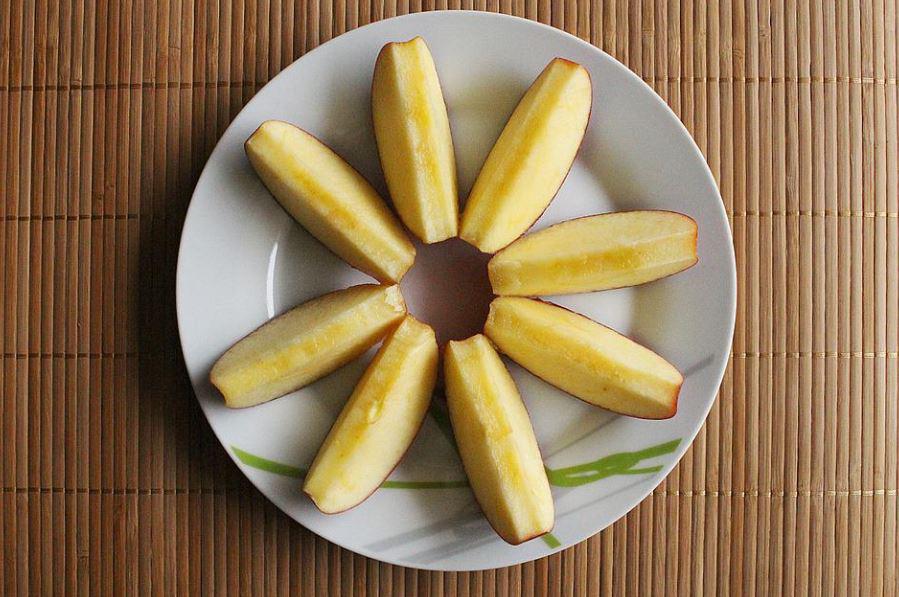
Apple slices are a sweet and healthy snack that little kids love and parents feel great about feeding them. However, you can’t cut up a bunch of apples in one sitting to dole out for lunches and snacks over the entire week because they will turn brown.
So you have to cut them up on demand.
Nicole Keshishian Modic of KaleJunkie had found a “secret” solution to the brown apple problem. She recently shared the apple hack with Good Morning America, which she says keeps slices from turning brown for up to a week.
The hack utilizes an age-old method for preservation that humans have used for centuries, salt. Salt works as a natural preservative by inhibiting microbial growth through osmosis. It also reduces the amount of water available to bacteria, inhibiting reproduction.
The KaleJunkie apple hack:
“In a bowl, add cold water and salt, whisk until it dissolves, then add your sliced apples and set a time for 5 minutes,” Keshishian Modic says in the video. “Drain the apples and rinse and when you take a bite they shouldn’t taste like salt.”
Then, put the apples in a resealable container and serve them at your leisure for a week.
Keshishian Modic is a food blogger, recipe developer, former lawyer and boy mama. She began her popular KaleJunkie blog as a way of overcoming a serious eating disorder. “My recovery journey ignited my passion for creating recipes made with real, whole-food ingredients, that are easy to make, quick, and don’t sacrifice flavor,” she wrote on her site.