upworthy
Add Upworthy to your Google News feed.
Google News Button
More

I compared America's gun laws to laws in 5 other countries. This is what I learned.

In 1996, Australia initiated the most successful gun intervention to date. Here's what we can learn from it.

In 1996, a mass shooting took 35 lives in Australia. Immediately after, newly elected Prime Minister John Howard decided that something needed to change.

A mere 12 days after the tragedy, the government drafted and agreed on the legislation. This led to the National Firearms Programme Implementation Act of 1996.

The new act was fairly intense. It restricted the private ownership of high-capacity semi-automatic shotguns, semi-automatic rifles, and pump-action shotguns. While guns were certainly a part of the culture (and Howard's plan was met with some objection), most Australians were actually for the legislation because they were so horrified at the loss of innocent lives.


Howard didn't just disrupt the overarching gun laws, though. He also confiscated private weapons. Citizens took part in voluntary surrender and mandatory buyback programs. Essentially, the government paid citizens to give them their illegal firearms, and the guns were then destroyed.

This is arguably the most successful gun intervention implemented to date, and there hasn’t been a mass shooting in Australia since then.

Compare this to America, where people are 10 times more likely to be killed by guns than people in other developed countries.

Graph by Erin Grinshteyn/David Hemenway/The American Journal of Medicine. Image used with permission.

A mass shooting (typically defined as four or more people shot in a single incident) occurs, on average, almost daily in the U.S.

Solutions to this problem can get really political, though.

We don't have much research on gun deaths in the U.S. (which is a whole other issue), but we do know that violence is determined by a variety of factors, such as population and gun culture within a society.

Lots of other countries allow their citizens access to guns — but America's gun problems are far worse than many other countries, and the comparison is especially stark with other developed countries.

After reading about Australia, I wondered: What makes America different, really? And what's working elsewhere?

Today, Australian applicants are required to give a "legitimate reason" to apply for a firearm license.

Personal protection doesn't qualify as a genuine reason either. And background checks — such as criminal, mental health, physical, addiction, and domestic violence checks — are mandatory to obtain a license. Generally, a firearm safety and law course is required. License terms can vary depending on the license, and there's a limit on how many firearms and how much ammunition a person can own.

While buying back guns from people who already own them probably won't happen in the U.S., we can certainly take notes from Australia's banning of assault weapons.

And we can hold our government accountable for not making swift and comprehensive legislative decisions that protect the vast majority of Americans.

Mourners gather to commemorate the 20th anniversary of the Port Arthur massacre in Australia. Photo by Robert Cianflone/Getty Images.

In France, the amount of ammunition allowed in a person's home is pretty limited.

If you live in France, you must have a hunting license or a shooting sport license if you want to buy a gun.

The country also has restrictions on the amount of ammunition that can be kept at home and the total number of firearms owned by an individual.

By comparison, there are no set federal restrictions on how much ammunition a person can keep in the U.S. In fact, after a mass shooting, folks often buy more guns and rounds, despite cries for regulating how many rounds a person can own.

It's also worth noting that France has experienced an unusual number of mass shootings in recent years. That said, in Europe’s worst terrorist attack in 11 years, 130 people were killed at a concert, which is almost as many people as those who die from gun homicides in all of France in an average year.

But even if France had a mass shooting as lethal as the Paris attack every month, the annual rate of gun homicide death per capita in France would still be lower than the United States. We could follow France's example by making ammunition ownership a permit-based privilege, rather than an assumed right.

In Japan, gun ownership is discouraged altogether.

Japan's gun laws are incredibly restrictive, and obtaining a gun involves an arduous process. Gun owners must have a license, and the National Police Agency heavily regulates gun ownership. Handguns are banned in Japan, and firearms are extremely rare. Penalties for disobeying gun laws (which include a prison sentence) seem to discourage the use of guns overall.

Despite Japan's sizable population of 130 million, these rules seem to be working: gun homicides in Japan averaged around 33 per year from 1995 to 2011.

In Spain, applicants must go through a variety of tests and background checks if they want to buy a gun.

Spain has a variety of requirements for various forms of gun ownership. Exams are sometimes required, depending on the type of license, and the length of each license can vary. In most cases, to obtain the license, applicants must have a stated reason, criminal background check, mental health check, and a check into domestic violence records. Police also may inspect firearms at any time.

Spain's most recent massacre was in 1990 in the village of Puerto Hurraco, where nine people were killed. In 2007, 90 people were killed with guns, making their homicide-by-firearm rate 0.2% per 100,000 citizens.

Spain's various tests to get a gun are certainly extensive and much more detailed than America's processes, which can vary by state. By taking more time to examine folks who want to purchase a gun, though, many people argue that we could prevent mass shootings.

Image via iStock.

In an effort to curb gun violence, Canada recently added restrictions on owning a gun too.

Because target shooting and hunting are so popular in Canada, owning a rifle or shotgun is pretty common, but obtaining handguns and semi-automatic rifles is now a restricted process.

An applicant for a firearm license in Canada has to pass an extensive background check, including criminal, mental health, addiction, and domestic violence. Applications also require a third-party reference.

Licensing authorities also conduct interviews with or advise spouses, partners, or next of kin when someone is obtaining a license. A theoretical and practical training course is required, and a license lasts for five years.

Can we implement some of these strategies in the U.S.? Maybe.

The U.S. Constitution protects the right to own a gun. And right now, there are more guns than there are people in the U.S. A Pew Research Center study from 2014 shows a gun homicide rate of 3.4 per 100,000 people in the U.S.

To purchase a gun, American buyers must go through a background check, but several groups (fugitives, those with severe mental illness, and those convicted of domestic violence) are prohibited from buying guns (though many still get ahold of them). And while we have restrictions on buying guns, there are many loopholes in place that make obtaining a gun pretty easy.

The Pulse shooting in Orlando left 49 people dead. Image via iStock.

What are our options?

We can ban assault weapons like Australia. We can reduce the number of rounds people can have on hand like France. We can do research when we see a problem like Japan. We can raise our standards for who can own a gun like Spain. And we could even add new restrictions on gun ownership like our friends in Canada.

It's not likely that we'll find a solution in the U.S. by making ultimatums though. Banning all firearms is not a likely scenario, nor is it something that works anywhere else.

But looking at these other countries gives me hope that we can find reasonable solutions for reducing gun violence while maintaining Second Amendment rights as well.

Image via iStock.

Of course, adjusting our gun laws won't solve everything. Criminals will still find ways to circumvent the law, and bad things happening are simply a fact of life.

My biggest learning here is that we do, inarguably, need to update our policies to mirror changes to the political and cultural climate.

The U.S. Constitution is great and unique, but it has historically been flawed and has required several amendments. Reexamining former laws and implementing ways to make them better as society changes helps the Constitution to be a living document.

By moving forward with caution and thought, we can create an American society that is better, and safer, for everyone.

Gen Z; Millennials; technology; cell phones; social media; teens and technology; teens social media

Gen Z is the first generation less cognitively capable than their parents. Denmark has the solution.

Nearly every parent hopes their child will be better off than they are: smarter, more secure, and more well-adjusted. Many parents see this as a stamp of successful parenting, but something has changed for children growing up today. While younger generations are known for their empathy, their cognitive capabilities seem to be lagging behind those of previous generations for the first time in history.

Dr. Jared Cooney Horvath, a teacher turned cognitive neuroscientist who focuses on human learning, appeared before Congress to discuss concerns about cognitive development in children. In his address to the members of Congress, he says, "A sad fact that our generation has to face is this: our kids are less cognitively capable than we were at their age. Since we've been standardizing and measuring cognitive development since the late 1800s, every generation has outperformed their parents, and that's exactly what we want. We want sharper kids."


kids, intelligence, sharp kids, generations, education, cognitive abilities Student smiling in a classroom, working on a laptop.Photo credit: Canva
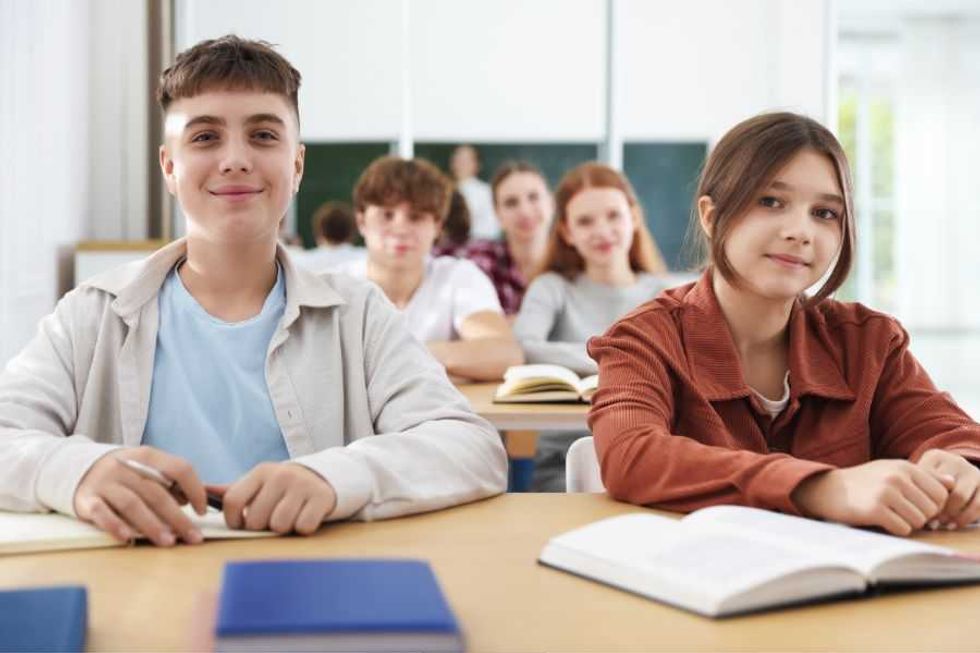
Horvath explains that the reason this happens is that each generation has gone to school longer than the previous generation. Gen Z is no exception to the longer duration of time spent in school, but they're the first ones who aren't meeting this normal increase in cognitive development. According to the cognitive neuroscientist, the decline is due to the introduction of screens in the classroom, which started around 2010.

"Across 80 countries, as Jean was just saying, if you look at the data, once countries adopt digital technology widely in schools, performance goes down significantly. To the point where kids who use computers about five hours per day in school for learning purposes will score over two-thirds of a standard deviation less than kids who rarely or never touch tech at school," Horvath reveals.

In most cases, the decline in performance doesn't result in better strategies. The neuroscientist shares that the standardized testing has been adjusted to accommodate lower expectations and shorter attention spans. This is an approach that educators, scientists, and researchers went to Capitol Hill to express wasn't working. But not every country is taking the approach of lowering standards to meet lowered cognitive ability. Denmark went in the opposite direction when it realized their students were slipping behind.

France24 recently interviewed educators in Denmark following their seemingly novel approach to students struggling with cognitive development. Since the beginning of the 2025/2026 school year, Denmark has not only been having students turn in their cellphones, but they've also taken tablets, laptops, and computers out of the classroom. No more digital learning for the majority of the school day. Danes went old school by bringing back physical textbooks, workbooks, and writing assignments. The results have been undeniable. Even the students can't seem to deny the success of the countrywide shift in educational approach.

"I think the biggest issue has been that, because we kind of got rid of the books and started using screens instead, that we've noticed that a lot of the kids have trouble concentrating, so it's pretty easy to swipe with three fingers over to a different screen and have a video game going, for example, in class," Copenhagen English teacher, Islam Dijab tells France24.

Now, instead of computers being part of every lesson, Denmark uses computers very sparingly and with strict supervision. One student says that it has been nice not having screen time at school because she loves to read and write. But it wasn't just the lack of attention span children were developing, they were also developing low self-esteem and poor mental health due to the amount of time spent on devices.

kids, intelligence, sharp kids, generations, education, cognitive abilities Students focused and ready to learn in the classroom.Photo credit: Canva
The data showing the negative impact of screens on teens' brains has prompted a nationwide change in Denmark that extends outside of the classroom. Afterschool activities are eliminating or extremely limiting electronic use. There is also a national No Phone Day that encourages everyone to put away their devices for the day, and Imran Rashid, a physician and digital health expert, is petitioning parliament to ban social media use for children under the age of 15. The no phone movement in Denmark is a nationwide effort that hopes to right the ship before another generation feels the effects.

farm, farmers, France, prison, rehabilitation

Moyembrie is changing inmates' lives for outside living.

Imagine a prison without bars. The cells are private rooms with doors that lock, and inmates hold their own keys. Social workers replace guards. For some, this may sound impossible, but two hours from Paris in a quiet French village, it exists.

La Ferme de Moyembrie is a working farm that doubles as a prison. It's a pioneering prison farm that challenges traditional ideas of incarceration. Here, the focus shifts from punishment and confinement into something much more meaningful: dignity, responsibility, and the heartfelt belief that everyone deserves a chance to rebuild their life.


For the men who arrive here—many after years in conventional prisons—Moyembrie offers something radical: trust. At Moyembrie, these men work the land, care for animals, and slowly remember what it's like to be regarded as humans who are responsible, dependable, and honest. It's a sanctuary where they can rediscover their self-worth, reconnect with nature's soothing rhythms, and prepare to step back into a world that too often leaves them behind.

A safe haven born from compassion

The story of Moyembrie began in 1990, not as a government program but as a personal mission. Jacques and Geneviève Pluvinage, two retired agricultural engineers, invested their life savings into the 24-hectare farm in Coucy-le-Château-Auffrique. Their plan was straightforward: give people a place to land when they had nowhere else to go.

Jacques had volunteered in prisons and had seen what happened to inmates after release: the panic, the paralysis. He began receiving letters from inmates desperate for support as they reentered society. In response, he and Geneviève did something unusual: they invited them in. The men lived in their house, ate at their table, and worked the fields alongside them.

By the early 2000s, the French justice system took notice. A progressive judge encouraged the farm to formally accept inmates serving sentences but eligible for "placement à l'extérieur" (work release). Moyembrie transformed from a shelter into a professional reintegration facility, but it never lost its sense of community. Today, it stands as proof that rehabilitation succeeds best in a supportive and collaborative environment, not behind bars.

Breaking the mold: no cells, no guards

The first thing you notice at Moyembrie is the absence: No barbed wire. No watchtowers. No scary guards in uniform. It's a working organic farm bustling with activity, the kind you might pass on any country road without a second thought.

The 20 or so men living here aren't just inmates. They're employees and community members. They hold the keys to their own rooms—a small but meaningful gesture that restores the privacy and autonomy lost in traditional prisons.

farm, farming, prison, reform, france Moyembrie prepares inmates for life outside. Photo credit: Canva
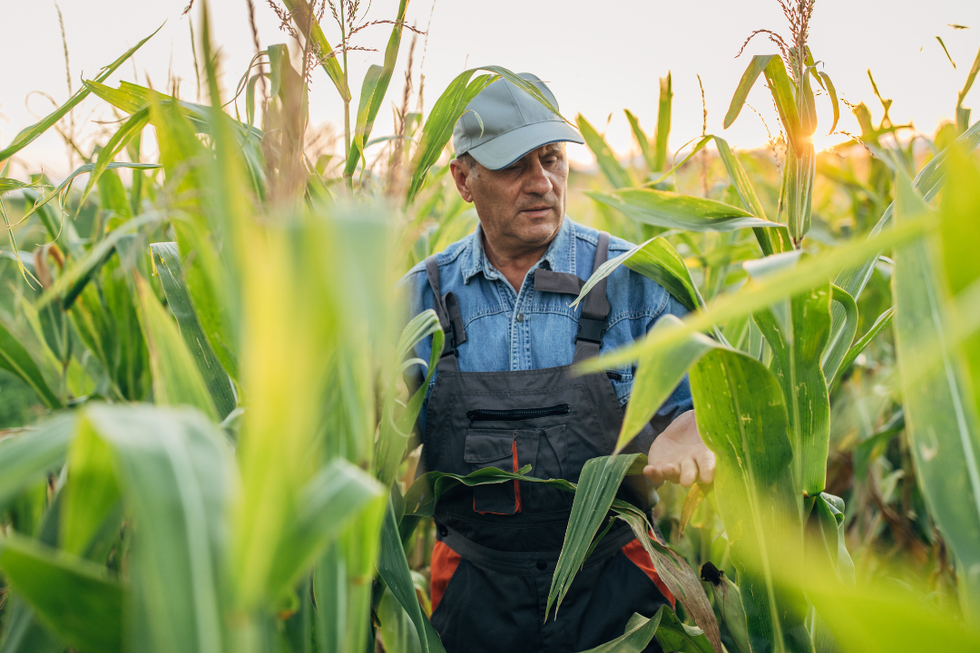
Security isn't enforced with bars; it's built on trust. The staff are social workers and technical supervisors—not corrections officers—who are there to guide and support, not to watch. This relationship sends a clear message: "I believe you are more than your worst mistake."

Finding purpose in the soil

The residents at Moyembrie wake early. From 8 a.m. until noon, they're busy in the fields or workshops, tending to goats and chickens, cultivating organic vegetables, and producing fresh cheese and yogurt.

The work is hard. It's repetitive. It's the kind of labor that makes your back ache and your hands feel like sandpaper. But it's real. Vegetables grow. Goats, eventually, will need milking. Cheese must be made.

Farmer, farming, prison, reform, France The farm pays the men a small wage and equips them with valuable life skills. Photo credit: Canva
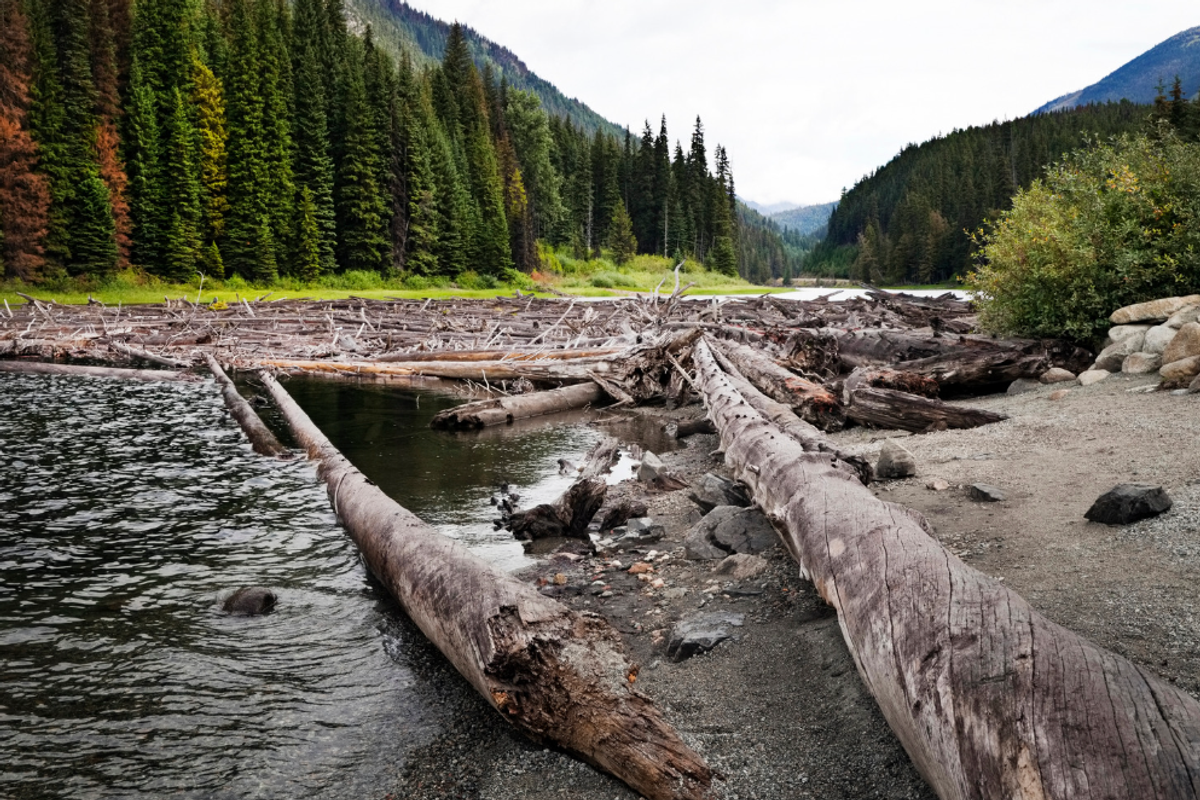
The farm pays them a small wage and sells their produce at local farmers' markets. The economic element is just a bonus, though. The work—tending to something outside yourself, being responsible for something alive, something fragile—changes the way you relate to your own life. On a deeper level, this work can be exquisitely therapeutic.

"Work is about relearning essential life skills like punctuality or decision-making," says Leila Desesquelle, one of the nine members on the farm. "In detention, the smallest choices were made for them. So it's a big deal if they can decide on their own."

You learn to show up on time. Work with other people. Begin to see your hands as tools of creation, not destruction. There is a profound sense of healing that comes from nurturing a living thing and watching it thrive.

At lunch, everyone sits together—staff and residents share the same table. There is no hierarchy, no separation. It's just lunch.

The afternoon then shifts into personal growth. The men work on the mechanics of reentry: getting a driver's license, familiarizing themselves with their paperwork, and learning how to open a bank account or apply for housing. Some take creative writing classes. Others meet with social workers to discuss what comes next.

These afternoons are when residents learn to manage their independence, a skill that's been eroded by years of incarceration. Whether they're taking a workshop or working with social workers to secure health insurance and ID cards, every task is a step towards successful reentry.

"I used to cry when I received judicial letters because I couldn't understand what they meant," explains Mahamady. Originally from Mali, he spent seven years in French jails before arriving at the farm—without ever learning the language.

Reasons to Be Cheerful reports that Mahamady took his first French lessons in detention, then continued with bi-weekly classes at the farm. He eventually passed a French language certification test.

The power of a second chance

Does it work? In France, recidivism, or the rate at which people return to prison, is notoriously high. Reports say that two out of three people leaving prison in France will be back within five years. Moyembrie's numbers tell a different story. While exact statistics for the farm are difficult to pin down due to its small size, one report estimates that only 7% of the men who pass through the farm return to prison.

Part of that's due to structure. Before leaving, the farm ensures every resident has a safety net: their housing is pre-arranged. Most have jobs or find employment within three months. These are the building blocks of a functioning life—practical victories, the ones that make all the difference when you're starting over with nothing.

However, Moyembrie's success is best reflected in personal stories rather than just statistics. It shows up in the man who spends his weekends with his daughter, trying to rebuild their relationship.

Olivier, a former resident who now works at the farm as a counselor, credits Moyembrie with changing his life. "I lost so much during my years in prison, including my family," he said. The farm's relaxed, welcoming environment made visits with loved ones easier, helping to heal old wounds. "Slowly, we became close again."

Why we need more places like Moyembrie

Despite its undeniable impact, Moyembrie is still a rarity in the prison industry. The farm can only take in about fifty people a year, and must turn away many more applicants than it can hold

It's a double-edged sword. The program's effectiveness lies in its small scale; the deep personal bonds between staff and residents are at its heart.

Still, the idea is spreading. Since 2018, similar farms have opened across France, including a dedicated site for women. They call them "farms of hope"—living proof that justice, healing, and growth over time can go hand-in-hand, and that simple punishment isn't always the answer.

What Moyembrie shows is simple: prison doesn't have to be about punishment. Instead, it can provide people with the tools they need to rebuild and move towards a brighter future. As Christian, a former resident, describes his experience:

"After prison, you start from scratch. Everything has to be done again," he exclaims. "I had a job, a partner... I lost everything in prison. My son was born during my incarceration; I didn't know him. After that, we have to rebuild everything. It's not easy."

Then, while reflecting on his time at Moyembrie, Christian continues, "I found moral support and a family atmosphere. I went back to work like a normal guy. At the end of my sentence, I became a supervisor. I wanted to thank the Farm for all the help it had given me, and to show the residents that we can get out of it."

Science

Helicopters dump 6,000 logs into rivers in the Pacific Northwest, fixing a decades-old mistake

Forty years ago, restoration workers thought logs were the problem. They were wrong.

river restoration, washington, river fish, restoration, Yakama Nation, indigenous land, indigenoues tribes, salmon, trout, pacific northwest

Restoration workers now see how "critical" wood is to the natural habitat.

For decades, river restoration in the Northwestern United States followed a simple rule: if you saw logs in the water, take them out. Clean streams were seen as healthy streams, fast-moving water was seen as optimal, and wood was treated like a "barrier" to natural processes, particularly those of the local fish.

Now, helicopters are flying thousands of tree trunks back into rivers to undo that thinking.


In central Washington, one of the largest river restoration efforts ever attempted in the region is underway. More than 6,000 logs are being placed along roughly 38 kilometers, or 24 miles, of rivers and streams across the Yakama Reservation and surrounding ceded lands.

Nearly 40 years ago, Scott Nicolai was doing the opposite kind of work, all in the name of restoration.

"(Back then) the fish heads — what I call the fisheries folks — we stood on the banks, and we looked at the stream," Nicolai, a Yakama Nation habitat biologist, told Oregon Public Broadcasting. "If we saw a big log jam, we thought, 'Oh, that's a barrier to fish. We want the stream to flow.'"

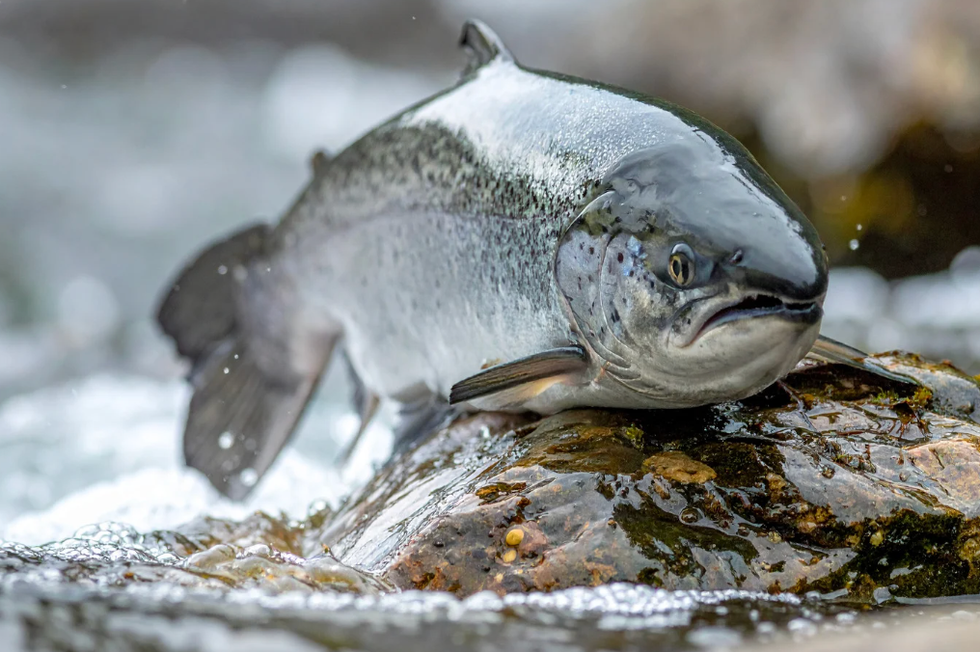
river restoration, washington, river fish, restoration, Yakama Nation, indigenous land, indigenoues tribes, salmon, trout, pacific northwest Fish find shelter for spawning in the nooks and crannies of wood. Photo credit: Canva
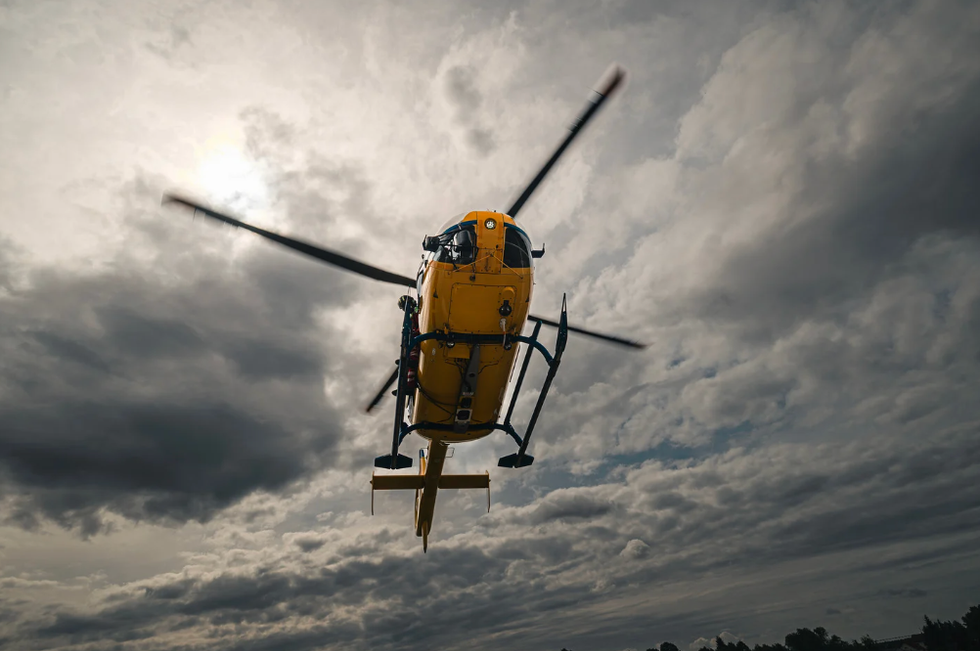
At the time, logs were removed in an effort to simplify the habitat. However, it soon became clear that wood provided vital "complexity," creating sheltered pockets for salmon and bull trout to spawn and supporting algae that feed aquatic insects. Logs also slow water, spread it across floodplains, and allow it to soak into the groundwater. That water is then slowly released back into streams, helping keep them flowing and cooler during hot, dry periods.

The consequences of removing this "critical part of the system" (in addition to overgrazing, railroad construction, and splash dam logging) were made all too clear over the years as the rivers dried up and wildlife populations declined.

"We're trying to learn from our mistakes and find a better way to manage," said Phil Rigdon, director of the Yakama Nation Department of Natural Resources.

That's why Nicolai is now helping lead a project for the Yakama Nation aimed at rebuilding river complexity by returning logs to their rightful place. Many of these streams are now unreachable by road, which is why helicopters are used. Logs are flown from staging areas and carefully placed at precise drop locations marked with pink and blue flagging tape.
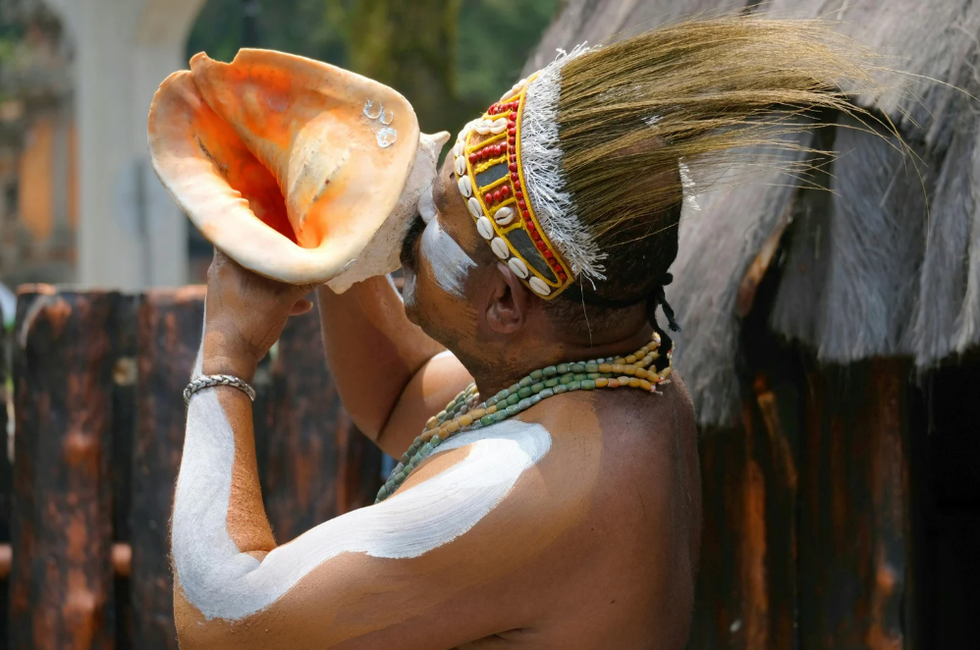
river restoration, washington, river fish, restoration, Yakama Nation, indigenous land, indigenoues tribes, salmon, trout, pacific northwest Many of these streams are now unreachable by road, which is why helicopters are used.Photo credit: Canva

The wood comes from forest-thinning projects led by The Nature Conservancy and includes species such as Douglas fir, grand fir, and cedar. Although some of the timber could have been sold, it is instead being used as river infrastructure.

For tribal leaders, the work carries even deeper meaning. During the helicopter flights, they gathered along the Little Naches River for a ceremony and prayer.

river restoration, washington, river fish, restoration, Yakama Nation, indigenous land, indigenoues tribes, salmon, trout, pacific northwest Tribal leaders gathered by the Little Naches River for a ceremony and prayer.Photo credit: Canva

"It was very simple: to bring what was rightfully part of this land back to us," said former tribal chairman Jerry Meninick.

The aftermath of the original restoration project illustrates how human concepts, such as the belief in the superiority of "cleanliness," can be limited and sometimes cause more harm than good. The miracle of nature, however, is that when left to her own devices, she can heal herself.

skunk, wildlife, skunk spray, animals, good people
Photo Credit: Canva

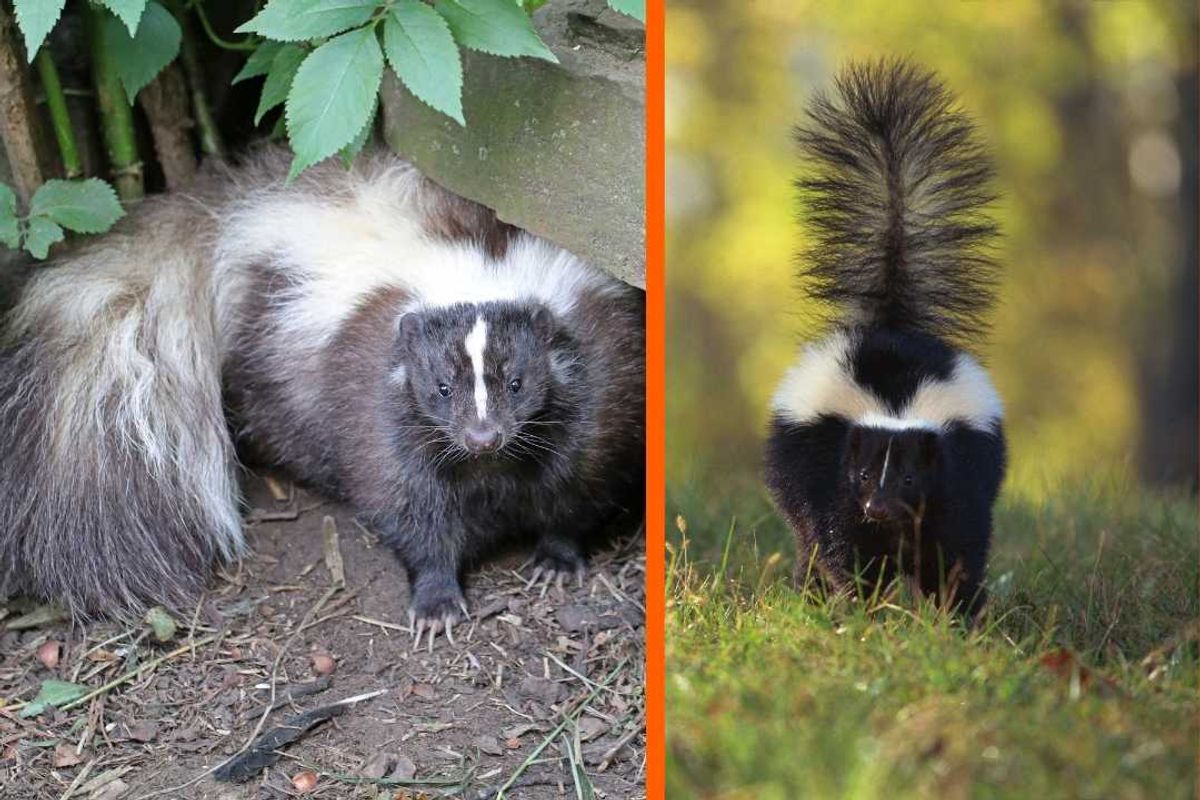
A skunk from the front and from the back.

Imagine you’re a skunk, just minding your own business waddling down the street. You're sniffing around when suddenly a glass jar gets stuck onto your snout. It becomes harder to breathe as carbon dioxide fills the jar, leaving you little to no room to exhale.

The clock is ticking. Perhaps you begin to panic. But, because there really is still absolute good in this world, so you're in luck.


This is what happened when Cheryl Rhodes spotted a skunk with a jar on its head. In a video posted to her TikTok page in December 2025, we see her running after the tiny skunk, knowing that time is of the essence. "Oh gosh, please," she exclaims. As she approaches, she bends down and beckons, "Come here, baby. Come here, come on." The skunk continues walking toward her as she gently gives it direction. "Come here. Let me get it off of your face."

@cherlavie

I found a lil skunk with a glass jar stuck on its head. Against my husband's advice, I pursued the skunk. I'm still in shock that it let me relieve it without retaliation. Ain't smellin like a skunk today! #skunkrescue #animalrescue #skunkslivesmatter #savealife #skunksoftiktok

She gingerly reaches out and grabs the jar, lifting the skunk temporarily into the air. Her voice becomes tense. "Please get it off. Please come on. Good boy!" She is able to remove the jar and quickly yells to her husband, "Honey, I got it! He didn't spray me!" She then cries in joyous relief.

The last shot oof the clip is of the dirty little jar, which created all the trouble in the first place.

Rhodes told Storyful, "I asked my husband to try to take the glass jar off the skunk's head. He said no, he's been sprayed before in the past. I couldn't just leave the skunk in that condition. My husband started to record unbeknownst to me. He thought I was going to get sprayed. Thankfully, I had a much better outcome."

Skunk spray is actually a fluid stored in their glands. Other animals, like opossums, have similar abilities. Havahart, "a leading manufacturer of wildlife control products," explains, "Skunk spray consists of a chemical called N-butylmercaptan, which is a pungent mix of sulfur-based compounds. The skunk stores the spray in glands positioned alongside its anus, which is why it needs to lift its tail to spray."

On the ABC Humane Wildlife site, they share that skunks don't actually enjoy spraying. "They actually only use their spray as a last resort when they feel they have exhausted all of their other defense mechanisms. A skunk only holds about 4 tablespoons of its noxious fluid, and it can take several days to replenish, leaving it vulnerable in the meantime."

In fact, they often attempt other defense mechanisms first. "When someone is bold enough to threaten them, the skunk’s first instinct is to run away. If this doesn’t work, it will turn around to face its enemy, raise its tail as a warning, and stomp its front feet. If this still isn’t effective in scaring away the attacker, the skunk will then use its spray."

The science behind skunk spray is fascinating. www.youtube.com, Animalogic

The comments on this heroic story are so lovely. On TikTok, one person paraphrases writer Karen Davidson, who once said, "Saving one dog won't change the world, but for that one dog, the whole world will change forever." The commenter changed it to, "Saving one animal won't change the world, but for that one animal, the whole world will change forever."

Another notes the tears at the end. "The crying while walking away victorious in your rescue mission is so valid."

Yet another noticed the skunk seeming to trust her, though it must have also been terrified. "The fact that the skunk came to you for help makes me (four smiling face emojis)."

And many simply wish the skunk-helper wonderful wishes. "I hope your pillow is always cool and you get all the green lights when you're running late."

On ABC 7's Instagram, others relay their admiration for Rhodes rescue. "I don't know her, but I love her," says one. Another agrees, "More people like her in the world please." And "Bay Area…protect this woman at all costs."

Another Instagrammer notes what helping the skunk says about her character. "You know the type of person they are when they show compassion towards animals."

Unfortunately, the world isn't always safe for animals like these. In a perfect scenario, a skunk or other wildlife wouldn't have access to a dangerous jar or other trash that might be left around.

Environmental consultant and educator Roberta C. Barbalace writes on EnvironmentalChemistry.com how dangerous trash can be, giving many examples. "Broken glass can cut the feet of foxes, coyotes, or badgers, and unbroken bottles present a hazard to various small animals. Lizards often crawl inside bottles or cans to bask in the warm interior, to seek protection, or search for food; but they may find it difficult to squeeze out again and can die of overheating. Small mammals in search of food often get their heads caught in the openings of jars. Replacing lids on bottles and jars before discarding can help prevent animals from becoming entrapped. Birds, fish, and mammals may be ensnared by plastic six-pack holders."

But there are solutions: "This can be prevented by cutting up the plastic rings so that they do not become traps."

raccoon, wildlife, animals, safety, trash A raccoon poses for the camera. Photo by Joshua J. Cotten on Unsplash
There are other ways people can do their part. The website Plain Disposal offers tips on keeping raccoons, skunks, and even bears safe and out of your trash.

"Keep trash in a secure location," they recommend. "When possible, store your trash inside an enclosed shed or garage until it’s time for pickup. This will prevent animals from accessing it and help keep the trash contained and out of sight. This is probably the easiest solution to keep wildlife out of trash."

They also suggest "installing a small secure enclosure or fencing area where you can store your bins," and/or putting your trash out of reach. "Elevating your trash bins off the ground can help deter them."

As for this little skunk, hopefully it went on to have the best day milling about town—thanks to this good, animal-loving Samaritan.

job interview tips, public speaking, water, job interview, life hack

A glass of water could help you get the job.

Job interviews or any form of public speaking can easily trip a person up, even when they’re totally prepared. It’s human to get lost and go blank in the middle of a thought, or get stuck on a question you've been asked. Well, one expert says that your best ally in such situations is your glass of water.

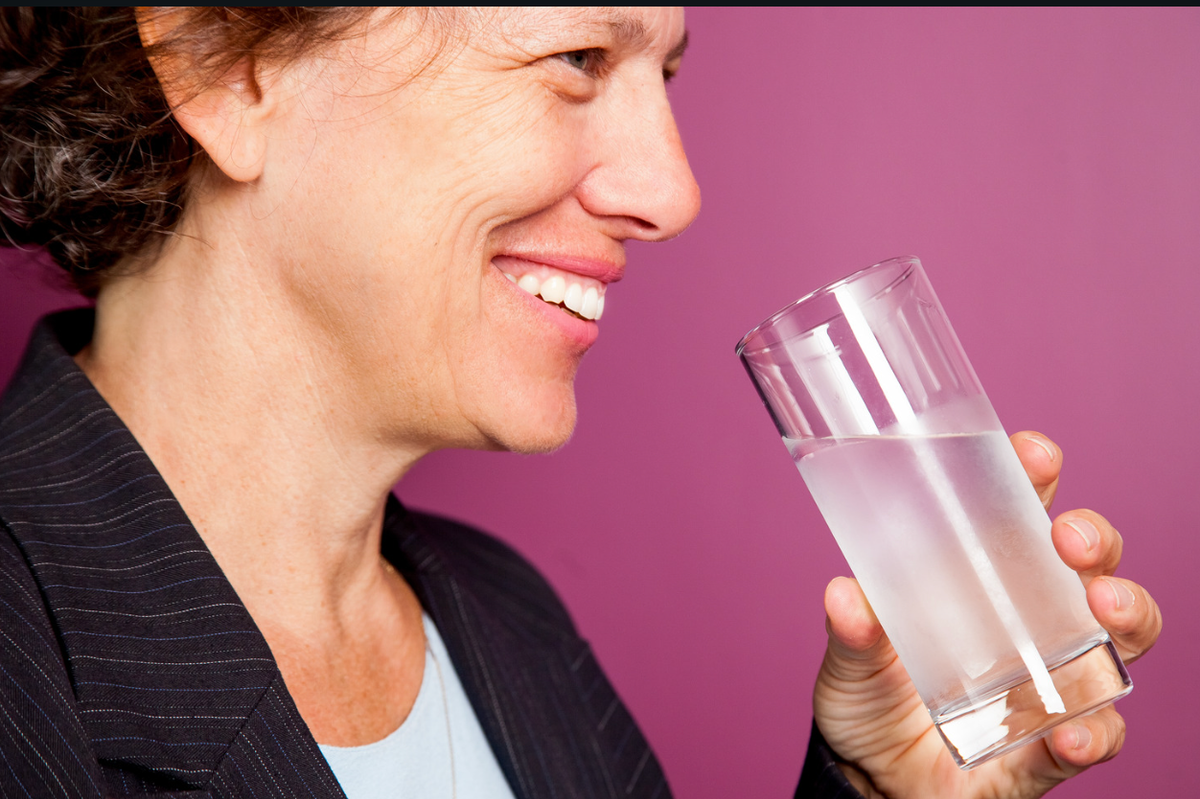
Behavioral therapist Dr. Shadé Zahrai shared on her TikTok that the next time you go blank during a job interview or a presentation, pause and take a sip from a glass or bottle of water. This isn’t just to refresh your throat, but to buy you time to refresh your mind. Not only does taking a drink of water buy you time to get your mind refocused, but the pause psychologically resets the conversation overall.


@shadezahrai

When your mind goes blank, take a sip! Simple trick to buy yourself more time.

It also puts you back in control. Whomever you're talking to will politely wait for you to finish your sip, allowing you to get the first word in after you’ve regained your composure. This pause can also provide more control in that it forces the conversation to slow down so you can think it through and speak thoroughly and clearly. It eliminates the feeling of needing to match speedy or frantic energy that may have built up during the chat.

In a job interview, it’s likely that the interviewer will offer you water. Some people online have interpreted this gesture as a form of test or mind game, but its actually nothing to worry about in most cases. You won't be judged on whether you drink the water, and it's better to have it if you need it. Career experts also say that, whether you feel thirsty or not, the safest bet is to accept the offer of water during an interview.

Beyond potentially feeling parched or needing a moment to pause Zahrai suggests you should go ahead and say yes to an offering of water from your interviewer. In some cases, there is a psychological component to accepting an offer of a glass of water that increases your chances of getting the job.


@postupcareers

#careersandbeers is mixing in a water. Here are reasons to accept a water in a #jobinterview. #jobinterviewtips #mixinawater #jobinterviewprep

By accepting the water, you’re allowing your interviewer to feel like an accommodating guest. It creates a friendly give and take before you both sit down to discuss the job.

@joshotusanya

Job Interview Hack 😎 (Thoughts?) #interview #learnontiktok #interviewtips #joshosays

Furthermore, saying “no” to the water offer may unintentionally throw off the vibe since, polite or not, "no" is a rejection. That feeling could carry over into the interview, and you’ll go into it at a disadvantage. By saying “yes” to the water offer, however, your interviewer is more likely to take a shine to you. In short, your “yes” might just lead to a job offer down the line.