upworthy

skunk

skunk, wildlife, skunk spray, animals, good people
Photo Credit: Canva

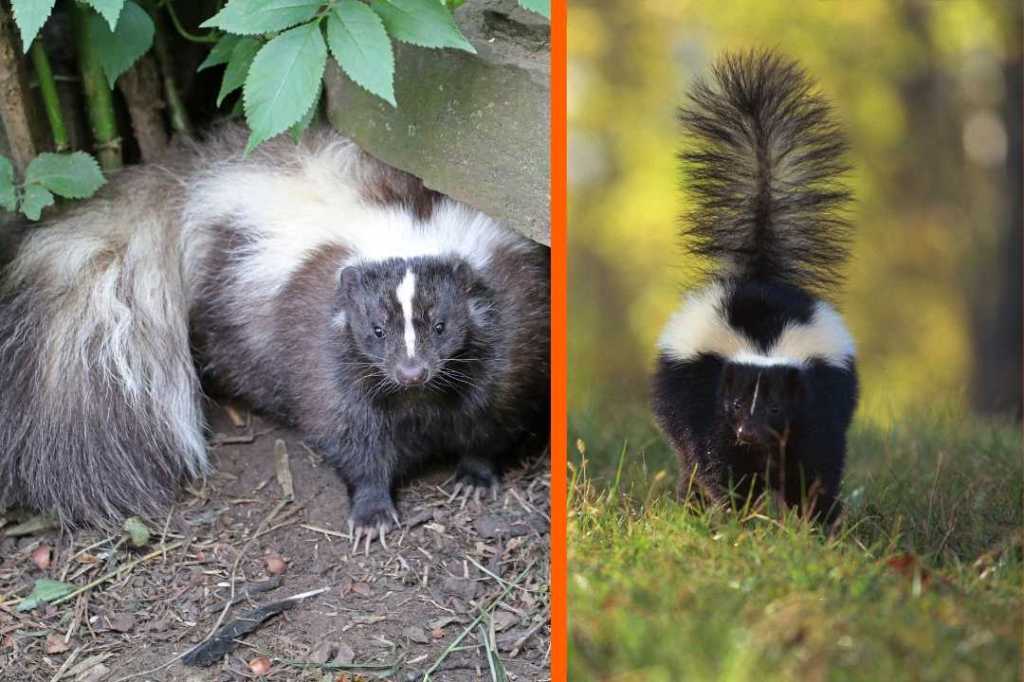
A skunk from the front and from the back.

Imagine you’re a skunk, just minding your own business waddling down the street. You're sniffing around when suddenly a glass jar gets stuck onto your snout. It becomes harder to breathe as carbon dioxide fills the jar, leaving you little to no room to exhale.

The clock is ticking. Perhaps you begin to panic. But, because there really is still absolute good in this world, so you're in luck.

This is what happened when Cheryl Rhodes spotted a skunk with a jar on its head. In a video posted to her TikTok page in December 2025, we see her running after the tiny skunk, knowing that time is of the essence. "Oh gosh, please," she exclaims. As she approaches, she bends down and beckons, "Come here, baby. Come here, come on." The skunk continues walking toward her as she gently gives it direction. "Come here. Let me get it off of your face."

@cherlavie

I found a lil skunk with a glass jar stuck on its head. Against my husband's advice, I pursued the skunk. I'm still in shock that it let me relieve it without retaliation. Ain't smellin like a skunk today! #skunkrescue #animalrescue #skunkslivesmatter #savealife #skunksoftiktok

She gingerly reaches out and grabs the jar, lifting the skunk temporarily into the air. Her voice becomes tense. "Please get it off. Please come on. Good boy!" She is able to remove the jar and quickly yells to her husband, "Honey, I got it! He didn't spray me!" She then cries in joyous relief.

The last shot oof the clip is of the dirty little jar, which created all the trouble in the first place.

Rhodes told Storyful, "I asked my husband to try to take the glass jar off the skunk's head. He said no, he's been sprayed before in the past. I couldn't just leave the skunk in that condition. My husband started to record unbeknownst to me. He thought I was going to get sprayed. Thankfully, I had a much better outcome."

Skunk spray is actually a fluid stored in their glands. Other animals, like opossums, have similar abilities. Havahart, "a leading manufacturer of wildlife control products," explains, "Skunk spray consists of a chemical called N-butylmercaptan, which is a pungent mix of sulfur-based compounds. The skunk stores the spray in glands positioned alongside its anus, which is why it needs to lift its tail to spray."

On the ABC Humane Wildlife site, they share that skunks don't actually enjoy spraying. "They actually only use their spray as a last resort when they feel they have exhausted all of their other defense mechanisms. A skunk only holds about 4 tablespoons of its noxious fluid, and it can take several days to replenish, leaving it vulnerable in the meantime."

In fact, they often attempt other defense mechanisms first. "When someone is bold enough to threaten them, the skunk’s first instinct is to run away. If this doesn’t work, it will turn around to face its enemy, raise its tail as a warning, and stomp its front feet. If this still isn’t effective in scaring away the attacker, the skunk will then use its spray."

The science behind skunk spray is fascinating. www.youtube.com, Animalogic

The comments on this heroic story are so lovely. On TikTok, one person paraphrases writer Karen Davidson, who once said, "Saving one dog won't change the world, but for that one dog, the whole world will change forever." The commenter changed it to, "Saving one animal won't change the world, but for that one animal, the whole world will change forever."

Another notes the tears at the end. "The crying while walking away victorious in your rescue mission is so valid."

Yet another noticed the skunk seeming to trust her, though it must have also been terrified. "The fact that the skunk came to you for help makes me (four smiling face emojis)."

And many simply wish the skunk-helper wonderful wishes. "I hope your pillow is always cool and you get all the green lights when you're running late."

On ABC 7's Instagram, others relay their admiration for Rhodes rescue. "I don't know her, but I love her," says one. Another agrees, "More people like her in the world please." And "Bay Area…protect this woman at all costs."

Another Instagrammer notes what helping the skunk says about her character. "You know the type of person they are when they show compassion towards animals."

Unfortunately, the world isn't always safe for animals like these. In a perfect scenario, a skunk or other wildlife wouldn't have access to a dangerous jar or other trash that might be left around.

Environmental consultant and educator Roberta C. Barbalace writes on EnvironmentalChemistry.com how dangerous trash can be, giving many examples. "Broken glass can cut the feet of foxes, coyotes, or badgers, and unbroken bottles present a hazard to various small animals. Lizards often crawl inside bottles or cans to bask in the warm interior, to seek protection, or search for food; but they may find it difficult to squeeze out again and can die of overheating. Small mammals in search of food often get their heads caught in the openings of jars. Replacing lids on bottles and jars before discarding can help prevent animals from becoming entrapped. Birds, fish, and mammals may be ensnared by plastic six-pack holders."

But there are solutions: "This can be prevented by cutting up the plastic rings so that they do not become traps."

raccoon, wildlife, animals, safety, trash A raccoon poses for the camera. Photo by Joshua J. Cotten on Unsplash

There are other ways people can do their part. The website Plain Disposal offers tips on keeping raccoons, skunks, and even bears safe and out of your trash.

"Keep trash in a secure location," they recommend. "When possible, store your trash inside an enclosed shed or garage until it’s time for pickup. This will prevent animals from accessing it and help keep the trash contained and out of sight. This is probably the easiest solution to keep wildlife out of trash."

They also suggest "installing a small secure enclosure or fencing area where you can store your bins," and/or putting your trash out of reach. "Elevating your trash bins off the ground can help deter them."

As for this little skunk, hopefully it went on to have the best day milling about town—thanks to this good, animal-loving Samaritan.