upworthy
Add Upworthy to your Google News feed.
Google News Button
Family

Harvard psychologists have been studying what it takes to raise 'good' kids. Here are 6 tips.

Help unlock your child's best self with a few tried-and-true strategies.

raise good kids, harvard parenting study, moral kids

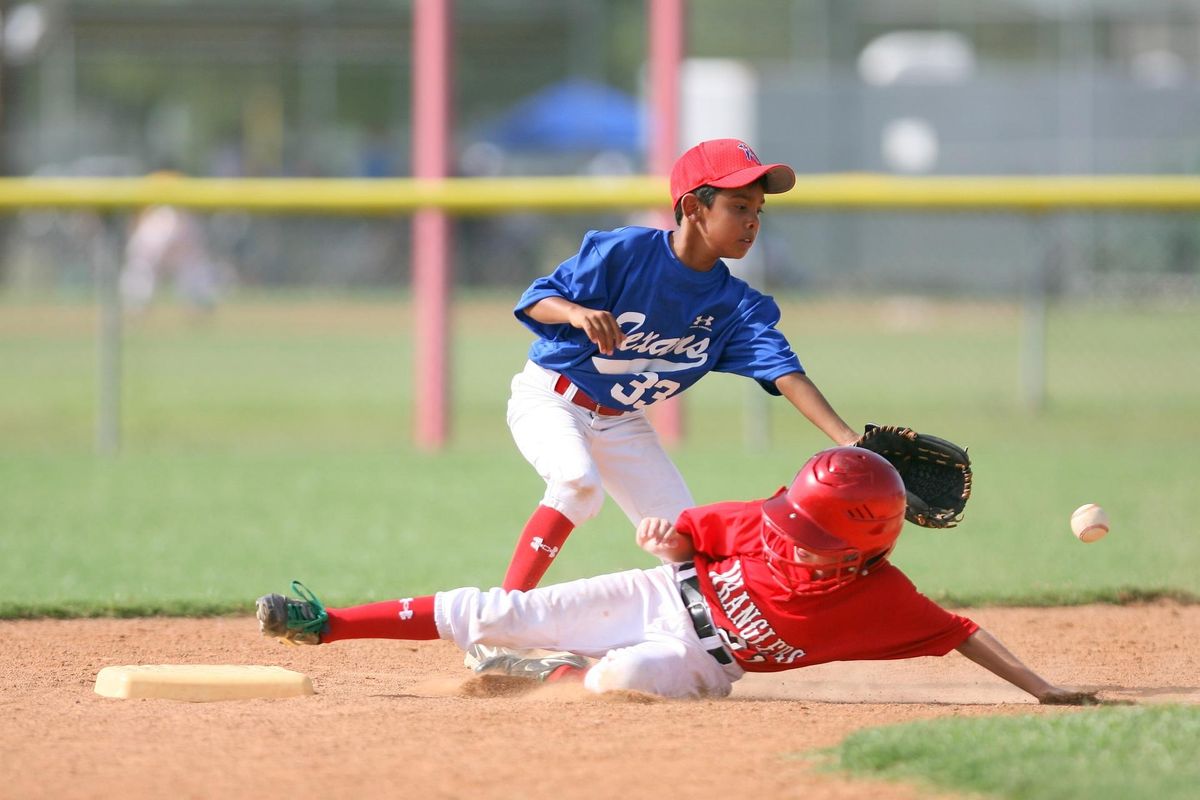
Kids playing baseball with a slide into second.

A lot of parents are tired of being told how technology is screwing up their kids. Moms and dads of the digital age are well aware of the growing competition for their children's attention, and they're bombarded at each turn of the page or click of the mouse with both cutting-edge ideas and newfound worries for raising great kids.

But beneath the madness of modernity, the basics of raising a moral child haven't really changed. Parents want their kids to achieve their goals and find happiness, but Harvard researchers believe that doesn't have to come at the expense of kindness and empathy. They say a few tried-and-true strategies remain the best ways to mold your kids into the morally upstanding and goals-oriented humans you want them to be.
kids, toddlers, pacifiers, parenting

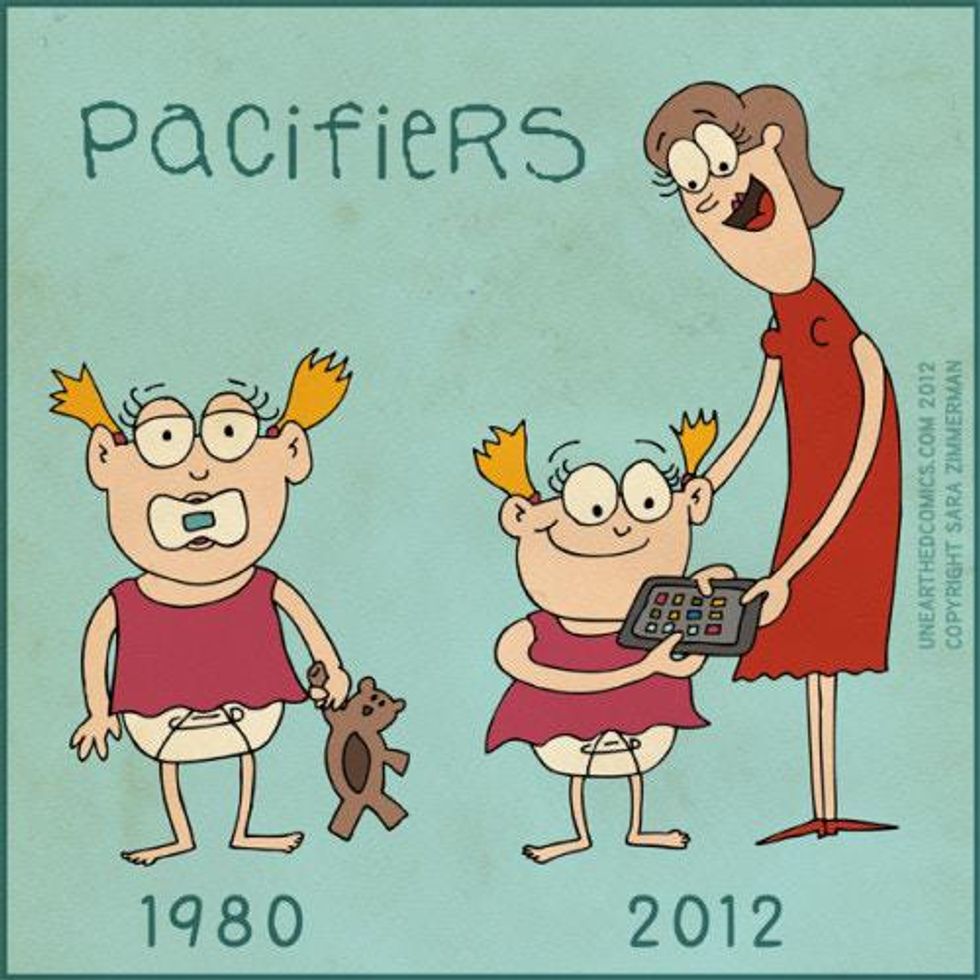
Entertaining the toddlers.

Cartoon by Sara Zimmerman/Unearthed Comics.

Here are six practical tips:

1) Hang out with your kids.

parenting advice, healthy habits, teachable moments

Cleaning the hands.

Image by Cade Martin/Public Domain Images.

This is, like, the foundation of it all. Spend regular time with your kids, ask them open-ended questions about themselves, about the world and how they see it, and actively listen to their responses. Not only will you learn all sorts of things that make your child unique, you'll also be demonstrating to them how to show care and concern for another person.

2) If it matters, say it out loud.
teamwork, educational games, Harvard

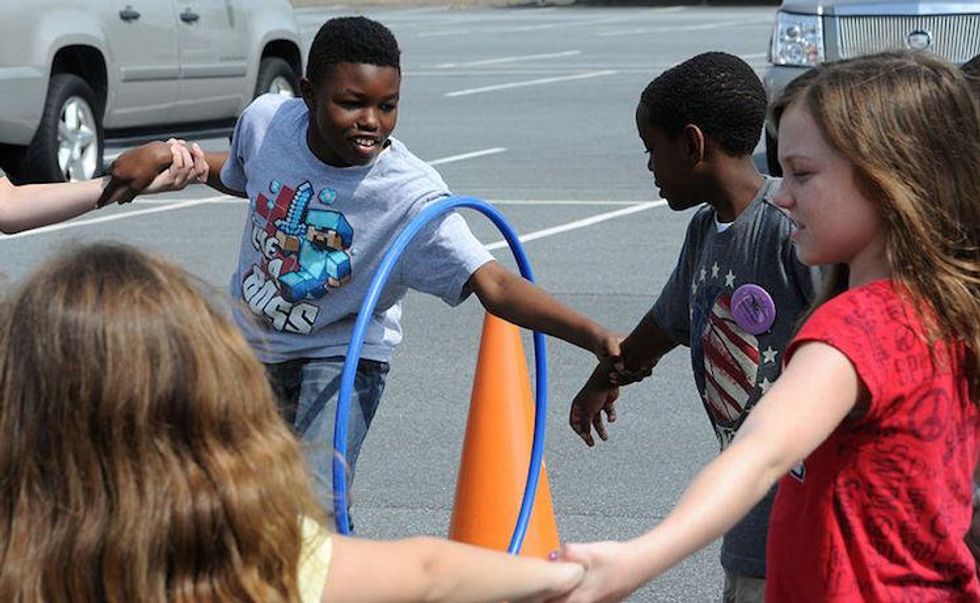
Teamwork in process.

Image by Steven Bennett/Wikimedia Commons.

According to the researchers, "Even though most parents and caretakers say that their children being caring is a top priority, often children aren't hearing that message." So be sure to say it with them. And so they know it's something they need to keep up with, check in with teachers, coaches, and others who work with your kids on how they're doing with teamwork, collaboration, and being a generally nice person.

3) Show your child how to "work it out."
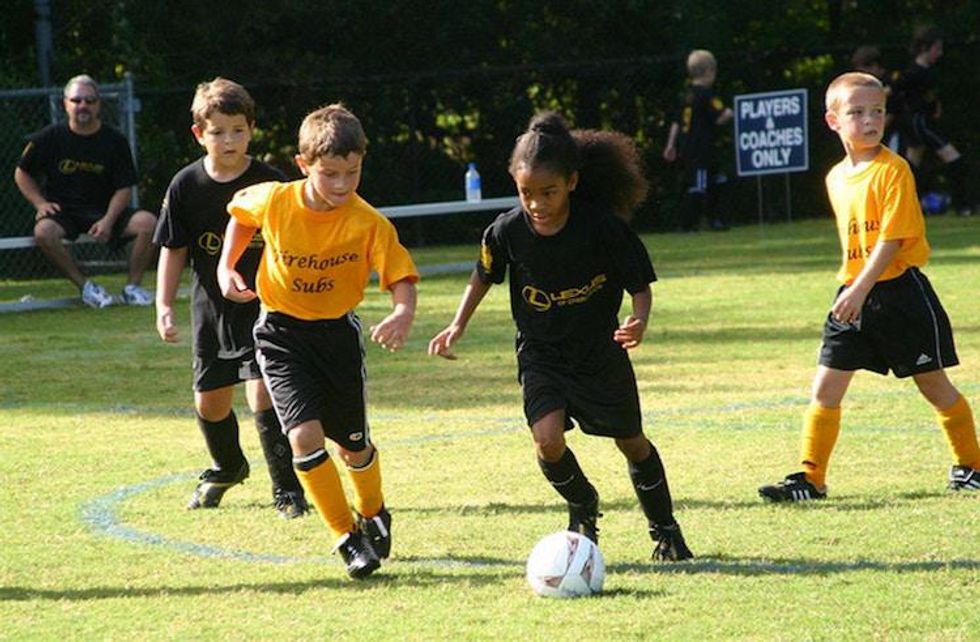
sports and exercise, team exercise, building confidence

Playing soccer.

Image by susieq3c/Flickr.

Walk them through decision-making processes that take into consideration people who could be affected. For example, if your child wants to quit a sport or other activity, encourage them to identify the source of the problem and consider their commitment to the team. Then help them figure out if quitting does, in fact, fix the problem.

4) Make helpfulness and gratitude routine.
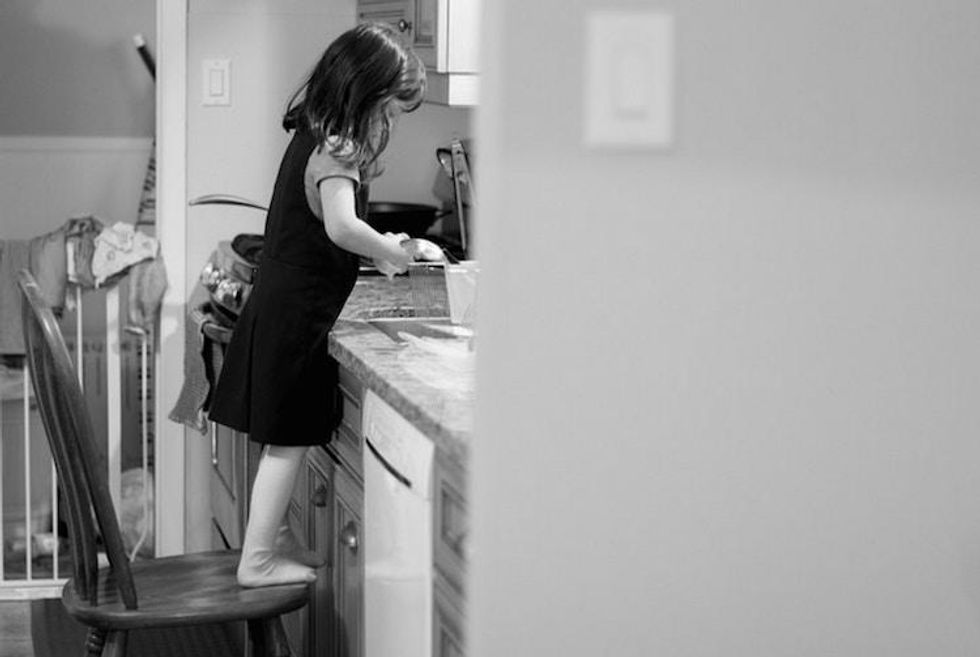
problem solving, gratitude, healthy

Ingenuity for cleaning up.

Image by David D/Flickr.

The researchers write, "Studies show that people who engage in the habit of expressing gratitude are more likely to be helpful, generous, compassionate, and forgiving — and they're also more likely to be happy and healthy." So it's good for parents to hold the line on chores, asking kids to help their siblings, and giving thanks throughout the day. And when it comes to rewarding "good" behavior, the researchers recommend that parents "only praise uncommon acts of kindness."

5) Check your child's destructive emotions.
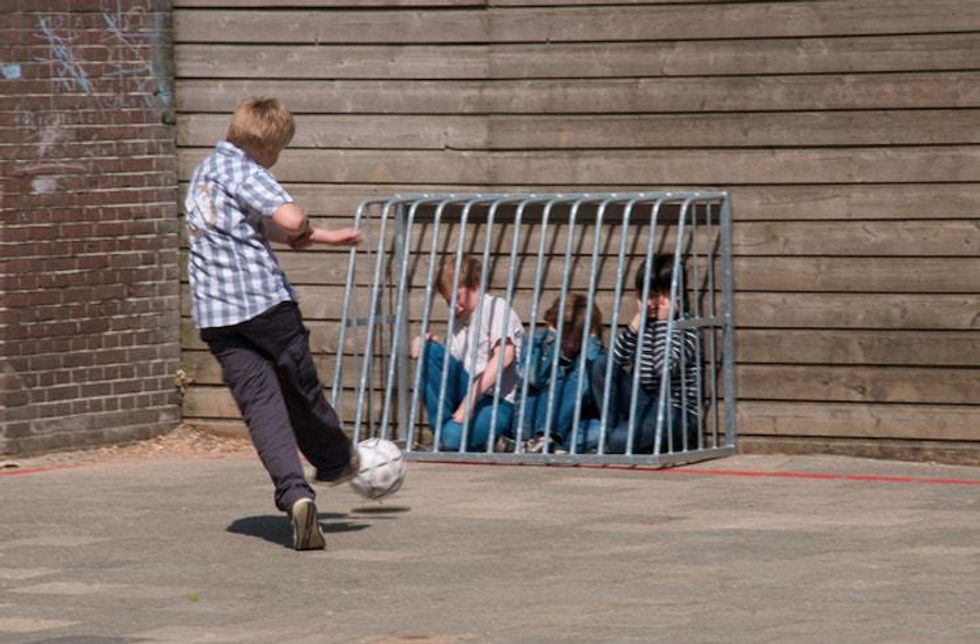
negative feelings, emotional intelligence, honesty, understanding

An automatic save.

Image by Thomas Ricker/Flickr.

"The ability to care for others is overwhelmed by anger, shame, envy, or other negative feelings," say the researchers. Helping kids name and process those emotions, then guiding them toward safe conflict resolution, will go a long way toward keeping them focused on being a caring individual. It's also important to set clear and reasonable boundaries that they'll understand are out of love and concern for their safety.

6) Show your kids the bigger picture.
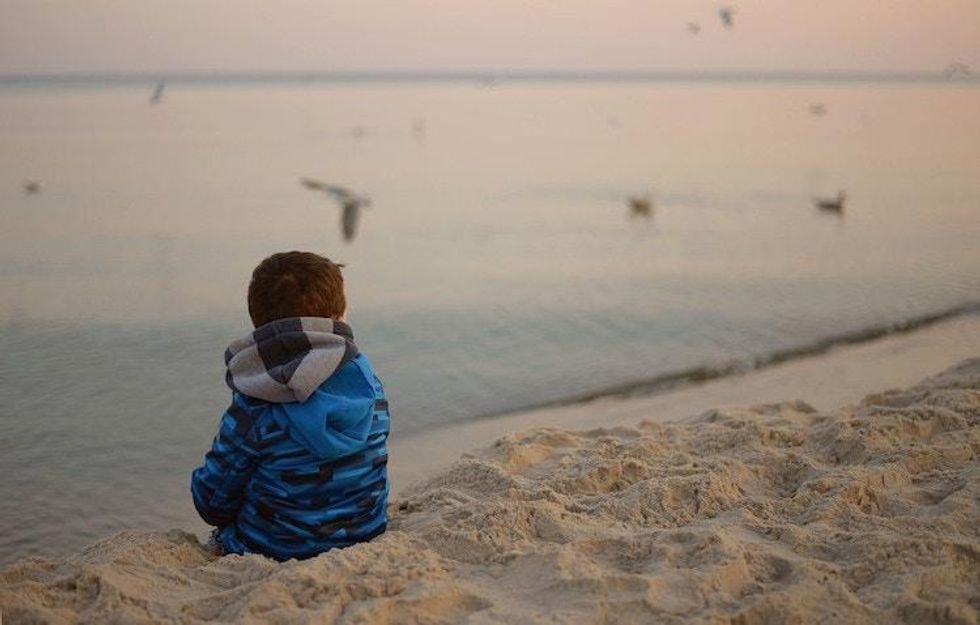
empathy, families, researchers

A reflective moment by the ocean.

Image by debowcyfoto/Pixabay.

"Almost all children empathize with and care about a small circle of families and friends," say the researchers. The trick is getting them to care about people who are socially, culturally, and even geographically outside their circles. You can do this by coaching them to be good listeners, by encouraging them to put themselves in other people's shoes, and by practicing empathy using teachable moments in news and entertainment.

The study concludes with a short pep talk for all the parents out there:

"Raising a caring, respectful, ethical child is and always has been hard work. But it's something all of us can do. And no work is more important or ultimately more rewarding."


This article originally appeared ten years ago.

Gen Z; Millennials; technology; cell phones; social media; teens and technology; teens social media

Gen Z is the first generation less cognitively capable than their parents. Denmark has the solution.

Nearly every parent hopes their child will be better off than they are: smarter, more secure, and more well-adjusted. Many parents see this as a stamp of successful parenting, but something has changed for children growing up today. While younger generations are known for their empathy, their cognitive capabilities seem to be lagging behind those of previous generations for the first time in history.

Dr. Jared Cooney Horvath, a teacher turned cognitive neuroscientist who focuses on human learning, appeared before Congress to discuss concerns about cognitive development in children. In his address to the members of Congress, he says, "A sad fact that our generation has to face is this: our kids are less cognitively capable than we were at their age. Since we've been standardizing and measuring cognitive development since the late 1800s, every generation has outperformed their parents, and that's exactly what we want. We want sharper kids."


kids, intelligence, sharp kids, generations, education, cognitive abilities Student smiling in a classroom, working on a laptop.Photo credit: Canva

Horvath explains that the reason this happens is that each generation has gone to school longer than the previous generation. Gen Z is no exception to the longer duration of time spent in school, but they're the first ones who aren't meeting this normal increase in cognitive development. According to the cognitive neuroscientist, the decline is due to the introduction of screens in the classroom, which started around 2010.

"Across 80 countries, as Jean was just saying, if you look at the data, once countries adopt digital technology widely in schools, performance goes down significantly. To the point where kids who use computers about five hours per day in school for learning purposes will score over two-thirds of a standard deviation less than kids who rarely or never touch tech at school," Horvath reveals.

In most cases, the decline in performance doesn't result in better strategies. The neuroscientist shares that the standardized testing has been adjusted to accommodate lower expectations and shorter attention spans. This is an approach that educators, scientists, and researchers went to Capitol Hill to express wasn't working. But not every country is taking the approach of lowering standards to meet lowered cognitive ability. Denmark went in the opposite direction when it realized their students were slipping behind.

France24 recently interviewed educators in Denmark following their seemingly novel approach to students struggling with cognitive development. Since the beginning of the 2025/2026 school year, Denmark has not only been having students turn in their cellphones, but they've also taken tablets, laptops, and computers out of the classroom. No more digital learning for the majority of the school day. Danes went old school by bringing back physical textbooks, workbooks, and writing assignments. The results have been undeniable. Even the students can't seem to deny the success of the countrywide shift in educational approach.

"I think the biggest issue has been that, because we kind of got rid of the books and started using screens instead, that we've noticed that a lot of the kids have trouble concentrating, so it's pretty easy to swipe with three fingers over to a different screen and have a video game going, for example, in class," Copenhagen English teacher, Islam Dijab tells France24.

Now, instead of computers being part of every lesson, Denmark uses computers very sparingly and with strict supervision. One student says that it has been nice not having screen time at school because she loves to read and write. But it wasn't just the lack of attention span children were developing, they were also developing low self-esteem and poor mental health due to the amount of time spent on devices.

kids, intelligence, sharp kids, generations, education, cognitive abilities Students focused and ready to learn in the classroom.Photo credit: Canva

The data showing the negative impact of screens on teens' brains has prompted a nationwide change in Denmark that extends outside of the classroom. Afterschool activities are eliminating or extremely limiting electronic use. There is also a national No Phone Day that encourages everyone to put away their devices for the day, and Imran Rashid, a physician and digital health expert, is petitioning parliament to ban social media use for children under the age of 15. The no phone movement in Denmark is a nationwide effort that hopes to right the ship before another generation feels the effects.

Boston; nice vs kind; kindness; east coast kind; west coast nice; kind people; faith in humanity restored; good news

A man helping someone out.

People often use "kind" and "nice" interchangeably, but there's a distinct difference between the two. Someone can be kind without being nice, just as someone can be nice but not kind. One man in Boston has people in stitches with his real-life lesson on being a kind human rather than a nice one.

The man, who goes by the name ChuncleRitchie on social media, says he was approached by a presumably disabled man who needed help a few days before Christmas. In the video shared to TikTok, Ritchie can be heard asking, "What do you need?" to someone off camera. The interaction quickly turned into a wild side quest for the content creator, but it was his reaction that had people happy and intimidated simultaneously.


Ritchie keeps the camera trained on himself, never exposing the disabled man's identity, but he can be heard stuttering through his request. Off camera, the man says, "I feel like I'm going to get jumped. I have significant funds in my pocket right now. I need someone to walk with me to the bank."

Boston; nice vs kind; kindness; east coast kind; west coast nice; kind people; faith in humanity restored; good news Walking together: friendship and guidance on a sunny day.Photo credit: Canva

In a thick Bostonian accent, Ritchie asks if the unidentified man thinks he's a police officer, to which the man confirms that he does not think Ritchie's in law enforcement. Clearly confused by the admission and request, the Good Samaritan clarifies, "You're saying you have a significant amount of funds in your pocket and you want me to f------ walk with ya? That's what you're asking?"

When the man confirms, Ritchie doesn't hesitate to assure the man that he will walk behind him to make sure no one tries to take his money. It should feel like a sweet moment, but the tone Ritchie uses sounds as if he's annoyed or upset, confusing commenters who aren't from the East Coast. Ritchie sprinkles expletives the entire walk to the bank, including when a couple of coworkers join the unexpected city stroll. Upon reaching their destination, Ritchie learns that the man's name is Bill before lecturing him on safety.

Boston; nice vs kind; kindness; east coast kind; west coast nice; kind people; faith in humanity restored; good news Friendly conversation on a sunny bus ride.Photo credit: Canva

"Bill, you shouldn't f------ yell that to random people for real. What if I was a f------ maggot psychopath? Dude, what are you nuts? Huh?" Ritchie says, but cuts Bill off when he attempts to explain. "No, I got that. Just don't be yelling like that to anybody else."

People familiar with Boston and East Coast kindness find the interaction hilariously endearing, while others are now afraid to visit the city. One person says, "The epitome of Boston, annoyed and mean but still going entirely out of your way to help a complete stranger."

@chuncleritchie If I didn’t catch it on video, you wouldn’t believe me. Now come with me as a random person approaches me and asks me to escort him to the bank as he’s fearful of being attacked while transporting a “significant amount of money.” #security #help #stranger #helpme #excuseme @JMealey537 @Michael Frazier ♬ original sound - ChuncleRitchie

This person thanks the man for validation and video evidence, "Hi. As someone who moved from the Midwest to New England and had to explain to my family every time we went to Boston … “no, they would do anything for you… they will just cuss and be a little mouthy about it. I swear they are nice”… thank you for this video evidence and being such a good human."

"You are the meanest nice person," another laughs, while someone else explains, "This is the difference between NICE and KIND. You are KIND, but not NICE."

This person plans to stay put in their home state, writing, "I’m not sure my skin is thick enough to live in Boston. Ima stick to the Midwest."

Boston; nice vs kind; kindness; east coast kind; west coast nice; kind people; faith in humanity restored; good news Lost on the road, they seek directions from a map.Photo credit: Canva

"Boston is full of grinches. We’ll go but we’re gonna talk sht the whole time," someone writes.

"Boston: Kind but not nice. LA: Nice but not kind. East coast best coast," one person declares.

Another person giggles at the conflicting tone versus action, saying, "How terrifyingly sweet of you guys."

One Massachusetts commenter confirms their style of kindness, saying, "As a fellow MA resident - this is the most Boston thing. The nicest, grumpiest, annoyed toned - but still going out of your way."

"Hey so I work with disabled adults and I just want you to know that being identified as a safe person to ask for help says a LOT about who you are as a person. I hope you realize that," someone shares.

Science

Helicopters dump 6,000 logs into rivers in the Pacific Northwest, fixing a decades-old mistake

Forty years ago, restoration workers thought logs were the problem. They were wrong.

river restoration, washington, river fish, restoration, Yakama Nation, indigenous land, indigenoues tribes, salmon, trout, pacific northwest

Restoration workers now see how "critical" wood is to the natural habitat.

For decades, river restoration in the Northwestern United States followed a simple rule: if you saw logs in the water, take them out. Clean streams were seen as healthy streams, fast-moving water was seen as optimal, and wood was treated like a "barrier" to natural processes, particularly those of the local fish.

Now, helicopters are flying thousands of tree trunks back into rivers to undo that thinking.


In central Washington, one of the largest river restoration efforts ever attempted in the region is underway. More than 6,000 logs are being placed along roughly 38 kilometers, or 24 miles, of rivers and streams across the Yakama Reservation and surrounding ceded lands.

Nearly 40 years ago, Scott Nicolai was doing the opposite kind of work, all in the name of restoration.

"(Back then) the fish heads — what I call the fisheries folks — we stood on the banks, and we looked at the stream," Nicolai, a Yakama Nation habitat biologist, told Oregon Public Broadcasting. "If we saw a big log jam, we thought, 'Oh, that's a barrier to fish. We want the stream to flow.'"

river restoration, washington, river fish, restoration, Yakama Nation, indigenous land, indigenoues tribes, salmon, trout, pacific northwest Fish find shelter for spawning in the nooks and crannies of wood. Photo credit: Canva

At the time, logs were removed in an effort to simplify the habitat. However, it soon became clear that wood provided vital "complexity," creating sheltered pockets for salmon and bull trout to spawn and supporting algae that feed aquatic insects. Logs also slow water, spread it across floodplains, and allow it to soak into the groundwater. That water is then slowly released back into streams, helping keep them flowing and cooler during hot, dry periods.

The consequences of removing this "critical part of the system" (in addition to overgrazing, railroad construction, and splash dam logging) were made all too clear over the years as the rivers dried up and wildlife populations declined.

"We're trying to learn from our mistakes and find a better way to manage," said Phil Rigdon, director of the Yakama Nation Department of Natural Resources.

That's why Nicolai is now helping lead a project for the Yakama Nation aimed at rebuilding river complexity by returning logs to their rightful place. Many of these streams are now unreachable by road, which is why helicopters are used. Logs are flown from staging areas and carefully placed at precise drop locations marked with pink and blue flagging tape.

river restoration, washington, river fish, restoration, Yakama Nation, indigenous land, indigenoues tribes, salmon, trout, pacific northwest Many of these streams are now unreachable by road, which is why helicopters are used.Photo credit: Canva

The wood comes from forest-thinning projects led by The Nature Conservancy and includes species such as Douglas fir, grand fir, and cedar. Although some of the timber could have been sold, it is instead being used as river infrastructure.

For tribal leaders, the work carries even deeper meaning. During the helicopter flights, they gathered along the Little Naches River for a ceremony and prayer.

river restoration, washington, river fish, restoration, Yakama Nation, indigenous land, indigenoues tribes, salmon, trout, pacific northwest Tribal leaders gathered by the Little Naches River for a ceremony and prayer.Photo credit: Canva

"It was very simple: to bring what was rightfully part of this land back to us," said former tribal chairman Jerry Meninick.

The aftermath of the original restoration project illustrates how human concepts, such as the belief in the superiority of "cleanliness," can be limited and sometimes cause more harm than good. The miracle of nature, however, is that when left to her own devices, she can heal herself.

squirrel, waving man, ranch dressing, american things, rodents

A squirrel, a happy man, and some ranch dressing.

There are obvious things people from overseas expect to find when they come to America on vacation. They'll see big, yellow school buses. They'll go out to dinner, be blown away by the portion sizes, and get excited about taking leftovers home. Of course, they'll also enjoy most Americans' happy-go-lucky attitude.

However, there are also things many people don't expect to find in America when they arrive. Some can be fun and exciting, others downright perplexing. Visitors might enjoy the pleasant surprise of seeing a garbage disposal in action, or feel overwhelmed by the countless massive billboards lining America's highways and byways.


A Redditor asked non-Americans who have visited the United States to share some of the "weirdest" things they noticed that most Americans might not. The responses turned into a fun list of everyday experiences many Americans don't realize are uniquely tied to life in the States. Who knew that seeing squirrels everywhere is a particularly American experience, or that people in other countries don't have to deal with poison ivy on a regular basis?

squirrel, rodents, busy tails, alert squirrel, squirrel in the forest. An alert squirrel. via Canva/Photos

Here are 15 of the strangest things that non-Americans didn't expect when visiting the U.S.

1. The medical advertisements

"How your medical ads show an old guy living life well because of X-drug. He has the best time, the wife is having the best time and it's all because of the drug making things better. The end of the ad is full of warnings about how this happy drug can potentially kill you and your family, nuke your dog and make cats impotent."

"When you have ads for drugs and half of the ad is telling you how the drug will kill you while also showing puppies. It's weird."

2. Military acknowledgements

"I went to SeaWorld with my mum when I was in my mid-teens. Halfway through the show, the performer (Not the whale) asked everybody in the military to stand up, and the whole crowd gave them a round of applause. They sat back down and the show continued as if nothing had happened. Couldn't imagine anything similar happening back in Blighty."

"I love that you specified it wasn't the whale asking questions."

3. Poison ivy is real

"That poison ivy not only exists, but it's so ubiquitous."

"When I was a kid, I walked through the smoke of burning poison ivy. I was out of school for a week after that, I couldn't even get my eyes open."


poison ivy, dangerous plants, poison plants, rashes, trees Poison ivy growing on a tree.via Canva/Photos

4. Thanksgiving invites

"The weirdest thing is that Americans will ask what you are doing for Thanksgiving. Are you going to your family, etc.? When you say no. They invite you to their home. (I was a student, my family was thousands of miles away, and I'm happy that the local Cracker Barrel is open and looking forward to a meal there. My Professor did that. Invited me to his home. I had a good time, but it was strange. I'm meeting his uncles and aunts. And one little girl threw a tantrum, I had to take her to calm her down, etc.... It was weird. But also wonderful. In my country, things like this would never happen. You don't bring a stranger to a family event."

"You don't bring a stranger to a family event. You're only a stranger until you show up, then you're family."

5. The bathrooms

"On behalf of my wife, what's up with the gaps in the toilet stall doors and no bidet?'"

Using a public restroom in the U.S. can be uncomfortable for visitors because of the large gaps beneath the stall doors. Strange as it may seem, those gaps are intentional. They exist for three main reasons: increased visibility makes it easier to spot emergencies, the extra space allows janitors to clean floors more efficiently, and smaller doors are cheaper to manufacture and install.


@mattypstories

And now you know!🚽#bathroom#facts#themoreyouknow

6. Wacky car dealership flags

"Car dealerships have huge flags. I don't get why you'd have a flag the size of ten RVs."

"Would you buy a truck from a guy whose American flag was smaller than a football field? If it's not at least one square mile in size, you're basically a communist, and we don't buy commie trucks."

"That's an advertising thing. In the US, a lot of cities ban signs being above a certain size or quantity, but flags, particularly US flags, are often exempt."

7. Prices on menus

"Why you guys don't put the actual full prices on food menus?"

"You guys don't add the taxes in beforehand."

"Maybe it's to discourage people from buying them with the slightly elevated price?"

8. Ranch is very confusing

"Ranch; it is somehow both delicious and revolting. And changes which with every mouthful."

"Buttermilk, mayo, dill, parsley, garlic."

"In the Netherlands, they don't really know what Ranch is... so we call it 'Cool American.'"


ranch dressing, ranch, cool ranch, hot wings, chicken wings Chicken wings and ranch dressing. via Canva/Photos

9. Casinos in gas stations

"I'm talking about slot/poker machines and sometimes a poker table or two in regular gas stations. Not just truck stops, not on native land. Find a street corner with some gas stations on it in Missoula and odds are at least one of them has a mini casino inside."

"Illinois has slots EVERYWHERE now. Gas stations, hotels, regional airports. It's crazy."

10. Free refills

"Free refills. Went to a restaurant with my dad (both German) and all of a sudden the waiter took away my drink with another perfectly good sipp in it and I must have looked pretty shocked. It was only then when my dad explained to me that you guys have free refills."

"The reason we have free refills is that drinks come in large containers of syrup that get mixed with the water and carbonation in a fountain on site. At fast food restaurants, it costs the restaurant more to provide you with a cup than the liquid that they order in bulk. This makes unlimited refills feasible, vs the individual glass bottles everyone in Europe is serving."

11. Huge squirrel population

"That there are a lot of squirrels."

"Half Spanish, when my godmother visited America for the first time she spent an unreasonable amount of time filming squirrels."

The U.S. has the largest squirrel population in the world, with an estimated 40 million squirrels across the country. What's funny is that this abundance is no accident. In the 1900s, urban parks were considered beneficial to people's health, so when many were built, cities intentionally introduced squirrels to create a more bucolic atmosphere. The result was an explosion in America's squirrel population.

12. Grocery baggers

"Clearly the fact that there are people to put your groceries in a bag for you, I've never been so stressed and uncomfortable that while I was watching this young girl taking care of my groceries."

"Conversely, the first time I went to a European store I stood and watched the cashier not bag things."


grocery stores, grocery bags, grocery checkout, customer service, super market, A woman checking out at the supermarket.via Canva/Photos

13. Y'all is real

"My cousins, who had lived in Kuwait and Australia for many years, came to visit my family back in Texas and laughed at how we said y'all."

"Me, a Southerner at Coachella: I ain't heard that band before...

Californians around me: ...did you just say 'ain't??'

Me: y'all don't say ain't?? WAIT. Do y'all even say y'all??

Californians: hella hella NorCal is hella better than SoCal hella no we don't say y'all."

14. People are really social

"Canadian here, I was blown away by how weirdly social people are with strangers. Like some random guy I've never seen before just starts telling me his life story on the street. He is super normal and doesn't seem crazy; he just wants to talk to me for some reason. But then also, the dude at Wendy's is loudly threatening some 16-year-old cashier in front of like 45 people. I got the impression the Wendy's guy was uncool, but the other guy seemed normal, and where I live, I generally assume that a stranger talking to me for no reason is either crazy or high."

15. Lightning bugs

"I live in the south, and one time I was hanging out with a friend smoking by a lake in late spring / early summer. He was Egyptian and had just moved here over the winter. All of a sudden, he freaked out, saying he was seeing weird lights in the trees. I thought he was too high or something before I realized he meant the lightning bugs. He'd never seen them and didn't know what they were, so I started catching them and he was mind blown that they were just a normal seasonal thing."

"My ex was a native of Colorado and one summer night was completely awestruck by the lightening bugs, which I, as a native Nebraskan, just took for granted. Crazy how drastically different places in the US can be."


Bugs Bunny, Looney Tunes, Bill Murray, Warner Bros, animation, movies
Photo Credit: Canva, Mark Anderson, Flickr, Wikipedia Commons

Bugs Bunny asks "What's up doc?" Bill Murray poses.

In 1986 Saturday Night Live creator Lorne Michaels and his production company released a mockumentary, but it wasn't just any spoof. Set to look like it was honoring the 50th anniversary of the Looney Tunes cartoon universe, the mockumentary showcased the characters as if they were very much real Hollywood stars. The idea was to have famous people discussing the beloved animated characters as if they were colleagues. The cast was incredibly star-studded. A barrel-full of impressive celebrities, such as George Burns, Kirk Douglas, Candace Bergen, Jeff Goldblum, Jeremy Irons, Molly Ringwald, and Billy Dee Williams showed up to do their part.

In an Instagram Reel from the account Toons, Tunes, and Trash (@toonstunesandtrash), they add, "From the music world, you had Cher, Quincy Jones, and David freaking Bowie. From the Lorne-verse, you had Chevy Chase, Steve Martin, and Bill Murray. For a bit of realism, Mel Blanc, Friz Freleng, and Chuck Jones are also interviewed in non-bits."


But it's Bill Murray who steals the show. While most of the others seem to be working off a script, Murray riffs for nearly two full minutes on infamous Looney Tunes characters as though he knew them in real life. And his observations are laugh-out-loud brilliant.

In the clip, Murray is casually shooting pool while he pretends to answer interview questions. "Bugs never did anything for anybody that didn't serve Bugs Bunny," he quips. "That's why he's a star."

He also suggests that Yosemite Sam was "afraid of the supernatural." He states, "Yosemite would come onto the set and start giving Friz a little trouble. And Friz would reach in for a little voodoo thing and just wave it in front of Sam." (Murray is referring to Friz Freleng, a Warner Bros. animator, director, and composer.)

Now it's time for Porky. "Porky Pig could have any dame he wanted in Hollywood. You know, with a (snaps his fingers) phone call. He goes out with this girl and he's like, 'She's a pig. I don't want to date a pig.' You know, it's one of those things where you always want what... you know, sort of rejecting his past and wanting more."

Back to the bunny. "But Bugs selling war bonds was a joke. Because Bugs was not interested in fighting, you know what I mean? He couldn't get arrested. After Knighty Knight Bugs', because all of a sudden Bugs was the superstar. He was the artist. And Pepe was just a little skunk."

And speaking of that skunk, Murrary shares, "So Pepe left. He bailed out. He went over to Europe. He worked in France. He did art films over there. He was loved by a lot of people, and whenever we'd go over, everybody would look him up. But he never came back. He never visited." Murray then attempts a French accent. "It was always 'If you are here, please stop by.' And you'd go by and he was so gracious and so lovely and he would always say, 'Oh, how is Bugs?' And you knew it was breaking his heart."

A compilation of classic Looney Tunes cartoons. www.youtube.com, Warner Bros. Classics

Time for the duck. "Everyone knew it was Daffy's picture all the way. Daff was unique. He was a maverick. He was a rebel. And he's a lot more intelligent than people give him credit for. I mean, I have no respect, intellectually, for Fudd. It's not that I don't like Fudd, I just don't have any respect for him intellectually. And Daffy... I do have respect for."

The Instagram handle also explains that the whole concept seemed to have little to do with any kind of actual anniversary. "It was tied into a Looney Tunes exhibit opening up at the MoMA entitled 'That’s Not All, Folks!: Warner Bros. Cartoons Golden Jubilee.' (The Cartoon Golden Jubilee was also a hugely successful video series of this stuff. This wabbit hole goes deep.)"

In a 2012 Vulture article entitled, "Bill Murray, Steve Martin and the Bugs Bunny; The Looney Tunes 50th Anniversary Special," author Matthew Callan writes, "The fact that the 50th anniversary special was produced by Lorne Michaels' Broadway Video should give your first clue as to the tone. Near its close, legendary animator Chuck Jones confesses, 'Our pictures were never made for children. Our pictures were never made for adults. They were made for us.' The same could have been said of this special. It was clearly done primarily for the enjoyment of the people involved."

If you watch it, it's clear the whole cast had a great time dishing on Hollywood scandals. Callan shares, "This 'gossip' was punctuated by a perfectly selected array of classic cartoons, edited together for maximum comic effect."

In a 1986 "review" of the film, New York Times writer John O'Connor writes, "With tongues nailed firmly to cheek, in time-honored cartoon style, the guests very seriously reveal their innermost thoughts about these peculiarly American heroes." Mentioning Murray as "bitter," O'Connor goes on to say that some of the stars, like Cher, are "wistful."

Bugs Bunny Looney Tunes 50th Anniversary film. www.youtube.com, Media Central UK

O'Connor makes it clear that there are real insights into the people and messages behind the scenes at Warner Bros. "Some of the studio's top animators are on hand to offer insights into their creations. Chuck Jones sees Bugs Bunny as an aspiration, 'what you'd like to be like,' as opposed to Daffy Duck, 'what you are afraid you're really like.'"

Highlights aside from Bill Murray, include Chevy Chase who, just before the opening credits, states, "Bugs just kind of plays himself. I've never really seen him stretch as an actor."

David Bowie, always down for a good joke, changes his tune on Bugs. "Look," he says. "I don't know Bugs Bunny. Alright, I've met him. In fact, I know him pretty well, but I'd never work with him... except I might be doing an album with him."

Jeff Goldblum hilariously defends Porky, saying, "Porky is not washed up, if that's what they've been saying. He's, as a matter of fact, for your information, the greatest and most versatile actor to ever work in the business."

And Steve Martin goes the extra absurdist route, insisting that movie stars simply copy Bugs, such as the time Paul Newman was spotted eating carrots.

- David Bowie has conflicted thoughts on Bugs Bunny in this mockumentary. www.youtube.com, Mr Screaming

Upworthy had a chance to chat with the Toons, Tunes, and Trash Instagram handle creator Mike Hadge, who adds his point of view as to why the Bill Murray bit was so special.

"Bill Murray’s wiring is just so perfectly installed to endlessly riff on Yosemite Sam’s presence on set and things like that. When people refer to 'yes and-ing' something in regards to improvisation, this is what they mean. It helps that Murray trained in comedy under Del Close, the godfather of the 'yes and...' philosophy of improv, at Second City. That said, this is just how Bill Murray lives and breathes. Lucky us!"

Additionally, he tells us that having had Lorne Michaels at the helm of the whole thing totally tracks. "The odd approach taken in the special makes sense when you realize this whole thing was produced by Lorne Michaels, who, aside from SNL, produced another faux-documentary eight years earlier in The Rutles’ 'All You Need Is Cash,' an iconic Beatles riff that, by the way, ALSO featured some tasty Bill Murray riffing."

Hadge also shares how his account came about. "As for Toons, Tunes, and Trash, the account started six months ago as support for my online shop, which specializes in affordable vintage animation and music collectibles. The account has become an overall celebration of old animation, music, comedy—basically stuff I love made by humans. In the process, I’ve learned just how much people enjoy revisiting—or being introduced to—classic animation and the like. It’s been nice to share stuff that amuses me and see who else it amuses. Community is key, people."