An entire extended family pranked their matriarch in a way that’s making hundreds of thousands of people celebrate. It’s not an easy feat, as pranks can often come off as insensitive or they simply don’t work out as intended, but in the case of Paige Kampsen’s family, it was utter perfection.
Kampsen shared a video with the explanation, “Seeing how long it takes Grandma to notice us wearing her clothes.” In the video, we see a large family preparing Thanksgiving dinner, milling about, chatting, and doing puzzles together while also surreptitiously going into Grandma’s bedroom one by one. Every family member takes an item of clothing from her closet, puts it on, and rejoins the family in the dining room and kitchen area. Meanwhile, Grandma is bustling around, completely oblivious to her family’s antics.
That is, until she notices one unmistakable item from her closet.
The robe was too much to miss. Grandma’s “What the hell?!” as she began noticing her clothing on the rest of the family was hilarious, and the way she laughed as hard as everyone else speaks to the joy of a close family with a good sense of humor.
People in the comments of the video, which has been liked over a million times, absolutely loved it:
“I’m so glad her genuine reaction was recorded. This is going to live rent free in her mind forever!! This is the best kind of carrying on “
“Grandmas just thought everyone was finally well dressed “
Naturally, no family is perfect or gets along all the time, but this example of a big crew going all in to bring a smile to Grandma’s face is simply delightful. People who have lots of family to spend holidays with may forget that not everyone has that in their lives, and many people wish they did.
And grandparents aren’t just nice to have around (absent problematic family dynamics). Research shows that grandparents have a profound effect on the development of kids’ cognitive and verbal abilities, mental health, and overall well-being.
“Recent research suggests that grandparent involvement during childhood, conceptualized as the amount of contact and emotional closeness, is positively linked to emotional development, cognitive functioning, and social adjustment in early adulthood,” writes Dr. Thomas R. Verny. “The lessons learned from grandparent-grandchild relationships in childhood, especially those related to spirituality and moral development, persist into early adulthood.”
And the benefits often flow both ways. Grandparent involvement in kids’ lives can stave off the loneliness and isolation that is often experienced by aging adults, according to Michigan Medicine, which is a link to the mental health and overall well-being of elderly folks.
Of course, it helps if you have a grandparent who is as playful and quick to laugh as Grandma Kampsen. What a wonderful holiday memory for all of them.
In a small village in Pwani, a district on Tanzania’s coast, a massive dance party is coming to a close. For the past two hours, locals have paraded through the village streets, singing and beating ngombe drums; now, in a large clearing, a woman named Sheilla motions for everyone to sit facing a large projector screen. A film premiere is about to begin.
It’s an unusual way to kick off a film about gender bias, inequality, early marriage, and other barriers that prevent girls from accessing education in Tanzania. But in Pwani and beyond, local organizations supported by Malala Fund and funded by Pura are finding creative, culturally relevant ways like this one to capture people’s interest.
The film ends and Sheilla, the Communications and Partnership Lead for Media for Development and Advocacy (MEDEA), stands in front of the crowd once again, asking the audience to reflect: What did you think about the film? How did it relate to your own experience? What can we learn?
Sheilla explains that, once the community sees the film, “It brings out conversations within themselves, reflective conversations.” The resonance and immediate action create a ripple effect of change.
MEDEA Screening Audience in Tanzania. Captured by James Roh for Pura
Across Tanzania, gender-based violence often forces adolescent girls out of the classroom. This and other barriers — including child marriage, poverty, conflict, and discrimination — prevent girls from completing their education around the world.
Sheilla and her team are using film and radio programs to address the challenges girls face in their communities. MEDEA’s ultimate goal is to affirm education as a fundamental right for everyone, and to ensure that every member of a community understands how girls’ education contributes to a stronger whole and how to be an ally for their sisters, daughters, granddaughters, friends, nieces, and girlfriends.
Sheilla’s story is one of many that inspired Heart on Fire, a new fragrance from the Pura x Malala Fund Collection that blends the warm, earthy spices of Tanzania with a playful, joyful twist. Here’s how Pura is using scent as a tool to connect the world and inspire action.
A partnership focused on local impact, on a global mission
Pura, a fragrance company that recognizes education as both freedom and a human right, has partnered with Malala Fund since 2022. In order to defend every girl’s right to access and complete 12 years of education, Malala Fund partners with local organizations in countries where the educational barriers are the greatest. They invest in locally-led solutions because they know that those who are closest to the problems are best equipped to solve and build durable solutions, like MEDEA, which works with communities to challenge discrimination against girls and change beliefs about their education.
But local initiatives can thrive and scale more powerfully with global support, which is why Pura is using their own superpower, the power of scent, to connect people around the world with the women and girls in these local communities.
The Pura x Malala Fund Collection incorporates ingredients naturally found in Tanzania, Nigeria, Pakistan, and Brazil: countries where Malala Fund operates to address systemic education barriers. Eight percent of net revenue from the Pura x Malala Fund Collection will be donated to Malala Fund directly, but beyond financial support, the Collection is also a love letter to each unique community, blending notes like lemon, jasmine, cedarwood, and clove to transport people, ignite their senses, and help them draw inspiration and hope from the global movement for girls’ education. Through scent, people can connect to the courage, joy, and tenacity of girls and local leaders, all while uniting in a shared commitment to education: the belief that supporting girls’ rights in one community benefits all of us, everywhere.
You’ve already met Sheilla. Now see how Naiara and Mama Habiba are building unique solutions to ensure every girl can learn freely and dare to dream.
Naiara Leite is reimagining what’s possible in Brazil
Julia with Odara in Brazil. Captured by Luisa Dorr for Pura
In Brazil, where pear trees and coconut plantations cover the Northeastern Coast, girls like ten-year-old Julia experience a different kind of educational barrier than girls in Tanzania. Too often, racial discrimination contributes to high dropout rates among Black, quilombola and Indigenous girls in the country.
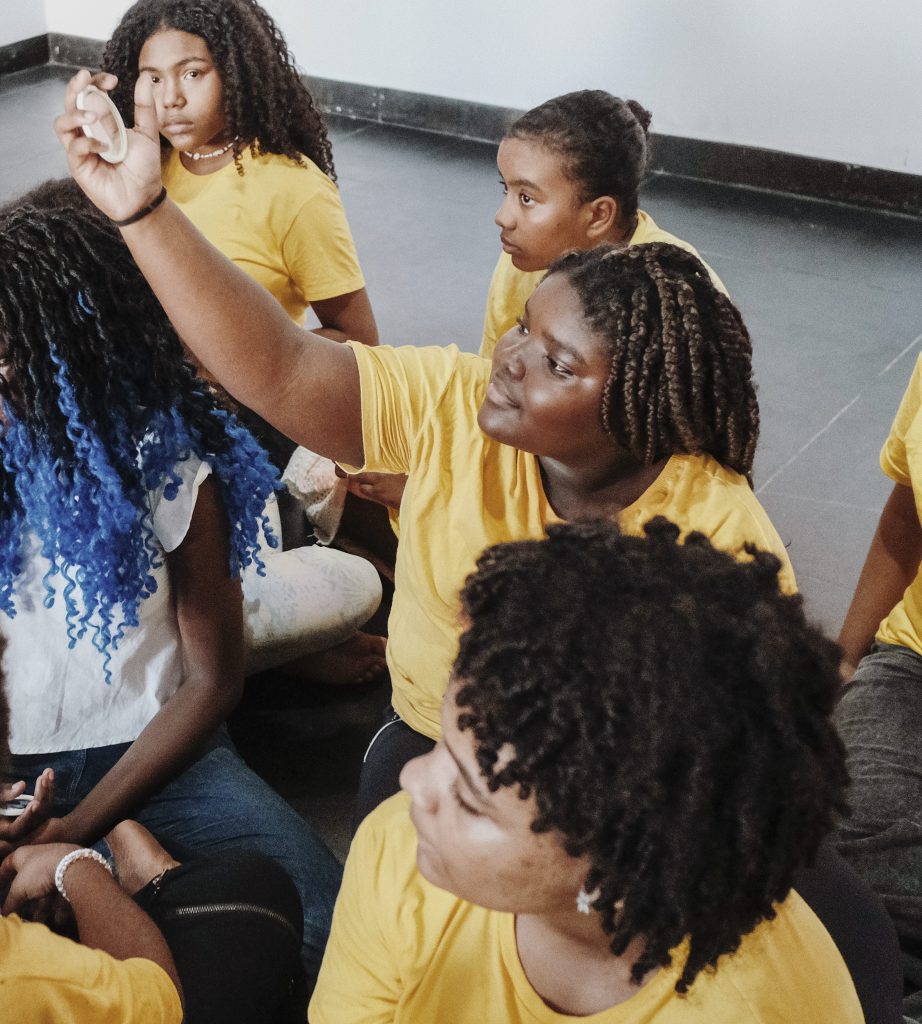
“In the logic of Brazilian society, Black people don’t need to study,” says Naiara Leite, Executive Coordinator of Odara, a women-led organization and Malala Fund partner. Bahia, the state where Odara is based, was once one of the largest slave-receiving territories in the Americas, and because of that history, deeply-ingrained, anti-Black prejudice is still widespread. “Our role and the image constructed around us is one of manual labor,” Naiara says.
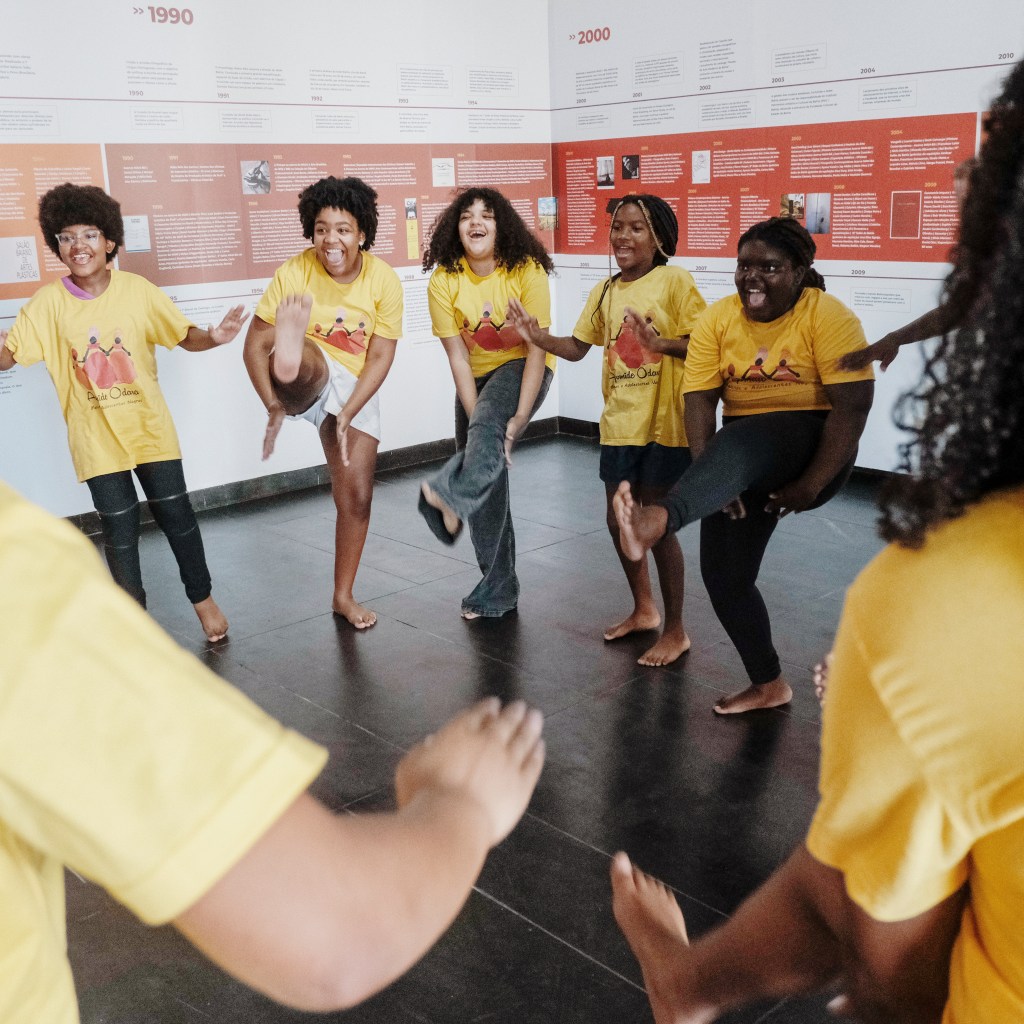
But education can change that. In 2020, with assistance from a Malala Fund grant, Odara launched its first initiative for improving school completion rates among Black, quilombola, and Indigenous girls: “Ayomidê Odara”. The young girls mentored under the program, including Julia, are known as the Ayomidês. And like the Pura x Malala Fund Collection’s Brazil: Breath of Courage scent, the Ayomidês are fierce, determined, and bursting with energy.
Ayomidês with Odara in Brazil. Captured by Luisa Dorr for Pura
Ayomidês take part in weekly educational sessions where they explore subjects like education and ethnic-racial relations. The girls are encouraged to find their own voices by producing Instagram lives, social media videos, and by participating in public panels. Already, the Ayomidês are rewriting the narrative on what’s possible for Afro-Brazilian girls to achieve. One of the earliest Ayomidês, a young woman named Debora, is now a communications intern. Another former Ayomidê, Francine, works at UNICEF, helping train the next generation of adolescent leaders. And Julia has already set her sights on becoming a math teacher or a model.
“These are generations of Black women who did not have access to a school,” Naiara says. “These are generations of Black women robbed daily of their dreams. And we’re telling them that they could be the generation in their family to write a new story.”
Mama Habiba is reframing the conversation in Nigeria
Centre for Girls' Education, Nigeria. Captured by James Roh for Pura
In Mama Habiba’s home country of Nigeria, the scents of starfruit, ylang ylang and pineapple, all incorporated into the Pura x Malala Collection’s “Nigeria: Hope for Tomorrow,” can be found throughout the vibrant markets. Like these native scents, Mama Habiba says that the Nigerian girls are also bright and passionate, but too often they are forced to leave school long before their potential fully blooms.
“Some of these schools are very far, and there is an issue of quality, too,” Mama Habiba says. “Most parents find out when their children are in school, the girls are not learning. So why allow them to continue?”
When girls drop out of secondary school, marriage is often the alternative. In Nigeria, one in three girls is married before the age of 18. When this happens, girls are unable to fulfill their potential, and their families and communities lose out on the social, health and economic benefits.
Completing secondary school delays marriage, and according to UNESCO, educated girls become women who raise healthier children, lift their families out of poverty and contribute to more peaceful, resilient communities.
Centre for Girls’ Education, Nigeria. Captured by James Roh for Pura
To encourage young girls to stay in school, the Centre for Girls’ Education, a nonprofit in Nigeria founded by Mama Habiba and supported by Malala Fund and Pura, has pioneered an initiative that’s similar to the Ayomidê workshops in Brazil: safe spaces. Here, girls meet regularly to learn literacy, numeracy, and other issues like reproductive health. These safe spaces also provide an opportunity for the girls to role-play and learn to advocate for themselves, develop their self-image, and practice conversations with others about their values, education being one of them. In safe spaces, Mama Habiba says, girls start to understand “who she is, and that she is a girl who has value. She has the right to negotiate with her parents on what she really feels or wants.”
“When girls are educated, they can unlock so many opportunities,” Mama Habiba says. “It will help the economy of the country. It will boost so many opportunities for the country. If they are given the opportunity, I think the sky is not the limit. It is the starting point for every girl.”
From parades, film screenings to safe spaces and educational programs, girls and local leaders are working hard to strengthen the quality, safety and accessibility of education and overcome systemic challenges. They are encouraging courageous behavior and reminding us all that education is freedom.
Experience the Pura x Malala Fund Collection here, and connect with the stories of real girls leading change across the globe.
There are many ways to pay tribute to a music artist through a cover of one of their songs. Some honor their inspiration by playing their hit song in a different genre of music. Others cover the song through different instrumentation or key changes. Then there’s the guy who performs his cover with rubber chickens.
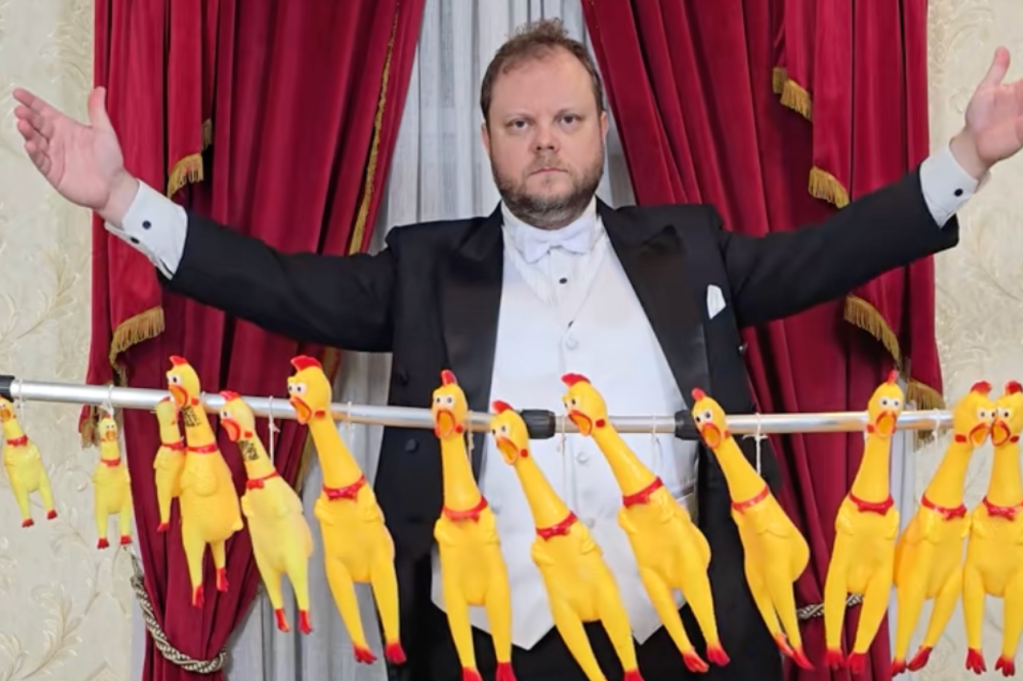
The professional pianist known as Lord Vinheteiro has gotten attention on TikTok by performing Guns N’ Roses’ song “Sweet Child O’ Mine.” Only, instead of the vocal stylings of Axl Rose, Vinheteiro sings the song through the squeaky voices of rubber chickens of varying sizes. And he nails it.
“If you close your eyes, it sounds just like Axl Rose.”
“This is what the internet was invented for.”
“I don’t care what y’all say… THIS IS TALENT.”
“Simply awesome, Maestro!”
“As a middle school science teacher would you mind if I showed this video to my students? We’re studying sound waves and this is a perfect example of frequency and pitch.”
“Needed this smile. Thank you.”
“Clucking brilliant.”
Who is this rubber chicken maestro?
Lord Vinheteiro, the professional name of Brazilian musician Fabrício André Bernard Di Paolo, has entertained the Internet since 2008. He gained attention through his expert piano skills—where he’s playing theme songs from cartoons or playing the piano at a distance with strings. All the while, Vinheteiro adds to the absurdity by looking directly into the camera with an expressionless face.
Prior to his career as a YouTube content creator and music teacher, Paolo worked in construction. His videos grew in popularity in his native Brazil before gaining traction worldwide. Until recently, he showcased his classical music prowess by playing video game themes and other pop-culture favorites. In 2025, he began expanding his musical talent by incorporating rubber chickens into his content.
While still showcasing his impressive piano skills, he frequently shows off his rubber chicken singing abilities using chickens of various sizes. Impressively, Paolo is able to hit the proper tone and pitch with expert grip and timing. This feat has earned him millions of views on rubber chicken versions of a wide variety of songs, from System of a Down’s “Chop Suey!” to Queen’s “Bohemian Rhapsody,” and even the “Imperial March” theme from Star Wars.
If you are amused and fascinated by Lord Vinheteiro’s work, check out his social media for more. It may be piano and rubber chickens for now, but it’ll be interesting to see which instrument he masters next.
Visiting different states within America can sometimes feel like traveling to a completely different country, given the significant cultural differences and accents. Visiting parts of Louisiana may make you feel like you require a translator to navigate your vacation, as people often speak Creole or Cajun—both of which have very thick, unique accents. Southern Mississippi also has a mishmash of accents that range from Cajun to a non-distinct regional accent.
But one thing North Carolina has in common with states like Texas, Mississippi, and Louisiana is that they all have a range of southern colloquialisms that translate fine between southern states. It’s when those creative southern phrases make their way above the Mason-Dixon Line that causes some confusion. Many southerners who travel north for work, pleasure, or relocation adapt quickly to not using uniquely southern phrases after experiencing looks of bewildered confusion.
Oftentimes, southerners don’t even know where their beloved and well-used phrases originated or why. As far as a Google search pulls up, there’s never been a child born in the world who has ever been small enough to be “knee high to a grasshopper,” but that’s not going to stop PawPaw from saying it. People who are used to hearing the sometimes outrageous phrases simply interpret them themselves and add them to their own lexicon for future use.
General Southern expressions to keep in your pocket
1. “You don’t believe fat meat is greasy.”
This is an expression often used when someone is intent on not listening to advice. It essentially means they won’t believe it until they see or experience it themselves. We all know someone who has to learn lessons the hard way, and this is the saying that conveys that message without sounding harsh.
A phrase like this is used a lot by elders. It just adds a little dramatic flair when they’re making plans. In a conversation, it would go like this: “So, I’ll see you next Sunday at the potluck, right?” There may be a pause for emphasis along with a fist perched on their hip before responding, “The Lord willing and the creek don’t rise.” Just know they’ll be there as long as they wake up in the morning and there’s no natural disaster preventing them from getting there.
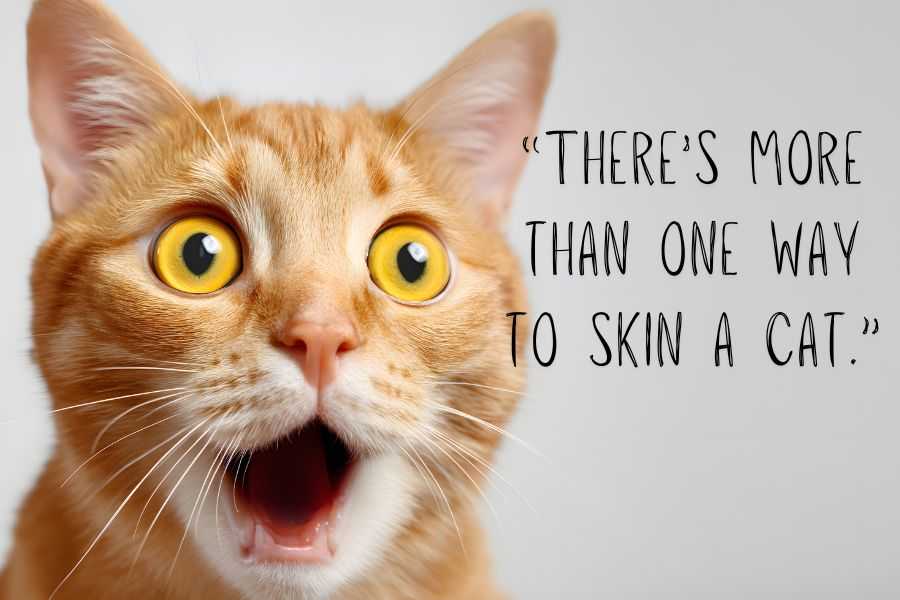
3. “There’s more than one way to skin a cat.”
This particular one is a phrase my husband uses often. It is often said by men doing manual labor, whether it’s at work or around the house. If someone is trying something that isn’t working, they have to come up with a better idea of how to make it work. If the original person pushes back on trying it a different way, that’s when you’ll hear, “There’s more than one way to skin a cat.” To date, no one has skinned a cat to prove a point, that I’m aware of, but there’s debate on its origin. It’s believed to come from a phrase used in the mid-1600s in England, “There’s more than one way to kill a dog than hanging.”
Eventually, it got changed to the cat idiom southerners say today, though some suggest the phrase came from when women’s coats were made from cat fur…(that’s information you can’t unlearn). Either way, as someone who has lived in the south for more than 20 years, you can rest assured that the only people skinning cats down here are taxidermists with the pet owner’s permission. Just know they’re saying there’s more than one way to get the job done.
4. “Don’t pee on my leg and tell me it’s raining.”
This is just a fancy way of telling someone not to lie to you.
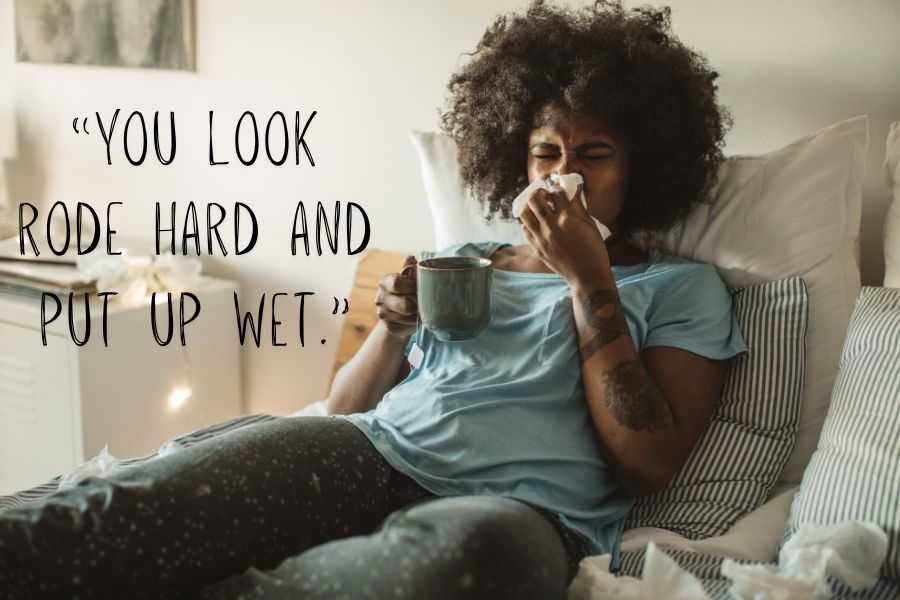
5. “Well, you look rode hard and put up wet.”
Honestly, if someone says this to you, you’re looking mighty bad. This means not only do you look exhausted, but you also look disheveled, and maybe even ill. When people say this, it’s not meant to be rude. They’re typically genuinely concerned about your well-being, whether it be that you appear to need a break or you need to rest and get some soup in your belly.
6. “P*ss or get off the pot” and “Fish or cut bait.”
These two phrases mean the exact same thing. They’re calling out someone’s lack of progress and can be applied to all sorts of situations. It means to do what you’re supposed to be doing or get out of the way so someone else can do the job you won’t. By the time someone says this, they’re a little annoyed, so it’s best to go ahead and “pee or get off the pot” before they move you over and do it themselves.
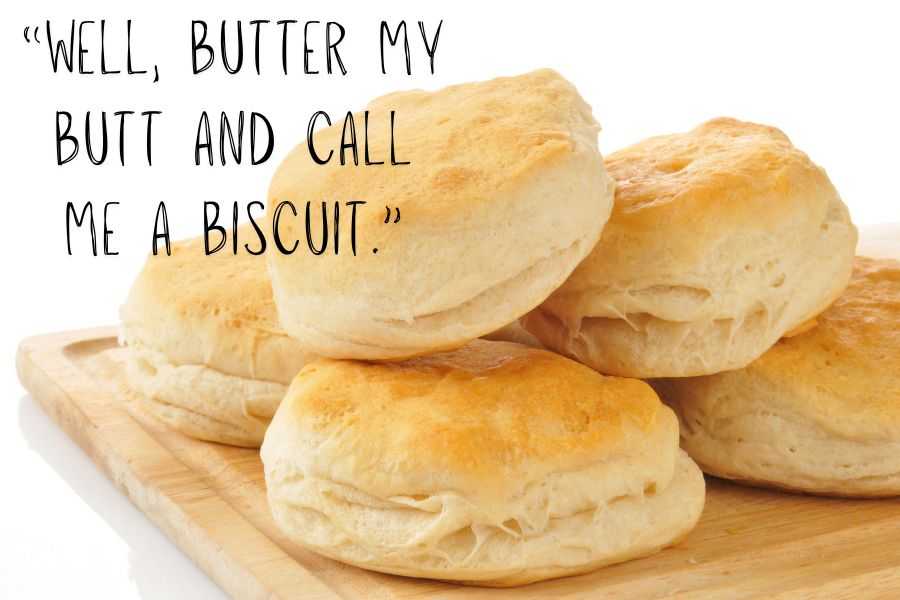
7. “Well, butter my butt and call me a biscuit.”
You can stick this in the same category as, “Well, I’ll be a monkey’s uncle.” It’s meant to convey genuine surprise and delight in information they’ve just received or upon seeing someone they haven’t seen in a while and weren’t expecting. It’s a fun one to say, even outside of the South, due to the humorous element.
8. “I’ve got a hitch in my giddy-up”
You’ve got a limp due to hurting yourself somehow, or you’re feeling under the weather in some way that’s slowing you down.
9. “Why, bless your little pea-pickin’ heart.”
Ouch! You’ve just been insulted, and they wanted to make sure you knew. “Bless your heart” on its own can be said in a condescending way or a genuine, “I’m so sorry you’re going through this” way. Using tone and context clues can help you decipher the difference. But when they add “little pea-pickin” right in the middle of the phrase, go grab some ointment because that was meant to sting.
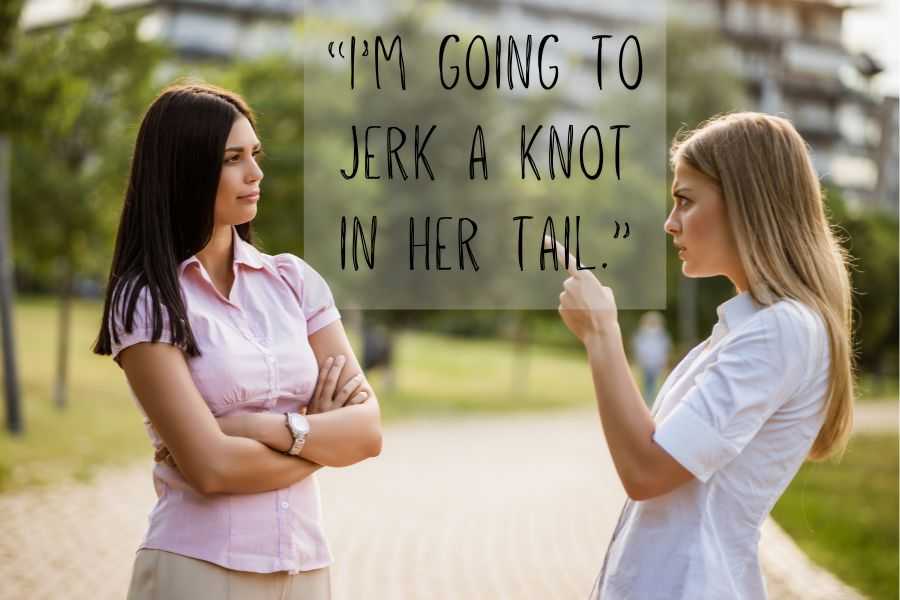
10. “I’m going to snatch her baldheaded.”
Whoever is the target of that comment should probably avoid being around the person making it. See also, “I’m going to jerk a knot in her tail.” When it’s an adult directing the comment at another adult, it could simply mean they’re going to have a verbal confrontation. But, depending on the person, it could also mean physical confrontation because that is not off the table in Southern culture. If it’s a parent directing the expression towards their child, then it usually means that the child is going to get into trouble.
11. “Pull your dress down, everyone can see Christmas.”
This feels self-explanatory, but it’s something you might hear a friend say to another friend to address a wardrobe malfunction. You may also hear a parent telling their young daughter a version of this as they’re learning how to properly sit in a dress. Also see, “Pull down that skirt! We can see clear to the promised land.”
12. “They fell out of the ugly tree and hit every branch on the way down.”
Also in the vein of calling someone unattractive, one might say, “He’s so ugly he could make paint peel.”
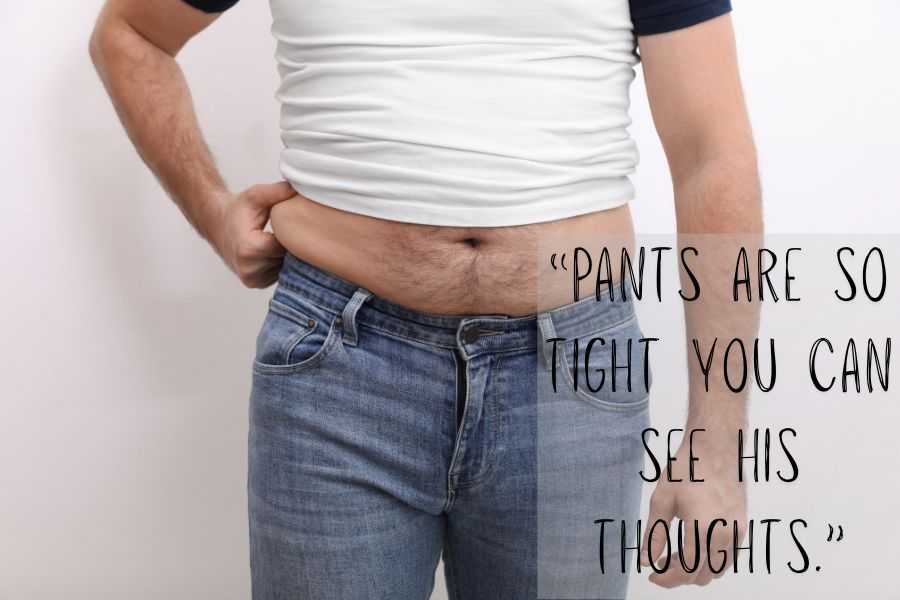
13. “Pants are so tight you can see his thoughts.”
Those are some really tight pants.
14. “She’s just as loony as a Betsy Bug.”
Until today, I had no idea what a Betsy Bug was, but apparently it’s a type of beetle that eats decomposing wood. There doesn’t seem to be an explanation for what makes the beetle loony, though.
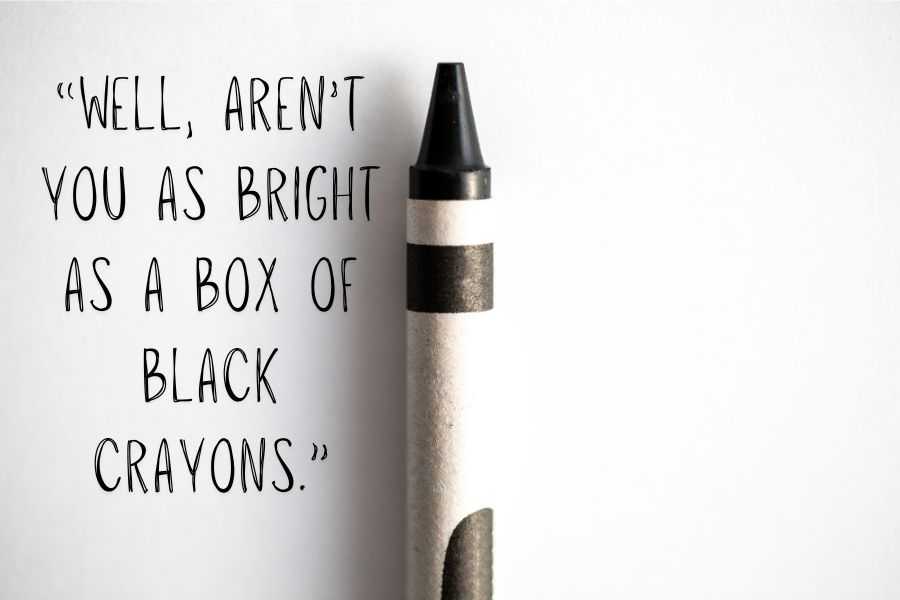
15. “Well, aren’t you as bright as a box of black crayons.”
Have you ever seen a bright black crayon? If southerners are good at one thing, it’s insults.
16. “That boy’s so dumb he’d throw himself on the ground and miss.”
See also: “He ain’t got the good sense God gave a mule,” and, “If he had an idea, it would die of loneliness.”
Bonus sayings you don’t want to miss
Clearly, southerners have a way with words, but there are a few more that can be fun to pull out for a party trick. A favorite is, “That really burns my biscuits,” but a close second is, “I’m fuller than a tick on a dog’s behind.” If you want to get around the ears of nosey children while having a chat about an adult encounter, some people in the south will say, “He took me to church,” “I was singing opera,” or “We stayed in and played the piano.”
Whenever you decide to pull out any of these phrases, just make sure it’s not one that’ll make someone “madder than a wet hen,” and you’ll be golden.
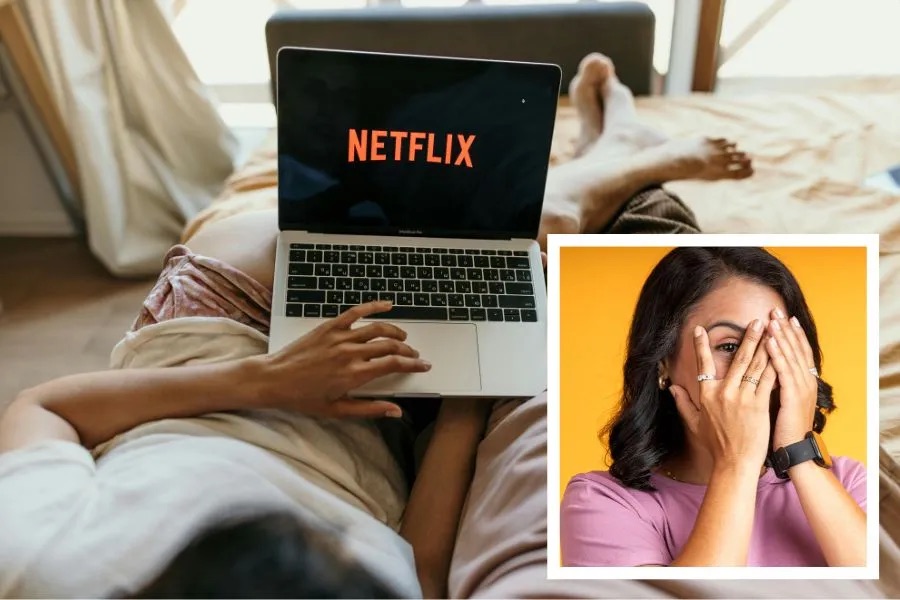
For many, if not most of us, when someone uses the term “Netflix and chill,” we know it to be a euphemism for, well, not much TV watching.
And yet, not everyone knows that this phrase has sexual connotations, apparently. At least one 34-year-old female college professor recently admitted to not knowing. Too bad she had been using the phrase as one of her go-to “icebreakers” in class.
A teacher learns she’s been using “Netflixand chill” wrong
As she shared on Reddit, she would often list “Netflix and chill” as one of her favorite hobbies. Not only that, but whenever students mentioned how stressed they were, she would reiterate: “While it’s important to study, it’s also important to take time to relax and recharge, so I hope they are able to do something for themselves soon, like ‘Netflix and chill.’”
It wasn’t until she visited her husband for lunch at his work and struck up a conversation with two of his co-workers that she discovered her hefty misunderstanding.
“I’m currently on maternity leave and mentioned to his co-workers that I can’t wait for my infant to be older so I can ‘Netflix and chill’ again instead of having to feed and change diapers,” she wrote.
When one of the coworkers had a “shocked look on his face,” the OP was “confused.” She couldn’t believe it when this person explained that it’s a “euphemism for hooking up.” And yet, when the other coworker, a 50-year-old female, said, “Oh he’s right, even I know what that means!” there was really no denying it.
Well, understandably, this woman was “mortified” at having learned the truth and was “now terrified I’m going to be reported for sexual harassment because I guess I’ve been inadvertently telling my students I love to hook up and have been encouraging them to hook up, too??”
In her defense, it’s true that “Netflix and chill” used to mean relaxing while streaming, but that was about 17 years ago. The context we are all familiar with has been around since 2015.
She also noted that she and her husband married young and therefore never spent much time on dating apps, which could help explain why she remained unaware. Plus, she lived at home and worked two jobs during her college years, which meant “Netflix and chill” was literally “Netflixing and chilling,” she quipped.
All in all, she chalked this up to being an “oblivious Millennial.” And by that, she meant a “Millennial who is clearly oblivious” to something “invented by Millennials and has been around for at least 10-15 years.”
Reddit’s reactions
Down in the comments, people tried to ease her worries about the whole accidental harassment thing.
“They either thought you were adorably clueless, or just a very cool teacher. Don’t sweat it.”
“Either people figured she didn’t know and thought it was funny or just assumed they’re very open and sex positive. NBD either way.”
“Rate my professor: 10/10. She told me I can come over and netflix and chill anytime 🥵”
Others didn’t let her off so easily, especially when she surmised that her older coworkers also likely didn’t know what it meant.
“I was shocked when I opened the post and saw OP was 34. I expected her to be 64.”
“I am 38 and have known what it means since it’s been around. This definitely isn’t an age thing, this is a living under a rock thing lol”
“I’m an out of touch millennial but that’s been a saying for like a decade now. lol. You might be under a rock.”
Regardless, the OP has had a good sense of humor despite being mortified. She concluded her post by saying, “Anyone who has lived the past decade+ under a rock like me is welcome to come over to my place and literally chill and watch Netflix with me anytime! I’ll supply the popcorn 🤣”
Listen, it’s bonkers when things like this happen, but they do happen. Is it embarrassing? Sure. But does it remind us that life is about laughing at ourselves? Also yes.
There is a particular kind of frustration that comes with being told how to mow your own lawn. Not whether the grass is too long, not whether the edges need trimming, but the specific direction your lawnmower needs to travel. For the man behind the TikTok account @rootedlawnco, that was apparently the line.His HOA had…
There is a particular kind of frustration that comes with being told how to mow your own lawn. Not whether the grass is too long, not whether the edges need trimming, but the specific direction your lawnmower needs to travel. For the man behind the TikTok account @rootedlawnco, that was apparently the line.
His HOA had instructed him to mow only in straight lines. So he did. Sort of.
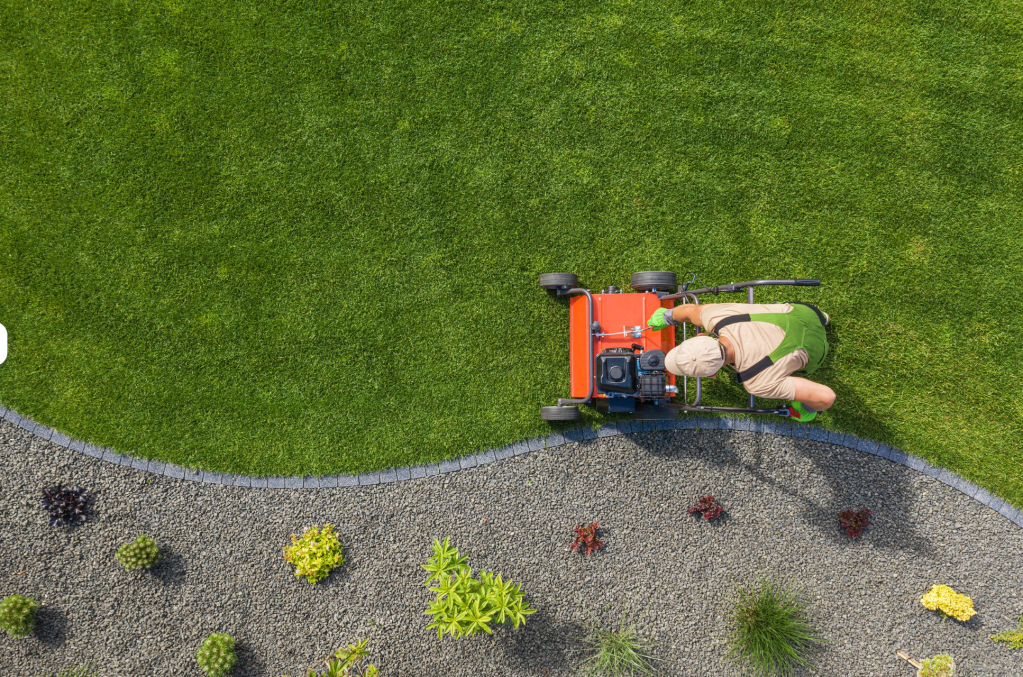
In a video that has been bouncing around TikTok with the caption “Take that HOA,” he methodically mows his lawn in long, flowing, perfectly symmetrical waves. The result is gorgeous: a sea of alternating light and dark grass bands that roll across the yard like something off a golf course or a baseball field. He even varies the cut depth on alternating passes to give it a color shift, which makes the whole thing pop even more from a distance. The text overlay on the video reads, “When HOA tells you only straight lines.” His face, for what it’s worth, is extremely unbothered.
The comments landed exactly where you’d expect. “Tell them you have astigmatism and this is straight,” wrote @nowherenothin. @spiderlover74 added, “No way they’re trying to control the direction you mow your lawn.” One commenter, @caffeinatedpossum, offered a legal-ish read on the situation: “HOAs have legal rights to control the aesthetic of your grass, but there’s no legal standard for them to control cutting patterns as the cutting pattern is semantic.” (That’s one interpretation, though HOA rules vary widely by state and governing documents, so your mileage may vary on that one.)
The broader frustration behind the video is real and well documented. A survey conducted by Rocket Mortgage found that 57% of HOA homeowners dislike having one, and more than 3 in 10 feel their HOA has too much power. A separate YouGov poll found that most Americans actually oppose HOA rules specifically around landscaping, with more people against those restrictions than in favor of them. And yet, 38% of HOA residents think their HOA is too restrictive, with rules about yard signs, fences, and landscaping among the most contested.
It’s worth saying that HOAs were not invented to tell people which direction to push their lawnmower. The idea was originally to maintain shared spaces and protect property values. But there’s a gap between that intention and the reality of a board with the authority to regulate the pattern of someone’s grass, and that gap is where videos like this one get millions of views.
In yet another video, he openly disregards the HOA’s rules against using sand to level his yard: “POV: When the HOA says no sand, but you did it anyway…”
Yep, the HOA will be all over me for this one! Got a bumpy lawn? Check out my 4 part mini series on You Tube and learn all you need to know in under 10 minutes. Mowing is super enjoyable but mowing a smooth lawn is literally the best thing! I need to do this to my back lawn pretty badly. Maybe this Fall I will. #level#leveling#bumpy#Lawn#diy#lawntips#compost#sand#topsoil#smooth#HOA
There is something deeply satisfying about a response that is simultaneously fully compliant and completely defiant. He did not fight the rule. He did not post an angry letter or file a complaint. He just made something beautiful out of the constraint, posted it to TikTok, and let the rest of us enjoy it.
The lawn looks incredible, for the record.
You can follow @rootedlawnco on TikTok for more content on home decor and lifestyle.
It started like any ordinary pharmacy errand. A Michigan woman named Sarah was waiting at CVS to pick up a prescription for her “son.” When another woman waiting in line overheard the name of her “son,” she apparently couldn’t help but let out an unsolicited opinion.“You’ll really name your son anything, huh?” the woman said…
It started like any ordinary pharmacy errand. A Michigan woman named Sarah was waiting at CVS to pick up a prescription for her “son.” When another woman waiting in line overheard the name of her “son,” she apparently couldn’t help but let out an unsolicited opinion.
“You’ll really name your son anything, huh?” the woman said with a sigh.
Now, if you’re picturing a tiny human in a onesie named after your dad’s favorite Friday-night drink, and feeling a little baffled in the process, don’t worry. So was everyone else.
Yep. Sarah’s “son” is of the four-legged variety, currently undergoing cancer treatments and racking up a pharmacy bill that could rival a small country’s GDP. She and her husband get his prescriptions filled at their local CVS because (fun fact) many human and animal meds are the same, just at different doses.
You just know there's a person named Whiskey out there getting a kick out of this. media4.giphy.com
As Sarah explained to Newsweek, this strategy saves them a few bucks, but can certainly lead to some incredible misunderstandings.
In her TikTok video, which has now been watched over 3 million times, Sarah retold this CVS name-shaming incident, and viewers collectively lost it.
One commenter shared, “I was shaming you too until you said dog!” Another wrote, “I mean, Whiskey is a horrible name for a child 😂 But for a dog? Okay lol.”
However, a few folks came to Sarah’s defense. One person noted, “There are women named Brandi—what’s wrong with Whiskey?” Another admitted, “in my 49 years I didn’t know CVS filled pet meds!”
It’s the kind of mix-up that reminds us how funny life can be when the human and animal worlds collide. Because let’s face it: Whiskey the dog? Adorable. Whiskey the toddler? Maybe… less so. It might be a mostly unspoken rule, but a rule nonetheless.
As for what became of that misunderstanding, Sarah shared that when the other woman called Whiskey a “horrible” name for a child to grow up with that could lead to getting bullied in school, Sarah quipped back with “Well, he’s a dog. So I don’t think so.” Upon that realization, Sarah told Newsweek that she “apologized very nicely” once she learned that Whiskey was, in fact, a dog.
As Sarah put it, the stranger “just left in a hurry, probably to think about her actions later.”
Meanwhile, TikTok is still chuckling, and celebrating one very good boy with a name that fits him perfectly.
Moral of the story: some names are meant for baby humans, like Zach or Emma. Others are for the fur babies who greet you at the door with a wagging tail and oodles of love…like Whiskey. 🐾🥃
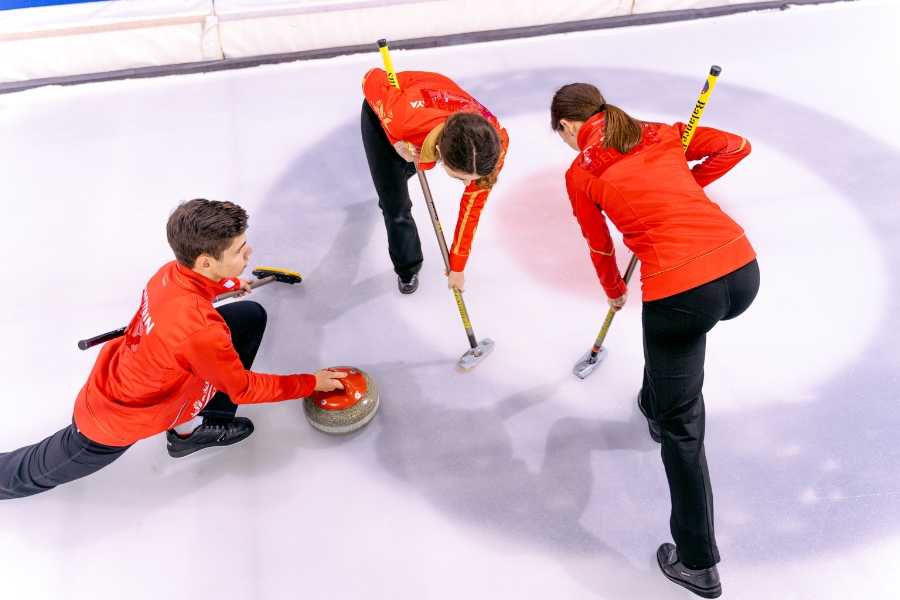
When curling became an official Olympic sport in 1998, it was met with a fair amount of curiosity and confusion, at least among people outside Canada, Scotland, and the Scandinavian countries where it has long been a winter sport tradition. Without an explanation of what’s happening, curling can look downright bizarre: large stones sliding across the ice toward a target, while people vigorously sweep the ice in front of them as the person who threw the stone yells unintelligibly.
It’s not obvious what skills are required for curling just by watching, which initially led people to poke fun at the event. More recent Olympic Games, however, have seen interest in curling grow as people find the sport strangely riveting. Now, curling has reached even greater heights of popularity, as evidenced by satirical curling-at-home videos popping up on social media.
Many of them use a combo of a Roomba and a Swiffer, which works perfectly:
No one knows the exact origins of curling, but there is evidence of the sport (or something like it) being played by monks on frozen lakes and ponds in Scotland in the 16th century. Farmers would join in curling games during the winter months, and as the sport evolved through the 1800s, it became more organized. Rules were formalized, and people began traveling to watch and participate in competitions held outdoors in large Scottish cities. The Scots eventually took the sport with them to other countries, and by the 1900s, curling had transformed from a Scottish outdoor pastime into an international, mostly indoor sport.
How does curling work as a sport?
Curling is played by two teams of four, with each team aiming to get its eight stones closest to the center of a target called a “house.” Teams alternate “throwing” their stones, which really means gliding them along the ice. Sweepers brush the ice to help guide the stones, while the team captain, or “skip,” gives directions, often by yelling, to place the stones where they want them to go.
After all 16 stones are thrown, the team with a stone closest to the center of the house scores one point for each of its stones that landed inside the house. The other team does not score at all in that round, called an “end.” There are eight or 10 ends per game, depending on the event, and the team with the most points after all the ends have been played is the winner.
Here’s a visual explainer that goes through the basics:
Fun facts about curling
Tara Peterson of the USA Curling National Team shared some interesting facts about curling with Columbia Sportswear:
Modern curling stones are made of granite that comes from only two places: a quarry in Wales and an uninhabited island off the coast of Scotland called Ailsa Craig.
Curling is called curling because of the way the stone curves depending on how it’s spun, but exactly how that happens is still a bit of a scientific mystery. Curling stones actually move in the opposite direction of what the turn would normally dictate according to physics.
Despite the yelling, curling is considered a polite “gentleman’s” sport, with traditional etiquette rules observed before and after the game.
Though it may not be immediately obvious, you have to be in pretty good shape to curl. Throwing a 42-pound stone, even on ice, isn’t as easy as it looks, and the person throwing it must remain crouched close to the ground for long periods. Sweeping also requires arm strength and cardiovascular endurance.
Curling requiresu00a0more athleticism than it first appears. Photo credit: Canva
Curlers wear two different shoes, one designed for gripping the ice and the other for sliding. The slider sole is made of Teflon or stainless steel, while the grippy sole is made of rubber.
Curling is called the “roaring game,” which might sound odd, but the sound of the stones gliding over the ice is apparently much louder in person than it sounds on TV.
Every sport is more fun to watch when you actually know what you’re seeing, and curling is no exception. If you’re wondering who to watch, Canada has traditionally dominated the sport, though Sweden trails by only two medals in total Olympic curling medals. And if you’re curious how Scotland fares as the original home of the sport, its curlers compete under Great Britain’s flag.
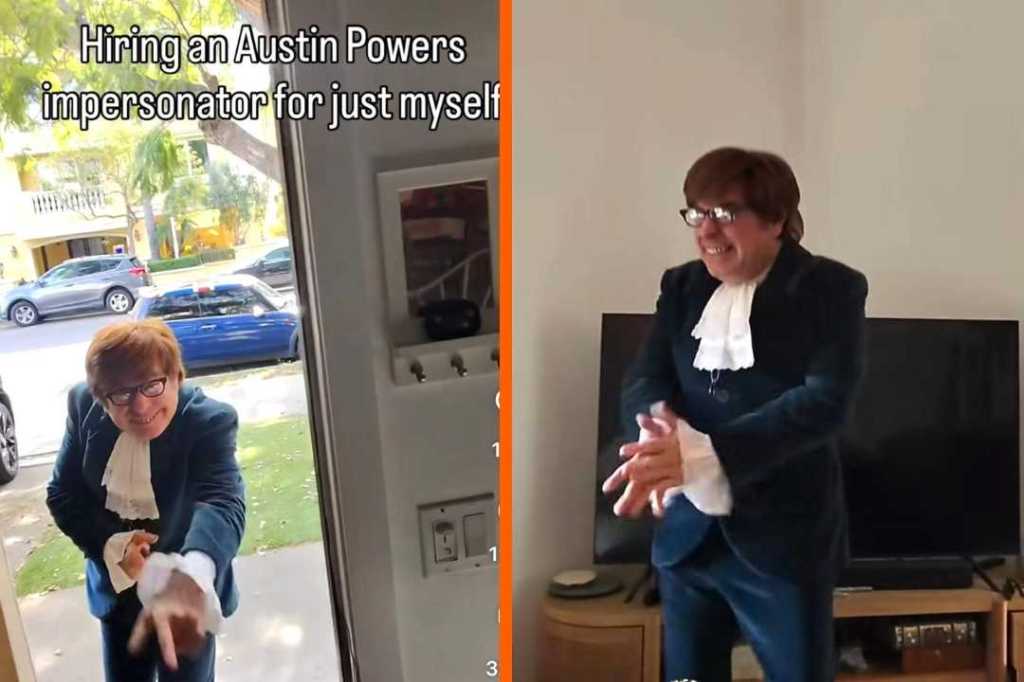
It was groovy, baby. Chase Hofer woke up one day and decided to hire an Austin Powers impersonator to just, well, come over. And that he did, creating a brilliantly funny and equally awkward exchange between two guys just hanging in an apartment. (Albeit one of them was dressed head to toe as the infamous English ladies’ man.)
For those unfamiliar with the Austin Powers franchise, comedian Mike Myers created and played the character in a series of three films directed by Jay Roach. The gist was that Powers is a British international spy who loved crushed velvet suits and “shagging” and wasn’t ashamed of either. The purposely cringe-heavy dialogue created hours of fun, and the ’60s spy satire was blatant.
In the clip, Hofer opens the door to find “Austin Powers” (as played by actual impersonator Richard Halpern) dressed in his trademark blue velour suit, frilly white shirt, and thick black glasses. They shake hands, and Halpern immediately says, “You must be Chase, baby! What a grip you have. You must live alone!” They laugh uproariously.
Halpern asks, “So what do you want me to do? Like what I would do at a party?” He then begins laughing maniacally, pacing and yelling out some of his catchphrases—most notably, “Oh, BEHAVE.” After turning to his smartphone, he remembers a line that would only work if looking at a woman’s chest area: “Oh, you make a lovely couple.” This lands awkwardly, as he tries to explain that it’s a “boobie” reference. Hofer assures him he got it, though it’s a “different time.”
From there, the awkwardness just gets better. Halpern is now lounging on the couch. Hofer asks, “Did you watch the Super Bowl?” He answers, “Oh yeah, yeah sure I did.” Hofer follows this up with, “Are you more of a soccer guy since… U.K.?” He yells, “Soccer, I don’t even know her!” Hofer attempts to feign a laugh, but it putters out pretty quickly.
The room is incredibly quiet for a bit, followed by a little more forced banter. The clip ends with the two of them watching a rap performance on TV in complete silence.
The comments on both Hofer’s TikTok and Instagram page are also truly observant and funny. One points out the commitment to the bit: “Dude has the car and everything.”
Another jokes, “When the Austin Powers impersonator thinks YOU’RE the weirdo.”
On Instagram, a person references the rap performance they’re watching, noting, “The 2016 XXL freshman cypher at the end is pure gold. PURE GOLD.”
Upworthy had a chance to chat with Hofer, who shares how the idea sparked. “I came up with the idea after doing it with a magician! The magician was a friend of mine. So I thought it would be great to do it with this Austin Powers impersonator that my friends have worked with.”
Said aforementioned impersonator has been playing Austin Powers for ages. “Austin was played by this man on Instagram known as ‘Austin Powers Impersonator.’ He’s been doing this professionally for more than 25 years.”
(Note: On Richard Halpern’s Instagram page, he lets it be known that he’s L.A.-based and “ready for YOUR event.”)
We asked if Halpern had been given a heads up. “Basically, I gave him the rundown that it’d just be us two, and then I rolled non-stop for 30 minutes. So it was basically all improv.”
As for Myers himself, Hofer is a fan. “I have not met Mike Myers! Big fan though. I felt like I was watching him a couple of days ago!”
As popular as this clip has become, some wonder if this cringe humor would be too much for younger generations. On the Reddit thread, “Does Generation Z enjoy the Austin Powers movies or find them offensive and outdated?” the OP writes, “I recently watched Austin Powers with my nephew. He found half of it funny, but the other half he didn’t really get. Some jokes he thought were racist and not funny. This made me wonder, Gen Z, do you like these movies, or do you find them offensive and outdated?”
The OP adds, “Personally, I found these movies really funny. I love that Mike Myers has the laugh-per-minute dialed up in these movies. There’s constant jokes… nonstop jokes. Definitely some of the jokes lost their luster from when I was 19 years old. But the jokes are still there.”
This thread received nearly 3,000 comments. One Redditor wasn’t bothered at all, noting that being offensive is the POINT. “That seems funny to me because Austin Powers is a direct parody of the old Bond movies, so the overt sexual and offensive jokes are part of the satire.”
Another points out that it’s all relative, writing, “The weird thing is that despite Austin being a complete and total horndog, he’s also weirdly more respectful than a lot of characters at the time or since. There’s a scene in one of the movies (I can’t remember which one) where the female co-lead is finally willing to sleep with him after he’s been unsuccessfully hitting on her most of the movie, and he respectfully turns her down because she’s drunk as a skunk and he has the decency to not take advantage of someone who’s inebriated and thus can’t consent.”
Perhaps Dr. Evil (also played by Myers in the Austin Powers films) said it best when he pointed out in Austin Powers: International Man of Mystery: “I’ve been frozen for thirty years, okay?”
For many of us, decluttering is a necessary evil. We take no joy in it, other than knowing our lives might run a little more smoothly afterward. It’s sort of like going to the dentist or getting an oil change.
But like so many of life’s mundanities, could decluttering become something we actually look forward to if we found a way to infuse a little playfulness?
For Stephanie Patrick, that meant secretly leaving random items at other people’s houses.
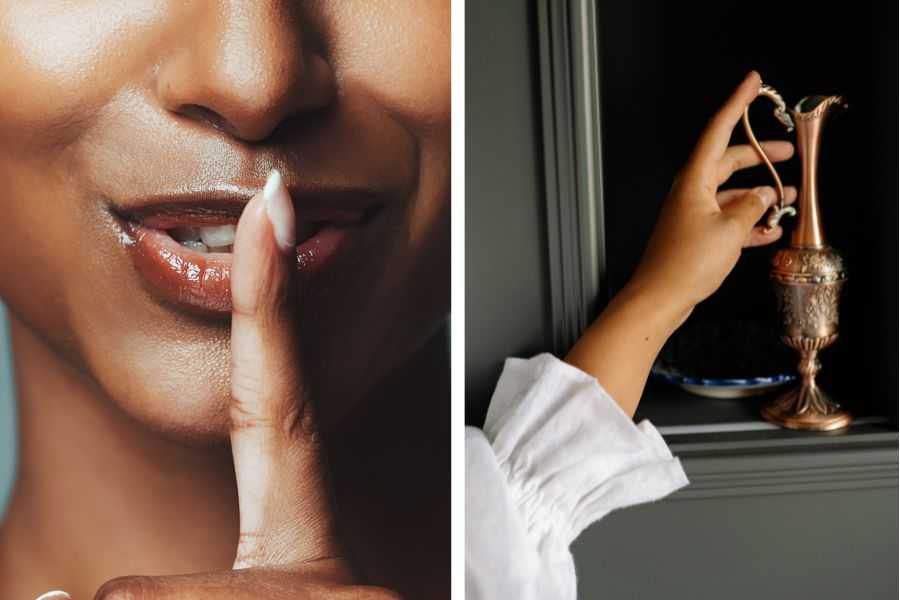
In a mega-viral Instagram clip, Patrick is seen placing a tiny bar of soap, a small creamer pitcher, and a vintage glass tealight candle holder on different countertops, accompanied by the caption, “Sometimes you gotta do what you gotta do.”
The video has been viewed more than 25 million times, with thousands of people praising Patrick for her “diabolical” yet “genius” idea. Here are just a few of the reactions:
“A clever menace. I love it.”
“This is amazing. They are going to go crazy asking each other ‘where did this come from? Do you know where this came from?’”
“I have never felt so inspired in my whole entire life.”
“UNHEIST”
“Reverse burglary”
This isn’t Patrick’s first, ahem, unconventional decluttering idea. In another video, we see her placing random items—a picture frame, a mini sewing kit, a sequined heart pillow, and yet another tealight candle holder—along the aisles of Hobby Lobby. Retail sticker and everything.
While leaving items for retail workers to deal with isn’t the best option, Patrick clarified in the comments that she only “pretended” to leave the items behind. Still, there’s something to be said for gamifying decluttering so the process itself becomes a bit more enjoyable.
Turn all your hangers the wrong way. When you wear an item, flip the hanger back. After six months, donate anything that’s still reversed.
The “no-thing” prize
Reward yourself with an experience, like a movie or dessert, rather than more items.
Take the 12-12-12 challenge
Locate 12 items to throw away, 12 to donate, and 12 to return to their proper homes. You can customize the challenge however you see fit.
Take before-and-after photos of a small area
Choose one part of your home, like a kitchen counter, and take a photo of a small area. Quickly clear away the items in the photo, then take an after shot. Once you see how your home could look, it becomes easier to start decluttering other areas.
Play the “minimalism game”
Created by Joshua Fields Millburn and Ryan Nicodemus (“The Minimalists“), this game has you determine how many items you’ll declutter based on the day of the week, such as 20 items on the 20th. You can find a free printable by clicking here.
Decluttering jar
A “declutter jar” contains color-coded sticks for each area of the house. The kitchen might be marked blue, with each blue stick representing a specific area, such as the pantry, under the sink, the junk drawer, or the cup shelf. Whatever stick you draw is the area you declutter. No decision-making necessary.
The “moving method”
Pretend you’re moving into a smaller, but swankier, home and only keep what you absolutely love or need. Tap into your imagination while making room for real life. A win-win.
Lastly, never underestimate the power of simply throwing on a bangin’ decluttering playlist. Whatever route gets you there is the route worth taking. Of course, if you follow in Patrick’s footsteps, you might have some explaining to do to your friends.