Finally, someone explains why we all need subtitles when watching TV
No, you're probably not losing your hearing.
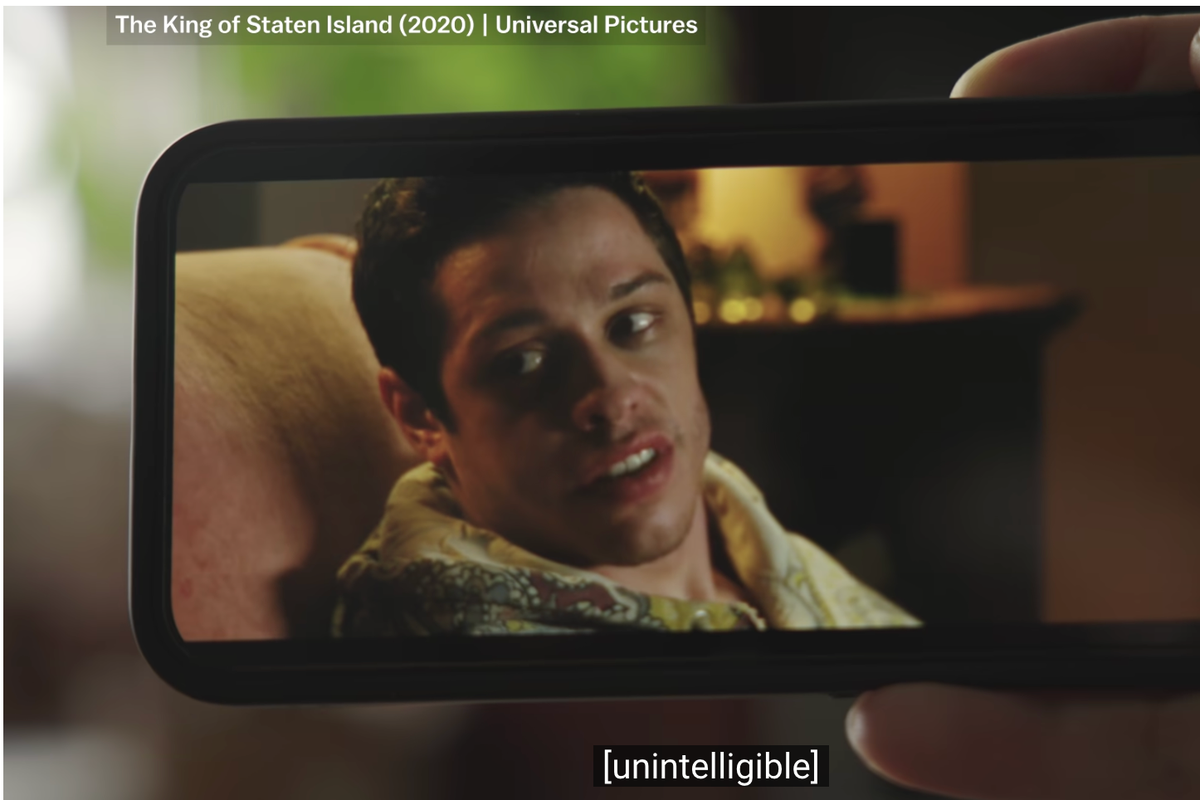
Finally, someone explains why we all need subtitles.
It seems everyone needs subtitles nowadays in order to "hear" the television. This is something that has become more common over the past decade and it's caused people to question if their hearing is going bad or if perhaps actors have gotten lazy with enunciation.
So if you've been wondering if it's just you who needs subtitles in order to watch the latest marathon-worthy show, worry no more. Vox video producer Edward Vega interviewed dialogue editor Austin Olivia Kendrick to get to the bottom of why we can't seem to make out what the actors are saying anymore. It turns out it's technology's fault, and to get to how we got here, Vega and Kendrick took us back in time.
They first explained that way back when movies were first moving from silent film to spoken dialogue, actors had to enunciate and project loudly while speaking directly into a large microphone. If they spoke and moved like actors do today, it would sound almost as if someone were giving a drive-by soliloquy while circling the block. You'd only hear every other sentence or two.
But with today's technology, microphones are so small they can be strapped just about anywhere on an actor. This allows the actor to move about the set freely and speak at a normal volume without worrying that their words won't be picked up.
So then why can't we hear them? Turns out it's super complicated…and also not.
"A lot of people will ask, 'Why don't you just turn the dialogue up?' Like, 'Just turn it up.' And...if only it were that simple," Kendrick said before explaining, "If you have your dialogue that's going to be at the same volume as an explosion that immediately follows it, the explosion is not going to feel as big. You need that contrast in volume in order to give your ear a sense of scale."
Sure, you may be thinking, well that kinda explains it, but why do the music and other cinematic noises sound like they're beating on your eardrum while the dialogue sounds like the actors are whispering every line? That doesn't seem very balanced. There's more to it, and again, it falls back onto technology.
In the video, they explain how our televisions are too thin to hold large speakers facing in the correct direction, and until this video, it didn't dawn on me that the speakers to my television are indeed in the back. No wonder we can't hear. The actors are quite literally talking to our walls.
And there's more. Check out the full explanation in the video:
While it may be a confusing trend, there's a reason for it as Kendrick explains. And, some experts like the World Literacy Foundation note that watching television and movies with subtitles is especially beneficial for children. Studies have shown that simply putting on subtitles improves literacy for kids, and many actors support the practice. This is good news for those worried about the literacy crisis in America.
If subtitles help us "hear" and improve literacy, then I'm all for them.
This article originally appeared last year.
- How can we harness technology to create a more sustainable and equitable world? ›
- Chris Pratt apologized to deaf fans online then had harsh words for Instagram itself. ›
- How movie trailers get you to want to watch the movie - Upworthy ›
- Woman show how claw machines are rigged against players - Upworthy ›
- Gen X mom can't understand her kids' love for subtitles - Upworthy ›
- 5 brilliant modern silent films for when you need a break from Hollywood blockbusters - Upworthy ›
- Mom is baffled why her Millennial and Gen Z kids refuse to watch TV without subtitles - Upworthy ›
- 5 reasons why classic TV actors look so old compared to today's actors - Upworthy ›
- 27 words people struggle to enunciate properly in English - Upworthy ›

 A Generation Jones teenager poses in her room.Image via Wikmedia Commons



 A woman getting her nails painted.via