

Marlon Brando's compassionate insights on representation in Hollywood were far ahead of their time
He shared them in an intimate 1973 interview with Dick Cavett.
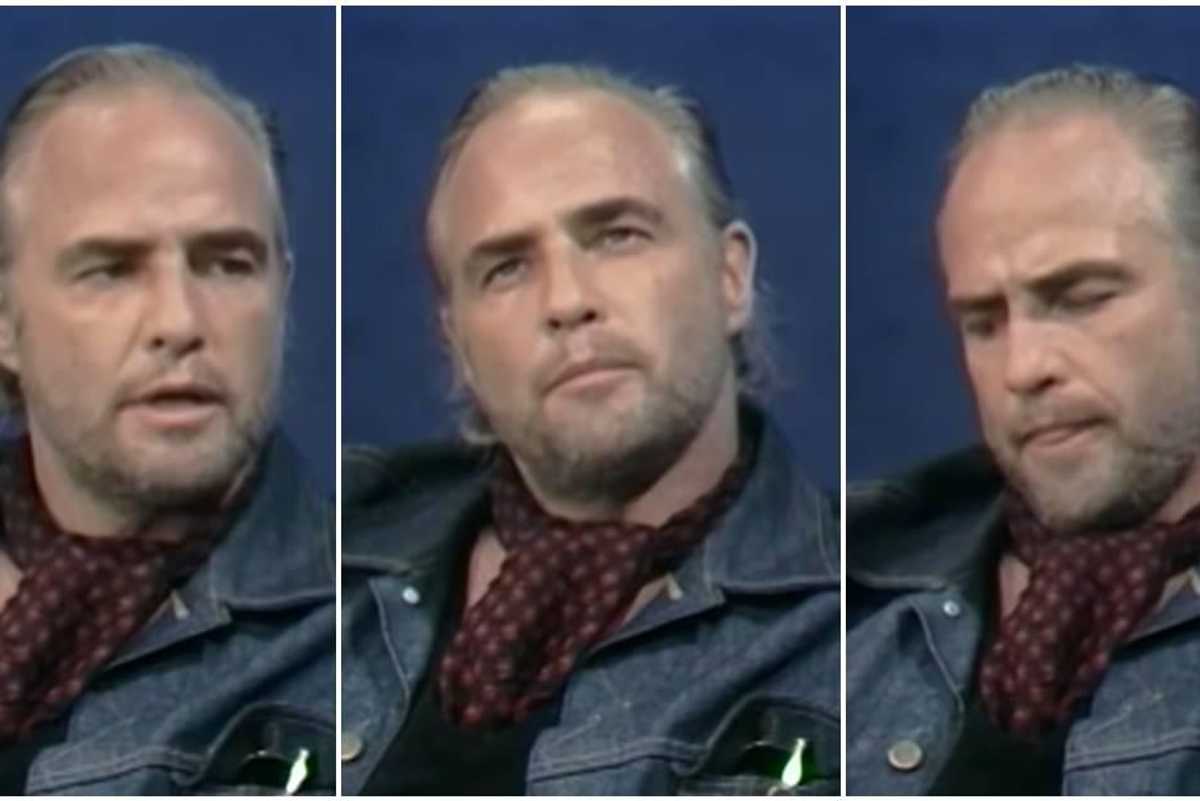
Marlon Brando on "The Dick Cavett Show" in 1973.
Marlon Brando made one of the biggest Hollywood comebacks in 1972 after playing the iconic role of Vito Corleone in Francis Ford Coppola’s “The Godfather.” The venerable actor's career had been on a decline for years after a series of flops and increasingly unruly behavior on set.
Brando was a shoo-in for Best Actor at the 1973 Academy Awards, so the actor decided to use the opportunity to make an important point about Native American representation in Hollywood. Instead of attending the ceremony, he sent Sacheen Littlefeather, a Yaqui and Apache actress and activist, dressed in traditional clothing, to talk about the injustices faced by Native Americans.
She explained that Brando "very regretfully cannot accept this generous award, the reasons for this being … the treatment of American Indians today by the film industry and on television in movie reruns, and also with recent happenings at Wounded Knee."
The unexpected surprise was greeted with a mixture of applause and boos from the audience and would be the butt of jokes told by presenters, including Clint Eastwood. Littlefeather later said that John Wayne attempted to assault her backstage.
"A lot of people were making money off of that racism of the Hollywood Indian," Littlefeather told KQED. "Of course, they’re going to boo. They don't want their evening interrupted."
Three months later, Brando explained his reasoning in an interview with late-night host Dick Cavett where he also discussed how all people of color are misrepresented in Hollywood. The interview was historic because Brando was known for avoiding the media.
"I felt there was an opportunity," Brando told Cavett about the awards ceremony. "Since the American Indian hasn't been able to have his voice heard anywhere in the history of the United States, I thought it was a marvelous opportunity to voice his opinion to 85 million people. I felt that he had a right to, in view of what Hollywood has done to him."
Brando’s eyes were opened after reading John Collier’s novel “Indians of the Americas.”
“After reading the book I realized, I knew nothing about the American Indian, and everything that we are taught about the American Indian is wrong,” Brando said. “It’s inaccurate. Our school books are hopelessly lacking, criminally lacking, in revealing what our relationship was with the Indian.”
“When we hear, as we’ve heard throughout all our lives, no matter how old we are, that we are a country that stands for freedom, for rightness, for justice for everyone, it simply doesn’t apply to those who are not white,” Brando said. “It just simply doesn’t apply, and we were simply the most rapacious, aggressive, destructive, torturing, monstrous people who swept from one coast to the other murdering and causing mayhem among the Indians.”
Brando understood that the boos from his contemporaries were the sounds of powerful people who couldn’t stand having their industry and reality challenged. It was the sound of pure denial.
But Brando was unapologetic about bursting the audience’s collective bubble.
“They were booing because they thought, 'This moment is sacrosanct, and you're ruining our fantasy with this intrusion of reality. I suppose it was unkind of me to do that, but there was a larger issue, and it's an issue that no one in the motion picture industry has ever addressed themselves to, unless forced to,” Brando said.
“The Godfather” star then expanded his thoughts on representation to include all people of color.
“I don't think people realize what the motion picture industry has done to the American Indian, and a matter of fact, all ethnic groups. All minorities. All non-whites,” he said. “So when someone makes a protest of some kind and says, 'No, please don't present the Chinese this way.' ... On this network, you can see silly renditions of human behavior. The leering Filipino houseboy, the wily Japanese or the kook or the gook. The idiot Black man, the stupid Indian. It goes on and on and on, and people don't realize how deeply these people are injured by seeing themselves represented—not the adults, who are already inured to that kind of pain and pressure, but the children. Indian children, seeing Indians represented as savage, ugly, vicious, treacherous, drunken—they grow up only with a negative image of themselves, and it lasts a lifetime.”
Hollywood is still far from ideal when it comes to being truly representative of America at large. But it is miles ahead of where it was in 1973 when the film industry, including some of its biggest stars, was outwardly hostile toward the idea of representation.
In 1973, Marlon Brando was at the height of his power, which most would have relished, after a series of setbacks. But instead of taking the opportunity to bask in the spotlight, he spent a large portion of his star power capital to give voice to the people Hollywood had dehumanized for seven decades.
This article originally appeared two years ago.
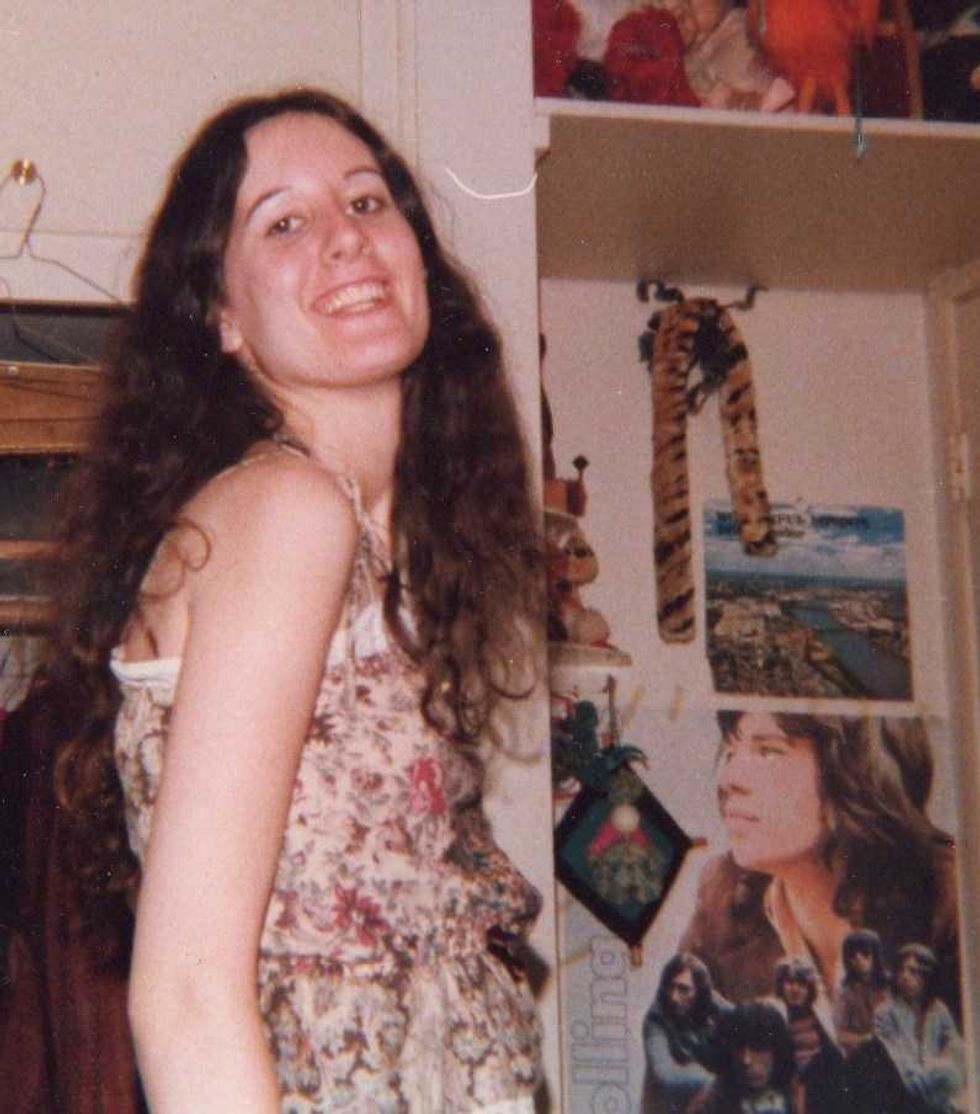 A Generation Jones teenager poses in her room.Image via Wikmedia Commons
 An office kitchen.via
  An angry man eating spaghetti.via


An Irish woman went to the doctor for a routine eye exam. She left with bright neon green eyes.
It's not easy seeing green.
Did she get superpowers?
Going to the eye doctor can be a hassle and a pain. It's not just the routine issues and inconveniences that come along when making a doctor appointment, but sometimes the various devices being used to check your eyes' health feel invasive and uncomfortable. But at least at the end of the appointment, most of us don't look like we're turning into The Incredible Hulk. That wasn't the case for one Irish woman.
Photographer Margerita B. Wargola was just going in for a routine eye exam at the hospital but ended up leaving with her eyes a shocking, bright neon green.
At the doctor's office, the nurse practitioner was prepping Wargola for a test with a machine that Wargola had experienced before. Before the test started, Wargola presumed the nurse had dropped some saline into her eyes, as they were feeling dry. After she blinked, everything went yellow.
Wargola and the nurse initially panicked. Neither knew what was going on as Wargola suddenly had yellow vision and radioactive-looking green eyes. After the initial shock, both realized the issue: the nurse forgot to ask Wargola to remove her contact lenses before putting contrast drops in her eyes for the exam. Wargola and the nurse quickly removed the lenses from her eyes and washed them thoroughly with saline. Fortunately, Wargola's eyes were unharmed. Unfortunately, her contacts were permanently stained and she didn't bring a spare pair.
- YouTube youtube.com
Since she has poor vision, Wargola was forced to drive herself home after the eye exam wearing the neon-green contact lenses that make her look like a member of the Green Lantern Corps. She couldn't help but laugh at her predicament and recorded a video explaining it all on social media. Since then, her video has sparked a couple Reddit threads and collected a bunch of comments on Instagram:
“But the REAL question is: do you now have X-Ray vision?”
“You can just say you're a superhero.”
“I would make a few stops on the way home just to freak some people out!”
“I would have lived it up! Grab a coffee, do grocery shopping, walk around a shopping center.”
“This one would pair well with that girl who ate something with turmeric with her invisalign on and walked around Paris smiling at people with seemingly BRIGHT YELLOW TEETH.”
“I would save those for fancy special occasions! WOW!”
“Every time I'd stop I'd turn slowly and stare at the person in the car next to me.”
“Keep them. Tell people what to do. They’ll do your bidding.”
In a follow-up Instagram video, Wargola showed her followers that she was safe at home with normal eyes, showing that the damaged contact lenses were so stained that they turned the saline solution in her contacts case into a bright Gatorade yellow. She wasn't mad at the nurse and, in fact, plans on keeping the lenses to wear on St. Patrick's Day or some other special occasion.
While no harm was done and a good laugh was had, it's still best for doctors, nurses, and patients alike to double-check and ask or tell if contact lenses are being worn before each eye test. If not, there might be more than ultra-green eyes to worry about.