upworthy
Add Upworthy to your Google News feed.
Google News Button
Internet

Woman explains what dry cleaning actually is and people are legitimately shocked

“They really take the buttons off of every shirt?”
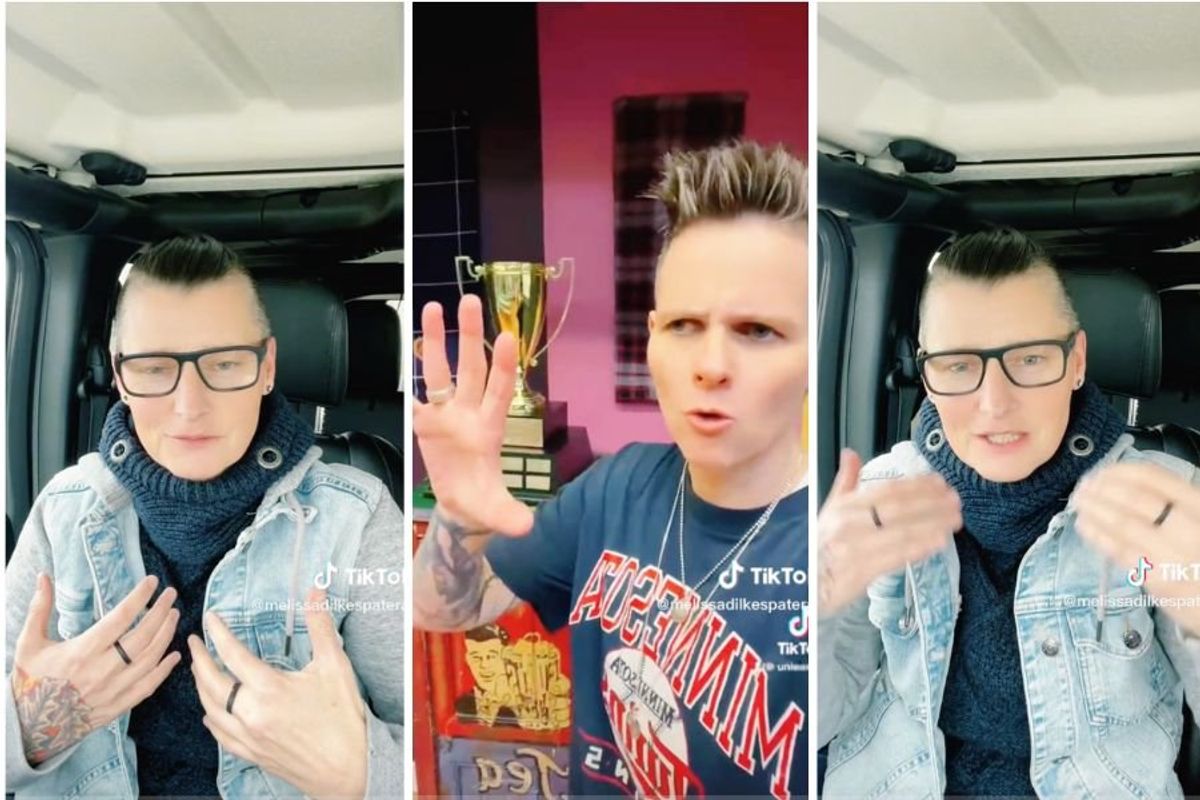
screenshots of a woman speaking to camera.

Melissa Pateras explains how dry cleaning works.

Have you ever wondered what happens at the dry cleaners? Or are you like me and just assumed the people at the dry cleaners were wizards and never questioned their magic? Turns out, dry cleaners aren't magic and there's actually a pretty interesting explanation of how they came to be and what they do.

Melissa Pateras is known on Tiktok for her laundry knowledge. If she pops up on your For You Page, you're officially on Laundrytok. Seriously, her ability to fold laundry is hypnotizing. This time, she created a video explaining what actually takes place at the dry cleaner and the Internet is aghast.

Before Pateras explained what happens in the mysterious world behind the counter of a dry cleaner, she asked a few of her friends what they thought dry cleaning was. Their answers were...interesting to say the least.

One friend surmised, "You put it in a box, right...and then you let some wind, really fast wind, blow around on your clothes and it wipes off all the dirt." The friend, whose username is @unlearn16, continued with her working hypothesis, saying that the clothes are then blasted with infrared heat to sterilize the garments. While that is certainly an interesting theory, that's not what happens.


Another friend guessed, "Dry cleaning is when they take all of your dirty clothes into this big dryer with a clean sheet that sticks all of the dirt to it from your dirty clothes." This friend was also incorrect, and Pateras finally explained why after her friends dug deep into their brains for their best guesses.

Turns out dry cleaning was invented by accident when Jean-Baptiste Jolly spilled a kerosene lamp on his tablecloth, which dried cleaner than it was previously, according to Pateras.

The laundry guru explained that while it was dangerous, the practice of cleaning things with kerosene continued until a less flammable method was discovered. But even the safer method is still fairly harsh, which is why dry cleaners take buttons off of clothing before running them through, she says.

This prompted one commenter to ask, "They really take the buttons off of every shirt?" to which Pateras replied that it only occurs if the buttons won't withstand the chemicals.

If you've ever been curious about what happens at the dry cleaner, watch the video below. She takes you through each step.

@melissadilkespateras

What is dry cleaning #laundry #laundrytok #drycleaning #funfacts @Tracy Taylor @Unlearn16 @Ana Pac @Ashley Mathieu @Li

Of course, some garments will do just fine without dry cleaning; knowing when to consider it is key.

This article originally appeared two years ago.

Once a refugee seeking safety in the U.S., Anita Omary is using what she learned to help others thrive.
Pictured here: Anita Omary; her son, Osman; and Omary’s close friends
True

In March 2023, after months of preparation and paperwork, Anita Omary arrived in the United States from her native Afghanistan to build a better life. Once she arrived in Connecticut, however, the experience was anything but easy.

“When I first arrived, everything felt so strange—the weather, the environment, the people,” Omary recalled. Omary had not only left behind her extended family and friends in Afghanistan, she left her career managing child protective cases and supporting refugee communities behind as well. Even more challenging, Anita was five months pregnant at the time, and because her husband was unable to obtain a travel visa, she found herself having to navigate a new language, a different culture, and an unfamiliar country entirely on her own.


“I went through a period of deep disappointment and depression, where I wasn’t able to do much for myself,” Omary said.

Then something incredible happened: Omary met a woman who would become her close friend, offering support that would change her experience as a refugee—and ultimately the trajectory of her entire life.

Understanding the journey

Like Anita Omary, tens of thousands of people come to the United States each year seeking safety from war, political violence, religious persecution, and other threats. Yet escaping danger, unfortunately, is only the first challenge. Once here, immigrant and refugee families must deal with the loss of displacement, while at the same time facing language barriers, adapting to a new culture, and sometimes even facing social stigma and anti-immigrant biases.

Welcoming immigrant and refugee neighbors strengthens the nation and benefits everyone—and according to Anita Omary, small, simple acts of human kindness can make the greatest difference in helping them feel safe, valued, and truly at home.

A warm welcome

Dee and Omary's son, Osman

Anita Omary was receiving prenatal checkups at a woman’s health center in West Haven when she met Dee, a nurse.

“She immediately recognized that I was new, and that I was struggling,” Omary said. “From that moment on, she became my support system.”

Dee started checking in on Omary throughout her pregnancy, both inside the clinic and out.

“She would call me and ask am I okay, am I eating, am I healthy,” Omary said. “She helped me with things I didn’t even realize I needed, like getting an air conditioner for my small, hot room.”

Soon, Dee was helping Omary apply for jobs and taking her on driving lessons every weekend. With her help, Omary landed a job, passed her road test on the first attempt, and even enrolled at the University of New Haven to pursue her master’s degree. Dee and Omary became like family. After Omary’s son, Osman, was born, Dee spent five days in the hospital at her side, bringing her halal food and brushing her hair in the same way Omary’s mother used to. When Omary’s postpartum pain became too great for her to lift Osman’s car seat, Dee accompanied her to his doctor’s appointments and carried the baby for her.

“Her support truly changed my life,” Omary said. “Her motivation, compassion, and support gave me hope. It gave me a sense of stability and confidence. I didn’t feel alone, because of her.”

More than that, the experience gave Omary a new resolve to help other people.

“That experience has deeply shaped the way I give back,” she said. “I want to be that source of encouragement and support for others that my friend was for me.”

Extending the welcome

Omary and Dee at the Martin Luther King, Jr. Vision Awards ceremony at the University of New Haven.

Omary is now flourishing. She currently works as a career development specialist as she continues her Master’s degree. She also, as a member of the Refugee Storytellers Collective, helps advocate for refugee and immigrant families by connecting them with resources—and teaches local communities how to best welcome newcomers.

“Welcoming new families today has many challenges,” Omary said. “One major barrier is access to English classes. Many newcomers, especially those who have just arrived, often put their names on long wait lists and for months there are no available spots.” For women with children, the lack of available childcare makes attending English classes, or working outside the home, especially difficult.

Omary stresses that sometimes small, everyday acts of kindness can make the biggest difference to immigrant and refugee families.

“Welcome is not about big gestures, but about small, consistent acts of care that remind you that you belong,” Omary said. Receiving a compliment on her dress or her son from a stranger in the grocery store was incredibly uplifting during her early days as a newcomer, and Omary remembers how even the smallest gestures of kindness gave her hope that she could thrive and build a new life here.

“I built my new life, but I didn’t do it alone,” Omary said. “Community and kindness were my greatest strengths.”

Are you in? Click here to join the Refugee Advocacy Lab and sign the #WeWillWelcome pledge and complete one small act of welcome in your community. Together, with small, meaningful steps, we can build communities where everyone feels safe.

This article is part of Upworthy’s “The Threads Between U.S.” series that highlights what we have in common thanks to the generous support from the Levi Strauss Foundation, whose grantmaking is committed to creating a culture of belonging.

Family

Mom explains the 'dishonest' Boomer parenting style that hurts adults to this day

“How did I not hear about dishonest harmony until now? This describes my family dynamic to a T."

boomer parents, parenting styles, dishonest harmony, parents, older parents, '70s and '80s parents,

“What they want is dishonest harmony rather than honest conflict.”

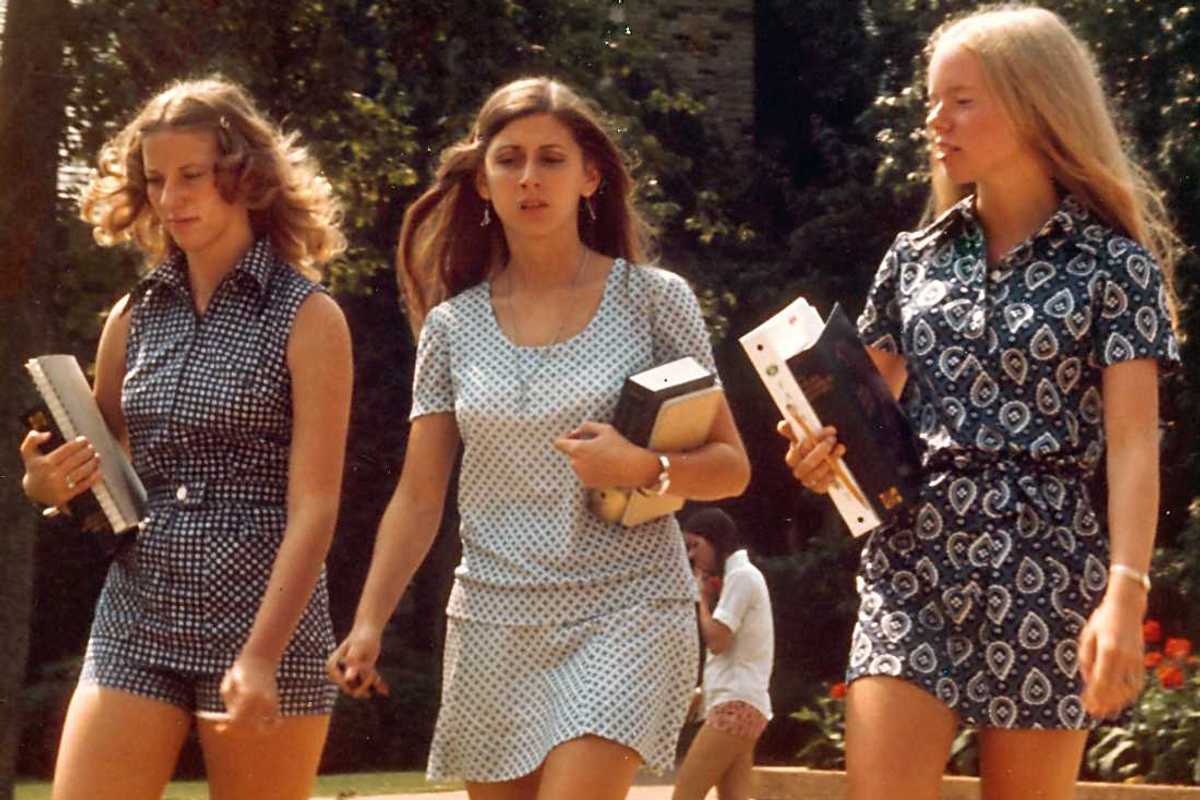
There are certainly many things the Boomer parents generally did right when raising their kids. Teaching them the importance of manners and respect. That actions do, in fact, have consequences. That a little manners go a long way…all of these things are truly good values to instill in kids.

But, and we are speaking in broad strokes here, being able to openly discuss difficult feelings was not one of the skills passed down by this generation. And many Gen X and Millennial kids can sadly attest to this. This is why the term “dishonest harmony” is giving many folks of this age group some relief. They finally have a term to describe the lack of emotional validation they needed throughout childhood to save face.


Psychologists define the "dishonest harmony" approach as maintaining a façade of peace and harmony at the expense of addressing underlying issues. Parents who practice disharmony prioritize appearance over authenticity and are known to avoid conflict and sweep problems under the rug.

In a video posted to TikTok, a woman named Angela Baker begins by saying, “Fellow Gen X and Millennials, let's talk about our parents and their need for dishonest harmony.”

@parkrosepermaculture

Replying to @Joe Namath #boomerparents #toxicparent #harmony #genx #millennial #badparenting #conflict #nocontact

Barker, who thankfully did not experience this phenomenon growing up, but says her husband “certainly” did, shared that when she’s tried to discuss this topic, the typical response she’d get from Boomers would be to “Stop talking about it. We don't need to hear about it. Move on. Be quiet.” And it’s this attitude that’s at the core of dishonest harmony.

What the experts say about 'dishonest harmony'

"Research supports what many therapists witness daily: families that avoid conflict tend to experience higher levels of anxiety, depression, and relational dissatisfaction," writes Dr. Rachel White, LMFT, at Restoration Psychological Services. "According to the American Association for Marriage and Family Therapy (AAMFT), families who suppress conflict are more likely to develop covert communication patterns, where body language and tone carry more weight than actual words. This leads to confusion, emotional misattunement, and a cycle of disconnection.

How 'dishonest harmony' works in families

“What that’s showing is their lack of ability to handle the distress that they feel when we talk openly about uncomfortable things,” she says. “What they want is dishonest harmony rather than honest conflict. Keep quiet about these hard issues. Suppress your pain, suppress your trauma. Definitely don't talk openly about it so that you can learn to heal and break the cycle,” she continues. “What matters most is that we have the appearance of harmony, even if there's nothing harmonious under the surface.”

baby boomers, boomer parents, boomer couple, couple 60s, grandparents, A Baby Boomer couple.via Canva/Photos


Barker concludes that this need to maintain a certain facade led to most of the toxic parenting choices of that period. “The desire of Boomer parents to have this perception that everything was sweet and hunky dory, rather than prioritizing the needs of their kids, is what drove a lot of the toxic parenting we experienced.”

Barker’s video made others feel seen

“How did I not hear about dishonest harmony until now? This describes my family dynamic to a T. And if you disrespect that illusion, you are automatically labeled as the problem. It’s frustrating,” one person wrote in the comments.

“THANK YOU SO MUCH! I'm a 49 yo biker sitting in my bedroom crying right now. You just put a name to my darkness!” added another.

baby boomers, boomer parents, boomer couple, couple 60s, grandparents, A Baby Boomer couple.via Canva/Photos


Many shared how they were refusing to repeat the cycle

One wrote, “This is EXACTLY my family dynamic. I’m the problem because I won’t remain quiet. Not anymore. Not again.”

“I love when my kids tell me what I did wrong. It gives me a chance to acknowledge and apologize. Everyone wants to be heard,” said another.

Of course, no parenting style is perfect. And all parents are working with the current ideals of the time, their own inner programming, and their inherent need to course-correct child-rearing problems of the previous generation. Gen Alpha parents will probably cringe at certain parenting styles currently considered in vogue. It’s all part of the process.

But hopefully, one thing we have learned as a collective is that true change happens when we summon the courage to have difficult conversations.

This article originally appeared last year. It has since been updated.

teachers, students, arts and crafts, knitted hats, creativity, art
Photo Credit: Canva

A young child colors in a design. A baby wears a pink knitted hat.

Putting a dream into action can sometimes provide that little bit of magic children crave. So, when first grade teacher Ashley Lowry genuinely surprised her students with homemade hats based on their own designs, their reactions were super wholesome.

Lowry, who teaches first grade at Wallace Elementary in Kelso, Washington, is always looking for new ways to get her students excited about learning. According to KGW News, her aunt, Amy Lowry, had a thoughtful idea: "What if we created our own hats?" Amy tells the news camera, "So I had seen the idea and thought, well in the middle of winter, it would be a great project."


So, Lowry made photocopies of the already drawn winter hats with no color. The kids were tasked with coloring in their favorite designs. Some opted for solid colors like all blue or purple. Others were drawn to colorful stripes!

First grade students color in the hat of their dreams and their teacher surprisingly sews them. www.youtube.com, KGW News

Lowry shares that some of the kids were excited just to color. "I definitely saw kids who were like really excited about patterns. So you'll see kids that had like a nice repeating pattern."

Once winter break arrived, Lowry had her plan: she would take those hat drawings and sew each and every one of them for her 22 students. "I guess I didn't realize 22 hats was going to take as long as it did, but we managed," she shared.

Once they were back from break, she sent the kids off to recess so she could put each perfectly wrapped, made-to-design hat in their desks. When they returned, Lowry asked, "Raise your hand if you remember doing your hat." Many raised their hands enthusiastically.

She then read them a book called Extra Yarn, and told them to "go to their desks and sit down." She added, "I might do a little magic in here." As they sat obediently at their seats she shouted, "Let's say magic magic! Drumroll!" The children begin drumming on their desks. "Open your drawers," she instructs.

KGW News (@kgwnews) on Threads

teacher, first grade, surprise, knitting, hats, art project Teacher surprises kids with hats of their own design. www.threads.com, KGW News, Threads

The children excitedly do as told to uncover the gift-wrapped hats—just as they had imagined them. Delighted, some of the kids explained their design choices. "Because those are my favorite colors in the world!" one shared.

They each try their hats on to showcase what great work has been done. Aunt Amy shared, "I was just thrilled that everybody was so excited. And it looked like they're going to enjoy the efforts."

Lowry added, "They love accessories. So I can't wait to see these hats bouncing around. I think they'll love it and just that pride. It's something that they made!"

On a Threads post sharing the news story, commenters are deeply impressed with this teacher's choice to go the extra mile. One writes, "I absolutely love this story. The children’s teacher is amazing and these young little people will remember this moment forever. We need more stories like this in the world today."

This Threader points out how special the teacher is for caring for these children, writing, "You can’t teach a teacher that kind of compassion and empathy for their students, it’s priceless and starts these young students with a love for education and going to school. We should all take a lesson from this teacher!"

kids, school, first grade, arts and crafts, creativity A child makes a colorful craft project. Photo by Taylor Heery on Unsplash

Another states the important and obvious, saying, "You cannot put a price on a good teacher."

The YouTube comments were equally supportive. "This made me tear up. Those kiddos are so excited! What a wonderful way to show them that people care about them and want them to be happy," one shares.

One commenter was not only impressed with the teacher's knitting skills, they adored the creative design picks. They wrote, "I LOVE that! As a crocheter of over 50 years experience, and a knitter of considerably less time, I can very easily appreciate all the effort that went into making all those hats! I do have to say, I really liked that one little girl's unicorn hat---even though I'm now 73, I very much like unicorns!"

Education

Real people share 17 red flags that expose someone trying to appear wiser than they actually are

"Actually referring to oneself as 'smart' in general is often a good indicator too."

low intelligence, low iq, iq lower, signs of low intelligence, not smart, not very smart

A man looks confused.

People who struggle with intellectual functioning, often described as having a low IQ, may also be considered to have low intelligence. Determining low intelligence is not always easy or obvious, so people on Reddit shared their thoughts on the signs that can indicate it.

One observant Redditor shared their insight, writing that a sign of low intelligence is "actually referring to oneself as 'smart' in general is often a good indicator too." The comment is an example of the Dunning–Kruger effect, first described in 1999 by psychologists David Dunning and Justin Kruger, which found that people with lower IQs tend to overestimate their intelligence, while those with higher IQs often underestimate it.


"Those with limited knowledge in a domain suffer a dual burden: Not only do they reach mistaken conclusions and make regrettable errors, but their incompetence robs them of the ability to realize it," the psychologists wrote, according to Psychology Today.

- YouTube www.youtube.com

17 signs of low intelligence, according to Redditors

"When presented with an statement that generalizes something, they will use an anecdote as a counterexample and think that it completely refutes the statement. Example: travelling in an airplane is generally safer than in a car. 'Actually that's not true, I know someone who died in an airplane crash.'" - Traditional_Rub_9828

"Refusal to learn, grow and change your views from evidence provided." - Userdataunavailable

"Confusing 'being loud' with 'being right.' The loudest person in the room is rarely the smartest." - Kernel_Slasher

"Actually referring to oneself as 'smart' in a general is often a good indicator too." - loku_gem

"Believing anything they see on social media." - Fabulous_Ady

"Lack of curiosity. Thinking they know it all." - Disastrous-Sky-8484

- YouTube www.youtube.com

"Further than a lack of curiosity is never asking questions. It was something I heard about gorilla researchers who taught them sign language that in the years of gorilla sign language communications they never had a gorilla ask a question of a human. That simple process of recognizing you don't know/have something you want, understanding someone else likely does know what you want, and asking them actually takes a lot of brain power. Some parrots and exceptionally smart dogs can hit that threshold... And some very cognitively limited humans do not." - MildGenevaSuggestion

"They get annoyed by people who act curious, too. About anything. 'Why do you care?' 'Who cares?' Idk man, it's just interesting. Why shouldn't I care?" - Belle_Juive

"Not realizing that everything has nuances." - SecretHuckleberry720

"Refusing to consider they might be wrong." - Marry_Ennaria

"Not being able to understand or engage with hypotheticals. It is a meme online but that is actually a sign of low intelligence. Individuals with IQs under 90 often struggle with conditional hypotheticals—such as 'How would you feel if you hadn't eaten dinner?'—responding with factual rebuttals like 'But I did eat dinner.'" - Emergency-Resist-730

@baxate_carter

Even more low IQ traits from a year ago

"Severe impairment in metacognition - that is, a persistent inability to recognize one's own errors in thinking, monitor one's own reasoning, or adjust beliefs/behavior even when presented with clear contradictory evidence." - DiamondCalvesFan

"Ironically, Always having an answer. There is a lot of power in saying 'I don't know'." - Loose-Cicada5473, mattacular2001

"People who mock others instead of trying to understand them. Curiosity is usually a sign of intelligence." - cutiepie_00me

"Repeating the same mistakes and blaming everyone else." - Luckypiniece

"Bragging that you haven't read a book since high school." - tiger0204

"One move chess player. This is like an analogy to how some people think and act and vote. A good chess player is thinking 3 or more moves ahead. a bad one is playing one move ahead only. When people say things like 'Why should I pay school taxes if I don't have any kids!?' they are playing one move without thinking ahead. Better schools means a more educated populace means less crimes and more economic opportunity for your area, thus it benefits everyone whether they have kids or not." - ChickenMarsala4500

college, college major, parenting advice, parenting and college, parents and college majors, choosing a college major

Mom poses with son at his graduation.

Choosing a college major is a big deal for students and parents alike because one's college major sets the groundwork for their future career and income.

One mom decided that, in order to set her kids up for future financial success, she would limit her kids' college major choices.


Mom and therapist Ruth Han, LPC, took to Instagram to share how she helped guide her children on choosing their college majors—and her methods seem pretty controversial.

Her kids can choose from four majors

Han began the video by saying people are going to "lose their minds" when she tells them why she is implementing limits for her kids' college majors. She added that her husband thought she was crazy and thought their kids would rebel when she delivered the news.

"College is not a time to explore your passions. I do not have the money or the time for that," she said. "Absolutely take advantage of all the extracurriculars and the opportunities that a college campus offers. But college, to me, is a white collar trade school, so you have to graduate with an in-demand skill."

The four majors are: Nursing, Accounting, Engineering, and Computer Science.

Her biggest reason for limiting college major choices is tuition itself, which she adds can cost up to $400,000. Han explains her homeschooled kids earned full merit scholarships as well. However, she argues that young adults will have a harder time launching if they don't earn enough money to financially support themselves.

"They can at that time figure out what they want to do and what their passions are. So it was best for me to do something to make sure that my kids were going to enter young adulthood with a highly-marketable, in-demand skill."

Han explained that she told her kids that they would have her full financial support for four years, but "after that i have to focus on my retirement because I do not expect you to support me in my old age. As a mother, it's my duty to make sure that you can provide for yourself."

That means doing whatever her kids want to do. "You want to go play guitar on the boardwalk for money? Go for it. You wanna be a professional gamer, an actress, a dancer, a musician, a pro athlete—go for it. I want them to do whatever they want once they have the actual ability to make that choice as an adult because then you also have to have the ability to handle all of the ups and downs of such choices."

Her final takeaway: "As parents, we have to make sure that they start out in life without any student loans," Han said.

college, college major, college majors, college graduation, graduating college Students pose after college graduation.Photo credit: Canva

What parents are saying

Han received many comments on her video.

Some were supportive:

"My daughter had 1 choice… tech, and I won’t say she agreed. But after becoming a SE and making 110K straight out of college, she was very happy she listened."

"Certified HR professional with 18 years of experience and having worked for Fortune 500s, tech, and hedge funds (as HR) I can tell you she’s saving them so much time wasted. So many professionals don’t end up in the fields they studied delaying their peak salary. Every single one of those degrees have high salaries averages and are respectable degrees. I’ve never seen a high paying job (200k+) asking for liberal arts preferred…"

"This is what my parents pretty much did lol I wanted to go to acting school my dad said get a degree first and I got an engineering degree. I’m actually happy he did that."

"I love the concept of launching young adults VS raising children. I’m on board."

However, others were critical:

college, college major, college majors, moving to college, moving in at college, parents help move into college Parents help move daughter in to college.Photo credit: Canva

"Having worked in higher education, practically my entire career, I can say from professional experience that this sounds like good advice but it’s not that cut and dry. Great, you limited the education and career options for your child because of its earning potential. Congratulations, now your child is crying in my office their entire senior year because their unhappy, not really good at what they’ve studied because they were never invested, and now they’re on their way to being unemployed or underemployed because they never really mastered the skill set. They just sat in class to make you happy. A paid dancer makes more than an unemployed engineer everyday of the week. And trust me… there are a bunch of unemployed engineers, doctors, and lawyers."

"I totally understand your reasoning but also maybe they shouldn’t go to college if they don’t like those majors. I have a long list of people who decided the majors they graduated in weren’t for them. They decided they were happier being carpenters, bartenders, teachers, opened restaurants, etc. Those big paychecks and so called secure jobs killed their soul."

"I got a BFA in acting. Went on to become a professional theatre creator for years, and then received a scholarship to get my masters degree at Columbia where I now have the opportunity to work on Broadway. Thank GOD my mother didn't do this, and she accepted and supported my talent and drive for what it was! I'm so glad my parents saw me for who I was, even if it wasn't the most statistically probable path towards financial stability (yes, we both have student loans to pay for this). And perhaps this might come as surprising, but an advanced tertiary education is about learning, not just financial gain."

"I would have dropped out of school in 2 days if I had been in accounting/nursing/engineering. I also would have wasted YEARS not developing the skills I was passionate about and been behind. I am SO thankful I had parents who supported 'out of the box' ways of life and thought my art degree was a great idea. The overall liberal arts education was mind-opening! I started my own company and now make more each year than any accountant or nurse I know, plus I work from home on my own schedule and have tons of time with my family. Doing what I LOVE. I also paid for all my own schooling by choosing affordable schools and finding creative ways to pay for them. My parents supported creative ways to make money but never handed me cash. It’s my education, not theirs."

siblings, older siblings, younger siblings, sister, brother, kids, family, love, poet, poetry, poems

Young siblings holding hands while standing in a lake.

Oldest siblings can have a complicated relationship with their youngers. They may be separated by many years, or just one or two. They can be best friends or mortal enemies depending on the day. Siblings tend to fight and have conflict at an almost laughably high rate, and yet, in many cases, they are among the most meaningful relationships in a person's life.

However, it's often not until kids grow up that they truly appreciate the bond they have with their siblings and the crucial role that each of them has played in the other's lives.


Poet Joshua De Schutter recently performed a tear-jerking poem dedicated to his older sister, Joy, and it's striking a nerve with people everywhere who grew up with siblings.

siblings, older siblings, younger siblings, sister, brother, kids, family, love, poet, poetry, poems Older sibling with her arm around her younger sibling. Photo by Annie Spratt on Unsplash

De Schutter, who is only in his early twenties, has been posting clips of his performances online for about two years. In that short time he has amassed over a million followers. Viewers connect deeply with his incisive observations about life, love, and family, and his poems are extremely accessible in their language and structure, giving them a broad appeal almost anyone can relate to.

A recent piece about older siblings has racked up over three million views.

"Someone to protect me from everything that hurt them, that's what it really means to have an older sibling," De Schutter says early in the piece, which is a spoken word poem performed in a natural cadence.

"Someone in my life I don't even remember meeting, someone who loved me before I knew love was a feeling ... And man, it must be hard, being mom and dad's first, being the kid that taught them how to be adults, being the first kid to experience those flaws and responsibilities you have to inherit. We all know that the first child becomes the third parent."

One of the best lines comes as he makes a realization about his older sister's love and protection: That it came at a cost.

"Then you grow up and you look back at all they did... and you realize she had to grow up faster so that I could stay a kid."

The whole performance is a must-watch:

Nearly five-thousand people commented on De Schutter's video expressing their gratitude for his message. Many were brought to tears:

"as an eldest child, i'm crying. thank you."

"I’m the eldest child and this made me cry so much ... thank you for your words. This isn’t your first poem that brought me to tears. You touch many lives. Keep doing what you do!"

"As the eldest sibling, my younger siblings are literally my babies and I’d do anything for them"

"Sitting here, crying. Because me and my older sister didnt get along so good. I wish we would have. And crying, because I hope my First daughter will be this for her Younger Sisters. And crying, because it will be hard for her."

"recently lost my little sister and she expressed some of these same sentiments. It’s one of the only things that bring me solace. I miss her so much"

"Thank you for putting this into words. As the older sibling by almost 8years with a single mom I wish I could’ve had this kind of appreciation."

De Schutter's poem captures something many eldest siblings inherently understand. Birth order, research shows, can play a huge role in the development of our personalities.

(The young poet has a real talent for taking seemingly simple observations about life and making them hit like a sledgehammer.)

"Oldest child syndrome" refers to traits that are commonly seen in a firstborn kid as they grow into an adult. They often grow up faster and reach cognitive milestones more quickly, take on more responsibility at a younger age, and can be drawn to leadership roles as adults. However, the extra responsibility and parent-like roles they take on can have a toll on their mental health. There's an extremely fine line between a kid learning responsibility and leadership versus becoming parentified. Too much of the latter can cause massive stress, anxiety, and healthy boundary issues in children as they grow up.

Oldest siblings, of course, are rarely recognized for these contributions to the family. In many cases, they do make sacrifices in their own childhood in order to be a role model and caregiver for their younger siblings, so it's no wonder hearing that hard work finally acknowledged in De Schutter's poem is bringing so many eldest siblings to tears.