How a system of ropes and pulleys may change the lives of babies with Down syndrome.
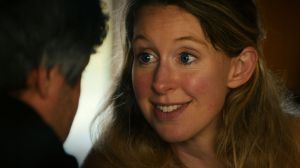
When Grace Morgan smiles, everyone smiles.
Image via Upworthy/YouTube.
How could you not? She's almost 1, and her enthusiasm, curiosity, and zest for life are contagious.
And thanks to an innovative research project, Grace will get to interact with and explore her world like never before.
Grace was born with Down syndrome in April 2015.
Her parents, Liz and Matt Morgan, learned about her diagnosis after she was born. Their initial surprise quickly turned to worry and concerns about Grace's future. Physicians at the Down syndrome clinic at their local children's hospital told the Morgans they could expect Grace to do everything a typical child would, it would just take her twice as long.
But that response didn't fly with the Morgans.
"Why would we just accept the fact that they say 'Everything takes twice as long?'" Liz told Upworthy.
Image via Upworthy/YouTube.
Then the Morgans heard about a research project that could improve Grace's mobility — a huge deal for kids like her.
The man behind the study, Dr. Cole Galloway , is a physical therapy professor at the University of Delaware and founder of GoBabyGo. The program combines engineering, tech, and rehabilitation tools to provide real-world mobility and confidence to kids with disabilities. Galloway was looking for a baby younger than 9 months with Down syndrome and a family with enough time to supervise daily use of an innovative device. The Morgans were selected from a pool of applicants.
Galloway and his team recently set up a mobility harness system in the Morgan's home.
The 10-foot-by-10-foot rig is common in children's hospitals and clinics, but this is one of the first times a system like this is being used in a home environment.
Image via Upworthy/YouTube.
The harness, which is attached to a canopy and pulley system, allows Grace to remain upright, jump, bounce, and interact with her world in a way similar to that of her peers.
Since she's free to roam on the system, she can sway and twirl.
All GIFs via Upworthy/YouTube.
She can play with her parents and big brother.
And even charm the family dog.
For the Morgans and other families, mobility devices like this are life-changing.
The ability to move independently is more than just getting from one place to another. Children learn about their environment and develop cognitively and socially through locomotion. And for older children, the ability to get around and interact with peers is how friendships are formed.
The difference for Grace is "huge," Liz told Upworthy. Without the harness, Grace's world is limited to the toys or people directly in front of her.
But with the device, there's no stopping her.
"What a harness can do is just give a chance for Gracie to never experience anything less than her own independence," Galloway told Upworthy. "Her own self-guided life, liberty, and the pursuit of happiness." Adding, "But it's the pursuit of happiness."
Looks like Grace and her family have plenty to smile about.
See Grace take on the world in this heartwarming Upworthy Original.




A Generation Jones teenager poses in her room.Image via Wikmedia Commons
An office kitchen.via
An angry man eating spaghetti.via 


An Irish woman went to the doctor for a routine eye exam. She left with bright neon green eyes.
It's not easy seeing green.
Did she get superpowers?
Going to the eye doctor can be a hassle and a pain. It's not just the routine issues and inconveniences that come along when making a doctor appointment, but sometimes the various devices being used to check your eyes' health feel invasive and uncomfortable. But at least at the end of the appointment, most of us don't look like we're turning into The Incredible Hulk. That wasn't the case for one Irish woman.
Photographer Margerita B. Wargola was just going in for a routine eye exam at the hospital but ended up leaving with her eyes a shocking, bright neon green.
At the doctor's office, the nurse practitioner was prepping Wargola for a test with a machine that Wargola had experienced before. Before the test started, Wargola presumed the nurse had dropped some saline into her eyes, as they were feeling dry. After she blinked, everything went yellow.
Wargola and the nurse initially panicked. Neither knew what was going on as Wargola suddenly had yellow vision and radioactive-looking green eyes. After the initial shock, both realized the issue: the nurse forgot to ask Wargola to remove her contact lenses before putting contrast drops in her eyes for the exam. Wargola and the nurse quickly removed the lenses from her eyes and washed them thoroughly with saline. Fortunately, Wargola's eyes were unharmed. Unfortunately, her contacts were permanently stained and she didn't bring a spare pair.
- YouTube youtube.com
Since she has poor vision, Wargola was forced to drive herself home after the eye exam wearing the neon-green contact lenses that make her look like a member of the Green Lantern Corps. She couldn't help but laugh at her predicament and recorded a video explaining it all on social media. Since then, her video has sparked a couple Reddit threads and collected a bunch of comments on Instagram:
“But the REAL question is: do you now have X-Ray vision?”
“You can just say you're a superhero.”
“I would make a few stops on the way home just to freak some people out!”
“I would have lived it up! Grab a coffee, do grocery shopping, walk around a shopping center.”
“This one would pair well with that girl who ate something with turmeric with her invisalign on and walked around Paris smiling at people with seemingly BRIGHT YELLOW TEETH.”
“I would save those for fancy special occasions! WOW!”
“Every time I'd stop I'd turn slowly and stare at the person in the car next to me.”
“Keep them. Tell people what to do. They’ll do your bidding.”
In a follow-up Instagram video, Wargola showed her followers that she was safe at home with normal eyes, showing that the damaged contact lenses were so stained that they turned the saline solution in her contacts case into a bright Gatorade yellow. She wasn't mad at the nurse and, in fact, plans on keeping the lenses to wear on St. Patrick's Day or some other special occasion.
While no harm was done and a good laugh was had, it's still best for doctors, nurses, and patients alike to double-check and ask or tell if contact lenses are being worn before each eye test. If not, there might be more than ultra-green eyes to worry about.