

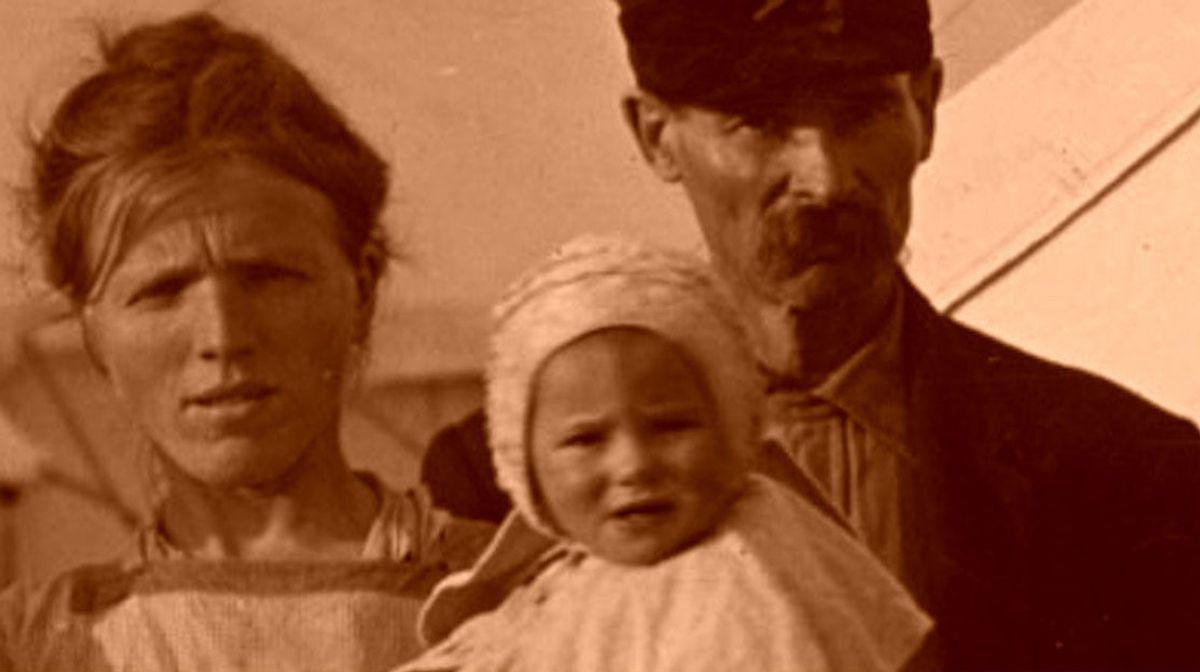
Strikers, Ludlow Tent Colony, 1914.
The early 1900s were a time of great social upheaval in our country. During the years leading up to the Ludlow Massacre, miners all around the country looking to make a better life for themselves and their families set up picket lines, organized massive parades and rallies, and even took up arms. Some died.
It's always worth considering why history like this was never taught in school before. Could it be that the powers that be would rather keep this kind of thing under wraps?
Here is Woody Guthrie's tribute to the good people who fought in the battles of Ludlow to help make a better tomorrow for everyone — you can just start the video and then start reading, if you wish:
Coal Country, Colorado
100 years ago, the Rocky Mountains were the source of a vast supply of coal. At its peak, it employed 16,000 people and accounted for 10% of all employed workers in the state of Colorado. It was dangerous work; in just 1913 alone, the mines claimed the lives of over 100 people. There were laws in place that were supposed to protect workers, but largely, management ignored those, which led to Colorado having double the on-the-job fatality rate of any other mining state.
It was a time of company towns, when all real estate, housing, doctors, and grocery stores were owned by the coal companies themselves, which led to the suppression of dissent as well as overinflated prices and an extreme dependence on the coal companies for everything that made life livable. In some of these, workers couldn't even leave town, and armed guards made sure they didn't. Also, if any miner or his family began to air grievances, they might find themselves evicted and run out of town.
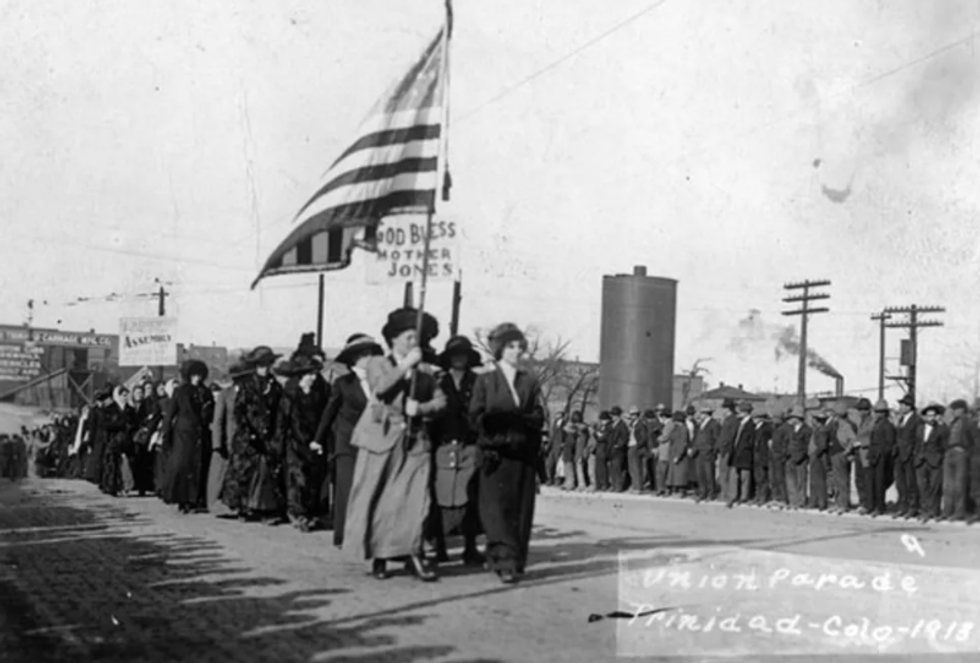
Strikers, Ludlow Tent Colony, 1914.
Union Parade, Trinidad, Colorado, 1913. Images via Colorado Coal Field War Project/University of Denver Library.
The Union
The United Mine Workers of America (UMWA) had been organizing for many years in the area, and this particular company, Colorado Fuel and Iron, was one of the biggest in the West — and was owned by the Rockefeller family, notoriously anti-union.
Put all this together, and it was a powder keg.
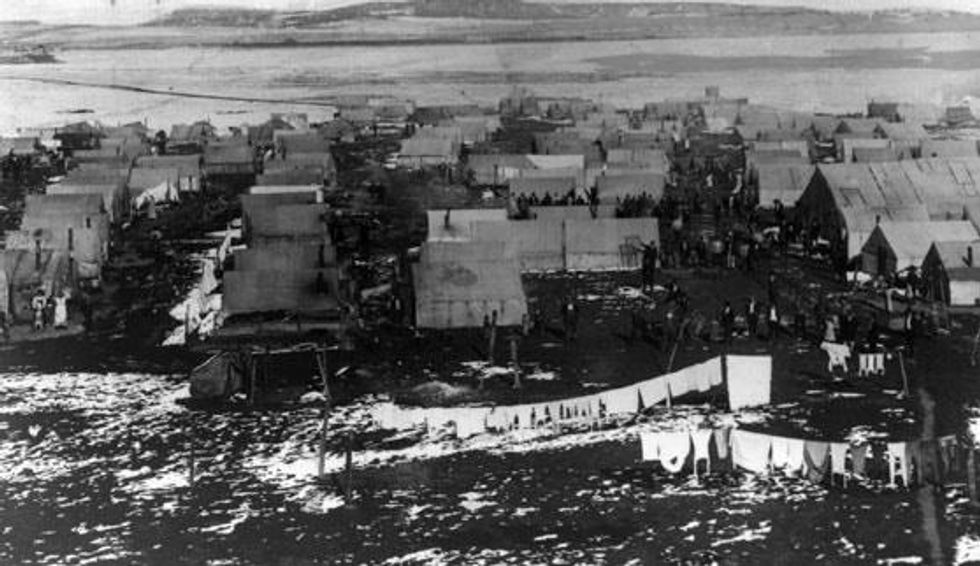
The Ludlow Colony before the massacre, 1914.
Photo from Youtube video.
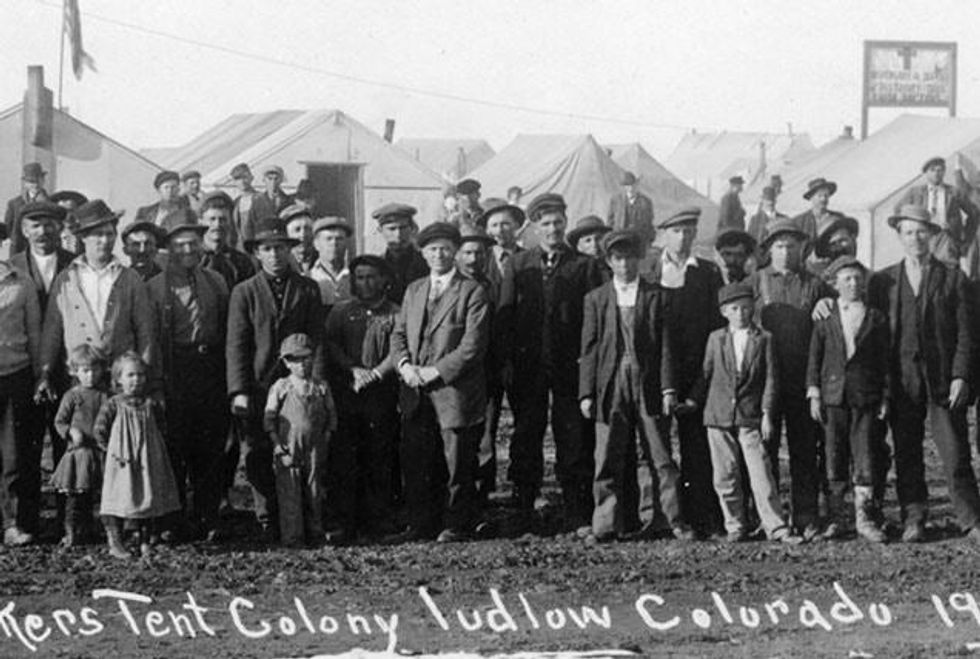
Strikers, Ludlow Tent Colony, 1914.
Photo from Youtube video.
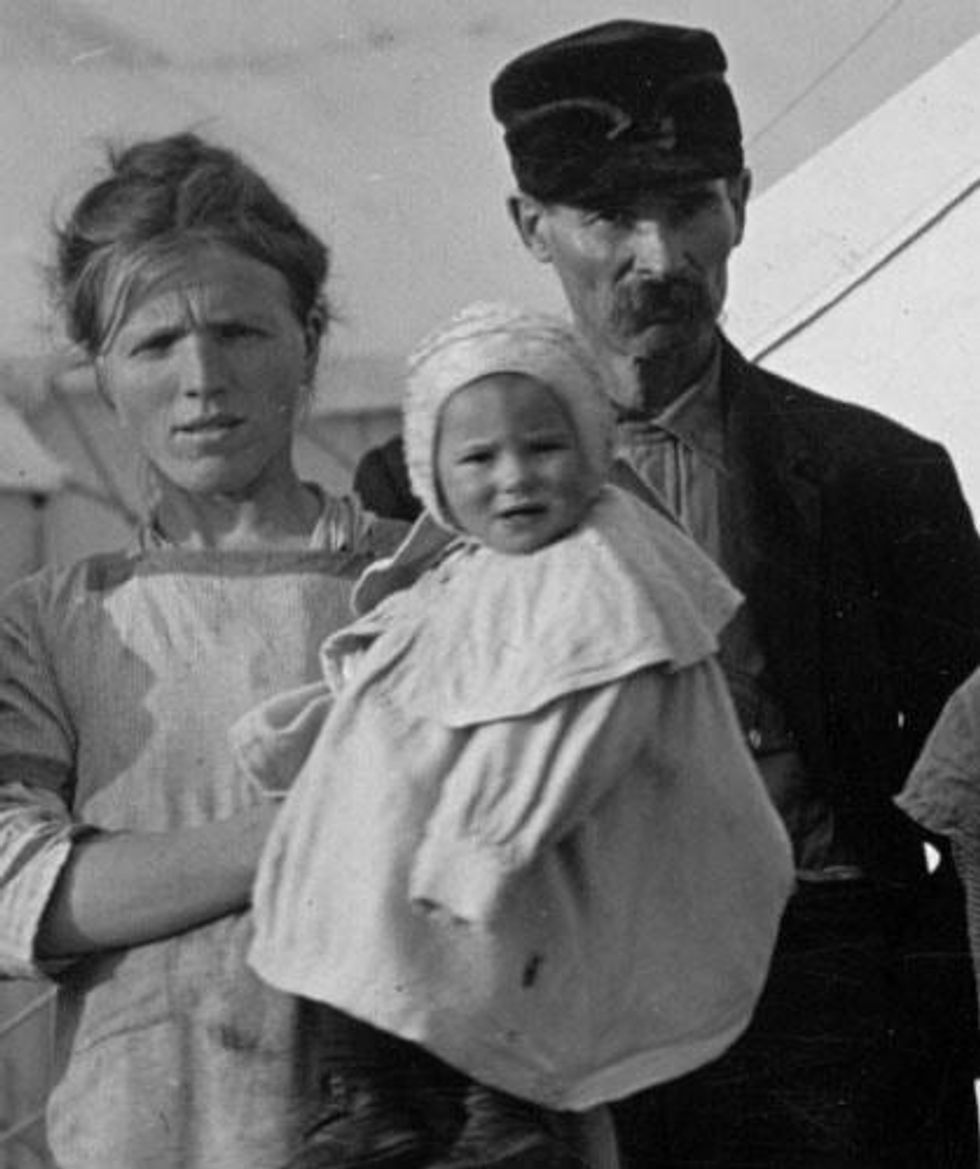
Strikers, Ludlow Tent Colony, 1914.
Photo from Youtube video.
Strike!
When a strike was called in 1913, the coal company evicted all the miners from their company homes, and they moved to tent villages on leased land set up by the UMWA. Company-hired guards (aka “goons") and members of the Colorado National Guard would drive by the tent villages and randomly shoot into the tents, leading the strikers to dig holes under their tents and the wooden beams that supported them.
Why did the union call for a strike? The workers wanted:
- (equivalent to a 10% wage increase),
- Enforcement of the eight-hour work day,
- Payment for "dead work" that usually wasn't compensated, such as laying coal car tracks,
- The job known as “Weight-checkmen" to be elected by workers. This was to keep company weightmen honest so the workers got paid for their true work,
- The right to use any store rather than just the company store, and choose their own houses and doctors,
- Strict enforcement of Colorado's laws, especially mine safety laws.
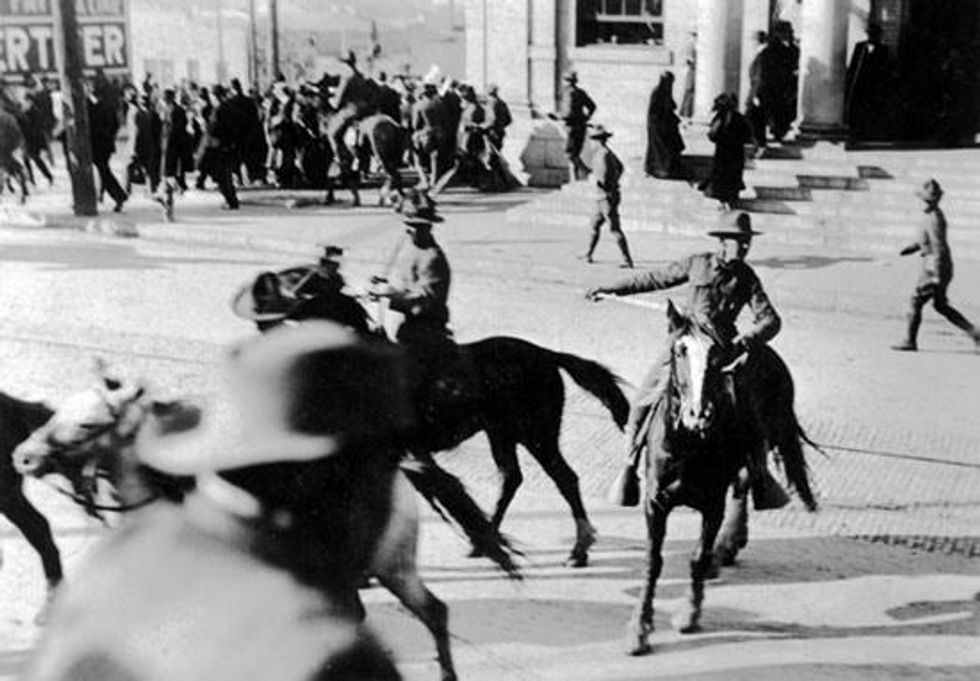
Cavalry charge on striker women in nearby Trinidad.
Photo from Youtube video.
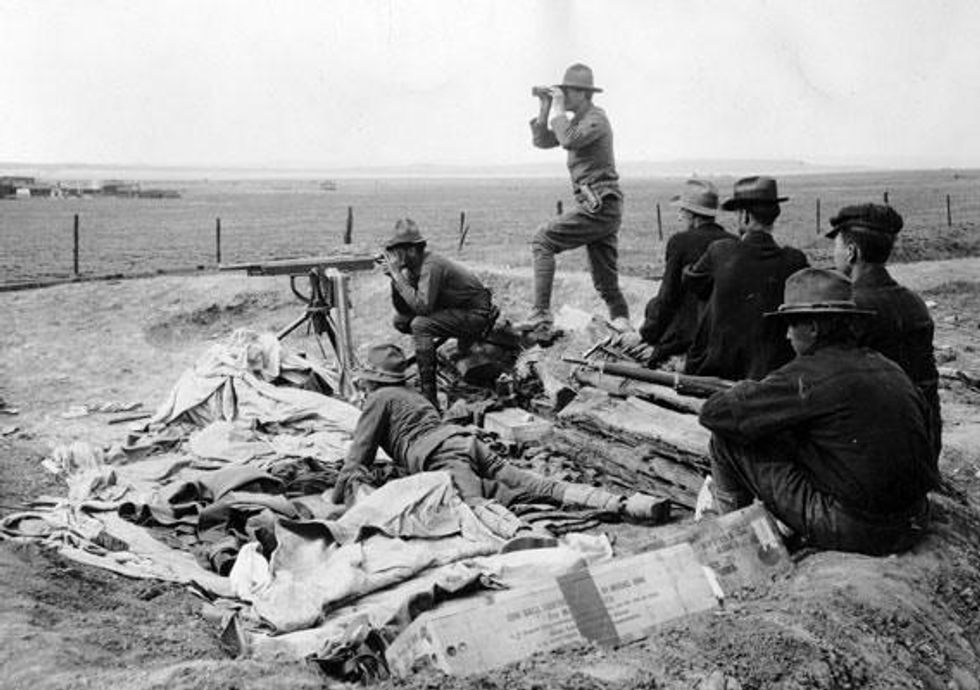
Militia and private detectives or mine guards, Ludlow.
Photo from Youtube video.
The Powder Keg Explodes
The attacks from the goons continued, as did the battles between scabs (strikebreakers) and the miners. It culminated in an attack on April 20, 1914, by company goons and Colorado National Guard soldiers who kidnapped and later killed the main camp leader and some of his fellow miners, and then set the tents in the main camp ablaze with kerosene. As they were engulfed, people inside the tents tried to flee the inferno; many were shot down as they tried to escape. Some also died in the dugouts below the burning tents. In the first photograph below, two women and 11 children died in the fire directly above them. A day that started off with Orthodox Easter celebrations for the families became known as the Ludlow Massacre.
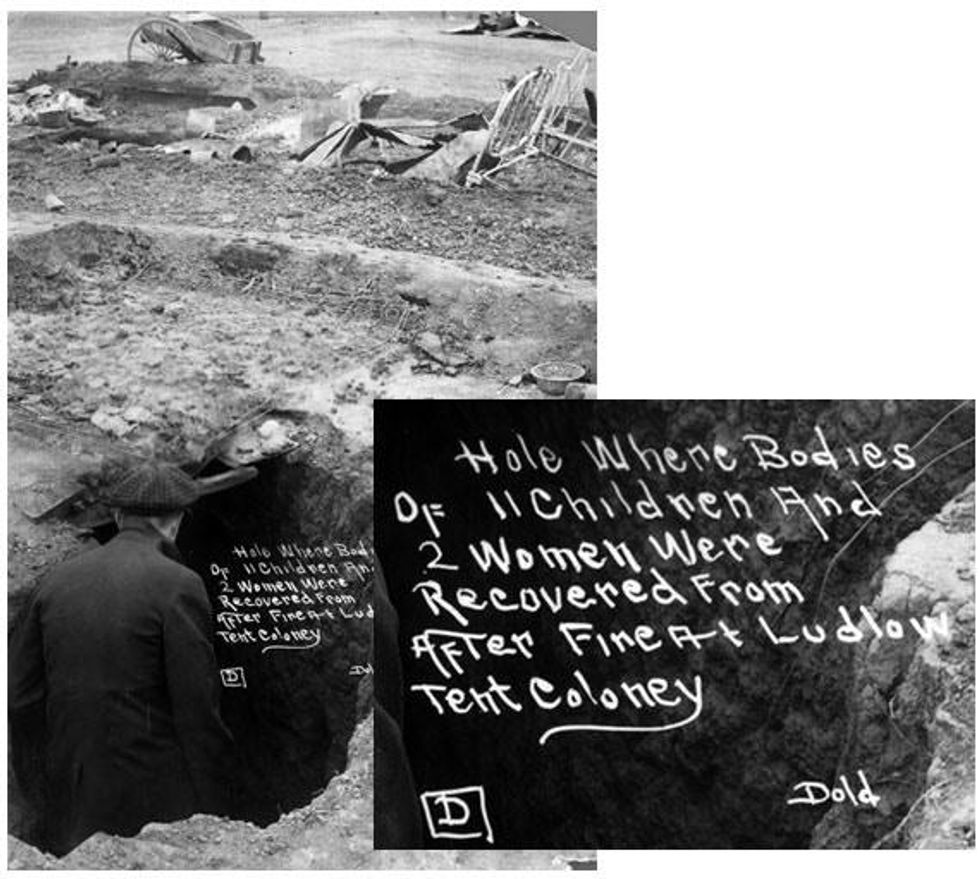
The "Death Pit."
Photo from Youtube video.
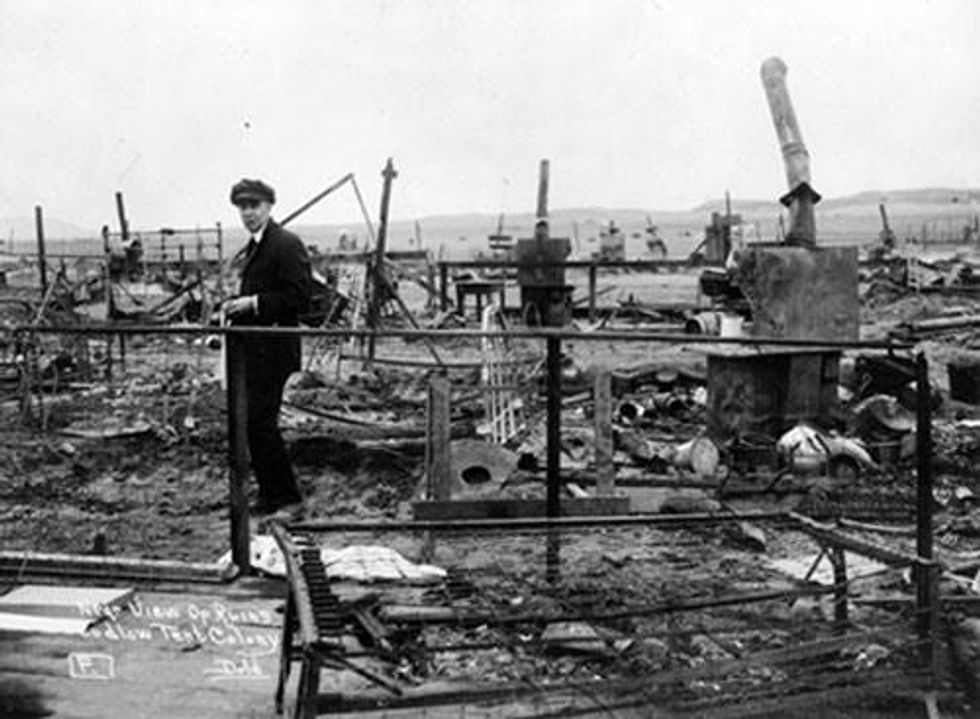
Rear view of ruins of tent colony.
Photo from Youtube video.
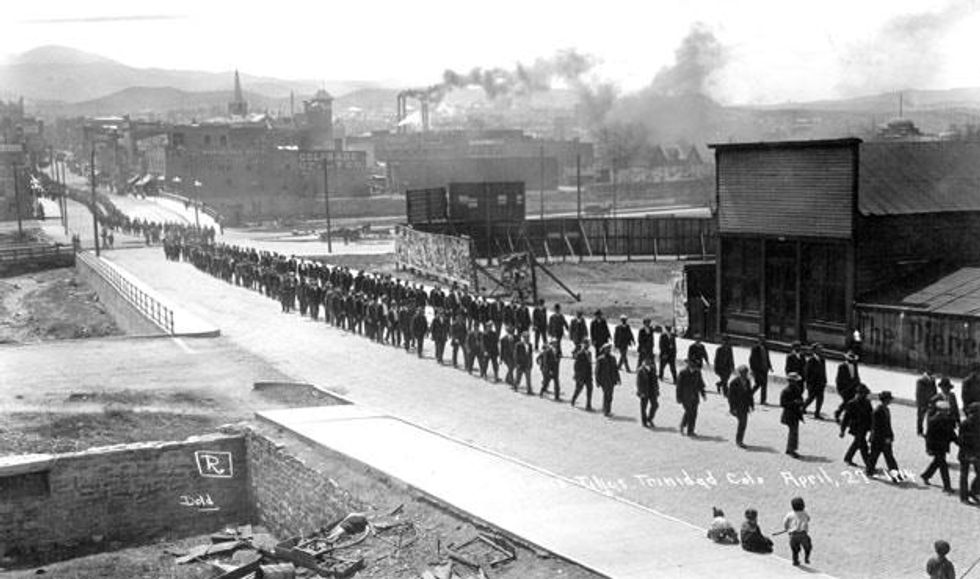
Funeral procession for Louis Tikas, leader of Greek strikers.
Photo from Youtube video.
The 10-Day War
The miners, fresh off the murders of their friends and family members, tried to get President Woodrow Wilson to put a stop to the madness, but he deferred to the governor, who was pretty much in the pocket of the mine companies.
So the miners and those at other tent colonies quickly armed themselves, knowing that many other confrontations were coming. And they went to the mines that were being operated by scabs and forced many of them to close, sometimes setting fire to the buildings. After 10 days of pitched battle and at least 50 dead, the president finally sent in the National Guard, which promptly disarmed both sides.
Union Victory
While close to 200 people died over the course of about 18 months before and after the battles at Ludlow and the union ultimately lost the election, the Ludlow Massacre brought a congressional investigation that led to the beginnings of child-labor laws and an eight-hour workday, among other things.
But it also brought national attention to the plight of these miners and their families, and it showed the resilience and strength that union people could display when they remained united, even in the face of extreme corporate and government violence. Historian Howard Zinn called it "the culminating act of perhaps the most violent struggle between corporate power and laboring men in American history." And the primary mine owner, John D. Rockefeller Jr., received a lot of negative attention and blame for what happened here.
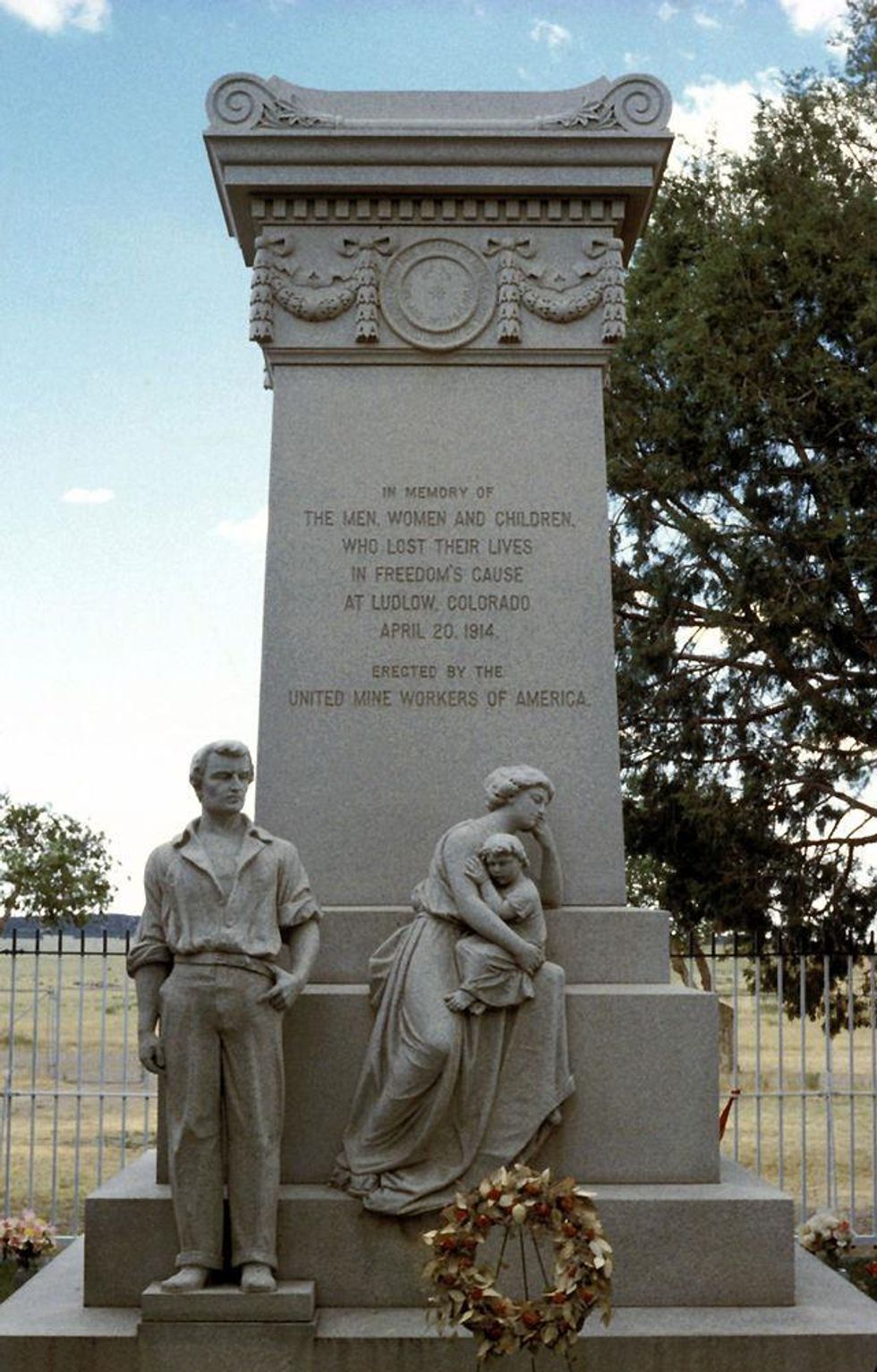
The UMWA is still a solid union today, and there is a monument in Colorado to those who died in the Ludlow Massacre.
Image by Mark Walker/Wikimedia Commons.
This article was written by Brandon Weber and originally appeared on 08.14.14
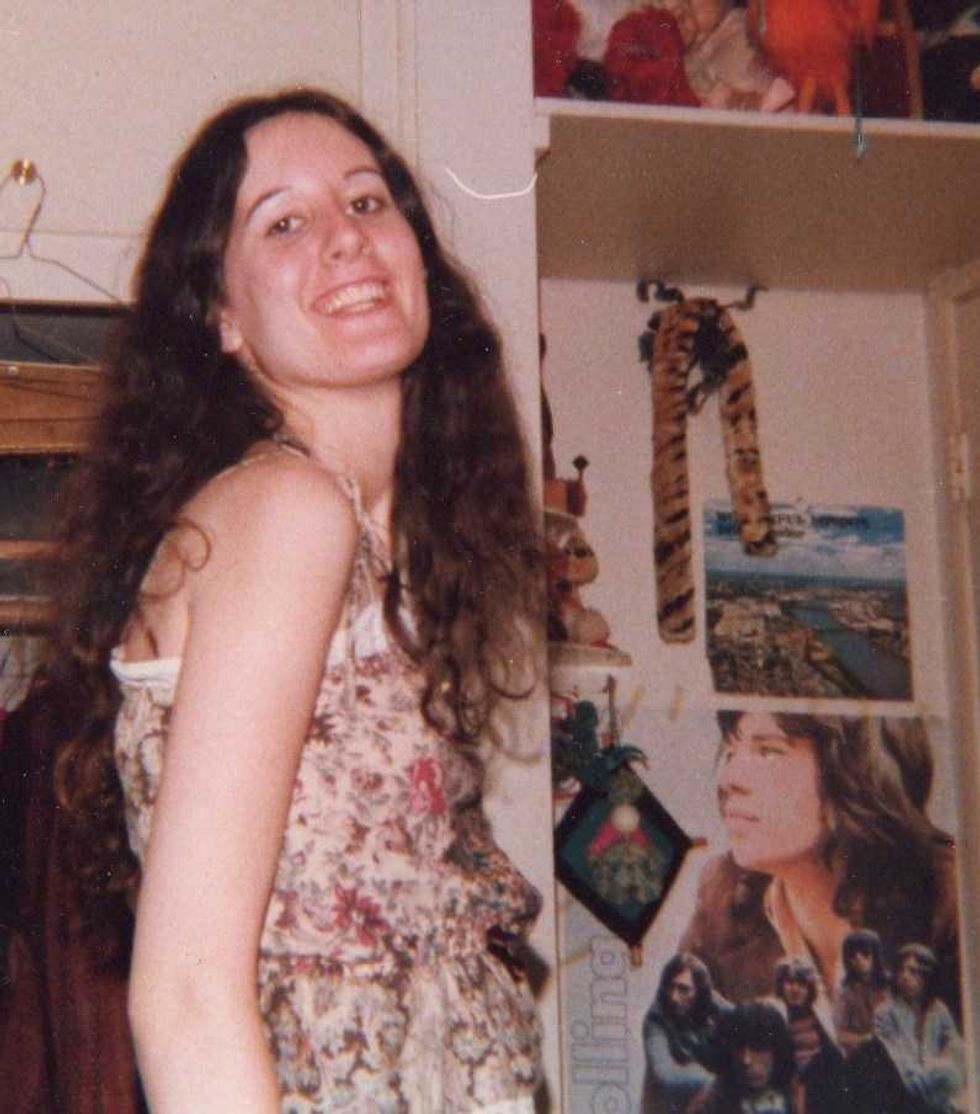 A Generation Jones teenager poses in her room.Image via Wikmedia Commons
 An office kitchen.via
  An angry man eating spaghetti.via
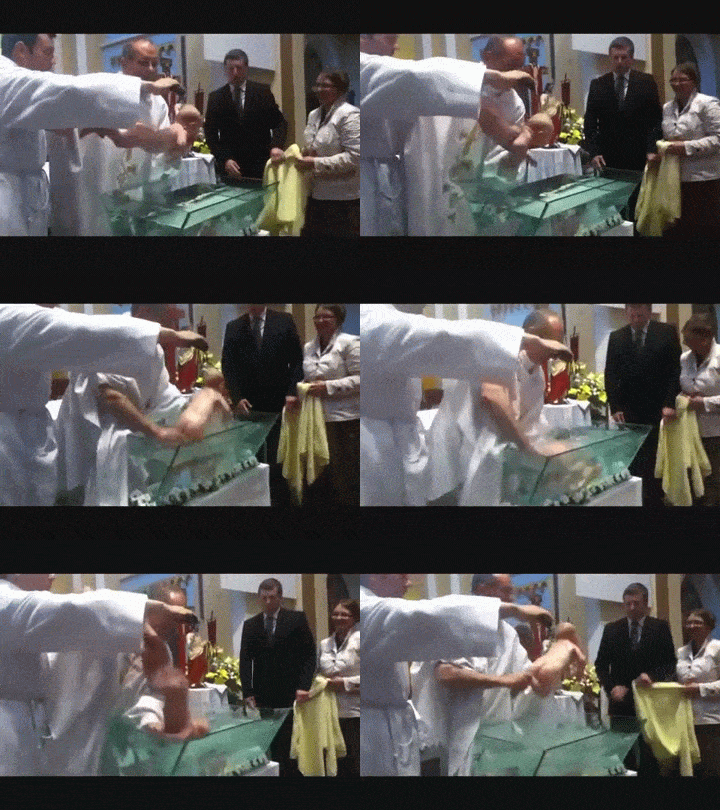 Gif of baby being baptized
 Woman gives toddler a bath Canva


An Irish woman went to the doctor for a routine eye exam. She left with bright neon green eyes.
It's not easy seeing green.
Did she get superpowers?
Going to the eye doctor can be a hassle and a pain. It's not just the routine issues and inconveniences that come along when making a doctor appointment, but sometimes the various devices being used to check your eyes' health feel invasive and uncomfortable. But at least at the end of the appointment, most of us don't look like we're turning into The Incredible Hulk. That wasn't the case for one Irish woman.
Photographer Margerita B. Wargola was just going in for a routine eye exam at the hospital but ended up leaving with her eyes a shocking, bright neon green.
At the doctor's office, the nurse practitioner was prepping Wargola for a test with a machine that Wargola had experienced before. Before the test started, Wargola presumed the nurse had dropped some saline into her eyes, as they were feeling dry. After she blinked, everything went yellow.
Wargola and the nurse initially panicked. Neither knew what was going on as Wargola suddenly had yellow vision and radioactive-looking green eyes. After the initial shock, both realized the issue: the nurse forgot to ask Wargola to remove her contact lenses before putting contrast drops in her eyes for the exam. Wargola and the nurse quickly removed the lenses from her eyes and washed them thoroughly with saline. Fortunately, Wargola's eyes were unharmed. Unfortunately, her contacts were permanently stained and she didn't bring a spare pair.
- YouTube youtube.com
Since she has poor vision, Wargola was forced to drive herself home after the eye exam wearing the neon-green contact lenses that make her look like a member of the Green Lantern Corps. She couldn't help but laugh at her predicament and recorded a video explaining it all on social media. Since then, her video has sparked a couple Reddit threads and collected a bunch of comments on Instagram:
“But the REAL question is: do you now have X-Ray vision?”
“You can just say you're a superhero.”
“I would make a few stops on the way home just to freak some people out!”
“I would have lived it up! Grab a coffee, do grocery shopping, walk around a shopping center.”
“This one would pair well with that girl who ate something with turmeric with her invisalign on and walked around Paris smiling at people with seemingly BRIGHT YELLOW TEETH.”
“I would save those for fancy special occasions! WOW!”
“Every time I'd stop I'd turn slowly and stare at the person in the car next to me.”
“Keep them. Tell people what to do. They’ll do your bidding.”
In a follow-up Instagram video, Wargola showed her followers that she was safe at home with normal eyes, showing that the damaged contact lenses were so stained that they turned the saline solution in her contacts case into a bright Gatorade yellow. She wasn't mad at the nurse and, in fact, plans on keeping the lenses to wear on St. Patrick's Day or some other special occasion.
While no harm was done and a good laugh was had, it's still best for doctors, nurses, and patients alike to double-check and ask or tell if contact lenses are being worn before each eye test. If not, there might be more than ultra-green eyes to worry about.