It's Black History Month and there's a good reason why we celebrate it in February

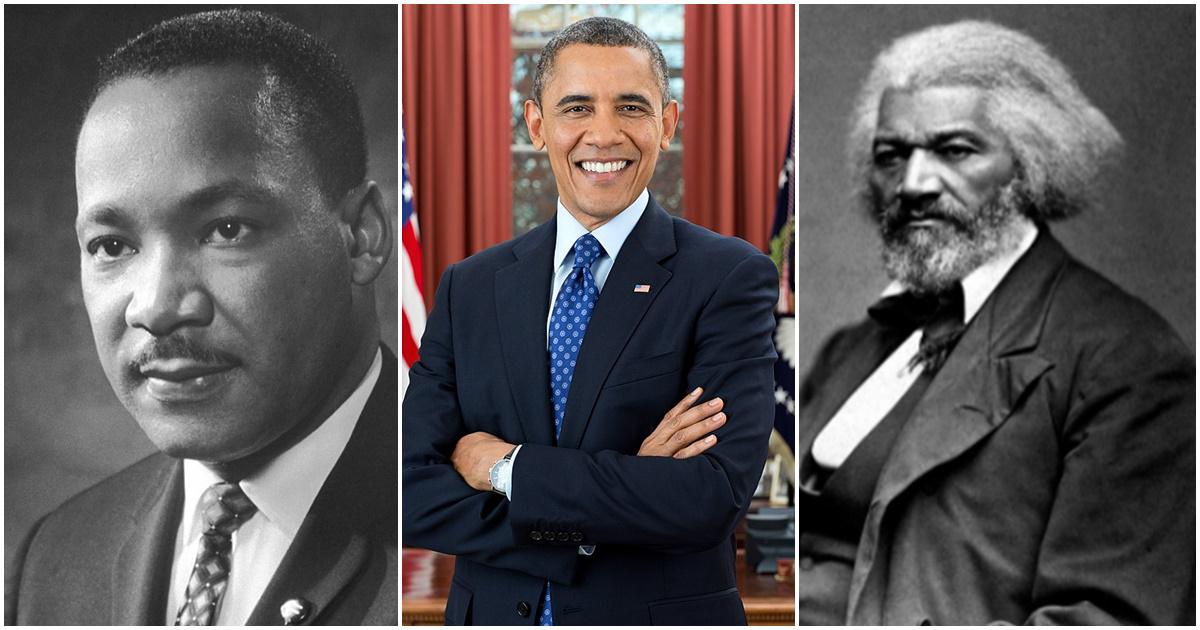
Dr. Martin Luther King, Jr., Barack Obama, Frederick Douglass
Comedian Chris Rock once famously joked that Black History Month is in February because it’s the “shortest month of the year, and the coldest—just in case we want to have a parade.” Given the lessons that come with studying Black history, it’s not too far-fetched to believe Rock’s explanation.
However, there are in fact two very important reasons why the month was chosen and they have nothing to do with the weather or parades, and everything to do with the abolition of slavery.
Long before Black History Month was established, Black people would often celebrate the emancipation of the slaves in February because it was the month that abolitionist Frederick Douglass and President Abraham Lincoln were born.
Lincoln was born on the 12th and Douglass’ actual birthday was never recorded, but he celebrated it on the 14th.
Douglass was an escaped slave who became a prominent activist, author, public speaker and leader in the abolitionist movement. President Lincoln paved the way for the 13th Amendment, which outlawed slavery.
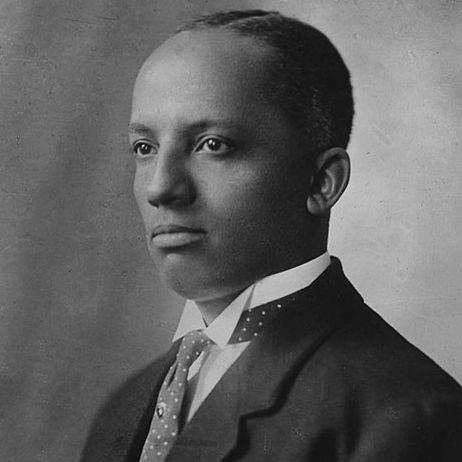
Carter G. Woodson
The push for what would become Black History Month started in 1915 when Harvard-educated historian Carter G. Woodson attended a 50th-anniversary celebration of the 13th Amendment. The three-week-long event featured various exhibits about the history of Black culture in America. The event inspired Woodson to form the Association for the Study of Afro-American Life and History (ASALH) and write a book “The Journal of Negro History.”
In 1924, Woodson’s fraternity created Negro Achievement Week. Over the next few decades communities across the country began to celebrate what evolved into Negro History Week and the ASALH expanded the idea to become Black History Month.
In 1976, President Ford made it official declaring February Black History Month, and asked Americans to "seize the opportunity to honor the too-often neglected accomplishments of Black Americans in every area of endeavor throughout our history."
The 2022 Black History Month theme is Black Health and Wellness. This focus celebrates the contributions and breakthroughs of Black professionals as well as to “nontraditional” health and wellness practitioners.
President Barack Obama made a speech in 2016 about why we celebrate Black History Month and he did a great job at encapsulating why and how it should be celebrated. Obama’s speech at the White House—a building built by slaves—is a testament to one of the central messages behind the month. We celebrate Black History Month to learn from our past to build a better future.
"Black History Month shouldn’t be treated as though it is somehow separate from our collective American history, or somehow just boiled down to a compilation of greatest hits from the March on Washington, or from some of our sports heroes," President Obama said.
"It’s about the lived, shared experience of all African Americans, high and low, famous and obscure, and how those experiences have shaped and challenged and ultimately strengthened America. It’s about taking an unvarnished look at the past so we can create a better future. It’s a reminder of where we as a country have been so that we know where we need to go."
- This hilarious skit about race from 'SNL' last season should be ... ›
- Lunar New Year gets funky—watch this amazing Asian dance group ... ›
- Celebrate Black History Month at Upworthy market by supporting local Artisans—save $7 with code IMPACT7 - Upworthy ›
- There are plenty of things to celebrate about Black Wall Street that you maybe didn't know - Upworthy ›
- Google celebrates 'Toni' Stone ›
- Google celebrates 'Toni' Stone - Upworthy ›
- Have you ever heard of the Ludlow Massacre? You might be shocked when you see what happened. - Upworthy ›
- Last witness to Lincoln assasination was on TV - Upworthy ›
- What is the Ludlow Massacre? - Upworthy ›


A woman is getting angry at her coworker.via
A man with tape over his mouth.via
A husband is angry with his wife. via 
a man sitting at a desk with his head on his arms Photo by
Can a warm cup of tea help you sleep better? If you believe it, then yes. Photo by 
Three women sit on a blanket in the park. 
Two women engaging in a pleasant conversation inside a coffee shop
Two men engaging in a peaceful disagreement.
Resurfaced video of French skier's groin incident has people giving the announcer a gold medal
"The boys took a beating on that one."
Downhill skiing is a sport rife with injuries, but not usually this kind.
A good commentator can make all the difference when watching sports, even when an event goes smoothly. But it's when something goes wrong that great announcers rise to the top. There's no better example of a great announcer in a surprise moment than when French skier Yannick Bertrand took a gate to the groin in a 2007 super-G race.
Competitive skiers fly down runs at incredible speeds, often exceeding 60 mph. Hitting something hard at that speed would definitely hurt, but hitting something hard with a particularly sensitive part of your body would be excruciating. So when Bertrand slammed right into a gate family-jewels-first, his high-pitched scream was unsurprising. What was surprising was the perfect commentary that immediately followed.
This is a clip you really just have to see and hear to fully appreciate:
- YouTube youtu.be
It's unclear who the announcer is, even after multiple Google inquiries, which is unfortunate because that gentleman deserves a medal. The commentary gets better with each repeated viewing, with highlights like:
"The gate the groin for Yannick Bertrand, and you could hear it. And if you're a man, you could feel it."
"Oh, the Frenchman. Oh-ho, monsieurrrrrr."
"The boys took a beating on that one."
"That guy needs a hug."
"Those are the moments that change your life if you're a man, I tell you what."
"When you crash through a gate, when you do it at high rate of speed, it's gonna hurt and it's going to leave a mark in most cases. And in this particular case, not the area where you want to leave a mark."
Imagine watching a man take a hit to the privates at 60 mph and having to make impromptu commentary straddling the line between professionalism and acknowledging the universal reality of what just happened. There are certain things you can't say on network television that you might feel compelled to say. There's a visceral element to this scenario that could easily be taken too far in the commentary, and the inherent humor element could be seen as insensitive and offensive if not handled just right.
The announcer nailed it. 10/10. No notes.
The clip frequently resurfaces during the Winter Olympic Games, though the incident didn't happen during an Olympic event. Yannick Bertrand was competing at the FIS World Cup super-G race in Kvitfjell, Norway in 2007, when the unfortunate accident occurred. Bertrand had competed at the Turin Olympics the year before, however, coming in 24th in the downhill and super-G events.
As painful as the gate to the groin clearly as, Bertrand did not appear to suffer any damage that kept him from the sport. In fact, he continued competing in international downhill and super-G races until 2014.
According to a 2018 study, Alpine skiing is a notoriously dangerous sport with a reported injury rate of 36.7 per 100 World Cup athletes per season. Of course, it's the knees and not the coin purse that are the most common casualty of ski racing, which we saw clearly in U.S. skier Lindsey Vonn's harrowing experiences at the 2026 Olympics. Vonn was competing with a torn ACL and ended up being helicoptered off of the mountain after an ugly crash that did additional damage to her legs, requiring multiple surgeries (though what caused the crash was reportedly unrelated to her ACL tear). Still, she says she has no regrets.
As Bertrand's return to the slopes shows, the risk of injury doesn't stop those who live for the thrill of victory, even when the agony of defeat hits them right in the rocks.