upworthy
Add Upworthy to your Google News feed.
Google News Button
Most Shared

6 times something Jon Stewart said or did actually made a difference in the world

On more than one occasion, his influence was real.

"I'm not an activist, I'm a comedian."

Photo by Rick Kern/Getty Images.


For 16 years, Jon Stewart maintained that his only job is making people laugh. As for real-world influence? Well. As far as he's concerned, we're likely just imagining it.

For the most part, he's been right. Despite producing some of the most hilariously incisive television ever committed to air, "The Daily Show" is just a comedy show at the end of the day. And Jon Stewart was just the comedian who hosts it.

Mostly. But not always.

So here are six times something he said or did on TV actually made an impact in the world.

'Cause he's right. Mostly, he didn't change stuff. But the few times he actually did? Those moments were pretty great.

1. That time he got a terrible TV show cancelled

Thanks to a million breathless social media headlines, these days it has become cliché to say, "Jon Stewart destroyed X," or "Jon Stewart annihilated Y," or "Jon Stewart drop-kicked Z into the center of the sun."

But sometimes hyperbolic clichés are clichés for a reason.

And in this particular case, Jon Stewart actually, legitimately, for real destroyed CNN's "Crossfire."

If you weren't alive or paying attention in 2004, it's hard to express just how bad "Crossfire" was. But, oh, was it bad.

In the second year of a war fought under ever-thinner pretenses, in the midst of perhaps the most important election of the 21st Century, the signature show on America's "Most Trusted Name in News" was entirely devoted to pundits screaming at each other about which candidate looked lamer windsurfing.

And then, on October 15 of that year, just a few weeks before the election, Stewart appeared on "Crossfire." He was ostensibly there to promote his book, but instead, he spent nearly 15 minutes berating hosts Paul Begala and Tucker Carlson for cheapening the public discourse, letting themselves be rolled by politicians, and generally "hurting America."

"Crossfire" never recovered. Two-and-a-half months later, it was off the air. And then-CNN president Jonathan Klein straight-up told The New York Times that Jon Stewart's critique was a big reason why. The network subsequently tried to reboot the show with new hosts in 2013. Predictably, it failed miserably.

And America breathed a sigh of relief.

2. That time he got the U.S. government to pay health care costs for 9/11 first responders

9/11 marked a turning point for "The Daily Show" and Stewart, who, like many Americans, was visibly, personally shaken by the events of that day. It marked the show's sudden shift away from goofball comedy into a venue for the funniest, sharpest political commentary on TV.

As a result, in 2010, when Congress floated a bill to provide health care to 9/11 first responders, Stewart was plenty interested.

Like many others, he figured passing the bill would be a no-brainer.

Like many others, he was wrong.

Republicans refused to support the bill because paying for the program required increasing taxes on foreign corporations, and then, when their hand was forced, they tried to amend it to exclude undocumented immigrants.

Democrats refused to bring the bill to a traditional up-or-down vote, for fear that voting down the Republicans' undocumented immigrant amendment would make them look soft on immigration.

It was a stunning display of political cravenness. And a Stewart let them have it.

Somehow, some way, his rant flipped a light on somewhere in Congress. About a month later, the bill passed the House.

Then, when it looked like it was on track to be filibustered in the Senate, Stewart devoted his entire last show of the year to the bill. He even convened a panel of 9/11 first responders who, predictably, savaged Congress for its inaction.

The bill passed the Senate just a few days later.

Ultimately, you could produce a long list of advocates, political leaders, and others who were responsible in some part for the bill's success.

But according to many of its most fervent supporters, Stewart's unyielding support was the real game changer.

3. That time he ridiculed Democrats for "taking advice from the opposing team's coaching staff"

After Massachusetts Republican Scott Brown was elected to Senator Ted Kennedy's old seat in a 2010 special election, the Democrats lost their supermajority in the Senate. They were in the middle of the initial debates around Obamacare, and without the supermajority, the Democrats feared the Republicans would filibuster the health care bill.

The Democrats were in — to use a bit of obscure political terminology — full-on freak-out mode. And, right on cue, their helpful Republican pals came out in full force to tell them how they could do better in the next election.

Specifically, "move to the center" and forget about their silly little health care plan, as well as a few of their other priorities.

While Democrats rushed to show how grateful they were for the advice by announcing their intent to water down their agenda, and possibly even give up on Obamacare, Stewart used the opportunity to politely point out that maybe — just maybe — the Republicans didn't exactly have the Democrats' best interests at heart.

Sort of, at least. What he actually said was: "Don't you get what the Republicans are doing? They're f**king with you."

Like many past "Daily Show" segments, Stewart's comments seemed to fly under the radar. But according to a report in Politico, the White House was actually paying attention and felt appropriately shamed:

"[Obama advisor Austan] Goolsbee said he would often wince at Stewart's assaults on the Obama White House and Capitol Hill Democrats. He recalled one particularly tough January 2010 episode in which Stewart used a clip from the 1980s TV show 'The Wonder Years' to question why Democrats ever expected Republicans to negotiate in good faith on issues from climate change to taxes to financial reform. 'You're just cringing,' Goolsbee said. 'Oh God. I think the main thing that you're hoping is, you're hoping in your heart of hearts he's not right.'"

At the end of the day, they took Stewart's advice. Congressional Democrats stood firm and Obamacare passed.

And judging by the mounting quantity of IDGAF moments in Obama's second term, it seems like they're continuing to follow his advice.

It appears to be working out pretty well for them, too.

4. That time he made it much easier for veterans who live in rural areas to see a doctor

By late 2014, wait times at VA hospitals had become unbearable for many veterans. In order to help rectify this, Congress instituted the Veteran's Choice program, which allowed veterans to see doctors at non-VA hospitals. The catch? In order to be eligible, veterans either had to demonstrate that they had waited at least 30 days for care or live at least 40 miles "as the crow flies," away from the nearest VA facility, rather than 40 miles actual driving distance.

As a result, many veterans who should have been covered by the program weren't. And the most infuriating part? It was specifically designed that way to save money. Or, as Stewart put it, "dicking over veterans isn't a bug of the program, it's a feature of the program."

The very next day after "The Daily Show" segment aired, the VA adjusted the rule from imaginary crow distance back to driving distance, doubling the number of veterans who could use Veteran's Choice.

As usual, Stewart was skeptical that his segment led to the change, but considering the hotness of the fire he spit, it's more than a little bit likely that it had an impact.

5. Those times he joked, sang, and danced to raise money for people with autism

In addition to his gig as chief riffer on quick-cut cable news montages on "The Daily Show," Stewart is also the frequent host of "Night of Too Many Stars," a fundraiser that benefits New York Collaborates for Autism. According to Comedy Central, since it began in 2006, the event has raised over $18 million for adults and children with autism.

Not only is the program good for the Earth, it's also entertaining as hell, thanks in no small part to Stewart's involvement.

Example: This near-perfect musical moment from 2010, featuring Stewart and two obscure comedians from the early days of "The Daily Show" wearing pilot hats and starting a new dance craze.

6. That time he got more than 200,000 people to stand outside for hours in Washington, D.C., and listen appreciatively to Kid Rock

"The Rally to Restore Sanity and/or Fear" was kind of a ludicrous idea, in retrospect. Gathering a massive group of people on the Washington Mall to unite behind the cause of civility and calming down? To parody something Glenn Beck did? Five years later, it's kind of hard to imagine how it all came together.

But for three hours in 2010, it all made so much sense.

There have been criticisms of the rally, for sure: for being an exercise in narcissism, for missing the big picture, and for being tantamount to telling people not to care. And those criticisms are all valid — to some extent.

But in a certain sense, the rally was peak Jon Stewart. An absurd, hilarious, joyful, tearful spectacle devoted to us all getting along.

What could be wrong with that?

Especially for D.C.'s food truck operators, who undoubtedly raked it in all afternoon.
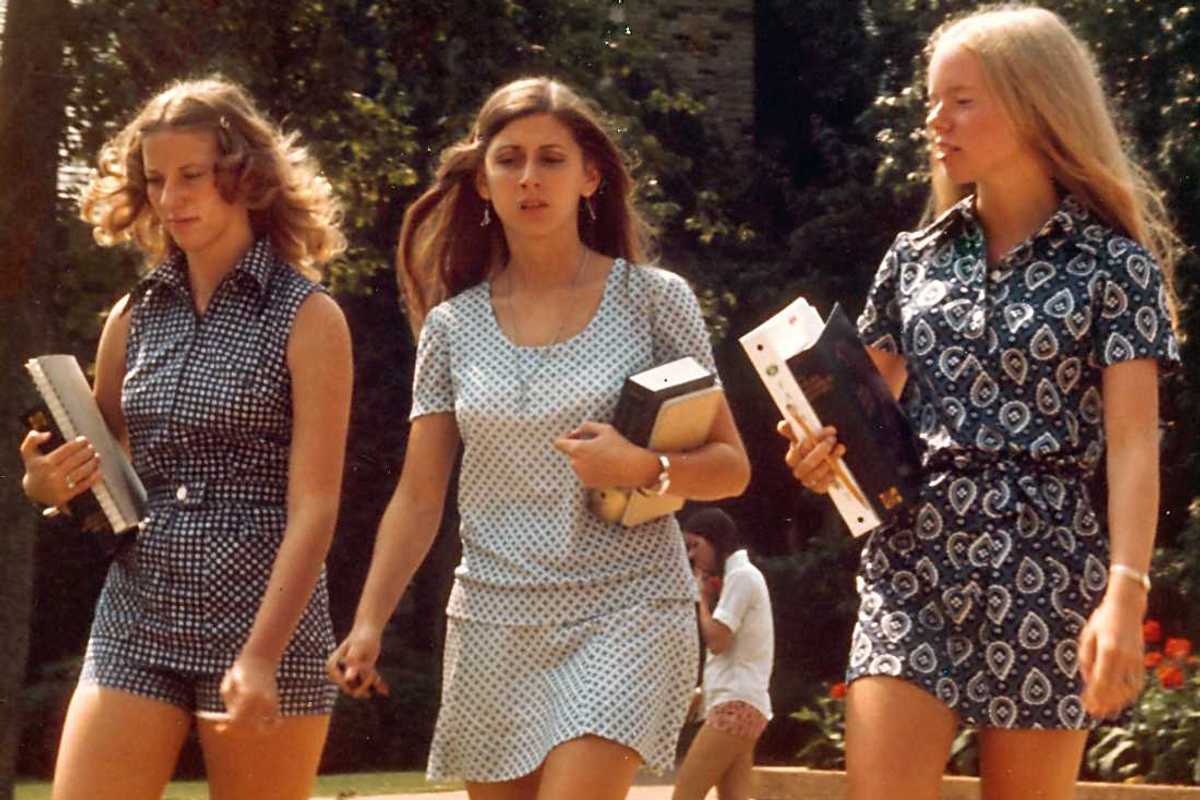
boomer grandparents, boomer grandparent, millennial parents, millennial parent, grandkids
Image via Canva/PeopleImages

Boomer grandparents are excessively gifting their grandkids, and Millennial parents have had enough.

Millennial parents and Boomer grandparents don't always see eye to eye on parenting and grandparenting. Now, Millennial parents are uniting on a nightmare Boomer grandparenting trend that sees them "excessively gifting" their grandkids with tons of both new and old *unwanted* stuff during visits.

Ohio mom Rose Grady (@nps.in.a.pod) shared her "Boomer grandparent" experience in a funny and relatable video. "Just a millennial mom watching her boomer parents bring three full loads of 'treasures' into her home," she wrote in the overlay.


Grady can be seen looking out the window of her home at her Boomer mom and dad carrying bags and boxes up her driveway after several visits. The distressed and contemplative look on Grady's is speaking to plenty of Millennial moms.

@nps.in.a.pod

Today's "treasure" highlight was the mobile that hung in my nursery... #boomerparents #boomers #boomersbelike #millennialsoftiktok #millenialmom #motherdaughter

Grady captioned the video, "Today's 'treasure' highlight was the mobile that hung in my nursery..."

The humorous video resonated with with fellow Millennial parents. "Straight to the trash when they leave," one viewer commented. Another added, "I always say 'if you don’t want it in yours, we don’t want it in ours' 😂."

Even more Millennial parents have shared and discussed their situations with Boomer grandparents buying their kids too much stuff on Reddit. "Both my mother and my MIL love buying and sending toys, books, clothes, etc. I don't want to be ungrateful but we just don't need it and don't have the space. I have brought this up politely in 'we are all out of drawers for that' but it hasn't slowed things down," one explained. "I think part of the issue is that the grandparents live in different cities and vacation a lot. They don't get to see our daughter much so they buy stuff instead."

Another Millennial parent shared, "While the intention is very kind behind these, all the grandparents are very aware that we do not need, nor wish to receive these gifts in such an excessive volume - as it creates a daily struggle to store and accommodate in our home. I struggle to keep on top of tidying as it is, and this is a massive added challenge."

millennial parents, millennial parent, millennial mom, kids room, organize Millennial mom struggles to organize her son's room.Image via Canva/fotostorm

How to talk to Boomer grandparents about gifts

So, why are Boomer grandparents excessively gifting? "Boomer grandparents may be the first grandparent generation to have accumulated the substantial discretionary funds that enables them to spend money on their grandchildren," Sari Goodman, a Certified Parent Educator and founder of Parental Edge, tells Upworthy. "These grandparents probably grew up with grandparents who didn’t have that kind of money and so they may be excited to give their grandchildren the things they didn’t get."

Goodman suggests that Millennial parents first discuss with them the "why" behind the gifting. "What comes before setting a boundary to limit over-the-top gift-giving is delving into the reasons grandparents are buying so much," she explains. "Coming from a place of compassion and understanding makes it possible to come up with mutually beneficial solutions."

- YouTube www.youtube.com

She recommends that Millennial parents sit down with their Boomer parents to learn more. "Did they grow up without many toys and clothes and are fulfilling a dream? Ask them about the values they learned as children (hard work, perseverance, the power of delayed gratification) and how they can pass on these lessons to the grandchildren," she suggests.

She adds that another reason may be that Boomer grandparents live far away and want their grandchildren to feel a connection with them. "Set up a regular FaceTime or Zoom meeting. Rehearse with the kids so they have something to say and suggest a topic for the grandparents," says Goodman. "Or send snail mail. Kids love getting mail. The grandparents can send postcards from where they live and explain some of the special sites."

boomer grandparents, boomer grandparenting, video chat, video call, grandkids Boomer grandparents have a video call with grandkids.Image via Canva/Tima Miroshnichenko

Finally, Goodman adds that for some grandparents, this may be is the only way they know how to show their love. Millennial parents could ask if they would be open to other ideas. "Parents can set up an activity for grandparents and kids to do when they come over—a jigsaw puzzle, art activity, board game, magic tricks," she says. "Arrange for the grandchildren to teach the grandparents something their phones can do or introduce them to an app they might like."

This article originally appeared last September

words, overused words, therapy speak, 2025 slang, filler words, retired phrases, ask reddit, 2026 slang,

No one is gonna miss '6 7.'

It’s pretty customary for humans to collectively latch on to certain words or phrases for a time, only to grow tired of them once the trendiness wears off. That’s by and large how we get generational slang in the first place. One man’s “rad” is another man’s “bussin.” The linguistic circle of life, as it were. `

But the rapidity of social media has certainly seemed to make this turnover move at the speed of light, hasn’t it? It takes a fraction of the time for words to get overused, misused, change meaning, and lose meaning altogether.


That’s probably why when someone on Reddit asked, “What overused word or phrase needs to be retired in 2026?” there was no shortage of passionate answers. From warped psychology terms to nonsensical Gen Alpha brainrot words, people delivered.

Keep scrolling for our favorites.

Sensational journalism words

1. ’Slammed’ by the news.”

2. “Also while we're at it, ‘bombshell,’ ‘destroyed,’ ‘meltdown,’ and ‘disaster.’"

3. “Blasted. Clap back.”

“Those are telltale signs that what you're about to read is heavily biased and was written to evoke emotions instead of giving just the facts so it's basically trash.

Therapy speak

4. “Gaslighting. People love to use this term wrong. It doesn't mean ‘lying,’ it means ‘manipulating somebody into believing they're crazy.’ That involves lying, but they're not the same thing. Also every term invented to get around TikTok censors. ‘Unaliving,’ ‘graped,’etc.”

5. “Calling anyone who does anything slightly annoying a narcissist.”

6. “Similarly, anytime someone feels just a little proud of themselves for something and/or compliments themselves, it's ‘ego.’ Not hating and constantly putting yourself down isn't ego. It's healthy.”

7. “Trauma.You don’t have trauma from the Starbucks barista mispronouncing your name, Djoeffreigh. And if you do, I am not interested in hearing about it.”


Aggressively passive-aggressive phrases


8. "People who use ‘the ick,’ ironically enough, give me the ick. Now I've given it to myself.”

9. “Thank you for your attention to this matter.”

10. “Louder for the people in the back.”

11. “‘Let that sink in.’ ‘Read that again but slowly.’ ‘I don’t know who needs to hear this, but…’”

12. "‘Just saying’ after being very aggressive.”


Social media buzzwords and phrases that have been run into the ground

13. '''Let's normalize this.' please no.”

14. “Tell me you’re Y without saying it.”

15. “I’m begging people to stop saying’"its giving.’"

16. “I’m literally obsessed”

17. “X lives rent free.”

18. “That’s iconic, she’s iconic, they’re iconic.”

19. “Today years old”


Weird, cutesy parenting terms

20. "Boy mom"

21. “I also hate ‘littles."


Words that do not mean what people think they mean

22. “'Underrated'. Sick of seeing ‘OMG! This band/singer/guitarist/drummer is so underrated’ when they're clearly millionaires from the musical success they've enjoyed for years.”

23. “‘My truth.’ I like this one because it lets me know the next words out of their mouth are going to be bullshit.”

24. “According to AI.”


Phrases that kids today use that all us olds hate

25. “The grandkids are slowing down on 6 7 (FINALLY), and I haven’t heard them say ‘sigma’ for a while, so HOPEFULLY those are both going away forever!!

26. “‘Lowkey’ we’ve run it into the ground.”

“The new ‘literally.”

“Omg it's low key every second word my teen says.”

And finally…


Words that have lost their original meaning due to overuse

27. "‘Absolute game changer .’ I do product reviews, and I want to smack people for this one. Everything is a ‘game changer’ or a ‘holy grail.’ Bullshit, it is. That 5 star game changer is usually an overpriced piece of crap lol.”

the great depression; Florence Thompson; Mona Lisa of the Great Depression; Mona Lisa; the depression; depression era
Photo by Dorothea Lange via Library of Congress
The woman from the famous Great Depression photo didn't know about her fame for 40 years.

It's one of the most iconic and haunting photos of all time, up there with the likes of Hindenburg, The Falling Soldier, Burning Monk, Napalm Girl, and many others. It's called simply Migrant Mother, and it paints a better picture of the time in which it was taken than any book or interview possibly could.

Nearly everyone across the globe knows Florence Owens Thompson's face from newspapers, magazines, and history books. The young, destitute mother was the face of The Great Depression, her worried, suntanned face looking absolutely defeated as several of her children took comfort by resting on her thin frame. Thompson put a human face and emotion behind the very real struggle of the era, but she wasn't even aware of her role in helping to bring awareness to the effects of the Great Depression on families.


It turns out that Dorothea Lange, the photographer responsible for capturing the worry-stricken mother in the now-famous photo, told Thompson that the photos wouldn't be published.

Of course, they subsequently were published in the San Francisco News. At the time the photo was taken, Thompson was supposedly only taking respite at the migrant campsite with her seven children after the family car broke down near the campsite. The photo was taken in March 1936 in Nipomo, California when Lange was concluding a month's long photography excursion documenting migrant farm labor.

the great depression; Florence Thompson; Mona Lisa of the Great Depression; Mona Lisa; the depression; depression era Worried mother and children during the Great Depression era. Photo by Dorthea Lange via Library of Congress

"Migrant worker" was a term that meant something quite different than it does today. It was primarily used in the 30s to describe poverty-stricken Americans who moved from town to town harvesting the crops for farmers.

The pay was abysmal and not enough to sustain a family, but harvesting was what Thompson knew as she was born and raised in "Indian Territory," (now Oklahoma) on a farm. Her father was Choctaw and her mother was white. After the death of her husband, Thompson supported her children the best way she knew how: working long hours in the field.

"I'd hit that cotton field before daylight and stay out there until it got so dark I couldn't see," Thompson told NBC in 1979 a few years before her death.

the great depression; Florence Thompson; Mona Lisa of the Great Depression; Mona Lisa; the depression; depression era A mother reflects with her children during the Great Depression. Photo by Dorthea Lange via Library of Congress

When talking about meeting Thompson, Lange wrote in her article titled "The Assignment I'll Never Forget: Migrant Mother," which appeared in Popular Photography, Feb. 1960, "I saw and approached the hungry and desperate mother, as if drawn by a magnet. I do not remember how I explained my presence or my camera to her, but I do remember she asked me no questions. I made five exposures, working closer and closer from the same direction. I did not ask her name or her history. She told me her age, that she was thirty-two. She said that they had been living on frozen vegetables from the surrounding fields, and birds that the children killed."

Lange goes on to surmise that Thompson cooperated because on some level she knew the photos would help, though from Thompson's account she had no idea the photos would make it to print. Without her knowledge, Thompson became known as "The Dustbowl Mona Lisa," which didn't translate into money in the poor family's pocket.

In fact, according to a history buff who goes by @baewatch86 on TikTok, Thompson didn't find out she was famous until 40 years later after a journalist tracked her down in 1978 to ask how she felt about being a famous face of the depression.

@baewatch86

Florence Thompson, American Motherhood. #fyppppppppppppppppppppppp #historytok #americanhistory #migrantmother #thegreatdepression #dorthealange #womenshistory

It turns out Thompson wished her photo had never been taken since she never received any funds for her likeness being used. Baewatch explains, "because Dorothea Lange's work was funded by the federal government this photo was considered public domain and therefore Mrs. Florence and her family are not entitled to the royalties."

While the photo didn't provide direct financial compensation for Thompson, the "virality" of it helped to feed migrant farm workers. "When these photos were published, it immediately caught people's attention. The federal government sent food and other resources to those migrant camps to help the people that were there that were starving, they needed resources and this is the catalyst. This photo was the catalyst to the government intercepting and providing aid to people," Baewatch shares.

- YouTube www.youtube.com

As for Lange, Migrant Mother was not her only influential photograph of the Great Depression. She captured many moving images of farmers who had been devastated by the Dust Bowl and were forced into a migrant lifestyle.

"Broke, baby sick, and car trouble!" is just one of her many incredible photos from the same year, 1937.

She also did tremendous work covering Japanese internment in the 1940s, and was eventually inducted into the International Photography Hall of Fame and Museum and the National Women's Hall of Fame.

the great depression; Florence Thompson; Mona Lisa of the Great Depression; Mona Lisa; the depression; depression era Families on the move suffered enormous hardships during The Great Depression.Photo by Dorthea Lange via Library of Congress

Thompson did find some semblance of financial comfort later in life when she married a man named George Thompson, who would be her third husband. In total, she had 10 children. When Thompson's health declined with age, people rallied around to help pay her medical bills citing the importance of the 1936 photo in their own lives. The "Migrant Mother" passed away in 1983, just over a week after her 80th birthday. She was buried in California.

"Florence Leona Thompson, Migrant Mother. A legend of the strength of American motherhood," her gravestone reads.

toddler, redhead, cheesehead, cheese lover, viral video
Courtesy of @verityandsuns/Instagram (used with permission)

Asa really, really, really loves cheese.

Judging by the number of people who say things like, "I could totally be vegan if I didn't have to give up cheese," it's safe to say that cheese is favorite staple among the general population. Apparently, Americans in particular are big cheese fans, with the U.S. alone producing a whopping 523 varieties of cheese and 96% of Americans saying they consume cheddar cheese regularly.

But perhaps no one is as big a fan of cheese as a toddler named Asa, whose heartbroken reaction to having his cheese shreds taken away has people crowning the wee one King Cheesehead and begging for his mom to give the not-yet-2-year-old all the cheddar he wants. Though he only says the word "cheese," he manages to take viewers on an entire emotional journey in this video with over 18 million views:


With some combination of "Yeah, same, kid," and "Give that boy all the cheese his heart desires," the consensus was loud in the comments:

"That is not a tantrum cry, that is true pain. 😭"

"Oddly enough, I have the same reaction."

"Me too, bud. Me too."

"That’s a normal human reaction when cheese is taken from anyone. If you don’t react like this, I’d be concerned."

"Don’t you ever take the cheeeeee again from my little ginger baby!!!!"

"Internet Auntie here and I’m on the way Ginger."

"Ready to send the U.S. military after mom."

"DON'T MAKE THIS PAWPAW COME OVER THERE!!😡😡 Quit messin' with that baby's cheese!😍"

cheese, cheese lover, wallace and gromit, crackers about cheese, cheesehead Wallace And Gromit Cheese GIF Giphy

"The cheese police are on their way ma’am, taking away a precious angels cheese is a felony."

"I'm his lawyer and I can confirm you are indeed not allowed to confiscate his cheese again."

"Give him an Oscar. He just expressed Love, fear, pain, forgiveness and gratefulness only using one word 🫶. 'Cheeeeesee.'"

"His only lines are four 'cheese's but he won Academy Awards for Best New Actor already. 🥰"

This is not Asa's only viral cheese experience, by the way. Like the true cheese lover he is, he also represented his fellow cheddar heads by demonstrating a perfect example of "cheese rage," the dairy equivalent of "cute aggression." It just builds and builds until his little body can't contain it.


And now Asa has a die-hard fan base of followers who relate to his cheese obsession.

"I’ve never met someone who MAY, in fact, like cheese more than me. 😂"

"Someone called him RON CHEESELY on the viral cheese reel and I can only think of that name every time I see him. He’s so adorable. I hope Santa brings him lots of cheese this Christmas."

"Cheese Baby™️ brings me so much joy. And evidently the whole world. Please give him lots of hugs 🫂"

"Love it! My husband just heard it too and came running in - is it a new cheese baby video?!! Wishing you all the best for the festive season - and thanks for sharing the cheese love. It makes so many of us smile! 😁"

"I watch every video of my new cheese nephew at least 42,458 times. He looks SO much like my little brother when he was little! Please let us gather and pray to the cheese baby mother so we can continue to be gifted with more cheese baby videos! ❤️❤️❤️"

"The Cheese council should make this cute guy their spokesman. Every video of him I watch makes me want to eat some."

"He needs to be paid for all the promoting of cheese. My whole family just keep saying cheeeeese. 🤣🤣"

What is it about cheese that makes it so delectable? It's hard to go wrong with fat and salt, of course, but some people have gone so far as to claim that cheese is addictive, largely due to a misreading of a 2015 study on food addiction and specific foods' impact on the brain. According to Houston Methodist, "There's no scientific evidence that cheese is addictive or that it significantly affects the brain similar to drugs or alcohol. That's not to say that eating cheese can't affect your brain's reward center, which may even cause you to crave it from time to time. But food cravings aren't the same as addictions. And they're also not specific to cheese."

Like all of us, Asa does eat other things besides cheese, of course. Check out his "charCUTErie" board meal:


Straight for the cheese first. Kiddo knows his priorities.

For more Cheese Baby videos, you can follow Asa's mom on Instagram.

couple fight, argument, upset woman, woman in sweatshirt, marriage

A woman can't stand what she's hearing.

Some folks in this world just have to be right. All the time. Even when you present them with every fact imaginable that proves they are wrong, they will resort to any rhetorical tactic they can to make it seem as though they are right. If that doesn't work, they turn to personal attacks.

People like this can be infuriating to deal with because talking to them is like screaming at a wall. Fortunately, communication expert Jefferson Fisher recently shared a two-step method on TikTok for dealing with these impossible people.


Fisher, who has become massively popular online, offers tips "to help people argue less and talk more."

@art_for_feeling

How to handle someone who is always right. 3 steps from @ Jefferson Fisher #power #insporation

Here is Fisher's two-step process for dealing with people who will never admit they are wrong:

Step 1. Diffuse the situation

"Know that the harder we work to prove that they're wrong, the more convinced they are that they're right," he says. "So what you're gonna do is diffuse that by just saying something simple as well, 'maybe you're right,' or 'maybe so.' That diffuses the whole situation."

Step 2. Open the conversation up

Fisher says you can encourage the other person to explore your ideas by saying: "'It's helpful for me to know that you're at least considering my thoughts, even if you don't agree with me.' Now you've made a safe space to have a discussion that's not threatening their identity. That's how you talk to somebody who thinks they're always right. So try that."

coffee, women having coffee, serious talk, women on couch, agreement Two woman having a heart-to-heart conversation. via Canva/Photos

Why identity matters

In his video, Fisher notes that people who won't admit when they are wrong have developed an identity based on always being correct. That's why, when they're confronted with the possibility that they may be incorrect, they will do anything to avoid admitting it.

Research shows that when people feel their identity is being attacked, they perceive it as an affront to their authenticity and value as human beings. This can lead to a physical reaction known as the amygdala hijack, where people feel as if they are being physically threatened. That's a big reason some people get enraged when discussing politics or religion. If their views on these issues are closely tied to their identity and those views are challenged, it can invalidate their entire sense of self.

angry, arms folded, angy man, won't listen, sneer A man who has dug in his heels. via Canva/Photos

The 'backfire effect'

Fisher explains that the harder we try to prove someone wrong, the more convinced they become they're right, due to a psychological phenomenon known as the "backfire effect." When people are shown facts that clearly contradict their views, they often cling to those beliefs even more strongly. That's because those beliefs are tied to emotion, not facts. When their views are challenged, it triggers defensiveness, and the brain works to protect their self-image rather than reconsider the belief.

Getting through to stubborn people who always think they're right isn't easy, but Fisher's advice can help break through the wall they erect when their beliefs are challenged. It's good for you and the other person. When you're never wrong, you never learn from your mistakes, and that can quickly lead to problems far worse than admitting you were wrong.