

A woman zipping up her lips.
There are times to speak up, moments when it’s best to say nothing, and opportunities be very considerate in your response. But when you’re on the receiving end of a back-handed compliment, a foolish remark, or a coworker takes you down a peg, and your emotions are up, it can be hard to have a thoughtful response. Often, we say something we shouldn’t.
How is it that some folks fly off the handle and say things they’ll later regret, while others can stay calm and remove themselves from the situation or take the high ground? One way to be less impulsive with your words is to use the “name it to tame it” neuroscience hack, originally coined by author and psychiatrist Dr. Dan Siegel. When used properly, it allows you to step back from the moment and choose the best response in a challenging situation.
 A man saying "be quiet."via Canva/Photos
How to use the ‘name it to tame it’ hack
When someone upsets you, the first thing to do is to go inside yourself and describe the emotion that you feel in your body. Are you angry? Are you sad? Are you afraid? Do you feel rejected? Are you disappointed? The moment you name the emotion, it will begin to subside and give you the emotional and mental room to respond to the person who caused the negative emotion, rather than impulsively reacting.
How to respond to a reactive emotion so you don’t fly off the handle:
Event happens:
1. Your body stiffens up
2. You feel an intense emotion
3. You examine the emotion and give it a name: “My body is telling me I am angry.”
4. You should feel the emotion beginning to subside
5. Choose your response instead of being impulsive
 A woman zipping up her mouth.via Canva/Photos
Why does ‘name it to tame it’ work?
“Name it to tame it” works because, when we have a strong emotional reaction, our lizard brain kicks in, and we go into fight, flight, or freeze mode. The lizard brain is not known for giving thoughtful and strategic responses to challenging situations. When we name the emotion, our prefrontal cortex, or the thinking brain, kicks in. The thinking brain looks at the situation and says, “Alright, we don’t need to run or fight here. It's best to give a strategic response.”
When we tune into the negative emotions by naming them, they relax because they feel heard, like when a child has hurt their knee or a loved one has real concern and you gives them undivided attention. Once the emotions are named, they are tamed. Then, you are more likely to respond to the negative person with grace and speak from the best part of yourself.
Dr. Dan Siegel, who coined the phrase “Name it to tame it,” explains the brain science behind the technique in the video below. He does a great job of explaining how it allows us to transfer our thoughts from the downstairs brain (the lizard brain) to the upstairs brain (the thinking brain), so we can calm down and respond appropriately to the situation.
- YouTube www.youtube.com

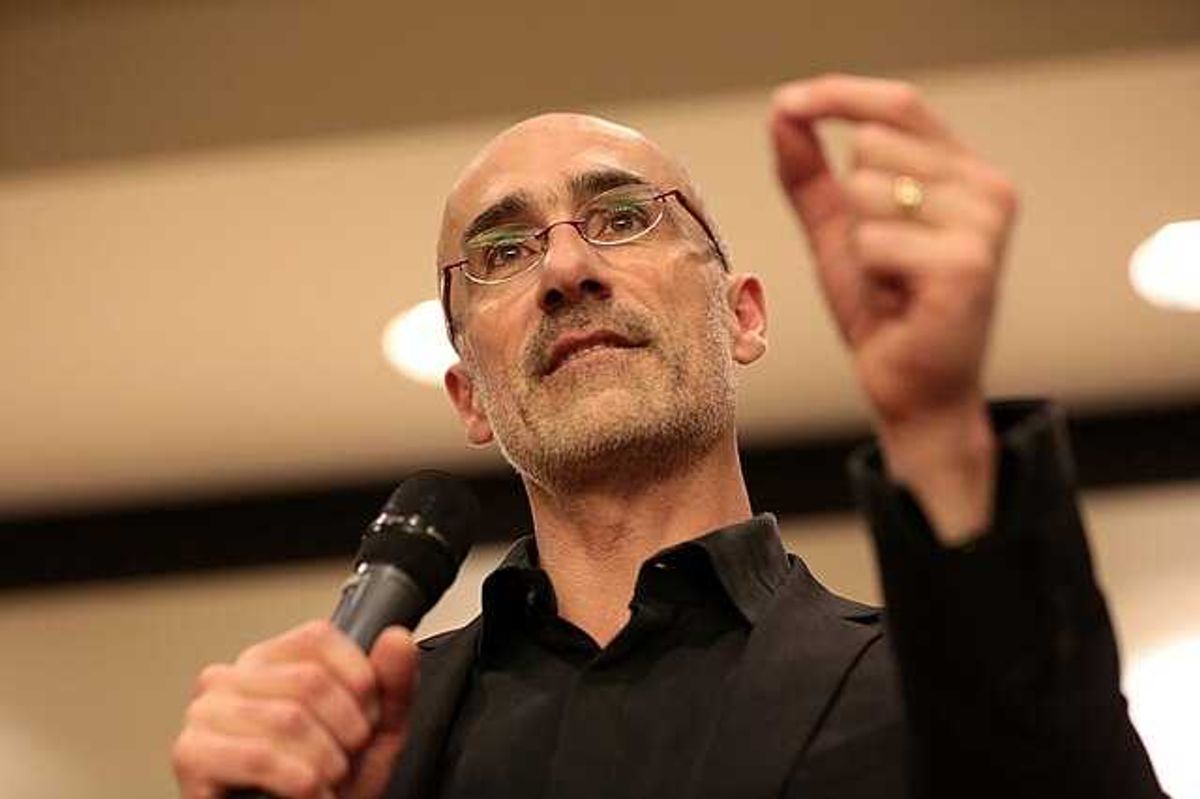
 Many people make bucket lists of things they want in life.
 People practicing on the driving range. via
  A group of people playing golf. via
Werner Herzog motivational posters are the best thing on the internet
The director with a cult following gets a tribute fit for guidance counselor office walls.
Werner Herzog inspirational art, FRIENDSHIP.
Looking for a little inspiration this afternoon, but don't actually want to be uplifted?
Well, then get a boost from the solemn Teutonic prose of legendary filmmaker Werner Herzog via the genius Tumblr project Herzog Inspirationals.
Take comfort and advice from the man for whom getting shot in the gut was NBD as you learn about the humble simplicity of the chicken or the inner life of birds.
ADVENTURE
via Werner Herzog Inspirationals/Tumblr
Universe is not harmony.
via Werner Herzog Inspirationals/Tumblr
HAPPINESS.
via Werner Herzog Inspirationals/Tumblr
HARMONY.
via Werner Herzog Inspirationals/Tumblr
Human life is...
via Werner Herzog Inspirationals/Tumblr
GRATEFUL.
via Werner Herzog Inspirationals/Tumblr
FRIENDSHIP.
via Werner Herzog Inspirationals/Tumblr
MISERY.
via Werner Herzog Inspirationals/Tumblr
CIVILIZATION.
via Werner Herzog Inspirationals/Tumblr
Eyes of a chicken.
via Werner Herzog Inspirationals/Tumblr
This article originally appeared on 09.18.17