
'The Wave' Afterschool Special from 1981 still holds up with its lessons about fascism
The chilling story was based on a real high school experiment.

"The Wave" demonstrates how easy it is to pull people into fascism.
"What are you watching?" my 13-year-old son asked.
"An old Afterschool Special," I responded.
"What's an 'Afterschool Special'?" he asked.
Hoo boy. Kids these days have no idea how different television was for those of us who grew up in the '80s or how many core memories we have wrapped up in the ABC Afterschool Special.
I briefly explained and then he sat down to watch with me. A discussion about fascism on X (formerly Twitter) had led me to look up "The Wave," a 1981 ABC Afterschool Special based on a real-life high school experiment in Palo Alto, California, in the 1960s.
In the real experiment, first-year history teacher Ron Jones had students at Cubberley High School engage in a simulation of how fascism spreads as part of a lesson on World War II, with him playing the role of the dictator. His intent was to show skeptical students how the Nazis came to power by creating a social movement he dubbed the Third Wave.
"It started out as a fun game with the most popular teacher at school," Mark Hancock, one of the students in Jones' history homeroom class, told Palo Alto Online in 2017. "He told us, 'If you're an active participant, I'll give you an A; if you just go along with it, I'll give you a C; if you try a revolution, I'll give you an F, but if your revolution succeeds, I'll give you an A.'"
Hancock said he started off planning to get that revolution A, but it quickly grew beyond grades and turned into something real. "At the end, I was scared to death," he shared.
It began with Jones rallying the students around the idea of "strength through discipline" and "strength through community." He had them engage in regimented behaviors and handed out membership cards. At first, it was just fun, but students began to enjoy feeling like part of a special community. Jones pushed the importance of following the rules. The students even formed a "secret police" to monitor other students, and if someone broke a Third Wave rule they'd be reported and publicly "tried" by the class.
The students got wrapped up in it to a frightening degree and even Jones found himself enjoying the way the students responded to him. "It was pretty intoxicating," he told Palo Alto Online.
But according to Verde Magazine, Jones felt like he'd lost control of it by the fourth day.
The experiment ended at the end of the week with a rally. Jones told the students they were actually part of a real national Third Wave movement and that the national leader was going to speak to them at the rally. Jones turned on the televisions to white static and watched the students eagerly wait for their leader to speak. That's when he broke the news to them that they'd fallen for a totalitarian regime. Instead of a Third Wave leader speech, he played them a video of a Nazi rally.
According to a school newspaper at the time, most students were disillusioned. But one student said, "It was probably the most interesting unit I've had. It was successful in its goal to achieve the emotions of the Germans under the Nazi regime."
"The Wave" follows the true story quite closely and still holds valuable lessons. One chilling scene shows a kid who had been sort of an outcast prior to the "movement" saying, "For the first time, I feel like I'm a part of something great." He was particularly crushed to find out it was all a fascist facade.
If you can get past the '80s aesthetic, it's worth watching. Even my teen kids got into it, once they stopped making fun of the hair and film quality.
This article originally appeared three years ago.
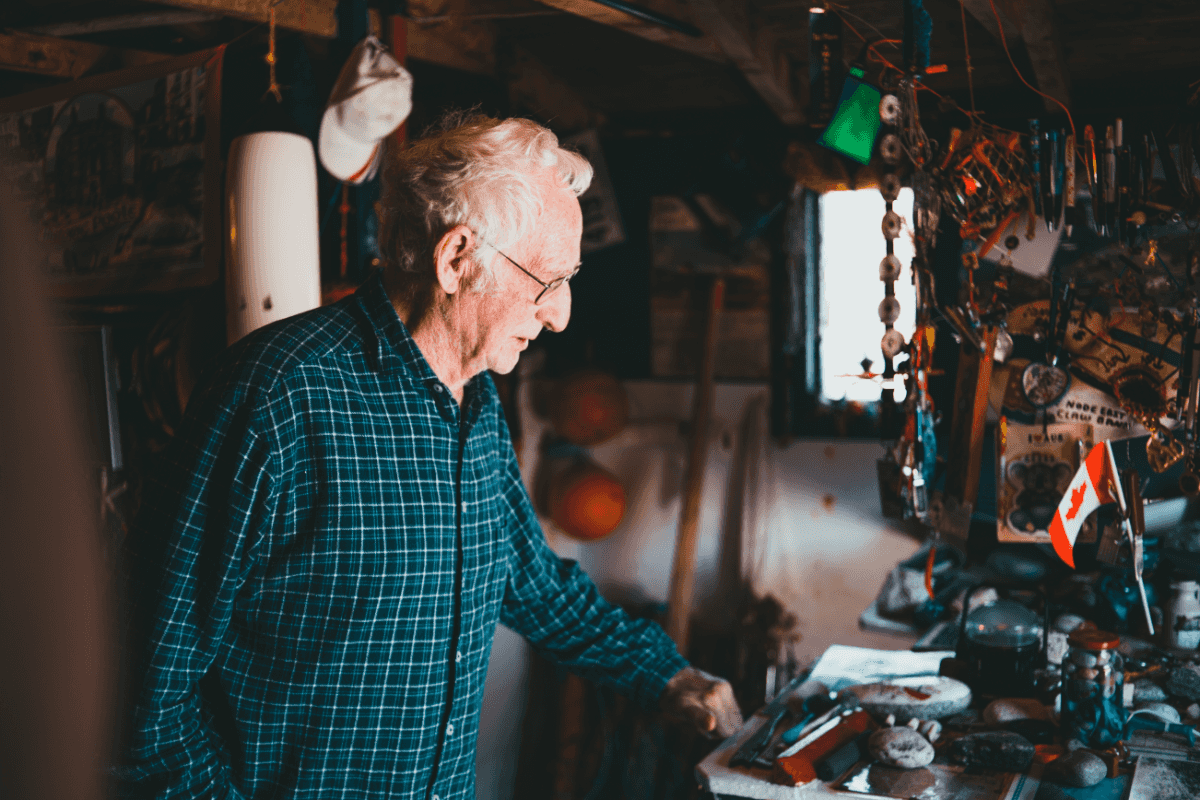
 A Baby Boomer garage filled with stuff.

 A van travels down the road.
  A person plays the guitar.
  A man smiles.
  A damaged vehicle sits on the side of a road.