upworthy
Add Upworthy to your Google News feed.
Google News Button
Education

A story about two pairs of boots illustrates how rich people get richer in ways poor people can't

It’s got nothing to do with bootstraps.
wealth, boots, Terry Pratchett, bootstraps, money, poor
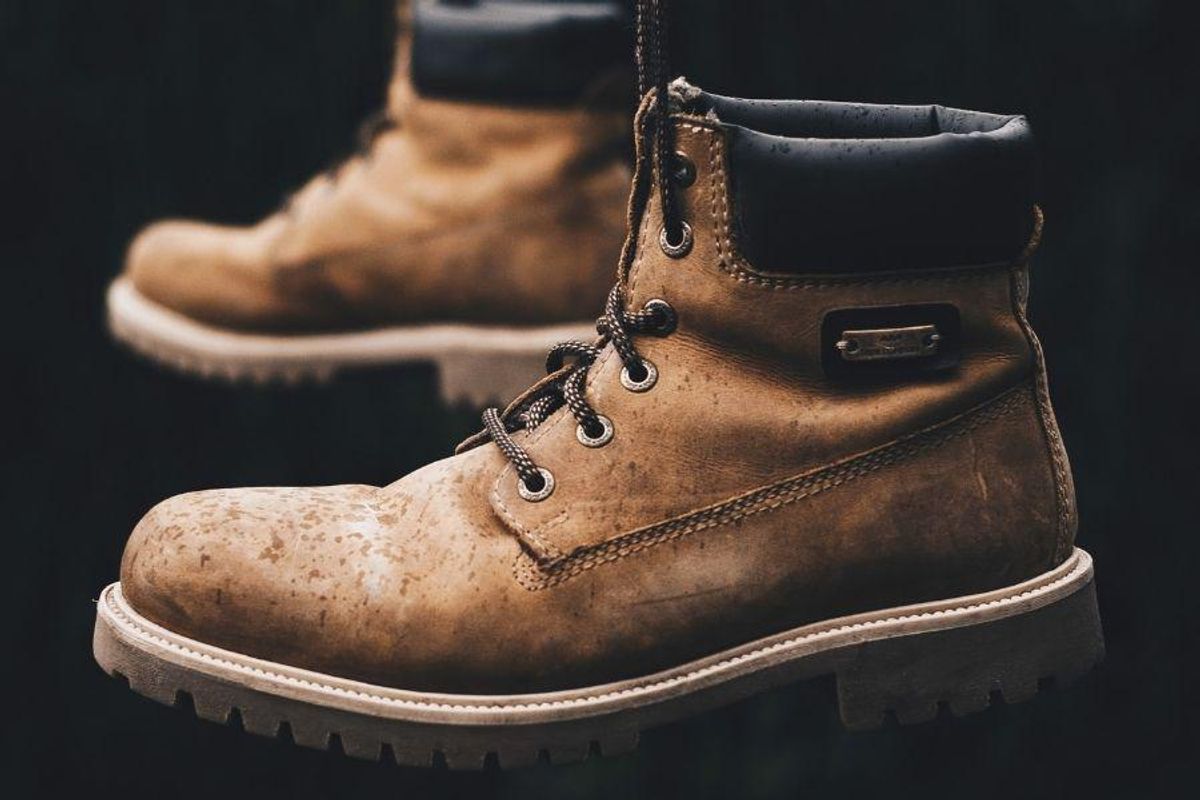
Photo by Maxim Hopman on Unsplash

The Sam Vimes "Boots" Theory of Socioeconomic Unfairness explains one way the rich get richer.

Any time conversations about wealth and poverty come up, people inevitably start talking about boots. The standard phrase that comes up is "pull yourself up by your bootstraps," which is usually shorthand for "work harder and don't ask for or expect help." (The fact that the phrase was originally used sarcastically because pulling oneself up by one's bootstraps is literally, physically impossible is rarely acknowledged, but c'est la vie.)

The idea that people who build wealth do so because they individually work harder than poor people is baked into the American consciousness and wrapped up in the ideal of the American dream. A different take on boots and building wealth, however, paints a more accurate picture of what it takes to get out of poverty.

Author Terry Pratchett is no longer with us, but his writing lives on and is occasionally shared on his official social media accounts. Recently, his Twitter page shared the "Sam Vimes 'Boots' Theory of Socioeconomic Unfairness" from Pratchett's 1993 book "Men At Arms." This boots theory explains that one reason the rich are able to get richer is because they are able to spend less money.

If that sounds confusing, read on:

Pratchett wrote:

"The reason that the rich were so rich, Vimes reasoned, was because they managed to spend less money.

Take boots, for example. He earned thirty-eight dollars a month plus allowances. A really good pair of leather boots cost fifty dollars. But an affordable pair of boots, which were sort of OK for a season or two and then leaked like hell when the cardboard gave out, cost about ten dollars. Those were the kind of boots Vimes always bought, and wore until the soles were so thin that he could tell where he was in Ankh-Morpork on a foggy night by the feel of the cobbles.

But the thing was that good boots lasted for years and years. A man who could afford fifty dollars had a pair of boots that’d still be keeping his feet dry in ten years’ time, while the poor man who could only afford cheap boots would have spent a hundred dollars on boots in the same time and would still have wet feet."

In other words, people who have the money to spend a little more upfront often end up spending less in the long run. A $50 pair of boots that last five years essentially cost you $10 a year. But if you can only afford $10 upfront for a pair of boots that last six months, that's what you buy—and you end up paying twice as much over a five-year period.

There are so many areas in which this principle applies when you're poor. Buying in bulk saves you money over the long run, but you have to be able to afford the bulk cost up front. A reliable car that doesn't require regular repairs will cost more than a beater, but if the beater is all you can afford, that's what you're stuck with. You'll likely spend the same or more over time than if you'd bought a newer/higher quality car, but without the capital (or the credit rating) to begin with, you don't have much choice.

People who can afford larger down payments pay lower interest rates, saving them money both immediately and in the long run. People who can afford to buy more can spend more with credit cards, pay off the balances, build up good credit and qualify for lower interest rate loans.

There are lots of good financial decisions and strategies one can utilize if one has the ability to build up some cash. But if you are living paycheck to paycheck, you can't.

Climbing the financial ladder requires getting to the bottom rung first. Those who started off anywhere on the ladder can make all kinds of pronouncements about how to climb it—good, sound advice that really does work if you're already on the ladder. But for people living in poverty, the bottom rung is just out of reach, and the walls you have to climb to get to it are slippery. It's expensive to be poor.

When people talk about how hard it is to climb out of poverty, this is a big part of what they mean. Ladder-climbing advice is useless if you can't actually get to the ladder. And yet, far too many people decry offering people assistance that might help them reach the ladder so they can start taking advantage of all that great financial advice. Why? Perhaps because they were born somewhere on the ladder—even if it was the bottom rung—and aren't aware that there are people for whom the ladder is out of reach. Or perhaps they're unaware of how expensive it is to be poor and how the costs of poverty keep people stuck in the pit. Hopefully, this theory will help more people understand and sympathize with the reality of being poor.

Money makes money, but having money also saves you money. The more money you have, the more wealth you're able to build not only because you have extra money to save, but also because you buy higher quality things that last, therefore spending less in the long run. (There's also the reality that the uber-wealthy will pay $5,000 for shoes they'll only wear a few times, but that's a whole other kind of boots story.)

Thanks, Terry Pratchett, for the simple explanation.


This story originally appeared two years ago.

Joy

5 ways people are going "All In" this week

From the silly to the sentimental, there are so many ways people like to go “all in” on something. Here are our five favorite examples this week.

5 ways people are going "All In" this week
True

When you hear the words “all in,” what do you think? You might think of getting groovy at a nursing home, a french bulldog having a total breakdown in the drive-thru, or maybe even a snack bar company promoting self care. Whatever you picture, the idea is the same: Going “all in” means doing something with total commitment—literally giving it your “all” and going completely over the top. No second guessing, no holding back—just full-throttle enthusiasm with some creativity and flair thrown in. That’s how we get those viral internet moments we can’t stop watching.


This DWTS dance trend 

If you’ve been watching TV or on the internet this week, you might have seen the viral dance move Dylan Efron and Daniella Karagach performed while on Dancing With The Stars (DWTS) last week. The one particular move, where Dylan holds Daniella as she does a mid-air horizontal walk, is going viral with over 8k videos using the sound. Some of my personal favorites include a mom and her baby, two girls or a girl and her cat, proving this dance trend is truly for anyone to try.

All In on Fiber

Speaking of trends, there’s one that really is about going “all in”, it’s called #fibermaxxing. After years of protein being the biggest nutrition trend, it looks like fiber might be taking over. For good reason too, while protein can cause issues with digestion, fiber can lead to better digestion, blood sugar management, weight control and reduced disease risk. Our friends at All In made a video explaining the #fibermaxxing trend. Each All In bar has 6 to 7 grams of fiber , plus they are delicious. Don't take our word for it, though: Click here to try it yourself (for free).

This child's long hair

This creator went all in… on pranking the audience. I don’t want to give away the contents of this video, but let’s just say it’s creative- and it made me quite literally laugh out loud. There are a lot of "momfluencers" out there who make content that uses their children, and as relatable and heartfelt as it is, sometimes a little satire break is worth appreciating.

Two entrepreneurs getting down to business


Lots of people dabble in entrepreneurship. These two went "all in" on helping others learn it. After four years of interviews with CEOs , research, edits, and a Penguin Random House book deal (yes, seriously), their book, Down to Business, has made its way into classrooms and libraries around the world. Now they are teaching other kids that age is not a barrier to entry in entrepreneurship; the earlier you start, the further you can go—and an entrepreneurial mindset will serve you no matter what you do in life.

Bridesmaids who went all in

Last on our list; two bridesmaids who committed to the bit. These ladies went “all in” in their remake of the legendary scene from the movie “Bridesmaids”. If you haven’t seen the original movie, starring Kristen Wig and Maya Rudolph, this might be your sign.

In the viral TikTok this bride, Caroline, had no idea what was coming when she put on her favorite movie while getting ready for her big day. The fact that she wanted to watch her favorite show before her bridesmaids surprised her, makes this going “all in” surprise all the better.

Snag your free (!!) snack bar here while this deal lasts. Just pick up a bar at Sprouts and text a pic ofv your receipt to get it for free. Enoy!

Joy

Mom puts a camera on her 2-year-old daughter as she takes a solo journey to 'Mimi's house'

“Her POV is giving she travelled for 40 days and 40 nights.”

cute kid videos, family humor, wholesome videos
@missylanning/TikTok

What a journey.

The world can feel so wondrously big when we’re kids, to the point where even the smallest excursions can feel like a grand adventure. Even, say, a walk to grandma’s house next door.

That was certainly the case for Missy Lanning’s sweet two-year-old daughter. And thanks to modern-day technology, we all got to go along for the adorable ride! In a previous clip posted to her TikTok, Lanning explains that her little one walks alone to Grandma’s (aka Mimi’s) house, which is on the same plot of land.


Naturally, when someone suggested that Lanning put a microphone on her daughter for the next solo journey, Lanning did one better and strapped a full-blown camera on her. A delightful (and loooooong) journey filled with giant blue skies, friendly farm creatures, and wholesome Little House on the Prairie vibes ensued.

Watch:

So cute, right? Especially hearing her say "chitens" instead of chickens. And the fact that she's wearing a Little Red Riding Hood-esque cloak ON HER WAY TO GRANDMA’S? Chef’s kiss.

Down in the comments, people were floored at getting to see the full scope of a trip like that when seen through the eyes of a small child.

“Her POV is giving she travelled for 40 days and 40 nights.”

“She’s gonna grow up to tell her kids how you made her through mountains and snow storms to get to Mimi’s.”

“Her POV is making me realize how huge the world must seem to kids! I’ve never considered this before.”

“‘The road was long and treacherous, it was many days. But we had pet friends along the way.”

“She left on Sunday and got there on Monday.”

“From her POV it was like hiking the Appalachian Trail.”

We might not ever technically be able to turn back the clock and return to a time when the world was this vast, but children help us remember that feeling when we just sit back and watch them experience it for the first time.

Hugh Grant, Renee Zellweger, celebrity news, bridget jones diary, movies, rom coms, bridget jones 2
Images of Hugh Grant and Renee Zellweger via Wikicommons

Hugh Grant (left) Renee Zellweger (right)

Hugh Grant does not hold back when it comes to his opinions on anything. But in one unfortunate interview he did for Elle Magazine back in 2009, he dished on most of his female co-stars, and it wasn't pretty. He described Emma Thompson as "clever, funny, mad as a chair." Of Sandra Bullock, he said, "a genius, a German, too many dogs." He later commented that Julia Roberts' mouth was so big, he "was aware of a faint echo" when they kissed onscreen. And while Julianne Moore, Rachel Weisz, and Drew Barrymore were all described as clever, stunning, or beautiful, the consensus was that they all "loathed him."

But it was his Bridget Jones's Diary co-star Renée Zellweger with whom he seemed to have the softest spot. Even when revisiting the matter on The Graham Norton Show in 2016, Hugh agreed with his original assessment that she's "delightful. Also far from sane. Very good kisser."


When pressed, Hugh jokingly said, "She is genuinely lovely, but her emails are 48 pages long. Can't understand a word of them."

- YouTube www.youtube.com

Now, nine years later, Renée is returning to her Bridget Jones character, and the two reunite for a piece called "Bridget Jones: Mad About the Boy" for British Vogue. Apparently in their OG Bridget Jones days, had tons of questions between on-set shots for Renée. Examples include: "If you had to marry one of today's extras, who would it be?" and "Who is a better kisser, me or Colin Firth?"

This time, there was a new slew of questions for each actor. Here are a few key things we find out:

What did Hugh always think of Renée?

He says candidly (of course), "With a lot of other actors, you think they're really great, and then suddenly you see a little glint of steely, scary ambition, and you realize this person would trample their grandmother to get what they want in this business. But I've never seen that glint coming off you. So either it's very well disguised, or you are quite nice."

What does Renée really think of Hugh?

Hugh Grant, Renee Zellweger, celebrity news, bridget jones diary, movies, rom coms, bridget jones 2 "You're hilariously brilliant at everything you hate." media1.giphy.com

"You're hilariously brilliant at everything you hate. And, though you hate humans, you're a very good and loyal friend. I like you very much. And I love working with you."

What did Hugh really think of her English accent?

After discussing Renée's dialect coach, Hugh tells her that her attempt at an English accent is…"perfect."

Why does the Bridget Jones franchise remain so appealing?

Hugh Grant, Renee Zellweger, celebrity news, bridget jones diary, movies, rom coms, bridget jones 2 "Bridget is authentically herself…and triumphs in her own way." media1.giphy.com

Hugh says, "In a nutshell, I say it's an antidote to Instagram. Instagram is telling people, especially women, 'Your life's not good enough.' It's not as good as this woman's or that woman's, making you insecure. Whereas what Helen (the writer) did with Bridget is celebrate failures, while making it funny and joyful."

Renée makes some jokes and then says, "I think maybe folks recognize themselves in her and relate to her feelings of self-doubt. Bridget is authentically herself and doesn't always get it right, but whatever her imperfections, she remains joyful and optimistic, carries on, and triumphs in her own way."

What does Hugh think of Renée's fashion?

After asking if people in general should be a "bit more stylish," Hugh tells Renée she's "very chic." Renée pushes back with, "I'm wearing a tracksuit." To which Hugh retorts, "Yeah, but a sort of PRICEY one."

And finally, those emails:

Hugh Grant, Renee Zellweger, celebrity news, bridget jones diary, movies, rom coms, bridget jones 2 "They're written in some curious language that I can't really understand." media2.giphy.com

"You have sent me the longest emails I've ever received. I can't understand a single word of them. They're written in some curious language that I can't really understand."

"No!" Renée exclaims. "If you reference something in your emails that makes me laugh…I will circle back to that. And if you've forgotten that you wrote it, I don't think I should be held accountable for that!"

This article originally appeared in February

beavers, beaver dam, animals, wildlife, ecosystem, nature, earth, sustainability, deserts, waterways, rivers, pollution, climate change

Can outsider beavers save this dried up river?

It's not easy being a river in the desert under the best of circumstances. The ecosystem exists in a very delicate balance, allowing water sources to thrive in the harsh conditions. These water sources in otherwise extremely dry areas are vital to the survival of unique wildlife, agriculture, and even tourism as they provide fresh drinking water for the people who live nearby.

But man-made problems like climate change, over-farming, and pollution have made a tough job even tougher in some areas. Rivers in Utah and Colorado part of the Colorado River Basin have been barely surviving the extremely harsh drought season. When the riverbeds get too dry, fish and other aquatic creatures die off and the wildfire risk increases dramatically.


About six years ago, one team of researchers had a fascinating idea to restore the health of some of Utah's most vulnerable rivers: Bring in the beavers.

beavers, beaver dam, animals, wildlife, ecosystem, nature, earth, sustainability, deserts, waterways, rivers, pollution, climate change Beaver on riverbank. Canva Photos

In 2019, master's student Emma Doden and a team of researchers from Utah State University began a "translocation" project to bring displaced beavers to areas like Utah's Price River, in the hopes of bringing it back to life.

Why beavers? Well, it just makes dam sense! (Sorry.)

In all seriousness, beaver dams restrict the flow of water in some areas of a river, creating ponds and wetlands. In drought-stricken areas, fish and other wildlife can take refuge in the ponds while the rest of the river runs dry, thus riding out the danger until it rains again.

When beavers are present in a watershed, the benefits are unbelievable: Better water quality, healthier fish populations, better nutrient availability, and fewer or less severe wildfires.

It's why beavers have earned the title of "keystone species," or any animal that has a disproportionate impact on the ecosystem around them.

beaver, dam, dam building, nature, ecosystem Pbs Nature Swimming GIF by Nature on PBS Giphy

Doden and her team took beavers who were captured or removed from their original homes due to their being a "nuisance," interfering with infrastructure, or being endangered, and—after a short period of quarantine—were brought to the Price River.

Despite the research team's best efforts, not all the translocated beavers have survived or stayed put over the years. Some have trouble adapting to their new home and die off or are killed by predators, while others leave of their own accord.

But sine 2019, enough have stayed and built dams that the team is starting to see the results of the effort. In fact, beaver projects just like this one have been going on all over the state in recent years.

- YouTube youtu.be

The water levels in the river are now the healthiest they've been in years. The fish are thriving and Utah residents are overjoyed with the experiment's results.

According to an early 2025 column in The Salt Lake Tribune (i.e. six years after the beaver translocation began) the revitalization of the Price River has "helped save [our] Utah town."

"A tributary of the Colorado River, the Price River runs through downtown Helper," wrote column authors Lenise Peterman and Jordan Nielson. "On a warm day, you’re likely to find the river filled with tourists and locals kayaking, tubing and fishing along its shore. A decade ago, it was hard to imagine this scene—and the thriving recreation economy that comes with it—was possible."

Of course, it wasn't JUST the beavers. Other federal water cleanup investments helped remove debris, break down old and malfunctioning dams, and place tighter regulations on agriculture grazing in the area that depleted vital plant life.

But the experts know that the beavers, and their incredible engineering work, are the real MVPs.

beavers, beaver dam, animals, wildlife, ecosystem, nature, earth, sustainability, deserts, waterways, rivers, pollution, climate change An actual beaver dam on the now-thriving Price River Public Domain

In other drying, struggling rivers in the area, researchers are bringing in beavers and even creating manmade beaver dams. They're hoping that the critters will take over the job as the rivers get healthier.

Utah's San Rafael River, which is in bleak condition, is a prime candidate. In one area of the river, a natural flood inspired a host of beavers to return to the area and "riparian habitat along that stretch had increased by 230%, and it had the most diverse flow patterns of anywhere on the river," according to KUER.

It's hard to believe that beavers nearly went extinct during the heyday of the fur trapping industry, and continued to struggle as they were considered nuisances and pests. Now, they're getting the respect they deserve as engineer marvels, and their populations have rebounded due to better PR and conservation programs.

It's about dam time!

This article originally appeared in June.

Humor

Gen X mom reenacts 'coming home from school in the 80s' and it couldn't be more perfect

"This is why we turned out self sufficient, independent and successful."

80s childhood, 80s, 80s nostalgia, gen x, latchkey kids, gen x nostalgia, generational differences, generational humor
Canva Photos

If you lived through an 80s childhood, this will send you back.

Generation X, made up of those born between 1965 and 1980, has many claims-to-fame in their younger years game. Gen X brought the world Prince and Kurt Cobain. We were The Goonies and The Breakfast Club. We took down the Berlin Wall while watching MTV.

But perhaps the most iconic thing about Gen X is our semi-feral childhoods of benign neglect. The standards of parenting and child rearing have shifted a lot in the past 40 to 50 years, as has the technological landscape that kids grow up in, so naturally, today's kids won't have the same childhoods previous generations had. But there's something particularly nostalgic about being a child of the 80s for those who lived it.


One mom nailed the experience with a video reenactment of what it was like to come home from school in the 80s.

Elizabeth Stevens (@BennettPeach on YouTube) arrives at the front door in her backpack, then pulls out a house key on a string around her neck. (Ah, the "latchkey kid" era when children were expected to come home to an empty house and let themselves in.)

Then she goes into the kitchen in her Care Bears t-shirt and finds a handwritten note—in cursive, of course—on the back of an envelope. "Working late—make your own dinner, watch your brother and the dishes better be done when I get home from bowling. – Mom"

- YouTube www.youtube.com

That's right. Mom wasn't just working late, she was also going bowling while her kids were home caring for themselves.

Then we see her washing the dishes despite barely being able to reach the faucet, even with a stool, and then her making a Gen X staple—the cinnamon-sugar and butter sandwich. On white bread, of course.

In just one minute, Stevens managed to capture the essence of so many Gen X memories, as commenters shared:

"The mom notes on an unopened bill is memories."

"Nailed it! The best thing about growing up in the '70s/'80's was being ALLOWED to grow up."

"Why this video made me almost cry?? How quiet it is inside the home. Lovely."

80s childhood, 80s, 80s nostalgia, gen x, latchkey kids, gen x nostalgia, generational differences, generational humor Wash the dishes before I get home from bowling! Photo by CDC on Unsplash

"Facts!!! No babysitter, go in the house, read the note, do the chores n not let anybody in!!!! I remember the homemade the 'cinnamon bun.'"

"70s and 80s … latch key kid here elementary, junior high and high school. we turned out self sufficient, independent and successful."

"Just so frickin on point!!! All of it from the clothes to the key on the necklace to the note. Even what you chose to do for a snack. Too good!!! The windbreaker that's memories. It's all coming back to me now lol thank you for this. You have brought a huge grin to both me and my inner child."

80s childhood, 80s, 80s nostalgia, gen x, latchkey kids, gen x nostalgia, generational differences, generational humor music video 80s GIF Giphy

"I was met with a note everyday, too. On the back of an envelope, my daily chores would be listed. If I was in trouble, I would cry as soon as I saw the note....lolol Love you momma. How I wished I could have saved those notes! They were historical treasures."

Tons of people gushed over the nostalgia of remembering those "good old days" when they were given both freedom and responsibility, with many saying kids today have no idea. One thing that might surprise the younger generations was how young the theoretical kid in this video could have been. We're not talking about young teens here—kids as young as 5 or 6 could be latchkey kids, and kids any older than that were often given responsibility for looking after younger siblings. Even official babysitting jobs could start around age 11, or sometimes even younger.

Gen X kids had learned to take care of themselves early on, which has its pros and cons. The rose-colored glasses many Gen X adults view their childhoods through can sometimes cloud the parts that were not so great about growing up in the 70s and 80s. Sure, that benign neglect resulted in resilience and independence, but for some that came at the cost of parental relationships and a sense of safety and security. We have more knowledge now about things like mental health support, parent-child attachment, and healthy relationship dynamics, and some of that learning is reflected in shifting parenting practices.

As often happens, the pendulum may have swung too far from the absent parents of the 70s and 80s to the helicopter parents of the 90s and 2000s, of course, and the "right" approach (if there is one) probably lies somewhere in the middle. But it is still fun to look back on those iconic childhood experiences with joy and humor and appreciate that they helped us become who we are today.

This article originally appeared in April. It has been updated.

kindness, emotional intelligence, work mistake, funny story, wholesome, Reddit, viral story, customer service, professional life, human connection
Canva

An embarrassed woman hides her face

For many of us, telling our friends and family that we love them is second nature. Every time someone leaves the house, "Love you!" Before bed at night, "Love you!" Getting off a call with them, "Love you!"

That's all well and good until that sweetly ingrained habit spills over into your work life. Especially when you're talking to an important client, where the boundaries of professional conduct are particularly important to uphold. (Do you feel the cringe coming?)


A woman shared an oh-so-human story about absent-mindedly telling a client she loved him, and his thoughtful response has people cheering.

kindness, emotional intelligence, work mistake, funny story, wholesome, Reddit, viral story, customer service, professional life, human connection An embarrassed woman covers her faceCanva

"Accidentally said 'Love you!' at the end of a call with an important client yesterday," wrote a Reddit user. "I heard him giggle as I hung up, and I was mortified. Today, I saw he emailed me this:"

The email began, "Hey—Just wanted to say that I didn't mean to laugh at you when you accidentally signed off on our call with a 'love you.' I just found it funny because I've definitely done that before, and I know it happens."

Okay, phew, he understood that the laughing was mortifying and he wasn't bothered by the "love you." But then he added the absolute best thing he could have said about the situation:

"I'm glad you have enough love in your life that that response comes naturally. If anything, you should be proud of that. :)"

Then he mercifully resumed their professional conversation. "Have a great weekend! We'll follow up about my call with Chris on Wednesday, as discussed."

He didn't just ignore the elephant in the room and let it hang over her like an awkward cloud. He put her at ease, letting her know he's done it before and it happens and is no big deal. But then he took it a step further, adding a deeper human layer to the moment by acknowledging the fact that the words flowing so automatically and easily for her meant she was surrounded by love.

kindness, emotional intelligence, work mistake, funny story, wholesome, Reddit, viral story, customer service, professional life, human connection A woman laughs while trying to hide her face from the cameraCanva

The client's emotional intelligence and thoughtful response warmed people's hearts.

"What a great and respectful response. He is completely right, it’s such a beautiful thing to have that much love in your life that it comes out naturally."

"You work with good people."

"Honestly, this made my day 😂 It's so wholesome how they responded. Shows that a little kindness (even accidental) always leaves a good impression!"

"Such a classy response. Made you feel at ease while staying professional and moving the conversation forward."

"Green flags from that client."

kindness, emotional intelligence, work mistake, funny story, wholesome, Reddit, viral story, customer service, professional life, human connection Green Flag GIF by The Last Talk ShowGiphy

People also shared their own similar experiences with blurting out accidental "love you"s and it was a veritable love-fest:

"I told my supervisor I loved her at the end of our weekly touch point call - she chuckled and said she loved me too. We shared a good laugh. I am happy to see empathy from a random human, it is much needed."

"I said 'love you' to my new boss at labcorp when she called me to tell me I passed my drug test. Same thing, hanging up, not thinking, she gave me my results and my start date to come in for orientation and I ended the call with 'bye love you!'"

"Back in the day I straight up called one of my bosses mom. It was so embarrassing I almost died."

"A surprising number of people have done this at least once. Happens when you’re distracted and tired. My ex husband (a prosecutor) accidentally ended a phone call with 'I love you' when talking to a rural county sheriff in the middle of the night."

"I had a coworker say 'love you,' just as we were about to hang up. There was an awkward pause, clearly neither of us had hung up, then he added, 'Don’t tell my wife.' We both laughed and finally disconnected."

kindness, emotional intelligence, work mistake, funny story, wholesome, Reddit, viral story, customer service, professional life, human connection A woman covers her faceCanva

"I did that with my ex husband last Thursday, we both burst out laughing lol. Happily we get along great and he and his fiancée are attending my wedding next week."

"Was on phone with my boss right after he had called his wife. He ended the call with "love you." Had so much fun telling him that while I cared for him, I didn't think it was love."

Embarrassing moments don't have to ruin your day—in fact, when handled like this client, they can turn into beautiful moments of human connection. This kind of relatability, empathy, and emotional intelligence makes us all feel better about our shared humanity, oopsies and all.

This article originally appeared earlier this year. It has been updated.