Dramatic video shows a dog coming out of nowhere to rescue a puppy from drowning

A real-life Lassie!

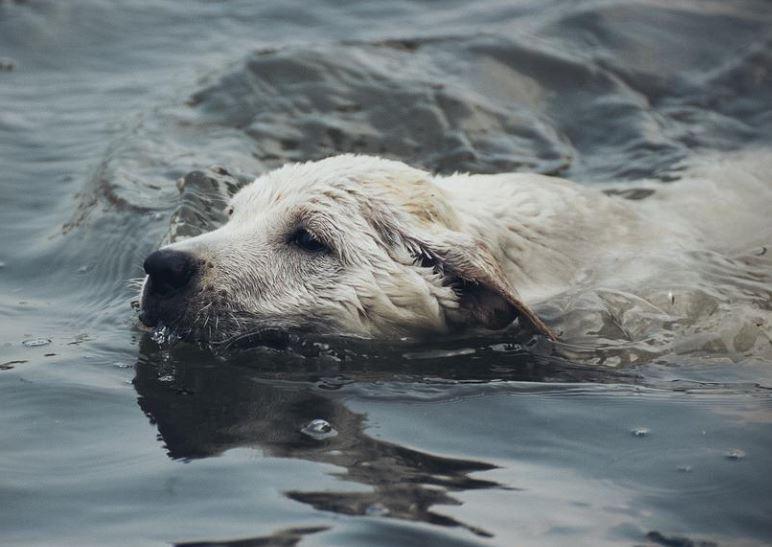
dog swimming
A good boy going for a swim. Photo credit: via Pixabay

A dramatic video from Lopburi, Thailand shows a dog running to the rescue of a puppy having trouble keeping its head above water in a fish pond. NowThis posted a surveillance camera video to their Instagram that captured a white dog named Soh being rescued by a larger dog named Hand.

Soh definitely appears to be struggling and calling out when, out of nowhere, Hand rushes to the rescue and pulls the dog out of the fish pond. Hand clearly could hear that Soh was in danger because it ran to its aid with purpose.

We often say we “don’t deserve dogs,” and after watching this video it’s pretty clear that sometimes, dogs may feel the same way. The video shows that dogs can have an innate empathy for one another. Hand could have dismissed Soh’s cries and thought, “More food for me,” but instead, the larger dog stepped up and saved the pup.

It’s unclear if all the footage was shot by a security camera because there are two different angles. Recently, there’s been a trend in staged “drowning” videos where people pretend to be in danger to show off their dog’s rescue instincts. This doesn’t appear to be one of those videos, but there’s no doubt it shows off Hand’s innate altruism.

A study from Messerli Research Institute at the University of Veterinary Medicine Vienna found that dogs can behave altruistically toward one another by sharing food, but are more likely to do so if they are familiar with them.

“Dogs truly behave prosocially toward other dogs,” the study, published in Science Daily, said. “That had never been experimentally demonstrated before. What we also found was that the degree of familiarity among the dogs further influenced this behavior. Prosocial behavior was exhibited less frequently toward unfamiliar dogs than toward familiar ones.”

However, a recent study found that dogs show very little altruism toward humans in regard to food-sharing, whether they know them or not. So, if you’re waiting for your dog to give you a treat, don’t hold your breath.

Don’t worry, though. Your dog still loves you, and they seem to love each other if Hand and Soh have anything to say about it.

This article originally appeared three years ago.

  • A clip of a golden retriever seemingly befriending a tiny mouse has given people the most unexpected joy
    A mouse and a golden retriever. Photo credit: Canva

    Beau, a golden retriever, is a very big deal. Like many dogs in the modern age, he has his own social media accounts. But one particular Instagram post went so viral that he’s gaining followers by the minute—and for good reason.

    His “person” happened to be filming him being his adorably goofy self one day in a parking lot. That’s when he spotted a tiny gray mouse. Some were concerned it wouldn’t end well. But Beau, tail wagging and fur shedding, immediately circled around it and lay down as though he’d known the mouse his entire life. His mom asked, “What are you doing? Did you find a mouse? Is that your friend?” Beau’s tail continued to wag as he occasionally side-eyed the little critter.

    In less than a week, the clip had 1.6 million likes and over 9,000 comments from new fans around the world. Both Beau and his new, unassuming pal seem to have become a symbol of hope—or at the very least, a gentle distraction.

    His bio is written in the first person on another Instagram post. While we can’t confirm or deny that Beau actually wrote it, it states:

    “Hello to all my new friends 🥰 I’m Beau 👋🏻🐾

    I was born in Utah and spent a year on the farm with my golden family, before my parents found me in March 2025 and moved me to Denver 😍

    I love tennis balls, morning cuddles, fresh snow, frozen cucumbers, and spending time in Minnesota with my cousin @cocobabydoodle ❤️

    My superpower is giving hugs. I learned it from my grand-doggy 🫶🏼

    During the week, I go to mom’s office and shed my hair all over her coworkers 💁🏽‍♀️

    My parents spoil me with toys, but my favorite is my Simba. He goes where I go 🥺

    I recently went viral for making friends with a mouse. I’m not sure why because I make friends with everyone, but I appreciate all the love ❤️”

    His new fans seem overjoyed. One person notes, “This is the most Golden Retriever behavior I’ve ever seen.”

    A few jokingly point out that if that mouse—or any mouse—crossed paths with THEIR breed of canine, it might not fare as well: “Our dachshund would have swallowed it whole. Ask me how I know.”

    Others seem to resonate with how wholesome the short clip is: “This needs to be a Disney movie.”

    Some animal experts might argue that Beau was “resource guarding” rather than becoming actual besties with the cute rodent. In a Los Angeles Times article, Kevin Spencer explains:

    “Resource guarding in dogs is a common canine behavior that does not always initially manifest as something dramatic. Sometimes resource guarding refers to a subtle head turn when a dog guards a food bowl. Other times, the same guarding behavior escalates into something far more obvious and unsettling. At its core, resource guarding describes a dog’s attempt to protect a valuable resource it finds important. This may be food, toys, bones, a dog bed, or other items dogs steal and stash. It might even be a favorite human.”

    It seems Beau has lots of cute quirks. Other photos on his Instagram page show him loving car rides, park days, and chasing balls. In one photo, Beau snuggles onto the couch with a leaf in his mouth. The caption reads, “Beau has been really into eating leaves lately.”

    While Upworthy wasn’t able to confirm with Beau (or his family) that the tiny mouse wound up having the best day ever, it seemed the dog’s owner did her best to keep him safe. All in all, Beau’s wagging tail was a delight to see—so much so that another commenter suggested maybe Beau needs his own pet buddy, writing, “Buy him a puppy!” Someone seemingly in the family replied, “We’re working on it!”

  • Video demonstrates that Mercury is the closest planet to every other planet in the solar system
    How can Mercury be closest to all other planets? Photo credit: Canva

    Pretty much every elementary school student on Earth learns the names and order of the planets in our solar system. They label worksheets, color activity sheets, and build models. We teach them songs and mnemonic devices to help them remember the order of the planets by their distance from the Sun.

    But when we see the planets neatly lined up, we don’t get a clear picture of the distances between them. And as a CGP Grey video illustrates, one of the most interesting things about the distances between planets isn’t how far apart they are from each other, but how close they all are to Mercury.

    Or at least, how close they are to Mercury most of the time. The distances between the planets vary due to the speed and shape of their orbits. But as Grey’s You Learned the Solar System Wrong” video illustrates, the planet that is closest to every other planet most often is Mercury.

    Yep, every single planet in our solar system. It feels counterintuitive, but the math checks out.

    Mercury, the “mostest closest” planet

    “Planets are not humans queuing for coffee but rather spheroids scattered in space, always in motion,” says CGP Grey. “Not in simple circles, either, but ellipses at untidy angles.”

    He explains that because of differences in their orbits, there’s no clear answer to the question of which planet is closest to another, because it changes all the time. The better question is, “Which planet is closest most often?”

    The planets of our solar system lined up in order of distance from the sun
    Planets don’t actually line up like this. Photo credit: Canva

    Mercury. It’s always Mercury. And it comes down to its small orbit.

    “Mercury’s small orbit means he never goes as far away as the other planets with their bigger orbits,” CGP Grey says. “The orbital math that shows Mercury is the mostest closest to Jupiter is the same for all the planets and everything that orbits the Sun.”

    Mercury is the social butterfly of planets

    People were delighted to learn this fun fact and shared some clever comments:

    “Mercury must be a really good friend, he’s got so many friends but he makes time for them all.”

    “This is why Mercury was the messenger, he was able to reach every God.”

    “Mercury is that one kid who has ties with the seniors.”

    “All other planets are in some toxic relationship: constantly shifting between being super intimate and escaping as far as they can from each other. And Mercury is that one guy who’s not very close, but always within reach, if you ever need him.”

    “Mercury is like that kid in school who knows EVERYone.”

    The sun with the planets clustered near it
    It’s impossible to fit all the planets into one image with their proper distances. Photo credit: Canva

    “Mercury is just the little brother that everyone loves.”

    “This is so delightfully appropriate for the planet named after the messenger of the gods. Who else can pass notes between them better but the mostest closest?”

    “Mercury is that hot (literally) playboy who steals everybody’s heart, from girls to guys, young to old.”

    Mercury does seem to get around, doesn’t it? It’s even the closest to Pluto, the poor, no-longer-a-planet outcast of our solar system.

    Mercury the planet
    Mercury is special.Photo credit: Image credit: Canva

    More fun facts about Mercury

    • It is rather wee. When Pluto was downgraded, Mercury claimed the title of smallest planet. It’s approximately one-third the size of Earth.
    • It is extreme. Daytime temperatures can reach 800 degrees Fahrenheit (430 degrees Celsius), and nighttime temperatures can drop to negative 290 degrees Fahrenheit (minus 180 degrees Celsius). A 1,000-degree swing is wild.
    • It has major magnetic tornadoes. According to NASA, “Though Mercury’s magnetic field at the surface has just 1% the strength of Earth’s, it interacts with the magnetic field of the solar wind to sometimes create intense magnetic tornadoes that funnel the fast, hot solar wind plasma down to the surface of the planet.”
    • It’s so metal. Mercury has a metallic core that takes up about 85% of its radius.
    • It is moonless. Mercury and Venus have no moons. Every other planet in our solar system has at least one.

    Mercury, the “mostest closest” of all the planets, truly is special.

    Follow CGP Grey on YouTube for more fun educational videos.

  • San Diego Safari Park’s new Elephant Valley puts you in the middle of the African savanna
    The herd at Elephant Valley at San Diego Zoo Safari Park.Photo credit: San Diego Zoo Safari Park
    ,

    San Diego Safari Park’s new Elephant Valley puts you in the middle of the African savanna

    The park’s largest exhibit gets you closer to the elephants than ever before.

    Have you ever wanted to visit the African savanna, inhale the beautiful scents of the grasslands, and watch a stunning sunset while walking beside a herd of elephants? It’s a little tough for most people to get to Africa, but now you can come close to the experience at Denny Sanford Elephant Valley. The newly opened interactive habitat at the San Diego Zoo Safari Park puts visitors at the center of the experience.

    What’s unique about Elephant Valley is that Safari Park visitors are surrounded by elephants on both sides and can follow the herd as they march beneath a bridge in the center of the habitat. This gives guests a 360-degree view of these majestic animals as they chew on thorn trees, wade in a lake, or use their mighty tusks to pull treats from high up in the trees. Guests can also get face-to-face with the world’s largest land mammal at viewing windows that put them just inches from the herd.

    At Elephant Valley, you can experience elephants from above and below.

    elephants, safari park, san diego, san diego zoo, elephant valley
    A boy looking through a viewing window at Elephant Valley. Photo credit: San Diego Safari Park

    Elephant Valley is an immersive experience

    Marco Wendt, wildlife ambassador for the San Diego Zoo Wildlife Alliance, hopes the immersive experience inspires visitors to support conservation efforts in Africa.

    “We want to connect the guests, the people around the world, here in San Diego, to our projects out in Africa,” Wendt told Upworthy. “Garner that empathy, that understanding of elephants, so we can all work together.”

    elephants, safari park, san diego, san diego zoo, elephant valley
    An elephant at Elephant Valley at the San Diego Zoo Safari Park. Photo credit: Declan Perry (used with permission)

    Wendt’s message is important, considering African savanna elephants are listed as Endangered on the International Union for Conservation of Nature’s Red List of Threatened Species. This is due in large part to the rise of human-elephant conflict across the continent.

    The San Diego Zoo Wildlife Alliance’s commitment to conservation is especially apparent in the three elephants of the eight-member herd that were saved from being culled in Swaziland.

    “We were able to help out by offering this massive space that we have here at the Safari Park and rescue the three 36-year-old adult females that you see here today,” Wendt said. “You’ll see those 36-year-old adults, but the youngest, is seven years old. So we have generations of grandma, aunties, daughters, and a little boy.”

    elephants, safari park, san diego, san diego zoo, elephant valley
    An elephant at Elephant Valley at the San Diego Zoo Safari Park. Photo credit: Declan Perry (used with permission)

    Which elephants live at Elephant Valley?

    The herd at Elephant Valley consists of eight elephants: matriarch Swazi, 36; Umngani, 36; Ndlulamitsi (Ndlula), 36; Khosi, 19; Phakamile (Kami), 18; Qinisa (Nisa), 13; young male Umzula-Zuli (Zuli), 7; and Mkhaya, 7. The herd’s founding members—Swazi, Ndlula, and Umngani—were rescued in 2003.

    To recreate the African savanna, a team of horticulturists and arborists worked together to replicate the region’s smells and sounds. The team grew more than 350 individual plants for Elephant Valley, including African thorn trees, a common food source for elephants.

    elephants, safari park, san diego, san diego zoo, elephant valley
    The herd at Elephant Valley. Photo credit: San Diego Zoo Safari Park (used with permission)

    Ultimately, Elephant Valley is about strengthening the connection between elephants and humans.

    “I want everyone here to gain some kind of empathy and understanding of this majestic animal, to leave the Safari Park with a little bit of hope, knowing that they were part of something bigger than themselves,” Wendt said. “I don’t care if you’re the emperor of the world or a kid from the barrio, that this is going to be for everyone, and we all have the opportunity to change the world together.”

  • In 1958, a scientist began filling flasks with air. The samples showed the Earth was ‘breathing.’
    A scientist pioneered the study of our atmosphere by manually collecting air in glass flasks.Photo credit: Wikimedia Commons
    ,

    In 1958, a scientist began filling flasks with air. The samples showed the Earth was ‘breathing.’

    Charles David Keeling’s painstaking work offered a better understanding of our planet, along with undeniable evidence of climate change.

    One of the longest-running scientific studies of its kind might not sound all that interesting on its surface. For more than 60 years, scientists on the flank of Mauna Loa, an active volcano in Hawaii, have been collecting air. Yes, air.

    The work, while repetitive and tedious at times, is surprisingly among the most important scientific research ever conducted.

    In the early 1900s, a handful of scientists had captured similar air samples from around the globe. An engineer named Guy Stewart Callendar was one of the first to compare these datasets and conclude that the human burning of fossil fuels was causing carbon dioxide levels in the atmosphere to rise.

    However, the datasets weren’t very good. They were collected at different locations around the globe and at different times. In the 1930s, there wasn’t a strong baseline for what Earth’s atmosphere should look like, so the scientific community was skeptical of Callendar’s ideas.

    That’s where scientist Charles David Keeling comes in.

    charles keeling, science, climate change, carbon emissions, fossil fuels, global warming, plants, earth, nature
    Charles David Keeling. Photo credit: National Science Foundation/Wikimedia Commons

    In 1958, Keeling had the idea to collect air samples from the same spot every single day. It was radical at the time. His method required stationing a team at the Mauna Loa Observatory, far from cars, factories, and other human emissions, and collecting air samples in simple flasks.

    The entire process doesn’t sound all that scientific. One of the researchers would take a volleyball-shaped glass flask that had all of its air vacuumed out, hold his breath, walk into the wind, and open a valve that allowed air to rush in. Other teams repeated this process at various spots around the world, but the measurements at the Mauna Loa Observatory were where it all began. Despite how it sounds, Keeling was a stickler for precision and helped pioneer more accurate atmospheric measurements than the world had ever seen.

    Once Keeling had enough data, he realized two remarkable things about our planet.

    For starters, the Earth was breathing

    Carbon dioxide (CO2) levels in the atmosphere weren’t exactly steady. Keeling observed that they would rise and fall throughout the day, and even more so in a seasonal pattern.

    According to the University of Illinois Urbana-Champaign:

    “First, Keeling determined that CO2 levels rise and fall during the day, as well as throughout the seasons, based on vegetation growth. Plants feed themselves through photosynthesis, and CO2 is a vital ingredient of that process. With more plants growing in the Northern hemisphere’s summer months, the CO2 levels drop for a time as the plants ‘breathe’ it in.”

    In the winter, as plants die off and begin to decay, they release more CO2 into the air. In the Southern Hemisphere, this pattern is more or less reversed.

    Revealing this simple pattern helped form our understanding of Earth’s CO2 cycle, where carbon flows through the soil, oceans, atmosphere, and living organisms on the planet. This discovery also helps scientists build models that calculate the environmental impact of human behavior.

    Next, baseline CO2 levels were steadily rising every single year

    Soon, a more alarming trend became clear from Keeling’s data. Carbon dioxide levels were rising. He even developed something called the “Keeling Curve,” which is less of a curve and more of a line trending steadily up and to the right, indicating rising carbon dioxide levels.

    The Keeling Curve. Photo credit: Oeneis/Wikimedia Commons

    The Keeling Curve was one of the first undeniable pieces of evidence of human-caused climate change. As carbon dioxide levels rise, the atmosphere traps more heat and steadily warms the planet. This, in turn, leads to melting ice, rising sea levels, and more extreme weather, to name only a few consequences.

    Many scientists consider it one of the most important discoveries of the last century.

    Of course, Keeling was not the sole “founding father” of climate science. There was Callendar, whose hypotheses Keeling’s data eventually helped confirm. There was Irish scientist John Tyndall, who in 1861 discovered how certain gases could trap heat—what we now call the “greenhouse effect.” Fascinatingly, a less-heralded amateur scientist named Eunice Newton Foote demonstrated these ideas several years before Tyndall. And we’d be remiss not to give a shoutout to Jan Baptista van Helmont, a Flemish alchemist who helped identify carbon dioxide as a distinct gas.

    The sample collection at Mauna Loa continues to this day and remains one of the longest continuously running studies in the field. If anything, in recent years the work has only become more important.

  • Beavers were brought to the desert to save a dying river. 6 years later, here are the results.
    Can outsider beavers save this dried up river?Photo credit: Canva Photos

    It’s not easy being a river in the desert under the best of circumstances. The ecosystem exists in a very delicate balance, allowing water sources to thrive in the harsh conditions. These water sources in otherwise extremely dry areas are vital to the survival of unique wildlife, agriculture, and even tourism as they provide fresh drinking water for the people who live nearby.

    But man-made problems like climate change, over-farming, and pollution have made a tough job even tougher in some areas. Rivers in Utah and Colorado that are part of the Colorado River Basin have been barely surviving the extremely harsh drought season. When the riverbeds get too dry, fish and other aquatic creatures die off and the wildfire risk increases dramatically.

    About six years ago, one team of researchers had a fascinating idea to restore the health of some of Utah’s most vulnerable rivers: Bring in the beavers.

    beavers, beaver dam, animals, wildlife, ecosystem, nature, earth, sustainability, deserts, waterways, rivers, pollution, climate change
    Beaver in water. Photo by Svetozar Cenisev on Unsplash

    In 2019, master’s student Emma Doden and a team of researchers from Utah State University began a “translocation” project to bring displaced beavers to areas like Utah’s Price River, in the hopes of bringing it back to life.

    Why beavers? It just makes dam sense! (Sorry.)

    Beaver dams restrict the flow of water in some areas of a river, creating ponds and wetlands. In drought-stricken areas, fish and other wildlife can take refuge in the ponds while the rest of the river runs dry, thus riding out the danger until it rains again.

    When beavers are present in a watershed, the benefits are unbelievable: Better water quality, healthier fish populations, better nutrient availability, and fewer or less severe wildfires.

    It’s why beavers have earned the title of “keystone species,” or any animal that has a disproportionate impact on the ecosystem around them.

    Doden and her team took beavers who were captured or removed from their original homes due to being a “nuisance,” interfering with infrastructure, or being in danger, and—after a short period of quarantine—were brought to the Price River.

    Despite the research team’s best efforts, not all the translocated beavers have survived or stayed put over the years. Some have trouble adapting to their new home and die off or are killed by predators, while others leave of their own accord.

    But enough have stayed and built dams since 2019 that the team is starting to see the results of the effort. In fact, beaver projects just like this one have been going on all over the state in recent years.

    The water levels in the river are now the healthiest they’ve been in years. The fish are thriving. Residents of Utah are overjoyed at the results of the experiment.

    A column in The Salt Lake Tribune from 2025 (six years after the beaver translocation began) writes that the revitalization of the Price River “helped save our Utah town.”

    “A tributary of the Colorado River, the Price River runs through downtown Helper. On a warm day, you’re likely to find the river filled with tourists and locals kayaking, tubing and fishing along its shore. A decade ago, it was hard to imagine this scene—and the thriving recreation economy that comes with it—was possible.”

    Of course, it wasn’t JUST the beavers. Other federal water cleanup investments helped remove debris, break down old and malfunctioning dams, and place tighter regulations on agriculture grazing in the area that depleted vital plant life.

    But the experts know that the beavers, and their incredible engineering work, are the real MVPs.

    beavers, beaver dam, animals, wildlife, ecosystem, nature, earth, sustainability, deserts, waterways, rivers, pollution, climate change
    An actual beaver dam on the now-thriving Price River Public Domain

    In other drying, struggling rivers in the area, researchers are bringing in beavers and even creating manmade beaver dams. They’re hoping that the critters will take over the job as the rivers get healthier.

    Utah’s San Rafael river, which is in bleak condition, is a prime candidate. In on area of the river, a natural flood inspired a host of beavers to return to the area and “riparian habitat along that stretch had increased by 230%, and it had the most diverse flow patterns of anywhere on the river,” according to KUER.

    It’s hard to believe that beavers nearly went extinct during the heyday of the fur trapping industry, and continued to struggle as they were considered nuisances and pests. Now, they’re getting the respect they deserve as engineer marvels, and their populations have rebounded due to better PR and conservation programs.

    To that I say…it’s about dam time!


    This article originally appeared last year. It has been updated.

  • Gardener shares ‘revolutionary’ way of starting seeds indoors using recycled packaging
    A "seed snail" is a compact way of getting your garden started.Photo credit: GrowVeg/YouTube
    ,

    Gardener shares ‘revolutionary’ way of starting seeds indoors using recycled packaging

    The space-saving method is known as a “seed snail” or “seed sushi.”

    As spring approaches, gardeners begin planning what they want to plant and when. Often, they starting seeds indoors rather than outside. Usually, seeds are planted in trays or small cups and nurtured into seedlings before being transplanted outdoors once the danger of frost has passed.

    Seed starts require space, though, and not everyone has it in abundance. That’s why a “revolutionary” method of starting seeds using recycled packaging materials has people excited. Using the “seed snail” or “seed sushi” method, you can grow far more seedlings in a much smaller area than with traditional trays or cups.

    When you start seeds, they need to be spaced far enough apart that their roots don’t get entangled, which is why traditional seed starter trays have small compartments. The seed snail keeps seedlings’ roots separate while allowing them to grow in a compact space.

    Benedict Vanheems, author of GrowVeg: The Beginner’s Guide to Easy Vegetable Gardening, demonstrates how to make the seed snail using different kinds of packaging materials. However, he says bubble wrap is his “absolute favorite.”

    “This, with its air pockets, helps to create a slightly sturdier roll so it sits firmer,” Vanheems says in a YouTube clip. “And the air pockets will also help to insulate the roots from swings in temperature, which our seedlings will much prefer. Bubble wrap is flexible, retains moisture well, and can be reused time and again.”

    Bubble wrap can be used for starting seeds
    Bubble wrap isn’t an obvious gardening tool, but it’s useful. Photo credit: Canva

    However, he acknowledges concerns people may have about microplastics and offers a solution. First, he cuts the bubble wrap into long strips about three inches wide. Next, he cuts a strip of baking parchment twice as wide. He then folds the parchment in half and wraps it over both sides of the bubble wrap. This ensures the soil never touches the plastic while still providing the temperature-regulation benefits of the bubble wrap.

    Vanheems adds water to the potting mix to make it very moist. Depending on the size of the seeds you plan to use, you’ll cover the strip of packaging with between 1/2 inch and 2 inches of soil. Pat the soil down fairly firmly, and leave an inch or two uncovered at the end.

    After you roll up the “snail,” use painter’s or masking tape to secure it. Then it’s ready for you to add your seeds according to the individual seed instructions. Vanheems doesn’t recommend sowing the seeds before rolling, as they can get moved around and dislodged. He also gives tips for retaining moisture in the snail rolls, from misting or light watering to keeping them covered with clear plastic.

    Seedlings started in a seed plug tray
    Traditional seed trays take up more space than a seed snail. Photo credit: Canva

    Vanheems showed what the seedlings looked like once they had developed roots and shoots. This method allows long, deep roots to grow, making it easy to separate the plants after unrolling the snail.

    Some seedlings may need more soil added to the roll once their roots begin to grow. Simply unroll the snail, sprinkle more soil over the roots, and reroll. Easy peasy. The main thing to watch with the snail is that it stays moist, since it uses less soil per seedling than traditional trays.

    Both amateurs and pros are loving the idea in the YouTube video comments:

    “Your method is a LOT cheaper than buying these expensive plastic containers in the DIY garden market that barely survive one year in the garden. I surely will give it a try. Thank you!”

    “I just ran across these a few days ago and I’ve already got a bunch of them going! This is going to be a game changer! I’m using disposable shower caps to cover the ones that need it – they’re infinitely reusable as long as you don’t break the elastic.”

    A gardener planting seedlings in a garden bed
    Once your seedlings grow large enough, you can transplant them. Photo credit: Canva

    “I tried this ‘seed snail’ method with my Sweet Peas last week and I’m officially a convert! The vertical root growth is incredible, but the real win for me was the space saving—I fit twice as many under my grow lights than I usually do. If you’re tight on indoor space, this is a total game-changer. Great tutorial!”

    “I’ve been wondering how to go about growing a large number of native plant plugs without having to buy more plastic. Using this technique I’m going to stretch my supplies to grow even more seeds in a single season. Thank you so much for the tip. You weren’t kidding when you said it would change the way you do things. I’m officially converted.”

    “A little advice from an old nurseryman, when handling tiny seedlings, it is much safer to handle them by their leaves, not the stems. Even a finger can damage a very sensitive seedling stem and can cause damping off that will kill the seedling. The seed snail idea is brilliant and I will start using it myself. It has several advantages but the best for me is the unrolling and the easy removal of the seedlings without damage to their root systems. Thank you!”

    You can follow GrowVeg on YouTube for more cool gardening tips.

  • A baby monkey rejected by his mom carries a stuffed animal for comfort. People can’t look away.
    What happens when a baby macaque is rejected? Photo credit: Canva
    ,

    A baby monkey rejected by his mom carries a stuffed animal for comfort. People can’t look away.

    Punch has people around the world emotionally invested in his story.

    A baby monkey named Punch has captured the hearts of people around the world. The now seven-month-old Japanese macaque, who lives at Japan’s Ichikawa City Zoo and Botanical Garden, was rejected by his mother shortly after birth. Videos of him clinging to zookeepers coming into the enclosure broke people’s hearts, but that was just the beginning of the saga.

    Zookeepers gave Punch a stuffed orangutan toy as a surrogate “mom” to cuddle with. Naturally, that has only increased the “Awww” factor. Punch drags the toy around with him and runs back to it for comfort when he’s scared or lonely, and he’s been scared and lonely a lot since he was introduced to the larger macaque troop in January. Videos show him being pushed away and even dragged around by older macaques, after which he runs back to cling to his stuffed mama. 

    @swnfdh

    JAPANESE ZOO RESPONDS AFTER BABY PUNCH IS SEEN BULLIED! #punch #monkey #zoo #japan #update

    ♬ original sound – me

    People can’t take watching a baby monkey be rejected

    However, things have not been quite as dire for Punch as they may appear. The zoo has reassured the public in a statement that the “bullying” Punch has endured is actually a pretty normal part of primate socialization. Being “disciplined” by other macaques will teach him appropriate behavior in the troop, even if it appears mean to our human sensibilities.

    People’s reactions to Punch and his struggles to fit in have been emotional and fierce, though. It’s like Punch’s story was designed to trigger every compassionate, protective instinct we have as humans. The motherless outcast who just wants to be loved. The big, mean bullies who knock him around. The rejection when he attempts to make friends. The finding comfort wherever he can, even in an inanimate object.

    Comedian Britt Migs captured the emotional investment people have in this monkey in a parody video. It may be hilariously over the top, but it’s actually not far off from how many people feel after watching Punch videos.

    Comments on the videos range from sadness to empathy to rage:

    “Punch needs to have his own kingdom.”

    “At dawn we ride for Punch.”

    “How do I apply to foster and ultimately adopt punch. He can stay with me.”

    “This story has wrecked my life this week.”

    “I love Punch and I’ve never met him!”

    “Every video I see of punch I’m crying, He’s so cute and innocent.”

    Punch is doing better than people think, thankfully

    There has been good news on the Punch front, thankfully. The zoo says he “shows resilience and mental strength” even as he goes through his social pitfalls. And he has started making friends with others. Newer videos show him being carried and cuddled by at least one older macaque, playing with a peer, and even being groomed. All good signs.

    Ichikawa Zoo has seen a massive influx of visitors since Punch’s story went viral and has had to make adjustments. They have asked visitors to limit their time on Monkey Mountain (where the macaques live) and observe quietly so as not to disturb them.

    The zoo has been keeping people posted on how Punch is doing. A zookeeper update from February 22 reads (translated from Japanese on X): “Thanks to everyone’s good manners, it was a calm atmosphere with no fights or anything like that. Punch, around 5 PM, was meticulously groomed by two monkeys and is steadily fitting into the group.”

    The reality of zoos can often give people pause and prompt concern for the well-being of the animals in human care. Dr. Tessa Wilde, executive director at For the Love of Primates, shared some insights into how macaques live in the wild and how that influences the way enclosures are designed.

    @fortheloveofprimates

    It’s #MonkeyMonday 🐒❄️ You asked about #PunchTheMonkey and Japanese macaque enclosures, so let’s break down how snow monkeys live in the wild—and how zoos and sanctuaries can mirror those rocky, mountainous habitats. #AnimalCare #fyp #viral

    ♬ original sound – For the Love of Primates

    There’s a rather fuzzy line between caring for animals and anthropomorphizing them to the point where we might interfere with normal behavior, such as the socialization we’ve seen Punch going through. Wilde pointed out in a previous video that early rejection and scolding are not unusual in a case like Punch’s. And we’re seeing progress as he gets integrated into the troop, so that’s promising.

    It is hard to watch, though, and our feelings of compassion for a creature we think is going through a hard time certainly isn’t a bad thing. We need more compassion in the world, even if it comes through a monkey with a stuffy just trying to find a family.

    @cbsnews

    Punch the 6-month-old macaques monkey has gone viral for seeking comfort in a stuffed orangutan that is like his “surrogate mom.” Punch was abandoned by his real mom shortly after birth and the staff at Ichikawa City Zoo near Tokyo, Japan have been raising him. Punch, however, has hit some bumps in the road while trying to learn how to socialized with the other monkeys. In one viral video, another monkey is seen getting aggressive with him, but the zoo explained why that may happen. Here’s what the zoo says about Punch’s development – and why his “surrogate mom” stuffed animal is helpful. #monkey #punch

    ♬ original sound – cbsnews
  • Obese cat amasses fan club on his weight loss journey as he cleverly tries to avoid working out
    An obese cat rests against a curb. Photo credit: Canva

    Working out isn’t always fun, but sometimes what’s good for you isn’t fun. An orange and white tabby cat named Mr. Kitty is realizing that all of those cat treats are a lifetime on the hips. So many things are tasty going down, but they’re not so great when working to get the pounds off.

    Mr. Kitty received the news that he had to not only go on a diet but also participate in an exercise regimen. His owner has been sharing his weight loss journey on her Instagram page, The Mr. Kitty Show. His less-than-stellar attitude about exercise has garnered him a fan club. There’s nothing like a sassy cat being forced to work out to make cat lovers cheer.

    cats; obese cats; overweight cats; animal weight loss; healthy cat weight; Mr. Kitty
    A chubby cat sits near a scale. Photo credit: Canva

    Mr. Kitty does not appear amused. The sassy cat does everything in his power to avoid working out. He must’ve been taking dieting tips from Garfield, because he’s a whopping 30 pounds. On the cat chonk chart, Mr. Kitty would be an “OH, LAWD HE COMIN.‘”

    People can find “The Chonk Chart” in cheeky veterinary offices. It shows cats’ weights, ranging from “A Fine Boi” (average weight) to “A Heckin’ Chonker” (overweight but not obese). On the far end of the chart is Mr. Kitty’s status.

    Some wonder how a cat gets to Mr. Kitty’s size. It’s unclear what led to his excessive weight. Often, this level of weight gain is caused by overfeeding and under-exercising. According to PetMD, “All cat breeds can become obese. Middle-aged (8–12 years old), spayed or neutered, indoor-only or primarily indoor cats tend to be more at risk for becoming obese cats.”

    The average weight of a healthy adult cat is between seven and 12 pounds, depending on whether the cat has a small or large frame, according to the Cummings School of Veterinary Medicine at Tufts University. So, Mr. Kitty is well outside of the normal weight range, and as his owner drags him to the kitty cat gym regularly, he wants her to know just how unhappy he is.

    Aside from giving his human the death stare while walking on the treadmill, he also protests the exercise equipment. Mr. Kitty was originally placed on a treadmill with a plastic display piece in front. By resting his front paws on the plastic piece, only his back legs had to walk. His humans moved him to a different treadmill to stop him from cheating on his weight loss journey.

    Instead, he decided not to walk at all. Mr. Kitty would park his chonkin’ self on the treadmill and wait for it to roll him all the way to the edge so he could try to escape burning calories. The people in the cat gym had to stack pool noodles at the back of the machine to force Mr. Kitty to work out. All the hard work has started to pay off, whether this cat wanted to participate or not. Mr. Kitty has dropped to 20 pounds, and his fan club couldn’t be prouder.

    One person says, “Hi Mr. Kitty! Congratulations on your weight loss journey! You look great!”

    “Get it Mr Kitty! Mr Kitty looks strong and confident,” another cheers.

    Someone else writes, “Mr. Kitty I think you look adorable but I’m betting your joints are thankful for the weight loss! Keep going, king!”

    This person feels Mr. Kitty’s pain, writing, “I understand this so well… I would go through the same length not to walk on a treadmill. Mr kitty understands us chubby ones.”

    According to some commenters, Mr. Kitty is perfectly happy working out at the holistic vet. He was just a cat doing cat things, finding cheat codes to not exercise because cats do what they want, when they want, and the days he tried to escape were the days he didn’t feel like exercising. Either way, Mr. Kitty’s progress has been amazing, and his little joints likely feel so much better.

People Skills

10 signs you’re a quiet introvert in group chats, according to psychology

Animals

A clip of a golden retriever seemingly befriending a tiny mouse has given people the most unexpected joy

Culture

Man gets wave of support after tearful confession that a friend called him ‘too poor’ to get invited anywhere

Nature

Video demonstrates that Mercury is the closest planet to every other planet in the solar system