A composer died in 2021, but a lab-grown version of his brain is still making new 'music'
Are the haunting tones proof of consciousness after death, or just a beautiful sentiment?

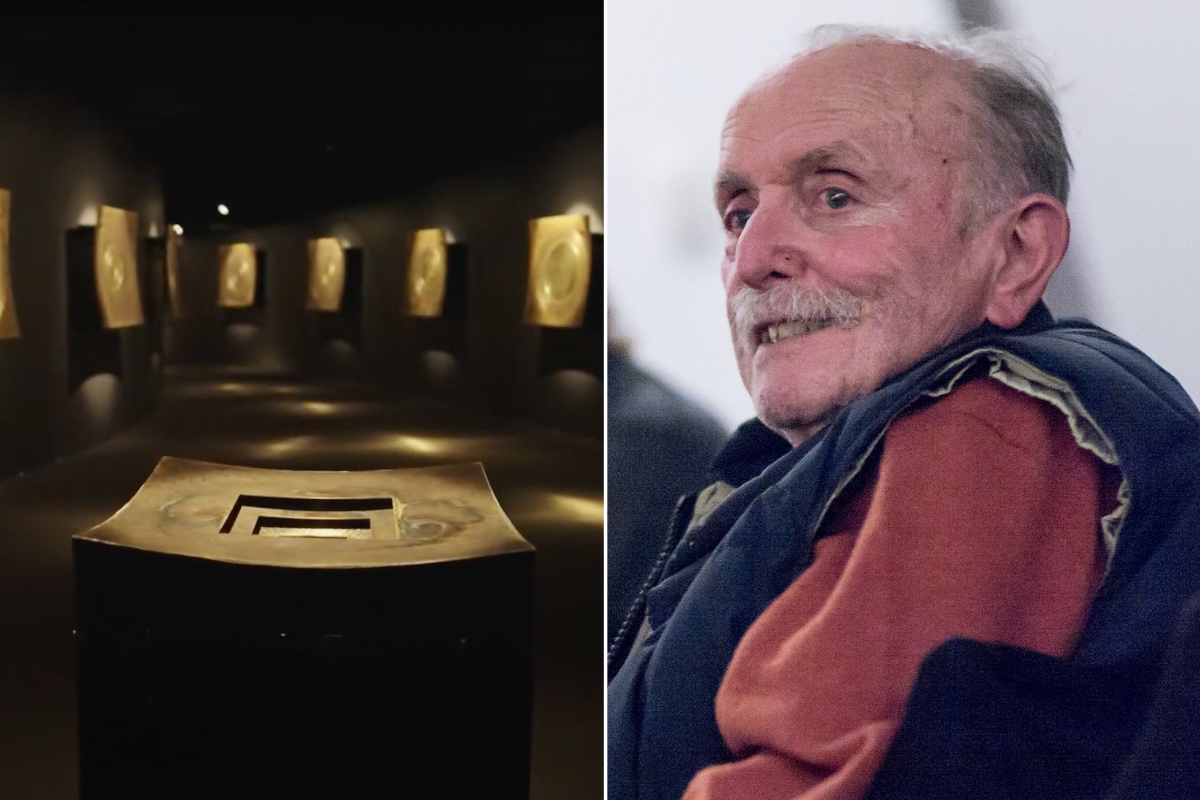
Alvin Lucier''s "brain" is still composing music 3 years after his death.
I love the gag from Futurama where, when people die, their heads and brains are kept alive in a jar, allowed to carry on forever. Their body may have failed, but in a sense they can live on and on and on (as long as someone's there to lug them around). It's a fascinating idea, and one that's definitely being explored in various ways here in the real world.
For example, did you know that you can upload photos, videos, and audio clips of a deceased loved one and create an incredibly lifelike AI version of them? This may or may not be considered a good thing depending on how you view it, and though it's not true consciousness per se, it can be a frighteningly accurate blurring of the lines. Furthermore, some scientists insist that consciousness does not exist solely in the brain, and that one day we may be able to harness it when the living organs of the body have died. Heavy stuff!

A composer who passed away several years ago was also fascinated by the idea of his consciousness and art living on without him. So he devised a bizarre experiment.
The musician, composer Alvin Lucier, was not content to only make music for the duration of his natural lifetime. So he recruited a team from Harvard Medical School to harvest his stem cells after he passed away
From there, the stem cells were used to grow something resembling a clump of human brain matter. It's not a fully functioning brain, not even close, but it is living tissue derived from the DNA of the late musician. The experiment, then, was to determine just how much of Lucier really existed in this sample.

"The central question we want people to ask is: could there be a filament of memory that persists through this biological transformation? Can Lucier's creative essence persist beyond his death?" the team said, per the Art Newspaper.
Neuroscientists and artists teamed up to create an installation — part art, part science — called "Revivification." They connected the "in-vitro brain" to electrodes that would then transmit the electrical impulses generation by the brain matter to twenty humongous brass plates hung around, thus creating music. Or, at least, tones.
You can see the art installation and the behind the scenes in this video. If you want to hear the haunting tones that seem to originate from beyond the grave, you can get a listen at about 3:53.
- YouTubewww.youtube.com
Not only does the "organoid" generate signals that become sound through the brass panels, it also responds to the environment around it. Sound from the art gallery is captured by a microphone and fed back to the little mini-brain, which affects its electrode activity.
That makes the sounds generated inside the experiment totally unique and dynamic. If Lucier really "composing" this music, in a sense? Not really, but the bizarre sounds are being generated, in part, by his genetic material. That makes Revivification an absolutely fascinating blend of art, science, and maybe even a little spiritualism.
Revivification is probably not proof of consciousness after death, and it doesn't claim to be. But it asks interesting questions about the nature of memory, and where our creativity or spirit or soul or whatever you want to call it is really stored.
Perhaps the most touching aspect of the story is Lucier's unwillingness to ever stop creating new art, even after his death at the age of 90. You'd think that would be enough years to fully satisfy his need for self-expression! But not so.
When Lucien's daughter was told about the project, she laughed and said, "This is so my dad. Just before he died he arranged for himself to play for ever. He just can't go. He needs to keep playing."


a man sitting at a desk with his head on his arms Photo by
Can a warm cup of tea help you sleep better? If you believe it, then yes. Photo by 
A woman is getting angry at her coworker.via
A man with tape over his mouth.via
A husband is angry with his wife. via 
Three women sit on a blanket in the park. 
Two women engaging in a pleasant conversation inside a coffee shop
Two men engaging in a peaceful disagreement.
Resurfaced video of French skier's groin incident has people giving the announcer a gold medal
"The boys took a beating on that one."
Downhill skiing is a sport rife with injuries, but not usually this kind.
A good commentator can make all the difference when watching sports, even when an event goes smoothly. But it's when something goes wrong that great announcers rise to the top. There's no better example of a great announcer in a surprise moment than when French skier Yannick Bertrand took a gate to the groin in a 2007 super-G race.
Competitive skiers fly down runs at incredible speeds, often exceeding 60 mph. Hitting something hard at that speed would definitely hurt, but hitting something hard with a particularly sensitive part of your body would be excruciating. So when Bertrand slammed right into a gate family-jewels-first, his high-pitched scream was unsurprising. What was surprising was the perfect commentary that immediately followed.
This is a clip you really just have to see and hear to fully appreciate:
- YouTube youtu.be
It's unclear who the announcer is, even after multiple Google inquiries, which is unfortunate because that gentleman deserves a medal. The commentary gets better with each repeated viewing, with highlights like:
"The gate the groin for Yannick Bertrand, and you could hear it. And if you're a man, you could feel it."
"Oh, the Frenchman. Oh-ho, monsieurrrrrr."
"The boys took a beating on that one."
"That guy needs a hug."
"Those are the moments that change your life if you're a man, I tell you what."
"When you crash through a gate, when you do it at high rate of speed, it's gonna hurt and it's going to leave a mark in most cases. And in this particular case, not the area where you want to leave a mark."
Imagine watching a man take a hit to the privates at 60 mph and having to make impromptu commentary straddling the line between professionalism and acknowledging the universal reality of what just happened. There are certain things you can't say on network television that you might feel compelled to say. There's a visceral element to this scenario that could easily be taken too far in the commentary, and the inherent humor element could be seen as insensitive and offensive if not handled just right.
The announcer nailed it. 10/10. No notes.
The clip frequently resurfaces during the Winter Olympic Games, though the incident didn't happen during an Olympic event. Yannick Bertrand was competing at the FIS World Cup super-G race in Kvitfjell, Norway in 2007, when the unfortunate accident occurred. Bertrand had competed at the Turin Olympics the year before, however, coming in 24th in the downhill and super-G events.
As painful as the gate to the groin clearly as, Bertrand did not appear to suffer any damage that kept him from the sport. In fact, he continued competing in international downhill and super-G races until 2014.
According to a 2018 study, Alpine skiing is a notoriously dangerous sport with a reported injury rate of 36.7 per 100 World Cup athletes per season. Of course, it's the knees and not the coin purse that are the most common casualty of ski racing, which we saw clearly in U.S. skier Lindsey Vonn's harrowing experiences at the 2026 Olympics. Vonn was competing with a torn ACL and ended up being helicoptered off of the mountain after an ugly crash that did additional damage to her legs, requiring multiple surgeries (though what caused the crash was reportedly unrelated to her ACL tear). Still, she says she has no regrets.
As Bertrand's return to the slopes shows, the risk of injury doesn't stop those who live for the thrill of victory, even when the agony of defeat hits them right in the rocks.