upworthy
Add Upworthy to your Google News feed.
Google News Button
More

What it was like being a 13-year-old New Yorker on 9/11.

Here is what I remember: most of it. The day itself, I mean. The interruption of class, the announcement by the fumbling English teacher, the crowding at the window, the black cloud already invading the skyline.

I remember the snarky, oblivious comments — my own, especially. The teachers herded everyone to the school rooftop to sort us into homerooms and take count of where everyone was.

I remember the first few parents arriving, to our surprise, followed by the announcement that students would not be released from school until a parent — anybody’s parent — signed them out. And then my own parents arrived in a flurry, scooping up as many of the downtown kids as they could find, sweeping us all out to the street, seeing a man with the radio walkie-talkie on his shoulder as if we were in another decade. I remember my father’s van becoming a caravan for other people’s children, the way we dropped them off one by one to grateful parents, how sad I was to watch them leave.


Photo by Ezra Shaw/Getty Images.

I remember reaching my father’s office on 17th Street and the black-and-white TV they had set up. It was the only black-and-white TV that I had ever seen up close. I remember that nobody knew who would be able to get home that night and that the bridge and tunnel employees gathered around the TV set, forcing smiles for my brother and me.

I remember my mother deciding we should go buy groceries, leaving my brother in the office and taking me back to the street. I remember Gourmet Garage feeling like Disneyland. Not because it was full of adventure, but because the entire store was one giant line wrapped around and around itself. Everyone else had had the same idea: Trucks had already been stopped from entering or leaving Manhattan. Food deliveries would be halted. I remember gathering what we could carry, winding around the aisles, paying, leaving.

It was while we were walking back to the office that the two men appeared. They were standing against a wall, both wearing yellow hard hats and reflective vests over their dirty grey sweatshirts and jeans.

Dark mud caked their hair and their hands, and there was dust in the lines in their faces. They poured water from bottles into their mouths, creating streams of mud down their chins and necks.

I heard myself say, "Ew." It wasn’t from disgust. It was just what I could come up with. Maybe it was to fill the quiet already starting to settle in the mouths of everyone around me. Maybe it was to hear my own voice. Maybe it was to try and make my mother laugh. She did not laugh. She looked startled and then worried. "Sarah," she said, "you know that is blood."

It was not a question. I did not stop walking. I did turn back to look.

Photo by Mario Tama/Getty Images.

When we got back to the office, my brother was perched on my father’s knee, playing a video game on his computer. I sat on the floor next to my father’s leg while my mother tried to hand out food to the employees in the other room.

I closed my eyes and put my face in the folds of his pants. I could see the faces of the two men like Dust Bowl photographs from history class. The water pouring down their necks. The dark stains on their arms, their chests. For the first time all day, I started to cry.

We spent that first night at my grandmother’s house because she lived uptown. My six-foot-four, 200-something-pound basketball coach father paced the tiny living room for two whole days, watching the news, wringing his hands.

Finally he decided he needed to get back to our apartment. We didn’t know whether the windows had been left open, whether everything we owned was now covered in ash. He announced that he would go downtown, get a change of clothes for each of us, get his bike out of the basement, and bike his way back uptown.

It sounds absurd now. It was two days after the attack. Nobody had any information yet. Nobody was allowed to go downtown. We could have borrowed clothes. I couldn’t stop imagining the towers falling over instead of down, envisioning my home and the entire neighborhood crushed. But my father was sick of pacing.

Photo by Mario Tama/Getty Images.

It took him hours to get downtown because he had to talk his way through every police barrier, and when he finally arrived, he understood why they had been trying to keep everyone out.

The air was thick and gritty. The only other humans around were police and soldiers. In an effort to reach potential survivors, responders had used bulldozers to stack damaged cars and shove them some blocks north, trying to clear as much rubble as possible. Ash and soot and trash covered everything. Later, my father described it like a science-fiction terrain. With no electricity, there was no elevator or light in the stairwell. The air smelled of burning debris.

My father was shaking by the time he got upstairs. He found a backpack. He put in a change of clothes for each member of the family, made sure the windows were closed. Then he caught sight of my childhood loves: a stuffed animal lion and a baby blanket. He did not know if he would ever be back in our apartment again. He did not know what the future held. He took out his change of clothes and put in the blanket and stuffed lion instead.

He zipped the backpack up as far as he could and left the lion with its head sticking out, so that when my father got on the bike to make his way up through the dust and ash and ghosts, the lion’s head lay perched on his shoulder. He said the only way he made it back uptown was by whispering into the lion’s ears the way he had seen me do as a child. "We’re going to make it," he said over and over. "You and I. We’re going to be OK."

We were not OK for a long time. But memory is a terrible beast. It refuses to obey or sit still.

There are holes that will not fill themselves. It was years before I remembered that my mother severely tore ligaments in her ankle the next week, that for all those weeks of aftermath she was hobbling on crutches, a stupid metaphor for her broken city. Why would my brain decide to forget that detail? Why would I need protection from that fact? My brother’s growing silence, his twitching eyes. My father’s time-bomb anger that we tiptoed around. My mother’s desperate attempts to prevent everything from sinking. These things come back only in pieces. The loft we stayed in for weeks is hazy at best.

Photo by Alex Fuchs/AFP/Getty Images.

But the moment we finally returned to our apartment I remember in crystalline detail. The three cars crushed one on top of the other in line with our front door, like some giant had stacked his Hot Wheels and gotten bored with them and smashed his hands down on top. What I can see most clearly is the white flowers that someone had slipped into the cracks of the shattered windshields. The delirious idea that this was all just a series of car crashes, one on top of another, the grey ash everywhere.

I remember knowing I was lucky. There was so much hurt I was spared.

Yes, I watched the black cloud from my classroom window. Yes, I inhaled the ash and the smell. Yes, I was out of my home for a month. Yes, my parents’ marriage became strained. Yes, I lost my soccer coach. Yes, my brother stopped speaking for months. Yes.

But my mother still tucked me in at night. My father still came home from work. All of my limbs worked to help raise me from the pillow each morning. Nothing was so disrupted that I could not continue being an eighth-grade girl, concerned about homework and the upcoming school dance.

I understand that scars are not always visible; they are often as quiet as a prolonged blink, a clenched fist. There are moments that are etched into the deepest parts of us that never leave.

My mother no longer trusts blue skies. I know that buried things do not always stay buried, that damage is a slow unraveling. Sometimes it feels like we are just accumulations of hurt smashed one on top of another. I collect as many flowers as I can. I never know when I will need to slip them into shattered glass.

Years later, I am unsurprised when I break into tears at the smell of an electrical fire. I understand what happens inside me when I see the lights come on each September.

Photo by Stan Honda/AFP/Getty Images.

But how can I explain the late-night train ride more than a decade later? The 4 a.m. trek home. I was alone on the subway car, until I wasn’t.

He was there, across the car, his grey sweatshirt sleeve pulled down over his hand, the clutched water bottle. The yellow hard hat. The reflective vest. The Dust Bowl eyes. The stains.

If God himself had outstretched a hand to me, I would have been less fazed. I did not breathe. I did not look away. My entire body quaked. He looked at me unblinking. I expected — and there is no way to say this except to say it — I expected that he was there to tell me my time had come. I truly believed this. It made perfect sense. He was my last memory of being a child. Now his presence would mark my last memory of being alive.

I do not know how long we rode together. Not another soul got on or off. The train stopped; the doors opened. He stared at me; I stared at him. The doors closed; the train started again. Finally the train reached my stop. The doors opened, and I shook to my feet. He did not look away. I made my way out to the platform, then reached back to hold open the doors. I held eye contact, waiting to see if he would follow. He did not. I let the doors close, and he disappeared. I have never seen him since.

generation jones, gen jones, gen jonesers, girls in 1970s, 1970s, teens 1970s
Image via Wikimedia Commons

Generation Jones is the microgeneration of people born from 1954 to 1965.

Generational labels have become cultural identifiers. These include Baby Boomers, Gen X, Millennials, Gen Z and Gen Alpha. And each of these generations is defined by its unique characteristics, personalities and experiences that set them apart from other generations.

But in-between these generational categories are "microgenerations", who straddle the generation before and after them. For example, "Xennial" is the microgeneration name for those who fall on the cusp of Gen X and Millennials.


And there is also a microgeneration between Baby Boomers and Gen X called Generation Jones, which is made up of people born from 1954 to 1965. But what exactly differentiates Gen Jones from the Boomers and Gen Xers that flank it?

- YouTube www.youtube.com

What is Generation Jones?

"Generation Jones" was coined by writer, television producer and social commentator Jonathan Pontell to describe the decade of Americans who grew up in the '60s and '70s. As Pontell wrote of Gen Jonesers in Politico:

"We fill the space between Woodstock and Lollapalooza, between the Paris student riots and the anti-globalisation protests, and between Dylan going electric and Nirvana going unplugged. Jonesers have a unique identity separate from Boomers and GenXers. An avalanche of attitudinal and behavioural data corroborates this distinction."

Pontell describes Jonesers as "practical idealists" who were "forged in the fires of social upheaval while too young to play a part." They are the younger siblings of the boomer civil rights and anti-war activists who grew up witnessing and being moved by the passion of those movements but were met with a fatigued culture by the time they themselves came of age. Sometimes, they're described as the cool older siblings of Gen X. Unlike their older boomer counterparts, most Jonesers were not raised by WWII veteran fathers and were too young to be drafted into Vietnam, leaving them in between on military experience.

How did Generation Jones get its name?

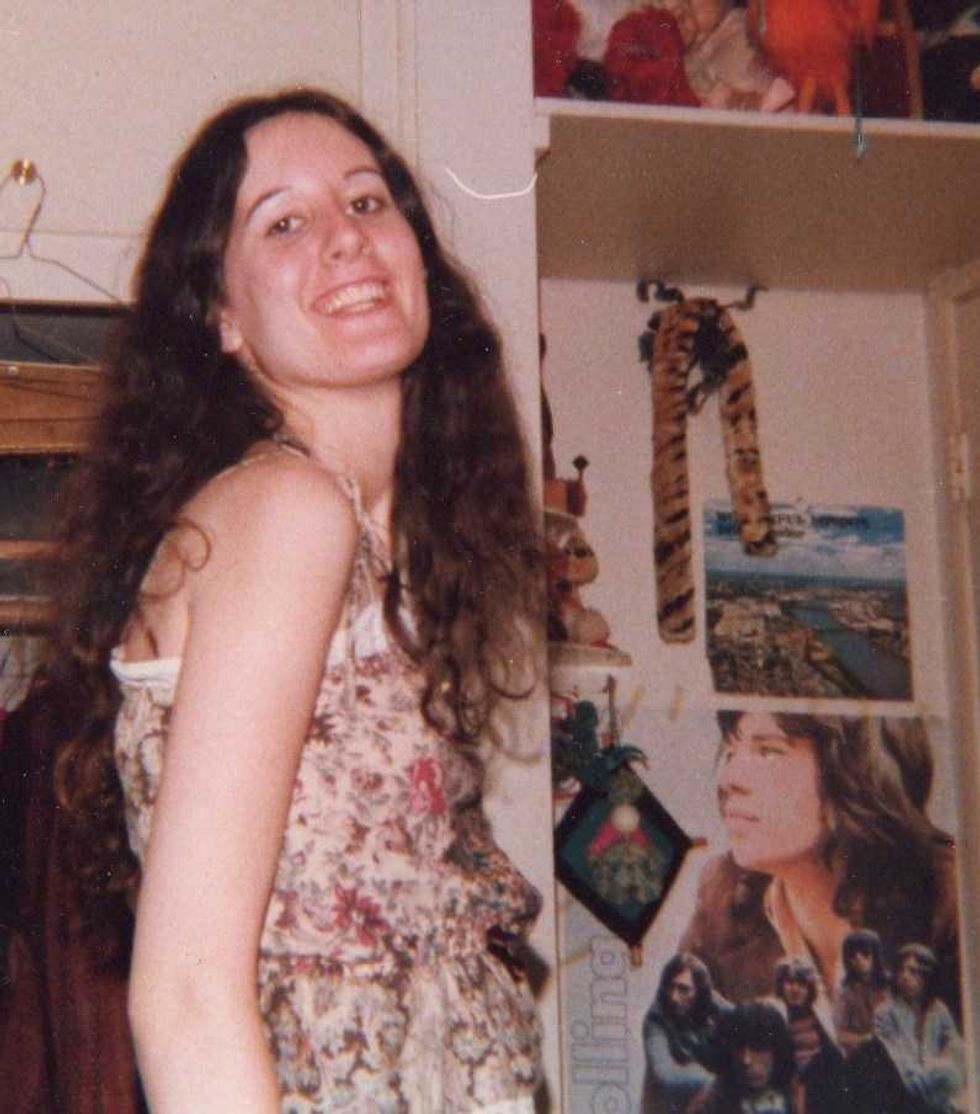
generation jones, gen jones, gen jones teen, generation jones teenager, what is generation jones A Generation Jones teenager poses in her room.Image via Wikmedia Commons

Gen Jones gets its name from the competitive "keeping up with the Joneses" spirit that spawned during their populous birth years, but also from the term "jonesin'," meaning an intense craving, that they coined—a drug reference but also a reflection of the yearning to make a difference that their "unrequited idealism" left them with. According to Pontell, their competitiveness and identity as a "generation aching to act" may make Jonesers particularly effective leaders:

"What makes us Jonesers also makes us uniquely positioned to bring about a new era in international affairs. Our practical idealism was created by witnessing the often unrealistic idealism of the 1960s. And we weren’t engaged in that era’s ideological battles; we were children playing with toys while boomers argued over issues. Our non-ideological pragmatism allows us to resolve intra-boomer skirmishes and to bridge that volatile Boomer-GenXer divide. We can lead."

@grownupdish

Are you Generation Jones? Definitive Guide to Generation Jones https://grownupdish.com/the-definitive-guide-to-generation-jones/ #greenscreen #generationjones #babyboomer #generationx #GenX #over50 #over60 #1970s #midlife #middleage #midlifewomen #grownupdish #over50tiktok #over60women #over60tiktok #over60club

However, generations aren't just calculated by birth year but by a person's cultural reality. Some on the cusp may find themselves identifying more with one generation than the other, such as being culturally more Gen X than boomer. And, of course, not everyone fits into whatever generality they happened to be born into, so stereotyping someone based on their birth year isn't a wise practice. Knowing about these microgenerational differences, however, can help us understand certain sociological realities better as well as help people feel like they have a "home" in the generational discourse.

As many Gen Jonesers have commented, it's nice to "find your people" when you haven't felt like you've fit into the generation you fall into by age. Perhaps in our fast-paced, ever-shifting, interconnected world where culture shifts so swiftly, we need to break generations into 10 year increments instead of 20 to 30 to give everyone a generation that better suits their sensibilities.

This article originally appeared two years ago. It has been updated.

boss, angry boss, mad boss, benihaha chef, laptop

A boss is fed up with his employee's antics.

One of the most frequently debated topics in professional etiquette is which foods are appropriate to eat in the office. People often take offense when others cook smelly foods, such as fish or broccoli, in a shared microwave. It can also be rude to bring a bag of snacks into a meeting as a lot of folks don't want to hear chewing while they're trying to think.

When it comes to remote workers, people are even less sure about proper eating etiquette. Is it okay to eat a large meal during an all-hands meeting? One remote worker recently claimed they pushed those boundaries to the limit when their boss allegedly did something most employees would find rude: He scheduled meetings during lunchtime and showed zero interest in apologizing for it.


office, office kitchen, office fridge, workers, employees An office kitchen.via Canva/Photos

"I used to take my lunch break at the same time every day - 12 to 1. I don't eat breakfast (just coffee and lots of water), so my lunch is essential, and I can't just skip it," a Redditor wrote. "My calendar was blocked, but my boss (newly promoted, power-tripping) started scheduling meetings right in the middle of it."

At first, it wasn't a problem, but it became a habit. "The first couple of times, I let it slide," the employee continued. "Figured maybe it was urgent. But then it became a pattern. I pushed back and reminded him that it was during my break, and he said, 'Well, we all have to make sacrifices sometimes.'"

spaghetti, mean spaghetti, pasta, italian food, lunch An angry man eating spaghetti.via Canva/Photos

Sometimes? That would make sense if the boss only occasionally scheduled lunchtime meetings, but this was becoming a regular thing. So, the employee decided they wouldn't skip lunch and would make the meeting as uncomfortable as possible.

"Next meeting, I showed up with a full plate of spaghetti and meatballs. Had my camera on and mic unmuted, slurping and chewing, occasionally gave thumbs up while mid-bite," they wrote. "A few days later, it repeated, so I brought sticky wings. Last week on Thursday, it happened again, glad I still had my pizza."

"We all have to make sacrifices sometimes"

After the boss started noticing a trend, he spoke up: "Do you have to eat during the meeting?" The employee had the perfect response: "I smiled and said, 'We all have to make sacrifices sometimes.'" During the following week, the boss didn't schedule any lunch meetings.

The post went viral. After receiving countless awards from readers, the poster joked about new and inventive ways they could get back at their boss, including dressing up as a Benihana chef and performing an onion volcano, heating cheese mid-meeting with a fondue pot, and carving a massive tomahawk steak on camera.

The Redditor also claimed they purposely behaved obnoxiously during the meeting to further drive home their point. But where do people draw the line when it comes to eating during a remote meeting?

Kate Noel, head of People Ops at Morning Brew, said it's important to read the room:

"All Zoom meetings are not created equal," Noel wrote. "If it's with your closest teammates, it's probably nbd. But if you feel nervous about eating your sushi on camera, then you might want to wait until after the awkward goodbye waves at the end of your meeting. Not for nothing, you could probably get away with keeping your video off during a larger group meeting to eat food. But at your own risk, so choose your own adventure."

Pop Culture

People rally behind an older woman who refused to train her 25-year-old replacement

"They expected me to teach her the job they said I wasn't good enough for."

ageism, workplace ageism, workplace violations, hr, negotiating severance package, exit strategy, hiring, jobs

An older employee refused two train her replacement who was "fresh out of grad school."

When an older employee was asked to train a 25-year-old to do the same job she'd been doing for as long as the young recruit had been alive, she had some choice words. And it became a vital lesson in not getting exploited.

The TikTok creator, who goes by The Unobsolete (@theunobsolete) centers her content around helping people “fight age bias” in the workplace. She explained how she had been “passed over” for a promotion that she had rightfully earned over the past two-and-a-half decades and was instead expected to train someone “fresh out of grad school” who presumably would then do the job for a fraction of the price.


“They expected me to teach her the job they said I wasn’t good enough for.”

The Unobsolete didn’t entertain pleasantries as she flat-out said “no.”

@theunobsolete watched 25-year-old get my promotion then ask me to train her. I said no. Not sorry. Not maybe. Just no. She shocked. Manager furious. HR email about team player. Don’t care. They passed me over for promotion I earned. Gave it to someone with zero experience. Expected me to teach her job they said I wasn’t good enough for. Train my replacement? Pay me. Want 25 years knowledge? Triple salary consulting rates. Want me to smile while you humiliate me? Wrong person. Not your free training program. Not making cheap hire look competent. Not handing over everything so you can pay her half. They said unprofessional. I said appropriately compensated or not sharing. They said not supporting team. I said team didn’t support me. Silence. Second you stop being useful they stop caring. Stop pretending you owe them anything.#promotions #over50 #notateamplayer #genx #isaidno ♬ original sound - The Unobsolete

"I'm not your free training program," she explained. "Want me to smile while you humiliate me? Wrong person." Furthermore, she noted that if she were going to move forward with the training, she would be expecting “triple salary consulting rates” as payment.

While she got reprimanded by HR for not “being a team player,” she maintained her stance that she deserved to be “fairly compensated for her expertise” or she wasn’t sharing it.

"They said [I was] not supporting [the] team. I said [the] team didn’t support me."

She then concluded the video with a word of caution to other folks who might find themselves in similar situations:

"The second you stop being useful, they stop pretending to care. So stop pretending you owe them anything."

With over four million views, the video certainly resonated. People flooded the comments agreeing how real ageism is in the workplace, and commended The Unobsolete for standing her ground.

"Can't be a team player for a team that played you," one person said.

Quite a few shared their own horror stories. One person recalled, "They hired 6 people to replace me and the work I was doing & wanted me to train them. Nope."

Another said, “I was laid off from a job and they said they’d be fine, because I wrote a literal manual on how to do everything for when I was on vacation. First thing I threw in the trash cleaning out my office. They emailed a few days later, asking where it was. I told them.”

In subsequent videos, The Unobsolete shared that while she didn’t get fired outright (for obvious legal reasons), the company had less direct ways of phasing her out. First, a meeting was held to discuss her "attitude.” Then, she was excluded from company functions and given less work. Eventually, she was called into another meeting and told the company's culture might not be a "good fit" for her.

@theunobsolete UPDATE: Refused to train replacement. What happened next I expected. Two days later meeting with manager and HR. My attitude. Not that they passed me over or wanted free labor. My attitude refusing exploitation. They said not collaborative poor leadership need team players. I said you passed me over want free training punish boundaries that’s control not collaboration. Silence. Not willing develop staff maybe not culture fit. I said right. Culture exploiting experience isn’t my fit. Ready for compensation talk? No? Back to my job. Didn’t fire me. Can’t. Lawsuit risk. Instead stopped including meetings gave projects away documented everything performance issues. Managed out playbook. I documented everything back. Every email meeting project. Knew exactly what they were doing. #promotions #isaidno #refused# #over45 #corporatetiktok ♬ original sound - The Unobsolete


"I agree," The Unobsolete apparently said in the meeting. "A culture that exploits experience isn't a fit for me."

Still, she didn’t back down and asked what the severance package she would receive for leaving. Unsurprisingly, that offer started off low with two weeks' worth of pay. The Unobsolete told them she expected six months of pay with full benefits through the end of the year, plus a neutral reference letter, and a release stating that they wouldn’t contest her unemployment.

When the manager said her demands were “unreasonable,” The Unobsolete replied, “So is asking me to train my replacement for free.”

@theunobsolete UPDATE PART 3: Refused train replacement. How it ended. Three weeks managed out documented retaliation. Manager and HR called me in. Don’t think right fit anymore. Best we part ways.#refusedtotrain #notateamplayer #isaidno #over50 #corporatetiktok ♬ original sound - The Unobsolete

“I’ve never been prouder of someone I don’t know,” one viewer wrote.

Thankfully, this story has a happy ending. The Unobsolete got her demands met, and with that six months of pay, she was able to build what she “actually wanted.” Furthermore, she learned that not long after she left, the 25-year-old quit the job and the company was left scrambling to fill the position. Talk about karmic justice.

“Turns out, I wasn’t obsolete after all. I was just undervalued. There’s a difference.”

Now, she’s taking what she’s learned to help other experienced professionals protect themselves against being taken advantage of.

“They’re counting on you being afraid…stop being what they’re counting on.”

That’s useful advice for anyone, no matter what age they are.

green eyes, funny story, viral video, humor, comedy
Photo credit: @margoinireland on Instagram

Did she get superpowers?

Going to the eye doctor can be a hassle and a pain. It's not just the routine issues and inconveniences that come along when making a doctor appointment, but sometimes the various devices being used to check your eyes' health feel invasive and uncomfortable. But at least at the end of the appointment, most of us don't look like we're turning into The Incredible Hulk. That wasn't the case for one Irish woman.

Photographer Margerita B. Wargola was just going in for a routine eye exam at the hospital but ended up leaving with her eyes a shocking, bright neon green.


At the doctor's office, the nurse practitioner was prepping Wargola for a test with a machine that Wargola had experienced before. Before the test started, Wargola presumed the nurse had dropped some saline into her eyes, as they were feeling dry. After she blinked, everything went yellow.

Wargola and the nurse initially panicked. Neither knew what was going on as Wargola suddenly had yellow vision and radioactive-looking green eyes. After the initial shock, both realized the issue: the nurse forgot to ask Wargola to remove her contact lenses before putting contrast drops in her eyes for the exam. Wargola and the nurse quickly removed the lenses from her eyes and washed them thoroughly with saline. Fortunately, Wargola's eyes were unharmed. Unfortunately, her contacts were permanently stained and she didn't bring a spare pair.

- YouTube youtube.com

Since she has poor vision, Wargola was forced to drive herself home after the eye exam wearing the neon-green contact lenses that make her look like a member of the Green Lantern Corps. She couldn't help but laugh at her predicament and recorded a video explaining it all on social media. Since then, her video has sparked a couple Reddit threads and collected a bunch of comments on Instagram:

“But the REAL question is: do you now have X-Ray vision?”

“You can just say you're a superhero.”

“I would make a few stops on the way home just to freak some people out!”

“I would have lived it up! Grab a coffee, do grocery shopping, walk around a shopping center.”

“This one would pair well with that girl who ate something with turmeric with her invisalign on and walked around Paris smiling at people with seemingly BRIGHT YELLOW TEETH.”

“I would save those for fancy special occasions! WOW!”

“Every time I'd stop I'd turn slowly and stare at the person in the car next to me.”

“Keep them. Tell people what to do. They’ll do your bidding.”

In a follow-up Instagram video, Wargola showed her followers that she was safe at home with normal eyes, showing that the damaged contact lenses were so stained that they turned the saline solution in her contacts case into a bright Gatorade yellow. She wasn't mad at the nurse and, in fact, plans on keeping the lenses to wear on St. Patrick's Day or some other special occasion.

While no harm was done and a good laugh was had, it's still best for doctors, nurses, and patients alike to double-check and ask or tell if contact lenses are being worn before each eye test. If not, there might be more than ultra-green eyes to worry about.

Netflix and chill, reddit, funny, millennials, millennial humor, tifu
Image via Canva

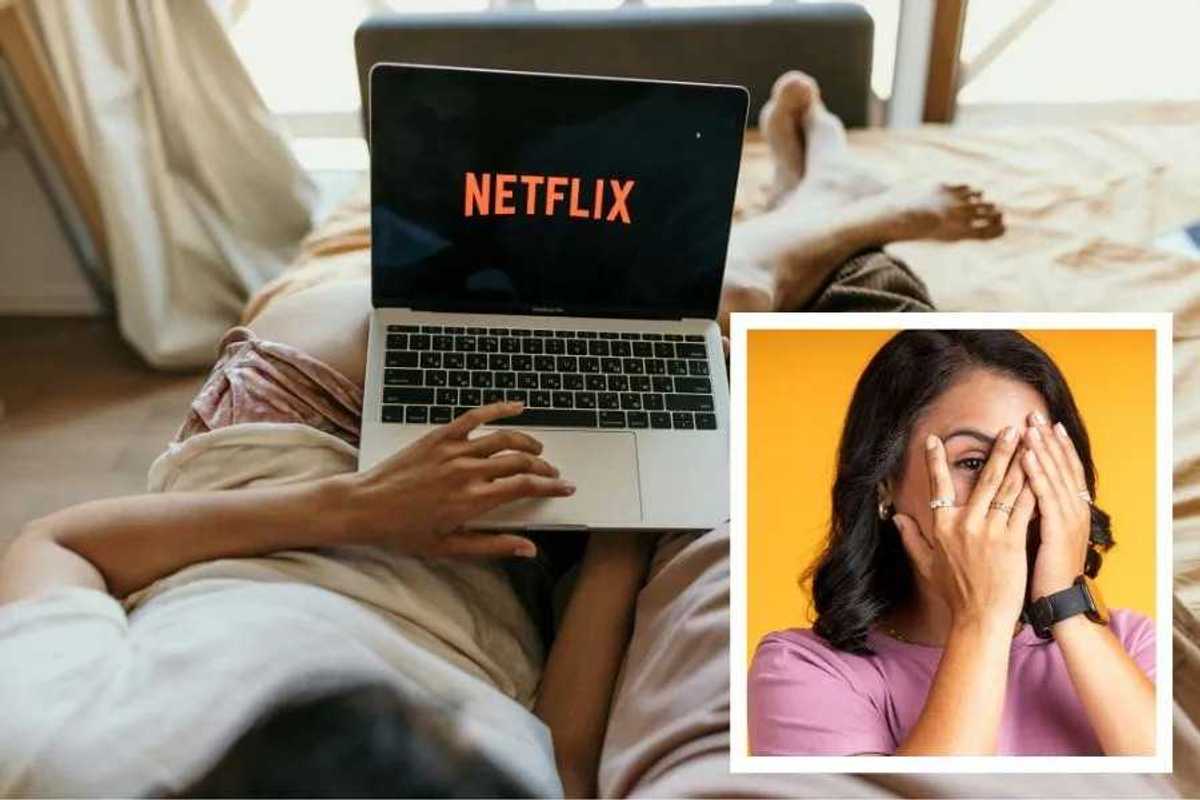
An image of an embarrassed woman interlaid with a picture of two people cuddling while watching Netflix.

For many, if not most of us, when someone uses the term “Netflix and chill,” we know it to be a euphemism for, well, not much TV watching.

And yet, not everyone knows that this phrase has sexual connotations, apparently. At least one 34-year-old female college professor recently admitted to not knowing. Too bad she had been using the phrase as one of her go-to “icebreakers” in class.


A teacher learns she’s been using “Netflix and chill” wrong

As she shared on Reddit, she would often list “Netflix and chill” as one of her favorite hobbies. Not only that, but whenever students mentioned how stressed they were, she would reiterate: “While it's important to study, it's also important to take time to relax and recharge, so I hope they are able to do something for themselves soon, like ‘Netflix and chill.’”

It wasn’t until she visited her husband for lunch at his work and struck up a conversation with two of his co-workers that she discovered her hefty misunderstanding.

“I'm currently on maternity leave and mentioned to his co-workers that I can't wait for my infant to be older so I can ‘Netflix and chill’ again instead of having to feed and change diapers,” she wrote.

When one of the coworkers had a “shocked look on his face,” the OP was “confused.” She couldn’t believe it when this person explained that it’s a “euphemism for hooking up.” And yet, when the other coworker, a 50-year-old female, said, "Oh he's right, even I know what that means!" there was really no denying it.

Photo credit: Canva


Well, understandably, this woman was “mortified” at having learned the truth and was “now terrified I'm going to be reported for sexual harassment because I guess I've been inadvertently telling my students I love to hook up and have been encouraging them to hook up, too??”

In her defense, it's true that “Netflix and chill” used to mean relaxing while streaming, but that was about 17 years ago. The context we are all familiar with has been around since 2015.


She also noted that she and her husband married young and therefore never spent much time on dating apps, which could help explain why she remained unaware. Plus, she lived at home and worked two jobs during her college years, which meant "Netflix and chill” was literally “Netflixing and chilling,” she quipped.

All in all, she chalked this up to being an “oblivious Millennial.” And by that, she meant a “Millennial who is clearly oblivious” to something “invented by Millennials and has been around for at least 10-15 years.”

Reddit's reactions

Down in the comments, people tried to ease her worries about the whole accidental harassment thing.

"They either thought you were adorably clueless, or just a very cool teacher. Don't sweat it."

“Either people figured she didn’t know and thought it was funny or just assumed they’re very open and sex positive. NBD either way.”

“Rate my professor: 10/10. She told me I can come over and netflix and chill anytime 🥵”

Others didn’t let her off so easily, especially when she surmised that her older coworkers also likely didn’t know what it meant.

“I was shocked when I opened the post and saw OP was 34. I expected her to be 64.”

“I am 38 and have known what it means since it’s been around. This definitely isn’t an age thing, this is a living under a rock thing lol”

“I’m an out of touch millennial but that’s been a saying for like a decade now. lol. You might be under a rock.”

Photo credit: Canva


Regardless, the OP has had a good sense of humor despite being mortified. She concluded her post by saying, “Anyone who has lived the past decade+ under a rock like me is welcome to come over to my place and literally chill and watch Netflix with me anytime! I'll supply the popcorn 🤣”

Listen, it’s bonkers when things like this happen, but they do happen. Is it embarrassing? Sure. But does it remind us that life is about laughing at ourselves? Also yes.