Tags
More for You
-
A safe, stable home can change lives for the better. Here’s how Habitat for Humanity wants to make that possible for everyone.
Better health, better jobs, and a brighter future all start with access to a safe, affordable home.
A single door can open up a world of endless possibilities. For homeowners, the front door of their house is a gateway to financial stability, job security, and better health. Yet for many, that door remains closed. Due to the rising costs of housing, 1 in 3 people around the world wake up without the security of safe, affordable housing.
Since 1976, Habitat for Humanity has made it their mission to unlock and open the door to opportunity for families everywhere, and their efforts have paid off in a big way. Through their work over the past 50 years, more than 65 million people have gained access to new or improved housing, and the movement continues to gain momentum. Since 2011 alone, Habitat for Humanity has expanded access to affordable housing by a hundredfold.
A world where everyone has access to a decent home is becoming a reality, but there’s still much to do. As they celebrate 50 years of building, Habitat for Humanity is inviting people of all backgrounds and talents to be part of what comes next through Let’s Open the Door, a global campaign that builds on this momentum and encourages people everywhere to help expand access to safe, affordable housing for those who need it most. Here’s how the foundation to a better world starts with housing, and how everyone can pitch in to make it happen.
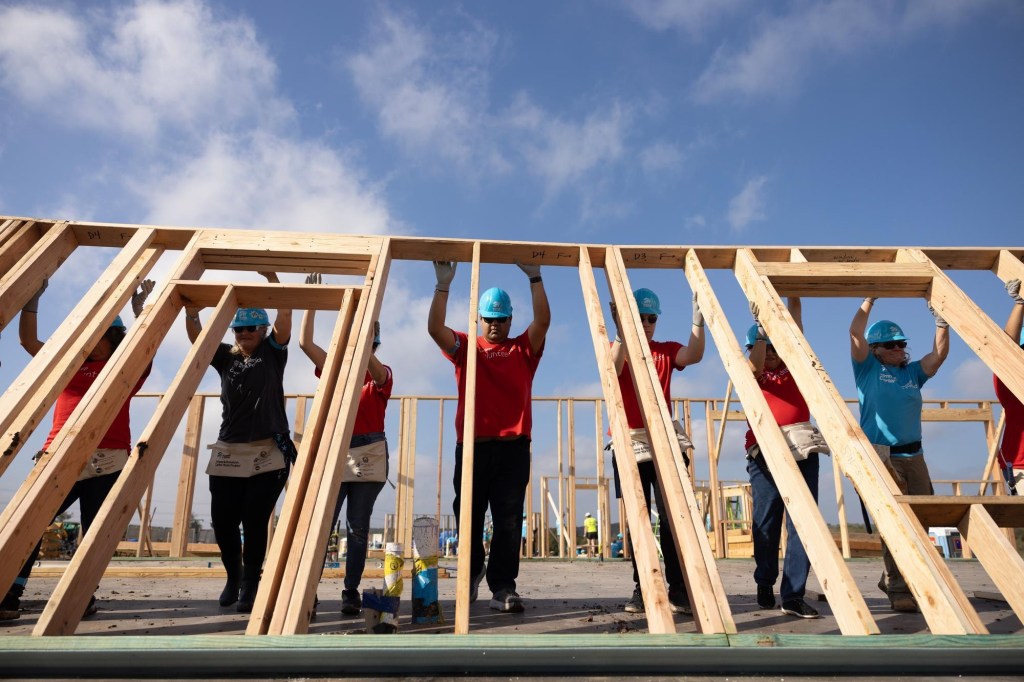
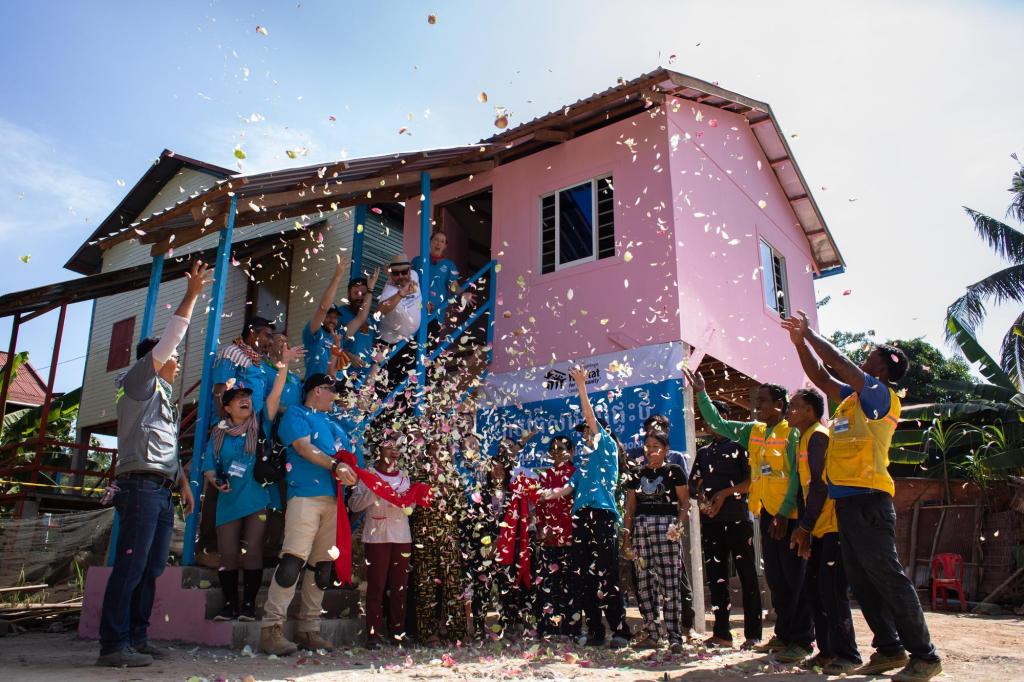
Volunteers raise a wall for the framework of a new home during the first day of building at Habitat for Humanity’s 2025 Carter Work Project. Globally, almost 3 billion people, including 1 in 6 U.S. families, struggle with high costs and other challenges related to housing. A crisis in itself, this also creates larger problems that affect families and communities in unexpected ways. People who lack affordable, stable housing are also more likely to experience financial hardship in other areas of their lives, since a larger share of their income often goes toward rent, utilities, and frequent moves. They are also more likely to experience health problems due to chronic stress or environmental factors, such as mold. Housing insecurity also goes hand-in-hand with unstable employment, since people may need to move further from their jobs or switch jobs altogether to offset the cost of housing.
Affordable homeownership creates a stable foundation for families to thrive, reducing stress and increasing the likelihood for good health and stable employment. Habitat for Humanity builds and repairs homes with individual families, but it also strengthens entire communities as well. The MicroBuild® Initiative, for example, strengthens communities by increasing access to loans for low-income families seeking to build or repair their homes. Habitat ReStore locations provide affordable appliances and building materials to local communities, in addition to creating job and volunteer opportunities that support neighborhood growth.
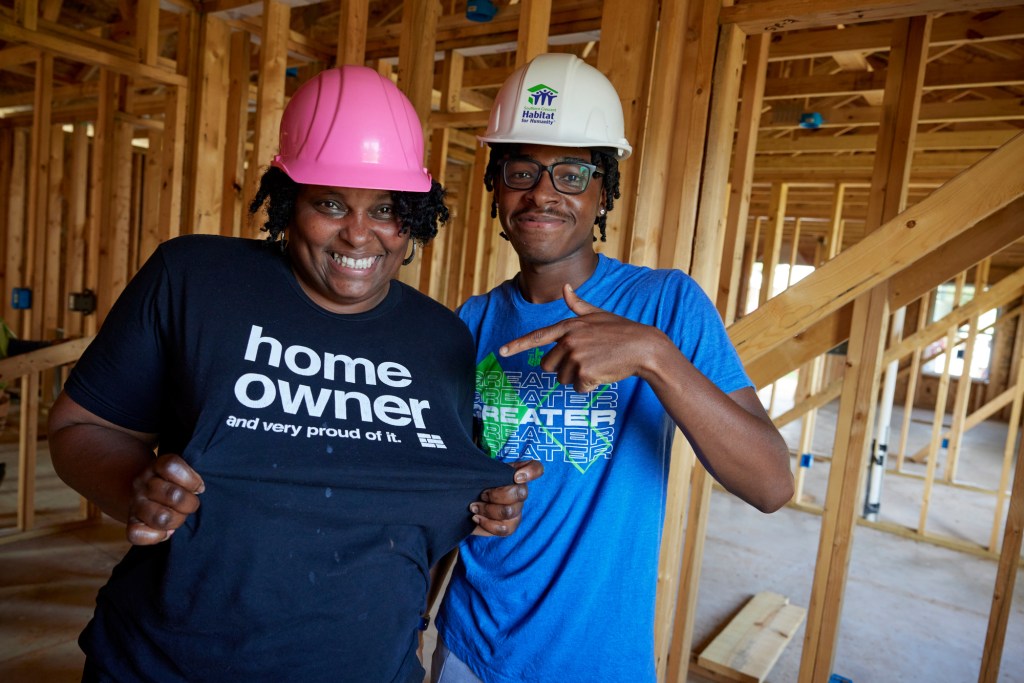
Marsha and her son pose for a photo while building their future home with Southern Crescent Habitat for Humanity in Georgia. Everyone can play a part in the fight for housing equity and the pursuit of a better world. Over the past 50 years, Habitat for Humanity has become a leader in global housing thanks to an engaged network of volunteers—but you don’t need to be skilled with a hammer to make a meaningful impact. Building an equitable future means calling on a wide range of people and talents.
Here’s how you can get involved in the global housing movement:- Speaking up on social media about the growing housing crisis
- Volunteering on a Habitat for Humanity build in your local community
- Travel and build with Habitat in the U.S. or in one of 60+ countries where we work around the globe
- Join the Let’s Open the Door movement and, when you donate, you can create your own personalized door
- Shop or donate at your local Habitat ReStore
Every action, big and small, drives a global movement toward a better future. A safe home unlocks opportunity for families and communities alike, but it’s volunteers and other supporters, working together with a shared vision, who can open the door for everyone.
Visit habitat.org/open-door to learn more and get involved today.
-
Richmond hospital’s 73-year-old ‘baby cuddler’ whispers these 6 words into every newborn’s ear
He calls his volunteer baby cuddler job “the best gig I’ve ever had.”
Volunteer work is often rewarding, but few volunteer gigs are as delightfully enjoyable as baby cuddling. Maternity wards around the country train baby cuddlers who provide human comfort for newborn babies in nurseries and neonatal intensive care units (NICUs).
One Richmond, Virginia, man shared with WTVR News why he shows up at Children’s Hospital of Richmond at VCU every Tuesday and Thursday to hold babies. Dave Whitlow, 73, has been a baby cuddler for eight years, calling it “the best gig I’ve ever had.”
Baby cuddling involves more than just holding babies

NICU babies need specialized care. Photo credit: Canva Cuddling babies in the NICU is delicate work. Whitlow puts on a gown and gloves before picking up the babies, who can sometimes weigh as little as two pounds. He’s been trained to watch the monitors while cuddling them. If a baby’s oxygen saturation dips, they may need to be repositioned.
Whitlow, a retired local government manager, also checks with the nurses to see what a baby’s specific needs are.
“I ask the nurse, ‘Tell me. Tell me what this child is receiving. What kind of treatment? Is there anything special I need to know about it?’” the father of two and grandfather of three told WTVR.
But perhaps the best part of Whitlow’s time with the dozen or so babies he cuddles each week is what he whispers in their ear: “Grow strong, grow smart, grow kind.”
That’s really what he wants from people in general, he said.
Baby cuddling is often a great way for retired people to volunteer, as it’s not too physically demanding.
How do you become a baby cuddler?
If baby cuddling sounds like a dream volunteer opportunity, check with your local hospital to see if it has a program. Some hospitals have volunteer coordinators you can speak with or sections on their websites for volunteers.
Though volunteer requirements differ from place to place, you can likely expect:
- age requirement (often a minimum age of 18 to 21)
- commitment of a certain number of hours per week over a minimum time period (such as a year)
- personal interview
- background check
- health screening, including immunization verification and updated flu vaccines
- orientation and training
Baby cuddlers serve an important purpose in infant care
Cuddling a baby may be beneficial for the cuddler, but it genuinely helps the infants as well. One study found that the length of stay in the NICU for newborns with Neonatal Abstinence Syndrome was six days shorter for babies who were part of a volunteer baby cuddling program. And according to Intermountain Healthcare, research shows that human touch helps a baby’s brain and body develop. Short-term and long-term benefits of positive touch for babies include increased stability in vital stats, faster weight gain, shorter hospital stays, better pain tolerance, improved sleep, stronger immune systems, and more.
Baby cuddling truly is a win-win volunteer experience, especially when you’re someone who whispers words of strength, wisdom, and kindness in babies’ ears.
-
Republicans and Democrats in Congress finally agree on something: hot rotisserie chicken
They’re healthy, cheap and oh so tasty.
Since the 1970s, people on the Supplemental Nutrition Assistance Program (SNAP), have not been able to purchase hot, prepared foods—only those they can cook at home. So, if you stopped by your local grocery store’s deli counter, you could have the cold mashed potatoes in the refrigerated section, not the warm ones next to the chicken.
The idea behind the ban is that lawmakers want to provide grocery assistance and not restaurant assistance. It’s believed that when you buy hot food, the government wastes money on preparation fees. While a strict cost-saving measure on the surface, it overlooks that 79% of SNAP households include someone who is elderly, has children, or is disabled, which can make meal preparation challenging.
A bipartisan group of lawmakers in the Senate recently warmed to the idea of allowing people receiving SNAP benefits to purchase the grocery-store staple: hot, prepared rotisserie chicken. These typically retail for $5 to $9, making them a great deal and a healthy, lean protein source. So, in this case, the hot, prepared chicken is a better deal for everyone involved.
Behold, the Hot Rotisserie Chicken Act
In April, a bipartisan group of Senators including Jim Justice (R-W.V.), Shelley Moore Capito (R-W.V.), John Fetterman (D-Pa.), and Michael Bennet (D-Colo.) introduced the Hot Rotisserie Chicken Act to amend the 2008 Food and Nutrition Act by allowing a carve-out for the food.
“America’s best (and delicious) affordability play is Costco’s $4.99 rotisserie chicken,” Fetterman said in the statement. “It’s one of my family’s favorites and I’m proud to join this bill with Senator Justice for all to try. SNAP funds would be well spent to feed our nation’s families who need it.”
On April 30, a similar amendment to the act was added to the broader Farm Bill with dramatic bipartisan support. The measure cleared the House with a 384 to 35 vote. It seems that with all the partisan bickering in America, we can all agree that everyone deserves hot rotisserie chicken.
However, the $390 Farm Bill package wasn’t greeted with such bipartisan enthusiasm. It passed on a partisan vote in the House of Representatives, 224-200, with only 14 Democrats in support, as it locked in a $187 billion cut to SNAP benefits through 2034.
After the passing of the Big Beautiful Bill last year, four million people lost some or all of their SNAP benefits, including: able-bodied adults without dependents who don’t work or volunteer at least 80 hours a month, refugees, those on political asylum, veterans, unhoused people, and former foster youth.

Rotisserie chicken at a warehouse store. Credit: Canva Why are rotisserie chickens so cheap?
Usually, prepared food is more expensive than buying it uncooked. However, there are multiple reasons why buying a whole rotisserie chicken at your local grocery store or Costco is more affordable.
At Costco, the chickens are a loss-leader, meaning if the $5 chicken gets you in the door, you’ll probably cruise through the store and spend $400 on frozen fish, a 40-lb bag of dog food, 48 rolls of toilet paper, and an oversized holiday lawn decoration. In some grocery stores, rotisserie chickens are offered at a great price because they are butcher leftovers that may soon expire. Instead of throwing out the unsold raw chickens, they roast them and sell them at a discount.
-
A confidence expert shares a simple body language gesture that signals if a person is trustworthy and confident
Dr. Shadé Zahrai, PhD, explains how neck flexion can impact confidence.
Confidence is not always easy to have in social settings, especially when meeting new people. In 2021, a YouGov study found that 37% of Americans reported feeling “not very confident” in new social groups.
But there may be a simple gesture that can help you appear more confident. During a recent episode of communication expert Jefferson Fisher’s podcast, he sat down with Dr. Shadé Zahrai, PhD, a confidence expert and author of Big Trust: Rewire Self-Doubt, Find Your Confidence, and Fuel Success. Dr. Zahrai shared a body language gesture that can help indicate if a person is confident or not.
She explains the tell-tale sign is in the upper body. “The distance between the chin and your chest,” she tells Fisher.
What confident body language looks like
Dr. Zahrai explains why the distance between the chest and chin can indicate confidence.
“When you’re slouching, when you’re withdrawing, when you feel insecure, yeah sure shoulders go…but it’s also your head that drops,” she says, gesturing her head to tilt downwards. “So if you can just think, ‘Okay, what is the distance between my chin and my chest, and how do I elongate it? Not by looking at the ceiling, but in a natural state, you will naturally feel more empowered.”
Dr. Zahrai suggests that this also builds a sense of trustworthiness between others that will encourage connection.
“And you will naturally convey more of that big trust energy that we’re seeking,” she adds. “The idea is when you’re showing up as the person you want to be, people then respond to that.”
She notes that it has a snowball effect and can feel contagious to people you interact with.
“They respond more positively to that, which then makes you feel, ‘Maybe I really do deserve this. Maybe I do have a voice that is valued’,” she shares. “And then you show up more like that, and then they respond. So we almost create our environment based on how we choose to show up.”
According to Dr. Zahrai, this gesture is a term called “neck flexion.”
What is neck flexion?
The source for Dr. Zahrai’s confidence body language suggestion comes from a 2025 study published in the journal Psychophysiology. Researchers found a direct correlation with neck flexion (the act of lowering the head) to negative impacts on feelings of power (i.e. confidence) as well as lower moods.
Dr. Zahrai expanded on this during another podcast appearance delving into neck flexion research, where she explained that it “leads us to feel more insecure, more doubtful of our ourselves. All we need to do is lengthen this distance right here [as she’s signaling with her fingers between her chin and chest], and we will start to feel more powerful.”
How to feel confident besides body language
Body language may be one aspect to feeling more confident, but these are a few more tips from the American Psychological Association (APA) that may help boost your confidence:
Try self-affirmations
Research supports self-affirmations for better personal and social well-being. You can do this by reflecting on your core values, identity, and positive traits.
Celebrate your successes
Confidence without impostor syndrome can be achieved by reminding yourself of both big and small personal “wins”—things like receiving an email with positive feedback or not moving on too fast when someone congratulates you.
Build your resilience
Building resilience is an important part of building confidence in yourself. The APA notes that there are four parts to building resilience: connection, wellness, healthy thinking, and meaning. These include things like continuing to connect with others through empathy, taking care of your body, moving towards goals, and learning from the past to build a more confident future.
-
Elderly people are asked their ‘favorite age of life,’ and their answers are truly beautiful
“You can still hit milestones at 93!”
When we think back to what we might deem the best of times, at least in terms of age, the answers are multilayered and, of course, subjective. For some, it’s age five, when even the smallest dandelion seemed whimsical. For others, it’s freshman year of college, when we perhaps felt truly autonomous and ready for reinvention.
At the Carrington Court Assisted Living and Memory Care facility in Utah, elderly residents were asked the simple question: “What was your favorite age of life?” While The Beatles’ “Here Comes the Sun” underscores the video, a handful of people give their unique answers. Many of them are downright surprising.
In one clip shared on Instagram, we see senior citizens tackling the question. The caption reads, “You can still hit milestones at 93!” The first woman in the clip answers quickly. “25,” she says. She’s asked why, and she laughs while explaining, “My dad had bought me a new convertible car for my birthday. And I just drove it and drove it and drove it!”
We cut to the next resident, who answers, “About 63. Not too long ago, because I was looking forward to retiring.”
The next woman has a harder time making a choice. “I have so many,” she shares, “because my children have been very busy in their life and I’ve been busy in mine, and enjoyed what we were doing.”
A man is asked, and he doesn’t have to think about it long. “Last year!” This is followed by the obvious question: “Last year? How old were you?” He vulnerably shares, “Oh my goodness. I don’t remember.” But when his memory is prompted, he remembers he’s now 94. He continues, “Last year. Because I had no interest in life until this wonderful woman here brought it back to me.” The camera then pans over to the woman who had answered 63. She chuckles lovingly while absorbing the compliment.
Another man who is asked the same question says, “My favorite year of life would have to be probably when I was 17 or 18, because I was able to win a contest on a project I had made on my own lathe or a project on my dad’s lathe. And it took first place.”
Other videos shared on their social media pages show residents being asked the same question, with various answers: “Hopscotch, true love, babies, childhood farms.” Whatever it was for each, it was tied to moments embedded in their memories that brought them pure bliss.
The comment section seems moved by their answers, with plenty of opinions of their own. Some share how they would have answered: “I’m gonna vote 63, although I’m not there yet.”
This person can’t decide: “Who can pick just one… first true loves, seeing bands and just livin’… then the kids come along, and is anything better? Then they’re gone, but you’ve got money and time, and still can party and have fun… and I’m supposed to pick one, no can do.”
A few offer success stories from people in their lives: “My widowed aunt got remarried at 94. She’s now 99.”
Another had a similar experience with a family member: “My Mom met the love of her life at 80 in her Assisted Living home. They loved life together for the rest of their lives.”
The truth is that well-being researchers have studied the topic of happiness for quite some time. The consensus, at least for a handful of people, seems to be that we’re happiest in our twenties, take a big dip in middle age, and rediscover happiness again in older age.
This is known as the U-shaped happiness curve. While some dispute its accuracy and are quick to point out biases (as is often the case with studies), many take solace in the idea that there is always hope. And instead of thinking of “40” as “over the hill,” as it used to be so popular to claim, the idea that it’s actually uphill after—or at least could be—is promising.
Even just from the tiny sample received from the senior living home, it seems pretty clear: it’s not over till it’s over.
-
Hotel employee shares how to make hotel eggs, and warns ‘you might never want them again’
“Whelp, that’s ruined my appetite.”
Some explainer videos fill you with a newfound sense of appreciation for little things you took for granted. This is not one of those times.
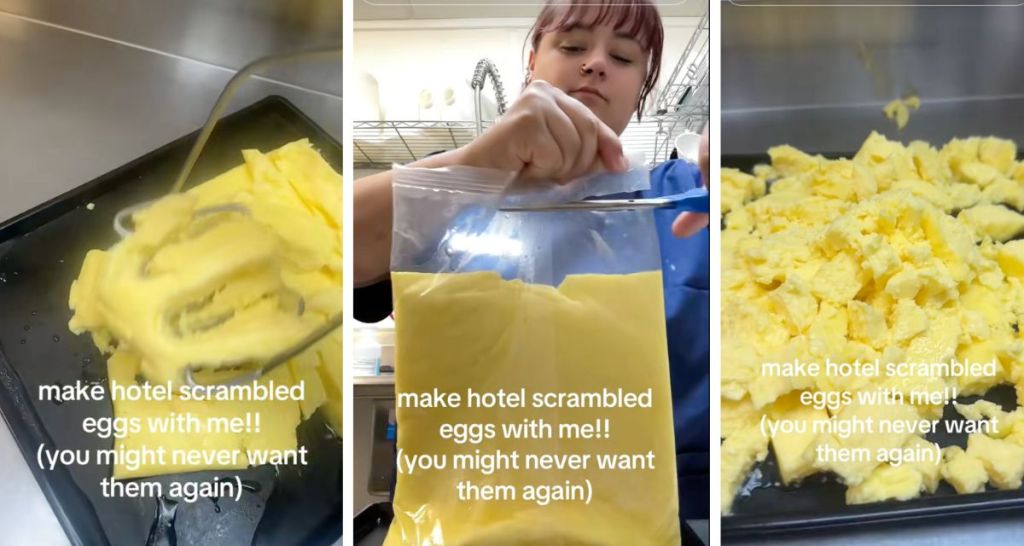
“Make hotel scrambled eggs with me,” Elizabeth Emmert, a hotel kitchen worker, began in a now mega-viral clip on TikTok.
However, before delving into the process, she warned, “You might never want them again.”
What followed was a breakfast routine that seemed better suited for a spaceship—or maybe a horror movie
Nary an egg was to be seen as Emmert grabbed a plastic bag full of sunny yellow goop (yum) and tossed it into a microwave. After the egg sack cooked for a few minutes, its yolk-like contents coagulated into a squishy, solid substance. She then cut the bag open, dumped the contents into a tray, and mashed them into small chunks.
And voilà: hotel eggs.
“Whelp, that’s ruined my appetite,” one viewer lamented
“[Hotel eggs] taste like they’re made exactly like that,” quipped another.
Why hotels use pre-mixed eggs
There are a few benefits hotels and other buffet-style establishments get from using pre-scrambled batches for their breakfast rushes. The first and most obvious is efficiency. Pre-mixed eggs allow for large-batch cooking in advance, without the need to crack hundreds of shells or do as much cleanup. Not to mention, you get a consistent batch virtually every time.

Eggs cooking in a skillet. Photo credit: Canva Then there’s cost. Premixed eggs are significantly cheaper, at around 19 cents per ounce (according to one restaurant food supplier, at least). Compare that to anywhere from $2.50 to over $6.00 for a carton of eggs.
However, this method does come with health concerns
Apart from the fact that these “eggs” may not taste as good as the real thing, there are a few other issues to consider. For one thing, the longer this dish sits out, the greater the risk of salmonella and other bacteria—especially if the tray remains open and the heat source goes out.
Plus, depending on the brand of liquid or powdered eggs the hotel is using, there may be preservatives in the mix to improve shelf life. And then, as many mentioned, there’s the potential consumption of what one viewer calls the “secret ingredient” of hotel eggs: microplastics.
And yet, for some commenters, there simply isn’t a deterrent strong enough to decline a free breakfast
“I mean if it’s free with stay, I ain’t complaining.”
“Girl move, I DON’T CARE. Give me my free hotel breakfast.”
“Lil pepper and hot sauce and some of that nasty cheap bread toasted and I’m all set babe.”
To each their own. But suddenly, the yogurt-and-banana option looks way more appetizing.
-
Blue Zone expert shares why partying all night isn’t decadent, it’s a key to longevity
You should no longer have to fight for your right to party.
In American culture, which still carries a hint of Puritanism from its early years, excessive partying can be seen as hedonistic, immature, and unhealthy. Party people are often criticized for being undisciplined, directionless, and irresponsible with their money.
Dan Buettner, a National Geographic fellow and expert on Blue Zones, says that going out and dancing until the crack of dawn is good for us and can even help us live longer. He learned the power of partying through his research on Blue Zones, five regions of the world where people live longer and have the greatest chance of reaching 100.
The five Blue Zones are:
- Ikaria, Greece
- Loma Linda, California
- Nicoya Peninsula, Costa Rica
- Okinawa, Japan
- Sardinia, Italy
“So in America, we tend to associate partying with decadence. But in the Blue Zones, partying is actually a longevity hack,” Buettner said in an Instagram video. “Why? Because when people get together for celebrations in the Blue Zone, they’re dancing. It can be an all-night dance party where they’re getting great physical activity. They’re remaking social bonds that exist throughout the village, and they last for years.”
Buettner adds that in many Blue Zones, people don’t just party to hang out with their friends; they also help their communities.
“In Icaria, for example, people donate all the food and the wine. The partygoers pay for that food and wine, but the proceeds all go to a school or to build a bridge the village needs or to a family that’s down on its luck,” he said. “So it’s this beautiful, virtuous circle. People get physical activity, build their connections, and help others. That’s what builds a Blue Zone, and that is the foundation to longevity.”
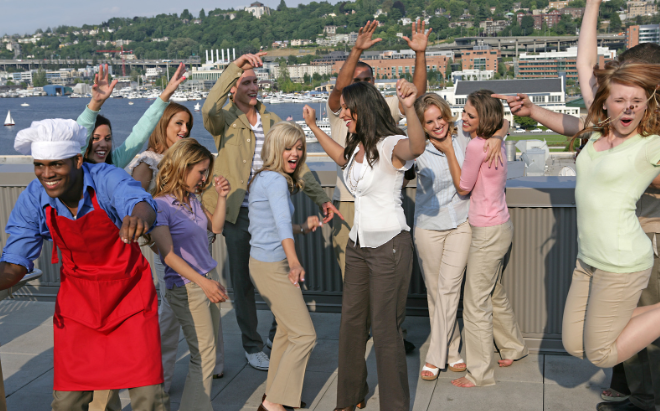
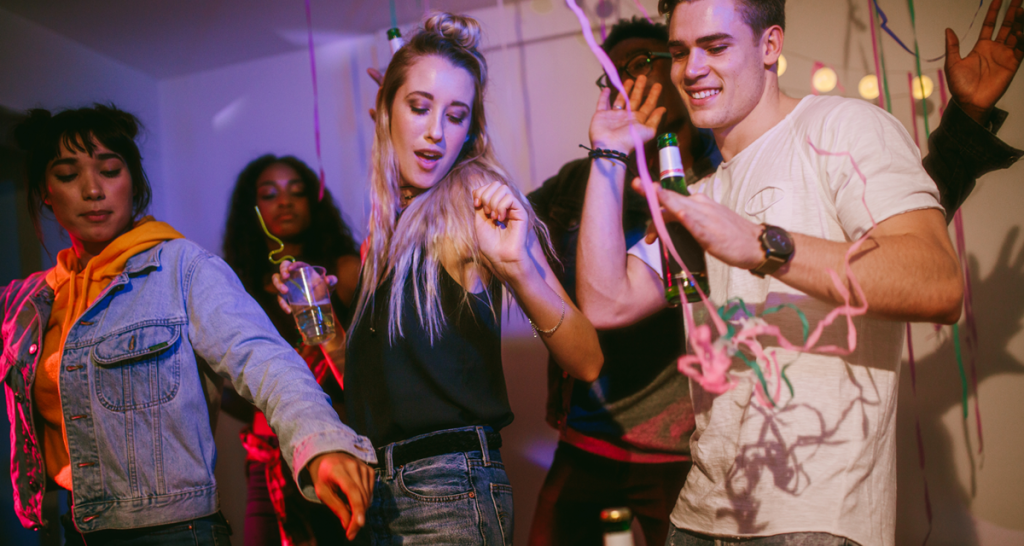
People enjoying a dance party. Photo credit: Canva What are the “Power 9”?
According to Buettner, there are nine common denominators across the five Blue Zones, and their party habits satisfy four of them:
Move Naturally
Dancing and milling about socializing is practical exercise. “The world’s longest-lived people don’t pump iron, run marathons, or join gyms. Instead, they live in environments that constantly nudge them into moving without thinking about it.”
Downshift
A party is a great way to de-stress after a hard week. “What the world’s longest-lived people have that we don’t are routines to shed that stress.”
Wine At 5
There’s nothing wrong with having a drink or two; in fact, it may help with longevity. “People in all Blue Zones (except Adventists) drink alcohol moderately and regularly.”
Purpose
Having a party that supports the community gives people a sense of purpose. “Knowing your sense of purpose is worth up to seven years of extra life expectancy.”

People in the club. Photo credit: Canva The remaining “Power 9”
The remaining “Power 9” includes:
- 80% Rule (eating smaller meals)
- Plant Slant (eating a lot of vegetables and beans)
- Belong (having a faith-based community)
- Loved Ones First (centenarians in the Blue Zones put their families first)
- Right Tribe (strong social networks)
Buettner’s video asks us to rethink what’s really going on when people go out to party. On the one hand, it can look decadent, but on the other, we’re building stronger social connections, getting some exercise, and enjoying a few drinks—which may help us live longer.
-
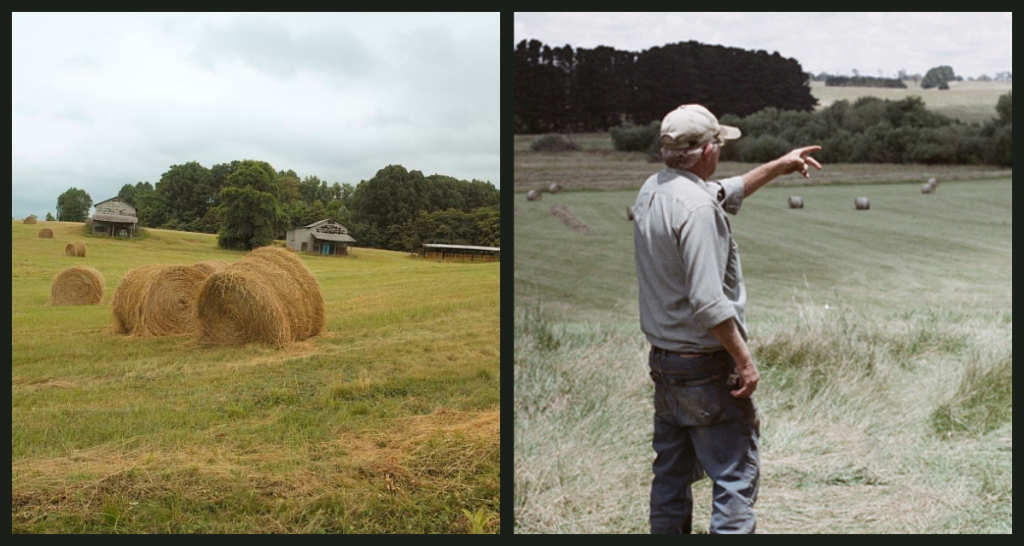
76-year-old farmer refuses to leave his Godley Green land, even as 2,150 homes are built around him
Alan French has already been pushed out of two homes. He’s not moving again.
From the outside gate, Far Meadow Farm looks quite standard. A fenced-off riding area with two horses; hens pecking at the ground. Trees gather around the buildings, and in the gaps between them, you can see glimpses of the moors beyond: windy, dramatic landscapes shaped by wild remoteness, rain, and lacerating winds.
Here, on a small farm in Godley, a bucolic suburb in northwest England on the edge of Manchester, you’ll find farmer Alan French, a 76‑year‑old local who refuses to let his little slice of pastoral heaven disappear—not again.
“I just think, piss off, leave me alone, I’m not moving. Every time I move somewhere developers want it,” French told the Manchester Evening News. “This is no longer a rural place. It’s going to get worse if they get their way.”
Before moving to Godley, French had to leave two previous homes to make way for development. Now, he’s been here for 17 years, and the humble farmer is fed up. As a huge new housing project backed by Tameside Council closes in around him, he keeps repeating the same four words to anyone who asks what happens next: “I am not moving.”
A life of being pushed along
French grew up in the days when the strip of land between the Tameside and Stockport boroughs still felt rural, its fields and farmhouses sitting just outside Manchester’s reach. As the city expanded, housing estates descended on places like Romiley, a village just a few miles south of Godley, and local councils turned to a planning tool that lets them seize land for “the greater good.”
In the United Kingdom, it’s a compulsory purchase order, or CPO. In the United States, it’s eminent domain, the power government agencies use to acquire private land for things like highways, schools, pipelines, and housing.
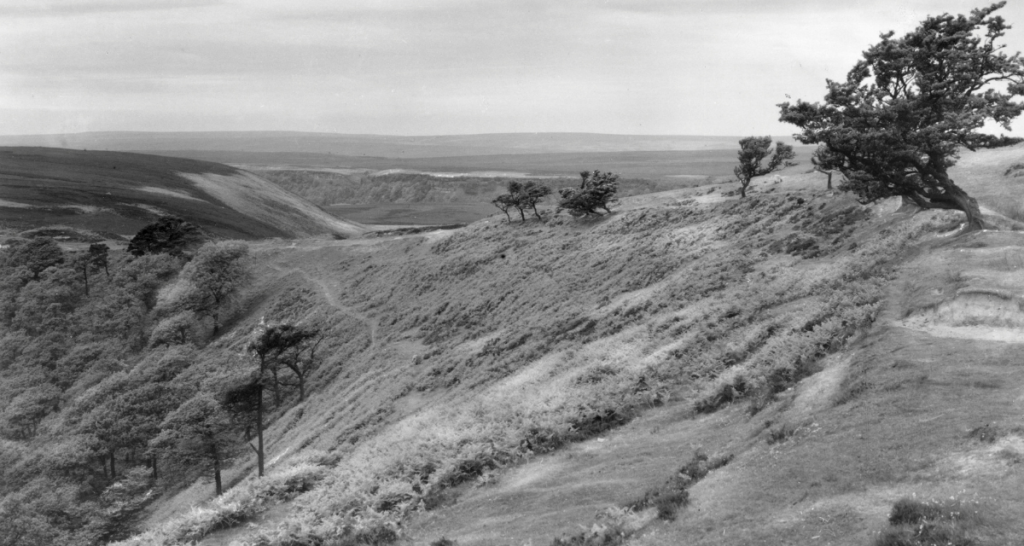
The moors of England. Photo credit: Canva Over the course of his life, French has had to leave two homes: both in Romiley, both because of compulsory purchase orders tied to development projects. That’s a pattern.
Now, with Godley Green Garden Village looming, he’s scared it’s happening again. Yet the 76-year-old farmer remains resolute: he will not sell Far Meadow Farm voluntarily.
What’s coming to Godley
For Tameside Council, Godley Green Garden Village is not just another development. It’s their flagship, a 15-year project that will see 2,150 homes built between Hyde and Hattersley, east of Manchester. The site sits on land that used to have green belt status, a planning zone meant to keep cities from sprawling endlessly outward. Places for Everyone, a region-wide development plan, removed this particular patch’s protected status, clearing the way for housebuilding.
Greater Manchester, like most big U.S. metros, has a housing crisis you can feel in people’s lives. Local reports describe tens of thousands of people on social housing waiting lists. Younger households can’t find anything affordable near work. Older residents struggle to downsize. Tameside Council argues that schemes like Godley Green are how they meet government-set housing targets and give more people decent places to live.
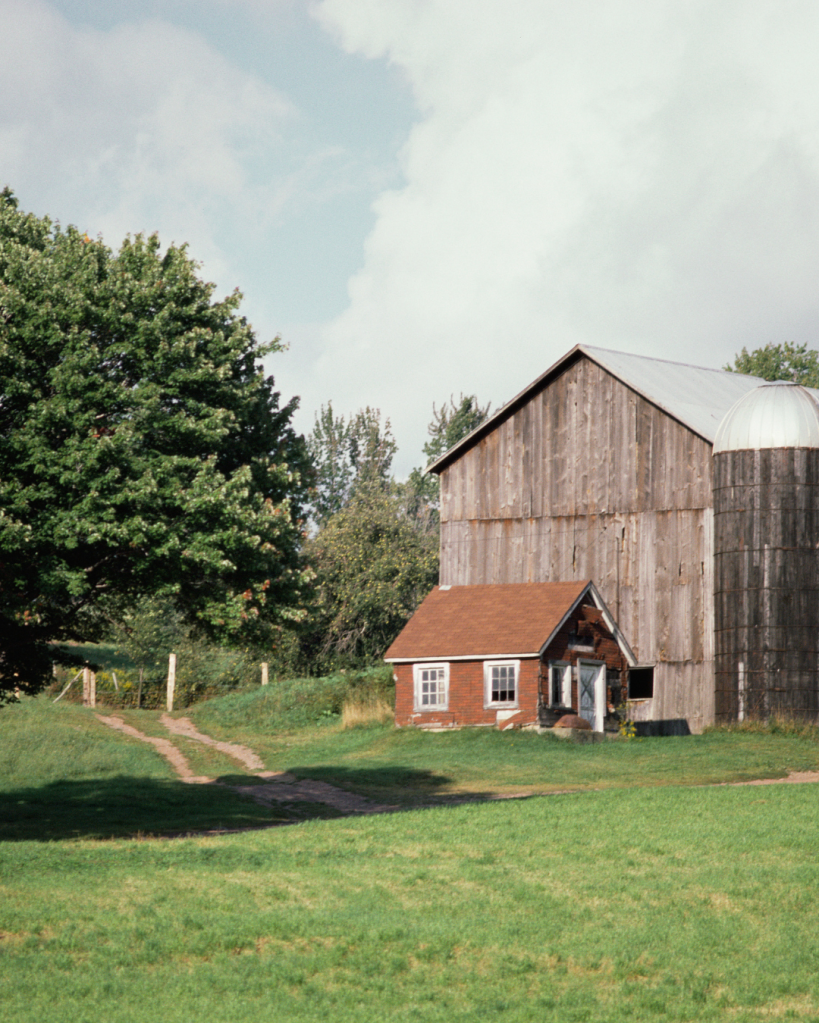
A farm. Photo credit: Canva The outline for Godley Green goes like this: two “village” centres on either side of a small waterway called Godley Brook, each with some shops, commercial space, and community facilities. Developers say they’ll reserve more than half the land in the final master plan for open space, parks, and habitat areas. The plan also includes expanded school options, healthcare facilities, sports fields, and walking paths. About 15% of the homes—roughly 323—will count as “affordable” in a mix of rentals and ownership schemes.
Council leaders echo that language. They say the scheme has been “thought through carefully” and describe a “natural, representative community” with homes for young families, single people, and retirees. They also point to the money the project will bring for roads, schools, healthcare, and other infrastructure. Exact dates shift, but the broad picture is this: infrastructure starts soon, then the first homes a couple of years later, with a full build-out carried out over 15 years.
A community speaks out
For people in charge of meeting housing targets, Godley Green looks like a necessary piece of a large puzzle. But for those who already live there, it looks like something else.
Campaigners like Anne Tym, whose family owns land earmarked for development, emphasize that “the green belt is there for a purpose.”
During the planning process, more than 4,000 objectors spoke out against the new housing development. “Save Tameside Greenbelt” groups have sprouted up, warning residents that this new, utopian village will “ruin” an area they’ve walked, ridden, and worked on for decades. Many residents do not need to wait 15 years; their once-rural home already feels like a city, and they cite increased traffic and decreased wildlife.
“All the green space is being turned urban,” French told one reporter. “The wildlife we’ve got here is becoming less. The deer used to come into the ménage with their babies. There was one dead last week on the road because the traffic is ridiculous.”
Life on the edge of “maybe”
French’s farm sat inside early development maps for Godley Green. More recent outlines appear to wrap around him rather than over him; he now believes he’s right on the edge of the red line, while neighbors report compulsory purchase orders have landed in their mailboxes.
Planners claim compulsory purchases will be a “last resort” and that they’re trying to strike private deals with landowners first. But they also make clear they can’t rule it out. For French, that’s not reassuring.
He doesn’t go to the consultation meetings anymore. “I can’t be bothered with it all,” he told Manchester Evening News. “I’m done with it.”
Friends and other farmers come back with updates: another committee meeting, another map, another speech about targets, homes, and growth. At planning hearings, some of them hold up banners with his name; he lets them do the shouting while he stays with the horses.
In the meantime, he feeds Yan and Tommy at the same times every day because the animals don’t care what’s on the council agenda. He points out where he can still see moorland between the trees. On some mornings, if the light is right and he looks in the right direction, it’s still possible to forget that a 15‑year construction project could soon begin on the other side of that horizon.
He knows, intellectually, that he doesn’t “own the view.” A council officer reminded him of that once. But he also knows what it feels like to lose more than bricks and mortar when a place goes. When asked where he’d go if he did have to leave, he tends to shrug. He hasn’t let himself imagine it.
“I love it here. It’s the happiest I’ve ever been,” he said.
This isn’t just a British story
If you live in the U.S., you don’t need a deep understanding of U.K. planning law to understand the shape of this. Swap the moors for a cornfield in Iowa, a ranch outside Austin, or a farming community in rural Georgia, and the outlines look familiar.
In America, the tools have different names—eminent domain instead of compulsory purchase orders, highway expansions instead of garden villages—but the basic tension is the same: a government or corporation says, “We need this land,” and your options are either to obey or to get out of the way.
All over the country, farmers have fought wind farms that cut across their fields, arguing that easements and buyouts do not compensate for a way of life being sliced up. In cities like Denver and Atlanta, long-time landowners watch new subdivisions march across what used to be their neighbors’ pastures and wonder when someone will knock on their own door.
Almost every major U.S. city now carries its own version of the Godley Green argument: We need more housing, but where do we put it without erasing the people and places that already make a place feel like home?
Holding two truths at once
It would be easy, and maybe emotionally satisfying, to file French’s story under “heroic farmer vs. greedy developers” and call it a day. It would also be easy to shrug and say, “Well, people need somewhere to live,” and move on.
The harder, truer version lives in between.
On one hand, Greater Manchester does need more homes. So do San Francisco, Phoenix, Denver, and Detroit. Young families in cramped rentals and older folks stuck on waiting lists are not imaginary abstractions; they are as real as French and his horses. On the other hand, someone has to pay the price of that new stability. In French’s case, that bill has come due three times in one lifetime.
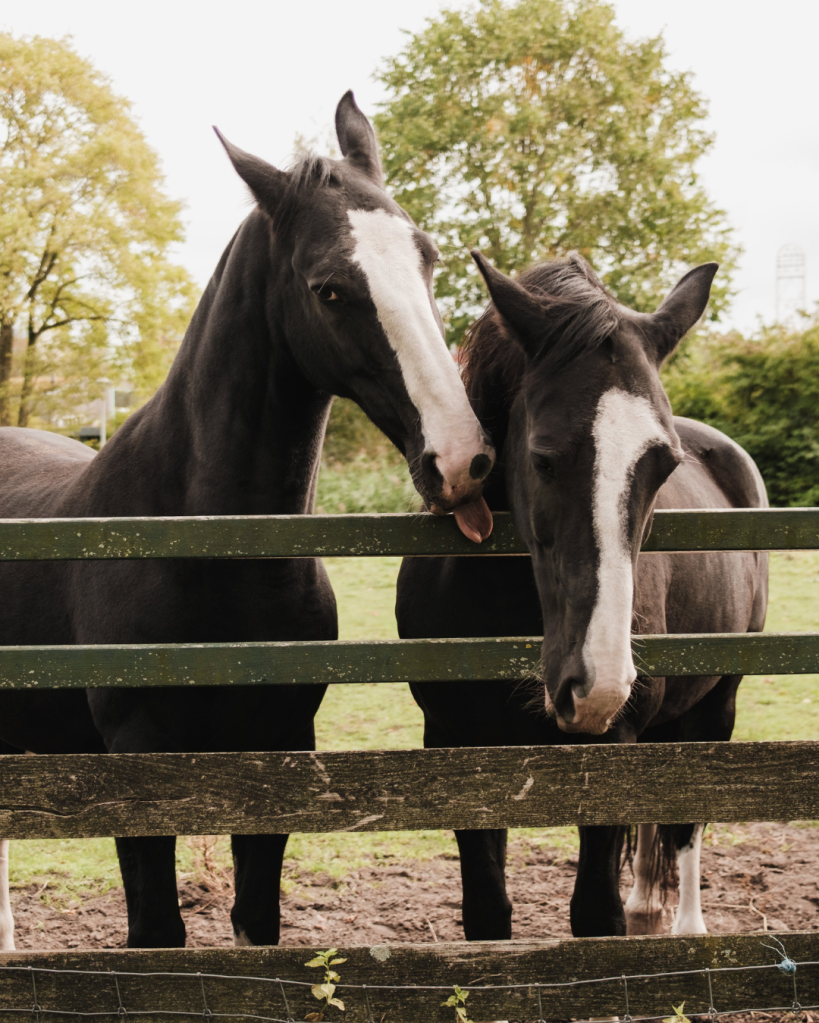
Two horses behind a gate. Photo credit: Canva As of early 2026, Tameside councillors have granted planning permission for Godley Green again after a brief refusal. Infrastructure work could begin soon. The full build‑out will take about 15 years. No one knows how long French can hold his line. No one knows if a CPO notice will ever arrive with Far Meadow Farm on it.
For now, the story looks like this: a 76‑year‑old farmer gets up in the morning, feeds his animals, and looks out over fields that, on paper, already belong to the future. Beyond his fence, a council talks about “modern placemaking” and “representative communities.” In between those two visions is a question neither side has quite answered yet in England or in the U.S.:
When we say we’re building for the public good, how many times do we expect the same people to move?
-
A professor’s students gave him 152 pages of wisdom they’d learned from him. It’s a must-read.
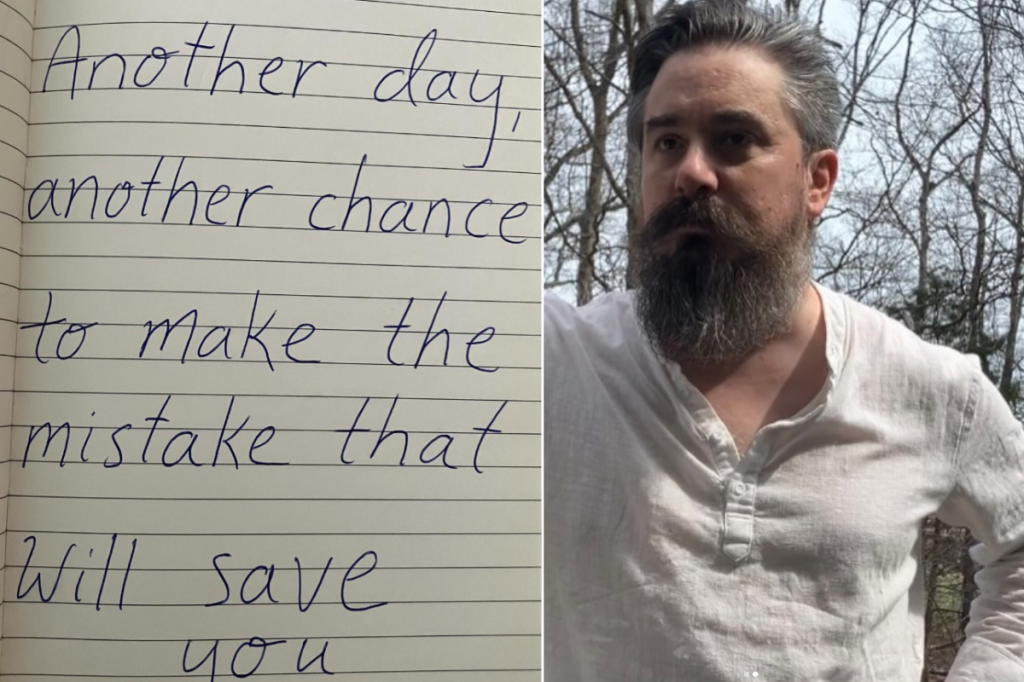
“Another day, another chance to make the mistake that will save you.”
Everyone remembers their favorite teachers. What we often can’t remember are the exact moments that left such a fond impression on us.
And while good teachers help us understand their subject, the absolute best of them help us think differently about the world.
Author taught a first-year college course and noticed some strange student behavior
Years ago, Joseph Fasano, a poet, writer, and author, was teaching an introductory college course on composition, writing, and critical thinking. By all appearances, he was crushing it.
“One semester I thought [my students] were just really focused on taking notes,” he wrote in a recent Instagram post, noticing that the students were spending an awful lot of time scrawling in their notebooks.
He wasn’t wrong, but it wasn’t the material in his lectures they were paying attention to. They weren’t diligently taking notes just to pass an exam.
“Turns out they were compiling a book of all the slightly unhinged things I’d said. It’s 152 pages long,” he wrote.
As an author and poet, Fasano has more than a way with words. He has a way of capturing essential truths and reflecting them in ways that are incisive and memorable. His students were eager not to let those nuggets escape them. Once the book was completed, they gifted it to him, and he calls it “the best thing my students ever gave me. … I love these kids.”
The first page reads, “You once said in class that you wanted to be sure that what you were saying was being heard and absorbed. Well… here ya go.”
A few of the most memorable quotes from those 2016 lectures, as handwritten by Fasano’s students:
“Who taught you wonder, love, and learning were supposed to be easy?”
“Your assignment is to read a writer someone told you not to.”
“Every day of your life is a rough draft.”
“Another day, another chance to make the mistake that will save you.”
“The only thing more painful than becoming yourself is not becoming yourself.”
Fasano may call the quotes “unhinged,” but the rest of us just see wisdom.
The post went viral, and people are wishing they could have taken Fasano’s course
The post racked up 179,000 likes and 1,300 comments in just two days, and the response has been nothing short of overwhelming. A few standouts:
“This is the best thing I’ve ever seen. You can actually see how you’ve positively influenced your students. What more could we want as teachers?”
“This book needs to be published.”
“Do you teach classes for 23 year old girls preferably for free”
“And evidently they love you. What an accomplishment. I hope this book gives you the peaceful sleep you have earned. Please do not stop.”
“This is the most thoughtful, touching thing ever. What great kids. What a great teacher. Thank you for your passion, for inspiring them and for making the best kind of impression on them. What a gift!”
Calm wisdom like this lands hardest when times are tough
A few sentences scribbled in a notebook. A couple of motivational quotes. Why are Fasano’s words landing and resonating so deeply with hundreds of thousands of social media users?
“I have a feeling it is resonating with people because we’re all looking for a teacher, a guide, an adult in the room,” Fasano told Upworthy. “Especially when those seem to hard to find right now.”
The words are beautiful and memorable, but they wouldn’t have quite the same impact if we didn’t have physical proof that they touched his students. They were compelled to write them down, and it’s easy to imagine that taking that introductory course with him may truly have changed the way some of them viewed the world.
Though Fasano only teaches occasionally, he continues his work as a poet and author. Fellow poet Dorothea Lasky described him as “A poet brave enough to return poetry to its troubled and eternal origins…This is the poet I trust to see the world as it is, quietly writhing around us.”
Fasano was able to pass on some of his gift to his students. But what’s even cooler is what they were able to give back to him—and so did thousands on social media.
“This is clearly the good side of social media,” he wrote on Instagram regarding the flood of appreciative and heartfelt messages. “I can’t (but can) believe people are this beautiful.”




Health
Richmond hospital’s 73-year-old ‘baby cuddler’ whispers these 6 words into every newborn’s ear


Skills
A confidence expert shares a simple body language gesture that signals if a person is trustworthy and confident

Generations
Elderly people are asked their ‘favorite age of life,’ and their answers are truly beautiful

Get stories worth sharing delivered to your inbox.
Advertisement