upworthy
Add Upworthy to your Google News feed.
Google News Button
More

A Muslim-American mother explains what it's like to talk to her kids about terrorism.

The other day, I was watching CNN when a picture of San Bernardino's female terrorist, Tashfeen Malik, flashed onto the screen.

My 6-year-old daughter immediately turned to me and exclaimed, "Mom, that bad girl is a Muslim!"

My heart stopped for a second. As a mother, I've tried shielding my children from news of ISIS and American terrorists — whether they shoot innocent people at an office party or a Planned Parenthood clinic. Isn't that a natural instinct for most parents, wanting to shield your young ones from life's ugly realities as much as possible?


Image via iStock.

Except there's only so much shielding you can do. Especially when you're a Muslim.

"Mom, that bad girl is a Muslim!" my daughter said. "Look, she's wearing a scarf on her head just like you do!" I'm not only a Muslim mother who wears a headscarf. I'm also a writer and public speaker, focusing on stories of Muslims and training law enforcement on cultural sensitivity. I often appear on radio and television to talk about the effects of these media stories on the average, law-abiding Muslim American. That means my 6-year-old daughter and 9-year-old son know a little too much about how ugly this world can be.

Image via iStock.

I want my children to feel safe and loved. But what do you tell your children when the news is full of people "of your tribe" doing something horrible and evil?

I've been digging into that question, searching for suggestions and insights from experts. And while I've found a lot of good advice for post-terrorism parenting making the rounds online, not all of it addresses the specific challenges my family, and so many others, are facing.

Here are some key pieces of advice most commonly shared by experts and how I've made them work for our family:

1. "Assure children that these attacks are rare and the chances of anything ever happening to them are next to nothing."

A friend recently told me that every time her high school son passes someone in the hallway, people yell, "Bomb!" Another friend told me her 7-year-old daughter was nicknamed "ISIS" by her classmates.

Even more than terrorist attacks, my children are scared about how others will view them because they look like some of the terrorists they're seeing on the news.

Image via iStock.

While President Obama has repeatedly cautioned us not to lump all Muslims into the same box, Muslims are still regularly on the receiving end of hate speech and threats.

Which is why we need to talk to our kids — all of them — about bullying.

In a world already hurting, we all need to work together to help Muslim children understand that they are not any less loved or valued because of their faith. (It's worth pointing out that many brown-skinned people like Sikhs and Hindus are mistaken for Muslim, too.)

Teachers, principals, and school administrators should do the same by reminding their staff and students that faith-based teasing is not acceptable.

Image by nick chapman/Flickr.

2. "Talk about how the child feels rather than giving information about the who, why, what, and where."

For my family, it's impossible to escape the "who." And it's (naturally) always followed by questions about why. The day after the San Bernardino attack, my son, listening to the news in the car on the way to school, asked me, "Mommy, if those people were Muslim, why did they kill someone? Don't they know Islam means peace?" These aren't easy questions, and I don't have all the answers.

But I take this opportunity to talk to my children about Islam and its inherently peaceful teachings.

We looked through the Quran and found the verse, "Whoever kills a soul … it is as if he has killed all mankind, and whoever saves a soul, it is as if he has saved all mankind" (5:32).

I show them all the commandments about being peaceful, kind, loving, and just. That's the reaffirmation of faith I and my family need in times like these.

Image by Tarang hirani/Flickr.

3. "Shut off the television and radio and spend time with the family."

I want to be able to shut it all off. Yet I need to stay connected — not just for work, but for my sense of my family's safety. Switching off the television means not knowing what presidential candidates are saying, how Muslims are responding, what the latest advisories by Muslim civil rights groups are, and so much more.

That's why I'm trying to focus on listening to unbiased news reports instead of talk shows full of hateful rhetoric when my kids are around.

After my son casually told his sister that the word Islamic is actually a code word for evil, I stopped listening to the radio in the car when I drop my kids off at school. I find websites like Fairness and Accuracy in Reporting and some NPR programs to be more balanced than the main cable news channels.

Ultimately, that's the best way I know to protect my children from the painful words others are using against their faith, and I'm hoping other parents do the same so that we don't promote intolerance in future generations.

Image via iStock.

4. "Remind children that many people in the government and the community are working hard to keep them safe."

While that's certainly true of terrorist attacks, it's harder to make the case for Muslims right now. Adults and children are being harassed in the street, spit on in buses, and so much more. My children can see what the American Muslim community is going through, and it's almost impossible to shield them from it.

Last week, the father of my daughter's friend was escorted off a plane for looking suspicious and then detained by the police for hours. His face on the news was recognizable and she cried, "Mom, why did the police catch Amna's dad?" It's so heartbreaking and frustrating to watch my children grow wary and afraid.

I told her that loving other people, taking care of them, and making sure we help them when they're in need is what makes a Muslim.

That's why it's so important to get involved in showcasing a positive side of Islam and Muslims.

Whether you're a Muslim or not, getting to know your Muslim neighbors, visiting Islamic organizations, and learning about the positive contributions Muslims make in their communities can change the narrative and counter stereotypes. Virtually every city with a Muslim presence has a charitable or social service arm.

This week, my kids and I are buying holiday gifts as part of a mosque project to give to sick children in our local cancer hospital. You can also contact your nearest charity or two of the largest national charitable organizations — Islamic Relief USA and ICNA Relief — for projects to help with.

Image via iStock.

At the end of the day, keeping communication open is key. Sometimes only an honest heart-to-heart talk with your child will do.

When my daughter was so upset about seeing a terrorist wearing the same head covering as her mother, I told her to remember there are bad people in the world, no matter their religion.

I told her that loving other people, taking care of them, and making sure we help them when they're in need is what makes a Muslim.

I told her we are in this world to be kind and good.

I coaxed her into a better mood by telling her stories of the Prophet Muhammad who gave up everything he had for others. I'm an author after all, and I know the power of storytelling.

My daughter was silent for a long time, which means she was thinking about what I said.

At her age, I know I'll have likely have to repeat the message many times. But at least she was thinking about it, and today, that's all I can pray for.

generation jones, gen jones, gen jonesers, girls in 1970s, 1970s, teens 1970s
Image via Wikimedia Commons

Generation Jones is the microgeneration of people born from 1954 to 1965.

Generational labels have become cultural identifiers. These include Baby Boomers, Gen X, Millennials, Gen Z and Gen Alpha. And each of these generations is defined by its unique characteristics, personalities and experiences that set them apart from other generations.

But in-between these generational categories are "microgenerations", who straddle the generation before and after them. For example, "Xennial" is the microgeneration name for those who fall on the cusp of Gen X and Millennials.


And there is also a microgeneration between Baby Boomers and Gen X called Generation Jones, which is made up of people born from 1954 to 1965. But what exactly differentiates Gen Jones from the Boomers and Gen Xers that flank it?

- YouTube www.youtube.com

What is Generation Jones?

"Generation Jones" was coined by writer, television producer and social commentator Jonathan Pontell to describe the decade of Americans who grew up in the '60s and '70s. As Pontell wrote of Gen Jonesers in Politico:

"We fill the space between Woodstock and Lollapalooza, between the Paris student riots and the anti-globalisation protests, and between Dylan going electric and Nirvana going unplugged. Jonesers have a unique identity separate from Boomers and GenXers. An avalanche of attitudinal and behavioural data corroborates this distinction."

Pontell describes Jonesers as "practical idealists" who were "forged in the fires of social upheaval while too young to play a part." They are the younger siblings of the boomer civil rights and anti-war activists who grew up witnessing and being moved by the passion of those movements but were met with a fatigued culture by the time they themselves came of age. Sometimes, they're described as the cool older siblings of Gen X. Unlike their older boomer counterparts, most Jonesers were not raised by WWII veteran fathers and were too young to be drafted into Vietnam, leaving them in between on military experience.

How did Generation Jones get its name?

generation jones, gen jones, gen jones teen, generation jones teenager, what is generation jones A Generation Jones teenager poses in her room.Image via Wikmedia Commons

Gen Jones gets its name from the competitive "keeping up with the Joneses" spirit that spawned during their populous birth years, but also from the term "jonesin'," meaning an intense craving, that they coined—a drug reference but also a reflection of the yearning to make a difference that their "unrequited idealism" left them with. According to Pontell, their competitiveness and identity as a "generation aching to act" may make Jonesers particularly effective leaders:

"What makes us Jonesers also makes us uniquely positioned to bring about a new era in international affairs. Our practical idealism was created by witnessing the often unrealistic idealism of the 1960s. And we weren’t engaged in that era’s ideological battles; we were children playing with toys while boomers argued over issues. Our non-ideological pragmatism allows us to resolve intra-boomer skirmishes and to bridge that volatile Boomer-GenXer divide. We can lead."

@grownupdish

Are you Generation Jones? Definitive Guide to Generation Jones https://grownupdish.com/the-definitive-guide-to-generation-jones/ #greenscreen #generationjones #babyboomer #generationx #GenX #over50 #over60 #1970s #midlife #middleage #midlifewomen #grownupdish #over50tiktok #over60women #over60tiktok #over60club

However, generations aren't just calculated by birth year but by a person's cultural reality. Some on the cusp may find themselves identifying more with one generation than the other, such as being culturally more Gen X than boomer. And, of course, not everyone fits into whatever generality they happened to be born into, so stereotyping someone based on their birth year isn't a wise practice. Knowing about these microgenerational differences, however, can help us understand certain sociological realities better as well as help people feel like they have a "home" in the generational discourse.

As many Gen Jonesers have commented, it's nice to "find your people" when you haven't felt like you've fit into the generation you fall into by age. Perhaps in our fast-paced, ever-shifting, interconnected world where culture shifts so swiftly, we need to break generations into 10 year increments instead of 20 to 30 to give everyone a generation that better suits their sensibilities.

This article originally appeared two years ago. It has been updated.

boss, angry boss, mad boss, benihaha chef, laptop

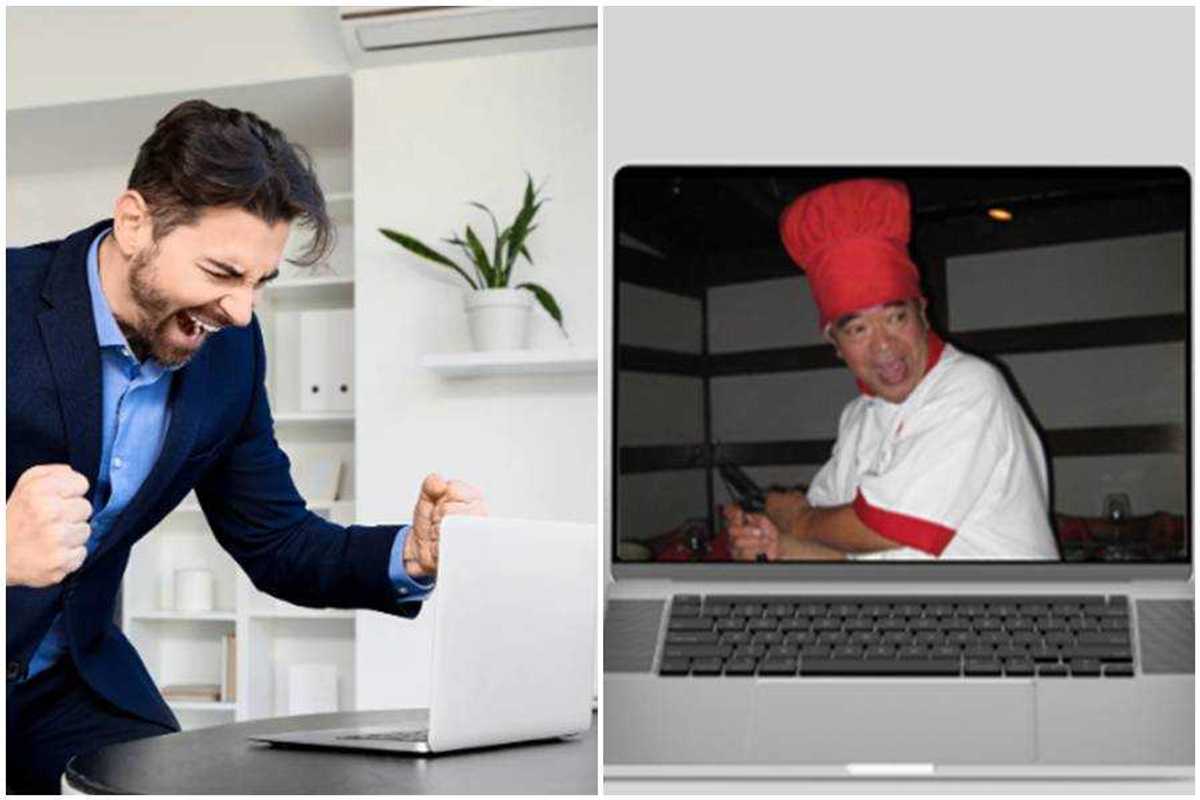
A boss is fed up with his employee's antics.

One of the most frequently debated topics in professional etiquette is which foods are appropriate to eat in the office. People often take offense when others cook smelly foods, such as fish or broccoli, in a shared microwave. It can also be rude to bring a bag of snacks into a meeting as a lot of folks don't want to hear chewing while they're trying to think.

When it comes to remote workers, people are even less sure about proper eating etiquette. Is it okay to eat a large meal during an all-hands meeting? One remote worker recently claimed they pushed those boundaries to the limit when their boss allegedly did something most employees would find rude: He scheduled meetings during lunchtime and showed zero interest in apologizing for it.


office, office kitchen, office fridge, workers, employees An office kitchen.via Canva/Photos

"I used to take my lunch break at the same time every day - 12 to 1. I don't eat breakfast (just coffee and lots of water), so my lunch is essential, and I can't just skip it," a Redditor wrote. "My calendar was blocked, but my boss (newly promoted, power-tripping) started scheduling meetings right in the middle of it."

At first, it wasn't a problem, but it became a habit. "The first couple of times, I let it slide," the employee continued. "Figured maybe it was urgent. But then it became a pattern. I pushed back and reminded him that it was during my break, and he said, 'Well, we all have to make sacrifices sometimes.'"

spaghetti, mean spaghetti, pasta, italian food, lunch An angry man eating spaghetti.via Canva/Photos

Sometimes? That would make sense if the boss only occasionally scheduled lunchtime meetings, but this was becoming a regular thing. So, the employee decided they wouldn't skip lunch and would make the meeting as uncomfortable as possible.

"Next meeting, I showed up with a full plate of spaghetti and meatballs. Had my camera on and mic unmuted, slurping and chewing, occasionally gave thumbs up while mid-bite," they wrote. "A few days later, it repeated, so I brought sticky wings. Last week on Thursday, it happened again, glad I still had my pizza."

"We all have to make sacrifices sometimes"

After the boss started noticing a trend, he spoke up: "Do you have to eat during the meeting?" The employee had the perfect response: "I smiled and said, 'We all have to make sacrifices sometimes.'" During the following week, the boss didn't schedule any lunch meetings.

The post went viral. After receiving countless awards from readers, the poster joked about new and inventive ways they could get back at their boss, including dressing up as a Benihana chef and performing an onion volcano, heating cheese mid-meeting with a fondue pot, and carving a massive tomahawk steak on camera.

The Redditor also claimed they purposely behaved obnoxiously during the meeting to further drive home their point. But where do people draw the line when it comes to eating during a remote meeting?

Kate Noel, head of People Ops at Morning Brew, said it's important to read the room:

"All Zoom meetings are not created equal," Noel wrote. "If it's with your closest teammates, it's probably nbd. But if you feel nervous about eating your sushi on camera, then you might want to wait until after the awkward goodbye waves at the end of your meeting. Not for nothing, you could probably get away with keeping your video off during a larger group meeting to eat food. But at your own risk, so choose your own adventure."

Culture

26 words that have gone nearly 'extinct' in the English language

"Comely (meaning beautiful) and homely (meaning ugly)."

words, english words, old words, old fashioned words, disappearing words, extinct words

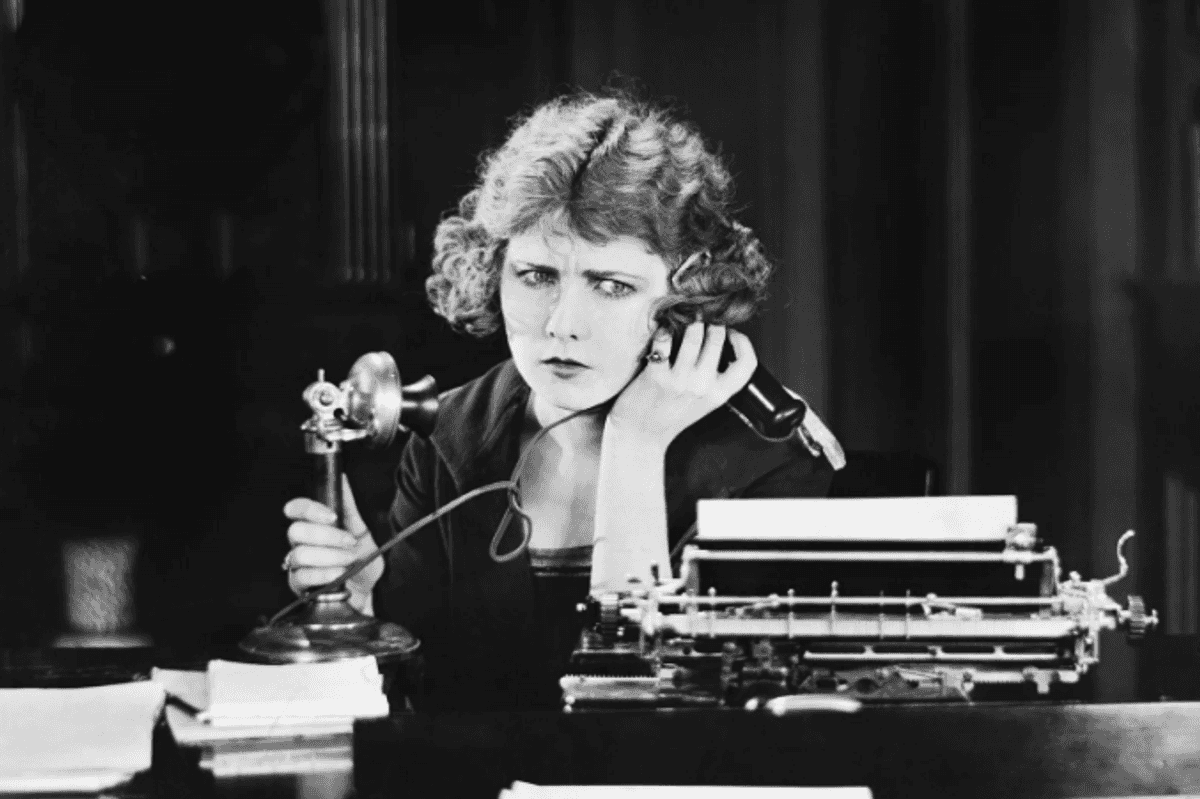
Black and white 1920s woman on the phone.

Our vernacular is always changing. Every generation has its own slang words, from Xennials to Millennials and Gen Z.

In 2025, Dictionary.com deemed '67' as the word of the year, the Oxford University Press claimed the word of the year was "rage bait," and Merriam-Webster claimed it was "slop."


In an interview with the BBC, host Kate Colin offered an example of words that have disappeared in English when she opened a segment for the broadcasting network with this greeting: "Good morrow! I beseech thee, whence comest thou?" (Translation: "Good morning. Where do you come from?")

- YouTube www.youtube.com

Colin noted that this phrase was "Old English" used hundreds of years ago, and a great example of "disappearing words." Colin's co-host Jackie Dalton added, "Yes, English is a language which is evolving all the time. So this mean there are new words continuously appearing, and older words are disappearing."

In English, words are here today and will likely be gone tomorrow. Language lovers on Reddit shared their favorite old-fashioned words that have gone nearly "extinct" in English today (and many they wish would make a comeback).

26 disappearing words

"Overmorrow. It means 'the day after tomorrow'." - TheGloveMan

"I remember the word 'grody' from the 90s. It meant gross or yucky." - Glittering_Age_5591

"Comely (meaning beautiful) and homely (meaning ugly)." - oddwithoutend, Suspicious_Art9118

"Rolodex. There was something great about those. My own was a desk model with a lockable closing cover. Something about the tangibleness, the physicality and the control. Having the different kinds of cards and card covers, hearing them click when you spun it. I was sad to let it go." - Matsunosuperfan, BASerx8

"Bitchin' (meaning excellent)." - fox3actual

"Yellow pages." - Matsunosuperfan

"Forsooth." - fingermagnets459

Merriam-Webster notes that the definition of forsooth is "in truth : indeed —often used to imply contempt or doubt; now usually used to evoke archaic speech." It comes from Middle English and dates back to the 12th century.

"Lunting: walking while smoking a pipe." - RainbowWarrior73

@pbsdigitalstudios

Wouldn’t it be a dilly idea to bring back these 1900s slang words!? Which one fractured you the most 😅 Let us know in the comments and catch up on episodes of Otherwords with @Dr. Erica Brozovsky on the Stoired YouTube channel! #slang #english #language #linguistics #history #vintage @PBS

"Only a 'square' would remember things like that." - EighthGreen

"'Cattywampus' also sometimes known as 'catawampus'. A cool word that you don't hear much anymore." - Dead_Is_Better

"I use finagle and my high school students think I'm so weird. I'm 47. This word is normal." - MLAheading

"Frippery, at least in American English (think it's used in France for thrift shops?)" - KobayashiWaifu

Merriam-Webster notes that the definition of frippery is "finery, also an elegant or showy garment; something showy, frivolous, or nonessential." Its origins are Old French and date back as far as 1568.

"Handsome (when describing a woman)." - Odd-Scheme6535, Popular-Solution7697

"I love the word 'scrimshaw.' I don't hear it enough." - nocatleftbehind420

"Maybe not extinct but it's meaning completely obliterated: nonplussed." - LeFreeke

"Oblige. Rarely hear it except in old westerns." - ReadySetGO0

"Druthers." - Embarrassed_Wrap8421

- YouTube www.youtube.com

"Bogart. Monopolizing something that's meant to be shared." - CoderJoe1

"Bumbershoot." - kelariy

Merriam-Webster notes that "bumbershoot" is an American nickname for an umbrella that was first used in 1856.

"Ne'er-do-well. From the early 20th century, basically some who never-does -well, implying a slacker or underachiever. Although people never said it even when I was growing up, I still think it's a cool word." - fabgwenn

"Whippersnapper - a young and inexperienced person considered to be presumptuous or overconfident. I've heard people on TV say it, (maybe Dennis the Menace, or some other 50s show). I heard a 90 year old woman say it IRL and I laughed so hard." - JazzFan1998

"Xeroxing a document." - C-ute-Thulu

"Blatherskite." - Biff_Bufflington

Merriam-Webster notes that the definition of "blatherskite" is "a person who blathers [talks foolishly at length] a lot; nonsense." Its first known use dates back to 1650.

"I don't seem to hear penultimate much anymore." - TakeMetoLallybroch

"I'm quite fond of the word slubberdegullion, meaning 'dirty scoundrel'. I use it frequently when I talk to my senior, who is a rather clean upstanding citizen. We laugh and then he tells me to get back to work." - r-pics-sux

green eyes, funny story, viral video, humor, comedy
Photo credit: @margoinireland on Instagram

Did she get superpowers?

Going to the eye doctor can be a hassle and a pain. It's not just the routine issues and inconveniences that come along when making a doctor appointment, but sometimes the various devices being used to check your eyes' health feel invasive and uncomfortable. But at least at the end of the appointment, most of us don't look like we're turning into The Incredible Hulk. That wasn't the case for one Irish woman.

Photographer Margerita B. Wargola was just going in for a routine eye exam at the hospital but ended up leaving with her eyes a shocking, bright neon green.


At the doctor's office, the nurse practitioner was prepping Wargola for a test with a machine that Wargola had experienced before. Before the test started, Wargola presumed the nurse had dropped some saline into her eyes, as they were feeling dry. After she blinked, everything went yellow.

Wargola and the nurse initially panicked. Neither knew what was going on as Wargola suddenly had yellow vision and radioactive-looking green eyes. After the initial shock, both realized the issue: the nurse forgot to ask Wargola to remove her contact lenses before putting contrast drops in her eyes for the exam. Wargola and the nurse quickly removed the lenses from her eyes and washed them thoroughly with saline. Fortunately, Wargola's eyes were unharmed. Unfortunately, her contacts were permanently stained and she didn't bring a spare pair.

- YouTube youtube.com

Since she has poor vision, Wargola was forced to drive herself home after the eye exam wearing the neon-green contact lenses that make her look like a member of the Green Lantern Corps. She couldn't help but laugh at her predicament and recorded a video explaining it all on social media. Since then, her video has sparked a couple Reddit threads and collected a bunch of comments on Instagram:

“But the REAL question is: do you now have X-Ray vision?”

“You can just say you're a superhero.”

“I would make a few stops on the way home just to freak some people out!”

“I would have lived it up! Grab a coffee, do grocery shopping, walk around a shopping center.”

“This one would pair well with that girl who ate something with turmeric with her invisalign on and walked around Paris smiling at people with seemingly BRIGHT YELLOW TEETH.”

“I would save those for fancy special occasions! WOW!”

“Every time I'd stop I'd turn slowly and stare at the person in the car next to me.”

“Keep them. Tell people what to do. They’ll do your bidding.”

In a follow-up Instagram video, Wargola showed her followers that she was safe at home with normal eyes, showing that the damaged contact lenses were so stained that they turned the saline solution in her contacts case into a bright Gatorade yellow. She wasn't mad at the nurse and, in fact, plans on keeping the lenses to wear on St. Patrick's Day or some other special occasion.

While no harm was done and a good laugh was had, it's still best for doctors, nurses, and patients alike to double-check and ask or tell if contact lenses are being worn before each eye test. If not, there might be more than ultra-green eyes to worry about.

Netflix and chill, reddit, funny, millennials, millennial humor, tifu
Image via Canva

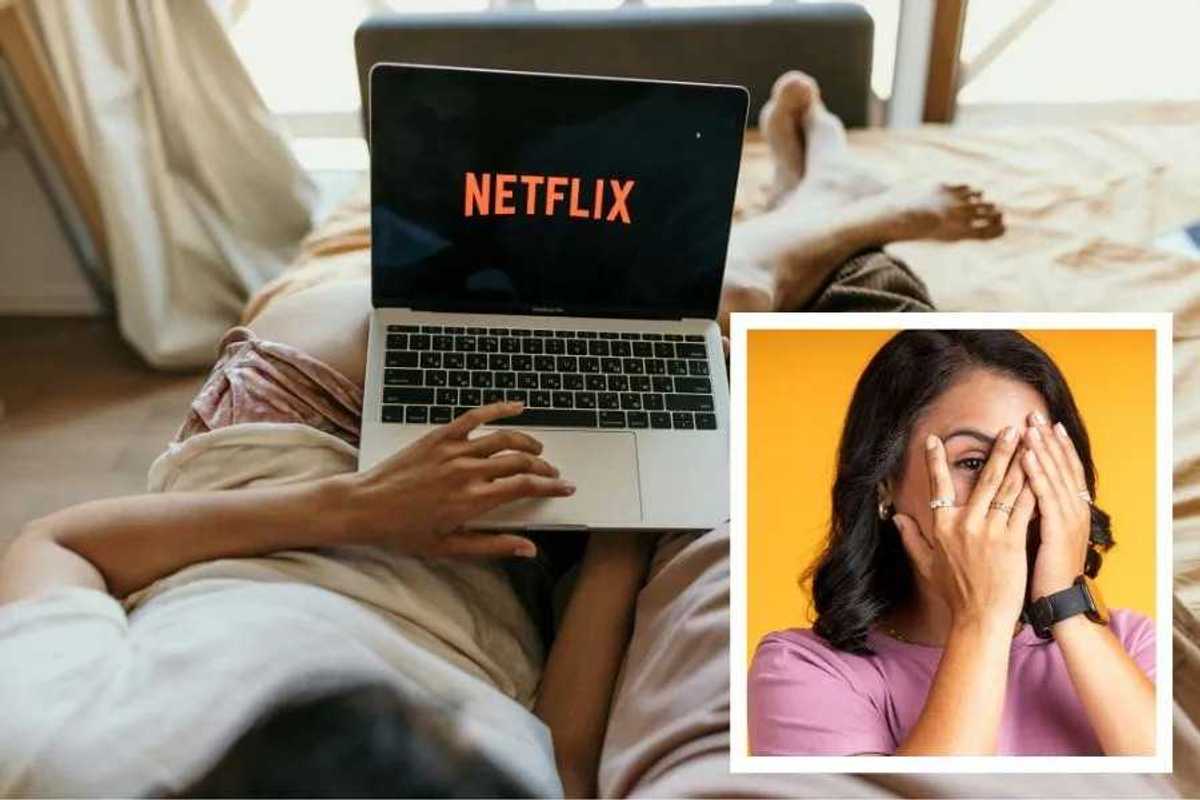
An image of an embarrassed woman interlaid with a picture of two people cuddling while watching Netflix.

For many, if not most of us, when someone uses the term “Netflix and chill,” we know it to be a euphemism for, well, not much TV watching.

And yet, not everyone knows that this phrase has sexual connotations, apparently. At least one 34-year-old female college professor recently admitted to not knowing. Too bad she had been using the phrase as one of her go-to “icebreakers” in class.


A teacher learns she’s been using “Netflix and chill” wrong

As she shared on Reddit, she would often list “Netflix and chill” as one of her favorite hobbies. Not only that, but whenever students mentioned how stressed they were, she would reiterate: “While it's important to study, it's also important to take time to relax and recharge, so I hope they are able to do something for themselves soon, like ‘Netflix and chill.’”

It wasn’t until she visited her husband for lunch at his work and struck up a conversation with two of his co-workers that she discovered her hefty misunderstanding.

“I'm currently on maternity leave and mentioned to his co-workers that I can't wait for my infant to be older so I can ‘Netflix and chill’ again instead of having to feed and change diapers,” she wrote.

When one of the coworkers had a “shocked look on his face,” the OP was “confused.” She couldn’t believe it when this person explained that it’s a “euphemism for hooking up.” And yet, when the other coworker, a 50-year-old female, said, "Oh he's right, even I know what that means!" there was really no denying it.

Photo credit: Canva


Well, understandably, this woman was “mortified” at having learned the truth and was “now terrified I'm going to be reported for sexual harassment because I guess I've been inadvertently telling my students I love to hook up and have been encouraging them to hook up, too??”

In her defense, it's true that “Netflix and chill” used to mean relaxing while streaming, but that was about 17 years ago. The context we are all familiar with has been around since 2015.


She also noted that she and her husband married young and therefore never spent much time on dating apps, which could help explain why she remained unaware. Plus, she lived at home and worked two jobs during her college years, which meant "Netflix and chill” was literally “Netflixing and chilling,” she quipped.

All in all, she chalked this up to being an “oblivious Millennial.” And by that, she meant a “Millennial who is clearly oblivious” to something “invented by Millennials and has been around for at least 10-15 years.”

Reddit's reactions

Down in the comments, people tried to ease her worries about the whole accidental harassment thing.

"They either thought you were adorably clueless, or just a very cool teacher. Don't sweat it."

“Either people figured she didn’t know and thought it was funny or just assumed they’re very open and sex positive. NBD either way.”

“Rate my professor: 10/10. She told me I can come over and netflix and chill anytime 🥵”

Others didn’t let her off so easily, especially when she surmised that her older coworkers also likely didn’t know what it meant.

“I was shocked when I opened the post and saw OP was 34. I expected her to be 64.”

“I am 38 and have known what it means since it’s been around. This definitely isn’t an age thing, this is a living under a rock thing lol”

“I’m an out of touch millennial but that’s been a saying for like a decade now. lol. You might be under a rock.”

Photo credit: Canva


Regardless, the OP has had a good sense of humor despite being mortified. She concluded her post by saying, “Anyone who has lived the past decade+ under a rock like me is welcome to come over to my place and literally chill and watch Netflix with me anytime! I'll supply the popcorn 🤣”

Listen, it’s bonkers when things like this happen, but they do happen. Is it embarrassing? Sure. But does it remind us that life is about laughing at ourselves? Also yes.