upworthy
Add Upworthy to your Google News feed.
Google News Button
Pop Culture

Millennial asks Gen Zers what they do for fun, and the answers are surprisingly different

There's something very different about Gen Z

gen z pasttimes, millennials vs gen z, millennial tiktok
@ashleyteacozy/TikTok

Every generation has it's own flavor of fun

The coming of age era known as your twenties are a time for experimentation, branching out, learning about different aspects of yourself, and of course, having stupid fun.

Of course, every generation's definition of fun varies. Just what might Gen Zers, those who navigated their teenhood through TikTok and basically came of drinking age during a global pandemic, do to elicit feelings of fun?

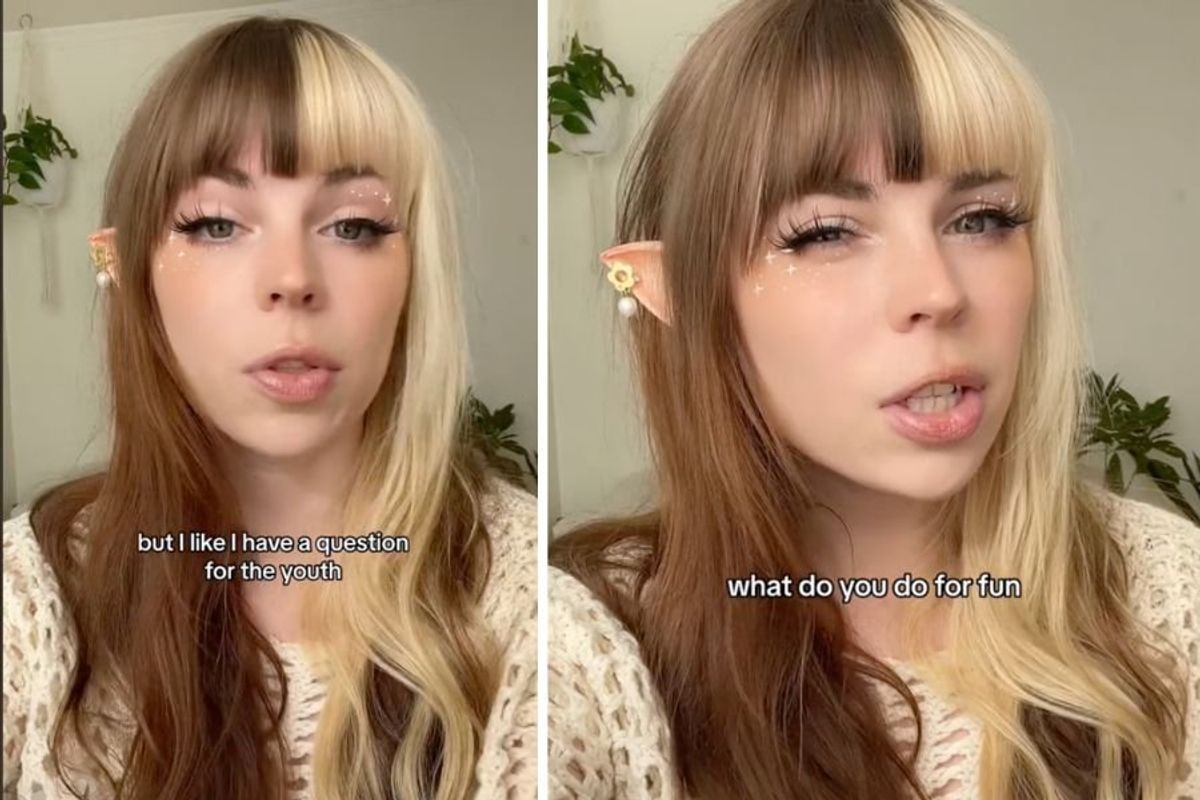
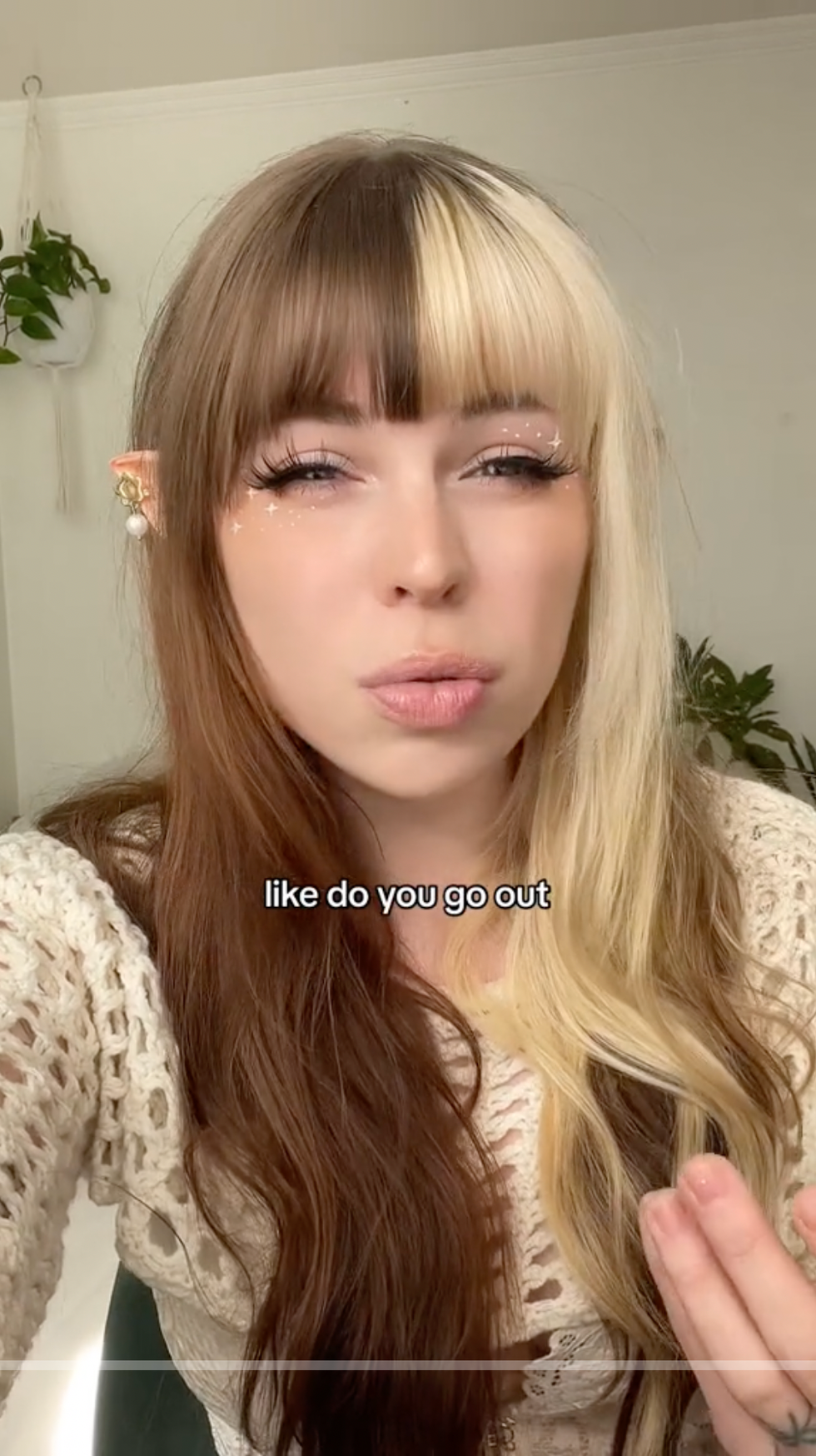
Thirty-two year old (read: millennial) Ashley Tea wondered this very thing. In a video that went viral on TikTok, she shared "I genuinely think millennials got to have a way better time than Gen Z does."

Millennials are already nostalgic about how they used to have fun 

Tea then reminisced about her own experience of being “an emo kid in 2005,” going out to clubs, bars and restaurants with her friends having a “fun, great, trashy” time.

That simply wouldn’t be financially feasible in today’s economic landscape, Tea noted, leaving her “mystified” as to how today’s college age adults might enjoy themselves.

So again, Tea posed the question: “ it's a Friday night, a Saturday night…What do do? Where do you go?”
gen z, cheap things to do for fun, fun activities

Ashley Tea wants to know how young people are having fun

@ashleyteacozy/TikTok

Thousands of Gen Z people responded with how they have fun and their answers were unexpected

The responses to Tea’s question, and their answers were…illuminating, to say the least—and certainly different than how she spent her early 20s.

For starters, Tea’s joke about “Gen Zers not having any fun at all” rang true for many people of that age group.

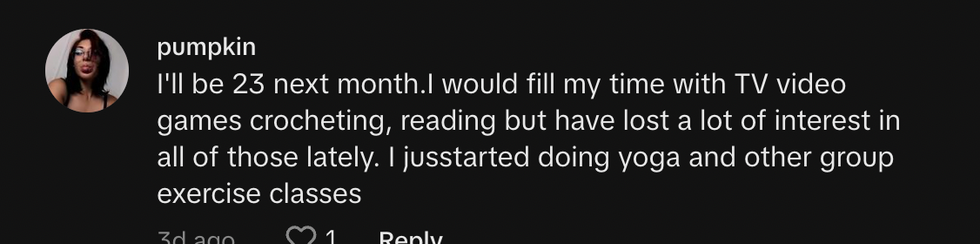
“As a 23 year old: I don’t have any fun, hope that helps!” quipped one person.

Another joked, “sometimes I sit outside if I'm feeling extra.”

gen z, cheap things to do for fun, fun activities

"Sometimes I sit outside if I'm feeling extra."

@ashleyteacozy/TikTok

One obvious factor behind this is finances. With everything being far more expensive, many Gen Zer’s simply cannot afford to have a social life that resembles earlier generations.

“As a 21 year old, the economy makes it difficult to have fun that way, I work 40 hours weekly and I’m either too tired or can’t afford it,” one person wrote.

Another reason, which isn’t maybe as obvious, is surveillance. Tea noted that a lot of young people said that since either “parents can track their phones everywhere” they are deterred from doing things that could get them into trouble. Perhaps that’s a win for safety, but there is something to be said about excessive levels of control.

Then of course there’s the pandemic, which sucked the fun out of everything big time.


“I got ROBBED of my early 20s bs COVID started when I was 22 😭 Nwo things are normal but all the good bars and clubs in my area didn’t survive the lockdown,” one person wrote.

Plus a lack of third spaces to gather, leaving very little options beside staying home and scrolling on TikTok.

However, it’s not all gloom and doom, Tea discovered.

@ashleyteacozy

im genuinely curious

♬ original sound - Ashley Tea

For one thing, Gen Zer’s don’t “glorify binge drinking” nearly as much as millennials and Gen Xers. According to a study held at the University of Michigan, many are forgoing booze entirely. Part of this comes down to Gen Zers prioriotizing health and wellness more than previous generations. And the other, again, is the cost.

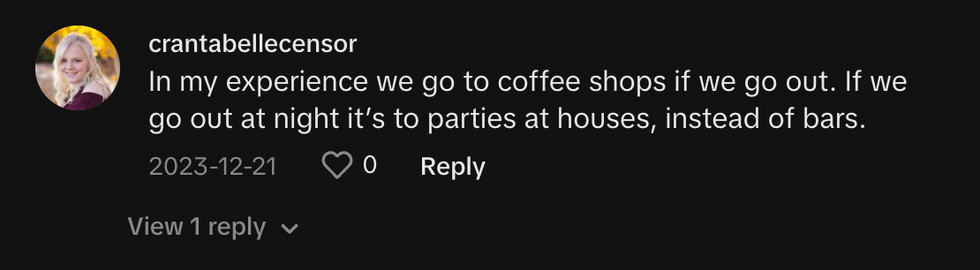
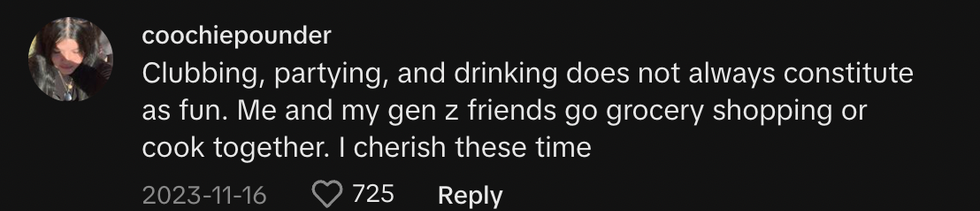
When Gen Zers do actually have fun, it tends to lean towards more wholesome activities, like house parties (sometimes even themes house parties) and crocheting. Lots and lots crocheting apparently.
gen z, cheap things to do for fun, fun activities

Grocery stores are the new clubs.

@ashleyteacozy/TikTok

gen z, cheap things to do for fun, fun activities

Love that self care is considered entertainment these days.

@ashleyteacozy/TikTok

gen z, cheap things to do for fun, fun activities

Fitness groups are a new way people are finding friends

@ashleyteacozy/TikTok

gen z, cheap things to do for fun, fun activities

Coffee shops instead of bars? Sign me up!

@ashleyteacozy/TikTok

So maybe things look quite a bit different for Gen Z than millennials or other generations

That’s not entirely a good or bad thing. And it’s definitely to be expected in some ways. The struggle of rising costs and limited opportunities to form connections and have fun are undeniably issues that must be addressed. But the fact that Gen Zers are leaning into their creativity is worth noting too. And it makes it clear that even though it might not look like it, there is still fun to be had.


This article originally appeared on 1.12.24

shhh, quiet, zip it, mouth closed, say nothing, be quiet

A woman zipping up her lips.

There are times to speak up, moments when it’s best to say nothing, and opportunities be very considerate in your response. But when you’re on the receiving end of a back-handed compliment, a foolish remark, or a coworker takes you down a peg, and your emotions are up, it can be hard to have a thoughtful response. Often, we say something we shouldn’t.

How is it that some folks fly off the handle and say things they’ll later regret, while others can stay calm and remove themselves from the situation or take the high ground? One way to be less impulsive with your words is to use the “name it to tame it” neuroscience hack, originally coined by author and psychiatrist Dr. Dan Siegel. When used properly, it allows you to step back from the moment and choose the best response in a challenging situation.


shhh, quiet, zip it, mouth closed, say nothing, be quiet A man saying "be quiet."via Canva/Photos

How to use the ‘name it to tame it’ hack

When someone upsets you, the first thing to do is to go inside yourself and describe the emotion that you feel in your body. Are you angry? Are you sad? Are you afraid? Do you feel rejected? Are you disappointed? The moment you name the emotion, it will begin to subside and give you the emotional and mental room to respond to the person who caused the negative emotion, rather than impulsively reacting.

How to respond to a reactive emotion so you don’t fly off the handle:

Event happens:

1. Your body stiffens up

2. You feel an intense emotion

3. You examine the emotion and give it a name: “My body is telling me I am angry.”

4. You should feel the emotion beginning to subside

5. Choose your response instead of being impulsive

shhh, quiet, zip it, mouth closed, say nothing, be quiet A woman zipping up her mouth.via Canva/Photos

Why does ‘name it to tame it’ work?

“Name it to tame it” works because, when we have a strong emotional reaction, our lizard brain kicks in, and we go into fight, flight, or freeze mode. The lizard brain is not known for giving thoughtful and strategic responses to challenging situations. When we name the emotion, our prefrontal cortex, or the thinking brain, kicks in. The thinking brain looks at the situation and says, “Alright, we don’t need to run or fight here. It's best to give a strategic response.”

When we tune into the negative emotions by naming them, they relax because they feel heard, like when a child has hurt their knee or a loved one has real concern and you gives them undivided attention. Once the emotions are named, they are tamed. Then, you are more likely to respond to the negative person with grace and speak from the best part of yourself.

Dr. Dan Siegel, who coined the phrase “Name it to tame it,” explains the brain science behind the technique in the video below. He does a great job of explaining how it allows us to transfer our thoughts from the downstairs brain (the lizard brain) to the upstairs brain (the thinking brain), so we can calm down and respond appropriately to the situation.

- YouTube www.youtube.com

hospice, hospice volunteer, impact theory, impact theory podcast, tom bilyeu, apple podcast, james sexton, death

Left: An older women side by side with a younger woman. Right: A young male hospital worker and a male patient.

In a recent, thought-provoking episode of the Impact Theory podcast with Tom Bilyeu, renowned divorce attorney and author James Sexton shared how being a hospice volunteer drastically changed his perspective on life.

"I think when you turn 18, you should have to do a year or two of mandatory hospice volunteering," Sexton said. "It changed my entire way of viewing the world."


Sexton recalled that while death itself wasn't necessarily the prime source of conversation—most of his volunteer work involved doing little odds and ends for folks—its presence was still palpable. Because of that, he walked out of each visit feeling like a "samurai," as all the things he thought were "so important five minutes ago" fell to the wayside.

"Spend time with people that are dying," he said. "All their stuff is a great big pile of nothing. Like, all that they can talk about is the people that they love, the connections that they made, the experiences that they had that were beautiful or painful."

That realization became even more apparent when he learned that his own mother was terminally ill with cancer and past the point that any doctor could help her.

"In that moment, all of the other things that I was stressed about and worried about, the volume was turned so far down on all those things because my mom was gonna die," Sexton said. "All that became important was how could I spend a little more time with her. How can I make sure she knows that I love her? How can I savor this?"

Developing an awareness of death during early adulthood, Sexton argued, would help people not get "distracted" by a society that constantly tries to make you forget that death is inevitable. Therefore, they wouldn't pay attention to the "meaningless sh*t that keeps the machine moving," and instead focus on what really matters.

And what really matters? Important things like kissing a spouse, for example, which Sexton reminded Bilyeu (and, conversely, all of us) happen a finite number of times. You won't know what that finite number is "until you've passed it," he warned.

hospice, hospice volunteer, impact theory, impact theory podcast, tom bilyeu, apple podcast, james sexton, death A couple kissing.Photo credit: Canva

"If you don't keep that in your line of sight, you're a fool," Sexton said. "You're gonna think you're gonna get to do that forever. You're gonna think you can do that all time and you don't. You will not do that forever. ... And that's the most beautiful thing in the world. It's what makes that so special."

For Sexton, being a hospice volunteer cemented this perspective, and since then, "nothing has been the same." It didn't mean suddenly "living life like a monk," but it did mean sharing his love a little more freely and appreciating that "things have to end."

Between hospice volunteering and working as a divorce lawyer, Sexton has become an expert of sorts with "endings." He argues that we must look at life through this lens because the one constant is that "everything is ending all the time," and ignoring that fact "does a tremendous disservice."

American culture generally treats death with avoidance, viewing it as a taboo topic or a medical failure rather than a natural stage of life. It is highly clinical and sanitized, with many people dying in hospitals away from family and loved ones. While shifting toward more home-based hospice care, U.S. society remains heavily influenced by "death-denying" attitudes that emphasize quick, efficient mourning. Compare that to other cultures with consistent mourning rituals, like Mexico's Día de los Muertos and Japan's Obon.

Perhaps Sexton's hospice volunteering concept could act as something similar to these traditions—a rite of passage that doesn't have us avoiding death, but walking alongside it.

You can watch the full Impact Theory episode below:

- YouTube www.youtube.com

Health

Psychologists say there are 4 types of introverts. These are the personality traits of each one.

The four types of introverts: Social, Thinking, Anxious, and Restrained.

introvert, introvers, types of introverts, introverted, introvert types, 4 introvert types

A woman sits in a chair reading a book.

Introverts can have many personality stereotypes. Many people assume they are quiet homebodies who prefer alone time, but not all introverts are the same.

Psychologist Jonathan M. Cheek, along with his colleagues Jennifer Grimes and Julie Norem at Wellesley College, presented findings in a 2011 study identifying four types of introverts: Social, Thinking, Anxious, and Restrained (STAR).


"Many people assume introversion is fixed, but introversion is on a spectrum," Chloë Bean, a somatic trauma therapist in Los Angeles, told Upworthy.

- YouTube www.youtube.com

Essentially, there is no one-size-fits-all type of introvert.

"It can shift depending on life phase, your stress level, burnout, support system, and trauma history," Bean said. "What looks like 'being introverted' is sometimes the nervous system doing it's job, protecting you especially when you're feeling overwhelmed or need to connect with yourself more."

Four types of introverts

In an interview with The Cut, Cheek explained that these introvert "types" are more like "shades," and that introverts are often a mix of each one. Here's what you need to know about each type of introvert:

introvert, introverts, being introverted, social introvert, introverts hanging out Three women sit on a blanket in the park. Photo credit: Canva

Social introverts

Bean noted that social introverts may be selective about who they connect with. They enjoy spending time with others but need downtime to recover.

"They prefer to stay home with a book or a computer, or to stick to small gatherings with close friends, as opposed to attending large parties with many strangers," Cheek explained.

How to tell if it's you:

"You may tend to lose a lot of energy when socializing in large groups even when they're fun and prefer one-on-one time," said Bean. "You may feel more regulated with one person at a time, as you can feel overstimulated with more than one person at a time."

Thinking introverts

Thinking introverts are internally rich, deep, and active but appear quiet on the outside, Bean noted. They spend a lot of time reflecting, imagining, creating, or analyzing.

"You're capable of getting lost in an internal fantasy world," Cheek said. "But it's not in a neurotic way, it's in an imaginative and creative way."

How to tell if it's you:

"You feel energized and excited by ideas but you feel exhausted when there is constant feedback and stimulation externally," Bean explained. "You need time to be with your thoughts to come to your conclusion so staying with your inner voice and process is supportive because you can get easily distracted by others' thoughts and opinions."

@onlyjayus

The 4 Types Of Introverts

Anxious introverts

Bean said that anxious introverts deal with anxiety and avoidance driven by fear, as the body anticipates rejection or not being accepted socially.

How to tell if it's you:

"You might replay conversations, dread upcoming plans and cancel them when the tension and anxiety gets too strong," Bean shared. "This is often less about your personality and more about your nervous system feeling dysregulated by thoughts about socializing."

Restrained introverts

Restrained introverts are highly observant, take time to warm up to others, and are cautious about who they spend their energy with, Bean explained.

How to tell if it's you:

"It might take you some time to feel like you can trust others and feel safe enough to speak up," Bean said. "You might also avoid being put on the spot or being the center of attention."

boomer, boomers, boomer clutter, clutter, hoarding, too much stuff

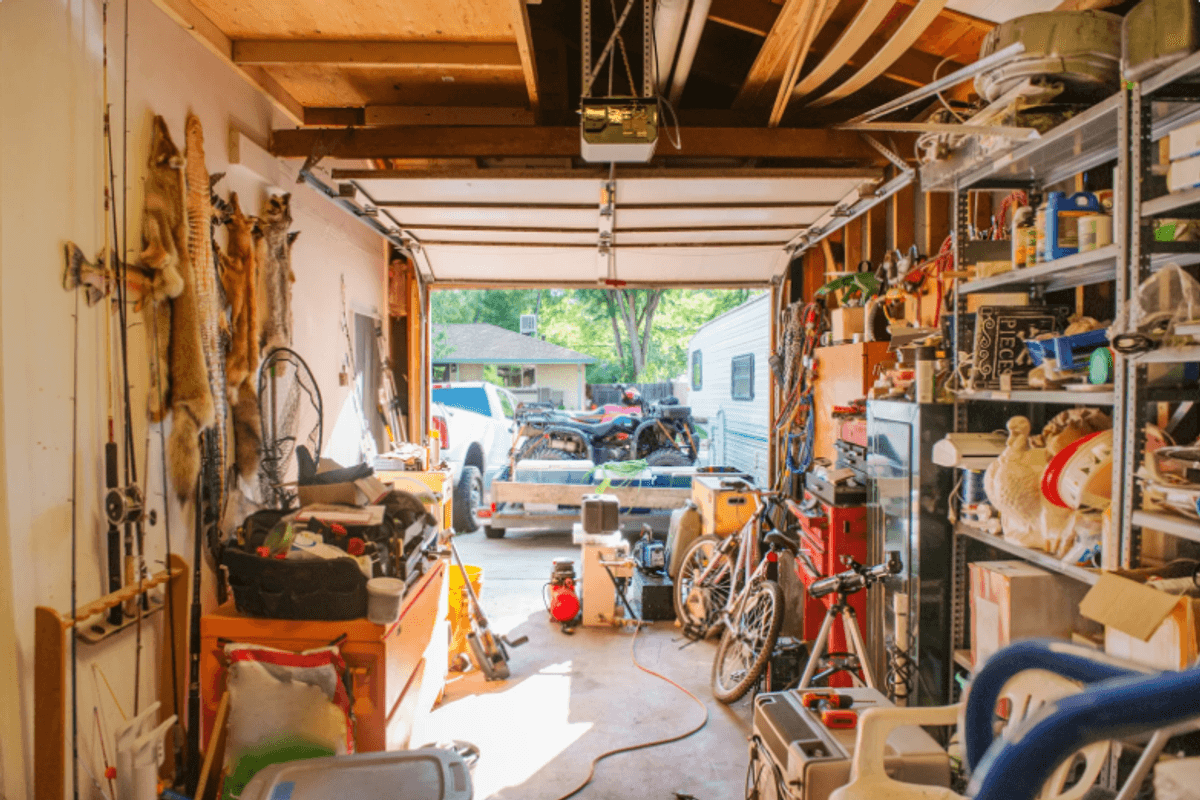
A Baby Boomer stands in his cluttered garage.

Millennials with Baby Boomer parents have not been shy about airing their complaints about the older generation. Millennials have previously noted that their parents tend to hoard food—and now they're are airing their grievances about Boomer "stuff avalanche."

On Reddit, Millennials discussed their frustrations about their Boomer parents and the insane amount of junk they have in their homes that (allegedly) will one day be passed down to them to deal with. Many Millennials shared that it is a source of contention for them, and that they wish their parents would just throw things out.


"3 car garage...cannot fit a single car in there," one commented. And another stated, "I am very concerned with the amount of junk my parents are holding onto."

- YouTube www.youtube.com

A fellow peeved Millennial added, "The worst part is that our parents think this is all worth lots and lots of money. Don’t worry kids, these three sets of china I’m saving for you will be worth millions!"

Another had laid down the law: "My mom kept joking about all the 'stuff' being my inheritance. After a few times I was tired of it, I looked her dead in the face and said in the most monotone I could get. 'I will get the biggest dumpster I can, and it will all go in the trash.' She stopped making that joke, and my parents have been slowly throwing out their junk ever since."

clutter, baby boomer stuff avalance, stuff, too much stuff, decluttering A Baby Boomer garage filled with stuff.Photo credit: Canva

Why Boomers struggle to throw things away

"The Boomer generation grew up in the post-war era shaped by rationing and economic rebuilding," Daniel Glazer, clinical psychologist and co-founder of US Therapy Rooms, tells Upworthy.

He adds that the Boomer inability to let stuff go is often criticized, but when you look at the psychology of their attachment to objects, their behavior makes much more sense.

"Not so long ago, saving things was an adaptive habit. 'That might come in handy' was a common refrain in households in which replacing something was not so easy, or affordable," says Glazer. "There is also an element of emotional security that comes from the things that have surrounded us through decades of life events, or even across a lifetime."

And for many Boomers, getting rid of stuff can signify an even bigger mental battle.

"As people age, there can also be an increased awareness of mortality," says Esin Pinarli, founder and holistic psychotherapist at Eternal Wellness Counseling. "Letting go of objects can feel symbolic, almost like letting go of chapters of their life. If no one is asking about those chapters anymore, those objects become the tangible proof that those experiences mattered. So it’s not stubbornness. It’s often about attachment, meaning-making, and a fear of losing relevance or erasing parts of their story."

How to help Boomers declutter

- YouTube www.youtube.com

Starting the conversation with Boomer parents in an empathetic and understanding way may help the process go more smoothly and deepen the relationship between them and their children. Here are a few examples of conversation starters Millennials can use when talking to their Boomer parents about decluttering:

Conversation Starter #1: "I know these things mean something to you. I’d love to hear the story behind a few of them."

"This shifts the focus from getting rid of objects to honoring the meaning behind them," says Pinarli. "When a parent feels seen and understood, they’re often more open to eventually letting go. It validates that the attachment is about memory and identity, not just stuff."

Conversation Starter #2: "What would feel good for you to keep, and what feels like it’s just taking up space now?"

"This gives them agency," Pinarli explains. "Instead of telling them what to throw away, it invites them to reflect on what still feels meaningful versus what might no longer serve them. That sense of control reduces defensiveness."

Conversation Starter #3: "Would it help to go through this together so we can make sure the important things are preserved?"

"This frames decluttering as a collaborative and supportive process, not a demand," Pinarli shares. "It reassures them that their memories and legacy won’t be dismissed or erased, which can lower the emotional intensity around letting go."

tipping culture debate, server tip note receipt, Lionell Carr Threads viral, restaurant tipping 2026, tipping etiquette US, Pew Research tipping survey, server minimum wage tips, cash tip restaurant, tipping fatigue America, viral restaurant receipt
Canva

A restaurant customer looks at his bill

Lionell Carr (@lionellsaidit2) stopped for breakfast while traveling over the holidays. His bill came to $33.06. He paid on the card, leaving the tip line blank because he planned to leave cash on the table. Before he could, the bill came back.

Written on the receipt in bold red letters: "Learn to TIP. It's not my job to serve you FOR FREE!"


Carr posted a photo of it to Threads last December, with a caption that summed up his reaction: "On my holiday travels, I stopped and had breakfast. this occurred afterwards. I was gonna leave a cash tip......" He added, "These servers are out of control, a lot of times they blocked their blessings for greed!"

The post has since pulled in 4.5 million views, according to Newsweek, and the comment section became exactly what you'd expect: a full-scale argument about one of the most reliably combustible topics in American public life.

On one side, people who felt the server crossed a line. "If you're not getting paid by your EMPLOYER, that's your fault. Tipping is OPTIONAL," wrote @gaga.looie. @trice_the_bea added, "U.S.A. should start learning how to pay its workers. Tips should be a reward for kind service, not their paycheck."

On the other, people who felt the server's frustration was completely understandable given the economic reality behind it. "greed? in U.S. servers get a base salary of $2.13/hour on average," wrote @lucy.vard. "The majority of the money they make is tips. We can argue that the system is broken, and restaurant owners should pay their employees, and, while valid, it's a different point. This is how system works, and we shouldn't punish people for the system's imperfection."

tipping culture debate, server tip note receipt, Lionell Carr Threads viral, restaurant tipping 2026, tipping etiquette US, Pew Research tipping survey, server minimum wage tips, cash tip restaurant, tipping fatigue America, viral restaurant receipt YouTube

Both responses capture something true, which is probably why this post keeps spreading.

The structural reality is that the American tipping system puts servers and customers in an uncomfortable position that neither of them created. According to a 2023 Pew Research Center survey, 72% of U.S. adults say they are being asked to tip in more places than five years ago. More Americans oppose businesses suggesting tip amounts (40%) than support it (24%). And 77% of diners say the quality of service is their primary factor in deciding how much to tip, which means a server's income is perpetually attached to variables outside their control.

That pressure is real. So is the frustration of a customer who genuinely intended to leave cash and got a lecture in red ink before he had the chance.

What makes this story harder to resolve than it looks is that the server's note wasn't wrong about the economics. It was just aimed at the wrong person. The broken part of the system isn't the customer who leaves cash instead of a card tip. It's the system that pays servers $2.13 an hour and asks both parties to sort out the rest between themselves.

@azjohnsons put it plainly in the comments: "Tips are their salary. Not a blessing. They worked and should be paid. Sorry for the frustrated note but I get it."

That might be the most honest sentence in the whole thread.

tipping culture debate, server tip note receipt, Lionell Carr Threads viral, restaurant tipping 2026, tipping etiquette US, Pew Research tipping survey, server minimum wage tips, cash tip restaurant, tipping fatigue America, viral restaurant receipt YouTube

You can follow Lionell Carr (@lionellsaidit2) on Instagram Threads for more content on lifestyle.

This article originally appeared earlier this year.