

A woman zipping up her lips.
There are times to speak up, moments when it’s best to say nothing, and opportunities be very considerate in your response. But when you’re on the receiving end of a back-handed compliment, a foolish remark, or a coworker takes you down a peg, and your emotions are up, it can be hard to have a thoughtful response. Often, we say something we shouldn’t.
How is it that some folks fly off the handle and say things they’ll later regret, while others can stay calm and remove themselves from the situation or take the high ground? One way to be less impulsive with your words is to use the “name it to tame it” neuroscience hack, originally coined by author and psychiatrist Dr. Dan Siegel. When used properly, it allows you to step back from the moment and choose the best response in a challenging situation.
 A man saying "be quiet."via Canva/Photos
How to use the ‘name it to tame it’ hack
When someone upsets you, the first thing to do is to go inside yourself and describe the emotion that you feel in your body. Are you angry? Are you sad? Are you afraid? Do you feel rejected? Are you disappointed? The moment you name the emotion, it will begin to subside and give you the emotional and mental room to respond to the person who caused the negative emotion, rather than impulsively reacting.
How to respond to a reactive emotion so you don’t fly off the handle:
Event happens:
1. Your body stiffens up
2. You feel an intense emotion
3. You examine the emotion and give it a name: “My body is telling me I am angry.”
4. You should feel the emotion beginning to subside
5. Choose your response instead of being impulsive
 A woman zipping up her mouth.via Canva/Photos
Why does ‘name it to tame it’ work?
“Name it to tame it” works because, when we have a strong emotional reaction, our lizard brain kicks in, and we go into fight, flight, or freeze mode. The lizard brain is not known for giving thoughtful and strategic responses to challenging situations. When we name the emotion, our prefrontal cortex, or the thinking brain, kicks in. The thinking brain looks at the situation and says, “Alright, we don’t need to run or fight here. It's best to give a strategic response.”
When we tune into the negative emotions by naming them, they relax because they feel heard, like when a child has hurt their knee or a loved one has real concern and you gives them undivided attention. Once the emotions are named, they are tamed. Then, you are more likely to respond to the negative person with grace and speak from the best part of yourself.
Dr. Dan Siegel, who coined the phrase “Name it to tame it,” explains the brain science behind the technique in the video below. He does a great job of explaining how it allows us to transfer our thoughts from the downstairs brain (the lizard brain) to the upstairs brain (the thinking brain), so we can calm down and respond appropriately to the situation.
- YouTube www.youtube.com

 People practicing on the driving range. via
  A group of people playing golf. via
 Many people make bucket lists of things they want in life.

 People used to save letters they received.
  Tony Trapani found a letter saying he had a son decades after it was sent.
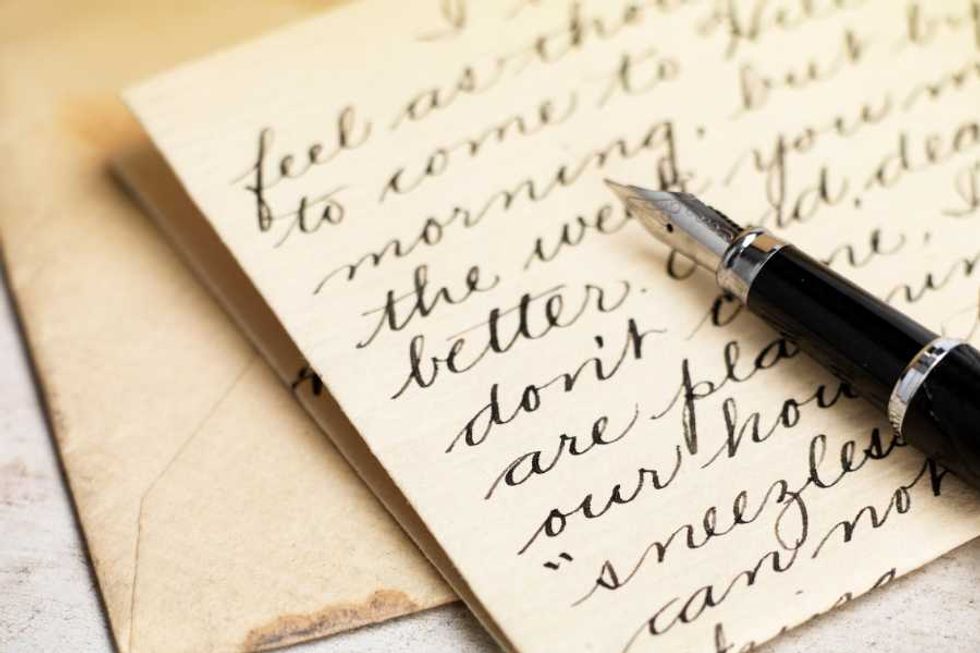 Letter-writing is a lost art in the digital age.
Men try to read the most disturbing comments women get online back to them.
If you wouldn't say it to their faces, don't type it.
This isn’t comfortable to talk about.
Trigger warning for discussion of sexual assault and violence.
in 2016, a video by Just Not Sports took two prominent female sportswriters and had regular guys* read the awful abuse they receive online aloud.
Sportswriters Sarah Spain and Julie DiCaro sat by as men read some of the most vile tweets they receive on a daily basis. See how long you can last watching it.
*(Note: The men reading them did not write these comments; they're just being helpful volunteers to prove a point.)
It starts out kind of jokey but eventually devolves into messages like this:
Awful.
All images and GIFs from Just Not Sports/YouTube.
These types of messages come in response to one thing: The women were doing their jobs.
Those wishes that DiCaro would die by hockey stick and get raped? Those were the result of her simply reporting on the National Hockey League's most disturbing ordeal: the Patrick Kane rape case, in which one of the league's top players was accused of rape.
DiCaro wasn't writing opinion pieces. She was simply reporting things like what the police said, statements from lawyers, and just general everyday work reporters do. In response, she received a deluge of death threats. Her male colleagues didn't receive nearly the same amount of abuse.
It got to the point where she and her employer thought it best for her to stay home for a day or two for her own physical safety.
The men in the video seemed absolutely shocked that real live human beings would attack someone simply for doing their job.
Not saying it.
All images and GIFs from Just Not Sports/YouTube.
Most found themselves speechless or, at very least, struggling to read the words being presented.
It evoked shame and sympathy.
All images and GIFs from Just Not Sports/YouTube.
Think this is all just anecdotal? There's evidence to the contrary.
The Guardian did a study to find out how bad this problem really is. They combed through more than 70 million comments that have been posted on their site since 2006 and counted the number of comments that violated their comment policy and were blocked.
The stats were staggering.
From their comprehensive and disturbing article:
If you can’t say it to their face... don’t type it.
All images and GIFs from Just Not Sports/YouTube.
So, what can people do about this kind of harassment once they know it exists?
There are no easy answers. But the more people who know this behavior exists, the more people there will be to tell others it's not OK to talk to anyone like that.
Watch the whole video below:
This article originally appeared nine years ago.