upworthy
Add Upworthy to your Google News feed.
Google News Button
Joy

Meet a mom who takes care of people's babies while they make huge parenting decisions.

This is what it's like to be an 'interim parent.'

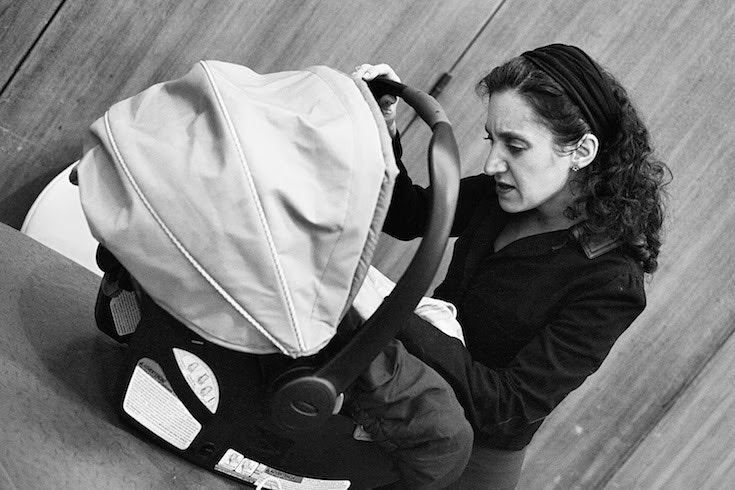
Black and white photo of woman looking into a baby carrier
Photo by Stacey Natal/Total City Girl used with permission.

Jillian, “...my heart skips a beat."


I'm trying desperately to be respectful of the person speaking to me, but my husband keeps texting me.

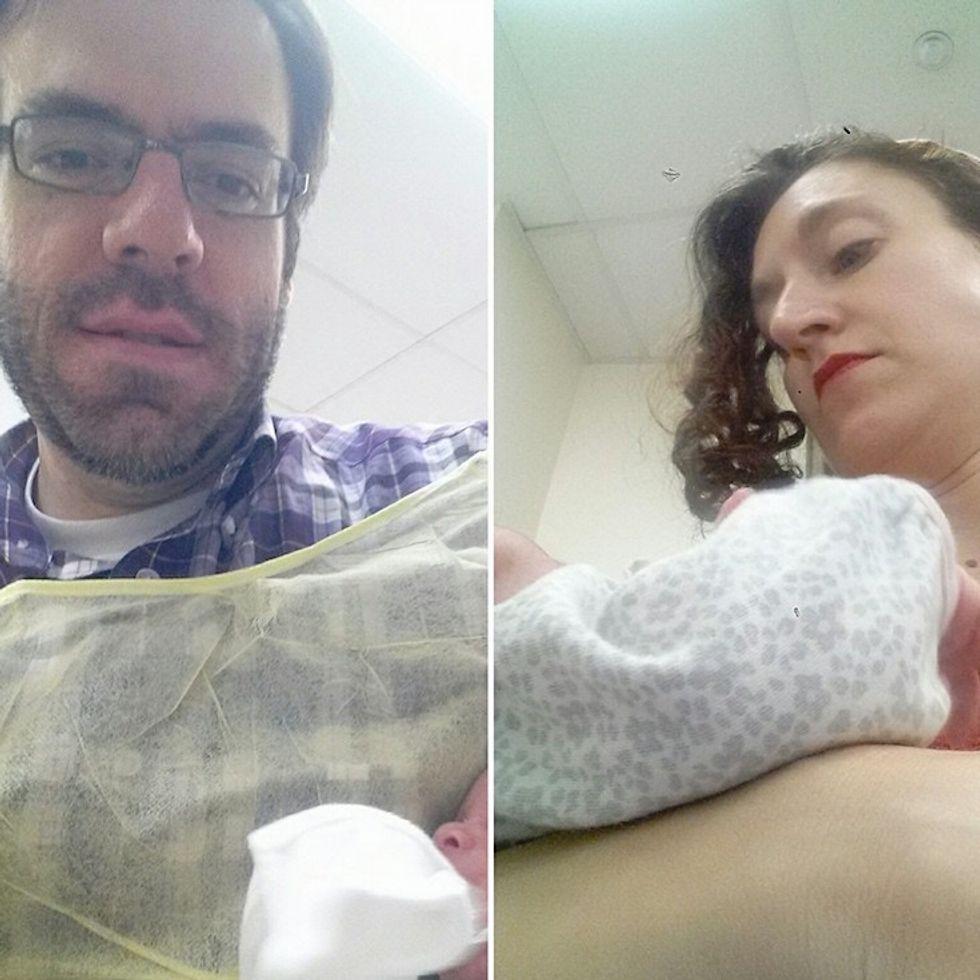
First he sends me a selfie of him with Rafi*, then it's an account of who stopped him on his way into the NICU.

Then, he suggests I take a selfie with Jillian* so he can post them side-by-side on Facebook and boast that we finally have two babies.

People will ask if they're twins, I'm sure. But they're not twins. In fact, the babies aren't even ours.

Man and woman each holding a baby

James' dream come true: Two babies! Rafi in the NICU with Tatte, Jillian at home with Eema.

Photo by Ann Lapin, used with permission.

I take care of these babies because I'm what's known as an "interim parent."

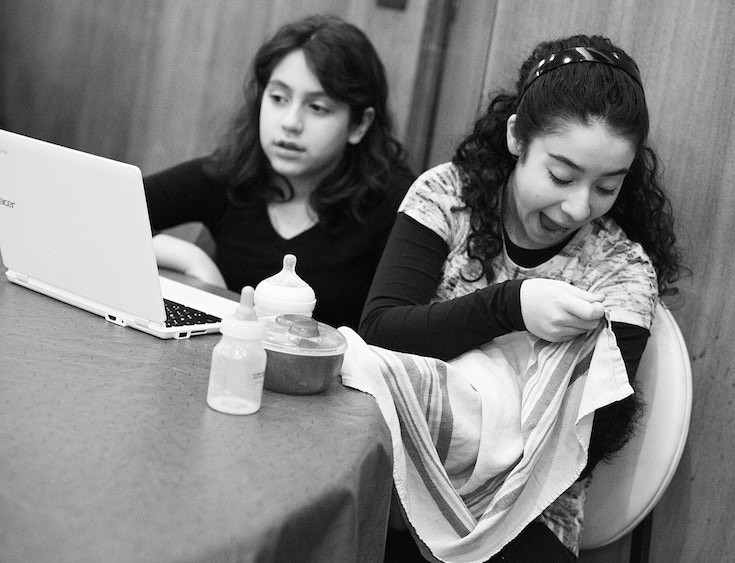
Two young girls with a laptop, bottles, and a baby.

Over the past four years, my family has cared for 22 newborns.

Photo by Ann Lapin, used with permission.

The program I'm part of is rare; there are very few like it in the United States.

While the babies are in my care, the birth parents retain their legal rights as parents and are encouraged to visit their babies (if that's something they would like).

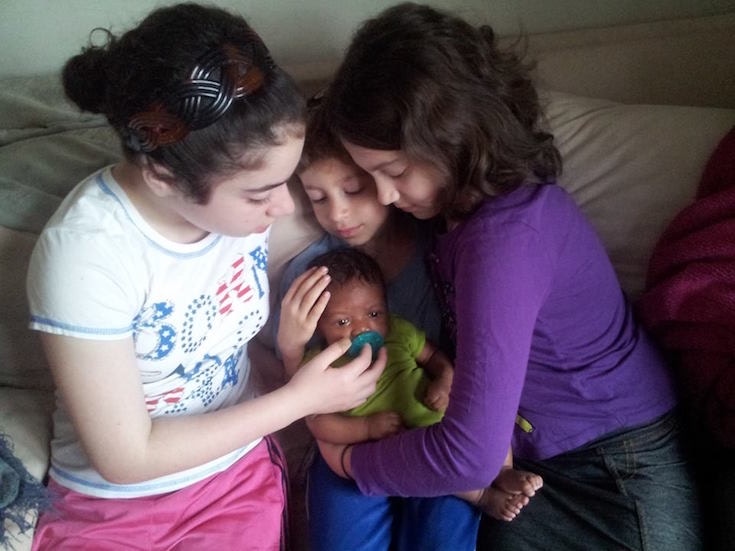
Three children hold a baby

My three kids with our baby before he meets his forever mommy.

Photo by Ann Lapin, used with permission.

If they weren't in the care of interim moms like me, these tiny babies might wait in the hospital a few extra days while their adoptions are finalized—or they might enter the foster care system.

In New York and most states, biological parents have 30 days after adoption proceedings begin to change their minds about their placement plan.

I became an interim parent when a local mom posted about it on our neighborhood Yahoo! group.

"That! THAT I can do!" I thought, as I looked at the computer screen.

I was thrilled. I felt incapable of doing other types of volunteer work, but I felt like I had finally found a community service that I could perform. So, my husband and I applied. And after months of doctor appointments, background checks, interviews, and letters of reference from close friends, we were accepted.
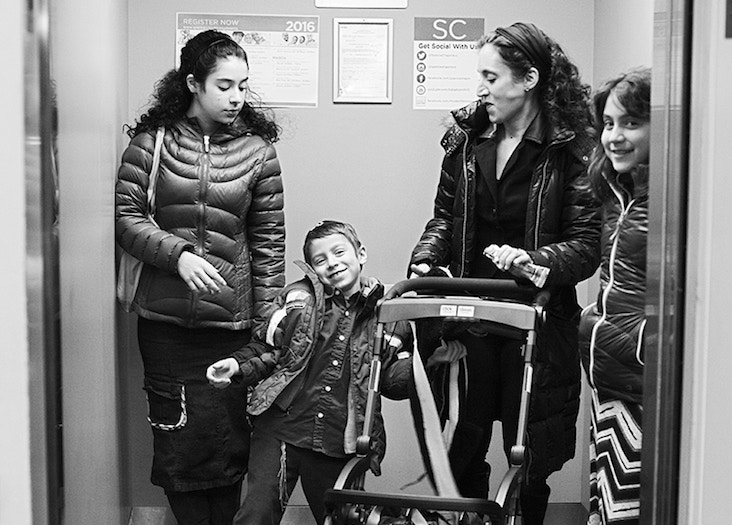
Woman with three children pushes an empty a stroller

We left the adoption agency with an empty stroller — but it didn't stay that way for long!

Photo by Stacey Natal/ Total City Girl, used with permission.

The hope with the interim boarding care program is that biological parents have time to gain clarity about their decisions without pressure.

It also helps adoptive parents feel secure in their status as parents.

The children don't usually get the chance to be present when one of our babies goes home, so this was a special day. Roughly 30% of the babies I've cared for have returned to their biological parents after their stay with me, and the rest have been adopted. Many of the birth mothers I've known have pursued open adoptions, selecting and meeting their child's forever families.

People often ask me what the experience of interim parenting is like, but there's no rule: Each case is different.

Babies stay with us, on average, for a few weeks. But one baby stayed with us with five days, another for nine and a half weeks.

Whatever the scenario, my family and I are available to care for these babies until they go home ... wherever "home" may be.

Woman looks into a baby carrier

This work can be emotionally challenging, too.

Photo by Stacey Natal/Total City Girl used with permission.

This work can be emotionally challenging, too. Some biological parents do not interact with us at all while they're making big decisions, and some end up being very involved. Some text regularly, requesting photos and updates on the baby while the baby is in our care. Sometimes they schedule weekly visits with the babies. One birth mom became such a constant in our life that my son asked if we could bake her cookies.

I am often blown away by the biological parents' gratitude.

Melody* was one of the most beautiful babies I'd ever cared for, and I met her parents a couple of times. When they came to take her home, it was as though she was the only one in the room. When they thanked me for taking care of her, my lip started to quiver.

I had also never met Jibraan's dad, either, when I placed him in his arms the day they went home together. "From the bottom of my heart ... I can't tell you what you've done for me," he said. I remember that he towered over me, the size of a linebacker, clenching his jaw to keep the tears from spilling down his cheeks.
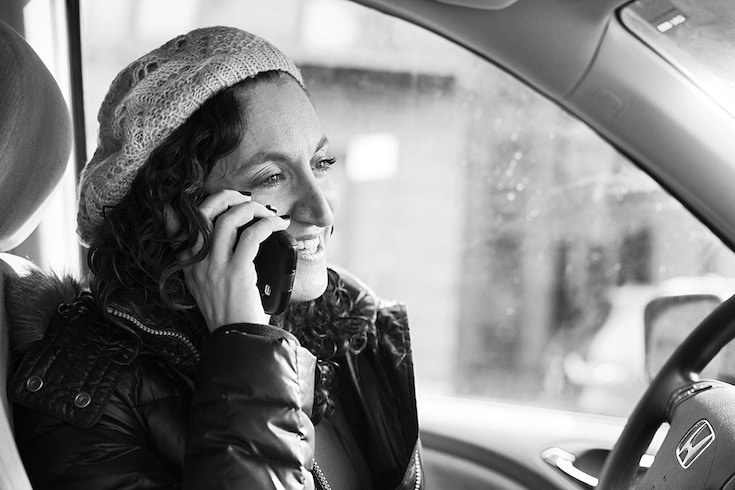
Woman smiling on the phone

Big smiles and on the phone.

Photo by Stacey Natal/Total City Girl, used with permission.

When I wave goodbye to the social workers at the agency after introducing each baby to their forever family, I always wonder how long it will be before I get to hold another baby.

I don't get attached to each baby, per se. But I get attached to having a baby, to taking care of a baby. I resent my empty arms, and I feel like I've lost my purpose. So each time I see the adoption agency's phone number pop up on caller ID, my heart skips a beat.

When the voice on the other end says, "Hi, Ann ... are you ready to take another baby?" my first thought is, "Baby! I'm getting a BABY!" That excitement lasts for at least 48 hours.

But even as the adrenaline calms down and the sleepless nights begin to take their toll, the experience of caring for each baby proves to be more than enough motivation for me to keep going.

The emotions that swell when my babies go home with any parent—their adoptive parents or their birth parents—are not just because of the emptiness I feel in my arms or even because of the happiness I have for my babies and their families.

The emotions I feel are because of the fullness in my heart and the gratitude I have for being a part of each of these babies' stories, even if it's just for a moment.


This article was written by Ann Lapin and originally appeared nine years ago.
old letter, 1959, tony trapani, letter, secret letters, love letter, love stories, dads, fatherhood, father and son, parents, parenting
via SHVETS production/Pexels and Suzy Hazelwood/Pexels
Tony Trapani discovers a letter his wife hid from him since 1959.

Writing a letter is truly a lost art form, and many young people will never know the joy of it. You had to choose your words carefully and say everything you wanted to say. Once you sent it off, there was no way to be sure it was delivered. No way to know if it had been opened or read. You couldn't take it back or send it again. You just put it in the mailbox and hoped for the best. It was excruciating and magical all at the same time.

One story of a letter never delivered has captured the hearts of readers everywhere. A heart-warming local news story gone viral for the best reasons.


Tony Trapani and his wife were married for 50 years despite the heartache of being unable to have children. "She wanted children,” Trapani told Fox 17. "She couldn't have any. She tried and tried." Even though they endured the pain of infertility, Tony's love for his wife never wavered and he cherished every moment they spent together.

letter, secret letters, love letter, love stories, dads, fatherhood, father and son, parents, parenting Tony Trapani received the most important letter of his life, but he didn't see it for 50 years Photo by Álvaro Serrano on Unsplash

After his wife passed away when Tony was 81 years old, he undertook the heartbreaking task of sorting out all of her belongings. In particular was a mountain of papers stuffed into filing cabinets. Trapani diligently went through every single one.

That’s when he stumbled upon a carefully concealed letter in a filing cabinet hidden for over half a century.

The letter was addressed to Tony and dated March 1959, but this was the first time he had seen it. His wife must have opened it, read it and hid it from him. The letter came from Shirley Childress, a woman Tony had once been close with before his marriage. She reached out, reminiscing about their past and revealing a secret that would change Tony's world forever.

"Dear Tony, I bet you are surprised to hear from me after so many years. I was just thinking about you tonight like so many other nights. But I thought I would write you and find out how you are," the letter reads. "Tony, please don't be angry or surprised to hear this. I have a little boy. He is five-years- old now - grey eyes and beautiful black hair. What I am trying to say Tony is he is your son."


"Please, Tony if you can find it in your heart to forgive me, please come and see him," Shirley wrote in the letter. "Every day he asks me where is his daddy and believe me Tony I can't even answer him anymore. I would be forever grateful to you if you would just see him. ... I'll close now hoping and praying you will answer. P.S. His name is Samuel Duane."

Now, Tony faced the fact that he had a son that would be around 60 years old and he set out to find him.

For over a year, Trapani’s sister tried to track down the mysterious Samuel Duane Childress, until she finally contacted his wife, Donna.

Tony and Samuel met in January 2015 and he felt like a new dad. After meeting his father, Samuel said his mother told him she sent the letter, but Tony never responded. "Why my wife didn't tell me," said Trapani, "I don't know. She wanted children. She couldn't have any. She tried and tried."

It's easy to understand why it may have been hard for Trapani's late wife, Dolly, to pass along that sort of news. Though we'll never know what exactly must have been in her heart and mind when she hid the letter all those years ago.

"I always asked my mom, I said, 'Well what does he look like?'' Samuel said. "She said, 'Well, go look in the mirror."

The two met and caught up on a lifetime of memories with the understanding that they could never change the past. "Just to know him now is so important to me. It's going to fill that void," Samuel said.

But just to be sure, Tony took a paternity test to ensure they were father and son. Stunning everyone involved, the test came back negative. Tony was not the father.


letter, secret letters, love letter, love stories, dads, fatherhood, father and son, parents, parenting Tony and Samuel didn't waste time thinking about what might have been if he'd seen the letter earlier. Photo by Ire Photocreative on Unsplash

The news upset Tony and Samuel, but they still had a unique bond. They shared a relationship with Samuel’s mother and both have been on an incredibly wild ride after Tony found the mysterious letter.

“They're keeping that bond,” Donna said. “That paper doesn't mean anything to him. That bond has been made—and we're going to move on from here.”

Tony Trapani passed away in 2017, leaving him just two short years to connect with the man he once believed to be his son. If he'd seen the letter earlier, maybe they would have had more time. But that's all in the past, and by all accounts the men treasured the time they got together, and the relationship that they did have — not the one they wished for.

This article originally appeared earlier this year. It has been updated.

patagonia, parenting, kids, moms, breastfeeding, workplace, office, working parents
Holly Morissette/LinkedIn
When a Patagonia employee breastfed her baby in a meeting her male VP's response was a masterclass in workplace values

Years after first engineering it, Patagonia's approach to the "family-friendly workplace" is on a whole new level that still deserves our attention - and praise. Unfortunately, parents all over the U.S. are struggling with burnout, high costs, unreliable childcare, poor paid leave, and more — in short, they're hanging on by a thread. But it's extremely reassuring to know that there are still some companies that value parents in the workplace and are fighting hard to keep them happy.

The outdoor clothing and gear company has made a name for itself by putting its money where its mouth is. From creating backpacks out of 100% recycled materials to donating their $10 million tax cut to fight climate change to refusing to sell to clients who harm the environment, Patagonia leads by example. It's made them not only an admired brand when it comes to values and integrity, but a beloved one with its own customers, who are fiercely loyal.


That dedication to principle is clear in its policies for parents who work for them, as evidenced by a 2019 viral post from Holly Morisette, a recruiter at Patagonia.


patagonia, workplace, office, career, benefits, paid leave, parental leave, parenting Patagona has always done a great job taking care of its employeesYukiko Matsuoka/Flickr

Morissette's stunning story begins with bringing her baby into a meeting at the office and proceeding to breastfeed as the team around her continued to discuss ROI, KPIs, EBITDA, and all those other acronyms corporate office culture loves so much.

That's when a male colleague took note of what she was doing.

Morrissette described the incident later on LinkedIn:

While nursing my baby during a morning meeting the other day after a recent return from maternity leave, our VP (Dean Carter) turned to me and said...”There is no way to measure the ROI on that. But I know it’s huge.”

It got me thinking...with the immense gratitude that I have for on-site childcare at Patagonia comes a responsibility to share a “call to action”. A PSA to tout the extraordinary benefits that come along with not asking employees to make the gut wrenching decision to either leave their jobs or leave their babies. TO HAVE TO LEAVE THEIR JOBS OR LEAVE THEIR BABIES. That perhaps just one person will brave the subject with their employer (big or small) in the hopes that it gets the wheels turning to think differently about how to truly support working families.

That with a bit of creativity, and a whole lot of guts, companies can create a workplace where mothers aren’t hiding in broom closets pumping milk, but rather visiting their babies for large doses of love and serotonin before returning to their work and kicking ass.

It’s no wonder that Patagonia has 100% retention of moms. Keeping them close to their babies keeps them engaged. And engaged mothers (and fathers!) get stuff done.

Thank you, Patagonia, for leading the way.

patagonia, kids, children, parenting, employee benefits, company culture, parental leave, paid leave While nursing my baby during a morning meeting the other day after a… www.linkedin.com


The post gathered massive attention on social media where commenters were smitten, if a little jealous:

"I was never so confident to nurse during a meeting, but I love that you were. I especially love the response. No different than an adult eating a protein bar. No one should bat an eye."

"I am in absolute awe over your story and I thank you so much for sharing it. We go to work to support our families, but we stay with great companies because they support us as people, as humans, and they see us and appreciate us where we are at. Beautiful."

"Amazing! How I wish I had this with by kids. One of my "fun" memories was when I worked for an insurance company with no room available for nursing moms. I pumped 3 times a day in an empty office with no window shades nor a lock."

Just the first eight words of Morissette's post are extraordinary. "While nursing my baby during a morning meeting..."


the office, office, workplace, career, parenting, working moms, breastfeeding Not sure if Dwight Schrute would be as accomodating. Giphy

As if that's totally normal. As if everyone understands that working moms can be much more engaged and efficient in their jobs if they can feed their baby while they go over sales figures. As if the long-held belief that life and work must be completely separate is a construct that deserves to be challenged.

And then the comment from her male colleague about the ROI (Return on Investment) of breastfeeding—witty, considering the time and place, and yet so supportive.

On-site childcare so that parents don't have to choose between leaving their jobs or leaving their babies. Letting life integrate with work so that working families don't have to constantly feel torn in two different directions. Flexibility in meetings and schedules. Allowing for the natural rhythms and needs of breastfeeders. Making childcare as easy and accessible as possible so that employees can be more effective in their jobs.

All of this seems so profoundly logical, it's a wonder that more companies have not figured this out sooner. Clearly, it works. I mean, who has ever heard of a 100% retention rate for mothers?

But that's not all folks! Patagonia has extended its support for parents in recent years by allowing up to a staggering 16 paid weeks off. Parents and non-parents alike also enjoy top-notch healthcare, college tuition reimbursement, and so much more.


Patagonia founder discusses why the company's values are so important www.youtube.com

The company could almost be a case study in employee retention when it comes to parents. Experts say the things workers value the most in their career when they have children are paid time off, flexible scheduling, and help with childcare.

One more thing that makes a huge difference? A great manager who understands and supports the parent's needs. In this case, maybe one who doesn't flinch at a breastfeeding mother in the workplace.

Patagonia's got it goin' on. Let's hope more companies take their lead.

This article originally appeared on six years ago.

time, neil degrasse tyson, time flies, perception of time. clock, science,

A clock and Neil deGrasse Tyson.

When you’re a kid, time passes a lot more slowly than when you’re an adult. At the age of seven, summer seems to go on forever, and the wait from New Year’s Day to Christmas feels like a decade. As an adult, time seems to go faster and faster until one weekend you’re putting up your Christmas lights though you swear you just took ‘em down a month ago.

Why does time seem to speed up as we get older? Astrophysicist Neil deGrasse Tyson recently explained the phenomenon in a video posted to Instagram. He also offered tips on how to slow the passage of time as you age. DeGrasse Tyson is one of the most popular science communicators in the world and the host of 2014's Cosmos: A Spacetime Odyssey and 2020’s Cosmos: Possible Worlds.


Why does time appear to speed up as we get older?


“When you're young, everything is new. Your brain is constantly recording fresh memories, and the more memory your brain stores, the longer the experience feels. But then something changes. As you get older, routines take over. Your brain stops saving so much detail. It switches to autopilot because everything feels familiar and predictable,” deGrasse Tyson explains. “And when your brain stores fewer new memories, your perception of time compresses. That's why childhood feels long, and adulthood feels like a blur.”


Steve Taylor, PhD, author of many best-selling books including Time Expansion Experience, The Leap, and Spiritual ScienceThe Leap, and Spiritual Science, agrees with deGrasse Tyson.

“This is mainly because, as children, we have so many new experiences, and so process a massive amount of perceptual information,” Taylor writes at Psychology Today. “Children also have an unfiltered and intense perception of the world, which makes their surroundings appear more vivid. However, as we get older, we have progressively fewer new experiences. Equally importantly, our perception of the world becomes more automatic. We grow progressively desensitized to our surroundings. As a result, we gradually absorb less information, which means time passes more quickly. Time is less stretched with information.”

How do we make time slow down?

There’s something a little depressing about the idea that time speeds up as we age because we have fallen into predictable routines. The good news is that we can break this cycle by changing our habits and having new experiences. The more novel information we can process and the less routine our lives become, the slower time will move.

DeGrasse Tyson believes that with some change in our behaviors, we can get back to longer summers and Christmases that aren’t perpetually around the corner.

“You can actually slow time down again. Do something unfamiliar,” deGrasse Tysons says. "Travel somewhere new. Break a routine you've repeated for years. Learn a skill your brain hasn't mapped yet. Because the more new memories your brain forms, the slower time feels as it passes. So if life feels like it's accelerating, it's not your age. It's your brain, and you can reboot it.”

anatomy, anatomical suit, teachers, science, cool teachers, science class, amazon

Veronica Duque wearing her famous anatomy suit

Being an educator in the American public school system is one of the hardest jobs in our nation. Not only is the work itself challenging, but with constant battles for educational funding and a student body increasingly tethered to their electronic devices, most teachers in America and around the world are navigating uncharted territory when it comes to finding ways to keep their students engaged in their studies.

And that's why when Verónica Duque came across a form-fitting, anatomical bodysuit while doing some online shopping, she thought it would be perfect visual aid to convey vital information (pun intended) to her students in Spain, in a way they'd actually remember.


Turns out, the entire internet would remember it too.

Duque's husband tweeted a collage of images from the classroom lesson, which quickly went viral, with nearly 70,000 likes. Loosely translated, the tweet from her husband Michael reads: "Very proud of this volcano of ideas that I am lucky to have as a wife. Today she explained the human body to her students in a very original way. Great Veronica !!!"

In an interview with Bored Panda, Duque explained the thought process that led her to presenting her third-grade-class with a unique approach to learning.

"I was surfing the internet when an ad of an AliExpress swimsuit popped up," she said. "Knowing how hard it is for kids this young to visualize the disposition of internal organs, I thought it was worth giving it a try."

anatomy, anatomical suit, teachers, science, cool teachers, science class, amazon This is a teacher who cares. assets.rebelmouse.io

Online retailers like Amazon have a number of similar anatomical bodysuits for sale. While most people apparently purchase them for Halloween costumes or as gag gifts, it's now likely that Duque's viral moment will inspire some other educators around the world to take a similar approach to teaching the body basics to their students.

anatomy, anatomical suit, teachers, science, cool teachers, science class, amazon Halloween costume, check. Amazon

While some on Twitter were critical of the suit, the vast majority have praised Duque for her innovative approach to teaching. And the anatomical bodysuit is reportedly far from her first creative endeavor in the classroom.

"I decided long ago to use disguises for history lessons," she told Bored Panda. "I'm also using cardboard crowns for my students to learn grammatical categories such as nouns, adjectives, and verbs. Different grammar kingdoms, so to say."

And when it comes to the inevitable, made-up controversy that tends to latch itself onto virtually anyone that goes viral, Duque said she says there's another far more controversial stereotype she hopes her brief moment of fame will help address.

"I'd like society to stop considering teachers to be lazy bureaucratic public servants," she said. "We're certainly not." Get this teacher a raise!

What really works about Duque's presentation is that it engages students in a sensorial experiences, which helps lessons stick (and let's face it, anything that engages he sense nowadays is a godsend). But there are other methods teachers/parents can try that don't involve wearing a suit with guts on 'em.

Here are some suggestions for hands-on "DIY experiments", courtesy of the Little Medical School website:

1. Building the respiratory system by creating a model lung with straws, balloons, bottles, and duct tape

- YouTube www.youtube.com

2. Sculpting Body parts with Play Doh

(Grab free printable mats on 123Homeschool4Me)

- YouTube www.youtube.com

3. Build a functioning heart model

- YouTube www.youtube.com

Of course, these lessons are a little more geared towards younger students, but at the same time, it could provide some inspiration for how to get students more involved in their own learning, just like Duque did.

This article originally appeared six years ago.

bread, sanitation, cleanliness, experiment, hand washing
Facebook/Jaralee Metcalf

Simple. Disgusting. Informative.

One of the biggest breakthroughs in preventing the spread of illnesses and infections in hospitals was embarrassingly simple: hand washing. In 1846, Hungarian physician Ignaz Semmelweis discovered that hand washing played a vital role in the spread of germs, and the practice soon became mandatory in hospitals. The simple act of scrubbing hands with soap and water literally saved lives.

Getting a kid to wash their hands, however, can be an uphill battle. While it's a common thing kids (don't) do, global perspective on the importance and effectiveness of hand washing has risen since the COVID-19 pandemic. According to a study published by the National Library of Medicine (NLM) in 2023, before the emergence of COVID-19, a survey found that only about 36% of people always washed their hands with soap, 48% sometimes used soap, and an unsettling 16% of respondents said they wash without soap. After COVID-19 emerged, however, more than 72% of respondents reported using soap every time they washed their hands. There's nothing like a pandemic (and perhaps the reality of FAFO) to strike fear into the hearts of those chronic under washers, but in 2019, one teacher did a simple experiment to show her students just how important hand washing is.


"We did a science project in class this last month as flu season was starting," teacher Dayna Robertson and classroom behavioral specialist Jaralee Metcalf wrote on Facebook. "We took fresh bread and touched it. We did one slice untouched. One with unwashed hands. One with hand sanitizer. One with washed hands with warm water and soap. Then we decided to rub a piece on all our classroom Chromebooks." Robertson later noted that they normally do make a point to sanitize the classroom Chromebooks, but didn't that day in the name of science.

science, experiment, dexter's lab, cartoon, kids, hygiene Dexters Laboratory What A Fine Day For Science GIF Giphy

The bread was put into plastic bags and the germs were left to fester. The bread that had been touched by unwashed hands and the bread that had touched the Chromebook had the most mold. The bread that had been touched by hands washed with soap and water remained (relatively) good enough to eat.

This experiment has been done before, but Robertson expanded on it by testing the effectiveness of hand sanitizer. The bread that had been touched by hands cleaned with sanitizer also had a fair amount of mold on it, although not as much as the bread touched by unwashed hands.

bread, mold, experiment, education, hand washing, cleanliness The bread doesn't lie. Facebook/Jaralee Metcalf

"As somebody who is sick and tired of being sick and tired of being sick and tired," Robertson wrote, "wash your hands! Remind your kids to wash their hands! And hand sanitizer is not an alternative to washing hands!! At all!" It's kind of making us retroactively gag over seeing port-a-potties with hand sanitizer set up in lieu of sinks.

The experiment was prompted by a different science lesson. "We had just finished a science lesson on how leaves break down during winter. The kids were kind of grossed out by the mold, so we decided to run our own version using germs and mold from our own environment," Robertson told Scary Mommy.

Weirdly, the classroom experiment received some criticism. "Lots of people actually DEFENDED not washing their hands!" Robertson told Scary Mommy. "That was shocking! It really was just a simple classroom experiment to teach about mold but we have all learned more about how easily we can spread the germs we can't see."

In the 2019 lens, this lesson being about mold seems simple enough. All of us here in 2025, though, blessed (or cursed) with the experience of the pandemic, know that washing your hands really is as life-saving as Semmelweis proved nearly two centuries ago. Research done in 2020 and published in PubMed showed that individuals who washed their hands consistently were more likely to have lower rates of COVID-19 infection. According to the Centers for Disease Control and Prevention (CDC) in 2024, hand washing also reduces respiratory illness like colds and flu in the general population by 16-21%, and reduces the number of people with diarrheal illnesses by 23-40%.

And to be sure, how we wash our hands is incredibly important. A quick rinse without scrubbing won't do the trick. According to the World Health Organization (WHO), the proper technique for handwashing is to wet your hands, apply soap, and then run your soapy hands under the stream while rotating, rubbing, and scrubbing every inch of your hands for at least 20 seconds. Usually you can hit that mark by singing "Happy Birthday" twice. Then, rinse. When you're done, dry your hands with a clean towel. Check out this demonstration from the CDC:

- YouTube www.youtube.com

The moral of the story is, please, please remember to always wash your hands. It really makes a difference.

This article originally appeared six years ago. It has been updated.