upworthy
Add Upworthy to your Google News feed.
Google News Button
Innovation

A student accidentally created a rechargeable battery that could last 400 years

"This thing has been cycling 10,000 cycles and it’s still going." ⚡️⚡️

A student accidentally created a rechargeable battery that could last 400 years

There's an old saying that luck happens when preparation meets opportunity.

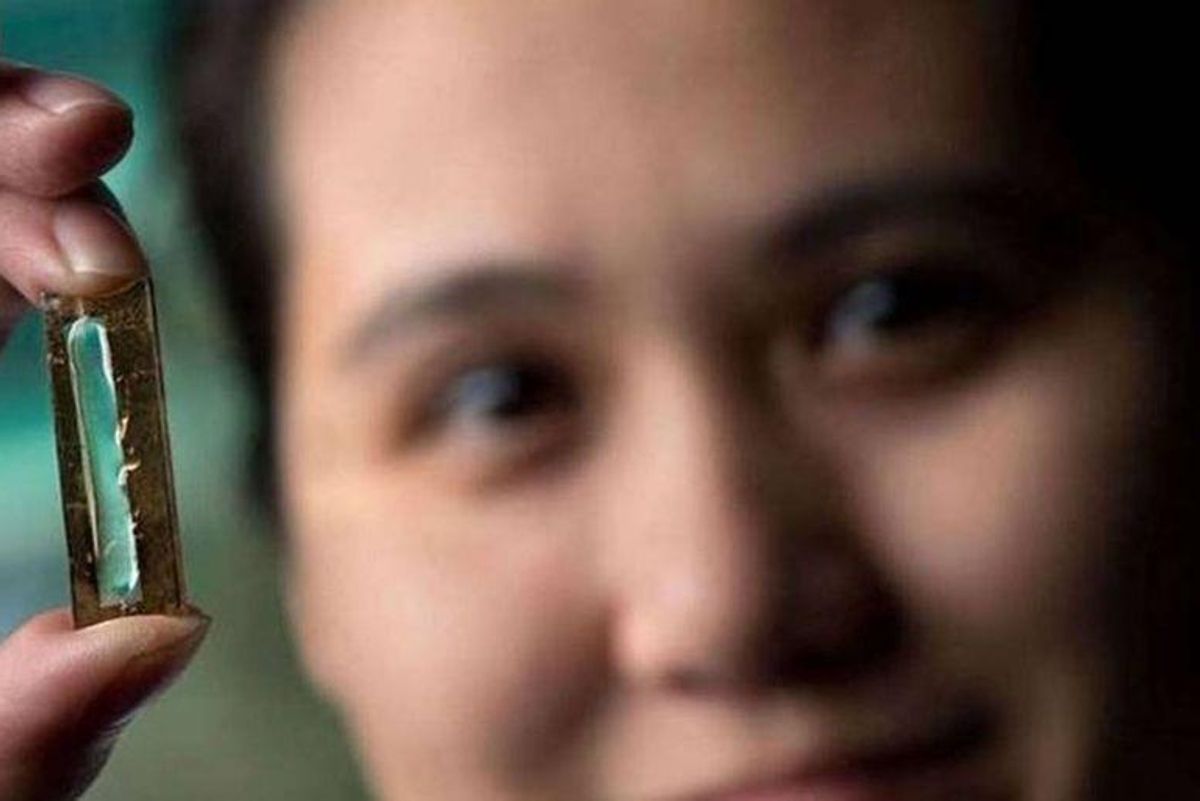
There's no better example of that than a 2016 discovery at the University of California, Irvine, by doctoral student Mya Le Thai. After playing around in the lab, she made a discovery that could lead to a rechargeable battery that could last up to 400 years. That means longer-lasting laptops and smartphones and fewer lithium ion batteries piling up in landfills.

A team of researchers at UCI had been experimenting with nanowires for potential use in batteries, but found that over time the thin, fragile wires would break down and crack after too many charging cycles. A charge cycle is when a battery goes from completely full to completely empty and back to full again.

But one day, on a whim, Thai coated a set of gold nanowires in manganese dioxide and a Plexiglas-like electrolyte gel.

"She started to cycle these gel capacitors, and that's when we got the surprise," said Reginald Penner, chair of the university's chemistry department. "She said, 'this thing has been cycling 10,000 cycles and it's still going.' She came back a few days later and said 'it's been cycling for 30,000 cycles.' That kept going on for a month."

This discovery is mind-blowing because the average laptop battery lasts 300 to 500 charge cycles. The nanobattery developed at UCI made it though 200,000 cycles in three months. That would extend the life of the average laptop battery by about 400 years. The rest of the device would have probably gone kaput decades before the battery, but the implications for a battery that that lasts hundreds of years are pretty startling.

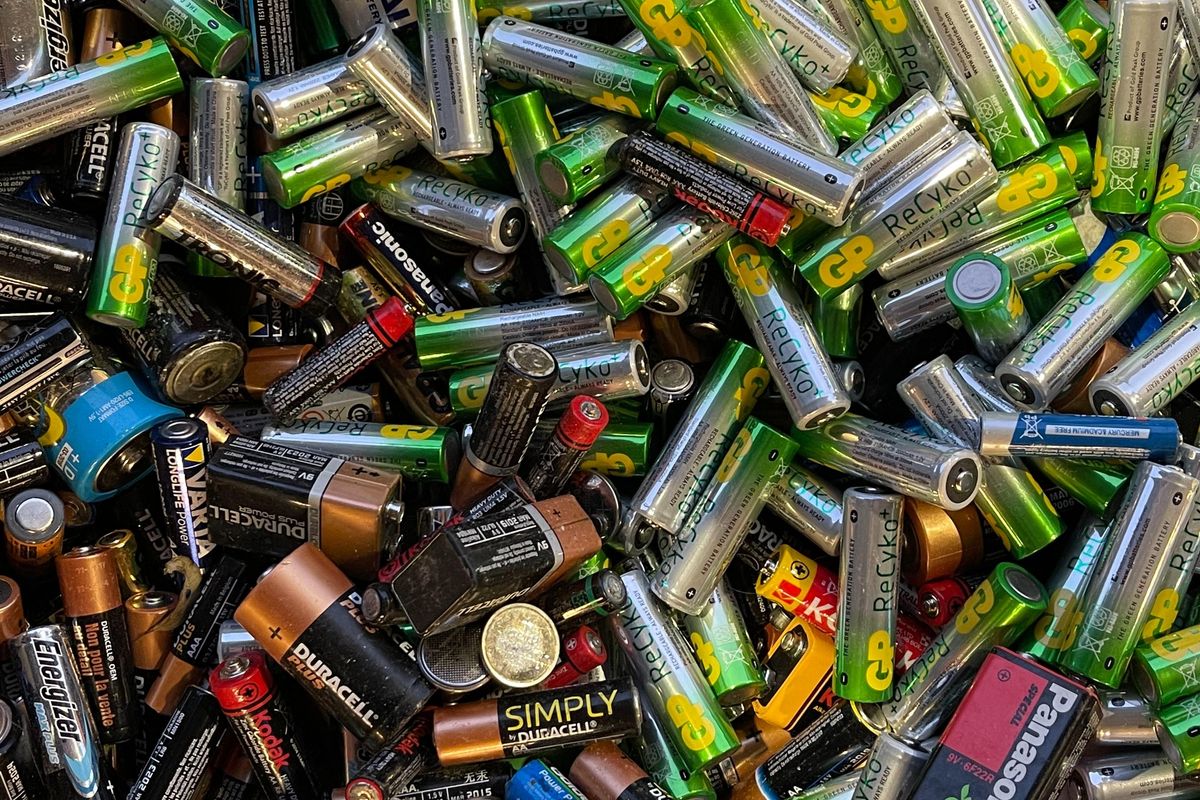
Batteries being recycled at WRWA, London. Nov ‘21Photo by John Cameron on Unsplash
"The big picture is that there may be a very simple way to stabilize nanowires of the type that we studied," Penner said. "If this turns out to be generally true, it would be a great advance for the community." Not bad for just fooling around in the laboratory.


This article originally appeared two years ago.

dance, motherhood, mommy daughter dance, mother daughter relationship, parenting, wholesome
Umi4ika/Youtube

Svetlana Putintseva with her daughter Masha.

In 2005 at only 18 years old, Russian rhythmic gymnast Svetlana Putintseva became a world champion, after which she retired and eventually became a mom. Then, in 2011, Putintseva came out of retirement for one special Gala performance.

Little did anyone know that her then two-year-old daughter named Masha would be the key to making that performance so special.


As the story goes, the young child refused to leave her side that night. But rather than stopping the performance, Putintseva did what so many incredible moms do: she masterfully held space for two different identities.

As we see in the video below, Putintseva simply brought Masha onto the dance floor and incorporated her into the routine—holding and comforting her at times, performing impressive moves while she ran around at others…letting it all become a lively, endearing interaction rather than a rote routine. It became something really touching:

Watch:

Now, a bit of fact-checking as this video has once again started going viral. Despite what many captions say, Putintseva‘s daughter was likely always a planned part of the performance (the tiny leotard is a bit of a giveaway). But that doesn’t really take away from the message behind it: motherhood weaves another soul into one's identity, forever. And one of the biggest lessons it teaches is how to hold someone else steady, all while becoming ourselves.

Every day, moms are engaging in a similar type of “dance”: navigating through the world while guiding and nurturing their little ones. It probably doesn't always feel quite as graceful as what Putintseva put out, and, yet, it is just as beautiful.

dance, motherhood, mommy daughter dance, mother daughter relationship, parenting, wholesome A mother hugging her daughter.Photo credit: Canva

Maybe so many thought it was an improvised moment because improvising is a very real parent superpower. That’s certainly the takeaway we get from some of these lovely comments:

“You cannot control life but you can learn to dance with it. 🤍”

"This is beyond beautiful. 🥲"

“If this isn't a metaphor for motherhood. We improvise so much.”

“A mother’s unconditional love 🥹❤️ She just made my whole month.”

“I do this sometimes while deejaying. My daughter comes up so I hit the slicer and let her chop it up. A few chops and she is happy and goes about her business. 🥰”

“I can see my daughter doing this to me soon whenever I get up on stage on perform. She already stares long and hard at me whenever I am onnstage singing. She doesn't take her eyes off me. Sure she would be running up to stand with me when she starts walking 😂😂 i look forward to it tho”

“Sobbing 😭😭😭😭 As a dancer who hasn’t performed since having a kid, this inspires me in so many ways 🥹🥹 So beautiful and it’s clear that she admires her mom so much 🥰”

- YouTube www.youtube.com

Though not much is written on Putintseva following this performance, one blog post says that Masha has followed in her footsteps by getting into rhythmic gymnastics. Maybe it all started with this one performance. ❤️

boomers, boomer grand parents, baby boomers, couple in their 70s, grandparents

A stressed mother and her baby boomer parents.

It's really amazing how the times have changed. There was a strange phenomenon in the 1970s, 1980s, and 1990s, when Gen Xers and older millennials were raised: their baby boomer parents were not around very much. This generation of children was often cared for in daycare or attended school with keys strung around their necks, and when they came home, they were told not to answer the door until a parent arrived. They were the children raised during both the divorce epidemic and the time when, for many families, both parents had to work. Now, if anything, parents are hyper-involved in their kids' lives.

However, the least parented generation in American history had strong relationships with their grandparents, who loved spending time with them and taking on babysitting duties. But now that the kids raised in the ‘70s, ‘80s, and '90s have children of their own, they’re noticing something interesting: the parents who weren’t around to raise them aren’t that into being grandparents either.


How are Baby Boomer grandparents different?

There is a lot of talk about the differences between Baby Boomers as grandparents and their parents from the Silent Generation. Some believe it’s because Baby Boomers have more money than their parents, who were raised when grandparents played a more significant role in child-rearing. After all, they didn't expect to travel or have busy social lives. Therefore, they have more lifestyle options to pursue than the generation before them. Unfortunately, that means their kids and grandkids are often seen as an afterthought.

boomers, boomer grand parents, baby boomers, couple in their 70s, grandparents Happy Baby Boomers.via Canva/Photos

This generation trend begs the question: Why do Boomer parents beg their kids to have children, but shy away when it comes to spending time with them?

An upset mother recently vented about the double standard on Reddit.

“My mother, a devout Christian, always preached the importance of getting married and having children. Now that I’ve done both (and happily so) and moved to be closer to her, she has very little interest in hanging out with us and never, ever offers to watch her grandkids,” she wrote. “I’ve been reading up on this, and it seems that it’s not uncommon. After moving across the country during COVID, I had dreams of my mom wanting to be an active part of our lives. The sad truth of it is, is that I see her maybe once more a year than when I lived across the country…and it’s not for lack of trying on my part.”

A lot of young parents feel abandoned by the older generation

The post resonated with many mothers her age who had experienced the same problem. Their Boomer parents begged them to have children, but they won’t lift a finger to see them. Now they feel like they've been hung out to dry. They gave their parents what they wanted, and now they have to raise them alone. The feeling of abandonment is especially worse at a time when basic necessities, such as childcare, are much more expensive than when their Boomer parents were raising kids.

stressed mom, mom and baby, crying mom, newborn, parenting A stressed mom crying with her baby.via Canva/Photos


“Yup, completely describes my Boomer parents. They begged and begged for us to relocate back to my home city. Still, as we began searching for new job opportunities/places to live, we naturally discussed the possibility of them spending some alone time with the grandkids from time to time,” another mom wrote. “That was a full stop for them. Both my parents insisted they’d retired from child watching duties and would not ever be utilized as ‘babysitters.’ The only acceptable option for them was for us to be present the entirety of the time their grandkids were interacting with them.”

“I think you hit the nail on the head. A lot of the Boomers want to be 'seen' as 'good grandparents' while not doing a damn thing,” another mom added.

Another mom noted that their grandparents were amazing, but their parents are the exact opposite. “What’s crazy is I spent TONS of time with my grandparents as a child. I’d routinely be dropped off on the weekends and weeknights,” the mother wrote. “My grandparents picked me up from school regularly. It’s not like my grandparents were doing the same behavior, and therefore it’s a learned generational thing.”

boomers, boomer grand parents, baby boomers, couple in their 70s, grandparents Baby Boomer grand parents.via Canva/Photos

One mother in the thread expressed sympathy for Baby Boomers who felt pressured to have children, regardless of whether they wanted them. She believes that now they’re getting their time back. “It’s because even though Boomers had the physical choice to become parents, they didn’t have the cultural/social choice. Whenever I hear this story, I figure the grandparents didn’t really want children. It also explains why we were at our grandparents' so often: anything they could do to not be around us, they took it up,” she wrote.

It’s wrong to paint an entire generation with the same brush, and there are, no doubt, plenty of wonderful Baby Boomer grandparents out there. However, it’s not surprising that a group of people once called the “Me Generation” is more reluctant to spend time with their families than those who came before them. One wonders if their feelings toward family will change when they become the ones who need to be cared for?

This article originally appeared last year. It has been updated.

Science

Her groundbreaking theory on the origin of life was rejected 15 times. Then biology proved her right.

Lynn Margulis had the audacity to challenge Darwin. And we're lucky she did.

lynn margulis, lynn margulis symbiosis, biology, scientific breakthroughs, darwin, darwinism, women in science
Facts That Will Blow Your Mind/Facebook

A photo of Lynn Margulis.

Throughout her prolific and distinguished career, biologist Lynn Margulis made several groundbreaking contributions to science that we take for granted as common knowledge today. For example, she championed James E. Lovelock’s “Gaia concept,” which posited that the Earth self-regulates to maintain conditions for life.

But by far, her most notable theory was symbiogenesis. While it was first written off as “strange” and “aesthetically pleasing” but “not compelling,” it would ultimately prevail, and completely rewrite how we viewed the origin of life itself.


In the late 1960s, Margulis wrote a paper titled "On the Origin of Mitosing Cells," that was quite avant-garde. In it, she proposed a theory: that life evolved through organisms merging together to become inseparable.

In essence, cooperation is the driver of life, not competition and domination. This directly went against Darwin’s “survival of the fittest” principle that was considered gospel in scientific circles. Margulis’ paper was rejected by fifteen journals before getting accepted into the Journal of Theoretical Biology.

- YouTube www.youtube.com

Time would be on Margulis’ side, however. By the late ‘70s and early ‘80s, research proved that the two major building blocks of plants and animals, chloroplasts and mitochondria were at one time independent bacteria. This solidified the fact that on a biological level, connection trumps autonomy for longevity. And now that fact is written in textbooks, with no real story of the adversity it overcame to get there.

While it is customary for most new scientific theories to be met with criticism, especially those that completely shift the current narrative, many have noted that sexism played a key part in Margulis’ initial lack of acceptance. On more than one occasion, she herself had hinted that women were seen as mothers and wives first, and scientists second. She recalled that while married to fellow scientist Carl Sagan that “Carl would finish his sentence, unperturbed” while she was expected to “handle all the duties of a 1950s housewife, from washing dishes to paying the household bills.”

And yet, Margulis would have other ideas that were controversial that had nothing to do with her gender. Most famously, she did not believe that AIDS was caused by HIV, and instead believed it was cause by a syphilis-causing type of bacteria, despite there already being decades of research proving otherwise. That view was seen as an endorsement of AIDS denialism, which undermined prevention and treatment effort. Then later in life, Margulis became a vocal proponent of 9/11 conspiracy theories suggesting government involvement the in Twin Towers attacks.

And yet, perhaps this is one of those “you gotta take the good with the bad” situations. Margulis’ inherent contrarian nature gave us both these unfounded, even harmful stances, in addition to entirely new paradigms that altered our understanding of life itself.

And if nothing else, it illuminated the need for science to include multiple points of view in order to unlock the truth. It seems life is, after all, about coming together.

albert einstein, intelligence, math problems, signs of being intelligent, smart people

Albert Einstein is so famous for his intelligence, people use "Einstein" as a synonym for a smart person.

How do you know someone is actually smart? Some intelligent people exude confidence, but plenty of not-very-smart people speak confidently about things they actually have no expertise in. On the other hand, some genuine geniuses are so humble and unassuming that it takes a while for others to realize the depths of their knowledge, and having more questions than answers can actually be a sign of a brilliant mind.

Highly intelligent people come in all types, but certain hallmarks of intelligence are noticeable in how smart people approach people and situations. Sometimes those hallmarks are things people might think are unrelated, such as having a great sense of humor, and others are the opposite of what people might think of as smart people traits.


A Redditor asked people on the ProductivityCafe subforum to share the “subtle signs that someone is intelligent," which led to great conversations about the characteristics of intelligent people and how their smarts seem to influence every part of them, from their personality to their ability to avoid unnecessary conflict.

Here are 14 subtle signs people shared that someone is very intelligent.

1. Curious about multiple subjects

"They like to learn about any and everything."

"And remember details and concepts later. A desire to understand and curiosity about the subject at hand."

2. They change their minds

"They can change their mind when presented with new information."

"This is definitely the best / most noticeable answer. Intelligent people agnostically process new information. They don’t just “automatically” deny anything that they don’t know or is inconsistent with what they already know. Intelligent people - it’s not what they know, it’s how they interpret / process new information."

"As John Nash, the mathematician allegedly once said; when the facts change, I change my mind!"


smart people, intelligence, humor, signs someone is smart, intelligent traits Quick wit and a good sense of humor can be signs of intelligence.Photo credit: Canva

3. They process humor quickly

"They get the joke sooner than most people. Happens once in a while in movies or group settings: one person starts to laugh way ahead of everyone else. That’s one with a super fast processing mind (I know one). It is totally unconscious, so cannot be faked."

4. They like being corrected

"When you correct them, they're actually happy about it because they get to learn something new."

"100%. This is often referred to as growth mindset."

5. Great sense of humor

"Humor is a marker for intelligence. Truly dumb people aren’t funny."

"Agreed but I would add that witty or dark humor is more intelligent than mean, cruel, gross humor. If someone’s 'wit' is just the same structure of putting other people down or being gratuitously shocking or gross, then no."

"A really good sense of humor. To be really funny, you have to be very observant and able to see things in ways that others don’t."

6. They make you feel smart

"They explain some things to you in a way that makes you feel intelligent."

"Einstein said, 'If you can't explain what you are talking about to a six-year-old, you don't fully understand it yourself.'"

smart people, intelligence, thoughtfulness, thinking before speaking, signs someone is intelligent Smart people take time to think before responding.Photo credit: Canva

7. They think before they respond

"They don't react. There is always a delay... and then, they respond."

"They observe, they pause, and then comes the long encyclopedic reply."

8. They know when to be quiet

"Yes, I have come across people with no filter, and have to argue about everything, and that can be exhausting."

"Never miss a good opportunity to shut the f**k up."

9. They're great at banter

"Yes, and quick word play/good puns."

10. They ask about your thought process

"If someone is inquisitive. They want to know how and why you think the way you do. Most people don’t do this."

11. They know what they don't know

"Even very intelligent people don't know about every topic. They understand this and don't pretend to be an expert or speak to things they don't specialize in. Or they use analogies to connect it to things they do understand. They understand that there is a lot they do not know, especially about their given specialties."

"Some people have so much ego, that they have an inability to say that they don’t know the answer to a question. They’ll either give a bullsh*t answer, or try to shrug off the patient’s concerns entirely. Nobody knows everything. If you don’t know, there’s no fault in admitting that, and then using resources to find the answer."


smart people, intelligence, physical intelligence, dance, choreography There are multiple manifestations of intelligence. Photo credit: Canva

12. Physical intelligence is important, too

"I wish people could understand intelligence in many forms—being good with your hands is intelligence. Being able to learn elaborate choreography is intelligence. Being emotionally responsive and understanding microexpressions is intelligence. It’s not just regurgitating facts. I’m a fact regurgitator myself, but I have a lot of respect for things I can’t do."

13. They don't get into drawn-out arguments

"Not raising their voice during a disagreement. Shouting over each other is to try and win an argument with intimidation rather than logic."

"Argue with an idiot and there's two idiots."

14. They think for themselves

"They don’t have herd mentality. Specifically in politics, religion, and pseudoscience."

"I remember the first time that I understood that not picking a side was a valid option for many situations. It was like a record skip moment in my head."

There are other signs of intelligence that people shared, of course, some of which are hilariously debatable. For instance, someone claimed that intelligent people use bidets instead of toilet paper, which is awfully specific and subjective. While certainly not foolproof, the above traits offer some solid starting points for spotting a smarty among the masses.

This article originally appeared last year. It has been updated.

scottish, mexican, scottish accent, spanish, bilingual

Yanett Steven grew up in Scotland in a bilingual family.

People who grow up in bilingual households have a distinct leg up on second-language fluency. When you grow up hearing native speakers speaking their languages, you pick them up naturally, and it's not unusual to hear a child in a bilingual family switching back and forth between languages.

What is unusual, however, is hearing an adult Scottish-Mexican woman doing that switch-up mid-conversation. Yanett Steven effortlessly flips from her dad's thick Scottish accent to her mom's native Spanish (with a Mexican accent), and it is fascinating to listen to. Steven shares that her mom didn't speak any English when she was little, so she learned Spanish from her mom, but she has the accent that one would expect from someone growing up in Glasgow.


@yanettsteven

As a Scottish Mexican I always feel so at home in Texas 🥰 #mexicanscottish #britishlatino #mexicanamerican #scottishlatino #scottishmexican

The Brave meets Coco combo feels super unusual, and people in the comments had some things to say:

"What just happened to me?"

"The switching back-and-forth between Scottish and Mexican accents is like scratching some weird itch in my brain"

"First time I've ever heard scanglish."

"Also 'cute wee summer dress, en CHANCLAS' was a wild ride I never imagined this blend of accents it’s lovely I’m so curious."

"I’m like blown away right now. How is the Scottish accent and the Spanish accent blending so smoothly???"

"I want 3000 hours of people speaking 'Spanglish' in a Scottish accent. This is actually the only way I want to hear anyone speak ever again. Also hi, I live in Texas and love visiting Scotland."

"This is tripping me out 😂 my mom is Scottish (my parents & brother live in Scotland) and my husband is from South Texas and is Mexican… it's like my two worlds have combined in one video 😵💫"

Steven shares a lot about her cultural and linguistic background that offers some cool insights into living in a multicultural family. Even just hearing her talk about her mom speaking Scottish English with a thick Mexican accent is a wild ride.

@yanettsteven

Replying to @Xzeken Maybe I’ll post her speaking English but I bet you’ve never heard a Mexican woman sound so Mexican but so Scottish at the same time 😅 #mexicanscottish #britishlatino #mexicanamerican #scottishlatino #mexicanbritish and

Steven shares that the two languages bring out different parts of her personality. "I feel like when I speak Spanish, I'm a bit more happy and fun. I smile more," she said (in Spanish) in another video. "And I feel like in Scottish, I'm a little bit more timid, a bit more quiet, a bit more reserved into myself." She wondered if other people from bilingual families feel like they have different personalities when they speak different languages, or if people who learn languages later in life also feel that way.

@yanettsteven

Replying to @Jasmine Rivera Going to Texas and shocking people is my favourite past time lmao Does anyone else who’s bilingual feel this way or just me ?#mexicanscottish #britishlatino #mexicanamerican #people #scottishmexican

Other bilingual folks confirmed that they also feel a personality difference in different languages:

"Yes girl, both languages bring out a different side of you. I think it’s because words in Mexican Spanish are meant to be loud and with attitude and humor And English words are so much more subtle or quiet, if that makes sense lol."

"I'm German/Scottish I totally get what you mean 😂"

"Yes!! Totally get this!! I feel like completely different people 😂"

"Omg. I'm bilingual and I feel like this!!! Was just trying to explain this to a friend yesterday! I think it’s bc Spanish feels like being at home. 💛"

"When I get in my feels, my husband says, 'Your Latina is coming out.' I definitely feel more passionate 'in Spanish.' 😂"

"Si. Es porque el español tiene el “sazon/chispa” that english doesnt have."

"Yes ma’am when my Mexican side comes out I feel free, outgoing, funny."

Steven has also shared some other interesting insights into growing up bilingual. For instance, the Spanish she learned growing up, which is the Spanish spoken in Northern Mexico, was sometimes a problem when she started learning Spanish in school. Spain's Spanish is different than Mexican Spanish in some ways, so what she had learned growing up was deemed "wrong," even though it was just different from the Spanish taught in school. It's fascinating how the same language can be spoken so many different ways.

@yanettsteven

Replying to @Frank Rhodes I swear Spain Spanish was the biggest shock to my system when I was wee , and some Spanish teachers being rude but that’s another story 😭 #mexicanscottish #britishlatino #scottishlatino #mexicanamerican #mexicanbritish

You can follow Yanett Steven on TikTok for more.