upworthy
Add Upworthy to your Google News feed.
Google News Button
Mental Health

The danger of high-functioning depression as told by a college student

Overachievers can struggle with mental health issues, too.

The danger of high-functioning depression as told by a college student


I first saw a psychiatrist for my anxiety and depression as a junior in high school.

During her evaluation, she asked about my coursework. I told her that I had a 4.0 GPA and had filled my schedule with pre-AP and AP classes. A puzzled look crossed her face. She asked about my involvement in extracurricular activities. As I rattled off the long list of groups and organizations I was a part of, her frown creased further.


Finally, she set down her pen and looked at me, saying something along the lines of "You seem to be pretty high-functioning, but your anxiety and depression seem pretty severe. Actually, it's teens like you who scare me a lot."


Now I was confused. What was scary about my condition? From the outside, I was functioning like a perfectly "normal" teenager. In fact, I was somewhat of an overachiever.

I was working through my mental illnesses and I was succeeding, so what was the problem?

I left that appointment with a prescription for Lexapro and a question that I would continue to think about for years. The answer didn't hit me all at once.

Instead, it came to me every time I heard a suicide story on the news saying, "By all accounts, they were living the perfect life."

It came to me as I crumbled under pressure over and over again, doing the bare minimum I could to still meet my definition of success.

It came to me as I began to share my story and my illness with others, and I was met with reactions of "I had no idea" and "I never would have known." It's easy to put depression into a box of symptoms.
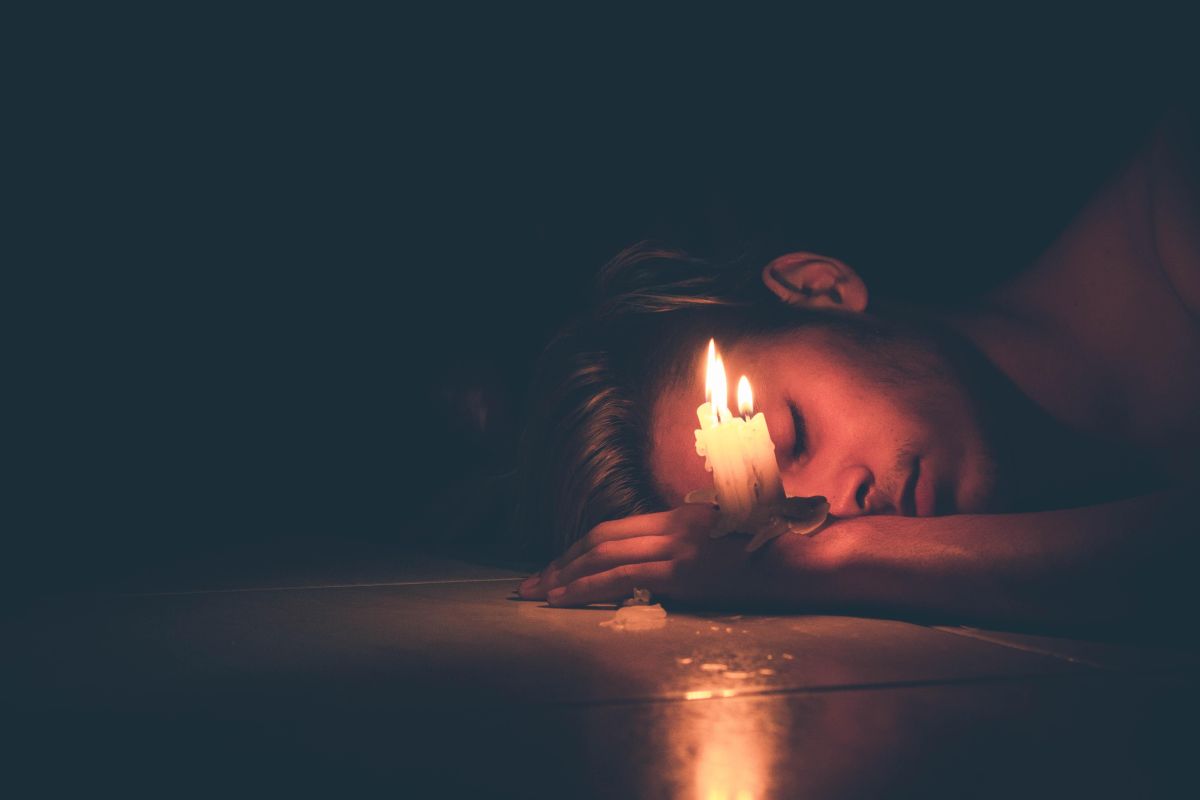
lighted candles on man's hand lying on the floorPhoto by Fernando @cferdophotography on Unsplash

Even though we're often told that mental illness comes in all shapes and sizes, I think we're still stuck with certain "stock images" of mental health in our heads.

When we see depression and anxiety in adolescents, we see teens struggling to get by in their day-to-day lives. We see grades dropping, and we see involvement replaced by isolation. But it doesn't always look like this.

And when we limit our idea of mental illness, at-risk people slip through the cracks.

We don't see the student with the 4.0 GPA or the student who's active in choir and theater or a member of the National Honor Society or the ambitious teen who takes on leadership roles in a religious youth group.
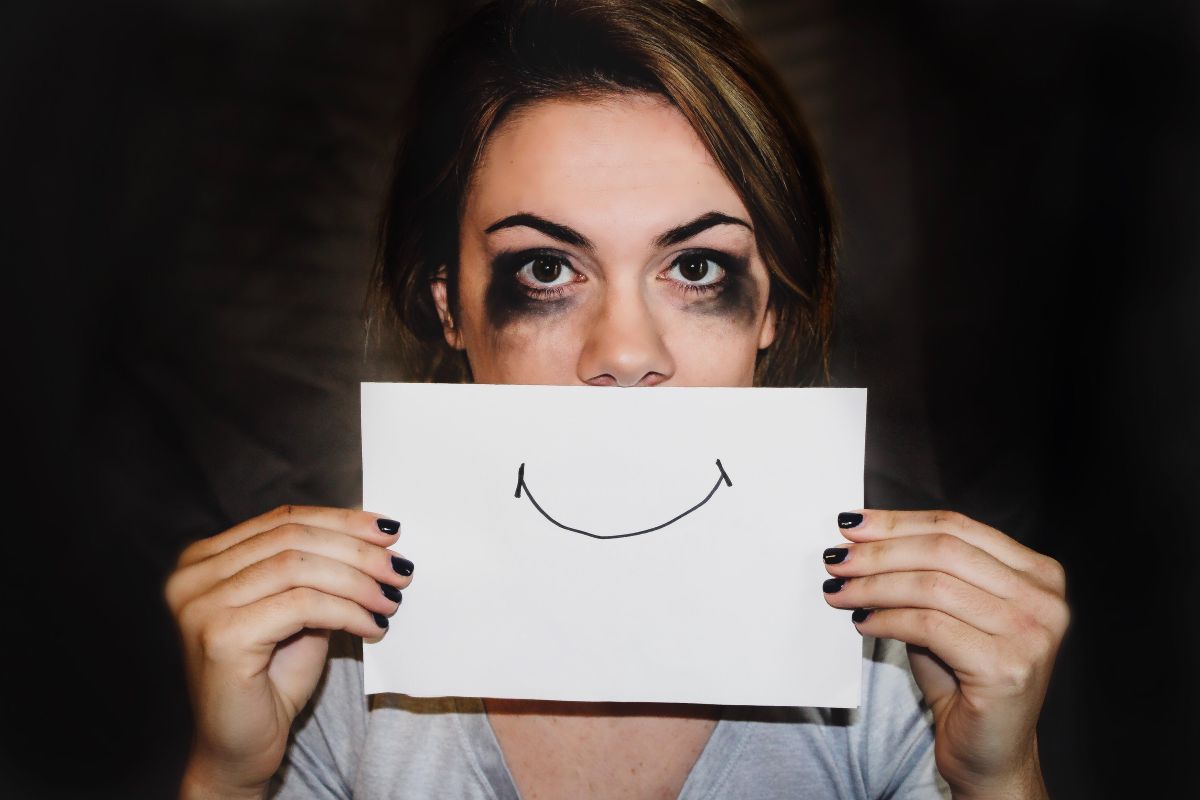
person holding white printer paperPhoto by Sydney Sims on Unsplash

No matter how many times we are reminded that mental illness doesn't discriminate, we revert back to a narrow idea of how it should manifest, and that is dangerous.

Recognizing this danger is what helped me find the answer to my question.

Watching person after person — myself included — slip under the radar of the "depression detector" made me realize where that fear comes from. My psychiatrist knew the list of symptoms, and she knew I didn't necessarily fit them. She understood it was the reason that, though my struggles with mental illness began at age 12, I didn't come to see her until I was 16.

If we keep allowing our perception of what mental illness looks like to dictate how we go about recognizing and treating it, we will continue to overlook people who don't fit the mold.

We cannot keep forgetting that there are people out there who, though they may not be able to check off every symptom on the list, are heavily and negatively affected by their mental illness. If we forget, we allow their struggle to continue unnoticed, and that is pretty scary.


This article was written by Amanda Leventhal and originally appeared on 06.03.16



dog experiments, dog tongue cleaner than humans, experiments by kids, cool science, dogs, fun science, experiments, science

A young teen boy holding a beagle.

Dogs come in a wide variety of breeds, along with their own unique personalities and needs. They can be guardians, helpful workers, loyal friends, snuggly companions, but there's one thing almost all dogs have in common: Licking.

Sure, some dogs lick way more than others, but it's rare to find a dog who never licks anyone or anything. Many dogs communicate and show affection by licking, which is sweet—if a little gross—depending on how slobbery they are. There's a common saying that dogs' mouths are cleaner than humans', which is a bit hard to believe when you see what some dogs put in their mouths, but it is true?


What does science say about dog tongues and saliva? Is a dog licking our face something we should worry about?


dog experiments, dog tongue cleaner than humans, experiments by kids, cool science, dogs, fun science, experiments, science A man being licked by a golden retreiver. Photo credit: Canva

It turns out, the answer to whether a dog's mouth is cleaner than ours isn't super straightforward.

An 8th grader named Abby tackled this question in a science experiment that won her a Young Naturalists Award from the American Museum of Natural History in 2011. Her family had gotten a dog and her mom kept telling her not to let the dog lick her face because dog mouths are full of bacteria. Instead of arguing, Abby decided to find out herself if this was true.

"I hypothesized that human tongues would be cleaner than dog tongues," she wrote. "I thought this because humans brush their teeth at least once a day. I hypothesized that dogs' tongues would be dirty because they were always licking dirty things like garbage."

After diving into the research about bacteria that live in and on humans and dogs, Abby decided she had a testable hypothesis. But this wasn't any old middle school science experiment. She applied for and got a grant to the State Hygienic Lab at the University of Iowa, where she was assigned a mentor to work with her.

You can read the nitty-gritty details of her experiment here, but it involved a lab, swabs, agar plates, and more. Here was the conclusion:

dog experiments, dog tongue cleaner than humans, experiments by kids, cool science, dogs, fun science, experiments, science A dog's tongue close-up. Photo credit: Canva

"I concluded that dog and human mouth flora are very different. (Flora means the bacteria found in a mouth or anywhere else.) The bacteria found in human mouths are more similar to another human's oral bacteria than the bacteria found in a dog's mouth.

"I also concluded that dogs' mouths are cleaner than humans' in some ways, and dirtier in other ways. Humans have more bacteria in their mouths than dogs do, based on the total number of bacteria. Most of the humans had a 'moderate' number of bacteria, and most of the dogs had 'few' bacteria. A possible explanation of this might be that dogs pant a lot, and maybe while panting, bacteria falls off their tongues along with their saliva. But dogs had more types of bacteria. The average number of different bacterial colonies in a dog's mouth was about 5.7. The average number of different bacterial colonies in a human's mouth was about 4.1. I think this is so because dogs sniff and lick a variety of things, like carpets, floors, chairs, grass, etc., so they pick up bacteria from many places."

But what about the licking of our faces? That's a bit of a subjective call, but Abby's results gave her some peace of mind:

"In conclusion, will I let my dog continue to lick me? The answer to the question is yes!" she wrote. "I will feel guiltless about letting my dog lick me because I found out that human and dog oral bacteria are different, so my dog's oral bacteria present no harm to me."

What do the experts say?

According to Colin Harvey, professor at the University of Pennsylvania’s School of Veterinary Medicine and executive secretary at the American Veterinary Dental College, comparing dogs' mouths to humans' mouth is "like comparing apples to oranges." As Abby found, the microbes in a dog's mouth are very different than those in a human's.

The American Kennel Club elaborates:

"Most of the bacteria in your dog’s mouth aren’t zoonotic, which means you probably won’t get a disease from a big old doggy kiss. There are exceptions to this. Dogs that eat a raw diet are at an increased risk of contracting salmonella, which can be spread to humans. You also probably shouldn’t share kisses with a dog that regularly raids the litter box.

In other words, kissing your dog is less risky than kissing another human, but that doesn’t mean that your dog’s mouth is necessarily cleaner than a human’s—they just have a mostly incompatible set of germs."

Keeping your dog's mouth healthy through regular teeth cleaning and dental check-ups can also help prevent issues that could potentially come from dog licks.

dog experiments, dog tongue cleaner than humans, experiments by kids, cool science, dogs, fun science, experiments, science A golden retreiver getting their teeth brushed. Photo credit: Canva

So there you have it. If your dog doesn't eat a raw diet and doesn't go snacking in the cat box (or some other equally fecal-bacteria-ridden place), their kisses are probably not going to hurt you. Guilt-free pooch smooches for the win!

This article originally appeared last year.

children, child development, milestones, theory of mind, lying
Photo Credit: Canva

A child mischievously hides in a ball pit.

Parents, teachers, and child caregivers are often aware of the gentle quirks young kids can display. They can become moody, rambunctious, and, at a certain age, they begin to tell fibs. "I only had one cookie, Mommy," a child might say as an empty Oreos package sits on the floor beside them.

But never fear! Child neurologist Arif Khan explains that parents shouldn't worry if a young child tells little white lies. In fact, it's incredibly common and even a sign of healthy cognitive development.


In a YouTube video entitled, "The REAL Reason Children Start Lying to Parents," Khan explains, "Children lie, not because they're bad or manipulative. Children lie because their brains are developing something new. Psychologists call it 'Theory of Mind.' It's the ability to understand that other people think differently than you do."

Dr. Arik Khan explains how lying in childhood can be a developmental milestone. www.youtube.com, Dr. Arif Khan

He goes on to explain that it's a huge mental leap for the brain in that they're learning that they can actually possibly change someone's mind. "It's a huge milestone. It means the child is starting to realize, 'Mom doesn't know what I'm thinking.' And once they realize that, they start to experiment."

Though admitting it might sound "sneaky," he says it can be an example of massive mental growth. "Because to lie…the brain needs to do three things:

  1. Remember what's real.
  2. Inhibit the truth.
  3. Predict what the other person might believe."

Khan cites a 2015 study from the University of Toronto that concluded "Children who start lying earlier actually score higher on measures of social and cognitive intelligence."

Of course, that doesn't mean that lying should be encouraged. Instead, simply note that it means the "brain is growing in complexity" and why this can be an excellent predictor of good social skills and even empathy later on in life.

Laura Todd, a licensed therapist who specializes in parental mental health and child development, spoke with Upworthy regarding the topic. "White lies are a healthy part of social and emotional development in children by demonstrating a child's understanding of social skills, empathy, and emotional intelligence. It is a way of showing that they are balancing the nuance of being honest and being kind."

The question then becomes, how should parents react? Todd gives specific examples on how to model a shame-free environment for their kid. "Have the child 'do over' by letting them try again, such as, 'That doesn't sound like the whole truth. Do you want to try again?'"

She adds, "Focus on the underlying feelings that might be the reason for the white lies, such as embarrassment, fear, or anxiety. Avoid interrogating or pressuring your child to be honest, as that may backfire and encourage further lying to save face. If necessary, seek professional help if the child is lying frequently, impulsively, and shows additional behaviors that the parents or teachers are concerned about."

Stephanie Pappas, LMFT, tells Upworthy that parenting approaches have changed in recent years. "Up until recently, a majority of the parenting approach to lying has been to blame, shame, and create distance between parent and child through time-outs or punishments. In reality, lying is trying to serve the opposite function by creating connection, empathy, and attachment. When your child lies, they aren’t trying to upset you or create distrust on purpose; they’re actually trying to stay close and connected to you by avoiding shame or embarrassment about what they did. When we reframe lying as a child’s brain trying to avoid shame and disconnection, parents can soften their approach to it."

Pappas echoes Khan's assessment that the act of lying for a young child is most definitely a milestone. "The ability to lie also requires a child to simultaneously know the truth and also create a new story, which is an incredible neurological feat in the prefrontal cortex of the brain."

A compilation of children telling white lies to their parents. www.youtube.com, Listed

She also gives practical suggestions. "Next time your child lies, instead of creating a close-ended question of 'Did you do this?' which can elicit shame or embarrassment, open the conversation up with curiosity and leadership, such as, 'It looks like you made a mistake. We all make mistakes, and what’s important is that we grow from them. I want to be able to talk with you truthfully. Can you walk me through what happened?'"

Or, she states, it's even helpful to even turn the interaction into a game. "Being playful and silly can also be effective with younger children, with saying something along the lines of, 'Wow! I love how you used your brain and imagination to come up with that. Can we keep going with the story? Maybe we can draw a picture! Then after, we can talk about what really happened and figure out a solution.'"

crowd, unique, personality type, nonconformist
Photo Credit: Canva

A person stands out in a crowd.

So many of us have the desire to compartmentalize our personality traits into neat little boxes. "Oh, she's such an INFJ. Oh, he's such a Gemini." Some of it is rooted (well sort of) in psychology, such as the Myers-Briggs Type Indicator, based loosely on Jungian ideas. Others rely on arguably less scientific data like stars and "rising signs." Humans aren't usually that simple.

That said, there's still value in understanding one's own personality and inclinations. Here's a confession: I've taken countless personality tests because I just couldn't figure out if I was an extrovert or an introvert. Neither description quite fit, and as someone constantly trying to understand what makes me tick, this has been frustrating.


Turns out, there are other options. The term "ambivert" got popularized in the 1930s (after being coined by Edmund S. Conklin in 1923), and it refers to a person "who has features of both an introvert (someone who prefers to spend time alone) and an extrovert (someone who prefers to be with other people) in their personality."

@tedtoks

Replying to @Factura🛄 now knowing what an ambivert is, how would you describe yourself? #ambivert #introvert #extrovert #adamgrant #psychology #TEDTalk #worklife

But for those who still don't quite relate, meet the otrovert. Just recently, psychiatrist Rami Kaminski published The Gift of Not Belonging, in which he discusses his coined term to describe a whole new type of personality. In an Insta-reel captioned "What is an Otrovert?" Kaminski mentions the polarization of introverts and extroverts. "When Jung invented the terms extrovert and introvert, he saw them as two fundamental orientations of the personality. I see the otrovert in the same way. A personality trait that faces away from the group."

He continues, "Extroverts and introverts are inherently communal, while the otrovert is an outsider to the group. In itself, it is not a problem or condition, nor is it a diagnostic label. It simply means that while most people learn to develop a sense of belonging to a specific group through social conditioning, otroverts remain social but not communal."

In writer Sarjna Rai's piece, "Struggle to Fit the Mold? The 'Otrovert' Personality Explains Why" for Business Standard, they write: "Unlike introverts or extroverts, otroverts are not defined by where they draw their social energy. Instead, the concept captures people who constantly feel like outsiders, and tend to look in a different direction altogether, not necessarily aligned with the rest of the group."

While it's impossible to group people into perfect categories, Rai explains that Kaminski claims the main thing that sets otroverts apart is their "reluctance to conform to group norms."

Writer Avery White lists signs one might be an otrovert in the article "7 Signs You Might Be an Otrovert" for VegOut. Among them is preferring "high-signal conversations and low-maintenance relationships." They give this as an example: "You’ll happily spend three hours exploring one idea with one person—and then not speak for weeks without either of you taking it personally. In other words, low pressure, low expectations, high connection.

Another on the list—and this is a big one according to Kaminski—is: "You can look extroverted in public—yet feel fundamentally 'other.'" This is actually the crux of the term, and in fact, what Kaminski formed The Otherness Institute for: as their website says, "those who feel they don't belong."

The site also shares that recognizing aspects of this type in yourself and others (if it applies) will help "balance between your individuality and your function as part of the social matrix that determines your well-being. The experience of otherness in a togetherness-minded world can be emotionally bruising. Often misunderstood and misdiagnosed, otherness may lead individuals to feel strange, lonely, and unwelcome in groups. Left unidentified, otroverts' non-belonging can result in a frustrating, futile lifetime effort of trying to 'fit in.'"

Some Redditors are scrambling to figure out if they fit into this category. In the subreddit r/INTP (referencing one of the Myers-Briggs personality types), the OP asks, "Maybe I am an 'otrovert?'" Under this, they write, "Dr. Kaminski described the otrovert child as 'neurotypical, friendly, curious, well-adjusted, and often popular' yet 'they resist being pressured into group activities.'"

While this can seem inconsequential in childhood, joining the peer group "becomes critically important" in adolescence, said the psychiatrist, and teens "start to gauge their self-worth based on the group’s ranking of popularity (or unpopularity).'

"Membership in a group, no matter how lowly, is better than being an outsider," he added. "Otroverts, however, are comfortable with being outsiders and find it impossible to feel like insiders, regardless of how welcome they are.'

There are a handful of commenters who feel seen, but many push back, claiming the term could easily apply to other personality traits. One writes, "I think it's easy to resonate with this description... but as some warning noted, there aren't enough studies done about this term that people should be running to adopt it. I resonated with it after reading about it... But I have ADHD and persistent depressive disorder... both of which coincide with the descriptions of an otrovert."

Time will tell if this new term sticks, but for now, it's helping a lot of people feel more understood.

This article originally appeared last year.


heat, heating, heating tips, frugal heating tips, money saving heat tips, heat tips during winter

A woman touches the thermostat on her wall.

Finding ways to stay warm during the winter is never easy, especially with rising energy costs. Now more than ever, keeping heating bills low is crucial.

On Reddit, a user shared frugal advice from their single mom about keeping a home warm during brutal Michigan winters on a tight budget.


"I currently live and grew up in mid Michigan with a very frugal single mother of 3 kids," user KookyUnderstanding65 explained. "We had a 100+ year old house with terrible insulation. We learned a few tricks for staying warm on a budget over the years. ... It was tough for a while, but we always made it through."

- YouTubewww.youtube.com

Frugal ways to heat the home

These are six frugal ways the Reddit user's mom kept their family warm during the winter:

1. Use window film

"You can get it from consumers energy for a steep discount or sometimes for free. It's ugly and a pain but it makes all the difference on a drafty window! Still chilly? Hang a blanket over the window for extra insulation!"

2. Grab a hair dryer

"Freezing pipes? Grab a hair dryer! Legit. Can't tell you how many cold mornings I spent in the basement warming the pipes with a hairdryer lol. May not be the most energy effective but at least we didn't have to run out and buy anything new. Hairdryer was free and available!"

3. Utilize the oven after baking

"After you're done baking something, leave the oven door open to allow the residual heat into your home. It's not advised to do this with the oven on and you should never attempt to heat your home with a stove or cooking device."

4. Block drafts

"Roll blankets or towels and set them at the bottom of doors to reduce drafts (on exterior doors and between rooms that you're not in/trying not to fully heat)."

- YouTubewww.youtube.com

5. Make the most of your space

"During the day, try to keep everyone to one room that's the most heated. Do activities that help keep warm (like jumping jack or push up contests. Probably the only time my mom intentionally riled up three kids). If needed, sleep in the same room. Mom made this fun by saying we were 'camping in the living room'. We'd grab every blanket in the house and all cuddle up together on the living room rug. Easier to heat one room and more warm bodies to cuddle!"

6. Don't be afraid to ask for help

"When there's nowhere else to turn, ask for help. If you're backed against a wall, reach out to someone or community programs. Everyone deserves warmth and safety. There's absolutely no shame in keeping yourself and/or your family safe."

Additional money-saving heating tips

Fellow Michiganders and frugal readers offered their advice on how to heat a home during the winter:

"I like to keep a big pan of water on to boil periodically. Helps add heat and moisture when the house gets dry." - alohamora19

"If you can't afford the film for windows, buy painter's plastic from Menards, Lowe's, or Home Depot. Per foot it's cheaper and you can get several winter's with in a single purchase. Use painter's tape, blue papery tape, to hold the plastic up right ripping the paint off your walls. Still be careful removing it, don't just yank it. If you have unused exterior doors seal them completely with plastic and tape." - mesoterra

"On the coldest days I like to walk around and figure out where drafts are coming in. I found one on our sliding door last year and yesterday found a gap between the mantle/wall that seemed to be allowing cold air in. A little bit of foam or replacing seals can make a huge difference and it's a permanent improvement." - HonestOtterTravel

"You can also place a tent on top of your mattress and sleep inside. It stays quite warm. No-frills tents are relatively inexpensive." - SomethingHasGotToGiv

Buddhist monks on a peace walk help a nonverbal autistic boy make a heartwarming breakthrough

"He was included, and we don't always see that." [This quote isn't in the story; suggest using: "Today was such a blessing."]

buddhist monks, raleigh north carolina, peace walk, flowers,
Photo via Sean Stevens (used with permission)

Buddhist monks walk through Raleigh, North Carolina, on a peace walk.

There is a story unfolding across America's South that has been healing for many at a time when the news cycle is dominated by war, street violence, and political tension.

On October 26, 2025, a procession of Buddhist monks left their temple in Texas to begin a 120-day, on-foot spiritual trek to Washington, D.C. Their mission is simple: to promote national healing and peace. At a time when many forces seem to be pulling America apart, these monks are here to bring people together.


"My hope is, when this walk ends, the people we met will continue practicing mindfulness and find peace," said the Venerable Bhikkhu Pannakara, the group's leader, according to the Independent.

Along for the "Walk of Peace" journey has been Aloka, a rescued Indian pariah dog who captured hearts across the country and later became a cause for concern after being sidelined by a leg injury. Aloka is now recovering and hopes to rejoin the monks once healed.

The monks have a beautiful encounter with an autistic child

The monks have touched countless hearts on their trek to spread peace and love, and they created what felt like a near miracle during a stop in Raleigh, North Carolina, on January 25. Samantha Bray and her family were among the spectators hoping to see the monks along their journey, and she couldn't believe the effect they had on her son, Vincent, who is nonverbal and autistic.

As the monks walked by, they noticed Vincent and approached him. One of the monks tied a bracelet around the boy's wrist as Vincent held his mother's hand. For his family, the moment was astonishing—Vincent had never allowed anyone to put anything on his wrist before, not even those close to him.

Bray later shared the video on Facebook, where it received more than a million views. The monks also reposted the clip on their growing social media accounts.

Bray wrote in her post:

"Today was such a blessing. We caught the Buddhist Monks in the Walk for Peace. My daughter and I were on the sidewalk while my son and husband were a little ways back. One of the Buddhist Monks saw our son and asked if he was ok. My husband brought our son up. They prayed over our son, who is autistic and nonverbal, and tied the holy thread around his wrist and gave our daughter flowers."

The monks responded:

"Thank you, Samantha, for sharing your family's precious experience with all of us. May the blessing continue to shine in your son's life and in your whole family's hearts."


"Having that moment with our family, surrounded by our community and the monks, it was just a really beautiful moment to experience," Bray told WRAL. "And to even add, you know, for him to tolerate that and kind of just being in that moment together was pretty spectacular."

- YouTube www.youtube.com

The meaning behind the bracelet

Traditionally, when a Buddhist monk shares a bracelet, it carries multiple meanings. It's meant to promote mindfulness, serving as a reminder to focus on having a deeper connection to the present moment. The bracelets are also believed to promote inner peace, offer protection from negative energies, and help ward off obstacles along one's spiritual path.

There's a lot of good in this world; you just have to look around to find it sometimes. While those who wage war and sow chaos often get the most attention, it's important to remember that many people are also fighting for good. These monks are a powerful reminder that simple acts, like gentle kindness, can overcome forces of negativity and division.