

To fight the stigma of mental illness during and after pregnancy, these 7 women got very real.
Because getting help can change everything.
1 in 7 moms deals with postpartum depression or another perinatal mood disorder.
That's a lot of women who are facing a serious situation, many of them in silence and without help, because there's a stigma attached to this type of illness.
Now, these women want to show us the faces of everyday moms with the condition.
Seven real women, all of whom survived or are currently being treated for PPD or other perinatal mood disorders such as postpartum anxiety and obsessive-compulsive disorder, opened up about their experiences in a video so that we can keep talking about the fairly common condition. (You can scroll to the end to watch it — it's worth your two minutes.)
Photo collage created from video by Jill Williams Krause of Baby Rabies.
Here are some of the very real and honest feelings they shared:
"Just the sounds of crying, it really started to get to me."
"And my stomach always felt like when you miss a step when you're going down the stairs and your stomach jumps. That's how I felt all the time."
"I really wanted to act out this anger on inanimate objects around my husband. And it was such a weird feeling."
"I found myself just getting fixated on certain things, extreme worry about his health."
"I felt like I could finally ... I would be able to rest if I would die."
What is postpartum depression, anyway?
Some women experience "baby blues" after giving birth. Those last for a few days or a few weeks tops and pass. According to Mayo Clinic, symptoms include the following: mood swings, sadness, anxiety, crying, irritability, trouble sleeping, and decreased concentration.
Postpartum depression is something else. It is one of the most common perinatal mood disorders, which can occur during or up to one year after pregnancy.
Photo by Thinkstock.
Mayo Clinic notes that "postpartum depression may appear to be the baby blues at first — but the signs and symptoms of PPD are more intense and longer lasting, eventually interfering with your ability to care for your baby and handle other daily tasks." They list the following:
- Loss of appetite
- Insomnia
- Intense irritability and anger
- Overwhelming fatigue
- Loss of interest in sex
- Lack of joy in life
- Feelings of shame, guilt, or inadequacy
- Severe mood swings
- Difficulty bonding with your baby
- Withdrawal from family and friends
- Thoughts of harming yourself or your baby
(For a list and explanations in "plain mama English," you can visit Postpartum Progress.)
Without treatment, PPD can last months — or longer — and interfere with your ability to bond with your baby (which can cause problems for your child later in life) and even turn into a chronic depressive disorder that extends well beyond your postpartum months.
I spoke to Jill Williams Krause of Baby Rabies, the woman behind this video, to learn more about barriers to seeking help.
"I experienced postpartum anxiety and OCD, which are two diagnoses I didn't even know existed until I read about them on Postpartum Progress," she shared. "I read it when my second was about 8 months old and, for the very first time, realized that I wasn't a 'bad' mom. I was sick."
Photo courtesy of Jill Williams Krause of Baby Rabies.
Why aren't more moms getting help? Well, for one, some "simply don't understand that it's not just feeling depressed or having suicidal thoughts," Jill said. "They breeze through the six-week checkup not realizing that the obsessions, the visions, the panic are all things that they can get help for. Also, many moms are told they will get better with time."
Additionally, Jill says some moms "worry if they express that it's anything worse than a lack of sleep, they will lose their children."
Another barrier to reaching out for help is the way we've been presented with extreme stories of PPD in the media. "In many cases, their only exposure to a mom who has dealt with this is via a horrific news story. They don't want to be associated with that," Jill explained. Think: Cases where women tried to kill their babies (or actually succeeded).
But those cases are few and far between. We really need to focus on all the moms who are fighting this alone and silently — who can get better with help.
Because getting help matters so much.
Photo by Jill Williams Krause of Baby Rabies.
Here's what the women had to say about their lives after treatment.
"I started feeling like myself again, and I could tell that for six months, I had felt like a completely different person."
"I mean, it was really a moment where I felt like I'm kind of me again."
"I was doing things with the kids more. I wasn't over-analyzing every bad thing that could happen. And I wasn't crying as much."
"You will get better. You will feel better. You feel right now like you're going to feel like this for the rest of your life, but it does get better."
Watch these women talk about their experiences.
"The seven women in this video are each in various stages of recovery from various perinatal mood and anxiety disorders," Jill explained.
"We want women who are struggling to see this and hopefully see themselves, their struggle in another mom who is healing or who has come through the other side. We want them to see the photos of loving moms with happy babies and know that 'good' moms deal with this stuff. That they are good moms, too."

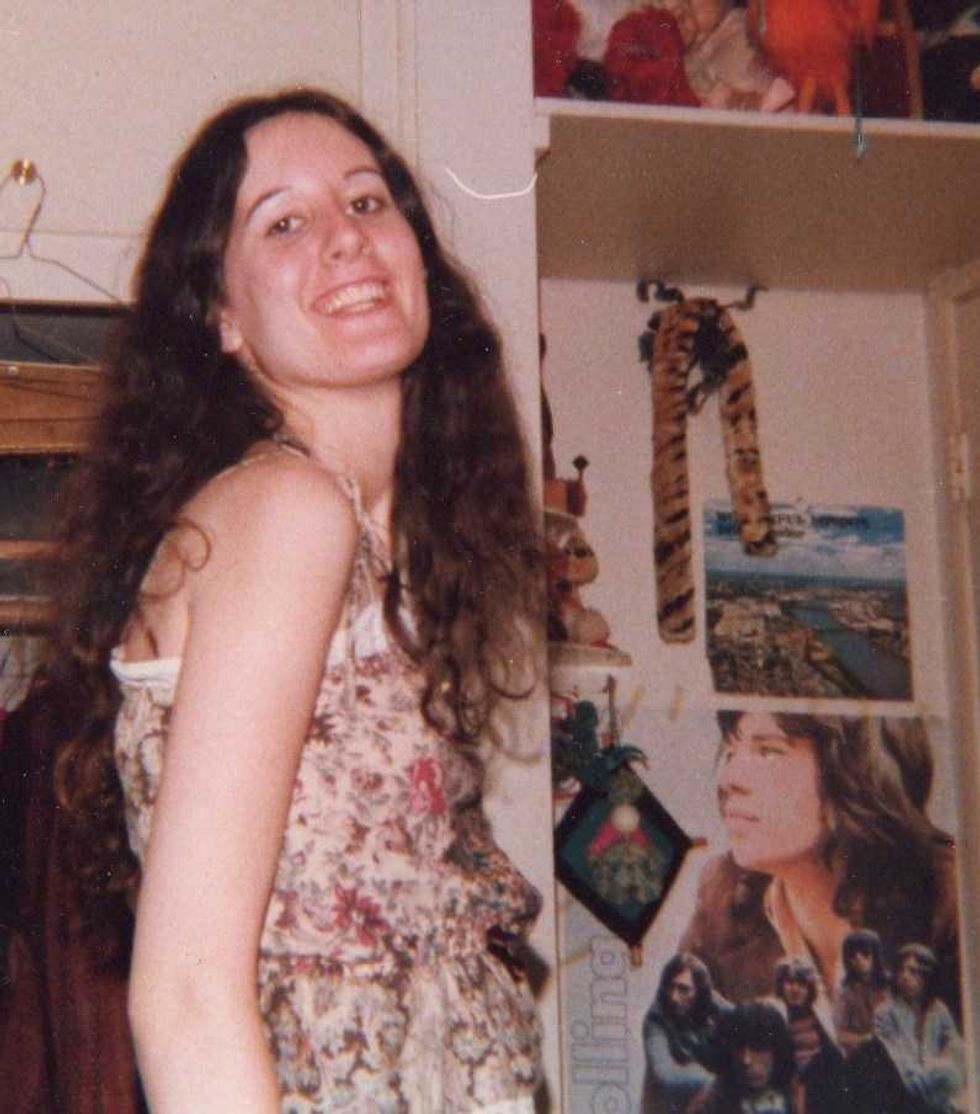 A Generation Jones teenager poses in her room.Image via Wikmedia Commons
 An office kitchen.via
  An angry man eating spaghetti.via



An Irish woman went to the doctor for a routine eye exam. She left with bright neon green eyes.
It's not easy seeing green.
Did she get superpowers?
Going to the eye doctor can be a hassle and a pain. It's not just the routine issues and inconveniences that come along when making a doctor appointment, but sometimes the various devices being used to check your eyes' health feel invasive and uncomfortable. But at least at the end of the appointment, most of us don't look like we're turning into The Incredible Hulk. That wasn't the case for one Irish woman.
Photographer Margerita B. Wargola was just going in for a routine eye exam at the hospital but ended up leaving with her eyes a shocking, bright neon green.
At the doctor's office, the nurse practitioner was prepping Wargola for a test with a machine that Wargola had experienced before. Before the test started, Wargola presumed the nurse had dropped some saline into her eyes, as they were feeling dry. After she blinked, everything went yellow.
Wargola and the nurse initially panicked. Neither knew what was going on as Wargola suddenly had yellow vision and radioactive-looking green eyes. After the initial shock, both realized the issue: the nurse forgot to ask Wargola to remove her contact lenses before putting contrast drops in her eyes for the exam. Wargola and the nurse quickly removed the lenses from her eyes and washed them thoroughly with saline. Fortunately, Wargola's eyes were unharmed. Unfortunately, her contacts were permanently stained and she didn't bring a spare pair.
- YouTube youtube.com
Since she has poor vision, Wargola was forced to drive herself home after the eye exam wearing the neon-green contact lenses that make her look like a member of the Green Lantern Corps. She couldn't help but laugh at her predicament and recorded a video explaining it all on social media. Since then, her video has sparked a couple Reddit threads and collected a bunch of comments on Instagram:
“But the REAL question is: do you now have X-Ray vision?”
“You can just say you're a superhero.”
“I would make a few stops on the way home just to freak some people out!”
“I would have lived it up! Grab a coffee, do grocery shopping, walk around a shopping center.”
“This one would pair well with that girl who ate something with turmeric with her invisalign on and walked around Paris smiling at people with seemingly BRIGHT YELLOW TEETH.”
“I would save those for fancy special occasions! WOW!”
“Every time I'd stop I'd turn slowly and stare at the person in the car next to me.”
“Keep them. Tell people what to do. They’ll do your bidding.”
In a follow-up Instagram video, Wargola showed her followers that she was safe at home with normal eyes, showing that the damaged contact lenses were so stained that they turned the saline solution in her contacts case into a bright Gatorade yellow. She wasn't mad at the nurse and, in fact, plans on keeping the lenses to wear on St. Patrick's Day or some other special occasion.
While no harm was done and a good laugh was had, it's still best for doctors, nurses, and patients alike to double-check and ask or tell if contact lenses are being worn before each eye test. If not, there might be more than ultra-green eyes to worry about.