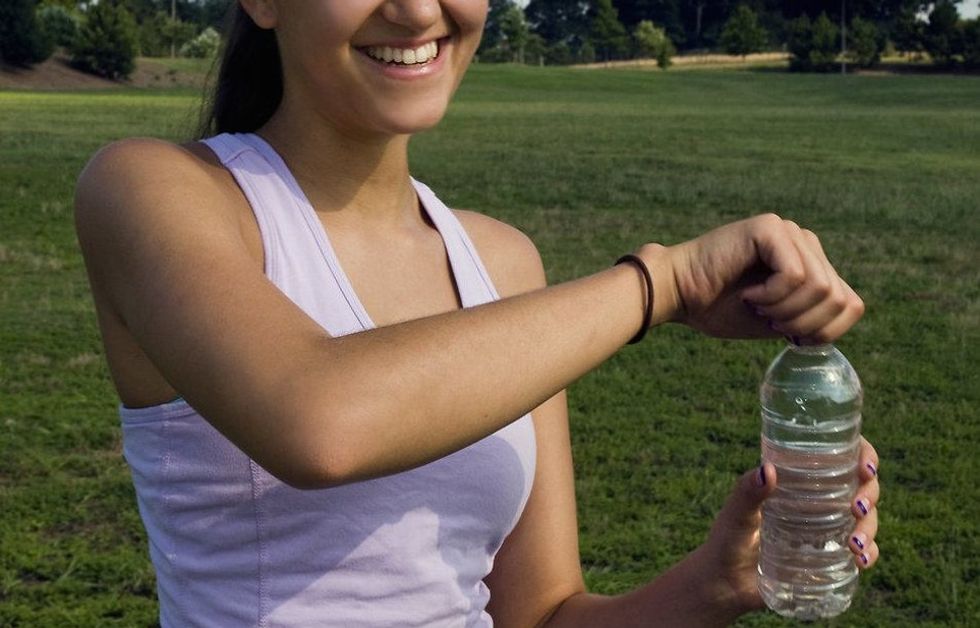
A young woman drinking bottled water outdoors before exercising.
Here are six facts from the video above by The Story of Stuff Project that I'll definitely remember next time I'm tempted to buy bottled water.
The Story of Bottled Waterwww.youtube.com
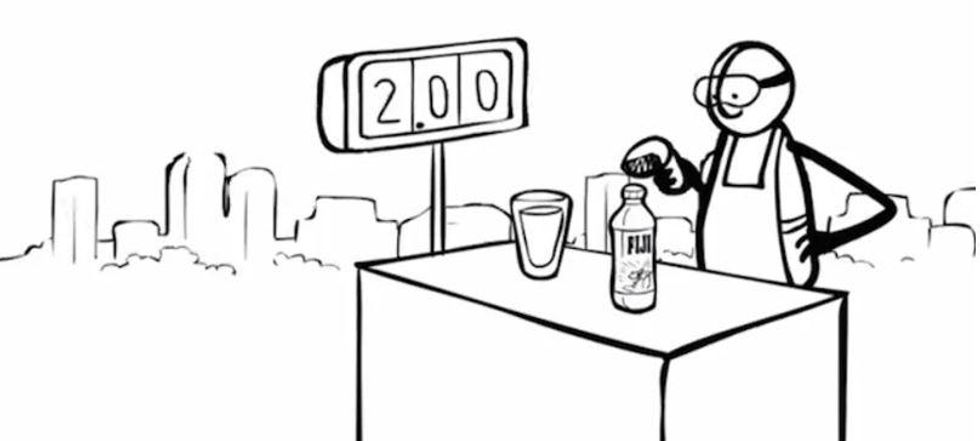
1. Bottled water is more expensive than tap water (and not just a little).
 via The Story of Stuff Project/YouTube
A Business Insider column noted that two-thirds of the bottled water sold in the United States is in individual 16.9-ounce bottles, which comes out to roughly $7.50 per gallon. That's about 2,000 times higher than the cost of a gallon of tap water.
And in an
article in 20 Something Finance, G.E. Miller investigated the cost of bottled versus tap water for himself. He found that he could fill 4,787 20-ounce bottles with tap water for only $2.10! So if he paid $1 for a bottled water, he'd be paying 2,279 times the cost of tap.
2. Bottled water could potentially be of lower quality than tap water.
via The Story of Stuff Project/YouTube
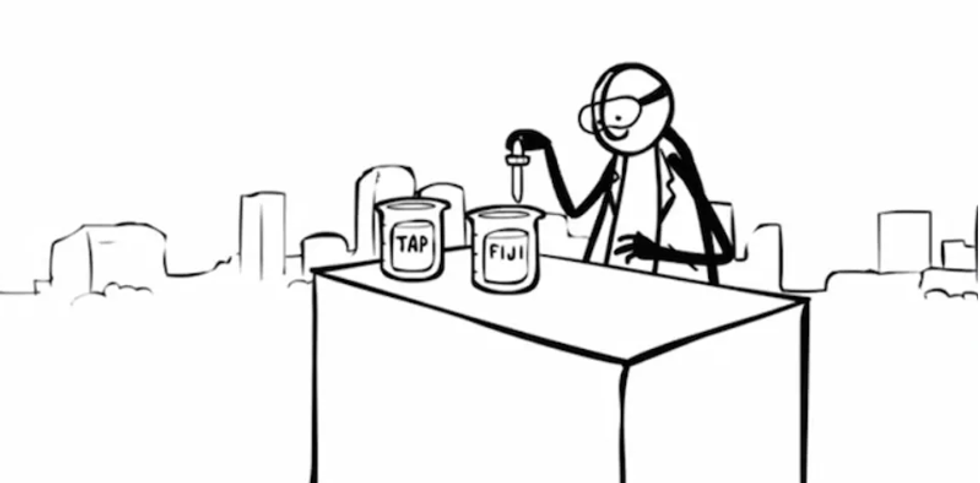
Fiji Water ran an ad campaign that was pretty disparaging about the city of Cleveland. Not a wise move. The city ordered a test of the snooty brand's water and found that Fiji Water contained levels of arsenic that weren't seen in the city's water supply.
How was that possible? Sarah Goodman of the New York Times explains:
" Bottled water manufacturers are not required to disclose as much information as municipal water utilities because of gaps in federal oversight authority. Bottom line: The Food and Drug Administration oversees bottled water, and U.S. EPA is in charge of tap water. FDA lacks the regulatory authority of EPA."
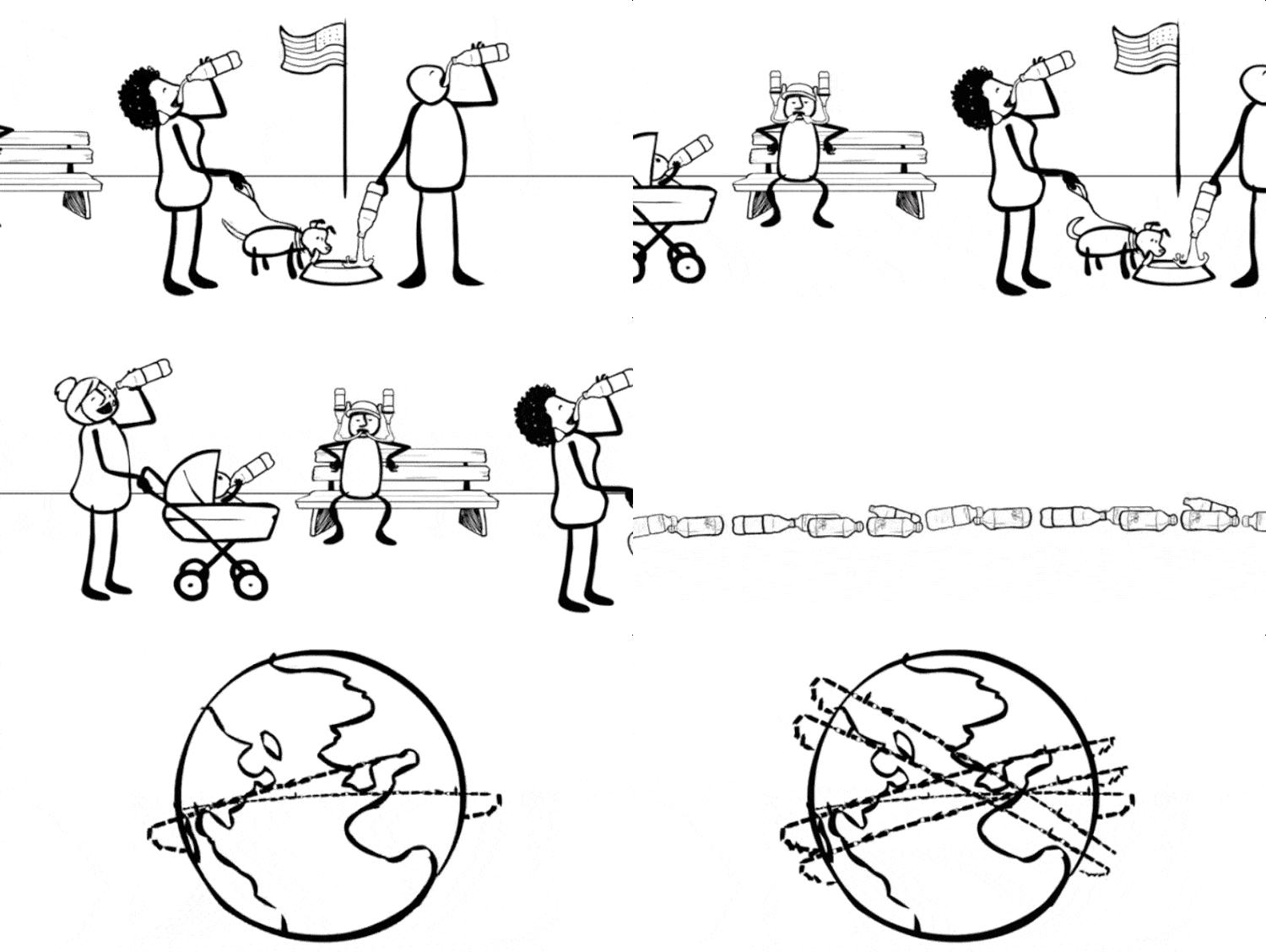
3. The amount of bottled water we buy every week in the U.S. alone could circle the globe five times!
via The Story of Stuff Project/YouTube
That sounded like it just had to be impossible, so we looked into it. Here's what our fact-checkers found:
"According to the video, ' People in the U.S. buy more than half a billion bottles of water every week.' National Geographic says for 2011, bottled water sales hit 9.1 billion gallons (roughly 34 billion liters).
A 'typical' water bottle is a half-liter, so that's about 68 billion bottles per year. Divided by 52 weeks would be a little over 1 billion bottles of water sold per week in the U.S. Because that's based on a smaller 'typical' bottle size, it seems reasonable that a half billion bottles a week could be accurate.
The Earth is about 131.5 million feet around, so yep, half a billion bottles of varying sizes strung end-to-end could circle the Earth five times."
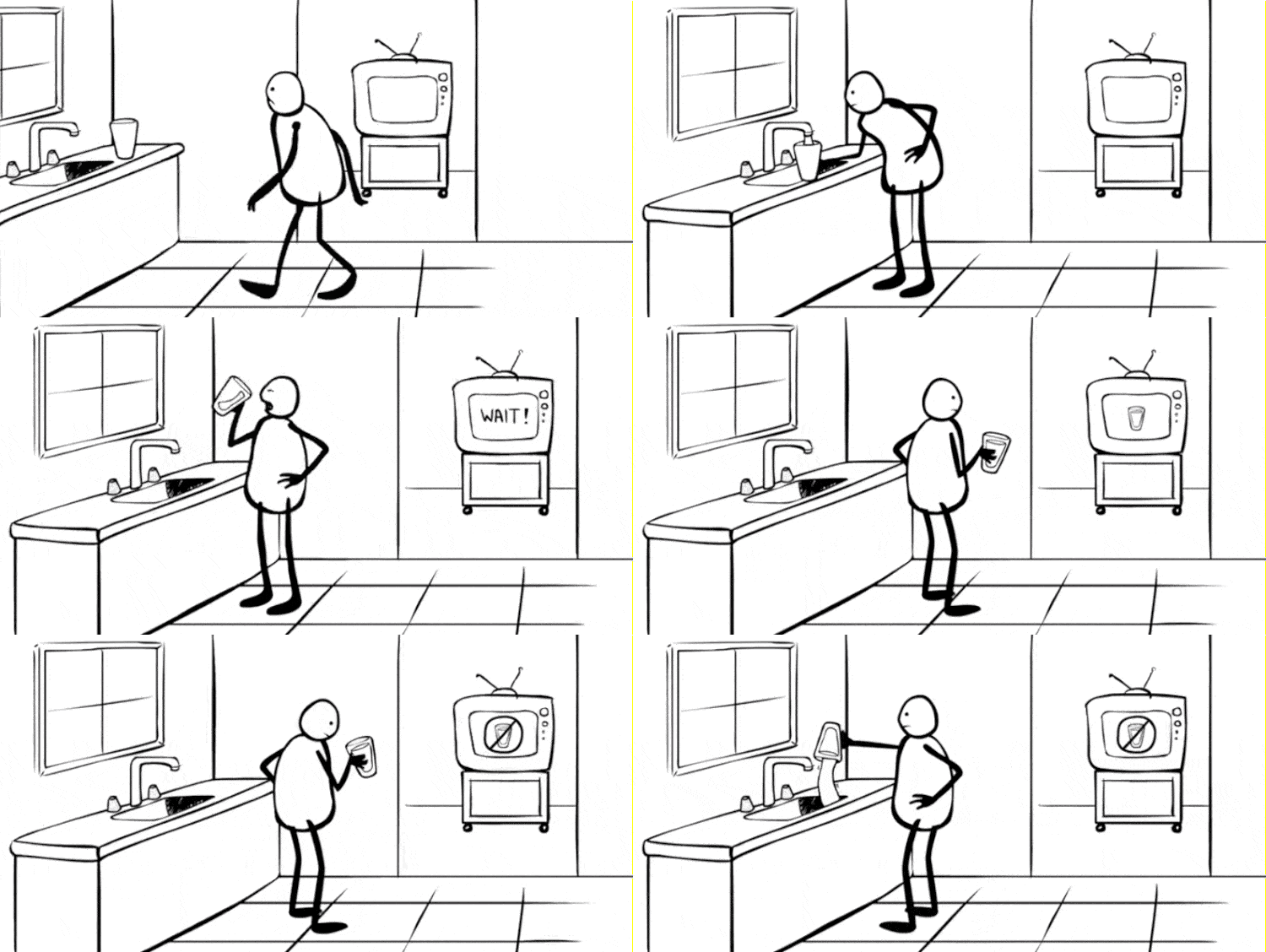
4. Paying for bottled water makes us chumps.
via The Story of Stuff Project/YouTube
Beverage companies have turned bottled water into a multibillion-dollar industry through a concept known as manufactured demand. Bottled water advertisements used a combination of scare tactics (Tap water bad!) and seduction (From the purest mountain streams EVER!) to reel us in.
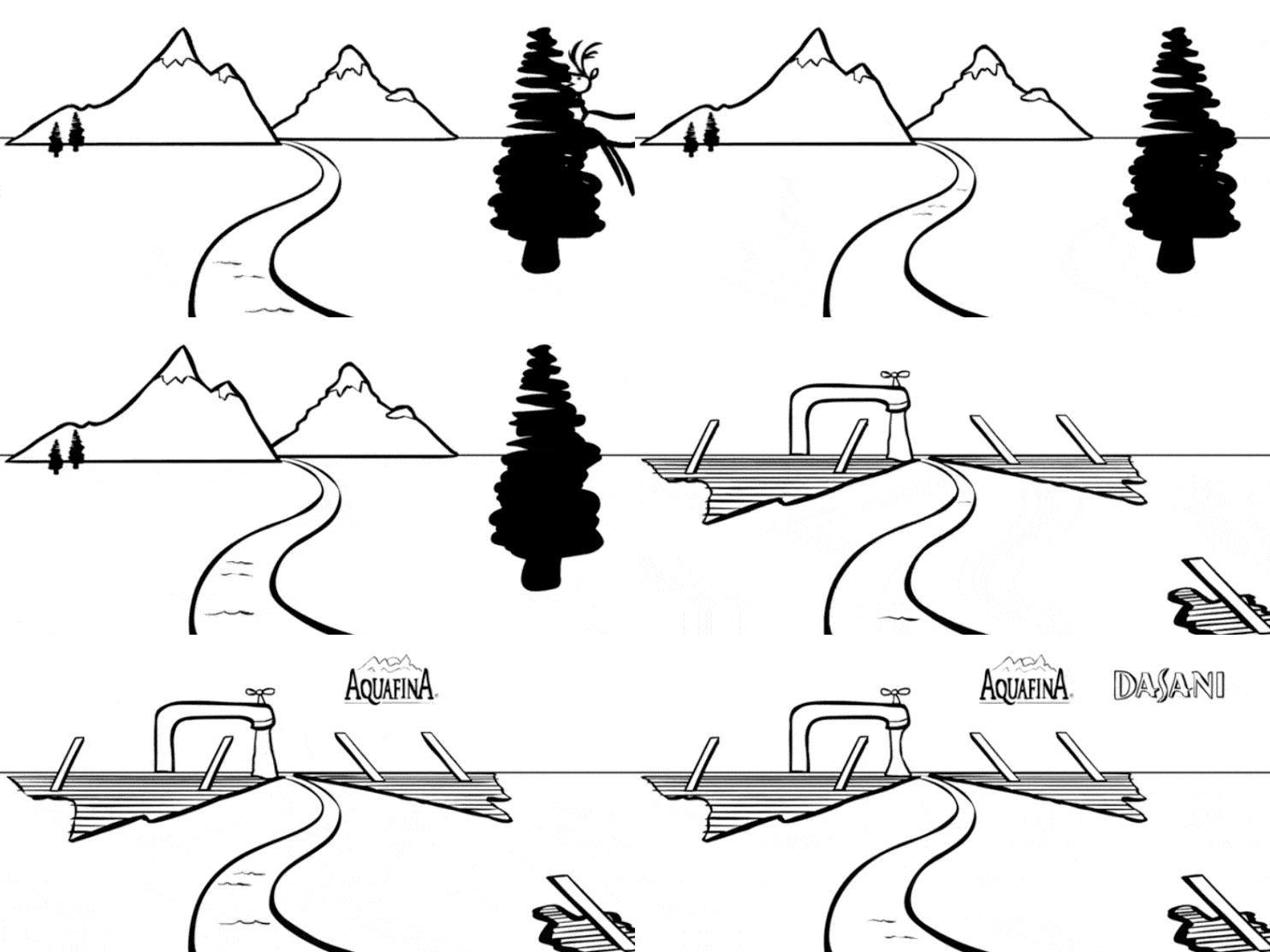
Well, we now know their claims about the superior quality of bottled water are mostly bogus. And research shows that anywhere from a quarter to 45% of all bottled water comes from the exact same place as your tap water (which, to reiterate, is so cheap it's almost free).
via The Story of Stuff Project/YouTube
5. Bottled water is FILTHY.
It takes oil — lots of it — to make plastic bottles. According to the video, the energy in the amount of oil it takes to make the plastic water bottles sold in the U.S. in one year could fuel a million cars. That's not even counting the oil it takes to ship bottled water around the world.
And once we've guzzled our bottled water, up to 80% of the empty bottles end up in landfills or noxious-gas-producing incinerators. The rest is either recycled or shipped to countries like India where poor people without environmental and labor protections have to deal with it.
On top of all that, the process of manufacturing plastic bottles is polluting public water supplies, which makes it easier for bottled water companies to sell us their expensive product.
6. There are 750 million people around the world who don't have access to clean water.
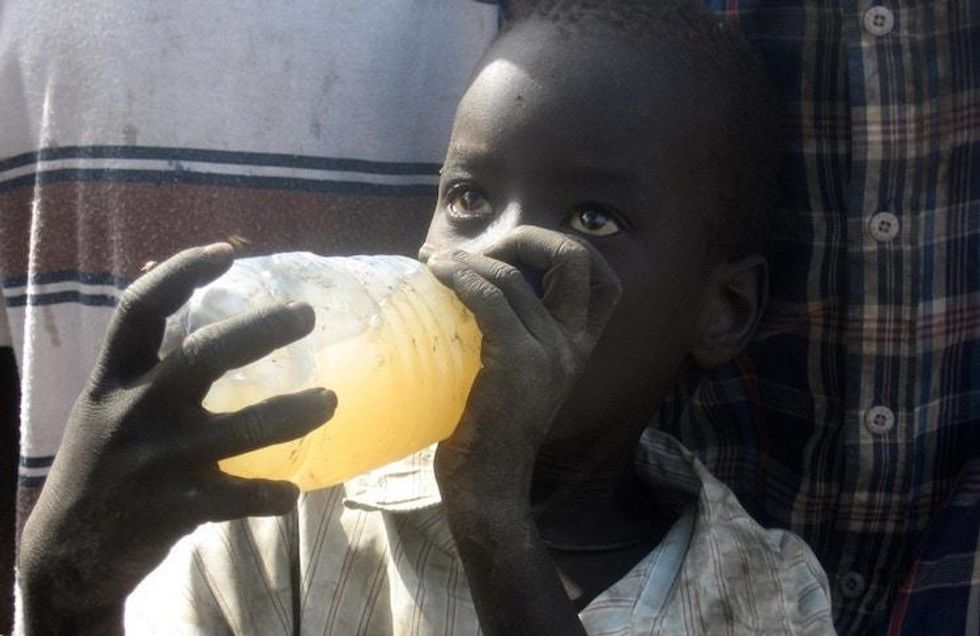
Photo by H2O for Life.
A child dies every minute from a waterborne disease. And for me, that's the core of what makes bottled water so evil.
The video wraps by comparing buying bottled water to smoking while pregnant. That may sound extreme, but after learning everything I just did about the bottled water industry, I can't disagree.

via The Story of Stuff Project/YouTube
If you're properly disgusted, here are a few ways you can help destroy the bottled water industry:
- Don't buy bottled water. Get a reusable water bottle. The savings will add up.
- Rally your schools, workplaces, and communities to ban bottled water.
- Demand that your city, state, and federal governments invest in better water infrastructure.
This article originally appeared 10 years ago.
- Everyone should know this international hand signal for 'Help Me ... ›
- Your little plastic pill bottles can make a major difference to the world ... ›
- Woman who sent a 'message in a bottle' in 1995 finally got a response - Upworthy ›
- Scientists find huge number of nanoplastics in bottled water - Upworthy ›
- Researchers tested 6 brands of bottled water against tap water, and there was a clear winner - Upworthy ›

 Three women sit on a blanket in the park.


 A Generation Jones teenager poses in her room.Image via Wikmedia Commons