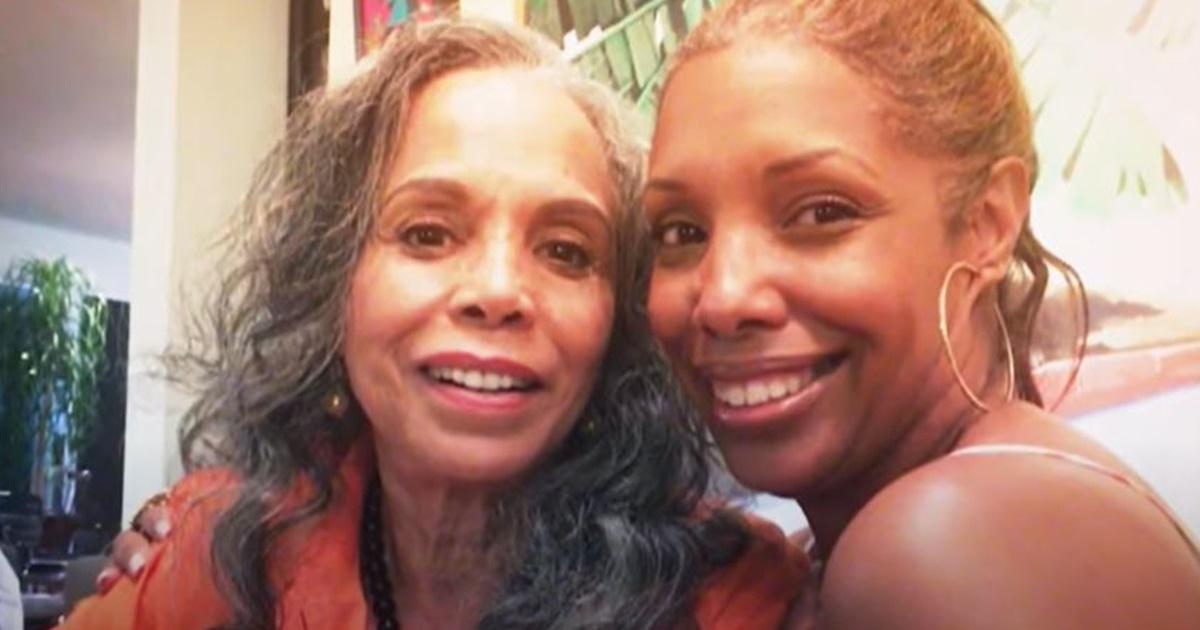
Woman discovers star of favorite childhood TV show is her long lost birth mother
When Lisa Wright watched the mid-’70s TV show “That’s My Mama” as a child, she had no idea that she was actually seeing her mother on the screen. “I grew up watching my mother on TV and didn’t even know it,” Lisa told Today. “‘That’s My Mama’ — that was our must-see TV. We all…
When Lisa Wright watched the mid-’70s TV show “That’s My Mama” as a child, she had no idea that she was actually seeing her mother on the screen.
“I grew up watching my mother on TV and didn’t even know it,” Lisa told Today. “‘That’s My Mama’ — that was our must-see TV. We all sat down and watched ‘That’s My Mama’ every week, and who knew? No idea. … And that’s my mama!”
Lisa was born on Dec. 10, 1964 and her mother gave her up for adoption. The mother’s face was covered by a towel after she delivered the baby, so she was never able to see her child. She only heard the baby’s cries as they ushered her away.
Fifty-four years later, in 2018, Lisa signed up for 23andMe to learn about her genetic heritage.
“I get an alert, and it says, ‘This person is your uncle,’” Lisa said. So, she reached out to the man, named Carlton Moody, and asked, “If you’re open to it, I would love to chat with you to see what all of this means.” Carlton got back to her the next day.
The next day on the phone, he asked Lisa to tell him something about herself. “‘I was told that my biological mom was very young when she had me,’” she told Carlton. “‘She moved to L.A. because she wanted to be in Hollywood.’ And then he just stopped me right there.”
“So then I’m thinking, ‘OK, here it comes. He’s going to say don’t ever call me again.’ And so he goes, ‘Lisa, you’re my niece. We’ve been looking for you. We’ve all been looking for you,’” she said.
Lisa was excited to learn that her mother, Lynn Moody, lived in Los Angeles, too. And her name sounded familiar.
“Wait a minute, I know that name,’” Lisa told Red Rocks. “Sitting at my desk, I Googled Lynne Moody and when her picture popped up, I almost wanted to cry because it was the first time anyone had looked like me. I then realized that I grew up watching my mother on TV and didn’t even realize it. It was amazing information but it felt like a dream.”
Lynne has had a long career as an actor, starring on “That’s My Mama” for one season as the groundbreaking mini-series “Roots” and its follow-up “Roots: The Next Generation.” She also appeared on “Soap,” “Hill Street Blues,” “General Hospital,” and “Knots Landing.”
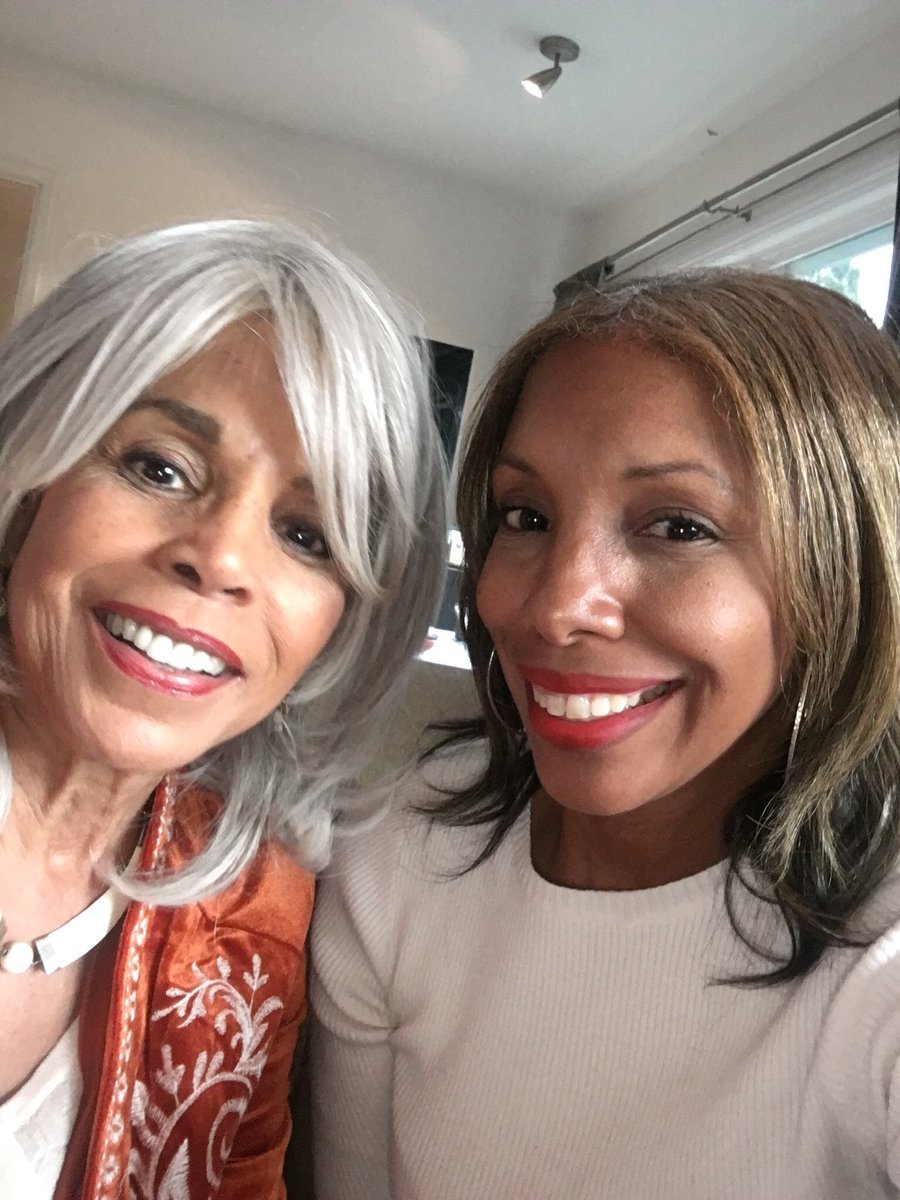
“For 54 years I had to learn how to deal with the fact that I had a daughter out there, not knowing if she was dead or alive,” Lynne said. “For the first time in my life, I was able to say, ‘Yes, honey, I am your mother,’” Lynne said. “I was still nervous. I wasn’t sure if she’d hate me, resent me, accept me, love me. I didn’t know.”
Lynne had searched for Lisa for years but kept hitting dead ends because the adoption was confidential. She even received help from revered “Roots” author Alex Haley, but he couldn’t make any headway either.
Unfortunately, Lisa’s adoptive parents weren’t able to meet Lynne because they had passed away in 2006 and 2010. The mother and daughter have forged a deep bond since they were first reunited in 2018. Lisa has got to meet many of her aunts and cousins, and Lynne has gotten to know her grandson.
“It’s a story about love and never giving up,” Lynne told Red Rocks. I’m experiencing a new world as a result of what has happened and I couldn’t be happier.”
In a small village in Pwani, a district on Tanzania’s coast, a massive dance party is coming to a close. For the past two hours, locals have paraded through the village streets, singing and beating ngombe drums; now, in a large clearing, a woman named Sheilla motions for everyone to sit facing a large projector screen. A film premiere is about to begin.
It’s an unusual way to kick off a film about gender bias, inequality, early marriage, and other barriers that prevent girls from accessing education in Tanzania. But in Pwani and beyond, local organizations supported by Malala Fund and funded by Pura are finding creative, culturally relevant ways like this one to capture people’s interest.
The film ends and Sheilla, the Communications and Partnership Lead for Media for Development and Advocacy (MEDEA), stands in front of the crowd once again, asking the audience to reflect: What did you think about the film? How did it relate to your own experience? What can we learn?
Sheilla explains that, once the community sees the film, “It brings out conversations within themselves, reflective conversations.” The resonance and immediate action create a ripple effect of change.
MEDEA Screening Audience in Tanzania. Captured by James Roh for Pura
Across Tanzania, gender-based violence often forces adolescent girls out of the classroom. This and other barriers — including child marriage, poverty, conflict, and discrimination — prevent girls from completing their education around the world.
Sheilla and her team are using film and radio programs to address the challenges girls face in their communities. MEDEA’s ultimate goal is to affirm education as a fundamental right for everyone, and to ensure that every member of a community understands how girls’ education contributes to a stronger whole and how to be an ally for their sisters, daughters, granddaughters, friends, nieces, and girlfriends.
Sheilla’s story is one of many that inspired Heart on Fire, a new fragrance from the Pura x Malala Fund Collection that blends the warm, earthy spices of Tanzania with a playful, joyful twist. Here’s how Pura is using scent as a tool to connect the world and inspire action.
A partnership focused on local impact, on a global mission
Pura, a fragrance company that recognizes education as both freedom and a human right, has partnered with Malala Fund since 2022. In order to defend every girl’s right to access and complete 12 years of education, Malala Fund partners with local organizations in countries where the educational barriers are the greatest. They invest in locally-led solutions because they know that those who are closest to the problems are best equipped to solve and build durable solutions, like MEDEA, which works with communities to challenge discrimination against girls and change beliefs about their education.
But local initiatives can thrive and scale more powerfully with global support, which is why Pura is using their own superpower, the power of scent, to connect people around the world with the women and girls in these local communities.
The Pura x Malala Fund Collection incorporates ingredients naturally found in Tanzania, Nigeria, Pakistan, and Brazil: countries where Malala Fund operates to address systemic education barriers. Eight percent of net revenue from the Pura x Malala Fund Collection will be donated to Malala Fund directly, but beyond financial support, the Collection is also a love letter to each unique community, blending notes like lemon, jasmine, cedarwood, and clove to transport people, ignite their senses, and help them draw inspiration and hope from the global movement for girls’ education. Through scent, people can connect to the courage, joy, and tenacity of girls and local leaders, all while uniting in a shared commitment to education: the belief that supporting girls’ rights in one community benefits all of us, everywhere.
You’ve already met Sheilla. Now see how Naiara and Mama Habiba are building unique solutions to ensure every girl can learn freely and dare to dream.
Naiara Leite is reimagining what’s possible in Brazil
Julia with Odara in Brazil. Captured by Luisa Dorr for Pura
In Brazil, where pear trees and coconut plantations cover the Northeastern Coast, girls like ten-year-old Julia experience a different kind of educational barrier than girls in Tanzania. Too often, racial discrimination contributes to high dropout rates among Black, quilombola and Indigenous girls in the country.
“In the logic of Brazilian society, Black people don’t need to study,” says Naiara Leite, Executive Coordinator of Odara, a women-led organization and Malala Fund partner. Bahia, the state where Odara is based, was once one of the largest slave-receiving territories in the Americas, and because of that history, deeply-ingrained, anti-Black prejudice is still widespread. “Our role and the image constructed around us is one of manual labor,” Naiara says.
But education can change that. In 2020, with assistance from a Malala Fund grant, Odara launched its first initiative for improving school completion rates among Black, quilombola, and Indigenous girls: “Ayomidê Odara”. The young girls mentored under the program, including Julia, are known as the Ayomidês. And like the Pura x Malala Fund Collection’s Brazil: Breath of Courage scent, the Ayomidês are fierce, determined, and bursting with energy.
Ayomidês with Odara in Brazil. Captured by Luisa Dorr for Pura
Ayomidês take part in weekly educational sessions where they explore subjects like education and ethnic-racial relations. The girls are encouraged to find their own voices by producing Instagram lives, social media videos, and by participating in public panels. Already, the Ayomidês are rewriting the narrative on what’s possible for Afro-Brazilian girls to achieve. One of the earliest Ayomidês, a young woman named Debora, is now a communications intern. Another former Ayomidê, Francine, works at UNICEF, helping train the next generation of adolescent leaders. And Julia has already set her sights on becoming a math teacher or a model.
“These are generations of Black women who did not have access to a school,” Naiara says. “These are generations of Black women robbed daily of their dreams. And we’re telling them that they could be the generation in their family to write a new story.”
Mama Habiba is reframing the conversation in Nigeria
Centre for Girls' Education, Nigeria. Captured by James Roh for Pura
In Mama Habiba’s home country of Nigeria, the scents of starfruit, ylang ylang and pineapple, all incorporated into the Pura x Malala Collection’s “Nigeria: Hope for Tomorrow,” can be found throughout the vibrant markets. Like these native scents, Mama Habiba says that the Nigerian girls are also bright and passionate, but too often they are forced to leave school long before their potential fully blooms.
“Some of these schools are very far, and there is an issue of quality, too,” Mama Habiba says. “Most parents find out when their children are in school, the girls are not learning. So why allow them to continue?”
When girls drop out of secondary school, marriage is often the alternative. In Nigeria, one in three girls is married before the age of 18. When this happens, girls are unable to fulfill their potential, and their families and communities lose out on the social, health and economic benefits.
Completing secondary school delays marriage, and according to UNESCO, educated girls become women who raise healthier children, lift their families out of poverty and contribute to more peaceful, resilient communities.
Centre for Girls’ Education, Nigeria. Captured by James Roh for Pura
To encourage young girls to stay in school, the Centre for Girls’ Education, a nonprofit in Nigeria founded by Mama Habiba and supported by Malala Fund and Pura, has pioneered an initiative that’s similar to the Ayomidê workshops in Brazil: safe spaces. Here, girls meet regularly to learn literacy, numeracy, and other issues like reproductive health. These safe spaces also provide an opportunity for the girls to role-play and learn to advocate for themselves, develop their self-image, and practice conversations with others about their values, education being one of them. In safe spaces, Mama Habiba says, girls start to understand “who she is, and that she is a girl who has value. She has the right to negotiate with her parents on what she really feels or wants.”
“When girls are educated, they can unlock so many opportunities,” Mama Habiba says. “It will help the economy of the country. It will boost so many opportunities for the country. If they are given the opportunity, I think the sky is not the limit. It is the starting point for every girl.”
From parades, film screenings to safe spaces and educational programs, girls and local leaders are working hard to strengthen the quality, safety and accessibility of education and overcome systemic challenges. They are encouraging courageous behavior and reminding us all that education is freedom.
Experience the Pura x Malala Fund Collection here, and connect with the stories of real girls leading change across the globe.
Just when you think you’ve experienced every amazing rendition of Chappell Roan’s ”Pink Pony Club,” a 10-year-old in a blow-up unicorn costume comes along and raises the bar once again.
In a video shared to TikTok, a boy named Caleb twirled his way onto the stage for his school’s talent show, all before settling at the piano and expertly playing a jaunty instrumental version of the popular tune.
Caleb’s mom, who posted the video, aptly wrote, “boys got talent for days, and fearless to boot” in the caption.
More than 14 million views later, people were floored by both of those qualities.
In an interview with People, Michael, Caleb’s father, said Caleb began playing piano at age seven and quickly fell in love with how it helped him focus. Since then, he has developed a routine of practicing for 10 minutes a day, every day.
As for the costume idea, he came up with that entirely on his own. And this doesn’t seem to be the first time Caleb has dressed up to make music. Here he is unleashing his Captain Jack Sparrow while playing the Pirates of the Caribbean main theme:
It’s all a testament to Caleb’s personality. “He is a sweet boy who is full of positivity and brings fun energy to everything he does,” his father gushed.
Really, that joy might be the most impressive part of all. Plenty of kids learn instruments quickly. Plenty of kids perform well in talent shows. But not every kid walks onstage in a giant inflatable unicorn suit, totally uninhibited, completely themselves, and turns a performance into something people remember long after the final note fades.
And if the Internet’s reaction is any indication, people are craving exactly this kind of wholesome, joyful content. Polished performances are great, but there’s something extra special about a kid who shows up, has fun, and brings everyone along for the ride.
Beyond the instant dose of dopamine, we can all take away some tried-and-true wisdom behind Caleb’s refreshingly simple approach: Practice a little every day. Commit to what you love. Add whatever makes you smile. It’s the kind of formula adults tend to overcomplicate, even though it works just as well at any age.
Bottom line: confidence grows when we are brave enough to fully express ourselves. Whether that’s dressing up as a pirate, a superhero, or a unicorn, or giving ourselves permission to be playful and try new things. As Caleb reminds us, a little whimsy goes a long way.
Caregiving is a female-dominated field, and that’s not just in the professional world. It’s estimated that approximately 66% of informal family caregiving is done by women, so it’s not often that men are seen as caregivers. One man aims to change that by sharing his caregiving journey on social media.
Chris Punsalan was the primary caregiver for his elderly grandmother before her death. He uses his platform to normalize men being in the role of caregivers, but recently, he received some unexpected backlash. Several months ago, the Millennial shared a video of himself caring for his grandmother as usual, but this time it showed him hopping in the shower with her.
A young person helping an elderly person wash their hands. Photo credit: Canva
There was nothing inappropriate to be viewed in the video, as the grandmother was already behind the privacy glass. Punsalan was wearing black shorts when he got into the shower to help his grandmother. Seeing this vulnerable reality of caregiving for an elderly relative set some people off. The content creator received several comments chastising him, and others implying that he had an inappropriate relationship with his grandmother.
Caregiving for an elderly relative can be a difficult task, especially when you’re their primary caregiver. As people age, they need more assistance with daily living activities like bathing, toileting, and eating. This is not uncommon, but caregiving for these family members is often done quietly. Those who can afford full-time professional caregivers or an assisted living facility pay for this type of care. But every family isn’t in that position, so they may divide caregiving duties among themselves.
It’s unclear why Punsalan started caring for his grandmother, but it’s evident that he wanted to ensure she was receiving the best care. He is tackling stigma and showing men in a more gentle light. So when he saw the negative comments questioning his actions, he decided to address them directly.
In the video, he shows a clip from the previous video of him getting in the shower to help his grandmother.
“Most people have never seen what actual caregiving looks like, and I didn’t either when I first started,” he says. “I was my grandmother’s full-time caregiver. She had osteoporosis, severe arthritis, and in the last couple of years of her life, she had dementia, so I helped her with almost everything. Taking a shower, helping her eat meals, use the restroom, get around the house.”
He further explains that there was no manual on caring for his grandma, nor did he receive professional training. The process was trial and error while making sure his grandmother was safe and cared for.
“It was really weird to help my grandmother shower, but you eventually get over it,” Punsalan says. “If I had just seen another person on the Internet that looked like me, a young male helping ‘the old woman’ when it was time for me to step up and do that for my grandmother, it would’ve been so much easier.”
He shared that he hopes continuing to post these videos will shed light on what to expect for others who may find themselves in a similar role. Punsalan’s message resonated with viewers, many of whom flocked to the comments to show their support.
One person says, “Bathing is all part of caregiving. We are all humans. We all have human parts. Get over it. It’s what nurses would do if you were in the hospital. People that say these things just have no concept and if the roles were reversed they’d get it.”
Another writes, “I bathe and care for my disabled brother. He’s only two years younger than me but has used diapers all his life as well. Thank you for sharing your experience and educating people about this line of work. People make situations weird because THEIR mind is in the gutter.”
Someone else shares, “Your grandmother was so lucky to have you there. There are lots of initially uncomfortable tasks (especially as a grandkid) that you grow accustomed to as a caregiver that often illicit judgment from people on the outside who possess very little understanding of the big difficulties involved in all of the little tasks, and even more so with a dementia patient! The way you use your platform is so helpful. Not only as a comfort to fellow caregivers, but also as an awareness guide to so many. Keep up the great work!”
“Before caregiving you really don’t know what you are getting yourself into but gradually you are doing all the things that your loved one can’t do for themselves because you love them and honor them and respect them,” one commenter writes. “Duties are endless and yes very personal and intimate. We love them so we do it and we also get used to it and want to keep them clean and comfortable.”
Though Punsalan’s grandmother has since passed, he continues to share videos to guide others. After caring for his grandmother for eight years, he shares that he felt lost, so he now dedicates his time to Tendercare as their creative director. The company helps connect caregivers with trusted professionals, furthering Punsalan’s goal of helping caregivers feel less alone.
Some celebrities really live up to their fictional personas. Harrison Ford is certainly one of them, and this recent story from Brendan Fraser is a prime example of it.
During a panel at MegaCon Orlando, Fraser shared how he first met Ford while working together on the 2010 film Extraordinary Measures, based on a true story. In the film, they play two men who team up to develop a drug to save children from a life-threatening disease.
As Fraser told the crowd, he randomly received a phone call from his costar, asking how quickly he could get to the airport. Not wanting to disappoint, Fraser replied, “I guess I can get in a cab now.” Apparently, as soon as he arrived, Ford was there waiting for him. The two then hopped on Ford’s plane, where Fraser was allowed to sit in the co-pilot’s seat.
Showing himself to be a true Star Wars fan, Fraser recalled, “I’m Chewbacca, b**ches,” dusting himself off proudly. Honestly, who could say no to being Chewbacca to the OG Han Solo? And even if you aren’t a Star Wars aficionado, it’s heartening to see Fraser relive a positive memory from his earlier Hollywood years.
“I’m smiling ear to ear and damn I needed that,” one viewer on TikTok aptly wrote.
Another gushed, “Han Solo flew you around? AMAZE AMAZE AMAZE.”
“This made me cheese so hard what a legend,” added a third.
This is only one of two hilarious Ford stories Fraser shared. Apparently, for one scene, Fraser couldn’t remember a newly updated line and was growing more flustered with each failed take. Ford, clearly done with the situation, grabbed a Sharpie, wrote the line on some duct tape, and promptly stuck it on his forehead so Fraser could simply read it.
“It was hysterical, but it totally defined Harrison,” Fraser recalled during an interview in Beverly Hills, according to the Orange County Register. “His philosophy on acting is ‘Do it, and do it right.’”
The outlet also noted that Ford was only trying to help his co-star relax. It just happened to be in the most Harrison Ford way possible.
“Marlon Brando once said that an actor can’t care about anything or the audience will see it on his face. Maybe Brendan was caring too much,” he quipped.
It’s interesting to think about how this time must have felt for Fraser. After the success of The Mummy, he had become an Indiana Jones type in his own right. And there he was, a decade later, not only meeting the OG, but actually working alongside him. That kind of full-circle moment had to feel surreal and nerve-wracking all at once.
And now, both universally loved actors have enjoyed their own renaissance of sorts: Fraser with his Hollywood comeback in projects like The Whale, Doom Patrol, and Rental Family, and Ford with Shrinking. Who knows—maybe we’ll see them share the screen again. If so, there will likely be even more great stories to come.
“Grease is the word, is the word that you heard/It’s got a groove, it’s got a meaningGrease is the time, is the place, is the motion/Grease is the way we are feeling”
The title track to the 1978 film Grease, starring John Travolta and Olivia Newton-John, brought three generations together and hit number 1 on the Billboard Charts. The song is based on a movie about teenagers in the ‘50s, sung by a legend from the ‘60s and written by one of the biggest hitmakers of the ‘70s. In other words, there was almost no one alive at the time who didn’t love Grease!
(And did you know that Grease was a Broadway musical years before the film? The story and songs, in many instances, are wildly different between the two, however.)
Grease was written by Barry Gibb of the Bee Gees but sung by doo-wop legend Frankie Valli. Although the Bee Gees toured in the late ‘70s and made a comeback in the ’90s, they never played the song live until 1997 when it was part of their “One Night Only” concert and album featuring many of their biggest hits.
What’s impressive about the song is that even though Valli does a great job singing it on the original recording, when you hear the Bee Gees sing it, it sounds exactly like something you would have heard them perform in the late ‘70s.
During the performance, Barry Gibb points to Grease star Olivia Newton-John, who’s seen dancing with her daughter, Chloe Lattanzi in the audience (Newton-John passed away in August 2022).
In the third verse, Valli’s vocal from the original is played so you can hear the difference.
The magic started when producer Robert Stigwood, fresh from the Travolta-starring ‘77 hit Saturday Night Fever, went into production on a film adaptation of the Broadway musical Grease. The film promised a killer soundtrack filled with new versions of the classic show tunes, but it needed a song for the film’s opening credits.
So, Stigwood tapped Barry Gibb, lead singer of the Bee Gees, the band that had just launched into the stratosphere after being featured on the Saturday Night Fever soundtrack. Stigwood also happened to be the band’s manager and planned to feature them in a Beatles-based musical, Sgt. Pepper’s Lonely Hearts Club Band.
Legend has it that Barry wrote the song “Grease” in one day. Instead of sounding like a ’50s doo-wop or rockabilly track, it was a slick-sounding disco-adjacent number about a feeling of generational confusion. The song was given to Valli, who’d had a recent comeback with the songs “My Eyes Adored You” (1975) and the 1976 nostalgia-dazed Four Seasons doo-wop disco number “December 1963 (Oh, What A Night).”
Valli had the option of recording the song or appearing as the Teen Angel who sings “Beauty School Drop-Out.” The “Walk Like a Man” singer opted to do the theme song and Frankie Avalon was given the Teen Angel role.
“I just remember that it all happened in one afternoon,” Barry Gibb recalled. “I was babysitting and my wife was out. And Robert Stigwood called up and said, ‘I have two wonderful new songs by John Farrar called ‘Hopelessly Devoted to You’ and ‘You’re the One that I Want.’ But we don’t have a song for the film’s title. Could you come up with a song called ‘Grease’?” I said, “How do you write a song called ‘Grease’? I don’t understand what direction I would take to do that.’ And Robert said, ‘Just Grease duh-duh-duh-duh-duh, Grease duh-duh-duh-duh-duh.’ So he wasn’t very helpful. But I understood that they really wanted something that was positive and sunny. It really all happened in that afternoon. I walked on the dock for a bit….”
Indeed, the feature film version of the musical is known for its upbeat and optimistic music when compared to the slightly darker tones of the stage musical.
Grease was a box-office smash and became the highest-grossing film of 1978. Unfortunately for Stigwood, his follow-up film, Sgt. Pepper’s Lonely Hearts Club Band, starring the Bee Gees, would be one of the biggest flops of the decade.
To celebrate the 40th anniversary of “Grease” in 2018, Barry Gibb released the demo he originally recorded of the song accompanied by piano. Take a listen and chill out for a few minutes.
This story originally appeared two years ago. It has been updated.
An 18-year-old in Michigan is getting attention for a bold move many disgruntled drivers understand, even if they wouldn’t take the same risk.
Ali Chami, who lives near the border of Dearborn Heights and Inkster, had grown tired of navigating the pothole-ridden stretch of Cherry Hill Road during his daily commute. Like many others in the area, the issue had gone from a minor annoyance to an expensive problem.
As reported by WXYZ-TV, he spent more than $600 replacing damaged tires over the past six months. He also saw a friend’s tire pop after hitting one of the same potholes.
At a certain point, the frustration boiled over
So on a Saturday afternoon, instead of waiting for repairs, he decided to act. Chami went to Home Depot, spent about $60 on asphalt, and headed to the road to start filling potholes himself.
He documented the process on TikTok, where his candid commentary quickly struck a chord
“Why is every single road but Cherry Hill getting fixed?” Chami asked in a video. “That s*** is pissing me off. I swear to God. So you want to know what I’m about to do? I’m about to go to Home Depot and I’m about to put some f****** asphalt on the road for all the these potholes.”
Using a simple method, he got to work.
“So pretty much, I just grabbed the cap of the bucket and I just scooped it out and spread it out, and I used it as a pushing point where I could just step on it and flatten it out,” Chami said.
In a follow-up video, he celebrated the effort.
“Yup, wallah, I do this s***,” Chami quipped.
Other drivers passing by seemed to share his sentiment, honking or shouting in support. One driver even called out, “Potholes are getting horrible. I had to change my tire last week.”
Videos go viral
The videos quickly gained traction online, racking up more than 175,000 views and drawing the attention of local officials.
John Danci, a representative from the Dearborn Heights Department of Public Works, acknowledged that the road has been a known issue for years. According to him, the delay is partly due to the complexity of the situation, as the road falls under three jurisdictions: the Wayne County Federal Aid Committee, Dearborn Heights, and Inkster.
“Historically, between Dearborn Heights and the city of Inkster, the funding for a road project like this is much higher relative to our city budgets versus the county that gets a lot of state revenue,” Danci told WXYZ-TV.
Mayor Mo Baydoun also responded, noting that temporary fixes have been attempted but are difficult to maintain in colder temperatures.
“I can tell you that we have patched Cherry Hill a few times already,” Baydoun wrote on Instagram. “Unfortunately, nothing is going to stick with the temperatures continuing to drop. The good news is that the city has been awarded a $2.6 million grant to fix all of Cherry Hill from Gully-Inkster. Project is expected to begin June 1st.”
While officials emphasized that residents should not attempt their own repairs due to safety concerns, Danci acknowledged the impact of Chami’s actions.
“You did something that at least gained a lot of attention,” he told Chami.
Chami, for his part, is not ruling out doing it again.
“If it happens [raises money], then I’ll do it,” he told WXYZ-TV.
Whether or not you agree with Chami’s actions, his feelings are certainly understandable
Yes, taking on road repairs yourself can be dangerous and is not recommended. At the same time, when problems go unresolved for too long, it’s natural to want to be the solution that seemingly will never come on its own.
For many people, it’s not just about fixing the specific issue, but about feeling heard. And in this case, one teenager’s decision did just that, bringing new attention to an issue years in the making.
We’ve historically seen the midlife crisis represented by large and lavish purchases, or maybe by questionable dating choices. But for Millennials, the next in line to approach this milestone, the image doesn’t really resonate. A 35-year-old New York comedian was able to perfectly capture why.
Mike Mancusi recently went viral on TikTok and Instagram after pointing out why the Millennial midlife crisis looks a little different from those of previous generations.
What makes the Millennial midlife crisis unique?
For one thing, Millennials, by and large, can’t afford to buy “Lamborghinis” or get “second families,” Mancusi quipped. Instead, they cope with nostalgia, like going to Disneyland to relive their childhoods.
Similarly, Mancusi argued that while other generations trigger their midlife crises by “looking forward” (“Whoa, I’m going to be old someday”), the Millennial midlife crisis is ignited by “looking back” and realizing that even though they “followed the blueprint” to success, they still aren’t “happy” or “fulfilled.”
“That is a way different crisis,” Mancusi said, noting that it often manifests as a career-specific midlife crisis. Many Millennials come to the stark realization that, 15 years into a job they thought would give them meaning, it simply doesn’t deliver.
Mancusi said there’s only one solution: build meaning outside of your job
“The more that you allow some job that you don’t even like to define your entire existence, the more it’s going to crush your soul,” Mancusi said. “You have to find something else to do. Whatever you want to call it. A hobby. A passion. But it has to be something that’s for you. It’s not to make you money, not to please your family, it’s for you.”
While Mancusi said that interest could potentially grow into a career, that’s not really the point. What matters is that it allows you to “move forward” with a sense of autonomy and your passion intact.
In the comments, many Millennials shared their newly discovered passions
“I’m writing again after 5 years. I used to do it constantly. But then life got in the way after I lost all my notes for the last thing I was working on, bills, debts, and this summer, when I had all but given up hope, my creativity came roaring back like a Phoenix reborn.”
“Started recording and releasing music this year.I can confidently say although it is actively losing me ALOT of money. I’m much happier than I was last year.”
“For me, this has now become running. Quite the form of therapy in my opinion. Since it seems like very few people affording therapy.”
“I started going out dancing/clubbing this year, something I basically skipped in my teens and 20s, and love being immersed in the music so much. I try to go at least one or 2 weekends a month.”
Mancusi may have prescribed this midlife crisis antidote for Millennials, but the wisdom applies to any generation. No matter your age, time on this planet is temporary and nothing is guaranteed. So you might as well spend it doing the things that bring you joy—or die trying.
During his shift as a pizza delivery driver for Domino’s Pizza, Dan Simpson noticed the order included a two-liter bottle of Diet Coke, but the shop was out. Instead of canceling that part of the order, he went to a nearby convenience store to buy the soda.
“It took about three minutes,” he told the Idaho Statesman. Those three minutes earned him a “tip” that now totals more than $24,000.
When Domino’s is out of Diet Coke, but your delivery driver stops at the store to get it for you. Dan, you went above and beyond tonight, thank you!The world needs more Dans. Happy almost retirement! #dominos#fyp
Caught on a Ring camera, Simpson presented the pizza and store-bought sodas to the grateful customer, who was astonished he had gone out of his way to get the Diet Coke. The customer was appreciative but upset they didn’t have any extra cash to add to Simpson’s tip. Simpson, however, was happy to have done a good deed and receive the tip he’d already earned, sharing that he had been delivering pizzas as a second job for 14 years and was just 26 days from retirement.
Simpson’s small gesture goes viral
The Ring camera footage was posted online, and commenters remarked on Simpson’s kindness:
“This is old school respect and going beyond duty.”
“As a loyal Diet Coke drinker, this would mean everything to me.”
“I am going to screammmmmmn, I love him. 😭😭😭”
“This literally made me cry. He’s so sweet. 🥺”
“He is a Pawpaw. I know it. This is something my Daddy would do. 🥰🥰”
“He’s overjoyed about $6.60 🥹 That’s so humble but it makes me sad for some reason. Probably because he deserves the WORLD with a soul like his. 🫶”
“GET DAN’S INFO!!!! He retired already and is still working! He deserves to retire! And I’m willing to pitch in for his retirement!!!”
Everyone wanted to “tip” him
Commenters and the customer agreed that Simpson’s $6.60 tip wasn’t enough. Not only did the customer send him a retirement card with $50 inside, but a GoFundMe was also started to contribute to his retirement. Within a couple of days, Simpson’s additional GoFundMe “tip” reached more than $24,000 and is still growing as of this writing.
Commenters cheered on and praised the donations as they came in:
“As someone that has worked with Dan for years, he is so deserving of this. He would always stay late and take extra deliveries when we were super busy even though he started his first job at 5am and had to be back at 5am the next day.”
“Just donated! Happy retirement Dan!🥹🩷”
“An example of how being a decent human goes a long way. One kind gesture turned into a 5k tip!! Kind gestures are so rare that the masses want to gift those who do nice things.🫶👏”
The customer who posted the Ring camera footage on TikTok later gave commenters an update:
“We dropped off a retirement card & an additional cash tip to the Domino’s Dan works at. In the card we wrote him a letter that explained how we put him on TikTok and that the internet fell in love with him. Dan gave us a call this afternoon and thanked us for the card, additional tip, and for TikTok’s donations to the GoFundMe. When we were talking with Dan, it had just reached $900! He was literally speechless and so humble. Dan doesn’t do technology, but he’s very thankful for all the support. We’ll keep ya’ll updated!Let’s see how far we can get this to go for Dan, he deserves it!”
Simpson was shocked and humbled by the gesture, especially since he believes in doing the right thing for its own sake.
“I know what it’s like to be down and out,” said Simpson. “So when I see people who are hurting, I try to help them.”
What Simpson did proves that even the smallest gestures, like getting a soda, can make a big impact on people.
A beautiful art project has strangers answering an old-fashioned telephone and saying whatever’s on their minds. – Photo credit: aview.fromabridge/Instagram
Viral “street interviews” are a relatively new form of content. They’ve popped up in the last couple of years and often involve random social media creators sticking a microphone in someone’s face on the street and asking personal, funny, or sometimes invasive questions about sex, relationships, and money.
In many big cities, these interviewers are everywhere. Though the clips are sometimes entertaining, many have pointed out problems with the format. Namely, that (often drunk) people can go viral for embarrassing moments and wind up humiliated on an international stage. Or famous. Either way, there’s little recourse for regretful participants, and even less substance in the interviews.
Artist Joe Bloom wanted to reimagine the street interview
“Interviewing strangers is such a beautiful art form but it’s been made so tacky,” Bloom told The Guardian in 2024. “You get some knobhead on the street running up to someone with a microphone asking them about their trauma. It feels awful. The AI-generated subtitles don’t even match up. It’s contrived and rushed. They just don’t care.”
He came up with what he thought was a better idea. Inspired by the early optimism of Internet projects like “Humans of New York,” he wanted to find a way to share people’s real stories, not just farm viral clips about embarrassing topics.
Immediately, he harkened back to his nostalgia for the telephone. No, not the iPhone, not texting, but the classic landline handset.
“You see it in movies: it’s always this nostalgic and almost glamorous thing, holding a phone up to your ear and talking into this object,” he said.
The project, called “A View from a Bridge,” launched in 2023 and saw Bloom place old-fashioned handset telephones on random bridges in London. When strangers would pass by and if they picked up, he’d be on the other end ready to chat.
What he found was that, surprisingly, people were willing to talk. Not just that, but they were more than willing to bare their souls.
There was the kid who had deep thoughts about the body after learning he was more than just a skeleton with a heart inside.
“What’s the point in not knowing who are you?” the wise boy said of his mission to devour all the books he could about anatomy.
Another young man opened up about all the time he spent chatting and connecting with people all over the world during COVID via virtual reality chat:
“A lot of people tend to think that history as it was has ended. … Things can never be how they once were. I don’t think things have changed that much in terms of people wanting each other and needing each other.”
“I don’t think things have changed much, in terms of people wanting each other and needing each other” – Cameron’s View From A Bridge @Cameron Winter . Filmed, interviewed + edited @Joe Bloom Original music @Ross Woodhead #geese#vr#virtualreality#Love#connection
Bloom’s project brings down people’s guard in a natural, organic way. As the interviewer, he stands far away. Typically, the subject can’t even see him at all. It gives the subject a sense of safety in the anonymity and lack of face-to-face eye contact.
And then there’s the phone itself.
“It creates an openness for the person being interviewed,” Bloom said of the format. “The action of holding the phone to your ear is powerful. It’s quite a calming thing.”
Who doesn’t remember long nights spent talking on the phone as a teenager, pouring out your deepest fears and dreams to friends and crushes? Research has found that in intimate, trusting relationships, we prefer to open up face to face. However, with people we don’t yet trust or are just getting to know, we’re often more forthcoming online or over the phone.
Bloom uses this phenomenon to get stranger interviewees to open up in ways the “street interview” creators could never dream of.
And the results are far more powerful and human. In each story, thousands of viewers see themselves and find ways to connect with the subjects—with their fears, pain, or even just funny observations. The videos are ultimately helping millions of people feel less alone.
That’s exactly the kind of optimism and connection Bloom was going for, and it’s something sorely lacking in most corners of the Internet.