upworthy
Add Upworthy to your Google News feed.
Google News Button
Wellness

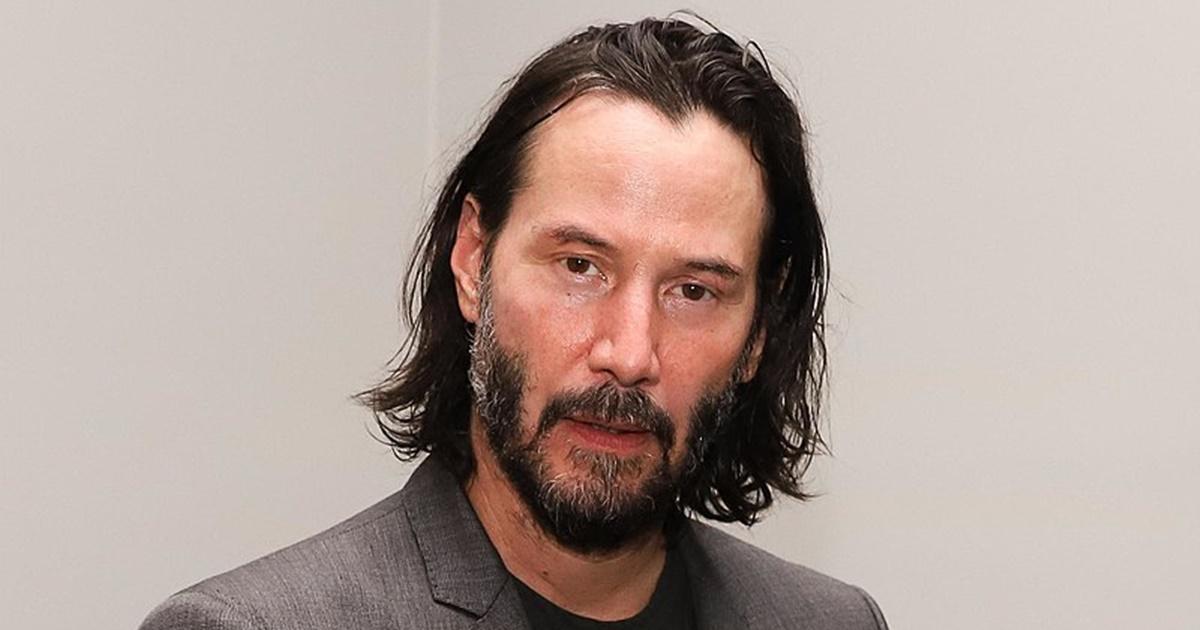
The touching reason why Keanu Reeves donated 70% of his 'Matrix' salary to cancer research

keanu reeves, keanu reeves charity, cancer

Keanu reeves in São Paulo, Brazil.

“The Matrix” (1999) directed by the Wachowskis, was one of the biggest box-office hits of the ‘90s. It changed the course of cinema by being one of the first films to create a credible cinematic world that exists in the digital realm.

The special effects and action sequences were also groundbreaking at the time. The slow-motion “bullet-time” effects would become a hallmark of action films for the next 20 years.

The film’s success made its lead actor, Keanu Reeves, a very rich man. The actor made a $10 million salary for appearing in the film and received $35 million on the back end.


But instead of pocketing the generational wealth, he donated 70% of it to fund leukemia research. Reeves’ sister, Kim, was diagnosed with cancer in 1991 and battled it for 10 years, before going into remission.

He also sold his home to be closer to his sister and spent $5 million in therapies to help her recover. Reeves was the primary caretaker for his sister while she was sick, he cooked her meals, cleaned the house and prepared her medication.

He dedicated his life to being a cancer caretaker as his career as a leading man was skyrocketing.

His dedication to his sister meant that “The Matrix”’s first two sequels had to be delayed.

“She was always there for me, you know. I will always be here for her,” he said.

The siblings have a close bond forged by a tough childhood. Their father walked out on the family when Reeves was just 2 and later served time for drug possession. The children were raised by their mother and they moved frequently, living in Canada, Australia, New York and Hawaii.

Reeves created a charity foundation to help those fighting cancer, although he doesn’t want any of the credit. “I have a private foundation that's been running for five or six years, and it helps aid a couple of children's hospitals and cancer research,” he said, according to The Mercury News.

“I don't like to attach my name to it, I just let the foundation do what it does,” he added.

Reeves is also very generous with his coworkers. He reportedly gave a significant amount of the back-end profits he made from “The Matrix” films to the visual effects artists and costume designers, although that was apparently more an in-kind donation to the production of the films, and not literally a cash payout to crew members and some have claimed.

Reeves’ nomadic life as an artist has led him to the understanding that true happiness doesn’t come from accumulating wealth and material objects, but learning how to appreciate what you have already.

“That enormous sense of gratitude is enough for me–I don’t need to surround myself with a lot of objects and possessions to feel that way,” he said according to the Mirror. “It’s always nice to open your eyes every morning and see the world–it all seems so simple! That’s why I frequently use an expression that I like very much, and which gives me peace of mind: ‘I’m happy to be here.’”

Keanu, we’re pretty happy you’re here, too.
Planet

Our favorite giveaway is back. Enter to win a free, fun date! 🌊 💗

It's super easy, no purchase or donation necessary, and you help our oceans! That's what we call a win-win-win. Enter here.

Our favorite giveaway is back. Enter to win a free, fun date! 🌊 💗
True

Our love for the ocean runs deep. Does yours? Enter here!

This Valentine’s Day, we're bringing back our favorite giveaway with Ocean Wise. You have the chance to win the ultimate ocean-friendly date. Our recommendation? Celebrate love for all your people this Valentine's Day! Treat your mom friends to a relaxing spa trip, take your best friend to an incredible concert, or enjoy a beach adventure with your sibling! Whether you're savoring a romantic seafood dinner or enjoying a movie night in, your next date could be on us!

Here’s how to enter:


  • Go to upworthy.com/oceandate and complete the quick form for a chance to win - it’s as easy as that.
  • P.S. If you follow @oceanwise or donate after entering, you’ll get extra entries!

Here are the incredible dates:

1. Give mom some relaxation

She’s up before the sun and still going at bedtime. She’s the calendar keeper, the lunch packer, the one who remembers everything so no one else has to. Moms are always creating magic for us. This Valentine’s Day, we’re all in for her. Win an eco-friendly spa day near you, plus a stash of All In snack bars—because she deserves a treat that’s as real as she is. Good for her, kinder to the ocean. That’s the kind of love we can all get behind.


Special thanks to our friends at All In who are all in on helping moms!

2. Jump in the ocean, together

Grab your favorite person and get some much-needed ocean time. Did you know research on “blue spaces” suggests that being near water is linked with better mental health and well-being, including feeling calmer and less stressed? We’ll treat you to a beach adventure like a surfing or sailing class, plus ocean-friendly bags from GOT Bag and blankets from Sand Cloud so your day by the water feels good for you and a little gentler on the ocean too.

Special thanks to our friends at GOT Bag. They make saving the ocean look stylish and fun!

3. Couch potato time

Love nights in as much as you love a date night out? We’ve got you. Have friends over for a movie night or make it a cozy night in with your favorite person. You’ll get a Disney+ and Hulu subscription so you can watch Nat Geo ocean content, plus a curated list of ocean-friendly documentaries and a movie-night basket of snacks. Easy, comfy, and you’ll probably come out of it loving the ocean even more.

4. Dance all day!

Soak up the sun and catch a full weekend of live music at BeachLife Festival in Redondo Beach, May 1–3, 2026, featuring Duran Duran, The Offspring, James Taylor and His All-Star Band, The Chainsmokers, My Morning Jacket, Slightly Stoopid, and Sheryl Crow. The perfect date to bring your favorite person on!

We also love that BeachLife puts real energy into protecting the coastline it’s built on by spotlighting ocean and beach-focused nonprofit partners and hosting community events like beach cleanups.

Date includes two (2) three-day GA tickets. Does not include accommodation, travel, or flights.

5. Chef it up (at home)

Stay in and cook something delicious with someone you love. We’ll hook you up with sustainable seafood ingredients and some additional goodies for a dinner for two, so you can eat well and feel good knowing your meal supports healthier oceans and more responsible fishing.

Giveaway ends 2/15/26 at 11:59pm PT. Winners will be selected at random and contacted via email from the Upworthy. No purchase necessary. Open to residents of the U.S. and specific Canadian provinces that have reached age of majority in their state/province/territory of residence at the time. Please see terms and conditions for specific instructions. Giveaway not affiliated with Instagram. More details at upworthy.com/oceandate

arthur c. brooks, harvard, psychology, happiness research, bucket list

Harvard researcher Arthur C. Brooks studies what leads to human happiness.

We live in a society that prizes ambition, celebrating goal-setting, and hustle culture as praiseworthy vehicles on the road to success. We also live in a society that associates successfully getting whatever our hearts desire with happiness. The formula we internalize from an early age is that desire + ambition + goal-setting + doing what it takes = a successful, happy life.

But as Harvard University happiness researcher Arthur C. Brooks has found, in his studies as well as his own experience, that happiness doesn't follow that formula. "It took me too long to figure this one out," Brooks told podcast host Tim Ferris, explaining why he uses a "reverse bucket list" to live a happier life.


bucket list, wants, desires, goals, detachment Many people make bucket lists of things they want in life. Giphy

Brooks shared that on his birthday, he would always make a list of his desires, ambitions, and things he wanted to accomplish—a bucket list. But when he was 50, he found his bucket list from when he was 40 and had an epiphany: "I looked at that list from when I was 40, and I'd checked everything off that list. And I was less happy at 50 than I was at 40."

As a social scientist, he recognized that he was doing something wrong and analyzed it.

"This is a neurophysiological problem and a psychological problem all rolled into one handy package," he said. "I was making the mistake of thinking that my satisfaction would come from having more. And the truth of the matter is that lasting and stable satisfaction, which doesn't wear off in a minute, comes when you understand that your satisfaction is your haves divided by your wants…You can increase your satisfaction temporarily and inefficiently by having more, or permanently and securely by wanting less."

Brooks concluded that he needed a "reverse bucket list" that would help him "consciously detach" from his worldly wants and desires by simply writing them down and crossing them off.

"I know that these things are going to occur to me as natural goals," Brooks said, citing human evolutionary psychology. "But I do not want to be owned by them. I want to manage them." He discussed moving those desires from the instinctual limbic system to the conscious pre-frontal cortex by examining each one and saying, "Maybe I get it, maybe I don't," but crossing them off as attachments. "And I'm free…it works," he said.

- YouTube www.youtube.com

"When I write them down, I acknowledge that I have the desire," he explained on X. "When I cross them out, I acknowledge that I will not be attached to this goal."

The idea that attachment itself causes unhappiness is a concept found in many spiritual traditions, but it is most closely associated with Buddhism. Mike Brooks, PhD, explains that humans need healthy attachments, such as an attachment to staying alive and attachments to loved ones, to avoid suffering. But many things to which we are attached are not necessarily healthy, either by degree (over-attachment) or by nature (being attached to things that are impermanent).

"We should strive for flexibility in our attachments because the objects of our attachment are inherently in flux," Brooks writes in Psychology Today. "In this way, we suffer unnecessarily when we don't accept their impermanent nature."

What Arthur C. Brooks suggests that we strive to detach ourselves from our wants and desires because the simplest way to solve the 'haves/wants = happiness' formula is to reduce the denominator. The reverse bucket list, in which you cross off desires before you fulfill them, can help free you from attachment and lead to a happier overall existence.

This article originally appeared last year.

tom jones, csn&y, crosby stills nash, long time gone, rock music, 70s music, david crosby, stephen stills, tom jones concert, live music
via Wikipedia, eBayItem/WikimediaCommons

Tom jones singing on 'This is Tom Jones" (left) Crosby, Stills, Nash and Young performing in 1970 (right).

The year was 1969. American culture was at a crossroads, with the Vietnam War dividing the country politically and counterculture in full swing. Despite the divide, music was there to unite in the golden age of variety shows.

In September of that year, Crosby, Stills, Nash and Young (CSN&Y) were asked to play a duet with Welsh singer Tom Jones on his variety television show and the pairing was a perfect example of the culture clash. Jones was famous for his hit songs “It’s Not Unusual” and “What’s New Pussycat?”, while CSN&Y had just played Woodstock and were known for the anti-war anthem “Wooden Ships” and “Long Time Gone” about the assassination of Robert Kennedy.


For the performance, Jones and CSN&Y played a rendition of “Long Time Gone,” and what’s impressive is that Jones does not hold back and forced the rest of the band to keep up. Steven Stills, on electric piano, tries his best to match Jones’ bravado on his lines but falls short.

- YouTube www.youtube.com

David Crosby has a look on his face of pure awe when he looks at Jones (although he was known for being in "awe" quite often in the days).

Throughout the performance, the hard-to-impress Neil Young seemingly goes from a look of pure disdain to “This rocks.” The performance is an excellent example of music's ability to bridge cultural divides and bring people together.

Fans react

Down in the comments, people had nothing but love for Tom Jones' soulful voice. And for the musical prowess of the whole gang, really.

"Everything about it is so perfect, Neil’s stanky guitar face at the beginning while he’s soloing, David staring at Tom while he’s busting out the high notes, Stephen getting the falsetto, graham nailing the harmonies, not to mention Dallas and Greg killing it in the rhythm section. God I love this band so much."

"I feel like some people don’t really understand what an absolute beast of a vocalist Tom Jones was in his prime! He could literally sing anything and everything! Nothing was out of the realm of possibility with that voice!!! Just look at CSN&Y! It’s rare that you have a group of such an amazing musicians all sitting back just awestruck!!! Truly one of the greatest voices of our time!!!"

- YouTube www.youtube.com

"All I want in life is for someone to look at me the way David Crosby looks at Tom Jones."

"I also love that one shot of Graham and David smiling at each other while singing their harmonies - their faces say "it doesn't get any better than this."

"So much talent on display. Everyone's pulling together and really delivering their part of a great arrangement. No clashing egos. Crosby Stills, Nash, Young and Jones!"

Another iconic Tom Jones collab

And this of course isn't the only time Tom Jones has brought the house down during a collaboration. Below is a powerhouse duet between Jones and the iconic Aretha Franklin, who did a “See Saw”/“'Spirit in the Dark" medley for his This Is Tom Jones show. It’s pure magic.

- YouTube www.youtube.com

If these videos have got your jonesin' for even more Jones (and you happen to live in the UK) you're in luck. The singer recently announced he would be part of the Colchester Castle Summer Series, which is expected to be the one of the largest music events the city has seen in years.

And for CSN&Y fans, their first tour is set to be released on a new live album. Pretty good year for classic rock lovers.

This article originally appeared two years ago. It has been updated.

Learning

27 English words people have a hard time enunciating properly, even native speakers

"The word I notice people struggle with is 'vulnerable'. Something about that N following an L is tricky."

enunciate, enunciation, english, words hard to say, hard to pronounce
Image via Canva/Povozniuk

English words that are difficult to enunciate.

The English language is hard to master, even for native speakers. With over an estimated one million words in the language, not only are English words hard to memorize—they can be hard to properly pronounce and enunciate. Getting tripped up with pronunciation can make your communication unclear, or worse—make you sound uneducated.

As American English teacher Vanessa explains, many mispronounced words are common and used in daily conversation due to tricky consonants and vowels in English words. But by knowing the proper pronunciation, it can help you become a more confident speaker, which is why she shared 33 words that are hard for English language learners to pronounce, such as "probably," "drawer," and "sixth."


On the subreddit r/words, a person posed the question: "What's a word you've noticed many native English speakers have difficulty enunciating even though the word is used fairly often?"

Turns out, there are a menagerie of words people notoriously stumble over. These are 27 English words that people say are the hardest to enunciate.

- YouTube www.youtube.com

Tricky 'R' words

"The word I notice people struggle with is 'vulnerable'. Something about that N following an L is tricky." - common_grounder

"Rural." - Silent-Database5613

“'Nucular' for nuclear." - throwawayinthe818

"Remuneration v renumeration (first one is correct)." - RonanH69

"February. It sounds like you're pronouncing it like it's spelled Febuary. But it's spelled February." - SDF5-0, ShadedSpaces

"Mirror. Some people pronounce it 'meer'." - weinthenolababy, diversalarums

"Anthropomorphize is a word I have to use semi-frequently with limited success each attempt." - ohn_the_quain

"I can’t say the phrase 'rear wheel' without considerable effort." - ohn_the_quain

"Eraser (erasure, but they're talking about the pink rubber thing)." - evlmgs

- YouTube www.youtube.com

Multiple syllables

"Exacerbated vs exasperated." - SNAFU-lophagus

"'Asterisk'. A lot of people wind up inadvertently name-checking Asterix. I think it's best for those who struggle to use the alternative name for that punctuation mark, the 'Nathan Hale', after the American patriot who famously declared, 'I can only regret that I have but one asterisk for my country!'" - John_EightThirtyTwo

"I realized recently I have always mispronounced mischievous. It's mis-chiv-us, not mis-chee-vee-us. I don't know if I've ever heard anyone pronounce that correctly." - callmebigley"

'Supposebly' [supposedly]. Drives me up the wall." - BlushBrat

"Library. My coworker knows I hate it, so he’ll say Liberry every time." - Jillypenny"ET cetera, not 'ect' cetera. I think people are used to seeing the abbreviation etc and since there is no diphthong tc in English their mind bends it into ect." - AdFrequent4623

"The amount of people who say Pacific when they're trying to stay specific is pretty alarming. I'm not even sure if they know it's a different word sometimes." - Global-Discussion-41

"Then there was my old boss who would confidently and consistently use the word tenant when he meant tenet." - jaelith"

"Probably." - Rachel_Silver

"Contemplate. It's one of those word I hear people stumble over more than anything, often it comes out as Comtemplate, Contempate or a combination of both." - megthebat49

- YouTube www.youtube.com

Foods

"Turmeric. People drop the first R. It drives me nuts!" - Jillypenny

"Oh, and it’s espresso, no X [ex-presso]." - Jillypenny

"Also cardamom with an N." - nemmalur

"Pumpkin (punkin)." - evlmgs

espresso, espresso gif, sipping espresso, espresso drink, drinking espresso sipping modern family GIF Giphy

Awkward vowels

"Crayon 👑. My ex pronounced it 'cran'. Drove me up a wall." - rickulele, premeditatedlasagna

'Mute' for moot. A good friend of mine, who's extremely intelligent and articulate otherwise, says that. Unfortunately, it's a word she likes to use. I haven't had the heart to tell her she's pronouncing it incorrectly, and it's been three decades." NewsSad5006, common_grounder

"Jewelry." - weinthenolababy

"I hear grown adults calling wolves woofs and they're not doing it to be funny." - asexualrhino


This article originally appeared last year.

og talk buttons, australian shepherd, dogs, dog intelligence, animals, pets, animal intelligence, funny, viral videos
@letsgoripley/TikTok, used with permission

What a smart doggo: Australian Shepherd Ripley uses talk buttons to warn family of a pending disaster.

Dogs seem to intuitively understand human emotions, and they can be trained to understand and respond to a nearly unlimited number of words, phrases, or commands. Some experts say smarter breeds can learn hundreds of different prompts! It makes you wonder how far off they really are from truly communicating with us using something resembling language.

People have been wondering and experimenting with the idea for a long time. Speech-language pathologist Christina Hunger and her dog, Stella, were the first to experiment with talking buttons in 2019, in which Stella could press a button with her nose to activate a word sound, thereby speaking, in a sense. Since then, there has been a surge of online content showing other pet parents using similar kits to communicate with their own pups.


The most fascinating aspect of this phenomenon is whether canines can understand full-blown, complex sentences beyond “treat” and “outside.” While the overall jury is still out on that, scientifically speaking, dogs like Ripley, a 2-year-old Australian Shepherd, seem to make an incredibly compelling case for believing the hype.


 australian shepherd, dogs, dog intelligence, animals, pets, animal intelligence, funny, viral videos An Australian Shepherd. via Canva/Photos

Ripley is a great example of a dog using talking buttons to communicate

Ripley has an entire TikTok account documenting his impressive talk button journey, along with 85,000 followers. But a video posted on March 28, 2024, feels next-level.

In the clip, Ripley presses the “smell” button as his parents eat lunch. When that doesn’t get their attention, he begins to bark.

“What do you smell?” a voice finally asks. To which Ripley replies “outside,” followed by “gardens.” Confused, someone asks, “It smells like the gardens outside?” Ripley’s parents had apparently just started a load of laundry before making lunch, and the detergent had been spilling all over the floor from the washing machine. Ripley had been smelling the detergent, which was reminiscent of the gardens outside.

Unfortunately, they didn’t put two and two together until after they went back to the laundry room and saw the rapidly worsening mess. Hence, the moral of the story: “You should always listen to your dog.”


@letsgoripley

He’s so freakin’ smart! #Talkingdog #letsgoripley #ripleytalks #fluentpet #australianshepherd #dogs

Ripley’s amazing feat prompted lots of praise from over a million viewers

“All of the treats,” one person wrote.

Another added, “I’ve said this before, and I’ll say it again, he is brilliant.”

"He was so mad y'all weren't moving," someone joked.

"This is amazing!!! It’s a good thing it wasn’t an emergency like a fire or something dangerous!!!! You both seemed a little slow to realize that she was trying to warn you of something off/strange!!!" said another.

Others were quick to compliment the breed. And rightfully so, as Australian Shepherds are known for their remarkable intelligence, as well as their strong drive and exuberance, according to the American Kennel Club. They thrive when they have a job, and the way Ripley jumped into action is a pretty great example of this characteristic.

australian shepherd, dogs, dog intelligence, animals, pets, animal intelligence, funny, viral videos An Australian Shepherd. via Canva/Photos

Although we aren't 100% sure whether dogs can learn complex sentences, studies show they can distinguish among human languages. A 2023 study found that dogs can distinguish familiar human languages from unfamiliar ones and can even determine real human words from gibberish.

The whole account is pretty remarkable. In another popular video, Ripley uses the buttons to demand to see his grandma (who, no doubt, gives him lots of treats). In another, he can be seen asking for water and alerting his humans that he smells food. His owners insist that he understands what they're saying to him and uses the buttons to communicate, not just for rewards and praise.


@letsgoripley

Ripley really loves his Grandma! This happened multiple times this day. This was the first time. Stay tuned… 🐶 #australianshepherd #fluentpet #talkingdog #dogswhotalk #dogmom #dogdad #puppy #doglover #grandma #smartdog #aussiesoftiktok #puppylove

So, while we might not have definite evidence for the efficacy of talk buttons, one thing remains abundantly clear—our dogs are trying to communicate with us in whatever way they can. All we need to do is listen.

Check out even more of Ripley's talk button shenanigans on TikTok.

This article originally appeared last year. It has been updated.

carl sagan, cosmos ,4th dimension, 3-D, 4-D, 2-D, physics, theoretical physics, math, science, space, spacetime, einstein

Carl Sagan used a sliced apple to perfectly explain the fourth dimension.

How do you explain the concept of a fourth dimension to humans who are only able to see in 3-D? Physical space can be measured in height, width, and depth. What is there beyond or in addition to those three dimensions? How can we understand the existence of a dimension we cannot picture?

Thankfully, we had Carl Sagan, one of the greatest science communicators of his time, to help us visualize a fourth dimension. Perhaps best known for his research into extraterrestrial life, Sagan was among the first to demonstrate that life could have existed on Mars. Sagan possessed a unique gift for demystifying complex scientific concepts, making them accessible and thrilling for the general public. He could be described as a scientific Mister Rogers: friendly, a wonderful storyteller, and able to distill difficult lessons into their simplest form.


In 1980, on Episode 10 of the groundbreaking PBS show “Cosmos,” Sagan embarked on a mission to explain the seemingly impossible fourth dimension. It's a hypnotic, entertaining, and incredibly enlightening watch:

- YouTube youtu.be

Many of us have commonly heard of time being considered the fourth dimension. That's not so hard to understand — in order to locate an object in the universe, you'd need to know three dimensions of its spatial location and also the time during which it exists.

But there is also a more theoretical and harder to understand place, where all four dimensions are spatial. It is nearly impossible for any of us to comprehend... without the help of a gifted teacher.

What’s excellent about Sagan’s explanation is that he uses simple and relatable objects: an apple and a Tesseract, or hypercube.

"In discussing the large-scale structure of the cosmos, astronomers sometimes say that space is curved. Or that the universe is finite but unbound," Sagan begins. "Whatever are they talking about?"

Yeah, this guy gets it.

Sagan then explains how a two-dimensional being living in a flat world would perceive a three-dimensional object like an apple.

apple slices, apple, carl sagan, dimensions, 4th dimension, 3-dimensional Sagan used an apple to help explain the fourth dimension.Photo credit: Canva

“Imagine we live in this ‘Flatland’/2-D plane with no concept of ‘up’ or ‘down.’ Then along comes a 3-D object like an apple. We do not even notice it until it crosses our plane of existence — and even then, we have no idea what the apple is,” Sagan explains. “We see only a fragment as it passes through our plane. There is no way we can comprehend the 3-D quality/dimension of the apple, because it is beyond our understanding. We only have the evidence of what has passed through our plane.”

To further demonstrate, Sagan stamps the apple into an inkpad and then onto the surface in front of him, which represents Flatland and all of its inhabitants. Inside Flatland, the apple exists only as its points of contact on the paper; or four small dots. He adds that as the apple passes through the 2-dimensional Flatland, its cross-section changes. So someone living in that plane of existence would experience the apple as an ever-shifting and rearranging set of shapes or objects. Wild!

Sagan then related this two-dimensional experience of the third dimension to how we might try to understand the fourth. To do so, he used the Tesseract, a four-dimensional cube, to demonstrate how difficult it is for us to perceive or visualize dimensions beyond our own three.

tesseract, cube, 4-dimensional, 3-dimensional, hypercube A hypercube is used to represent four dimensions.Photo credit: Canva

Sagan explains that the tesseract is a cube expanded into a 4th dimension, but "I cannot show you a tesseract because I, and you, are trapped in three dimensions." But what he can do is show us a 3-dimensional rendering of one. Just like a cube can be drawn and approximated (or cast a shadow) onto a piece of paper, a 4-dimensional tesseract can be imperfectly represented in 3-dimensional space. Still following?

At this point, Sagan is asking the viewer to expand their minds to understand the fourth dimension metaphorically. Though we cannot see it or even properly visualize it, that doesn't mean that the things we can see can't offer clues and lessons about the fourth dimension.

carl sagan, science, cosmos, scientist, 4-dimensional Carl Sagan gave many popular lectures. Kenneth C. Zirkel/Wikimedia Commons

Studying 4-dimensional space can help us understand the universe around us. Just because we see and experience only three dimensions doesn't mean that's all that exists. It's critical for physicists and mathematicians to be able to understand and map these theoretical spaces to better comprehend things we otherwise can not explain. Remember the ever-changing, rearranging set of shapes as the apple passes through Flatland?

Sagan’s demonstration of the fourth dimension isn’t just a wonderful explanation of a scientific idea that many of us find difficult to comprehend; it’s also a great example of how to teach complex ideas by combining clear explanations, everyday concepts everyone can understand, and brilliant storytelling.

You can check out more of Carl Sagan's brilliant scientific explanations on the carlsagan.com YouTube channel.

This article originally appeared two years ago. It has been updated.