Generational differences can make it seem like we’re not living in the same reality as those just a few years younger or older than us. But it’s the Baby Boomers who, perhaps, are the most perplexing to their children and grandchildren who want to understand and relate to them.
Even a therapist who specializes in family dynamics day in and day out struggles to understand one peculiar habit that seems to be nearly universal among those in the 60 and above age bracket.
Mary Beth Somich, LCMHC, who has been a family therapist for 10 years, recently posted a TikTok that struck a nerve. The caption reads, “Help me understand this Boomer parenting behavior.”
“There is this thing that Boomer parents consistently do that I have to admit, I truly do not understand. I would really like to understand this, as I think it would really help my Gen X and Millennial adult clients.”
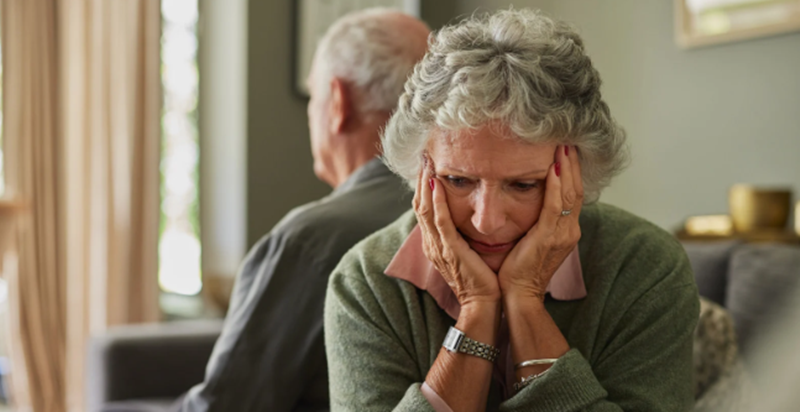
In her experience, Somich says, older adults tend to withhold important medical information from their adult children, sometimes until way after the fact. It often comes wrapped in a cushioning phrase like, “We just didn’t want to worry you.”
In the video, she acts out a few scenarios that are all too familiar to many adults with Boomer parents: Mom springing it on you out of the blue that Dad had “open heart surgery yesterday.” Or one of your parents suddenly disclosing that “Grandma has been on life support for a week.”
“These are adult children now. These are adults.” She says her adult clients come into her practice after moments like this feeling upset, sad, and even betrayed. In short, they’re far more upset than they would have been hearing the hard news sooner.
“If the idea here was to spare your adult child some anxiety, it has backfired,” she says. But the question still remains: Why do they do it?
The video racked up over a million views on social media, and viewers had no shortage of things to say about this frustrating phenomenon.
Theories abound as to why Boomers tend to withhold health-related updates. Some called out the behavior as manipulative or selfish:
“They don’t want to deal with our emotions. Surely you know that”
“Emotional immaturity is likely a part of it – avoiding having to acknowledge their own distress about it and also avoiding experiencing their kids’ distress. Sweep it under the rug until you can’t not trip over it.”
“They will give you every health update of the neighbor down the street that you don’t even know but won’t tell you when they have cancer. Then they make you feel bad that you didn’t know because you don’t come around enough.”
“It’s a form of punishment and control. ‘If we cared, we would have asked.’”
Several people theorized that it’s hard for parents of any age to think of their own kids as adults, so the urge to protect and shield them is tough to break even once they’re truly grown. Others were more empathetic, recalling that Boomers weren’t exactly raised with a lot of tender affection and care in the ’50s and ’60s:
“Boomers had f-ed up parents and so were their parents. Etc. There was no counseling, no mental health talk. It was non existent. OUR feelings were dismissed and communication skills were not taught to us. we were taught to brush everything under the rug and I think all of this is reflection of how we react to things now.”
“Late Boomer here (Gen Jones). Our parents kept everything from us. No talking about money, relationships, or coping skills. We never learned how to relate to our adult children unless we taught ourselves.”
Parents in the ’60s and thereabouts were heavy on authority and much lighter on warmth than parents today. The phrase, “Children should be seen and not heard,” was a common refrain of the day, so it’s no wonder they might have trouble opening up and communicating.
Experts say the truth is really a bit of both: A genuine (if misguided desire) to protect or not “burden” adult children, mixed with difficulties in being vulnerable as a result of their upbringing.

“Boomers are extremely independent and are used to making their own decisions,” Marianne Matzo, PhD who specializes in palliative care and gerontology, told Upworthy. “Remember, they came of age during the Vietnam war, and one of the legislative changes at that time was people were legal adults at age 18. At a young age they had the legal right to make major decisions and want to keep that freedom. They don’t need the family to drive them to the doctor, nor be involved in making decisions about their lives. The tendency is to make decisions and inform the family afterwards.
Jenna Budrea-Roman, a licensed clinical psychologist, tells Upworthy that, unfortunately, parents and their adult children can find themselves in a vicious cycle:
“These older adults still have a sense of obligation and it might feel wrong not to share something significant with their child …They might avoid bringing it up until the last possible moment, then creating an emotional boomerang for their child (‘Wait, what do you mean you might have cancer and are getting a biopsy tomorrow?’). The adult kid feels equal parts concerned, angry for not being trusted with the information earlier, and confused as to what they should do to be supportive. This reaction reinforces to the parent that they should have kept the information to themselves and have “now caused more problems.” No one gets what they need in this dynamic to feel emotionally safe and connected.”
As in most cases in life, the way forward is to not shy away from direct and uncomfortable conversations, and to handle them with empathy. It’s fair to be upset and anxious because of how sensitive health updates are handled, and to communicate that, but remember not to attack your parent’s independence, their right to privacy, or their struggles with vulnerability.