+
thankful pumpkin, amy latta, thanksgiving
via Pixabay

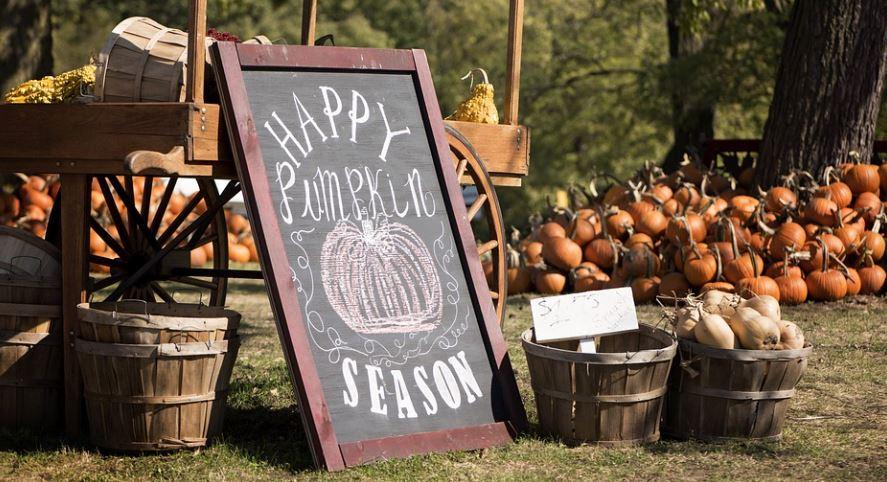
Happy pumpkin season.

We celebrate Thanksgiving on the fourth Thursday in November in the United States. The big focus on that day is the massive feast, football and maybe a little talk about pilgrims and Native Americans breaking bread together.

But, aside from a possible prayer at dinner, are many people focusing on the most essential part of the holiday: being thankful?

Amy Latta, a mother and craft expert, noticed the disconnect between the holiday and its meaning in 2012 so she created a new family tradition, the Thankful Pumpkin. The idea came to her after she went to a pumpkin patch with her son, Noah, who was 3 at the time.

“We need to stop and focus and be intentional about counting our blessings. To help do that in our family, we started the tradition of the Thankful Pumpkin,” she wrote on her blog. “All you need to make one is a pumpkin and a permanent marker and a heart full of gratitude.”


"

In the days leading up to Thanksgiving, Amy and her family sit down and make a list of things they’re thankful for and write them on a pumpkin in permanent marker.

By the time Thanksgiving rolls around, the pumpkin is filled with thankfulness. Then, on the big day, it makes a great centerpiece that keeps the reason for the holiday in focus for the whole family.

"I was excited to get the project out there because it is so simple and requires no special skills or materials," Latta told Today Parents. "Anyone can do it, and I was excited to think about other families taking time to focus on gratitude."

In the 10 years since Latta came up with the idea, the Thankful Pumpkin has caught on around the country and people have been sending her photos of how their families celebrate the new tradition. “I’ve seen hundreds of photos of families, clubs, community centers, churches, and shops adopting this tradition, inviting folks to add their blessings to a pumpkin, a visual reminder of all the reasons we have to be grateful,” Latta wrote in an Instagram post.

Latta was really onto something when she decided to put the “thanks” back in Thanksgiving. Further, learning how to practice gratitude is one of the most important keys to happiness, so it’s wonderful that she's given us all a new way to practice it with our families.

Amy E. Keller, Psy D., says that practicing gratitude is wonderful for our psychological well-being.

"Experiencing gratitude activates neurotransmitters like dopamine, which we associate with pleasure, and serotonin, which regulates our mood," she told Verywell Mind. "It also causes the brain to release oxytocin, a hormone which induces feelings like trust and generosity which promotes social bonding, and feeling connected."

A decade after her little idea has caught on, Latta is grateful for the incredible response.

“I never imagined the little idea I had in my kitchen that day would encourage gratitude far beyond our four walls, and each year as I see it shared, I am humbled all over again to think that maybe it has impacted you too,” she wrote on Instagram. “Let’s be grateful together as we head into the holiday season. I’m so glad you’re here.”


Sponsored

This is the most important van in NYC… and it’s full of socks.

How can socks make such a huge difference? You'd be surprised.

all photos provided by Coalition for The Homeless

Every night, the van delivers nourishment in all kinds of ways to those who need it most

True

Homelessness in New York City has reached its highest levels since the Great Depression of the 1930s. Over 50,000 people sleep each night in a shelter, while thousands of others rely on city streets, the subway system and other public locations as spaces to rest.

That’s why this meal (and sock) delivery van is an effective resource for providing aid to those experiencing homelessness in New York City.

Every night of the year, from 7pm to 9:30, the Coalition for the Homeless drives a small fleet of vans to over 25 stops throughout upper and lower Manhattan and in the Bronx. At each stop, adults and families in need can receive a warm meal, a welcoming smile from volunteers, and a fresh, comfy new pair of Bombas socks. Socks may be even more important than you think.

Bombas was founded in 2013 after the discovery that socks were the #1 most requested clothing item at homeless shelters.

Access to fresh, clean socks is often limited for individuals experiencing homelessness—whether someone is living on the street and walking for much of the day, or is unstably housed without reliable access to laundry or storage. And for individuals experiencing or at risk of homelessness —expenses might need to be prioritized for more critical needs like food, medication, school supplies, or gas. Used socks can’t be donated to shelters for hygienic reasons, making this important item even more difficult to supply to those who need it the most.

Bombas offers its consumers durable, long-lasting and comfortable socks, and for every pair of Bombas socks purchased, an additional pair of specially-designed socks is donated to organizations supporting those in need, like Coalition for the Homeless. What started out as a simple collaboration with a few organizations and nonprofits to help individuals without housing security has quickly become a bona fide giving movement. Bombas now has approximately 3,500 Giving Partners nationwide.

Though every individual’s experience is unique, there can frequently be an inherent lack of trust of institutions that want to help—making a solution even more challenging to achieve. “I’ve had people reach out when I’m handing them a pair of socks and their hands are shaking and they’re looking around, and they’re wondering ‘why is this person being nice to me?’” Robbi Montoya—director at Dorothy Day House, another Giving Partner—told Bombas.

Donations like socks are a small way to create connection. And they can quickly become something much bigger. Right now over 1,000 people receive clothing and warm food every night, rain or shine, from a Coalition for the Homeless van. That bit of consistent kindness during a time of struggle can help offer the feeling of true support. This type of encouragement is often crucial for organizations to help those take the next difficult steps towards stability.

This philosophy helped Bombas and its abundance of Giving Partners extend their reach beyond New York City. Over 75 million clothing items have been donated to those who need it the most across all 50 states. Over the years Bombas has accumulated all kinds of valuable statistics, information, and highlights from Giving Partners similar to the Coalition for the Homeless vans and Dorothy Day House, which can be found in the Bombas Impact Report.

In the Impact Report, you’ll also find out how to get involved—whether it’s purchasing a pair of Bombas socks to get another item donated, joining a volunteer group, or shifting the conversation around homelessness to prioritize compassion and humanity.

To find out more, visit BeeBetter.com.

Author, educator and mother Esther Wojcicki.

Esther Wojcicki has earned the right to tell people how to raise their kids. She’s an educator, journalist and bestselling author of "How to Raise Successful People" who has raised three daughters—two are CEOs and the other a doctor.

Susan Wojcicki is the CEO of YouTube, Anne Wojcicki is the co-founder and CEO of 23andMe and Dr. Janet Wojcicki is an anthropologist and epidemiologist who works on HIV progression and obesity risk in children.

In "How to Raise Successful People" Esther Wojcicki says the secret to success is the result of “TRICK”: trust, respect, independence, collaboration and kindness. In a new article she wrote for NBC Chicago, she boiled that down to one rule, “Don't do anything for your kids that they can do for themselves.”

Keep ReadingShow less
Pop Culture

AI technology helps render portraits from the Victorian era that are 'moving' in every way

The artists at Mystery Scoop breathe new life into old photographs using color restoration and facial movement.

Mystery Scoop creates all kinds of moving portraits based on historical figures.

For better or worse, AI technology has opened up a whole new genre of art. Artists who use it have been able to create some truly remarkable works—whether that’s bringing back beloved icons or bringing cartoon characters to life in a hyper-realistic way.

The creators behind Mystery Scoop have also blended some digital art wizardry and AI programs to render portraits from the late Victorian era that not only have stunning color, but lifelike movements. And the results are mesmerizing.

A video posted to their YouTube channel titled “19th Century Portraits Brought To Life” shows Victorian men and women as they undergo a full restoration, thanks to colorists Klimbim and Lorenzo Folli. But the magic doesn’t stop there. The “labor of love” also incorporates the “latest tools in AI technology" to bring facial movements to the photo. These static, black-and-white portraits quickly become breathing, blinking, smirking seemingly living beings.
Keep ReadingShow less
Pop Culture

Steven Spielberg went the extra mile to keep E.T. 'alive' on set for Drew Barrymore

7-year-old Barrymore thought E.T. was real, so Spielberg kept the illusion going even when they weren't filming.

Phoo by zuko1312

Drew Barrymore believed E.T. was real.

It's understandable that a young child seeing a movie like "E.T." might think the wide-eyed creature from another planet is real. After all, it's an award-winning film with still-impressive animatronics that bring E.T. to life. One would probably assume, however, that a child who acted in the movie and saw the behind-the-scenes filmmaking process firsthand would know he wasn't real.

However, that wasn't the case for actress Drew Barrymore.

Barrymore played the main character's younger sister, Gertie, in the film. After an initial scare, Gertie adored E.T.—and as it turns out, so did 7-year-old Barrymore.

Keep ReadingShow less