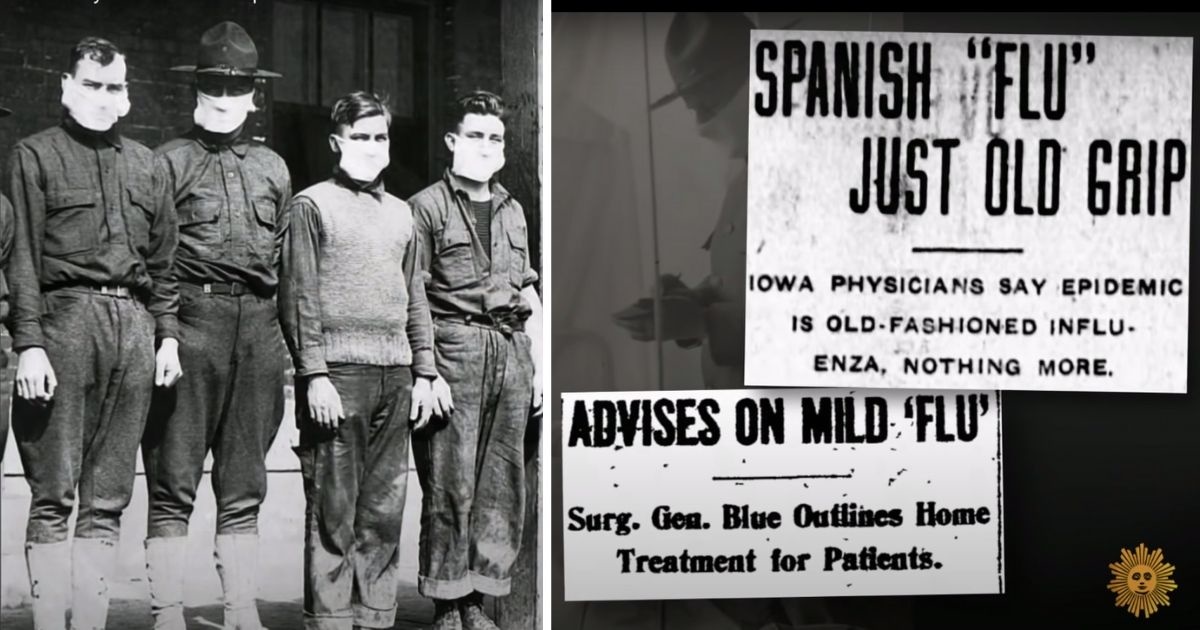
Pandemic photos from 1918 show what has changed in a century—and what hasn't

We all know history has a habit of repeating itself, but the fact that we find ourselves in a global pandemic almost exactly 100 years after the last major one feel almost too on the nose.

While the coronavirus outbreak differs from the Spanish flu pandemic in some important ways, there are also some striking similarities. The same uncertainty of how to handle it. The same differences of opinion on how bad it could get. The difference now is that we have a whole lot more science to help us figure it all out—but also a massive information machine that feeds off of people's misunderstandings of how science works and makes it easy for misinformation to spread like wildfire.

Good times.

But it can be eye-opening to look at historical documentation of a similar event, especially through photographs depicting the details of daily life. As we're all in various stages of lockdown or reopening, mask-wearing and physical distancing, it's fascinating to see people a century ago dealing with the same things.


CBS Sunday Morning did a segment on the 1918 pandemic in early March, just before states in the U.S. began coronavirus shutdowns. From some physicians downplaying the Spanish flu as "old-fashioned influenza, nothing more" to people wearing masks in public—or refusing to—there are so many parallels to what we're experiencing now.

The story of the 1918 flu pandemic www.youtube.com

Watching this segment now, several months into the pandemic, is really something, isn't it? One thing to be thankful for is that we're not in the middle of a world war while also dealing with coronavirus outbreak, though we do have our own era's social and political upheaval happening at the same time. Let's just all sign a pact to not add an all-out war on top of everything else we've got going on. 2020 has been eventful enough.

Courtesy of CeraVe
True

"I love being a nurse because I have the honor of connecting with my patients during some of their best and some of their worst days and making a difference in their lives is among the most rewarding things that I can do in my own life" - Tenesia Richards, RN

From ushering new life into the world to holding the hand of a patient as they take their last breath, nurses are everyday heroes that deserve our respect and appreciation.

To give back to this community that is always giving so selflessly to others, CeraVe® put out a call to nurses to share their stories for a chance to be featured in Heroes Behind the Masks, a digital content series shining a light on nurses who go above and beyond to provide safe and quality care to patients and their communities.

First up: Tenesia Richards, a labor and delivery nurse working in New York City who, in addition to her regular job, started a community outreach program in a homeless shelter that houses expectant mothers for up to one year postpartum.

Tenesia | Heroes Behind the Masks presented by CeraVe www.youtube.com

Upon learning at a conference that black mothers in the U.S. die at three to four times the rate of white mothers, one of the widest of all racial disparities in women's health, Richards decided to take further action to help her community. She, along with a handful of fellow nurses, volunteered to provide antepartum, childbirth and postpartum education to the women living at the shelter. Additionally, they looked for other ways to boost the spirits of the residents, like throwing baby showers and bringing in guest speakers. When COVID-19 hit and in-person gatherings were no longer possible, Richards and her team found creative workarounds and created holiday care packages for the mothers instead.

Keep Reading Show less

The fasting period of Ramadan observed by Muslims around the world is a both an individual and communal observance. For the individual, it's a time to grow closer to God through sacrifice and detachment from physical desires. For the community, it's a time to gather in joy and fellowship at sunset, breaking bread together after abstaining from food and drink since sunrise.

The COVID-19 pandemic has limited group gatherings in many countries, putting a damper on the communal part of Ramadan. But for one community in Barcelona, Spain, a different faith has stepped up to make the after sunset meal, known as Iftar, as safe as possible for the Muslim community.

According to Reuters, Father Peio Sanchez, Santa Anna's rector, has opened the doors of the Catholic church's open-air cloisters to local Muslims to use for breaking the Ramadan fast. He sees the different faiths coming together as a symbol of civic coexistence.

Keep Reading Show less
Courtesy of CeraVe
True

"I love being a nurse because I have the honor of connecting with my patients during some of their best and some of their worst days and making a difference in their lives is among the most rewarding things that I can do in my own life" - Tenesia Richards, RN

From ushering new life into the world to holding the hand of a patient as they take their last breath, nurses are everyday heroes that deserve our respect and appreciation.

To give back to this community that is always giving so selflessly to others, CeraVe® put out a call to nurses to share their stories for a chance to be featured in Heroes Behind the Masks, a digital content series shining a light on nurses who go above and beyond to provide safe and quality care to patients and their communities.

First up: Tenesia Richards, a labor and delivery nurse working in New York City who, in addition to her regular job, started a community outreach program in a homeless shelter that houses expectant mothers for up to one year postpartum.

Tenesia | Heroes Behind the Masks presented by CeraVe www.youtube.com

Upon learning at a conference that black mothers in the U.S. die at three to four times the rate of white mothers, one of the widest of all racial disparities in women's health, Richards decided to take further action to help her community. She, along with a handful of fellow nurses, volunteered to provide antepartum, childbirth and postpartum education to the women living at the shelter. Additionally, they looked for other ways to boost the spirits of the residents, like throwing baby showers and bringing in guest speakers. When COVID-19 hit and in-person gatherings were no longer possible, Richards and her team found creative workarounds and created holiday care packages for the mothers instead.

Keep Reading Show less