upworthy
Add Upworthy to your Google News feed.
Google News Button
Pop Culture

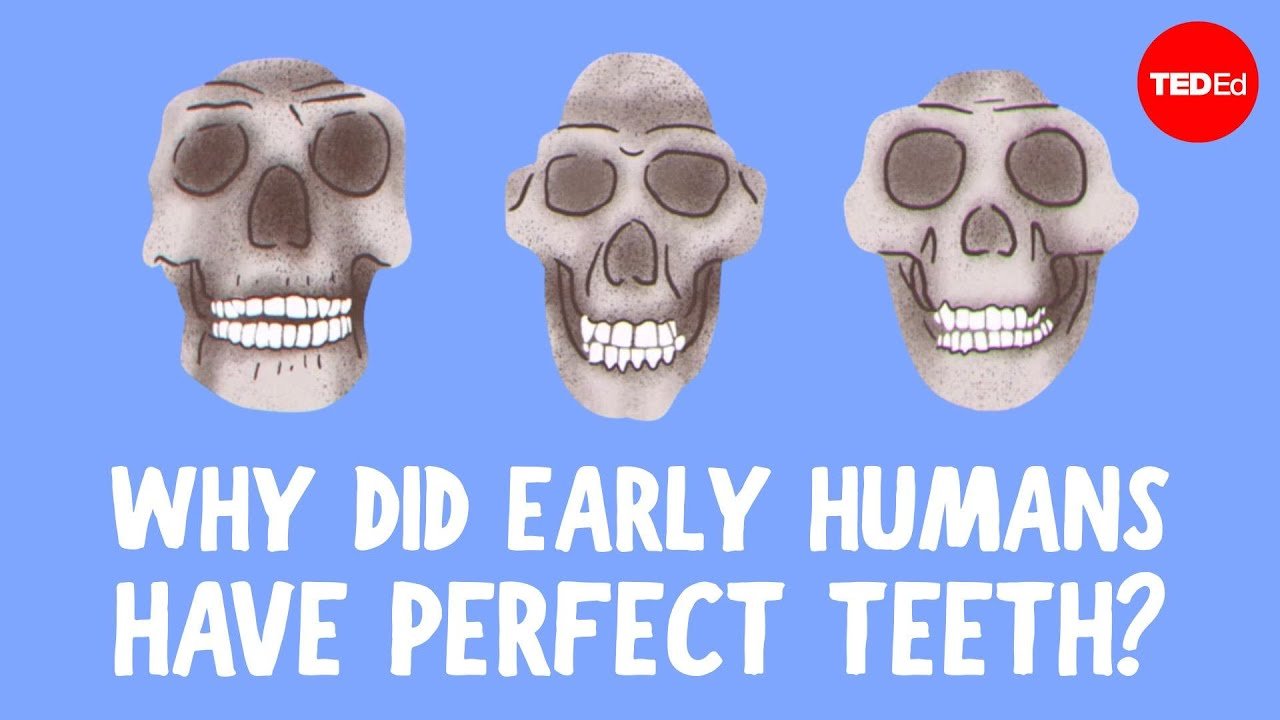
Video breaks down why early humans had naturally straight teeth and we don't

Thanks, innovation!

crooked teeth
Ted-Ed/Youtube

Technology isn't everything.

Crooked teeth is a very, very common occurrence in our modern world. Nine out of ten people have at least some misalignment going on in their mouths. Over 4 million people wear braces in the United States alone. I don’t know about you, but I can still feel the utter sticker shock from my own teeth-straightening journey. (I call it a “journey” so it feels a little more whimsical and less devastating.)

And yet, this is not something our ancestors dealt with. Like…at all. How could it be that no one experienced this normal modern-day conundrum in a time when we had exponentially less technological advancement?

As it turns out, technology might be the culprit, and a video from Ted-Ed explains it all.

The prevailing theory in the scientific community is that millions of years ago, when humans were hunter-gatherers, their teeth had to work extra hard to grind down seeds, fruit, meat, etc., and make them digestible.

When humans began incorporating tools, food was broken down before it even entered the mouth. It only became more refined and easier to chew with the introduction of agriculture, followed by the innovations of the Industrial Revolution.

In a relatively short amount of time (12,000 years), teeth were basically relieved of most of their “pulverizing duties.” And while teeth were initially able to adapt to the gradual evolution of culinary changes, things simply changed too quickly to keep up. Over time, jaws have reduced in size much more quickly than our teeth have, leading to overcrowding and some…unique dental arrangements.

This also helps explain why wisdom teeth are such a pain. By the time these final molars come out, there is simply no room left in the mouth for them. This is why many people need them surgically removed in order to prevent discomfort or infection.

This theory has been tested on animals like spider monkeys and lyraxes, who were given naturally tough foods and artificially softened foods. Sure enough, the critters with the softer foods also developed narrower jaws, and more crooked teeth.

Bottom line: this issue has a lot more to do with lifestyle than anything genetic. Which is why different people in different parts of the world don’t deal with dental crowding at all, and even have room for wisdom teeth. Knowing this might not stop us from eating softer foods—it’s certainly not gonna make me give up warm gooey cookies any time soon, perfect smile and zero cavities be damned—but it’s certainly something to chew on.

You can watch the full video, based on a lesson by dental anthropologist G. Richard Scott, below:

Joy

5 ways people are going "All In" this week

From the silly to the sentimental, there are so many ways people like to go “all in” on something. Here are our five favorite examples this week.

5 ways people are going "All In" this week
True

When you hear the words “all in,” what do you think? You might think of getting groovy at a nursing home, a french bulldog having a total breakdown in the drive-thru, or maybe even a snack bar company promoting self care. Whatever you picture, the idea is the same: Going “all in” means doing something with total commitment—literally giving it your “all” and going completely over the top. No second guessing, no holding back—just full-throttle enthusiasm with some creativity and flair thrown in. That’s how we get those viral internet moments we can’t stop watching.


This DWTS dance trend 

If you’ve been watching TV or on the internet this week, you might have seen the viral dance move Dylan Efron and Daniella Karagach performed while on Dancing With The Stars (DWTS) last week. The one particular move, where Dylan holds Daniella as she does a mid-air horizontal walk, is going viral with over 8k videos using the sound. Some of my personal favorites include a mom and her baby, two girls or a girl and her cat, proving this dance trend is truly for anyone to try.

All In on Fiber

Speaking of trends, there’s one that really is about going “all in”, it’s called #fibermaxxing. After years of protein being the biggest nutrition trend, it looks like fiber might be taking over. For good reason too, while protein can cause issues with digestion, fiber can lead to better digestion, blood sugar management, weight control and reduced disease risk. Our friends at All In made a video explaining the #fibermaxxing trend. Each All In bar has 6 to 7 grams of fiber , plus they are delicious. Don't take our word for it, though: Click here to try it yourself (for free).

This child's long hair

This creator went all in… on pranking the audience. I don’t want to give away the contents of this video, but let’s just say it’s creative- and it made me quite literally laugh out loud. There are a lot of "momfluencers" out there who make content that uses their children, and as relatable and heartfelt as it is, sometimes a little satire break is worth appreciating.

Two entrepreneurs getting down to business


Lots of people dabble in entrepreneurship. These two went "all in" on helping others learn it. After four years of interviews with CEOs , research, edits, and a Penguin Random House book deal (yes, seriously), their book, Down to Business, has made its way into classrooms and libraries around the world. Now they are teaching other kids that age is not a barrier to entry in entrepreneurship; the earlier you start, the further you can go—and an entrepreneurial mindset will serve you no matter what you do in life.

Bridesmaids who went all in

Last on our list; two bridesmaids who committed to the bit. These ladies went “all in” in their remake of the legendary scene from the movie “Bridesmaids”. If you haven’t seen the original movie, starring Kristen Wig and Maya Rudolph, this might be your sign.

In the viral TikTok this bride, Caroline, had no idea what was coming when she put on her favorite movie while getting ready for her big day. The fact that she wanted to watch her favorite show before her bridesmaids surprised her, makes this going “all in” surprise all the better.

Snag your free (!!) snack bar here while this deal lasts. Just pick up a bar at Sprouts and text a pic ofv your receipt to get it for free. Enoy!

beavers, beaver dam, animals, wildlife, ecosystem, nature, earth, sustainability, deserts, waterways, rivers, pollution, climate change

Can outsider beavers save this dried up river?

It's not easy being a river in the desert under the best of circumstances. The ecosystem exists in a very delicate balance, allowing water sources to thrive in the harsh conditions. These water sources in otherwise extremely dry areas are vital to the survival of unique wildlife, agriculture, and even tourism as they provide fresh drinking water for the people who live nearby.

But man-made problems like climate change, over-farming, and pollution have made a tough job even tougher in some areas. Rivers in Utah and Colorado part of the Colorado River Basin have been barely surviving the extremely harsh drought season. When the riverbeds get too dry, fish and other aquatic creatures die off and the wildfire risk increases dramatically.


About six years ago, one team of researchers had a fascinating idea to restore the health of some of Utah's most vulnerable rivers: Bring in the beavers.

beavers, beaver dam, animals, wildlife, ecosystem, nature, earth, sustainability, deserts, waterways, rivers, pollution, climate change Beaver on riverbank. Canva Photos

In 2019, master's student Emma Doden and a team of researchers from Utah State University began a "translocation" project to bring displaced beavers to areas like Utah's Price River, in the hopes of bringing it back to life.

Why beavers? Well, it just makes dam sense! (Sorry.)

In all seriousness, beaver dams restrict the flow of water in some areas of a river, creating ponds and wetlands. In drought-stricken areas, fish and other wildlife can take refuge in the ponds while the rest of the river runs dry, thus riding out the danger until it rains again.

When beavers are present in a watershed, the benefits are unbelievable: Better water quality, healthier fish populations, better nutrient availability, and fewer or less severe wildfires.

It's why beavers have earned the title of "keystone species," or any animal that has a disproportionate impact on the ecosystem around them.

beaver, dam, dam building, nature, ecosystem Pbs Nature Swimming GIF by Nature on PBS Giphy

Doden and her team took beavers who were captured or removed from their original homes due to their being a "nuisance," interfering with infrastructure, or being endangered, and—after a short period of quarantine—were brought to the Price River.

Despite the research team's best efforts, not all the translocated beavers have survived or stayed put over the years. Some have trouble adapting to their new home and die off or are killed by predators, while others leave of their own accord.

But sine 2019, enough have stayed and built dams that the team is starting to see the results of the effort. In fact, beaver projects just like this one have been going on all over the state in recent years.

- YouTube youtu.be

The water levels in the river are now the healthiest they've been in years. The fish are thriving and Utah residents are overjoyed with the experiment's results.

According to an early 2025 column in The Salt Lake Tribune (i.e. six years after the beaver translocation began) the revitalization of the Price River has "helped save [our] Utah town."

"A tributary of the Colorado River, the Price River runs through downtown Helper," wrote column authors Lenise Peterman and Jordan Nielson. "On a warm day, you’re likely to find the river filled with tourists and locals kayaking, tubing and fishing along its shore. A decade ago, it was hard to imagine this scene—and the thriving recreation economy that comes with it—was possible."

Of course, it wasn't JUST the beavers. Other federal water cleanup investments helped remove debris, break down old and malfunctioning dams, and place tighter regulations on agriculture grazing in the area that depleted vital plant life.

But the experts know that the beavers, and their incredible engineering work, are the real MVPs.

beavers, beaver dam, animals, wildlife, ecosystem, nature, earth, sustainability, deserts, waterways, rivers, pollution, climate change An actual beaver dam on the now-thriving Price River Public Domain

In other drying, struggling rivers in the area, researchers are bringing in beavers and even creating manmade beaver dams. They're hoping that the critters will take over the job as the rivers get healthier.

Utah's San Rafael River, which is in bleak condition, is a prime candidate. In one area of the river, a natural flood inspired a host of beavers to return to the area and "riparian habitat along that stretch had increased by 230%, and it had the most diverse flow patterns of anywhere on the river," according to KUER.

It's hard to believe that beavers nearly went extinct during the heyday of the fur trapping industry, and continued to struggle as they were considered nuisances and pests. Now, they're getting the respect they deserve as engineer marvels, and their populations have rebounded due to better PR and conservation programs.

It's about dam time!

This article originally appeared in June.

what men like, what men love, aubrey hirsch
via Unsplash

What do these men love?

Writer and illustrator Aubrey Hirsch jokingly asked her followers on Twitter what’s a “universal thing that most men like?” because she was writing a comic and “just realized I don’t actually know any men in real life." The tweet inspired an avalanche of funny responses.

Hirsch is the author of “Why We Never Talk About Sugar,” a collection of short stories, and her work has appeared in The New York Times, Child, American Short Fiction and Time.


The interesting thing about the responses is that they weren’t the typical stereotypes about men. She didn’t get a ton of people talking about sex, sports or toxic masculinity. Instead, there were a lot of folks that mentioned very specific male behaviors as if they were talking about a bizarre species they discovered in the wild.

There were two things that got the most comments on her post. First, men enjoy throwing heavy objects into bodies of water. Preferably, the larger the rock, the deeper the body of water and from the highest vantage point possible.

The other is watching construction sites. Evidently, the phenomenon is so popular in Italy that there is a specific word for this type of person in Italian.

Here are 19 of the best responses to the question, “What’s a universal thing that most men like?”

1.

When asked why men enjoy watching construction sites so much, a poster on Reddit named justdaps had the perfect response. "I just find it really satisfying and interesting to see the process behind things being built," he wrote.

2.

3.

4.

I have seen dudes do this and I have done it plenty of times myself. I usually stand while watching TV when I want to really focus on what’s happening and do not want to be distracted. This usually happens while watching sporting events or the news. It's also a great way to use your body language to let other people know that there is something very important happening on the television.

5.

When we do this 99% of the time we’re pretending that the sign is 10 feet high and that we have the ability to dunk a basketball. There are two types of men, those that can dunk and mere mortals.

6.

As a man, this one is near and dear to my heart. I can’t tell you the number of hours I have spent with my friends just throwing lines from “The Big Lebowski” back and forth.

“Nice marmot.”

“The Dude abides.”

“Say what you want about the tenets of national socialism, Dude. At least it’s an ethos.”

A movie that's running up the ranks of being among the most quotable is another dude buddy pic, "Once Upon a Time ... In Hollywood."

"All right, that's too hot. Anything we can do about that heat?" ... "Rick, it's a flamethrower.”

7.

8.

9.

10.

11.

Evidently, after reading the responses, Hirsch knew what was going to happen next. No need to feel ashamed about going viral. It just means you created something that people love.


This story originally appeared two years ago.