upworthy
Add Upworthy to your Google News feed.
Google News Button
Humor

Men share 30 women's habits they had no idea about until they actually lived with a woman

"Similar to cats, they naturally gravitate to the warmest parts of the house."

living with a woman, men vs women, women's skincare, moving in, relationships, beauty routine

These all seem to ring true.

While we are moving away from the rigidly binary “men are from Mars, women are from Venus,” mentality, we all know that each gender tends to have its own special quirks. And often, unless we grew up with a bunch of siblings from the opposite sex, we don’t learn what those quirks are until we move in with a significant other. Truly, it can feel like observing the daily ritual of another species entirely.

Recently, men were asked to open up about the womanly habits they had no idea were a thing until they got a girlfriend. Their answers were funny, sweet, and (not to speak for all women, but…) totally relatable. I’m certainly guilty of every single one of these.

Keep reading to see what the fellas said:

1. “She talks to herself when she blowdries her hair. Every time, and only then. Due to the noise of the dryer, I can't understand what she's saying, but she really goes on. Once she stops drying, she stops talking. Happens every day.”

living with a woman, men vs women, women's skincare, moving in, relationships, beauty routineA woman blowdrying her hairPhoto credit: Canva

2. “Anything that comes in a mini size is called cute. Mini bullet = cute. Mini Machete = cute. Doesn’t matter what it is as long as it’s mini.”

3. "Similarly to cats, they naturally gravitate to the warmest parts of the house. It might be the cozy chair, a heated blanket, or the bed section I was just lying in. I'm honestly unsure if she loves me or just my excess heat (and I'm honestly OK either way)."

4. “The "everything" shower.”

5. “Common areas which can be seen by guests: SPOTLESS. Their personal space that closes that cannot be seen by guests: FUCKING DISASTER.”
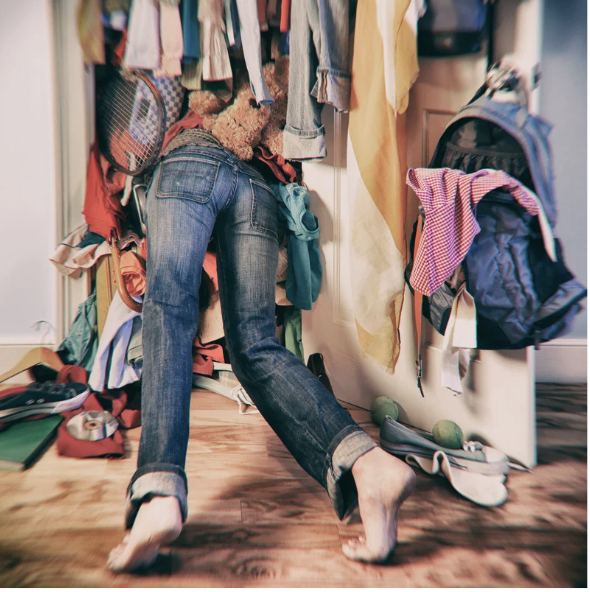
living with a woman, men vs women, women's skincare, moving in, relationships, beauty routineA woman in a closetPhoto credit: Canva

6. “First time I moved in with a partner I certainly wasn't ready for the transformation my bathroom counter was about to go through.”

7. “I don't know if it's women in general, but my wife sheds clothes like a snake around the house. You can find evidence of exactly where she became uncomfortable and how much, depending on if the discarded clothes are in a small pile or strewn around the room.”

8. “How much time and effort they spend curating style. The reason they call “shopping” a whole hobby is bc half the time they aren’t even buying anything. They’re spending hours just browsing (online or at a store) just concocting aesthetics in their heads and brainstorming new looks or ideas. Meanwhile I’ve been wearing the same 8 shirts and 8 pairs of pants for the last ten years.”

living with a woman, men vs women, women's skincare, moving in, relationships, beauty routineOnline shoppingPhoto credit: Canva

9. “That skincare was such a big deal. I think before I met my wife, I used to just use soap on my face, which almost gave her an aneurysm. Meanwhile, she is using about 5000 products in the morning and night on her face (snail something was the strangest one).After 7 years together she managed to get me using cleanser and moisturizer. I still can't tell the difference.”

10. “3 foot tall piles of clothes on the ground I’d assume are dirty but apparently they’re not? But at the same time some are dirty? I guess? Idfk.”

11. "The fact that they take showers with boiling water. I'll occasionally try to be a little spontaneous with my wife and sneak in the shower with her. First, I must locate the shower because I can't see a foot in front of me due to all the steam. When I finally step in, I must use her as a human shield until she turns the temperature down."

living with a woman, men vs women, women's skincare, moving in, relationships, beauty routineA hot showerPhoto credit: Canva

12. "They never finish their drinks. I find two cups of half-drunken coffee scattered around the house multiple times a week until we run out of coffee cups."

13. "She takes her bra off at the end of the day the same way I take my belt off my jeans when I get home. It is with the force of a thousand suns and a sigh of relief."

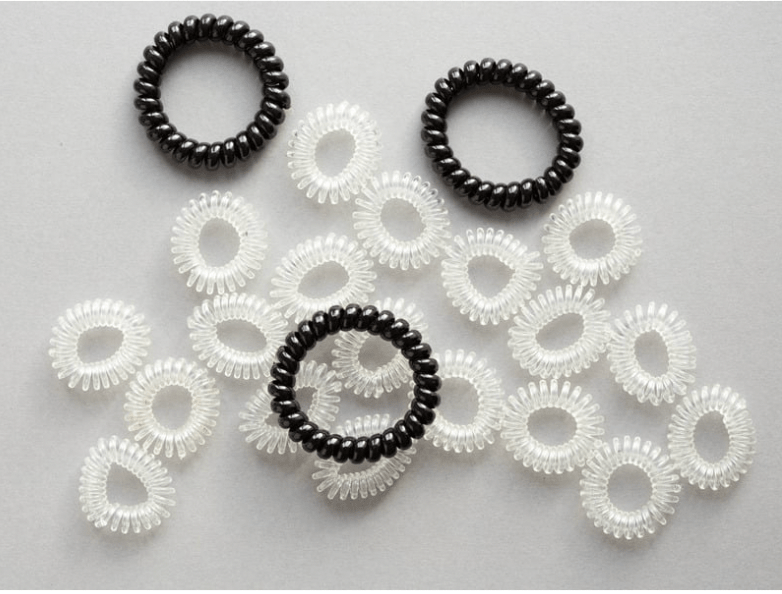
14. "Women have a million black hair ties and also none."

living with a woman, men vs women, women's skincare, moving in, relationships, beauty routineHair tiesPhoto credit: Canva

15. “A compulsive need to squeeze blackheads and tweeze [rogue] hairs. Sometimes, she will be scratching my back or scalp, and I think, hey, this is wonderful. I wonder what I did to deserve this, and then out of nowhere, I feel like I've become the victim of 1,000 fire ants."

16. "That a 5-foot-tall, 100-pound woman can take up an entire king-size bed."

17. "My wife pulls on the toilet paper roll like she's trying to start a lawn mower."

living with a woman, men vs women, women's skincare, moving in, relationships, beauty routineA woman holding toilet paperPhoto credit: Canva

18. "They plan things way more than I do and much further out. I have no clue what tomorrow will bring, but my wife has the next five-plus years of our life together planned out."

19. "Hair washing is something that needs planning for and has consequences if missed or overdone."

20. "If you buy snacks for yourself, hide dat sh*t. She'll find it."

living with a woman, men vs women, women's skincare, moving in, relationships, beauty routineA woman eating a donutPhoto credit: Canva

21. "Makeup is a whole thing. I never saw my mom put it on as a little kid. When I lived with my first significant other, watching her put on makeup fascinated me. I lost track of time when she went full-on with the makeup for an event."

22. "They are either cold or hungry. Sometimes both. Never neither."

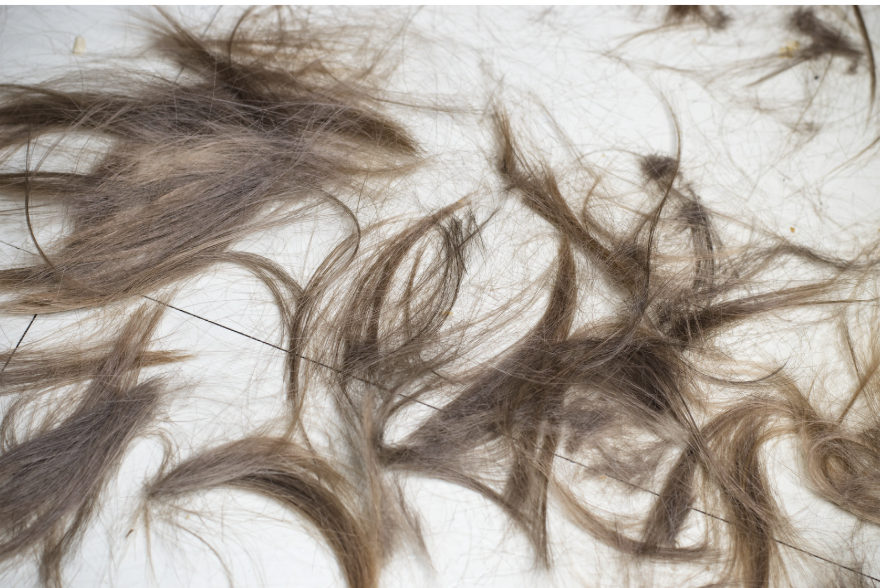
23. "Their hair gets everywhere. One time, my toe was hurting, so I removed my shoe and sock and noticed that a strand of my girlfriend's hair had wrapped itself TIGHTLY around my toe and cut off the circulation."

living with a woman, men vs women, women's skincare, moving in, relationships, beauty routineHair on the floorPhoto credit: Canva

24. "As a guy with long hair, I’m still thoroughly confused about why there is so much more hair everywhere now than when I was living alone."

25. "How tricky it is to find a well-fitting bra and how darn expensive they are."

26. "Pillows. Pillows everywhere. The more decorative pillow, the better."

living with a woman, men vs women, women's skincare, moving in, relationships, beauty routinePillowsPhoto credit: Canva

27. "How much time women spend in the bathroom every night before sleeping. No, sir, it's not just a matter of brushing your teeth and going to bed."

28. "A cute little thing I noticed after we were married is that my wife holds her breath when she applies mascara."

29. "A trip to the grocery store can turn into a full day of reorganizing the entire pantry and refrigerator."

living with a woman, men vs women, women's skincare, moving in, relationships, beauty routineA woman shoppingPhoto credit: Canva

30. "How much of their social life is tied to their personal safety. Women have safety protocols for going on date with guys they meet on apps, making sure they don’t get drugged at parties, making sure they aren’t nabbed off the street, letting each other know which men around them are safe and who they need to be careful around, etc. It’s insane. And like wtf, so heartbreaking that it’s necessary."

Gen Z; Millennials; technology; cell phones; social media; teens and technology; teens social media

Gen Z is the first generation less cognitively capable than their parents. Denmark has the solution.

Nearly every parent hopes their child will be better off than they are: smarter, more secure, and more well-adjusted. Many parents see this as a stamp of successful parenting, but something has changed for children growing up today. While younger generations are known for their empathy, their cognitive capabilities seem to be lagging behind those of previous generations for the first time in history.

Dr. Jared Cooney Horvath, a teacher turned cognitive neuroscientist who focuses on human learning, appeared before Congress to discuss concerns about cognitive development in children. In his address to the members of Congress, he says, "A sad fact that our generation has to face is this: our kids are less cognitively capable than we were at their age. Since we've been standardizing and measuring cognitive development since the late 1800s, every generation has outperformed their parents, and that's exactly what we want. We want sharper kids."


kids, intelligence, sharp kids, generations, education, cognitive abilities Student smiling in a classroom, working on a laptop.Photo credit: Canva

Horvath explains that the reason this happens is that each generation has gone to school longer than the previous generation. Gen Z is no exception to the longer duration of time spent in school, but they're the first ones who aren't meeting this normal increase in cognitive development. According to the cognitive neuroscientist, the decline is due to the introduction of screens in the classroom, which started around 2010.

"Across 80 countries, as Jean was just saying, if you look at the data, once countries adopt digital technology widely in schools, performance goes down significantly. To the point where kids who use computers about five hours per day in school for learning purposes will score over two-thirds of a standard deviation less than kids who rarely or never touch tech at school," Horvath reveals.

In most cases, the decline in performance doesn't result in better strategies. The neuroscientist shares that the standardized testing has been adjusted to accommodate lower expectations and shorter attention spans. This is an approach that educators, scientists, and researchers went to Capitol Hill to express wasn't working. But not every country is taking the approach of lowering standards to meet lowered cognitive ability. Denmark went in the opposite direction when it realized their students were slipping behind.

France24 recently interviewed educators in Denmark following their seemingly novel approach to students struggling with cognitive development. Since the beginning of the 2025/2026 school year, Denmark has not only been having students turn in their cellphones, but they've also taken tablets, laptops, and computers out of the classroom. No more digital learning for the majority of the school day. Danes went old school by bringing back physical textbooks, workbooks, and writing assignments. The results have been undeniable. Even the students can't seem to deny the success of the countrywide shift in educational approach.

"I think the biggest issue has been that, because we kind of got rid of the books and started using screens instead, that we've noticed that a lot of the kids have trouble concentrating, so it's pretty easy to swipe with three fingers over to a different screen and have a video game going, for example, in class," Copenhagen English teacher, Islam Dijab tells France24.

Now, instead of computers being part of every lesson, Denmark uses computers very sparingly and with strict supervision. One student says that it has been nice not having screen time at school because she loves to read and write. But it wasn't just the lack of attention span children were developing, they were also developing low self-esteem and poor mental health due to the amount of time spent on devices.

kids, intelligence, sharp kids, generations, education, cognitive abilities Students focused and ready to learn in the classroom.Photo credit: Canva

The data showing the negative impact of screens on teens' brains has prompted a nationwide change in Denmark that extends outside of the classroom. Afterschool activities are eliminating or extremely limiting electronic use. There is also a national No Phone Day that encourages everyone to put away their devices for the day, and Imran Rashid, a physician and digital health expert, is petitioning parliament to ban social media use for children under the age of 15. The no phone movement in Denmark is a nationwide effort that hopes to right the ship before another generation feels the effects.

squatters, squatters' rights, homeowner rights, Marco Velazquez, property dispute, Illinois law, moving in with squatters, viral story, real estate nightmare, eviction
Canva

A couple moves boxes into their new home

Picture it: you buy a new home knowing it's a bit of a fixer upper, but it's yours. You're expecting to move in slowly while you work on the house, but when you make your way to your new-to-you home, someone is already living there. Or maybe you're selling a home that's been sitting vacant and when the realtor gets there to show the property, someone has moved in. What do you do?

The logical answer would be to call the police because, clearly, there are intruders in your home who have made it their own. You have all the paperwork showing you own the property so it should be a no brainer. Wrong.


Marco Velazquez had this very situation happen when trying to sell a vacant home that he owns. When he reached out to the local authorities, he was informed that the people who moved into his home unlawfully cannot be forced out.

Under the current law in Illinois where the incident took place, squatters have rights and the police cannot forcibly remove squatters from the home. It's unclear if the squatters were scammed or if they were aware the property was not legally theirs as they presented police officers with mortgage paperwork, but the mortgage company listed did not exist.

squatters, squatters' rights, homeowner rights, Marco Velazquez, property dispute, Illinois law, moving in with squatters, viral story, real estate nightmare, eviction Row of boarded-up homesCanva

No matter how the couple came about living in the home, it wasn't legally theirs. There needed to be a resolution, but they weren't interested in leaving. That's when the homeowner decided to come up with something a little out of the box: Velazquez decided if the people in his home couldn't be removed, they'd be getting a new roommate–him.

"I said I'm not moving out and I said at one point they gotta leave, they gotta get tired of us being in the property. I called a couple of friends to stay overnight and I knew they were not gonna like that," Velazquez says to ABC 7 Chicago.

The homeowner moved in with his wife and several friends, bringing air mattresses and blankets determined to tire out the squatters. However, it quickly became apparent that the illegal tenants were not planning to move out. In actuality, the morning after Velazquez moved in, the squatters demanded he pay them $8,000 for them to move out. While the stunt of moving in with squatters was a Hail Mary, Velazquez knew that the arrangement wasn't safe and heard stories of squatters staying for months.

squatters, squatters' rights, homeowner rights, Marco Velazquez, property dispute, Illinois law, moving in with squatters, viral story, real estate nightmare, eviction A man walks down a alleyCanva

Instead of continuing to wait out the squatters, the man started negotiations with the couple to get them out of his house so it could be sold. He paid the couple $4,300 to leave his home. Shortly after the pair moved out, he learned that the woman had previously been arrested after squatting in someone else's home. Velazquez is hoping that he can also bring charges against the woman and her male partner for squatting in his home.

"We didn't want to give them money but we heard really bad stories about squatters taking over properties six, eight, ten months, even a year," Velazquez says. "I heard stories before about squatters. I never thought it was going to happen to me."

- YouTube www.youtube.com

This article originally appeared last year. It has been updated.

Science

Helicopters dump 6,000 logs into rivers in the Pacific Northwest, fixing a decades-old mistake

Forty years ago, restoration workers thought logs were the problem. They were wrong.

river restoration, washington, river fish, restoration, Yakama Nation, indigenous land, indigenoues tribes, salmon, trout, pacific northwest

Restoration workers now see how "critical" wood is to the natural habitat.

For decades, river restoration in the Northwestern United States followed a simple rule: if you saw logs in the water, take them out. Clean streams were seen as healthy streams, fast-moving water was seen as optimal, and wood was treated like a "barrier" to natural processes, particularly those of the local fish.

Now, helicopters are flying thousands of tree trunks back into rivers to undo that thinking.


In central Washington, one of the largest river restoration efforts ever attempted in the region is underway. More than 6,000 logs are being placed along roughly 38 kilometers, or 24 miles, of rivers and streams across the Yakama Reservation and surrounding ceded lands.

Nearly 40 years ago, Scott Nicolai was doing the opposite kind of work, all in the name of restoration.

"(Back then) the fish heads — what I call the fisheries folks — we stood on the banks, and we looked at the stream," Nicolai, a Yakama Nation habitat biologist, told Oregon Public Broadcasting. "If we saw a big log jam, we thought, 'Oh, that's a barrier to fish. We want the stream to flow.'"

river restoration, washington, river fish, restoration, Yakama Nation, indigenous land, indigenoues tribes, salmon, trout, pacific northwest Fish find shelter for spawning in the nooks and crannies of wood. Photo credit: Canva

At the time, logs were removed in an effort to simplify the habitat. However, it soon became clear that wood provided vital "complexity," creating sheltered pockets for salmon and bull trout to spawn and supporting algae that feed aquatic insects. Logs also slow water, spread it across floodplains, and allow it to soak into the groundwater. That water is then slowly released back into streams, helping keep them flowing and cooler during hot, dry periods.

The consequences of removing this "critical part of the system" (in addition to overgrazing, railroad construction, and splash dam logging) were made all too clear over the years as the rivers dried up and wildlife populations declined.

"We're trying to learn from our mistakes and find a better way to manage," said Phil Rigdon, director of the Yakama Nation Department of Natural Resources.

That's why Nicolai is now helping lead a project for the Yakama Nation aimed at rebuilding river complexity by returning logs to their rightful place. Many of these streams are now unreachable by road, which is why helicopters are used. Logs are flown from staging areas and carefully placed at precise drop locations marked with pink and blue flagging tape.

river restoration, washington, river fish, restoration, Yakama Nation, indigenous land, indigenoues tribes, salmon, trout, pacific northwest Many of these streams are now unreachable by road, which is why helicopters are used.Photo credit: Canva

The wood comes from forest-thinning projects led by The Nature Conservancy and includes species such as Douglas fir, grand fir, and cedar. Although some of the timber could have been sold, it is instead being used as river infrastructure.

For tribal leaders, the work carries even deeper meaning. During the helicopter flights, they gathered along the Little Naches River for a ceremony and prayer.

river restoration, washington, river fish, restoration, Yakama Nation, indigenous land, indigenoues tribes, salmon, trout, pacific northwest Tribal leaders gathered by the Little Naches River for a ceremony and prayer.Photo credit: Canva

"It was very simple: to bring what was rightfully part of this land back to us," said former tribal chairman Jerry Meninick.

The aftermath of the original restoration project illustrates how human concepts, such as the belief in the superiority of "cleanliness," can be limited and sometimes cause more harm than good. The miracle of nature, however, is that when left to her own devices, she can heal herself.

Couple, talking, coffee, conversation, chatting
Credit: Canva

A couple talking over coffee.

Many people find making small talk to be an excruciating experience. They think it’s boring to talk with a stranger about the weather, sports, or weekend plans. They may also feel like they don’t have anything to contribute to the conversation, or they don’t understand the point of having one in the first place.

However, those who excel at making small talk have a tremendous advantage in their professional and romantic relationships, as well as forming new friendships. Most importantly, small talk is a window to transition into medium talk or, eventually, deep, meaningful conversations. The problem is that many people get stuck in small talk, and things stall before progressing to something beneficial.


conversation, friends, small talk, chatting Two women chatting in front of a fire. Credit: Atlantic Ambience/Pexels

How to get better at small talk

The great thing is that, like anything, making small talk is a skill that we can all improve by learning some simple conversation techniques. One technique that is great for keeping a conversation going, like hitting a ball back and forth past a net in tennis, is a simple statement:

"It reminds me of…”

A Redditor recently shared some great examples of how the phrase can be used to turn a mundane topic, such as the weather, into something much more fun:

Them: "It's been really rainy, huh?"

You:

Option 1 (Personal Story): "Yeah, it reminds me of a time I went on a run in the rain and nearly got hit by a car."

Option 2 (Music / Pop Culture): "It reminds me of every Adele song. When I'm driving, I feel like I'm in a music video."

Option 3 (Family): "It reminds me of my dad, he used to love playing with us in the rain as kids."

Option 4 (Thing you watched / World News): "It reminds me of this documentary I saw where they're trying to make it rain in the Sahara Desert.”

Option 5 (Place you lived): “It reminds me of when I lived in Australia, it barely ever rained there. I actually love this weather.”


- YouTube www.youtube.com

You see in this example that using “It reminds me of…” opened up the conversation to five potential new and more exciting topics. The “You” in the story could have responded with, “Yeah, it sure is rainy,” and the conversation would have ended right there. But instead, branching off the topic of rain into something a bit deeper took the conversation to the next level. You get extra points if you can take the “reminds me of” into a topic that you assume the other person will be interested in.

What’s a polite way to change the topic in a conversation?

Using “this reminds me of…” is also a polite way to move the topics in another direction, especially when it's a topic that you don’t want to discuss or one that makes you feel a bit uncomfortable. Or, if it’s a situation where the other person is monologuing on one topic for a very long time, this makes it easy to transition away from their diatribe.

conversation, small talk, chatting, cafe Two guys chat at a cafe. Credit: Helena Lopes/Pexels

Ultimately, the phrase is an excellent way for you to save the person you’re talking to from being stuck in the small talk rut as well. It shows you understand that when someone brings up the weather, they are merely getting things started with something both of you have in common. They probably don’t want to talk about the weather for 30 minutes, unless they are a meteorologist. “It reminds me of…” is an invitation to go a bit deeper and shows the other person that you’d like to learn more about them.

This article originally appeared in April. It has been updated.


90-10 rule, happiness, life hacks, woman happy, woman angry, blonde woman

A woman is both happy and angry.

In the field of human psychology, there is a popular concept known as the illusion of control, which states that people believe they have greater control over the events in their lives than they do. If you think about it, a lot of our lives are controlled by chance, whether it's our genetics, the families we were born into, the time and place where we were born, and chance encounters that change the trajectory of our lives, such as the moment we met our spouse or someone with a job opportunity.

People who have it good are more likely to attribute their good fortunes to their effort, while those who are having difficulty getting by are more likely to blame bad luck. No matter how we delude ourselves, one thing is certain: many situations we find ourselves in throughout life are out of our control, and our real power lies in our ability to react.


Knowing how to react to situations beyond our control is the crux of the 90-10 rule.

What is the 90-10 rule?

The 90-10 rule, attributed to Stephen Covey in the bestseller “7 Habits of Highly Effective People,” states that 10% of life is made up of what happens to you, and 90% is decided by how you react.

People often explain the 90-10 rule by sharing a story of a mishap at breakfast.

You are having breakfast in business attire, and your young daughter spills coffee on your shirt. You reprimand her and your spouse for putting the cup of coffee too close to the table's ledge. Your daughter gets upset and misses her school bus. So you have to drive her to school, and because you’re speeding, you get a $180 ticket. You arrive at work late, and the day spirals from there. When you get home from work, you have an annoyed wife and child.

Why did you have a bad day?

A) Did the coffee cause it?

B) Did your daughter cause it?

C) Did the policeman cause it?

D) Did you cause it?

The answer is "D".

In an alternative universe, the coffee spills on your shirt, and you forgive your daughter. You change your shirt, your daughter makes the bus, and you get to work five minutes early. Now, instead of having a day that spiraled out of control, taking a moment to see the spilled coffee as an accident changed the entire day.

What happens when people skillfully respond to events out of their control over a long period? Their lives will be completely different than if they chose to take things out of their control personally.

Here are 3 ways to apply the 90-10 rule.

The key is not to take minor inconveniences personally.

1. If someone says something negative about you, do not be a sponge. Let the attack roll off like water off a duck's back. You do not have to let the negative comments affect you.

2. If someone cuts you off in traffic, don’t take it personally; who cares if you get to work 10 seconds later? There's no point in letting it ruin your day.

3. If you get to the airport and find out your flight is delayed, don’t get mad at the person working at the ticket counter. It’s beyond their control. The plane will arrive at some point, whether you get worked up or not.

airport, airplane, happy man airport, luggage, flights, A man walking through the airport.via Canva/Photos

The 90-10 rule mirrors the "Let them" theory championed by Mel Robbins, a podcast host, author, motivational speaker, and former lawyer. The first thing is to acknowledge that others are imperfect and that you cannot change them. “People can only meet you as deeply as they've met themselves. Most people haven't gone to therapy, they haven't looked at their issues, and frankly, they don't want to. Let them. Let your parents be less than what you deserved," Robbins said in a viral video. "Let your family life be something that isn't a fairy tale. Try to remind yourself that they're just doing the best they can with the resources and the life experiences they have."

Remember, you can’t control everything, but you can choose how you react to minor annoyances. Choose to respond in a skillful, thoughtful manner without taking things seriously, and you can quickly get past the minor annoyances without causing the adverse ripple effect that can ruin your entire day.

This article originally appeared last year. It has been updated.