With meditation on the rise, slowing down has never seemed so attractive. But what if you took it to the next level? Imagine this: sitting perfectly quiet for 90 minutes straight (the length of a typical movie): no talking, no laughing, no looking at your phone, and definitely no falling asleep. Sounds pretty difficult, right? Now, imagine being surrounded by nearly 100 competitors while attempting this. What are you competing at, you ask? Doing absolutely nothing.
Welcome to the serene, powerful world of “space-out competitions,” a fascinating phenomenon that began in South Korea, and is now sweeping across Asia—and beyond.
What exactly is a space-out competition?
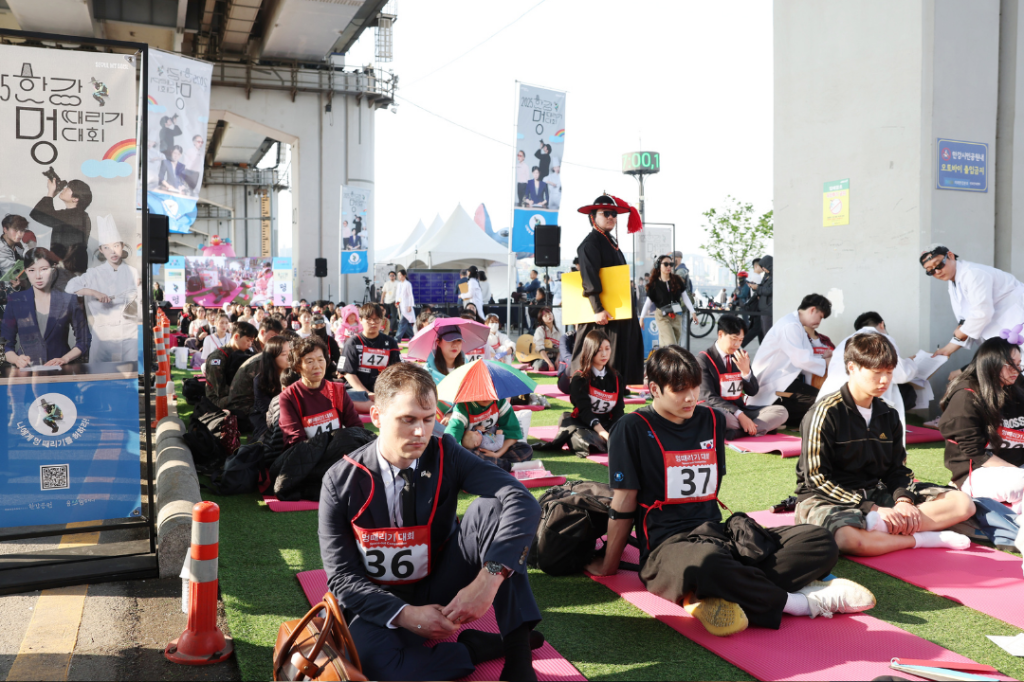
The concept is simple: participants gather in a public space, often sitting on yoga mats, and compete against each other by doing nothing for 90 minutes. Competitors are free to move around and change positions but be warned: although lying on your back is comfortable, it could lead to falling asleep, which warrants immediate disqualification. So does playing music, talking, or laughing.
If players need to use the bathroom, they can raise a colored card to be excused. Judges roam around, carefully monitoring the contestants. At the end of the 90 minutes, the judges choose the ten competitors who seemed the most peaceful. Of those ten, the person whose heart rate graph shows the steadiest downward trend is crowned the winner.
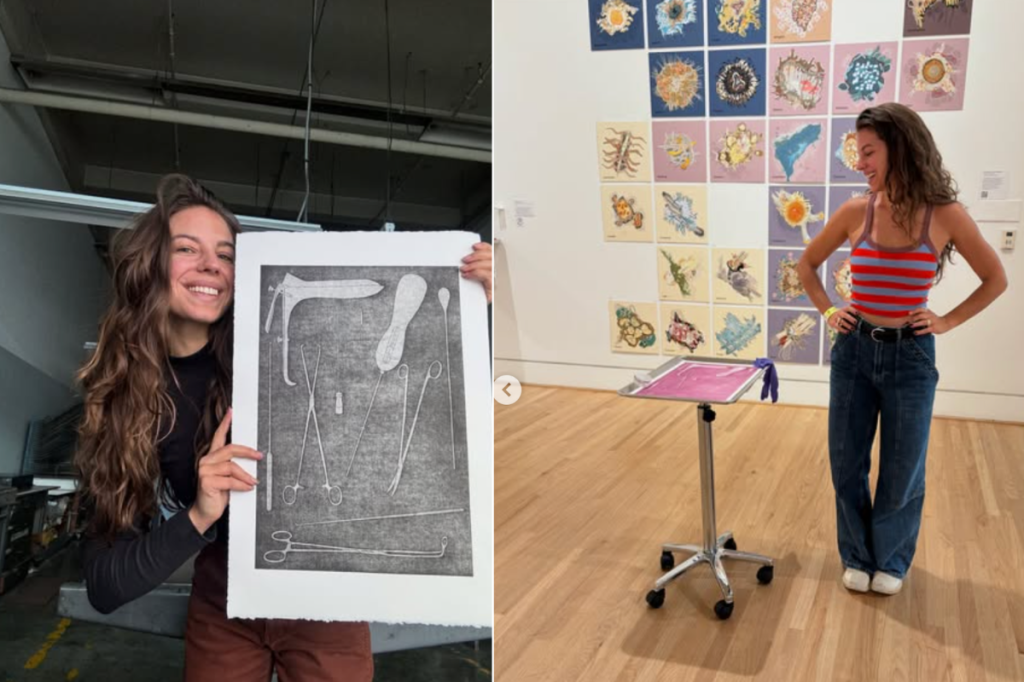
“It’s the quietest competition in the world,” says the founder of South Korea’s space-out competition, a visual artist who goes by the pseudonym, Woopsyang. In 2014, she was inspired to create the competition after suffering severe burnout, telling CNN, “I wondered why I was so anxious about doing nothing. So, I created a competition thinking that it would be nice to pause all together at the same place at the same time.”
But what began as a quirky art project quickly evolved into something much more profound, with space-out competitions in Asia now regularly attracting thousands of applicants, although only 50-80 people are often selected to participate.
From burnout to breakthrough
Woopsyang’s origin story is, sadly, not unique for her home country of South Korea, where a grueling work culture persists. Known as “pali pali” (빨리빨리), or “hurry hurry” culture, citizens feel pressured to approach life through a turbo-charged lens. Those who succeed, by burning their candle from both ends, simultaneously wear this burn-out badge with honor while deeply resenting the nation’s ethos—one that rewards speed, efficiency, and rapid progress above all else.
There are other ways that South Koreans are fighting back against the burnout, like with the rising “sohwakhaeng” movement, which roughly translates to “small but certain happiness.” South Koreans have embraced this philosophy in droves, realizing that delight can exist in any moment: in a freshly baked loaf of bread, neatly folded clothing, or the smell of freshly cut grass. By consciously training ourselves to be aware of life’s smallest beauties, we begin to see the bigger picture and excavate ourselves from the day-to-day toils that seem to drag us down.
“Especially here in Korea, it’s such a competitive country, where people think that if they do nothing that they are a little behind,” says 35-year-old freelance announcer Kwon So-a, who won the 2024 Space-Out Competition in Seoul. “I think everyone has to have their own pace and sometimes just slow down.”
What started in Seoul is now gaining traction across Asia and beyond, with space-out competitions spreading to cities including Beijing, Rotterdam, Taipei, Hong Kong and Tokyo, reports CNN.
The science behind spacing out
“Doing nothing is good for your mental health,” explains Kwon So-a. “Your body has to relax. But your body can only relax when your brain relaxes.”
This mentality, which lead to So-a’s win, exemplifies the principle of ART, or Attention Restoration Theory, which was developed primarily by psychologists Rachel and Stephen Kaplan. The central idea here is that directed attention—the kind channeled towards work, phones, and screens; most of what fills our modern days—fatigues the brain and has “far-reaching consequences.” It’s a radical way of looking at the human attention span: that directed attention, the kind we use to focus on tasks, is a finite resource that gets depleted, minute by minute, second by second.
To combat this, ART argues that natural environments—such as National Parks—and other activities that engage in “soft fascination” allow our directed attention to replenish. It might sound vague, but that’s because it’s meant to. Researchers describe soft fascination as “attention that is less demanding on our mental capacity,” conducted in environments where reflection and daydreaming can run wild. Dr. Kaplan specifically names locations like sitting next to a stream or discovering a quiet place in the forest as places that “capture attention effortlessly,” as opposed to “hard fascination,” found in hyper-arousing video games, movies, or television. Soft fascination supports mental respite and replenishes our attention, rather than depletes it.
Which makes space-out competitions the perfect oases for soft fascination and attention restoration, as participants are allowed to sit quietly in their surroundings, disengaging from the constant distractions of modern life.

How to space out, no competition required
You don’t need to enter a space-out competition to reap the benefits of attention restoration therapy or simply doing nothing. And you definitely don’t need to do sit quietly for 90 minutes or monitor your heart rate. Here are a few simple ways to incorporate spacing out into your daily life:
- Schedule unstructured time: Scan your calendar and reserve a 15 to 30-minute block to just exist. You could walk to a local park and watch the clouds float by, or simply just stare out the window. The only goal here is to feel as unstimulated as possible.
- Remove distractions: Put your phone on silent, leave it in another room, and be intentional. This is your space-out time: treat it as sacred.
- Boredom is actually good for you: Although it seems like we’re always trying to escape it, try embracing boredom. During space-out moments, it might be tempting to throw yourself into mental planning or thinking about the past or future. Those things will always be there when you return. Gently allow these thoughts to pass.
- What’s your soft fascination? Finding what works for you is half the fun. Maybe it’s leaning back in your chair and noticing how your house plant catches the light, or sitting on a calm, chill corner of your block and listening as the birds sing through the trees.
- Remember: this is not a waste of time: Well, not in the traditional sense, anyway. “We feel like we’re wasting our time if we don’t do anything while others are keeping busy,” Woopsyang reminds us. “[But] you can waste time a little bit. You deserve it.”
One day, Woopsyang dreams of creating a “World Spacing Out Day,” where everyone on earth stops moving at the same time, just for a short while, she tells InsideHook. “Wouldn’t it be the world’s largest, quietest festival?” In the meantime, we could all take a page out of Woopsyang’s book, and find ways to quietly engage in our own, mini space-out competitions. After reading this article, why not give it a try?