

Dad shares what happens when you give your child books instead of a smartphone
The key to fostering healthy habits in children is to be wholly present and reject the “pressures of convenience”
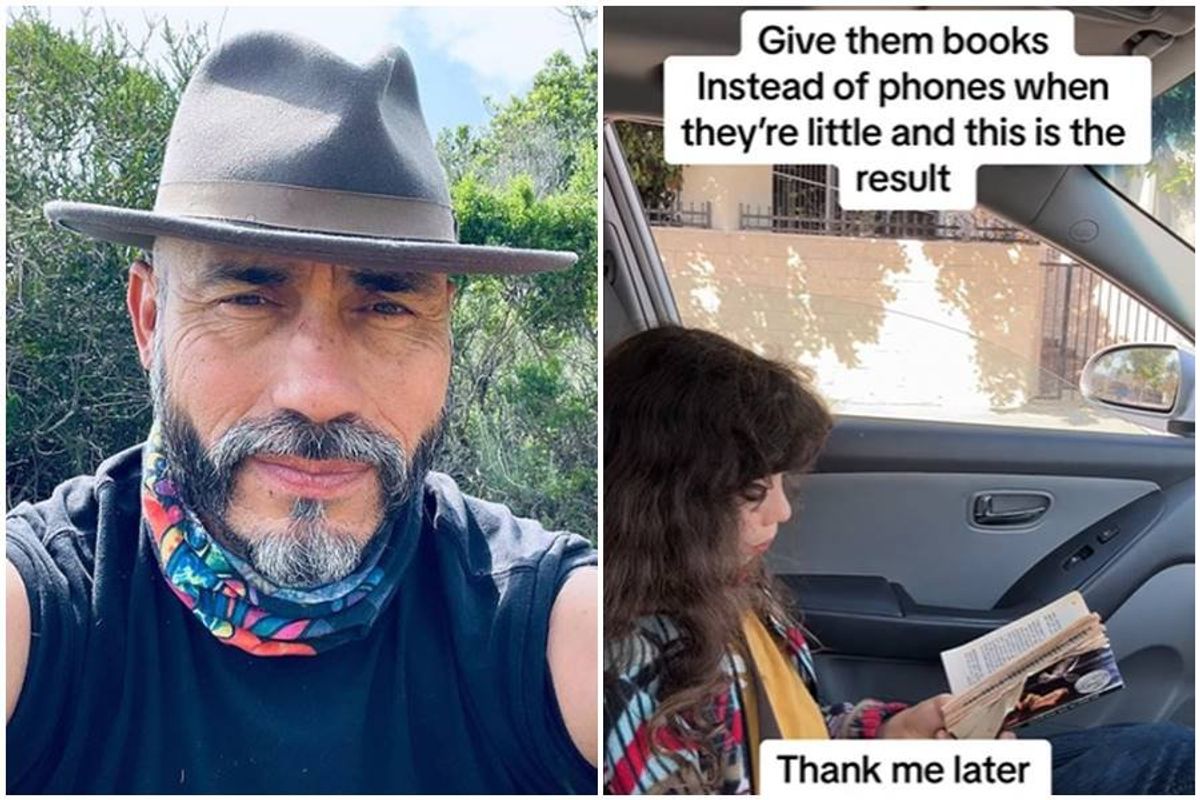
Armando Hart and his son, Raya.
One of the most pressing dilemmas for parents these days is how much screen time they should allow their children. Research published by the Mayo Clinic shows that excessive screen time can lead to obesity, disrupted sleep, behavioral issues, poor academic performance, exposure to violence and a significant reduction in playtime.
The American Academy of Pediatrics recommends limiting screen time to 1 to 2 hours daily for children over 2. But American children spend far more time in front of screens than that and the situation is only worsening.
Before the pandemic, kids between the ages of 4 and 12 spent an average of 4.4 hours a day looking at screens, but since 2020, the average child’s daily screen time has increased by 1.75 hours.
A father in Long Beach, California, is getting some love for his TikTok video sharing what happens when you give your kid books instead of an iPhone. Armando Hart posted a video showing his 10-year-old son, Raya, reading a book in the back of a car and it’s been seen over 8 million times.
"Give them books instead of phones when they are little and this is the result," the caption reads. "Thank me later."
We’re so blessed with our son Raya. I think he’s read more books than I have.
@lifeinmotion08 We’re so blessed with our son Raya. I think he’s read more books than I have. #Books #Read #Fyp
Hart and his wife started reading to their son every night before bedtime, hoping to instill a love for books. "It was all about leading by example and creating a nurturing environment where reading was celebrated," Hart told Newsweek. These days, Raya is an avid reader who enjoys just about anything.
“My son likes novels, fiction, nonfiction, and realistic fiction,” Hart told Upworthy. “He also likes informative content, such as reading the almanac and other informative magazines. He loves to build, cook from recipes, and make art.”
For Hart, reading is all about creating a sense of balance in his son’s life.
“It's not about being against technology but about fostering a balanced approach that prioritizes meaningful experiences and hands-on learning,” he told Upworthy. “By instilling a love for reading, creativity, and exploration early on, we're equipping Raya with the skills and mindset he needs to thrive in an ever-changing world.”
Hart believes that the screen time discussion isn’t just about technology but a trend that goes deeper. “It speaks to a broader societal problem: our youth's lack of self-esteem, confidence and fundamental values. While screen time may exacerbate these issues, it is not the sole cause,” he told Upworthy.
“In contrast, physical activity, such as exercise, promotes joy and well-being. Spending hours scrolling on a phone can detract from genuine moments of happiness and fulfillment,” he continued. “Therefore, we must address the deeper underlying issues affecting our youth's mental and emotional health rather than solely attributing them to screen time.”
Hart believes the key to fostering healthy habits in children is to be wholly present and reject the “pressures of convenience” that encourage parental complacency.
“We prioritize quality time together, whether exploring nature, sharing meals with the best available foods, or engaging in meaningful conversations. In today's rapidly advancing technological world, staying grounded in our humanity and embodying integrity in everything we do is crucial,” he continued. “This means staying connected to our authentic selves and teaching our son the importance of honesty, kindness, and respect.”
This article originally appeared last year.
- Billionaire Bill gates explains the safest age to give your kid a ... ›
- Gen Z grew up in a screen-saturated world. They're vowing to raise their kids differently. ›
- ‘Really concerning’: Researcher reveals how she instantly knows if a child is an 'iPad kid' ›
- Teacher explains why he 'doesn't like' 'Rainbow Fish' - Upworthy ›
- Someone finally wrote a novel about father-daughter relationships and it's a must-read. - Upworthy ›
- Billionaire Bill gates explains the safest age to give your kid a smartphone - Upworthy ›
- Sweet note from a boy to his mom found in a book from 1948 - Upworthy ›
- Parents share the children's books they bought that turned out to be absolute trash - Upworthy ›
- Teacher connects childhood play with high school performance - Upworthy ›
- 12 books people say changed their life - Upworthy ›
- 'Invisible' smartphone takes TikTok by storm - Upworthy ›

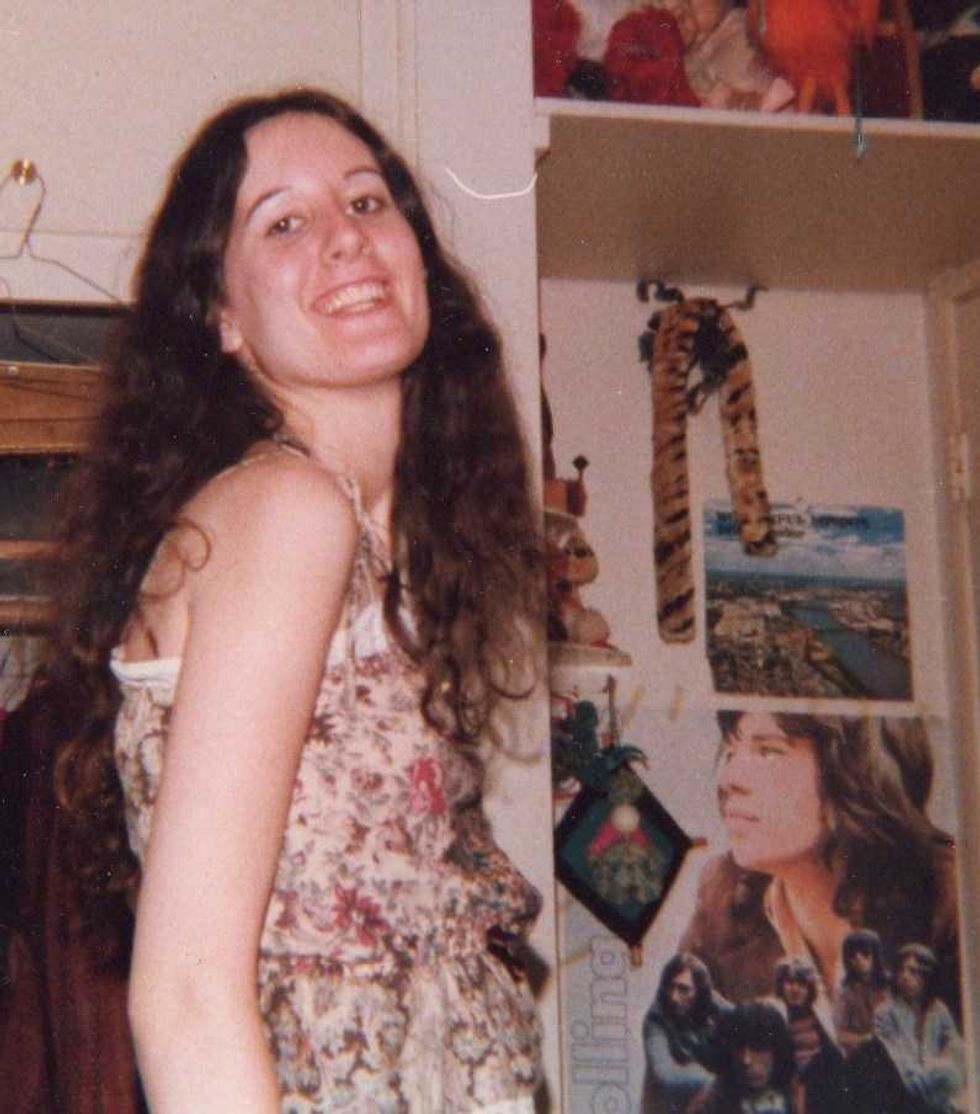 A Generation Jones teenager poses in her room.Image via Wikmedia Commons
 An office kitchen.via
  An angry man eating spaghetti.via
 At least it wasn't Bubbles.
  You just know there's a person named Whiskey out there getting a kick out of this.


An Irish woman went to the doctor for a routine eye exam. She left with bright neon green eyes.
It's not easy seeing green.
Did she get superpowers?
Going to the eye doctor can be a hassle and a pain. It's not just the routine issues and inconveniences that come along when making a doctor appointment, but sometimes the various devices being used to check your eyes' health feel invasive and uncomfortable. But at least at the end of the appointment, most of us don't look like we're turning into The Incredible Hulk. That wasn't the case for one Irish woman.
Photographer Margerita B. Wargola was just going in for a routine eye exam at the hospital but ended up leaving with her eyes a shocking, bright neon green.
At the doctor's office, the nurse practitioner was prepping Wargola for a test with a machine that Wargola had experienced before. Before the test started, Wargola presumed the nurse had dropped some saline into her eyes, as they were feeling dry. After she blinked, everything went yellow.
Wargola and the nurse initially panicked. Neither knew what was going on as Wargola suddenly had yellow vision and radioactive-looking green eyes. After the initial shock, both realized the issue: the nurse forgot to ask Wargola to remove her contact lenses before putting contrast drops in her eyes for the exam. Wargola and the nurse quickly removed the lenses from her eyes and washed them thoroughly with saline. Fortunately, Wargola's eyes were unharmed. Unfortunately, her contacts were permanently stained and she didn't bring a spare pair.
- YouTube youtube.com
Since she has poor vision, Wargola was forced to drive herself home after the eye exam wearing the neon-green contact lenses that make her look like a member of the Green Lantern Corps. She couldn't help but laugh at her predicament and recorded a video explaining it all on social media. Since then, her video has sparked a couple Reddit threads and collected a bunch of comments on Instagram:
“But the REAL question is: do you now have X-Ray vision?”
“You can just say you're a superhero.”
“I would make a few stops on the way home just to freak some people out!”
“I would have lived it up! Grab a coffee, do grocery shopping, walk around a shopping center.”
“This one would pair well with that girl who ate something with turmeric with her invisalign on and walked around Paris smiling at people with seemingly BRIGHT YELLOW TEETH.”
“I would save those for fancy special occasions! WOW!”
“Every time I'd stop I'd turn slowly and stare at the person in the car next to me.”
“Keep them. Tell people what to do. They’ll do your bidding.”
In a follow-up Instagram video, Wargola showed her followers that she was safe at home with normal eyes, showing that the damaged contact lenses were so stained that they turned the saline solution in her contacts case into a bright Gatorade yellow. She wasn't mad at the nurse and, in fact, plans on keeping the lenses to wear on St. Patrick's Day or some other special occasion.
While no harm was done and a good laugh was had, it's still best for doctors, nurses, and patients alike to double-check and ask or tell if contact lenses are being worn before each eye test. If not, there might be more than ultra-green eyes to worry about.