
Have you ever found yourself in a conversation you don’t really want to be in anymore? Maybe the conversation’s gone on too long or the person has you cornered or you just genuinely don’t have time to keep talking with them?
For some people, figuring out how to end a conversation without being rude or making it awkward is a challenge. Social etiquette is not always intuitive, and while some seem to to effortlessly navigate all kinds of social situations, many of us struggle with certain aspects of socializing. Most people might assume that starting a conversation is the hardest thing, but ending one can be equally or more challenging. You can’t just suddenly say, “Okay, bye,” without warning, but that transition between conversing and leaving doesn’t always happen naturally.
Thankfully, communication coach Alexander Lyon has offered 7 clear ways to wrap up a conversation politely to help those who need a little help.
Here’s what he suggests:
1. End on your turn
Every conversation is a back-and-forth, with people taking turns talking. Interrupting the other person to say you need to go can come across as rude, so make sure you plan to end the conversation when you’re already talking. “All the rest of the tips flow from this concept,” Lyon says.
2. State a time limit
This can come at any point in the conversation. If you’re talking to someone you know might drag it out, it might be good to place it at the beginning of the conversation: “Hey Steve, I’ve got about five minutes. What’s up?” That way they know the conversation time is going to be limited from the get go. You can also drop the time when you’re ready to wrap up: “I only have one minute before I have to go, so let me finish with this thought.” That way the person knows the conversation is coming to a close.
3. Start packing up
Those who feel awkward about ending a conversation might feel like it’s awkward to start gathering your things before the conversation is concluded. But it’s a normal thing to signal through behavior, and packing up signals to the other person that you’re ready to end the conversation.
“You start putting things in your bag. You get your keys out. You put your coat on. This shows them oh something’s changing here. Alex is about to leave.” Lyon says these are non-verbal actions are called leave-taking behaviors. “This is what we all do naturally when we’re about to go and so these cues are really known and powerful to most people. They will pick up on them,” he says.
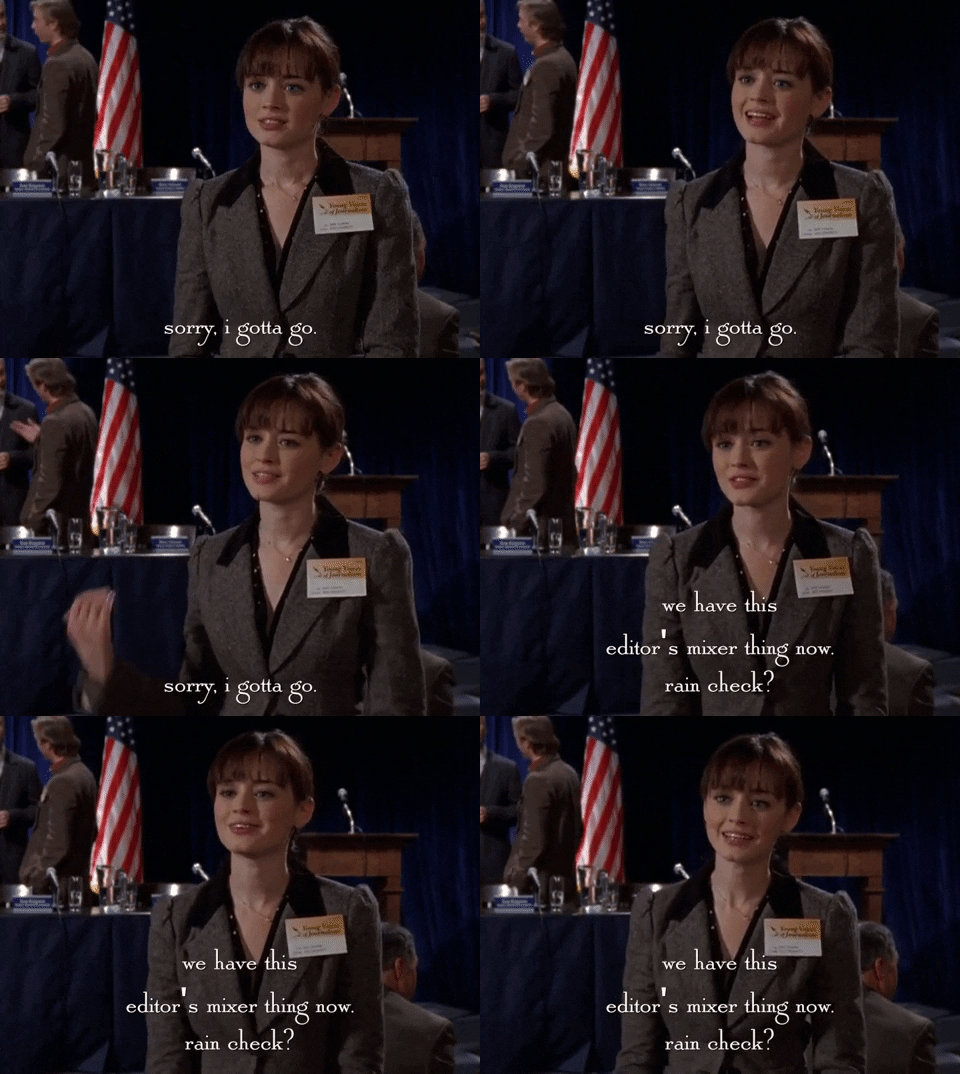
4. Say you’ve gotta go
This might seem obvious, but Lyon assures us that that’s exactly why it works. “You have to use phrases that they’re used to hearing like ‘I’ve gotta run,’ ‘I’ve got to get going,’” he says. “Those are phrases that signal, once again, that you’re going to go. A lot of times people even feel like just saying that feels rude. But I assure you these are just common phrases that, wrapped into the other tips, they’re going to understand that this means you’re going to go.”
5. Tell them what’s next
Share what you’re going to be doing after the conversation. “If you say things like, ‘I have a meeting to go to’ or ‘I have some projects that I’ve got to get back on’ or ‘I’m a little behind on some work,’ then they’ll know that, ‘Oh he’s not just abandoning the conversation because he doesn’t like me. He’s going because he has something else to do,’” explains Lyon. You don’t have to be super specific, just clear and concise.
6. Insert polite pleasantries
This is where you say things like, “It was so great catching up!” or “I hope we get to chat again soon,” or “I’m so happy we got a chance to talk,” to indicate that it’s time to move on but you’ve enjoyed the conversation. Lyon shares that these kinds of statements signal to the person that the conversation is coming to a close and are such a normal part of interactions that the person will understand what they mean.
7. Apologize and repeat any of the above, if necessary
If the person is really holding on and not taking the hint, say something like, “So sorry, I really have to get going, but it was so lovely to chat with you,” or something similar. “A lot of times people need that little extra reinforcement toward the end,” Lyon says. He says you don’t want to drag the apology or make a big deal out of it—just a quick, “Sorry, but I gotta go,” or “I apologize, but I’m running late,” will do. “It doesn’t mean you’ve actually done something wrong that you need to apologize for. It’s just a way once again to signal that you’re trying to be respectful to that person,” Lyon explains.
Even if some of these tips feel awkward or rude, Lyon assures us that they aren’t. People with social anxieties can often overthink interactions, so having such reassurances can be helpful. Courtesy in conversation is one of the ways we maintain social connections, so learning how to politely end a conversation is a valuable skill.
You can follow Communication Coach Alexander Lyon on YouTube.