Concerning study details how perfectionism affects college students
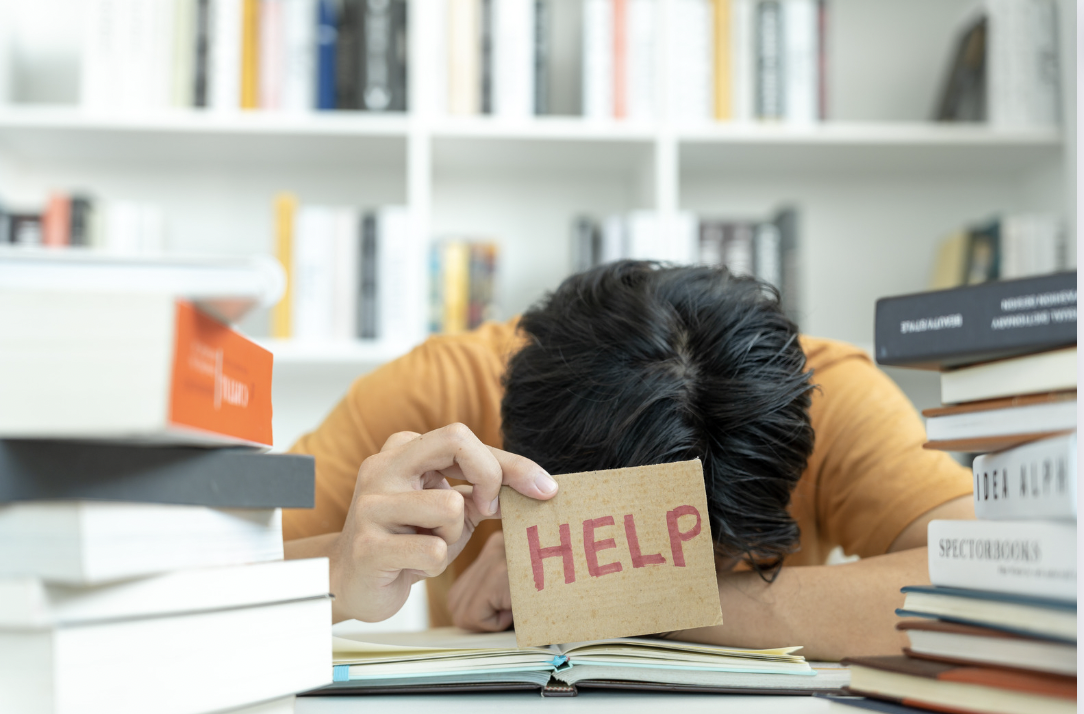
For years, we've told our kids that they have to be perfect to succeed. Turns out, they might have been listening.

Chasing perfection leads to nowhere but exhaustion
For years, we've told our kids that they have to be perfect to succeed. Turns out, they might have been listening.
If you feel anxiety about slipping up — like, the tiniest mistake is irrefutable evidence that you're secretly a failure — you might not be alone.
A study suggests that, compared to young people 30 years ago, more college students are, or feel expected to be, perfectionists — and that might be a problem.
Two scientists from the United Kingdom analyzed personality tests from over 41,000 American, Canadian, and British college students, dating from 2016 back to the late 1980s, comparing three different kinds of perfectionism and how much they've gone up or down over time.Overall, the data showed:
- A 33% increase in young people feeling judged by society for not being perfect (for example, "My parents will be mad if I get less than an A").
- A 16% increase in young people judging others ("I have no patience for my partner's mistakes").
- And a 10% increase in self-judgment ("I am upset that I didn't get 100% on that test"). Americans seemed especially self-judgey.
This incessant drive to be perfect might be stressing us out to a sickening degree.
Being a perfectionist may seem OK at first. It seems like nearly every single job posting these days specifically asks for someone detail-oriented. ("I'm a perfectionist" is a go-to answer to the classic biggest-weakness interview question for a reason.)
Yet perfectionism has been linked to mental health problems like depression and anxiety, which young people seem to be especially vulnerable to these days.
One problem appears to be how society defines — and demands — success.
The authors weren't able to test the exact cause for this, but they have some ideas. One contributing factor might be our increasingly success-obsessed society. Since the '80s, we've taken the idea of meritocracy and mythologized it.
"Meritocracy places a strong need for young people to strive, perform and achieve in modern life," said author Dr. Thomas Curran in a press release. "Young people are responding by reporting increasingly unrealistic educational and professional expectations for themselves.”
Other possible causes might be parents demanding more out of their children than they did in the 1980s and/or the panopticon of social media.
If perfectionism really is both problematic and on the rise, it's not going to be an easy problem to solve. But there are potential solutions.
Curran and his co-author, Dr. Andrew Hill, did not address specific solutions in the current paper, but, when asked, Curran said:
"We (my group) typically advocate balanced working lives, regular breaks from the social evaluation of social media, a focus [on] one’s own accomplishments (not others'), and depressurized environments that do not hold excessive expectations or perfection as criteria for success."
(By the way, if you need help with this, psychologist Tamar Chansky wrote a list eight personal strategies over at HuffPost. Alternatively, this might be something to unpack with a therapist.)

8 Strategies For Making A Better Life
In addition, Curran suggested that it might be time for schools, universities, and other organizations to teach the importance of compassion over competition. He and his co-author have previously praised Google's program of rewarding both successes and failures.
So while it might be admirable to aim for that gold star, it's important to remember that mistakes happen. It's OK not to be perfect.


A Generation Jones teenager poses in her room.Image via Wikmedia Commons
An office kitchen.via
An angry man eating spaghetti.via 


An Irish woman went to the doctor for a routine eye exam. She left with bright neon green eyes.
It's not easy seeing green.
Did she get superpowers?
Going to the eye doctor can be a hassle and a pain. It's not just the routine issues and inconveniences that come along when making a doctor appointment, but sometimes the various devices being used to check your eyes' health feel invasive and uncomfortable. But at least at the end of the appointment, most of us don't look like we're turning into The Incredible Hulk. That wasn't the case for one Irish woman.
Photographer Margerita B. Wargola was just going in for a routine eye exam at the hospital but ended up leaving with her eyes a shocking, bright neon green.
At the doctor's office, the nurse practitioner was prepping Wargola for a test with a machine that Wargola had experienced before. Before the test started, Wargola presumed the nurse had dropped some saline into her eyes, as they were feeling dry. After she blinked, everything went yellow.
Wargola and the nurse initially panicked. Neither knew what was going on as Wargola suddenly had yellow vision and radioactive-looking green eyes. After the initial shock, both realized the issue: the nurse forgot to ask Wargola to remove her contact lenses before putting contrast drops in her eyes for the exam. Wargola and the nurse quickly removed the lenses from her eyes and washed them thoroughly with saline. Fortunately, Wargola's eyes were unharmed. Unfortunately, her contacts were permanently stained and she didn't bring a spare pair.
- YouTube youtube.com
Since she has poor vision, Wargola was forced to drive herself home after the eye exam wearing the neon-green contact lenses that make her look like a member of the Green Lantern Corps. She couldn't help but laugh at her predicament and recorded a video explaining it all on social media. Since then, her video has sparked a couple Reddit threads and collected a bunch of comments on Instagram:
“But the REAL question is: do you now have X-Ray vision?”
“You can just say you're a superhero.”
“I would make a few stops on the way home just to freak some people out!”
“I would have lived it up! Grab a coffee, do grocery shopping, walk around a shopping center.”
“This one would pair well with that girl who ate something with turmeric with her invisalign on and walked around Paris smiling at people with seemingly BRIGHT YELLOW TEETH.”
“I would save those for fancy special occasions! WOW!”
“Every time I'd stop I'd turn slowly and stare at the person in the car next to me.”
“Keep them. Tell people what to do. They’ll do your bidding.”
In a follow-up Instagram video, Wargola showed her followers that she was safe at home with normal eyes, showing that the damaged contact lenses were so stained that they turned the saline solution in her contacts case into a bright Gatorade yellow. She wasn't mad at the nurse and, in fact, plans on keeping the lenses to wear on St. Patrick's Day or some other special occasion.
While no harm was done and a good laugh was had, it's still best for doctors, nurses, and patients alike to double-check and ask or tell if contact lenses are being worn before each eye test. If not, there might be more than ultra-green eyes to worry about.