There’s been a lot of talk about “kids these days.” The Gen Z and Gen Alpha kids that supposedly lack respect, critical thinking skills, motivation, and basic knowledge. Reports are numerous of teachers getting frustrated, burnt out, and ultimately quitting the profession they’d dedicated their lives to.
Anyone who has tried to wrangle a classroom of kids knows that it’s a formidable feat at any age and in any generation. Having a group of learners who are engaged, attentive and reasonably courteous is the goal, but managing diverse personalities from various backgrounds and home environments and who have different standards and expectations of behavior can be tricky.
Some teachers take the old-school “law and order” approach, laying out a list of classroom rules everyone is supposed to follow. Those who don’t fall in line face consequences of some sort. Others still insist that this new generation of kids is not a lost cause; they just need a different approach.

High school Language Arts teacher Monte Syrie takes a different tack—one that sees students as valued citizens of a community instead of young people to be controlled.
Syrie, who has been teaching for more than two decades, says he’s always striving to make the school year better than the last one. That means regularly reflecting and reevaluating how he communicates with his students, which is how he came up with the radical idea to get rid of all of his classroom’s rules.
That’s right. A classroom with no rules!
But that’s not to say Syrie didn’t replace the rules with anything. What he did was reframe them as “Policies and Procedures” to tossing out the concept of “rules” altogether.
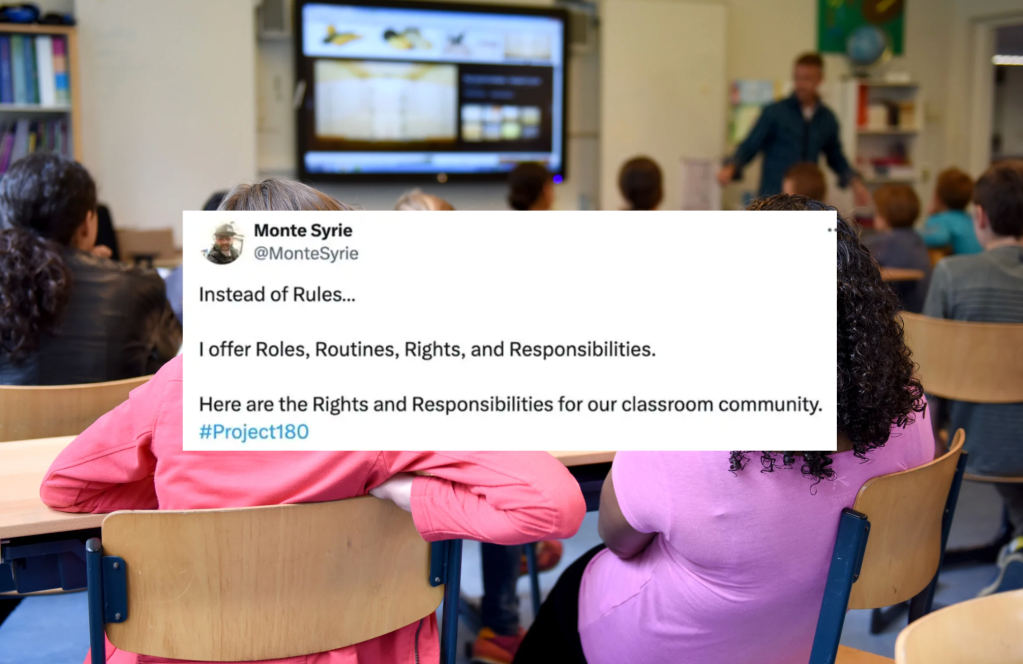
Now he offers 4 R’s—Roles, Routines, Rights and Responsibilities—as a framework for classroom management.
“I think teachers are framers. We frame the room. We frame the work. We frame the day. We frame the year. We frame the entire experience–whether we want to or not,” Syrie shares. “The kids look to us for the frame. What we do–or don’t do–decides the day. And, man oh man, is there pressure in that. But, there’s also possibility–powerful possibility.”
Syrie explains in his book about teaching that kids respond differently when teachers frame things differently, and being greeted with classroom rules on day one evokes a specific response in kids.
“We seem to believe if we don’t get rules in front of the kids immediately, we will never get the kids where we want them,” he writes. “I don’t believe in this anymore. I did, I suppose, at one point, but at this point, I believed there was a better way to ‘get kids.’”
Syrie decided to reframe his classroom policies as as Roles that let kids see themselves through various lenses, Routines that tell them what to expect, Rights that give them individual autonomy and Responsibilities that help them contribute to a shared community.
So what does that look like?
Roles in Syrie’s classroom include the roles of Yourself (the most important role, he says), Valued Community Member, Reader, Writer, Mistake Maker, and Reflector. He explains to the students what each of these roles entails and why it’s important for kids to take them on.
Routines include daily and weekly activities such as starting class with a community check-in called Smiles and Frowns and ending class with Journey Journaling. Each day of the week also has a specific focus, such as writing, reading or grammar.
Rights include things like, “I have the right to feel safe,” “I have the right to learn,” and “I have the right to ask as many questions as l want.” Syrie also gives students the right to eat and drink in class and the right to make mistakes without fear of penalty. He gives them a little more leeway than other teachers might, and with it, more trust.
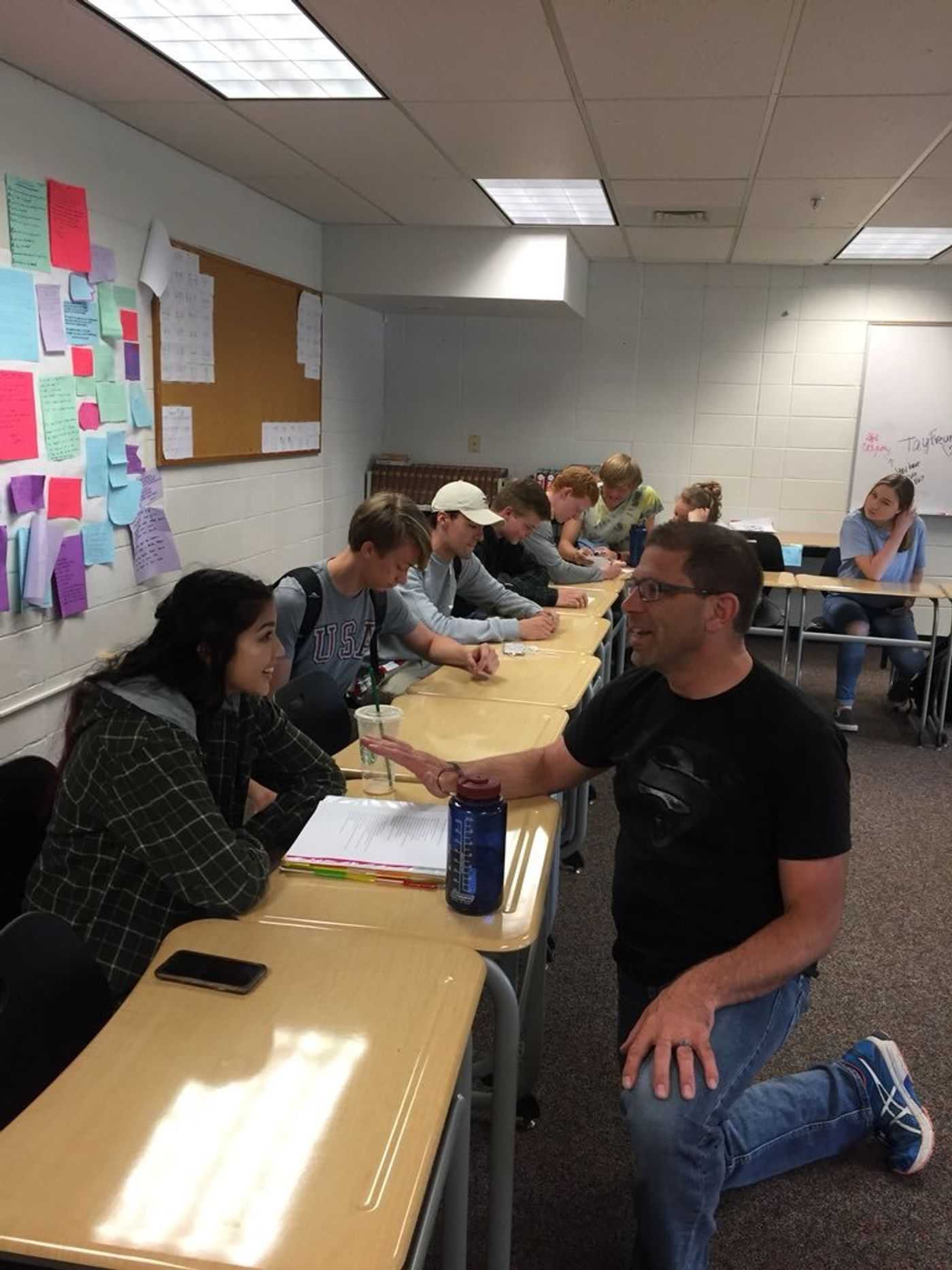
As for Responsibilities, students have a responsibility to get to class on time, know and honor the class routines, self-regulate use of electronic devices in the classroom, be a great listener, self-regulate leaving the room, take ownership of their learning, and be sensitive and respectful of others’ viewpoints, among other things. Students are expected to do their best to fulfill these responsibilities and to handle any breaches (such as being late to class) with courtesy and minimal disruption to the rest of the class. If they are struggling with any of these responsibilities, interventions include reminder(s), conversation(s), parent contact, and as a last and unlikely resort, office referral.
The beauty of Syrie’s four R’s is that they demonstrate a sense of trust in students right off the bat, helping them see themselves both as responsible individuals and as valued parts of a communal whole.
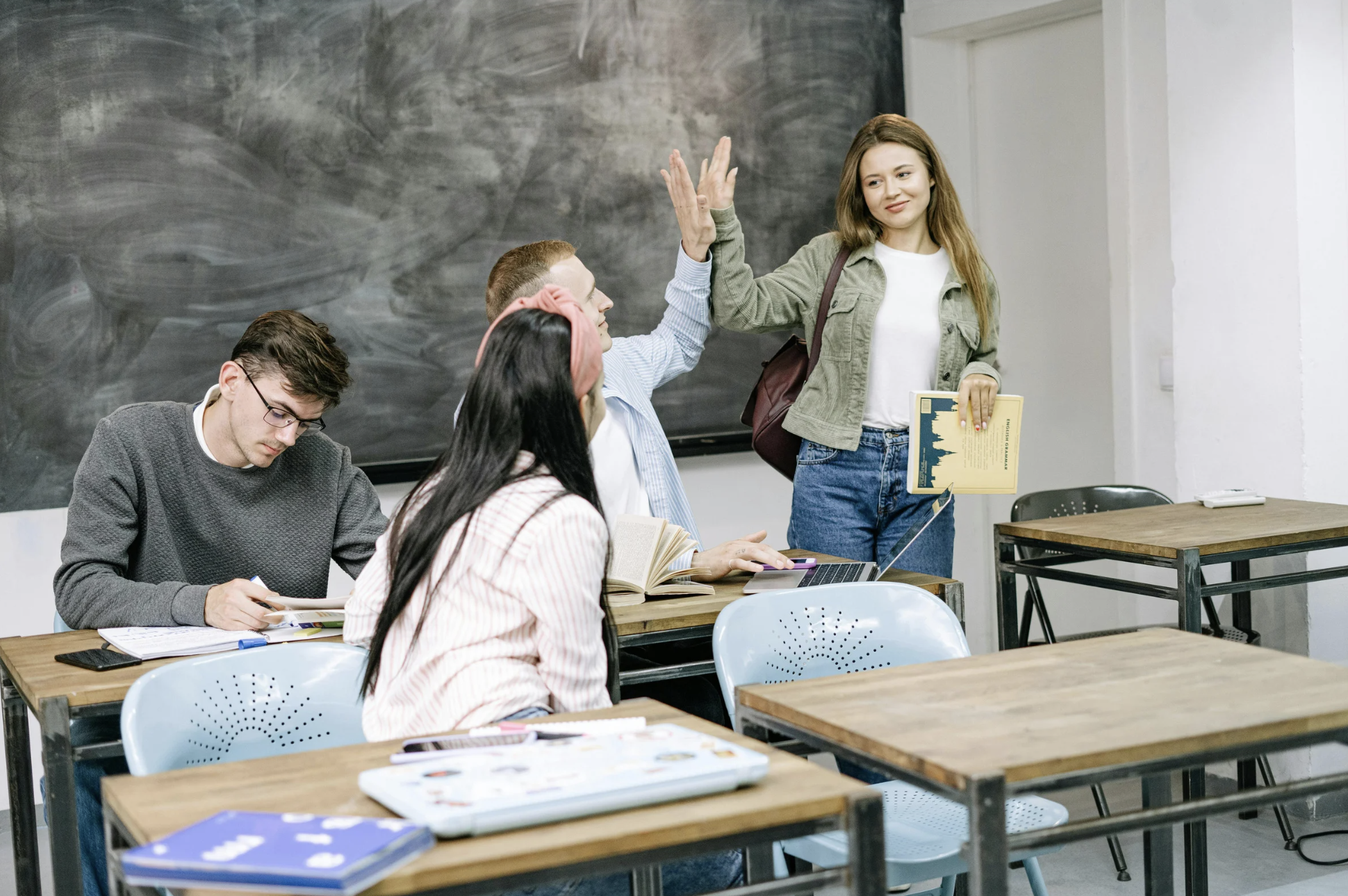
When people feel trusted and valued and are empowered by a clear balance of rights and responsibilities, most tend to rise to the occasion—even when they’re in high school. That’s not to say that this framing eliminates all classroom management issues, but it’s a framework that encourages character development from within the students rather than exerting control from the top down. They’ll be able to take this framing through their whole educational career and beyond.
A fellow educator wrote on X, “Love this in so many ways! In these times, this answers ‘how can we help learners understand the principles of a democracy?’” Imagine if we all reflected more on our roles, routines, rights and responsibilities as citizens rather than just memorizing the laws we are obliged to follow. Perhaps Mr. Syrie’s rethinking and reframing of the educational experience can help us all consider a new framing for our own lives as individuals and community members as well.
Today’s students are different from the ones that came before them. They openly struggle with mental health and all the negative side effects of growing up with cell phones, social media, and tons of screentime. Some have also lost faith in the traditional education system, and who could blame them in a world where working hard in school and going into massive debt to go to college still won’t guarantee them a comfortable shot at the “American Dream”?
Syrie believes the answer isn’t dropping the hammer on his so-called “lazy students,” but empowering them through a unique approach to running the classroom. So far, the results have spoken for themselves.
You can follow Monte Syrie on X and find his book, “better: A Teacher’s Journey: Project 180 Book One,” here.
This article originally appeared last year.