


Emily E. Smith is no ordinary teacher.
Fifth-grade teacher Emily E. Smith is not your ordinary teacher. She founded The Hive Society — a classroom that's all about inspiring children to learn more about their world ... and themselves — by interacting with literature and current events. Students watch TED talks, read Rolling Stone, and analyze infographics.
She even has a long-distance running club to encourage students to take care of their minds and bodies. Smith is such an awesome teacher, in fact, that she recently received the 2015 Donald H. Graves Award for Excellence in the Teaching of Writing.
It had always been her dream to work with children in urban areas, so when Smith started teaching, she hit the ground running. She had her students making podcasts, and they had in-depth discussions about their readings on a cozy carpet.
But in her acceptance speech for her award, she made it clear that it took a turning point in her career before she really got it:
"Things changed for me the day when, during a classroom discussion, one of my kids bluntly told me I "couldn't understand because I was a white lady." I had to agree with him. I sat there and tried to speak openly about how I could never fully understand and went home and cried, because my children knew about white privilege before I did. The closest I could ever come was empathy."
Smith knew that just acknowledging her white privilege wasn't enough.
She wanted to move beyond just empathy and find a way to take some real action that would make a difference for her students.
She kept the same innovative and engaging teaching methods, but she totally revamped her curriculum to include works by people who looked like her students. She also carved out more time to discuss issues that her students were facing, such as xenophobia and racism.
And that effort? Absolutely worth it.
As she said in her acceptance speech:
"We studied the works of Sandra Cisneros, Pam Munoz Ryan, and Gary Soto, with the intertwined Spanish language and Latino culture — so fluent and deep in the memories of my kids that I saw light in their eyes I had never seen before."
The changes Smith made in her classroom make a whole lot of sense. And they're easy enough for teachers everywhere to make:
— They studied the work of historical Latino figures, with some of the original Spanish language included. Many children of color are growing up in bilingual households. In 2007, 55.4 million Americans 5 years of age and older spoke a language other than English at home.
— They analyzed the vision of America that great writers of color sought to create. And her students realized that our country still isn't quite living up to its ideals. Despite progress toward racial equality with the end of laws that enforced slavery or segregation, we still have a long way to go. Black people still fare worse than white people when it comes to things like wealth, unfair arrests, and health.
— They read excerpts from contemporary writers of color, like Ta-Nehisi Coates who writes about race. Her students are reading and learning from a diverse group of writers. No small thing when they live in a society that overwhelmingly gives more attention to white male writers (and where the number of employees of color in the newspaper industry stagnates at a paltry 12%).
— They read about the Syrian crisis, and many students wrote about journeys across the border in their family history for class. The opportunity particularly struck one student; the assignment touched him so much that he cried. He never had a teacher honor the journey his family made. And he was proud of his heritage for the first time ever. "One child cried," Smith shared, "and told me he never had a teacher who honored the journey his family took to the United States. He told me he was not ashamed anymore, but instead proud of the sacrifice his parents made for him."
Opportunities like this will only increase as the number of children from immigrant families is steadily increasing. As of 2013, almost 17.4 million children under 18 have at least one immigrant parent.
Smith now identifies not just as an English teacher, but as a social justice teacher.

Teaching in a racially and ethnically diverse world.
Photo by John Pike. Used with permission.
Smith's successful shift in her teaching is an example for teachers everywhere, especially as our schools become increasingly ethnically and racially diverse. About 80% of American teachers are white. But as of last year, the majority of K-12 students in public schools are now children of color.
As America's demographics change, we need to work on creating work that reflects the experiences that our students relate to. And a more diverse curriculum isn't just important for students of color. It's vital for everyone.
As Smith put it, "We, the teachers, are responsible for instilling empathy and understanding in the hearts of all kids. We are responsible for the future of this country."
This article originally appeared nine years ago.
- Kindergarten teacher gently explaining racism to her students is a must-see for all kids ›
- This teacher is using inclusive coloring books to encourage acceptance in her classroom ›
- 9 simple ways to talk to kids about race that can help make the world kinder. ›
- 5th grader makes dad proud by getting suspended for the best reason - Upworthy ›
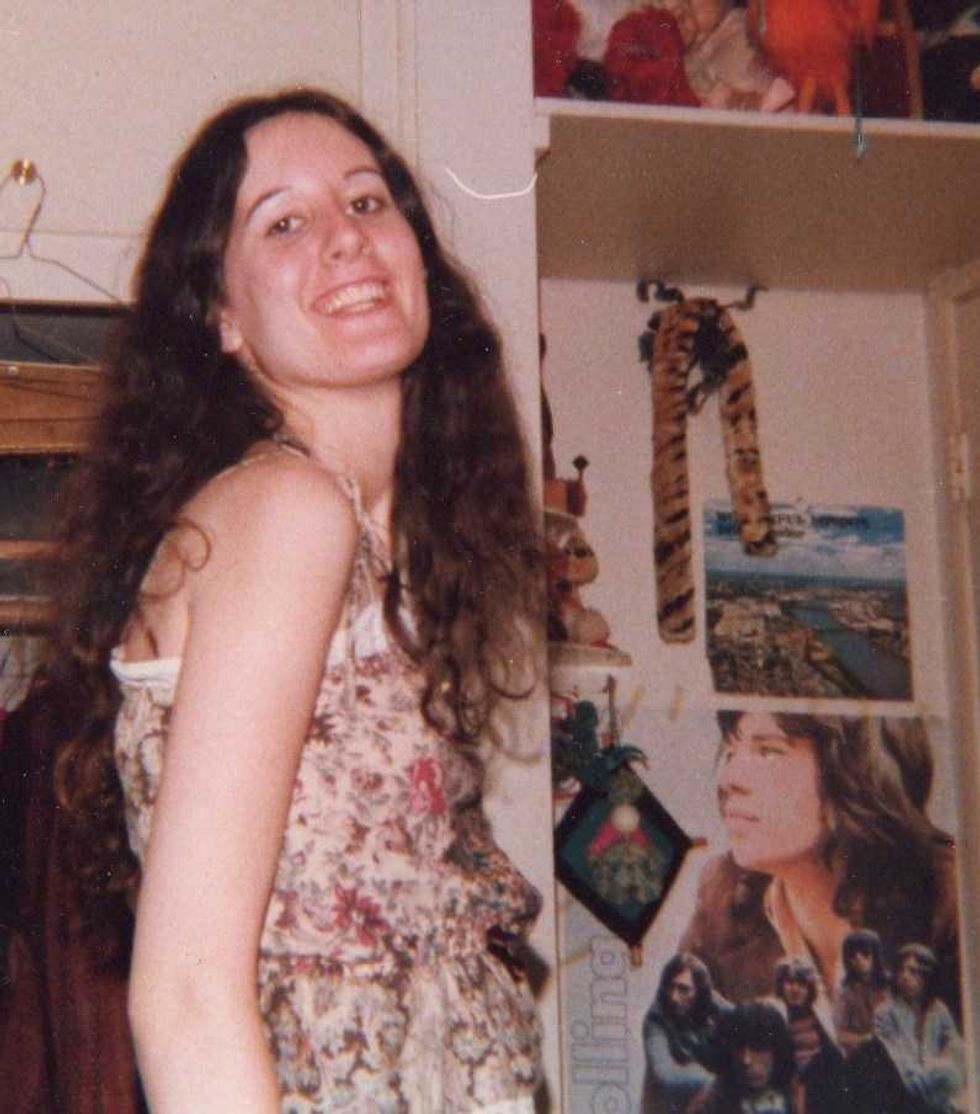 A Generation Jones teenager poses in her room.Image via Wikmedia Commons
 An office kitchen.via
  An angry man eating spaghetti.via



An Irish woman went to the doctor for a routine eye exam. She left with bright neon green eyes.
It's not easy seeing green.
Did she get superpowers?
Going to the eye doctor can be a hassle and a pain. It's not just the routine issues and inconveniences that come along when making a doctor appointment, but sometimes the various devices being used to check your eyes' health feel invasive and uncomfortable. But at least at the end of the appointment, most of us don't look like we're turning into The Incredible Hulk. That wasn't the case for one Irish woman.
Photographer Margerita B. Wargola was just going in for a routine eye exam at the hospital but ended up leaving with her eyes a shocking, bright neon green.
At the doctor's office, the nurse practitioner was prepping Wargola for a test with a machine that Wargola had experienced before. Before the test started, Wargola presumed the nurse had dropped some saline into her eyes, as they were feeling dry. After she blinked, everything went yellow.
Wargola and the nurse initially panicked. Neither knew what was going on as Wargola suddenly had yellow vision and radioactive-looking green eyes. After the initial shock, both realized the issue: the nurse forgot to ask Wargola to remove her contact lenses before putting contrast drops in her eyes for the exam. Wargola and the nurse quickly removed the lenses from her eyes and washed them thoroughly with saline. Fortunately, Wargola's eyes were unharmed. Unfortunately, her contacts were permanently stained and she didn't bring a spare pair.
- YouTube youtube.com
Since she has poor vision, Wargola was forced to drive herself home after the eye exam wearing the neon-green contact lenses that make her look like a member of the Green Lantern Corps. She couldn't help but laugh at her predicament and recorded a video explaining it all on social media. Since then, her video has sparked a couple Reddit threads and collected a bunch of comments on Instagram:
“But the REAL question is: do you now have X-Ray vision?”
“You can just say you're a superhero.”
“I would make a few stops on the way home just to freak some people out!”
“I would have lived it up! Grab a coffee, do grocery shopping, walk around a shopping center.”
“This one would pair well with that girl who ate something with turmeric with her invisalign on and walked around Paris smiling at people with seemingly BRIGHT YELLOW TEETH.”
“I would save those for fancy special occasions! WOW!”
“Every time I'd stop I'd turn slowly and stare at the person in the car next to me.”
“Keep them. Tell people what to do. They’ll do your bidding.”
In a follow-up Instagram video, Wargola showed her followers that she was safe at home with normal eyes, showing that the damaged contact lenses were so stained that they turned the saline solution in her contacts case into a bright Gatorade yellow. She wasn't mad at the nurse and, in fact, plans on keeping the lenses to wear on St. Patrick's Day or some other special occasion.
While no harm was done and a good laugh was had, it's still best for doctors, nurses, and patients alike to double-check and ask or tell if contact lenses are being worn before each eye test. If not, there might be more than ultra-green eyes to worry about.