+
upworthy
Science

Researchers dumped tons of coffee waste into a forest. This is what it looks like now.

30 dump truck loads and two years later, the forest looks totally different.

Researchers dumped tons of coffee waste into a forest. This is what it looks like now.

One of the biggest problems with coffee production is that it generates an incredible amount of waste. Once coffee beans are separated from cherries, about 45% of the entire biomass is discarded.

So for every pound of roasted coffee we enjoy, an equivalent amount of coffee pulp is discarded into massive landfills across the globe. That means that approximately 10 million tons of coffee pulp is discarded into the environment every year.


When disposed of improperly, the waste can cause serious damage soil and water sources.

However, a new study published in the British Ecological Society journal Ecological Solutions and Evidence has found that coffee pulp isn't just a nuisance to be discarded. It can have an incredibly positive impact on regrowing deforested areas of the planet.
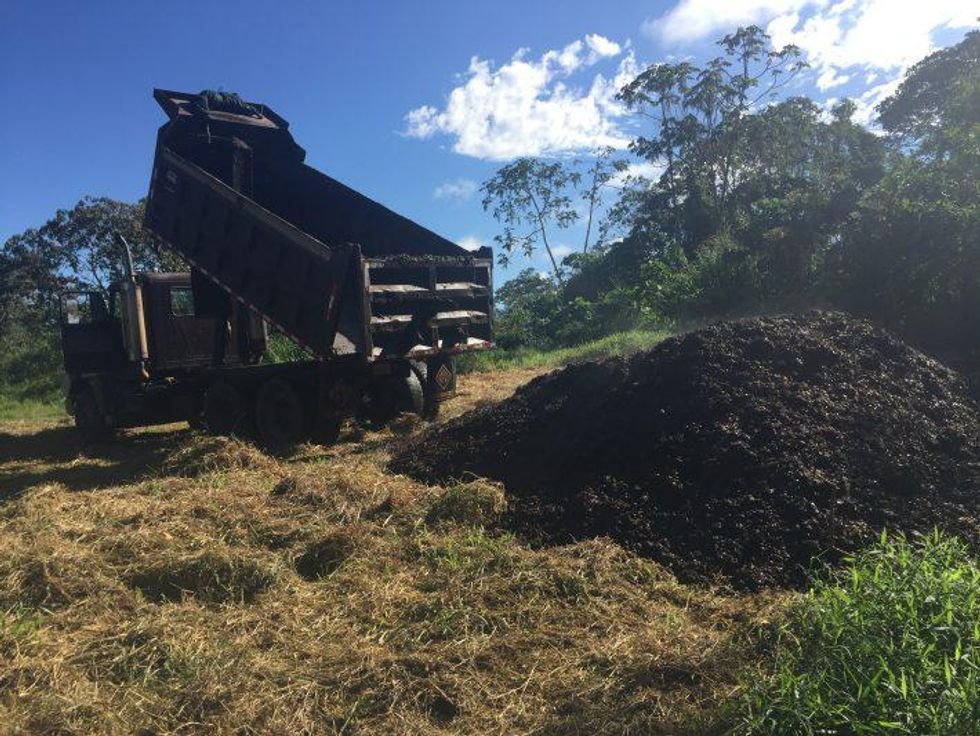
via British Ecological Society

In 2018, researchers from ETH-Zurich and the University of Hawaii spread 30 dump trucks worth of coffee pulp over a roughly 100' x 130' area of degraded land in Costa Rica. The experiment took place on a former coffee farm that underwent rapid deforestation in the 1950s.

The coffee pulp was spread three-feet thick over the entire area.

Another plot of land near the coffee pulp dump was left alone to act as a control for the experiment.

"The results were dramatic." Dr. Rebecca Cole, lead author of the study, said. "The area treated with a thick layer of coffee pulp turned into a small forest in only two years while the control plot remained dominated by non-native pasture grasses."

In just two years, the area treated with coffee pulp had an 80% canopy cover, compared to just 20% of the control area. So, the coffee-pulp-treated area grew four times more rapidly. Like a jolt of caffeine, it reinvigorated biological activity in the area.

The canopy was also four times taller than that of the control.
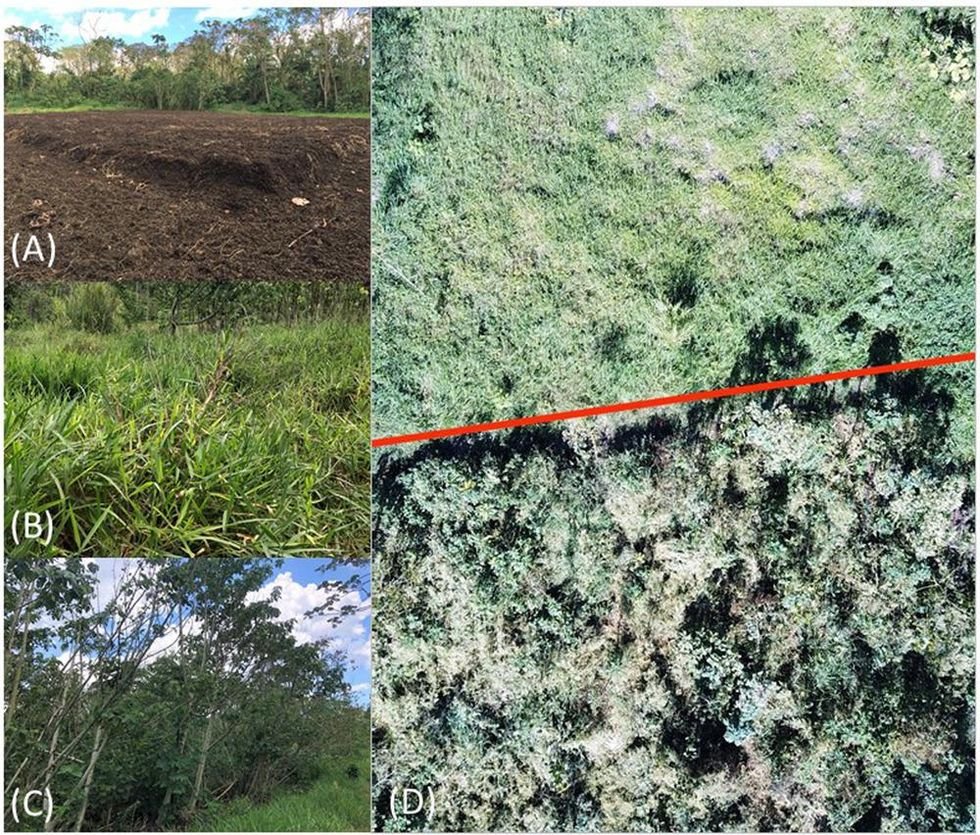
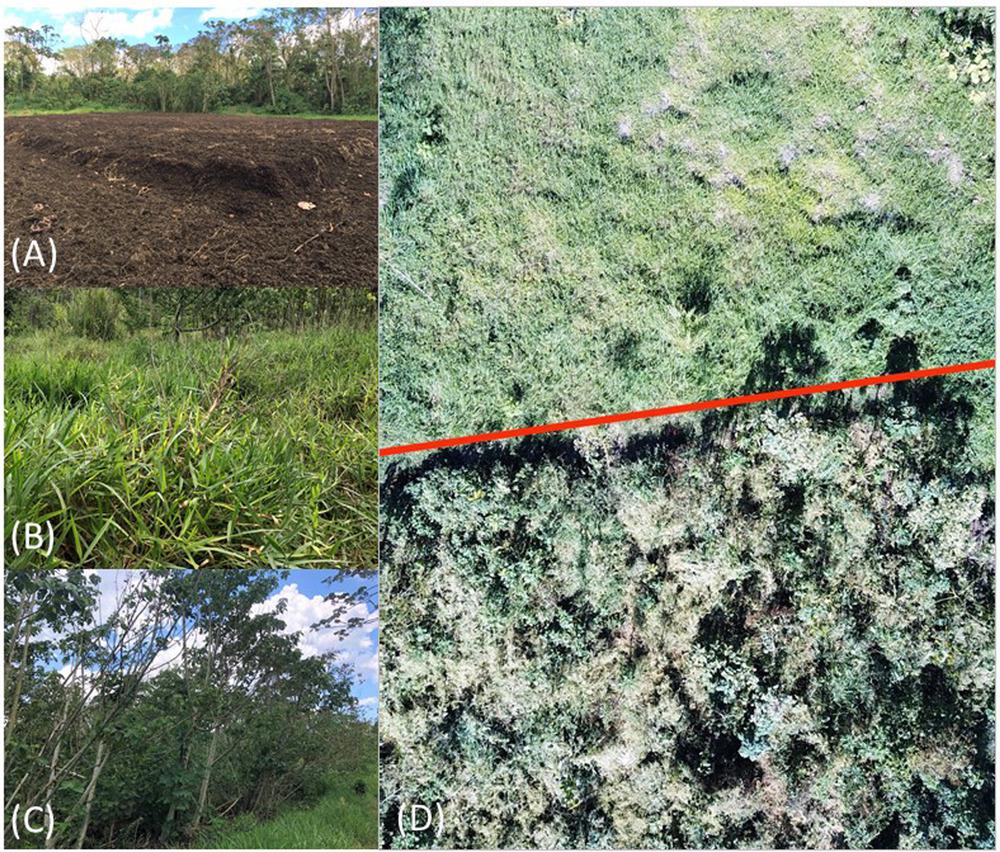
Before and after images of the forest

The forest experienced a radical, positive change

via British Ecological Society

The coffee-treated area also eliminated an invasive species of grass that took over the land and prevented forest succession. Its elimination allowed for other native species to take over and recolonize the area.

"This case study suggests that agricultural by-products can be used to speed up forest recovery on degraded tropical lands. In situations where processing these by-products incurs a cost to agricultural industries, using them for restoration to meet global reforestation objectives can represent a 'win-win' scenario," Dr. Cole said.

If the results are repeatable it's a win-win for coffee drinkers and the environment.

Researchers believe that coffee treatments can be a cost-effective way to reforest degraded land. They may also work to reverse the effects of climate change by supporting the growth of forests across the globe.

The 2016 Paris Agreement made reforestation an important part of the fight against climate change. The agreement incentivizes developing countries to reduce deforestation and forest degradation, promote forest conservation and sustainable management, and enhance forest carbon stocks in developing countries.

"We hope our study is a jumping off point for other researchers and industries to take a look at how they might make their production more efficient by creating links to the global restoration movement," Dr. Cole said.


This article originally appeared on 03.29.21

popular

People are baffled to find out they've been burning candles wrong their whole lives

There's an art to avoiding the "memory ring" that makes a candle tunnel around the wick.

The "tunnel" that often forms around a wick isn't supposed to be there.


The evolution of candles from lighting necessity to scented ambience creator is kind of funny. For thousands of years, people relied on candles and oil lamps for light, but with the invention of the light bulb in 1879, fire was no longer needed for light. At that time, people were probably relieved to not have to set something on fire every time they wanted to see in the dark, and now here we are spending tons of money to do it just for funsies.

We love lighting candles for coziness and romance, relishing their warm, soft light as we shrink from the fluorescent bulb craze of the early 2000s. Many people use candles for adding scent to a room, and there are entire candle companies just for this purpose (Yankee Candles, anyone?). As of 2022, candles were an $11 billion business.

With their widespread use, you'd think we'd know a thing or two about candles, but as a thread on X makes clear, a whole bunch of us have been burning candles wrong our entire lives without knowing it.

Keep ReadingShow less
Canva

Take pleasure in little things when you're raising kids.

As a parent, it sometimes feels like you're supposed to be fueled entirely by selfless love and a "spiritual connection" to your children.

But you know what? You matter, too! And there's nothing wrong with needing a little soul-nourishment that doesn't end with you on your knees scrubbing barf out of the carpet.

Keep ReadingShow less
Family

Woman goes to huge lengths to adopt husband's ex-wife's baby to save him from foster care

She had lived in foster care and didn't want it for the newborn with no name.

Christie Werts and her son, Levi


Christie and Wesley Werts have taken the idea of a blended family to the next level. When the couple fell in love five years ago and married, they brought together her children, Megan and Vance, and his children, Austin and Dakota.

As of January, the Ohio family has five children after adopting young Levi, 2. Levi is the son of Wesley’s ex-wife, who passed away four days after the child was born. The ex-wife had the boy prematurely, at 33 weeks, and died soon after from drug addiction and complications of COVID-19.

When Levi was born, he was a ward of the state with no first name or birth certificate.

Keep ReadingShow less

Can a dog really trust you?

Dogs can smell fear, but can they sniff out the truth? Your dog might actually be smarter than you're giving it credit for. It turns out, dogs are pretty good at picking up on human behavior. Science says so. A team led by Akiko Takaoka of Kyoto University in Japan conducted a study which found out that dogs actually know if you're to be believed or not.

The study involved tricking dogs in the name of science. Humans have known for a long time that if you point at an object, a dog will run to it. Researchers utilized this information in their study. During the experiment, they pointed at a container that was filled with hidden food. Sure enough, the dog ran towards the container. Then, they pointed at a container that was empty. The dogs ran towards it, but found that it had no food.

Keep ReadingShow less

A public service announcement from St. John Ambulance

Have you listened to the miscellaneous voices of your miscellaneous items on the floor lately?

Oh yours don't speak? Well these do.

Keep ReadingShow less
Image via Amanda Ripley/PopTech.

Map demonstrating scores of the Program for International Student Assessment for each state compared to a country that has similar scores.


This is not news: America does pretty badly when it goes up against other countries academically.

This is true even if we take it one state at a time—no single state, no matter how wealthy or small, matches the top scoring countries. And yet, the U.S. spends more per student than many other countries in the world.

Keep ReadingShow less